
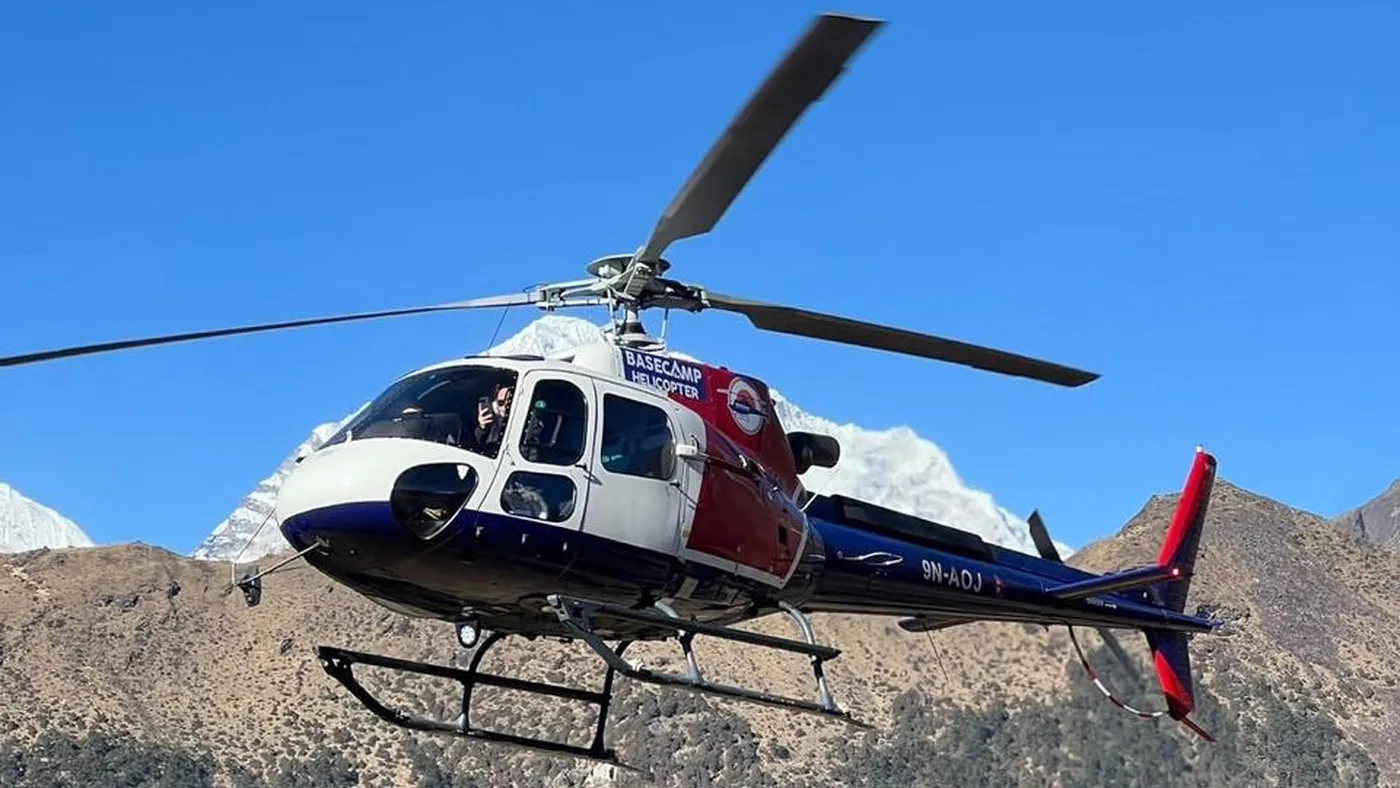
Short answer: Booking Mount Everest in 2026 comes down to one of four products, and they are not variations of the same thing: a $260 one-hour fixed-wing scenic flight with no landing, a $1,260 shared helicopter seat that lands you at Kala Patthar (5,545 m) and returns you to Kathmandu by lunch, a $4,500 private charter of the whole aircraft for up to five guests, or the $1,840 ten-day Everest Base Camp trek that ends with a helicopter flight out. For travellers booking from overseas, the practical sequence is: pick the product that matches the number of mornings you actually have, ask for an itemised written quote, confirm the weather rescheduling policy and your buffer days before you pay anything, and allow three to six weeks of lead time in the October to November and March to May windows. Budget separately for the Sagarmatha National Park entry permit at NPR 7,000 per person, and buy travel insurance that explicitly covers helicopter evacuation. We operate these flights directly in Kathmandu, so everything below is our own 2026 pricing and our own permit process rather than a marketplace estimate.
- $1,260Shared Everest Base Camp day tour seat
- 5,545 mKala Patthar, the highest landing
- $4,500Private charter, whole aircraft
- 8,848.86 mEverest summit, flown past not landed on
Why Mount Everest Booking Is Not Like Booking Any Other Tour
Most travellers arrive at "how do I book Mount Everest" with a picture of a mountain and an open calendar. The reality of a Mount Everest helicopter booking is closer to booking a small aircraft that flies into some of the most weather-sensitive airspace on earth. The machine is an Airbus AS350 B3e, also known as the H125, the same airframe used for high-altitude rescue work in the Alps and the Rockies, and at 5,000 metres it lifts roughly half what it lifts at sea level. That single fact explains most of the operational rules you will meet as a customer: strict weight limits, a fixed departure window in the morning, and a pilot who will simply not fly when the wind at the landing site shifts.
Three things make Everest booking different from the rest of our range. First, the flight is entirely weather-dependent, and roughly one morning in four is lost to weather across the year, so the booking is really a booking of a window, not of a date. Second, the aircraft is small and the landing sites are high, which means your party, your luggage and your body weight all have to fit inside a single load calculation that is not negotiable on the day. Third, the flight is a morning product. A helicopter lands in the Everest region early because the wind builds through the day, and the calmest window is shortly after sunrise, which means your Everest booking is really a booking of a morning in Kathmandu.
Because of all that, a good Mount Everest booking is decided before you leave home rather than on the day. The decision has three parts: which product, how much buffer you can absorb, and what happens to your money if the sky closes. Get those three right and the rest is logistics. Get them wrong and a perfect trip becomes a stressful one.
The Four Ways to Book Mount Everest in 2026
Search for a Mount Everest booking and you will find prices that appear to contradict each other: $260 on one page, $1,260 on the next, $1,840 on a third and $4,500 at the top of the range. None of those numbers is wrong. They describe four different arrangements sold under the same word. The Everest scenic mountain flight is a fixed-wing aircraft on a scheduled line parallel to the crest, about an hour in the air with a guaranteed window seat and no landing at all. The Everest Base Camp helicopter day tour buys a seat on a rotorcraft that leaves the flight path and puts you on snow at 5,545 m for ten to fifteen minutes. The private Everest helicopter charter buys the whole aircraft for the morning, and the routing, the departure hour and the ground stop become yours to set. The fourth, the Everest Base Camp helicopter trek, spends ten days walking into the Khumbu and replaces the walk out with one helicopter flight.
The table below is the shortest useful answer to "which Mount Everest should I book". The prices are our published 2026 rates for the live tours we operate, and the altitudes are the landing or maximum heights on each itinerary.
| Product | Time in the itinerary | Landing or maximum altitude | 2026 price |
|---|---|---|---|
| Everest scenic mountain flight (fixed wing, no landing) | 1 hour in the air | Fly-by only; the range seen from 8,848.86 m | $260 per person, window seat |
| Everest Base Camp helicopter day tour | 1 day, about 6 hours door to door | 5,545 m (Kala Patthar) or 5,364 m (Everest Base Camp) | $1,260 per person, shared flight |
| Private Everest helicopter charter | 1 day, about 5 to 6 hours | 5,545 m (Kala Patthar), with the 3,880 m Everest View Hotel stop | $4,500 per aircraft, up to 5 guests |
| Everest Base Camp helicopter trek (trek up, fly back) | 10 days | Max 5,545 m; helicopter out from Gorak Shep to Lukla | $1,840 per person, shared flight |
| Manaslu helicopter return trek (the alternative mountain) | 13 days | Max 5,160 m at Larkya La | $2,160 per person, shared flight |
Read that table in one direction and you see the price ladder: the more time you spend on the ground at altitude, and the more of the mountain you physically touch, the more the flight costs. Read it the other way and you see the shortcut ladder. The $1,260 day tour replaces a classic 12 to 14 day trek with a single morning. The $1,840 trek is the middle path for people who want the walking but not the walk out. The $4,500 charter is not a more expensive seat; it is a different contract for a different aircraft, and it is only worth it if your group is large enough or your schedule is tight enough to justify owning the whole machine.
One pricing note from the wider market, because it matters when you compare quotes: the big international marketplaces list this same Kala Patthar landing tour from $1,575 a seat, which is why our $1,260 sits well below them. That gap is not a budget cut-corner price. It is the difference between booking the aircraft that actually flies and buying a seat through a reseller who forwards your details to the same operator on the same morning. The full cost breakdown is in our Everest helicopter tour cost guide.
Where a Helicopter Can Actually Land on an Everest Flight
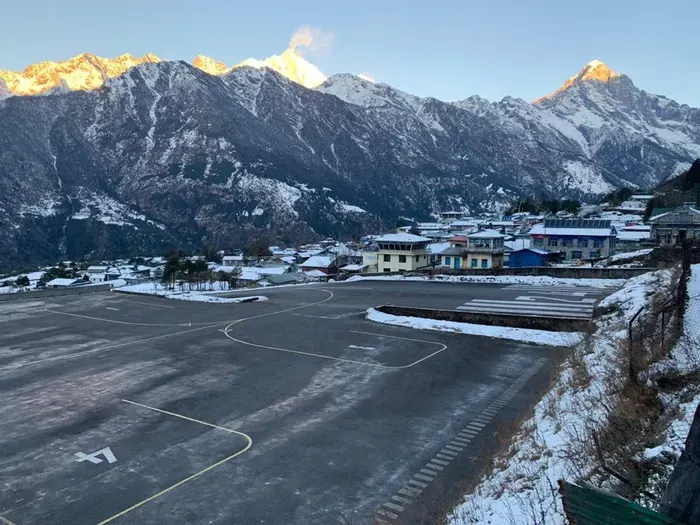
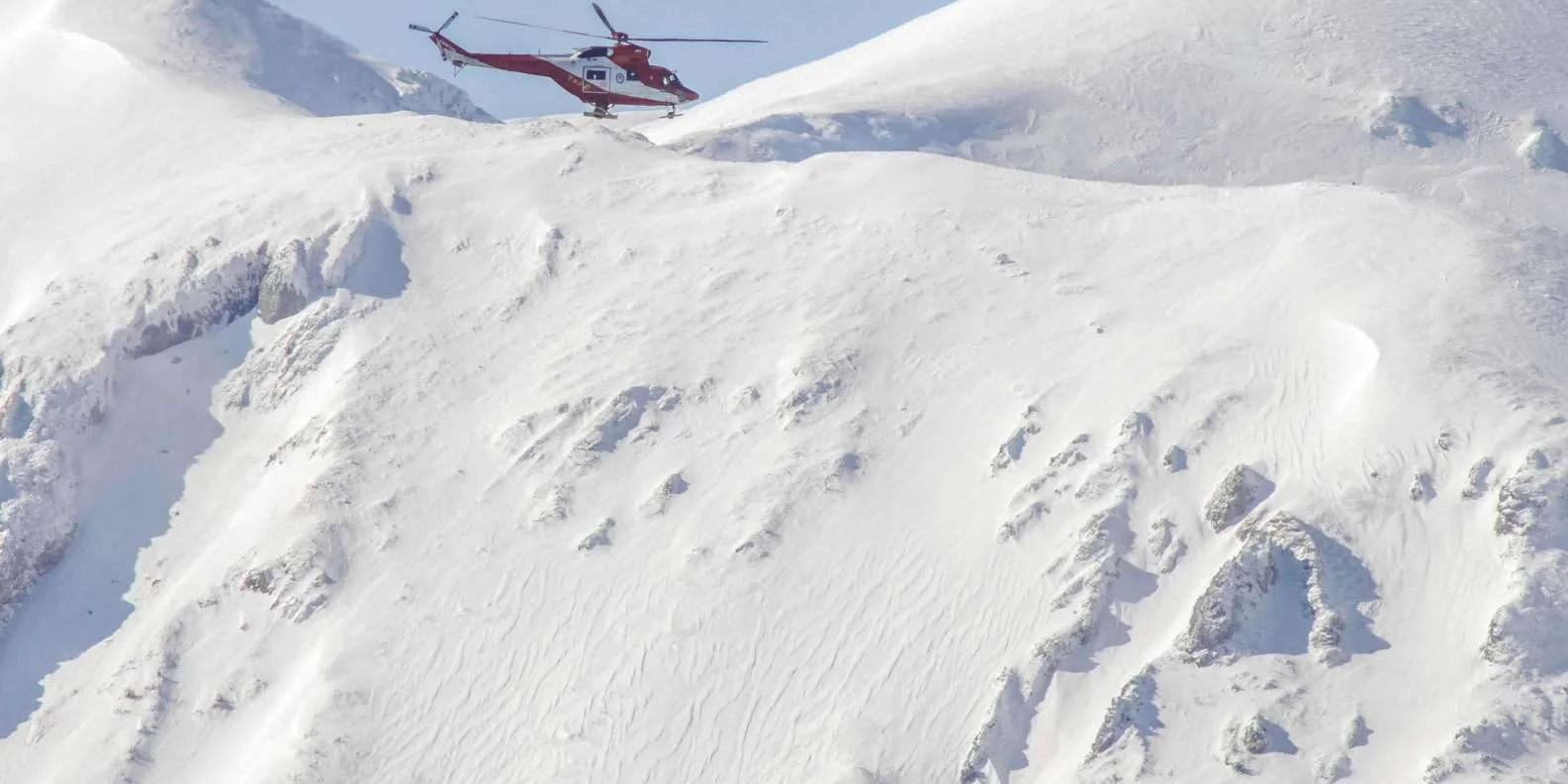
The single most common misunderstanding about a Mount Everest booking is where the aircraft actually puts you down. A helicopter does not land on the summit of Mount Everest. It has never been done, and the fuel, payload and reserve requirements make it impossible. The highest commercial landing on our Everest routings is Kala Patthar at 5,545 m, a black-rock ridge a few hundred metres above the glacier, and the second option is Everest Base Camp itself at 5,364 m, the staging ground where climbing expeditions prepare for summit attempts. The full explanation of why the summit is out of reach is a separate guide, but the short version is that the machine would have to take off again from a surface with no room to accelerate.
Here is what a Mount Everest booking looks like in the air. You leave Kathmandu in the early morning and fly north-west over the Langtang and Rolwaling ranges into the Khumbu. The aircraft tops up at Lukla at 2,860 m, because a helicopter cannot carry enough fuel to the Everest region and back on one tank at these altitudes. From Lukla the flight climbs up the valley to the landing site, and there are two shapes of landing. On a Kala Patthar landing the aircraft touches down on a snow slope with Everest, Lhotse and Nuptse around you, and you have a short, cold, spectacular photo stop. On a Base Camp landing the aircraft sets down closer to the glacier moraine, with the expedition village and the prayer flags at 5,364 m around you instead of a bare ridge.
Either way the flight then continues to the Everest View Hotel at 3,880 m, the highest-placed hotel in the world, where breakfast is served with the range filling the windows. That stop is where the charter and the shared day tour differ most: the charter is priced with the hotel stop and flexibility built in, while on the shared flight the breakfast is a separate charge at the hotel of approximately NPR 4,600 per person. Both flights then return you to Kathmandu, and because the aircraft is airborne early and the mountain weather builds through the day, you are typically back at your hotel before lunch with the rest of the day free.
Every one of those landing points is described in detail, with the landing zone requirements and the sites we fly to without landing at all, in our guide to where a helicopter can land in Nepal, from Kala Patthar at 5,545 m down to Lukla at 2,860 m.
How to Book Mount Everest from Abroad
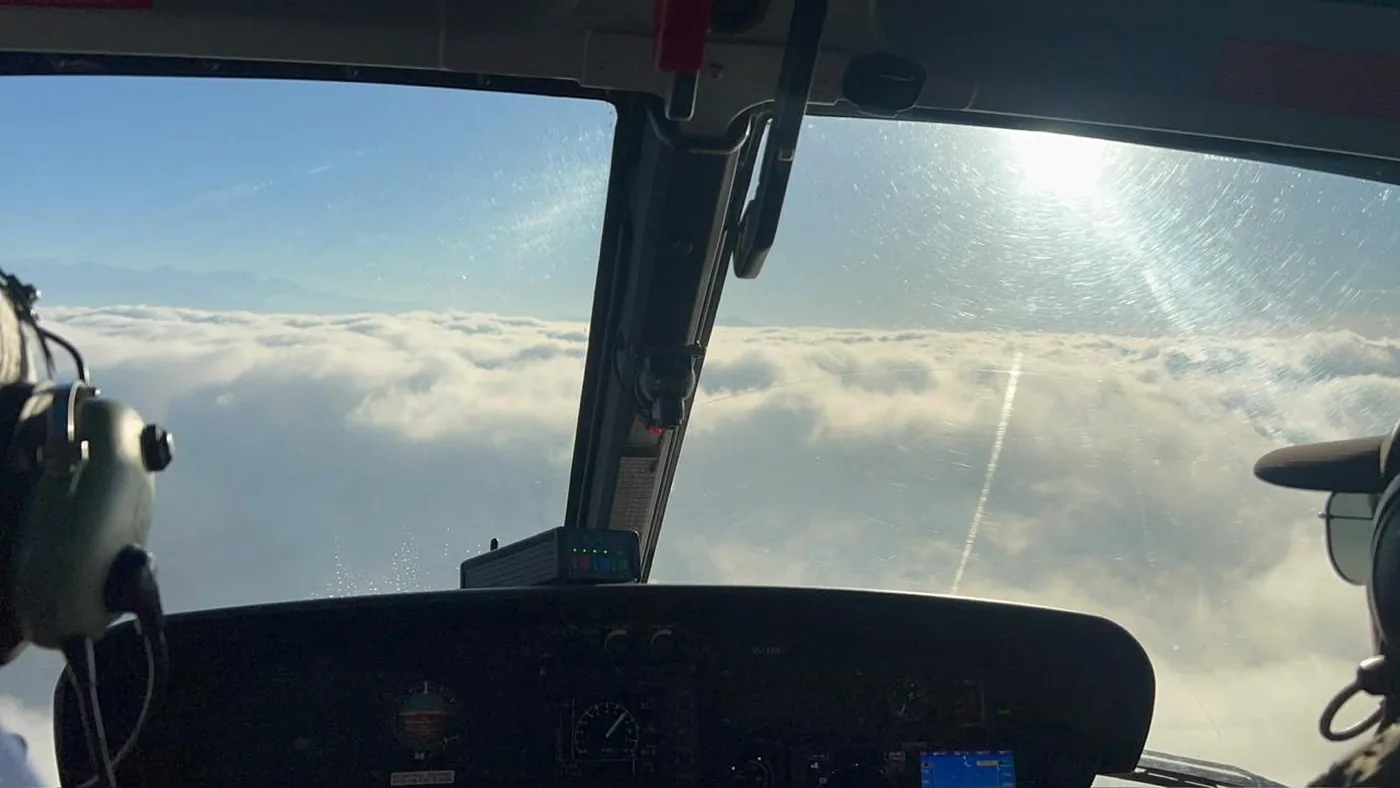
Booking from outside Nepal is not harder than booking from Kathmandu, but it is different in one important way: you cannot recover from a mistake on the ground. When the flight is cancelled in Nepal you can walk into our office in Thamel and sort it out over a cup of tea. When your flight is cancelled and you are on a six-hour flight home, the only thing that matters is whether the terms were written down before you paid. So the process below is built around getting the terms in writing, not around getting the cheapest headline price.
Step 1: Choose the product against your calendar, not your wish list
Count the mornings you will actually have in Kathmandu after you land, and subtract one for a buffer. One morning means the $1,260 shared day tour, and you need two mornings in Kathmandu to have a real chance of flying on the day you hoped for. Two mornings or more in the same trip, and you have a genuine choice between the $1,260 shared seat and the $4,500 private charter, because with a charter you can ask for the clearest slot of the season rather than taking the next scheduled departure. Ten days and a walking tolerance, and the $1,840 Everest Base Camp helicopter trek becomes the better value, because you are buying the mountain rather than a photograph of it.
What you should not do is book the day tour for a morning that is also your departure day, your international flight day, or the day after a trek. Weather alone will take roughly one morning in four across the year, and in the monsoon it is far worse. The single most common booking mistake we see is a client who lands at 6 am on day three, books the helicopter for day four, and has an international flight booked for the evening of day four. When that morning closes, there is no fallback.
Step 2: Ask for an itemised quote, not a headline price
Every operator in Nepal will quote you a number. What separates a usable quote from a marketing number is whether it tells you what it includes. Before you pay, ask for these specific points in writing: whether the price is per person or per aircraft; whether the Sagarmatha National Park entry permit at NPR 7,000 per person is inside the figure or separate; whether the Everest View Hotel breakfast is included; whether hotel-to-airport transfers in Kathmandu are included; whether supplemental oxygen and a medical kit are standard; and what the weather rescheduling terms are. On the shared Everest day tour the flight, crew, fuel, landing fees and flight clearances are all inside the published price and the park entry permit is the one item that is not. On the private charter the permits and transfers are in the price and the park entry permit at NPR 7,000 per person is not.
Ask for the quote in a way that gets you the operator's own number. We are a government-licensed Kathmandu operator and we price our own aircraft, which is why the seat on our Everest Base Camp helicopter day tour is $1,260 when the same landing tour is listed from $1,575 on the large international marketplaces. That 20 to 40 percent band is the standard reseller margin, and it is the single largest avoidable cost in a Mount Everest booking.
Step 3: Put the buffer and the cancellation policy in the document
The go or no-go call on the morning is made by the pilot and the operations team based on live conditions, and no operator can override it. What you can control is what happens afterwards. A legitimate operator will reschedule you to the next suitable window at no extra cost, or refund you in full if you cannot wait, and the ground stop on a high landing is kept short precisely because time at altitude is the main risk. Ask for both of these to be written into the confirmation, and ask how many buffer days we recommend for your dates. In the October to November and March to May windows, one or two buffer days is usually enough. Our cancellation and weather policy guide sets out exactly how the rescheduling works in practice.
Step 4: Send the details that cannot be changed later
Passenger names must match the passport exactly, because the flight clearance, the landing permission and the park permit are all filed in the passenger's name. Send passport details as soon as the seat is held, not on the morning. Also give us your hotel name, because the pickup coordination in Kathmandu depends on it, and send us your total weight including camera bags if you are carrying a professional kit. Every operator is required to hold an Air Operator Certificate from the Civil Aviation Authority of Nepal, and you are entitled to see the operator's licence, which is also the fastest way to check you are talking to the company that owns the aircraft rather than to a broker.
Step 5: Pay a deposit for a written confirmation, not the full amount to a stranger
A deposit to hold a seat is normal. The balance is normally due before or on the day of the flight. What is not normal is paying the full amount to a party you have never seen a confirmation from, so ask for a written confirmation containing the passenger names, the tour name, the date or date window, the total price and what it includes, the deposit and balance terms, the payment method, the weather and cancellation policy, and your pickup details. If any of those are missing, ask for a corrected version before you send money.
What a Mount Everest Booking Costs Beyond the Seat
The seat price is the part everybody quotes, and it is also the part that changes least. The extras are where a Mount Everest booking quietly gets expensive, so it is worth knowing them in advance. The table below is what actually lands on top of, or outside, the published price on the Everest routings.
| Item | Amount | How it is handled on an Everest booking |
|---|---|---|
| Everest Base Camp day tour seat | $1,260 per person, shared flight | Published price; includes flight, crew, fuel, landing fees, flight clearances, hotel transfers in Kathmandu |
| Private charter | $4,500 per aircraft, up to 5 guests | Published price; includes permits and transfers. The same morning quoted for the whole aircraft on the Kathmandu to Everest routing is from $3,500 |
| Everest Base Camp helicopter trek | $1,840 per person, shared flight | 10 days, trek up and fly back from Gorak Shep to Lukla; Sagarmatha and Khumbu Pasang Lhamu permits and TIMS included |
| Sagarmatha National Park entry permit | NPR 7,000 per person (about $55) | Payable separately on the day tour and the charter, at the gate |
| Everest View Hotel breakfast | Approximately NPR 4,600 per person | Paid directly at the hotel on both the shared day tour and the private charter |
| Travel and medical insurance | Your own policy | Must include helicopter evacuation cover; proof is requested before departure |
| Charter block hour rate | $1,400 to $2,200 per block hour | How charter quotes are actually built, if you are pricing a custom routing |
That table is also the answer to the question we get most from abroad: no, the $1,260 is not the total you will spend. Add the park permit, add breakfast if you want it at the hotel, and add your own insurance. What you should not have to add is a fee for a seat you already bought, a landing surcharge, or an airport transfer on the Kathmandu side, because all of those are inside the published price.
Permits are worth one more note, because the paperwork is simpler than most people expect. The full permit guide covers every route we fly, but for Everest the short version is that the operator files the flight clearance and the landing permission, and the park entry permit is the one fee you pay yourself at the gate. On the ten-day helicopter trek the park and rural municipality permits are both included in the package, which is one of the reasons that trip is priced the way it is.
Group Joining or Private Charter: Which Mount Everest Booking Fits
Shared seats and private charters are not a cheaper and an expensive version of the same thing. They are different contracts, and the honest comparison comes down to how many of you are travelling and how much control you need over the morning. A shared seat buys you the identical flight for a third of the price. A charter buys exclusivity, a departure time of your choosing inside the weather window, a routing you can adjust, and the ability to change the plan when the sky does not cooperate.
| Factor | Group joining (shared seat) | Private charter (whole aircraft) |
|---|---|---|
| Pricing model | Per seat, from $1,260 per person on the Everest day tour | Per aircraft, $4,500 for up to 5 guests |
| Cost for 1 traveller | $1,260 | About $4,500 to $5,500 for the aircraft |
| Cost for 2 travellers | $2,598 | About $4,500 to $5,500 for the aircraft |
| Cost for 4 to 5 travellers | $5,196 to $6,495 | About $4,500 to $5,500, roughly $900 to $1,375 per person |
| Who else is on board | Up to four other passengers | Only your group |
| Departure time | Set by the operator, optimised for weather and aircraft rotation | Yours to choose within weather and daylight limits |
| Route | Standard itinerary | Fully customisable |
| Confirmation | Once the flight fills | Immediate on booking |
The crossover point is the useful number. One traveller should take a shared seat. Two travellers should take a shared seat. Three to five travellers on the Everest day tour are already at or past the point where a charter is the cheaper option, and for a group of four or five the charter works out at roughly $900 to $1,375 per person, which is less than half the shared rate. The people who should still take a shared seat are solo travellers and couples whose goal is the experience itself, because the shared product delivers the identical flight, the identical landing and the identical breakfast. Our group joining guide walks through the decision in more detail.
One operational detail that decides a lot of charters: the weight. At 5,000 metres a helicopter lifts roughly half what it lifts at sea level, and every route has a maximum all-up weight covering passengers, bags, fuel and crew. Lukla charters carry a hard 450 to 550 kg total, and Everest landings restrict it further. Five average adults with day packs is the ceiling for most mountain routes; four adults with camera bags is the realistic configuration for an Everest landing. The weigh-in happens at the domestic terminal and it does not negotiate, so a group of five with heavy camera cases needs a different aircraft, and the quote changes.
When to Book Mount Everest: Season and Lead Time
The season shapes both the price and the reliability of an Everest booking. The South Asian monsoon governs it: a seasonal reversal of wind that sweeps moisture up from the Bay of Bengal and pushes it into the southern face of the Himalaya. October and November come right after the monsoon clears, which is why the air is most transparent and the ground is dry, and March to May gives clear air for a landing at 5,364 m with tolerable ground temperatures. January and February are dry, stable and frequently cloudless, but cold at altitude, and the monsoon months from June to August are when flights are frequently delayed or cancelled and operators shift to a day-by-day scheduling model. The month-by-month detail is in our best time to fly guide.
Lead time follows the same curve. In the peak windows of October to November and March to May, book three to six weeks ahead for a shared seat, and earlier for a private charter. Our working minimum recommendation is seven days. In the off-season and shoulder months, a few days to two weeks is usually enough, though weather flexibility matters more than lead time. The other thing worth booking early is not the flight but the arrival: an international traveller who lands in Kathmandu the evening before a mountain flight has no recovery time if the inbound flight is delayed, so build the buffer into the international itinerary rather than the helicopter booking.
There is a real advantage to booking the Mount Everest flight as part of a longer Nepal trip rather than as a standalone trip. At $1,260 a seat, the flight is a single morning of your holiday, and the reason to spend ten days in Nepal rather than four is that the other six days can be a trek, a pilgrimage or a second flight to a different mountain at a different altitude. Our Everest helicopter tour versus Base Camp trek comparison sets out that trade honestly.
If Everest Is Sold Out, Book a Different Mountain
The most common reason a traveller arrives at a mountain they cannot get is not weather and not cost. It is a fully booked shared departure in the best week of the season, on a route with one aircraft and one flight path. The fix is not to wait, it is to change the mountain, and Nepal has four serious alternatives that fly from the same city, on the same aircraft, in the same weather window.
The Manaslu helicopter return trek is the closest substitute on the ground and the most different in character: 13 days, a maximum of 5,160 m at Larkya La, and a helicopter exit from Samdo or Bimthang, priced at $2,160 per person on a shared flight. Manaslu itself stands at 8,163 m, the eighth-highest mountain on earth, and the route is a restricted area with a $100 permit for the first week of the September to November window, a Manaslu Conservation Area Permit and an Annapurna Conservation Area Permit on the exit section, all arranged as part of the package. It is also emptier than Everest in October, which is precisely why people book it. Our Manaslu helicopter return trek guide covers the route and the costs in full, and our Manaslu circuit guide covers the trekking side.
Before you switch mountains, it is worth reading the full Everest helicopter tour hub as well, because the Everest flights themselves are not all one product and the cheapest of them may already solve what you are trying to fix. Langtang and Gosaikunda are the short, cheap, quiet options: Langtang Valley at 4,984 m, Gosaikunda at 4,380 m, and a charter that starts from $2,400 for the aircraft, all within a couple of hours of Kathmandu. Muktinath at 3,710 m is the pilgrimage option at $1,080 per person, and it sits in the Mustang rain shadow, so it stays clearer longer than anywhere else on the Nepal calendar. Our Langtang helicopter tour guide covers the closest of these valleys to Kathmandu in full. The full comparison of every route we fly from Kathmandu and Pokhara, with real prices, is in the guide to Nepal's other Himalayan helicopter tours.
Booking from Inside Nepal or from India
If you are reading this from Kathmandu, Pokhara or Delhi, one thing is worth stating plainly: on helicopter seats the published US dollar per-seat price is the price for everyone, and group joining is the lever that reduces it. There is no separate helicopter rate for Nepali citizens or SAARC nationals, and any seller offering you a "local helicopter rate" is either mispricing or misinforming you. That is different from the fixed-wing mountain flight, where the airlines do publish their own local tariffs: Buddha Air charges NPR 13,776 for Nepali citizens and INR 8,610 for Indian and SAARC nationals, Shree Airlines charges NPR 15,000, and the document is re-checked at the gate. If your Everest experience is the one-hour scenic flight rather than the landing tour, ask us for the local-rate ticket and we will issue it at the airline's own price with no service charge on top.
What does change for a traveller inside Nepal or in India is the practical picture. You are likely to be adding the flight to a wider trip, so the cheapest way to use it is to book a shared seat on a scheduled morning rather than paying for an aircraft, and the Indian pilgrimage market in particular concentrates on Muktinath and Everest darshan flights, where the fixed-wing scenic flight at $260 does the job for a fraction of the landing-tour price. Our guide for Indian travellers covers that route in detail.
Frequently Asked Questions
How do I actually book Mount Everest with you?
Tell us how many mornings you have in Kathmandu and how many of you are travelling, and we will send an itemised written quote naming the tour, the date or date window, the landing site, what is included, the Sagarmatha park permit treatment, the weather and cancellation terms and the deposit. You send passport details exactly as they appear, we issue a written confirmation, a deposit holds the seat, and the balance is paid before or on the day of the flight. There is no need to pay anything before you have that confirmation in hand.
What does a Mount Everest booking cost in 2026?
From $260 per person for the one-hour fixed-wing scenic flight with no landing, through $1,260 for a shared seat on the Everest Base Camp helicopter day tour that lands at 5,545 m, up to $4,500 for the private charter of the whole aircraft for up to five guests, with the ten-day trek-up-fly-back itinerary at $1,840 per person. On top of the seat, expect the Sagarmatha National Park entry permit at NPR 7,000 per person on the day tour and the charter, and about NPR 4,600 per person if you want the Everest View Hotel breakfast.
Where can a helicopter actually land in Nepal?
On the Everest routings, the real landing sites are Kala Patthar at 5,545 m, Everest Base Camp at 5,364 m, the Everest View Hotel at 3,880 m and Lukla at 2,860 m, which is where the aircraft refuels. Elsewhere in the country the landings are Langtang and Gosaikunda, Annapurna Base Camp at 4,130 m, Muktinath at 3,710 m, Rara at 2,990 m and the high valleys in the Manaslu region. No helicopter has ever landed on the summit of Mount Everest, and it is not a matter of permission or weather.
Can a helicopter land on Everest itself?
No. The summit stands at 8,848.86 m and no commercial helicopter has ever touched it, because the aircraft would have to take off again from a surface with no room to accelerate and no fuel to climb with. The closest commercial landing is Kala Patthar at 5,545 m, and the summit is seen from the air for the entire flight. We have written the full argument, including the aircraft that have flown near the summit and why they did not land, in our guide to flying to the top of Mount Everest.
How do I book an Everest Base Camp trek that ends with a helicopter flight?
That is the $1,840 ten-day product: you walk into the Khumbu over Namche, Tengboche and Gorak Shep, and you fly out from Gorak Shep to Lukla on the last day. The Sagarmatha and Khumbu Pasang Lhamu rural municipality permits and the TIMS card are all included in that price, which is why the ten-day package costs more per day than the one-day flight. It is the right choice if you want the mountain rather than a photograph of it, and our trek-up-fly-back cost breakdown covers the day-by-day pricing.
Is joining a group cheaper than chartering the whole helicopter?
For one or two travellers, yes, by a wide margin: a shared seat is $1,260 per person against roughly $4,500 to $5,500 for the aircraft. For four or five travellers it reverses, and the charter works out at roughly $900 to $1,375 per person against $5,196 to $6,495 for shared seats. The shared seat is the better deal for a couple, and the charter is the better deal for a family or a group of four who want a departure time of their own choosing.
How far in advance should I book a Mount Everest helicopter tour?
Three to six weeks ahead for a shared seat in the October to November and March to May windows, and earlier for a private charter. Our minimum working recommendation is seven days, and in the shoulder season a few days to two weeks is usually enough. If you are flying in from overseas, the more important booking is your international flight, so that you land at least a day before the helicopter and never on the same morning. Two mornings is the practical minimum in Kathmandu for a traveller who is not already in Nepal: one for the flight, and one for the buffer that gives you a second chance if the first morning closes. The whole Everest Base Camp helicopter day tour takes about six hours door to door, so you are back at your hotel by early afternoon with the rest of the day free.
What happens if the weather cancels my flight?
Both shared and chartered flights are grounded in unsafe weather and both are rescheduled rather than lost, usually to the next suitable window at no extra cost, or refunded in full if you cannot wait. The go or no-go call is made by the pilot and the operations team on the morning based on live conditions, and it is a safety decision rather than a service failure. This is exactly why a buffer day is worth more than any packing tip, and the full policy is explained in our cancellation and weather policy guide.
What permits do I need for an Everest helicopter landing?
One. The Sagarmatha National Park entry permit at NPR 7,000 per person, roughly $55, which is payable at the gate on the Everest day tour and the charter. We file the flight clearance, the landing permission and the other paperwork. On the ten-day helicopter trek the park and rural municipality permits and the TIMS card are included in the package, and the Everest View Hotel breakfast is a separate charge of about NPR 4,600 per person paid at the hotel. Every route we fly has its own permit treatment, and our permit guide lists them route by route.
Do I need insurance that covers a helicopter evacuation?
Yes, and you need proof of it before departure. Mountain flying is a high-altitude, weather-dependent activity where a hospital transfer can mean an evacuation by air, and a standard travel policy often does not cover that. We also ask that you disclose any heart or respiratory condition, pregnancy or existing altitude sickness before you book, and tell the crew immediately if you feel a headache or dizziness at the landing. Supplemental oxygen and a basic medical kit are carried on every flight, and the ground stops are kept short for exactly this reason.
How much luggage can I take on an Everest helicopter?
Less than you think, and the limit is set by physics rather than by policy. At 5,000 metres a helicopter lifts roughly half what it lifts at sea level, and each route has a maximum all-up weight covering passengers, bags, fuel and crew. Lukla charters carry a hard 450 to 550 kg total, and an Everest landing restricts it further. Five average adults with day packs is the ceiling for most mountain routes and four adults with camera bags is the realistic configuration for an Everest landing. The weigh-in happens at the domestic terminal and it is not negotiable, so anything beyond a small day bag should travel on the airline instead.
What if the shared departure on my date is full?
Then you have three options, and the third is usually the best one. You can move to another date in the same window, you can charter the aircraft yourself for that morning, or you can change the mountain entirely and fly a route where the same aircraft is not fully committed. The Manaslu helicopter return trek at $2,160 for 13 days, the Langtang Valley charter from $2,400 and the Muktinath pilgrimage at $1,080 all fly from Kathmandu in the same season, and they are consistently easier to get into than Everest in the best weeks of October.
Ready to Book Your Mount Everest Flight?
A Mount Everest booking is really three decisions and a document: which of the four products matches the mornings you have, how many buffer days you can carry, and what the terms say if the weather closes. Get those in writing from the licensed operator that flies the aircraft, and the rest of the trip is straightforward. Browse our full range of helicopter tours and 2026 prices, read the Everest helicopter tour cost guide before you commit, or contact us directly for an itemised quote and to secure your seat. We will tell you plainly if the day tour is the wrong product for you, and if it is, we will tell you which mountain is right.