
What an Everest Helicopter Tour Actually Costs in 2026
If you're planning a trip to Nepal and want to see Mount Everest without committing to a two-week trek, a helicopter tour is the fastest and most spectacular way to do it. But the pricing is genuinely confusing — quotes range from a few hundred dollars to well over five thousand, and it's not always obvious what you're actually paying for. This guide breaks down every Everest helicopter option, what each one includes, and what the real 2026 prices are, so you can book with confidence and avoid overpaying.
- $1,260Everest day tour, per seat
- 5,545 mKala Patthar landing
- 6 hrsTypical door-to-door time
- DailyDepartures in season
The Three Types of Everest Helicopter Tours
There isn't one single "Everest helicopter tour" — there are three distinct products, and they're priced completely differently. This guide gives you the Everest Base Camp helicopter tour cost for each one, from the $260 fixed-wing scenic flight to the private charter, so you can see the real price of a base camp helicopter tour before you enquire. Understanding the difference is the single most important step to getting a fair price.
1. Everest Scenic Mountain Flight (Fixed-Wing)
This is the most affordable option and the one most first-time visitors choose. It's actually a fixed-wing aircraft, not a helicopter, and it departs from Kathmandu's domestic terminal every morning during the flying season. You get a guaranteed window seat, fly east along the Himalayan range for about an hour, and see Everest, Lhotse, Makalu, and a dozen other peaks from close range. Prices start around $260 per person in 2026, and the flight includes hotel pickup, a certificate of achievement, and expert commentary. It's the best value if your goal is simply to see Everest. See our Everest Scenic Mountain Flight details and pricing.
The scenic flight is also the most reliable option, because fixed-wing aircraft can operate in slightly more marginal weather than helicopters and the route is well-established. Flights depart early — usually between 6:00 and 9:00 AM — when the air is calmest and the views are clearest. Most operators use modern twin-engine aircraft with a window seat for every passenger, and the cabin crew will point out each peak as you pass. If you're short on time or budget, this is the smart choice.
2. Everest Base Camp Helicopter Tour (Helicopter, with Landing)
This is the true helicopter experience. You fly by helicopter from Kathmandu to Lukla, then continue up the Khumbu Valley to Kala Patthar or Everest Base Camp, where you land for a short photo stop at over 5,000 meters. The whole trip takes about 4–5 hours round trip, and you're back in Kathmandu by lunchtime. This is the option most people mean when they say "Everest helicopter tour," and it typically costs $1,100–$1,500 per person on a shared basis, or more for a private charter.
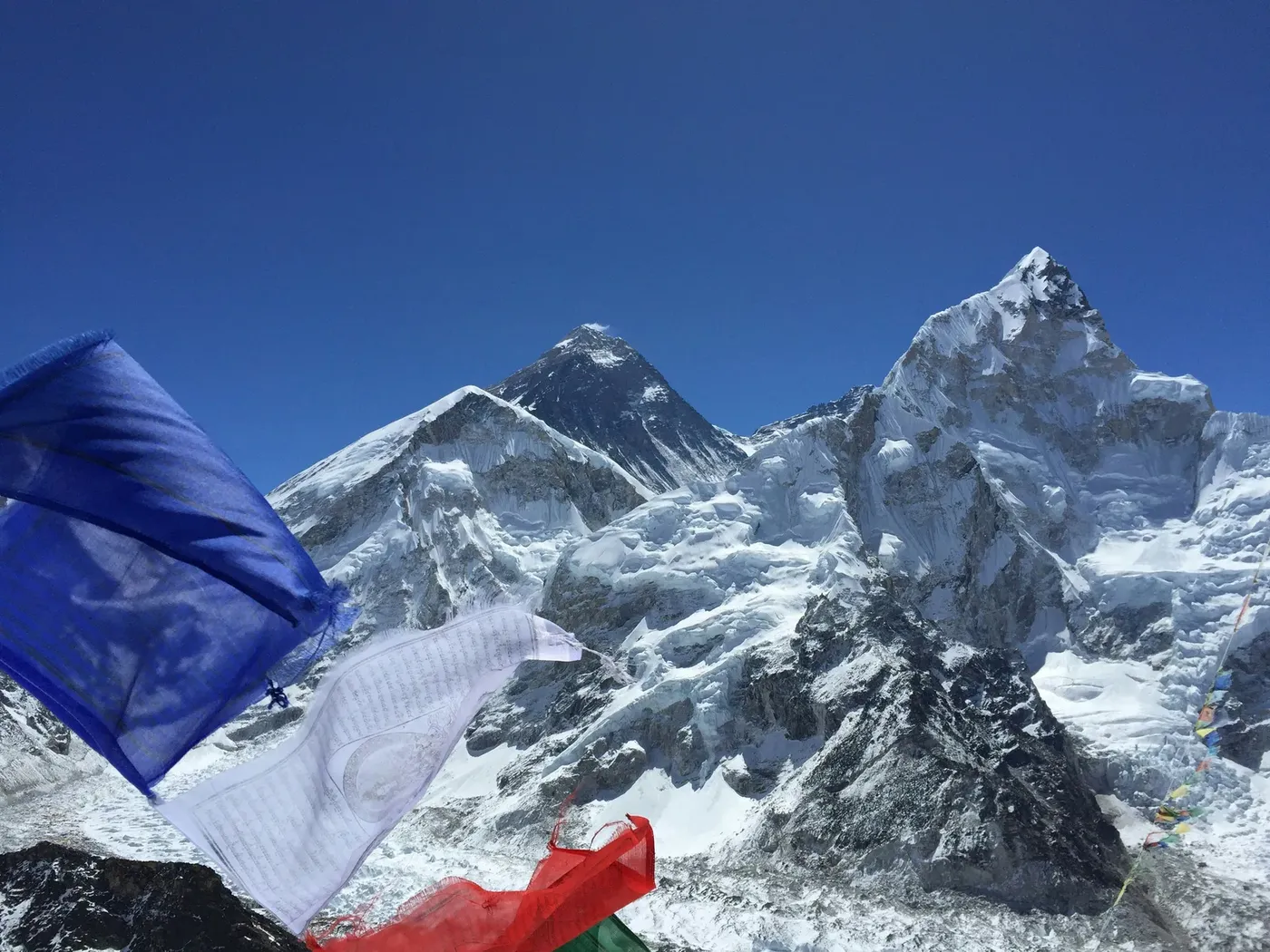
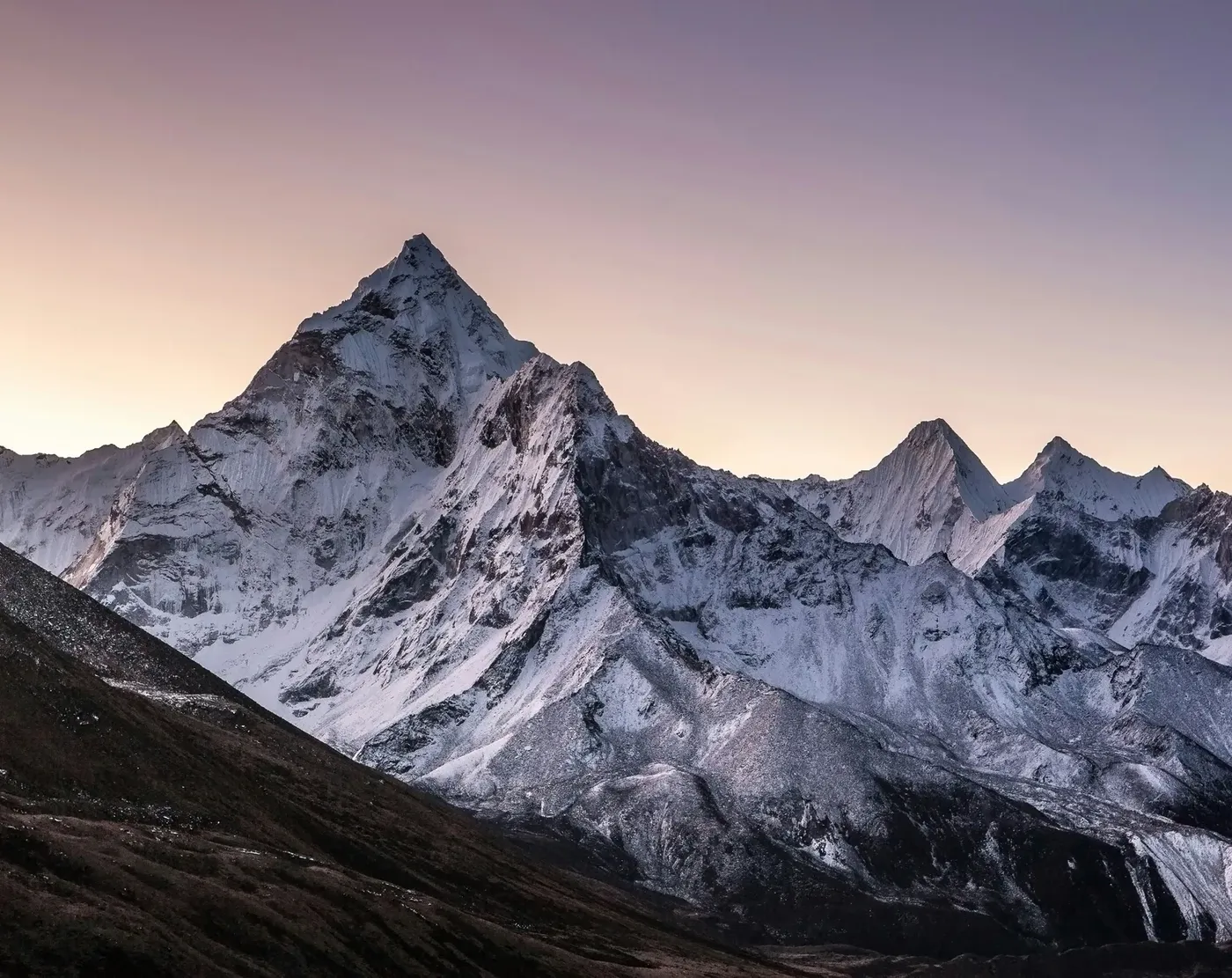
The flight itself is the highlight. You'll refuel at Lukla — the famous "most dangerous airport in the world" — then climb past Namche Bazaar, Tengboche Monastery, and the Khumbu Glacier, with Everest, Lhotse, Nuptse, and Ama Dablam filling the windows. The landing at Kala Patthar gives you a few precious minutes to stand at 5,545 meters and take in the view that trekkers spend two weeks earning. It's an intense, unforgettable experience, and the short ground time is deliberate — it minimizes altitude-sickness risk. You can see live availability and the full 2026 price for this exact product on our Everest Base Camp helicopter tour page, which departs Kathmandu daily.
3. Everest Base Camp Helicopter Trek (Trek Up, Fly Back)
This is the premium option for trekkers who want the full Everest Base Camp experience but don't want to walk back down. You trek the classic route from Lukla to Everest Base Camp over about 10 days, then fly back by helicopter from Gorak Shep to Lukla in 20 minutes instead of retracing your steps for 3–4 days. This combines the achievement of reaching Base Camp with the luxury of a helicopter return, and it costs from $1,840 per person in 2026. See our Everest Base Camp Helicopter Trek itinerary and pricing.
Why choose this over a standard trek? Three reasons. First, time: you save 3–4 days of descent, which matters if you have a limited window. Second, energy: the descent is hard on knees and legs, and flying back spares you the most physically demanding part. Third, the view: the helicopter flight from Gorak Shep back down the Khumbu is arguably the single best aerial view in the Himalayas, and it's a fitting finale to your trek. You still get the full acclimatization schedule, the teahouse experience, and the sense of achievement — you just skip the slog home.
Everest Helicopter Tour Price Breakdown (2026)
Here's a clear comparison of what each option costs and what you get:
| Tour Type | Duration | Aircraft | Landing | Price (per person) | Best For |
|---|---|---|---|---|---|
| Everest Scenic Mountain Flight | 1 hour | Fixed-wing | No landing | from $260 | Everest views on a budget |
| EBC Helicopter Day Tour | 5–6 hours | Helicopter (H125) | Kala Patthar 5,545m + Everest View Hotel | from $1,260 | The full landing experience in one day |
| EBC Helicopter Trek (trek up, fly back) | 10 days | Trek + helicopter return | Kala Patthar / Pheriche pickup | from $1,840 | Trekkers who want the trail without the descent |
| Private Everest Charter | 5–6 hours | Private helicopter | Custom (EBC, Gokyo, extended stops) | quote on request | Groups of 1–5 wanting flexible routing |
These are per-person prices on a shared basis. Private charters cost significantly more — a private Everest helicopter tour can run $4,000–$6,000 for the aircraft, split however you like among your group. If you're traveling solo or as a couple, shared flights are the economical choice; if you're a family or small group, a private charter can actually work out to a similar per-person cost with far more flexibility.
What's Included in the Price
When you compare quotes, make sure you're comparing like for like. A reputable operator's price should include:
- All airport transfers in Kathmandu
- Domestic flight or helicopter charter costs
- National park and local municipality permits
- An experienced pilot and, for treks, a licensed Sherpa guide
- Breakfast or meals where applicable
- Oxygen and basic medical kit on board
Things that are usually not included: international flights, Nepal entry visa ($50 for 30 days), travel insurance, and tips. Always ask for a written breakdown before you pay a deposit.
Why Prices Vary So Much
Helicopter prices in Nepal fluctuate for a few concrete reasons. First, shared vs. private: a shared flight splits the cost across 4–5 passengers, while a private charter means you pay for the whole aircraft. Second, season: peak trekking months (March–May and September–November) command higher prices than the monsoon or winter. Third, fuel and permit costs rise annually. Finally, operator overhead: established companies with certified pilots, proper insurance, and safety records charge more than fly-by-night brokers — and that premium is worth paying.
Best Time to Fly: Weather and Visibility
Everest helicopter tours are entirely weather-dependent, so timing matters as much as price. The two best windows are March to May (spring) and September to November (autumn), when skies are clearest and the mountain views are at their most dramatic. Spring offers blooming rhododendrons in the lower valleys; autumn brings crisp, stable air after the monsoon clears. The monsoon months (June to August) bring cloud and rain that frequently ground flights, while winter (December to February) is cold but often clear — though Lukla flights are more prone to cancellation. If you're booking a helicopter tour with a landing, always build in at least one buffer day in case weather forces a reschedule.
Safety: What to Look For in an Operator
Safety is non-negotiable at high altitude, and it's the main reason to book with a licensed operator rather than the cheapest broker you can find. Look for a company that uses certified pilots with Himalayan flying experience, maintains its aircraft to international standards, carries proper passenger insurance, and provides oxygen on board. Ask about the aircraft type — modern helicopters like the AS350 B3e are the workhorses of the Khumbu and are well-suited to high-altitude operations. A reputable operator will also be transparent about weight limits (typically 15kg per passenger on helicopter legs) and will brief you on altitude safety before you fly.
How to Book Without Overpaying
Book directly with a licensed Nepali operator rather than through an overseas reseller, which adds a markup. Confirm the exact itinerary, the number of passengers on your flight, and the cancellation policy in writing. For the scenic flight, book a morning departure — weather is clearer and flights are less likely to be delayed. For helicopter tours with landings, build in a buffer day in case of weather, and confirm whether the operator will reschedule at no cost. Paying a small deposit to secure your seat is normal; never pay the full amount upfront to an unverified broker.
The underlying facts are documented at Everest (8,848.86 m). It is worth reading before you plan, though nothing in it changes what the flight itself can do.
Worth reading alongside this guide: Everest Base Camp Helicopter Day Tour: Cost, Landing & How to…, Everest Base Camp Helicopter Trek Cost 2026 — Trek Up, Fly Back…, and Everest Helicopter Tour vs Base Camp Trek: Honest Comparison.
Frequently Asked Questions
How long is an Everest helicopter tour?
The scenic flight is about one hour. A helicopter tour with a landing at Kala Patthar or Everest Base Camp takes 4–5 hours round trip from Kathmandu. The trek-and-fly-back option takes 10 days in total.
Can I land at Everest Base Camp by helicopter?
Helicopters typically land at Kala Patthar (5,545m) or near Gorak Shep rather than directly at Base Camp itself, due to terrain and safety. You'll get close-up views of Everest and the Khumbu Icefall either way.
Is altitude sickness a risk on a helicopter tour?
Yes — because you ascend to over 5,000 meters in a matter of hours, there's a real risk of altitude sickness. Operators keep ground time short (usually 15–30 minutes) and carry oxygen. If you have any health concerns, consult your doctor first.
What should I wear?
Dress in warm layers even in spring and autumn — temperatures at 5,000 meters are well below freezing. Bring sunglasses, sunscreen, and a camera. The operator will provide a safety briefing.
Do I need a permit for an Everest helicopter tour?
For the scenic flight and the helicopter tour with landing, the operator arranges all necessary permits and includes them in the price. For the trek-and-fly-back option, you'll need the Sagarmatha National Park permit and the Pasang Lhamu Rural Municipality permit, both of which a licensed operator will handle for you.
How far in advance should I book?
For peak season (spring and autumn), book at least 2–4 weeks ahead to secure your seat, especially for shared flights. For the trek-and-fly-back option, book 1–2 months ahead so the operator can arrange guides, permits, and domestic flights.
What to Expect on the Day of Your Flight
Knowing what happens on the day removes a lot of the anxiety around booking. For the scenic flight, you'll be picked up from your hotel around 5:30–6:30 AM and driven to Kathmandu's domestic terminal. After a quick security check, you board, take your window seat, and the hour-long flight begins. The crew points out each peak as you pass, and you'll have the chance to visit the cockpit for photos. You're back at your hotel by mid-morning, certificate in hand.
For the helicopter tour with landing, the day starts similarly early. You fly from Kathmandu to Lukla to refuel, then continue up the valley. The landing at Kala Patthar lasts 15–30 minutes — long enough for photos and a moment of awe, short enough to stay safe at altitude. You'll stop for breakfast at a lodge in the Khumbu (often at the Everest View Hotel or a similar spot) before flying back. Expect to be back in Kathmandu by early afternoon.
For the trek-and-fly-back, the "day of the flight" is day nine or ten of your trek. After a pre-dawn climb of Kala Patthar for sunrise, you return to Gorak Shep for breakfast, then board the helicopter for the 20-minute flight back to Lukla. It's a surreal contrast — you've spent days walking this valley, and now you're soaring over it in minutes.
Helicopter Tour vs. Trekking: Which Should You Choose?
This is the question most people wrestle with, and the answer depends on your time, fitness, and goals. A full Everest Base Camp trek takes 12–14 days and requires a solid level of fitness, but it's a deeply rewarding, immersive experience that lets you acclimatize gradually and soak in Sherpa culture. A helicopter tour gives you the views in a single morning but skips the journey. The trek-and-fly-back option sits in the middle — you get the full trekking experience on the way up, then skip the descent.
If you have two weeks and good fitness, trek. If you have a few days and want to see Everest, fly. If you want the achievement of Base Camp without the punishing descent, choose the trek-and-fly-back. There's no wrong answer — only the right one for your circumstances.
Understanding the Khumbu Region
The Khumbu is the high-altitude region of northeastern Nepal that is home to Mount Everest and the Sherpa people. It's part of Sagarmatha National Park, a UNESCO World Heritage Site, and it's one of the most dramatic landscapes on Earth. The region's gateway is Lukla, reached by a famously short and steep airstrip, and the main trail climbs through Namche Bazaar, Tengboche, Dingboche, and Lobuche before reaching Everest Base Camp at 5,364 meters. Understanding this geography helps you appreciate what you're seeing from the air — every valley, monastery, and glacier has a name and a story.
Common Mistakes to Avoid
First-time bookers make a few predictable mistakes. Booking the cheapest option without checking the operator is the biggest one — an unlicensed broker can leave you stranded or, worse, compromise your safety. Not building in a buffer day is another: mountain weather is unpredictable, and a single buffer day can save your entire trip. Ignoring altitude is a third — even a short landing at 5,000 meters can trigger symptoms if you're not prepared. Finally, not confirming what's included leads to surprise costs. A five-minute conversation with your operator about inclusions, cancellation policy, and passenger count prevents all of these.
Budgeting for Your Everest Helicopter Tour
Beyond the tour price itself, factor in a few related costs so there are no surprises. Your Nepal entry visa is $50 for 30 days (or $125 for 90 days) and is available on arrival at Tribhuvan International Airport. Travel insurance with high-altitude and helicopter-evacuation coverage is strongly recommended and typically costs $50–$150 for a short trip. Accommodation in Kathmandu ranges from $20 budget guesthouses to $150+ boutique hotels in Thamel. Meals are inexpensive — a good restaurant dinner runs $5–$15. And if you're doing the trek-and-fly-back, budget for trekking gear (rentable in Kathmandu for a fraction of the purchase price) and tips for your guide and porter, conventionally around 10% of the package cost. All told, a scenic-flight day trip can be done for under $500 all-in, while a full trek-and-fly-back expedition with international flights, insurance, and spending money typically lands in the $4,000–$5,000 range.
Why Book With a Local Nepali Operator
There's a strong case for booking directly with a Kathmandu-based operator rather than an overseas travel agent. Local operators have direct relationships with the helicopter companies and domestic airlines, which means better availability and more flexible rescheduling when weather intervenes. They understand the permit system inside out and can handle last-minute changes that would stump a distant reseller. Their guides and pilots are local, with years of Himalayan experience, and their prices don't carry the reseller markup. Most importantly, a licensed local operator is accountable under Nepali law — you have real recourse if something goes wrong. When you book with a company like Heli Tours Nepal, operated by Enticing Himalayas Travel, you're dealing directly with the people who run the flights, not a middleman.
Is an Everest Helicopter Tour Worth It?
For most travelers, yes — it's the only way to see Everest up close if you don't have two weeks for a trek. The scenic flight is exceptional value at under $400. The helicopter tour with a landing is a once-in-a-lifetime experience worth the splurge. And the trek-and-fly-back option is the best of both worlds for serious trekkers. Whichever you choose, booking with a licensed, experienced operator is the difference between a smooth, safe experience and a stressful one.