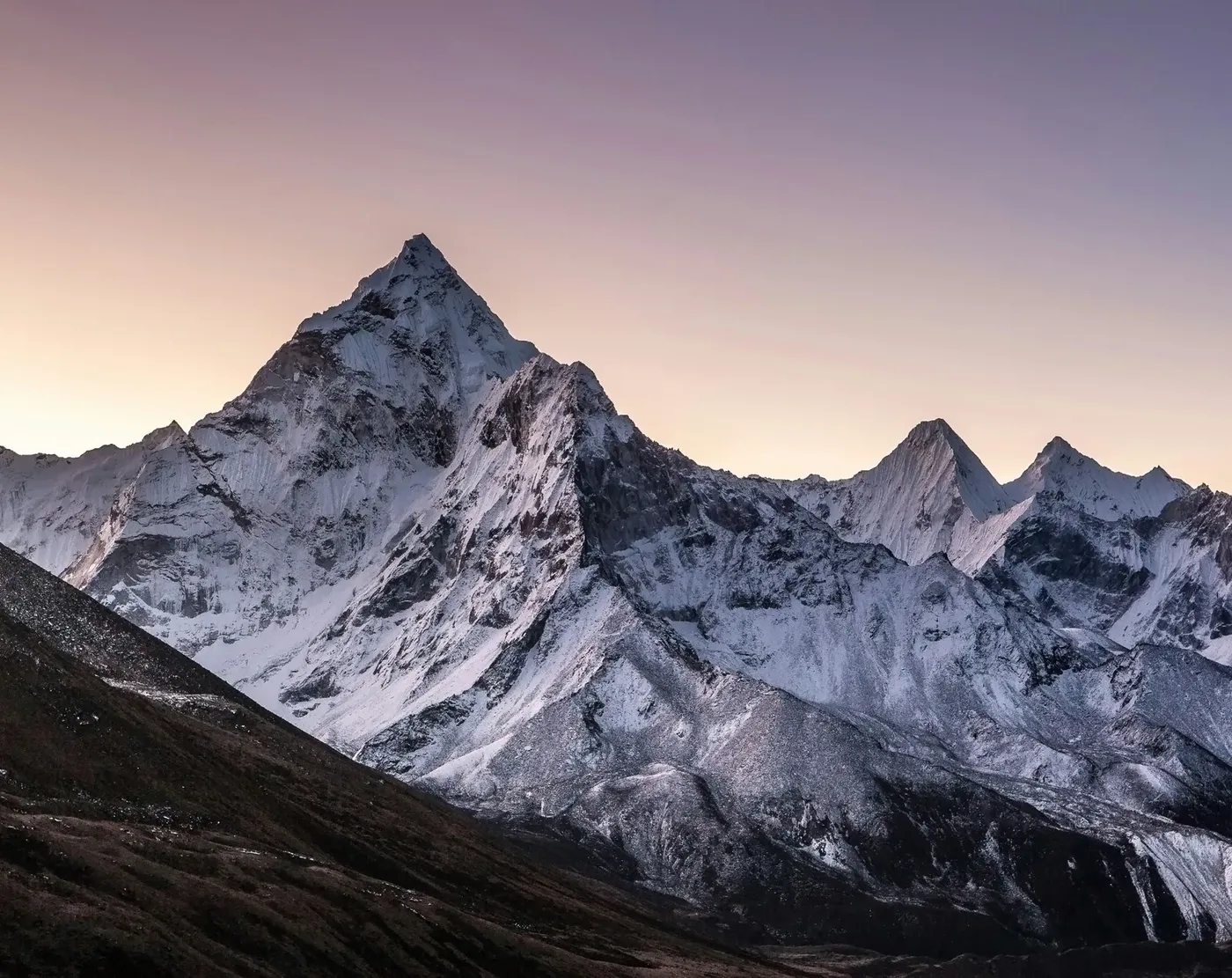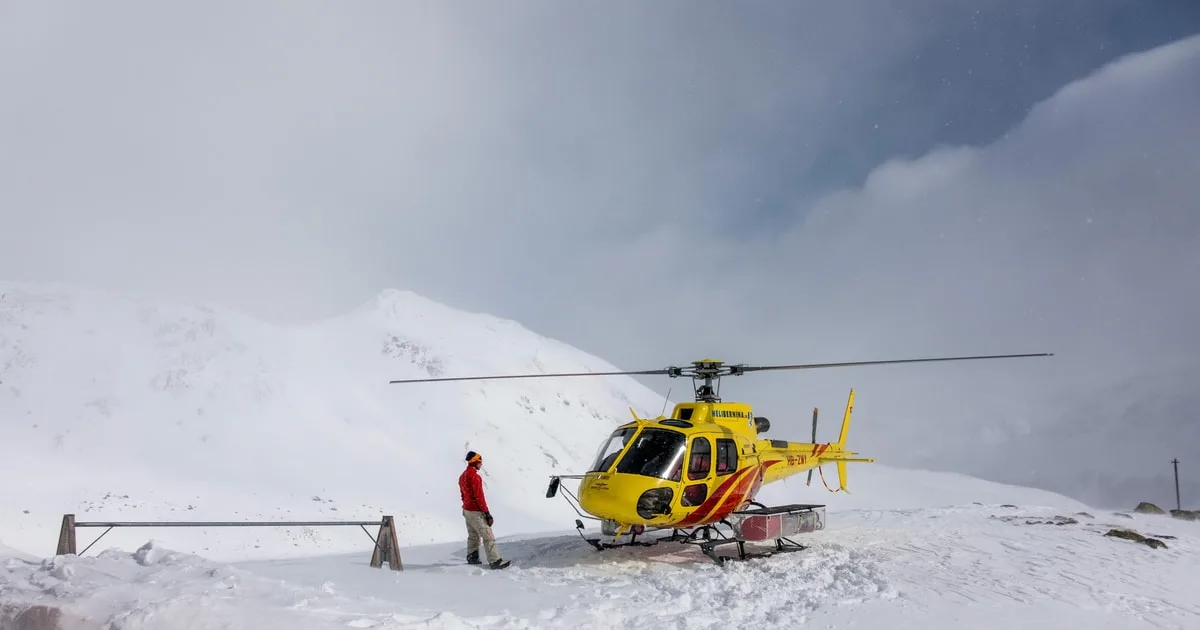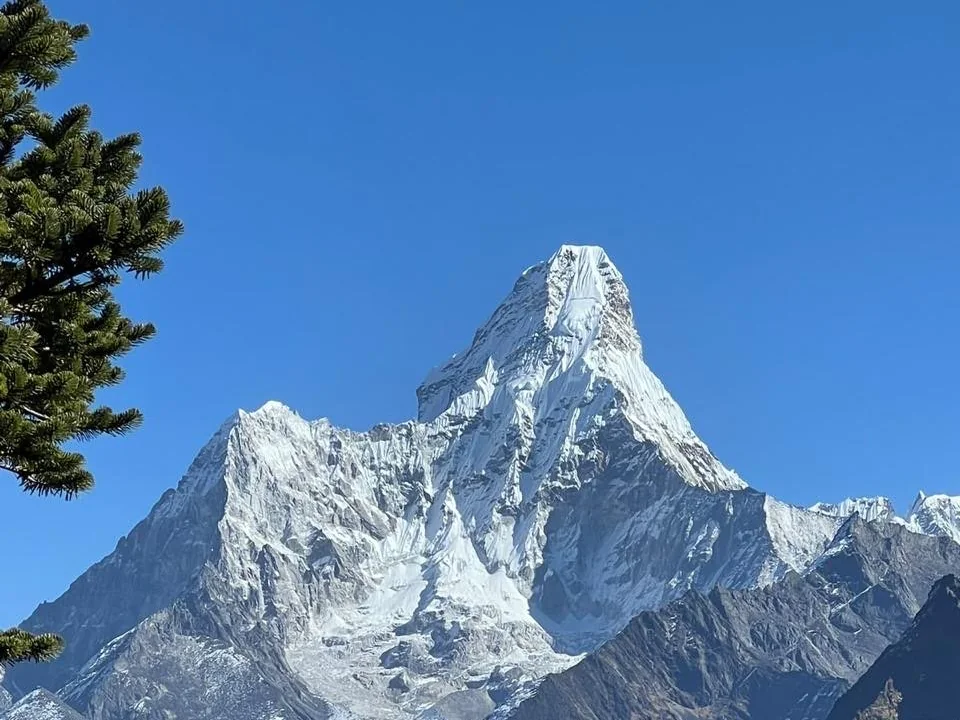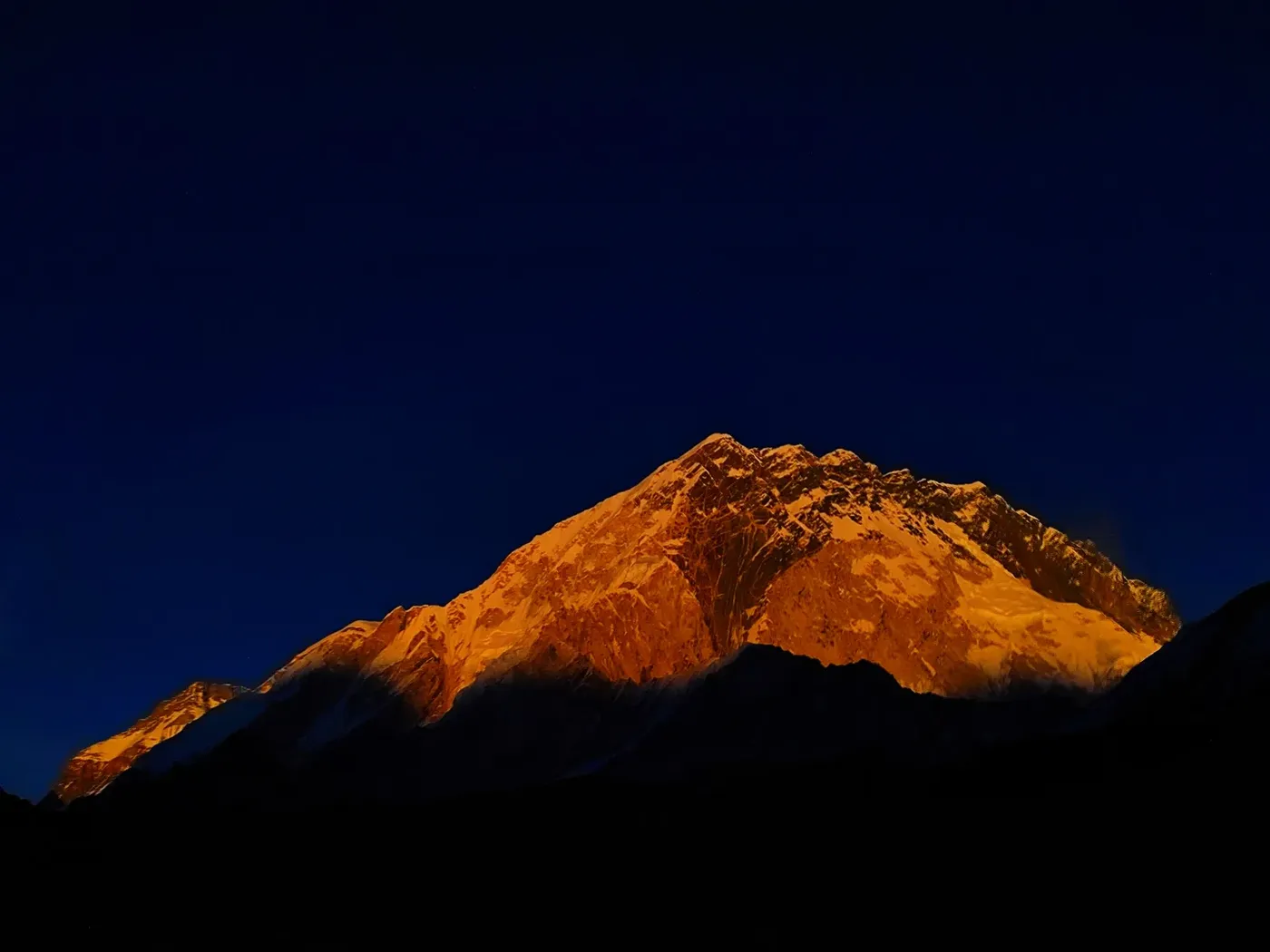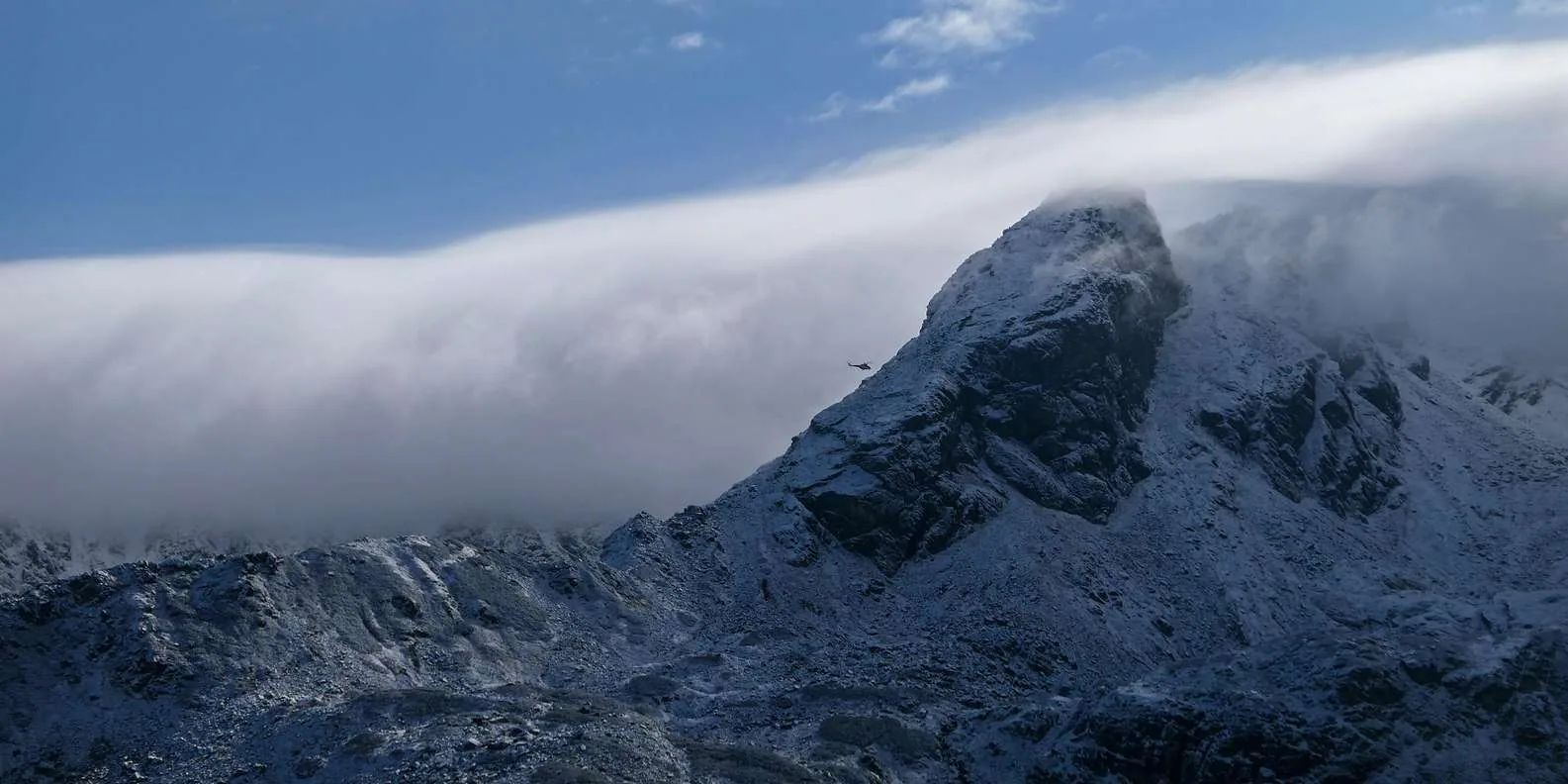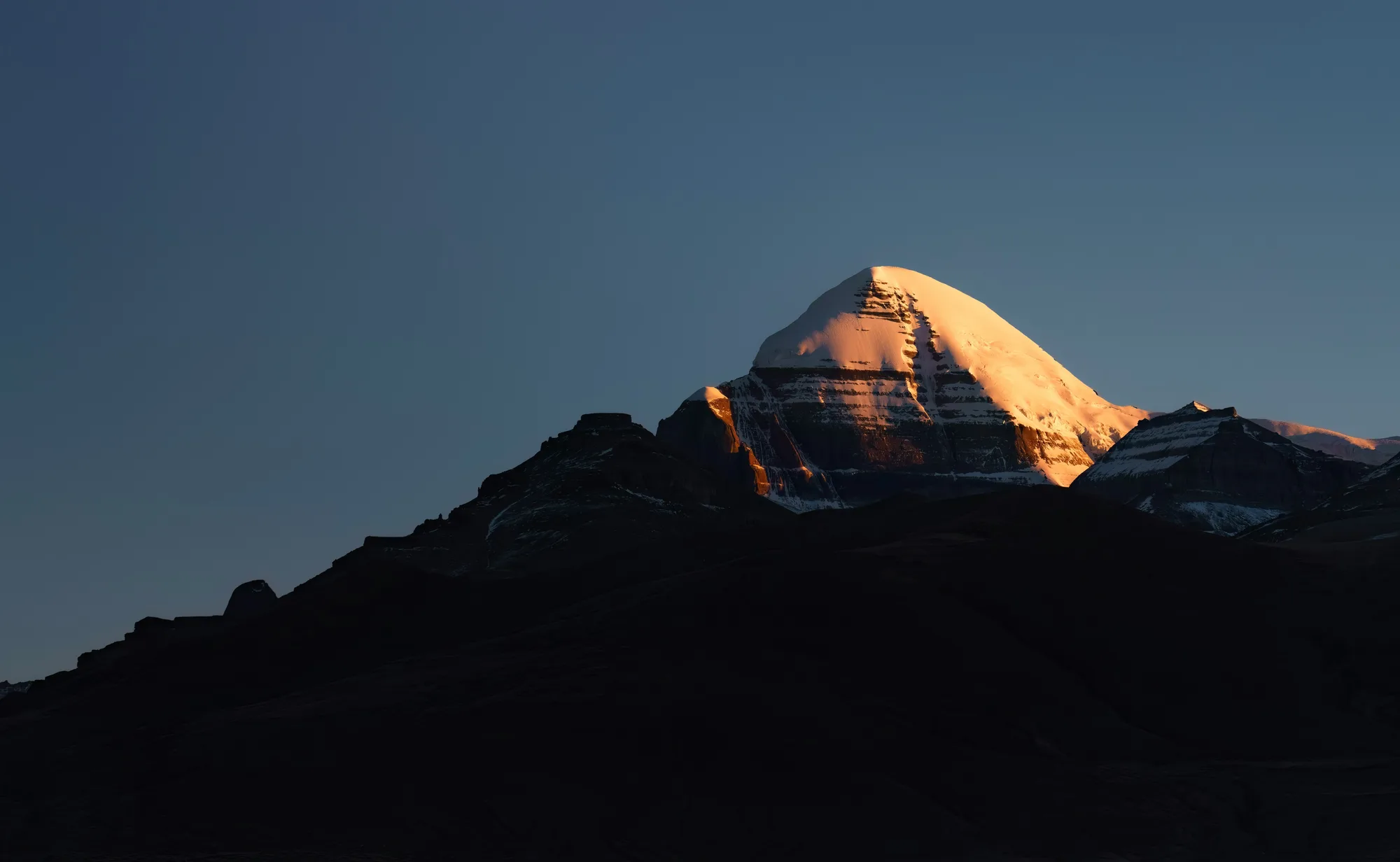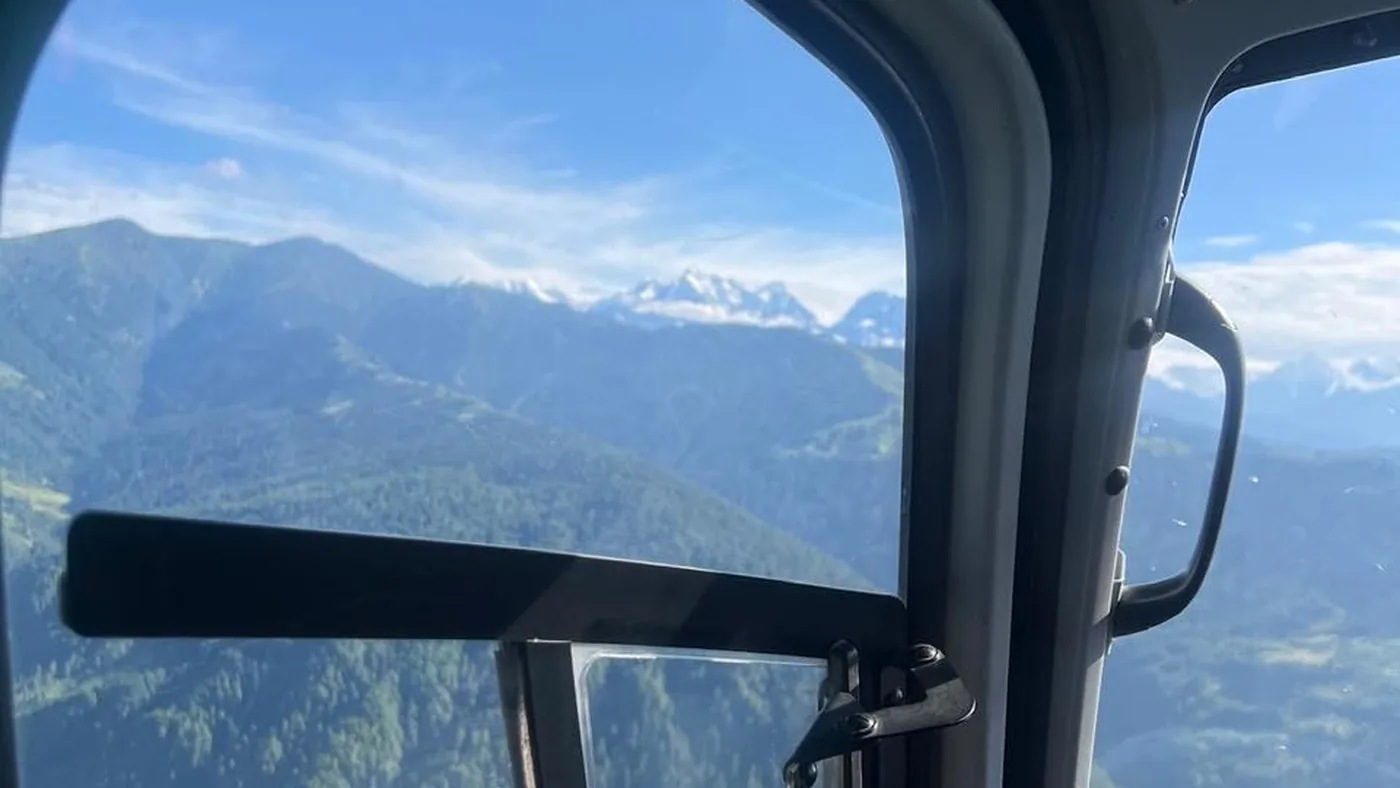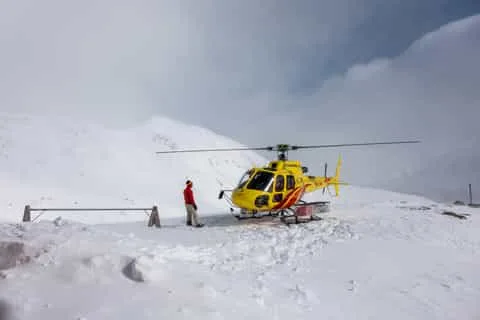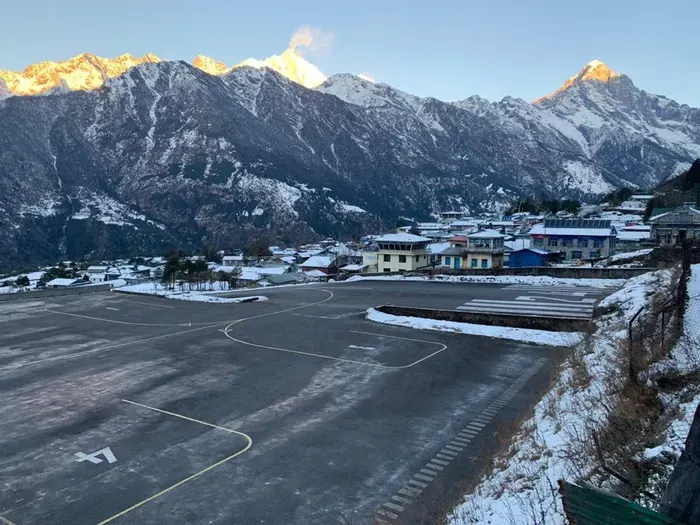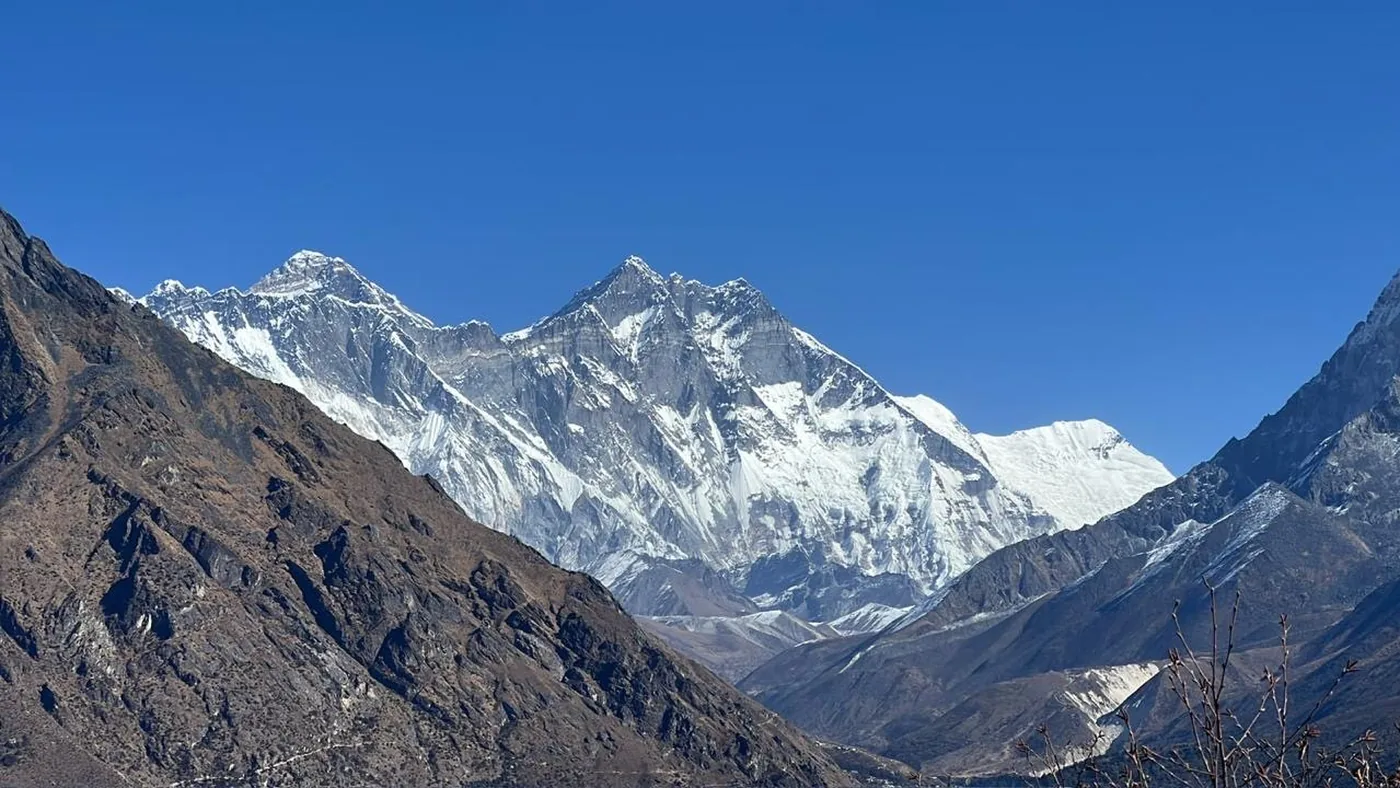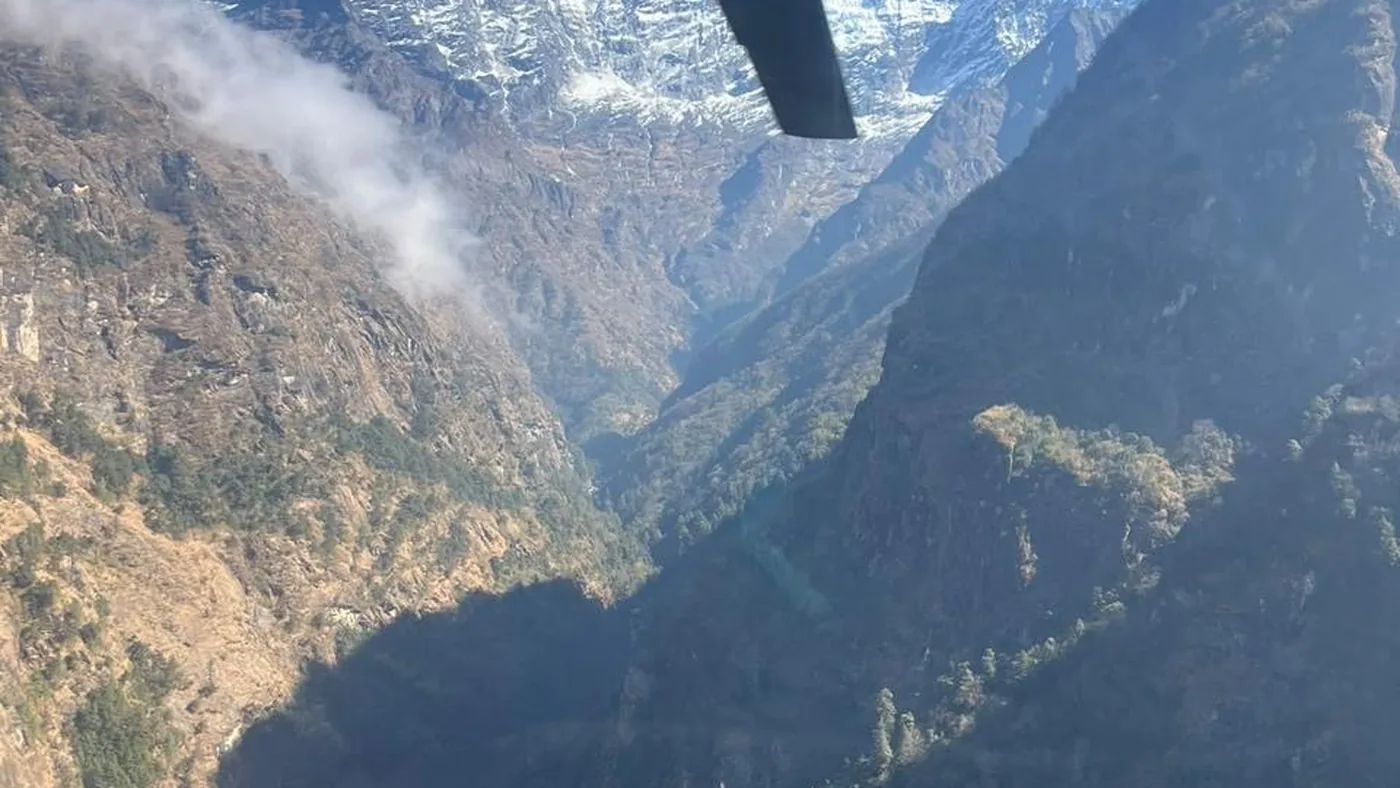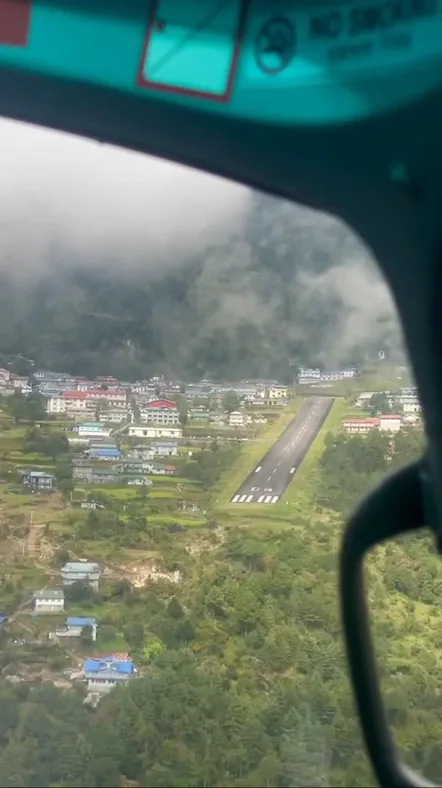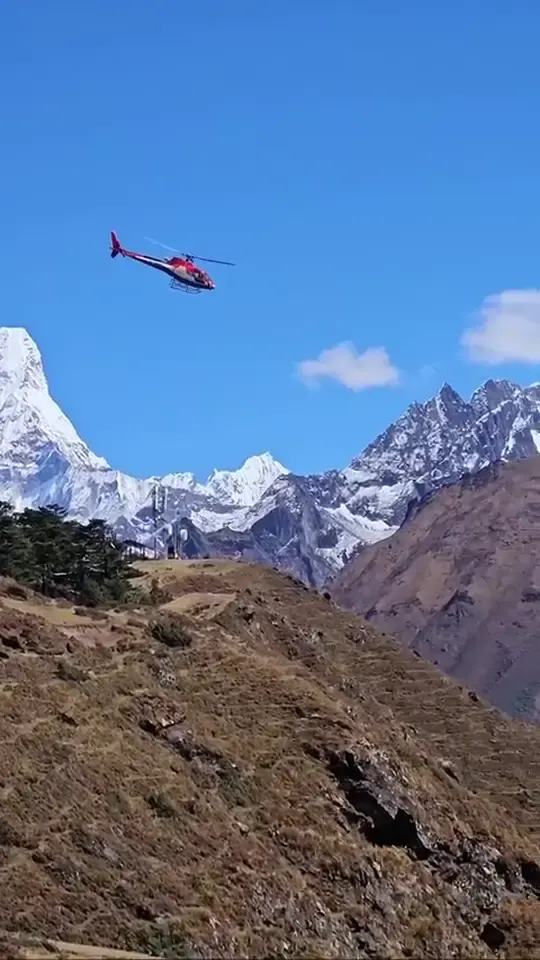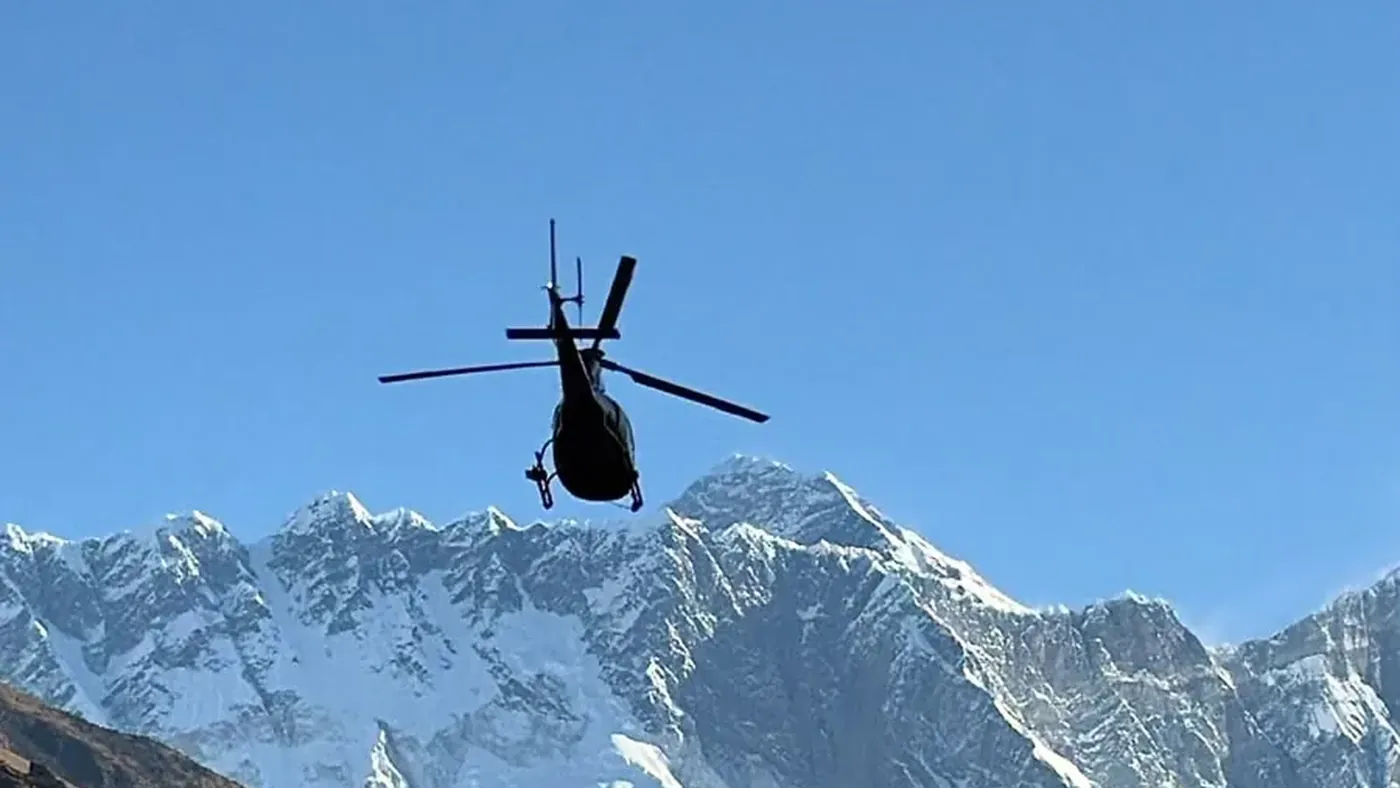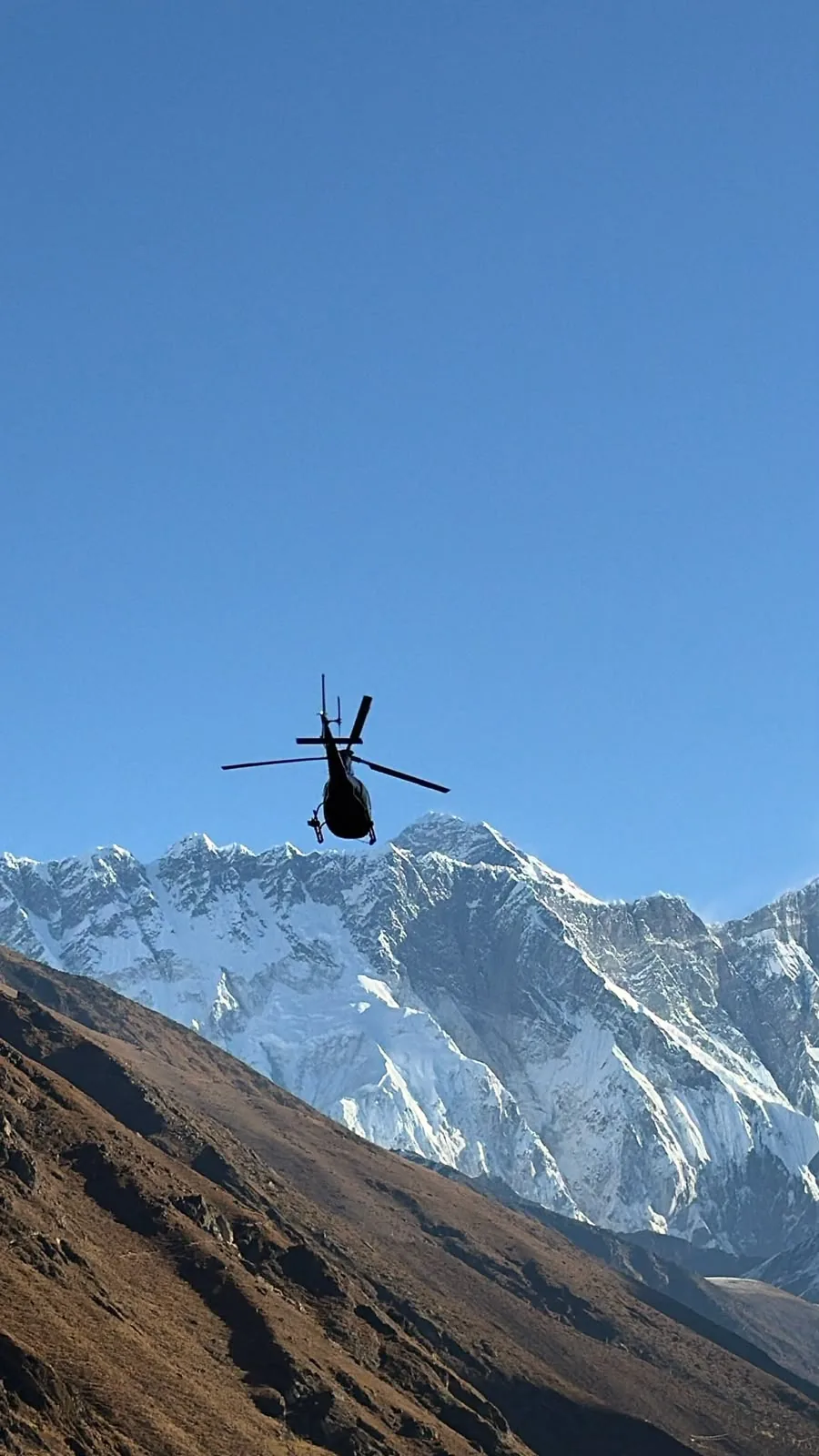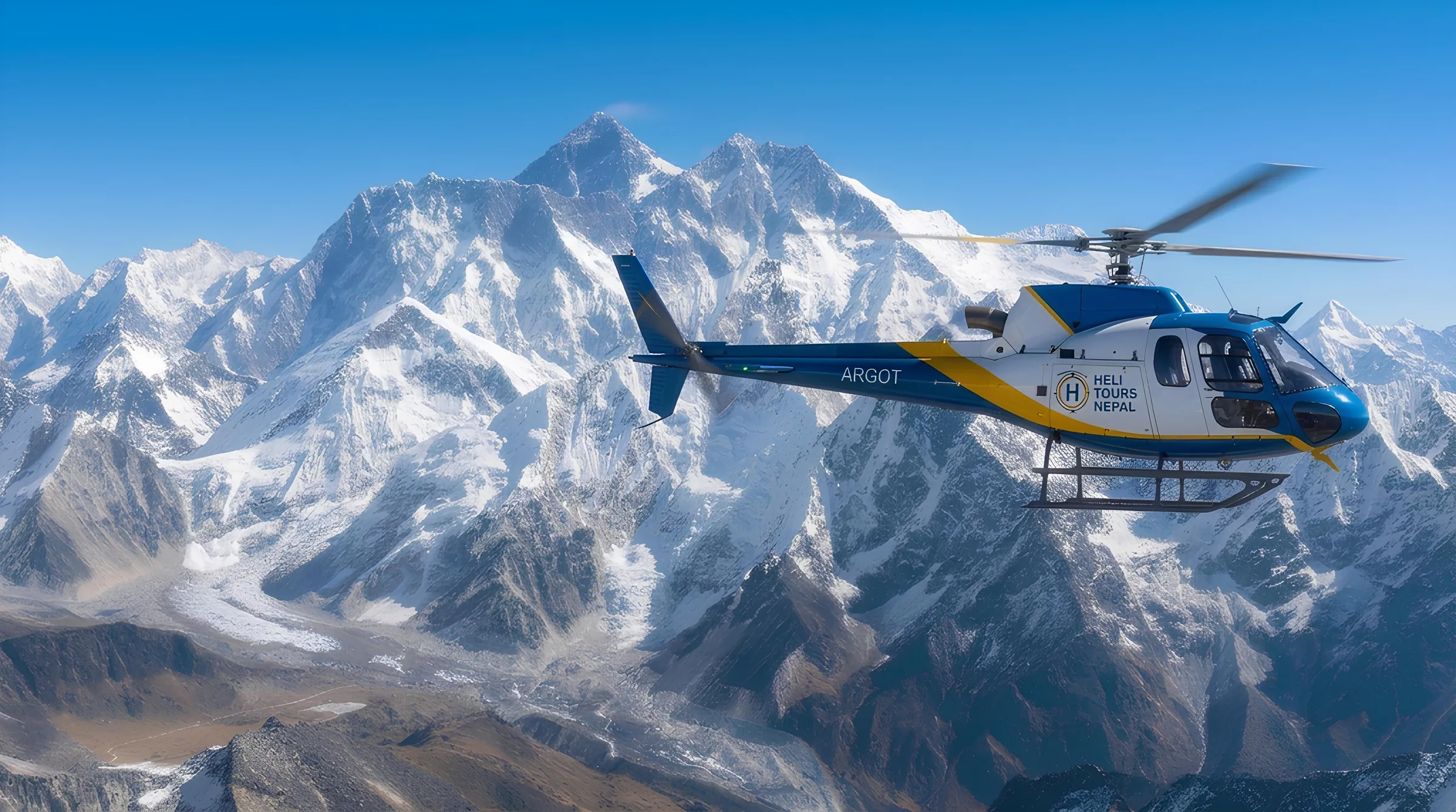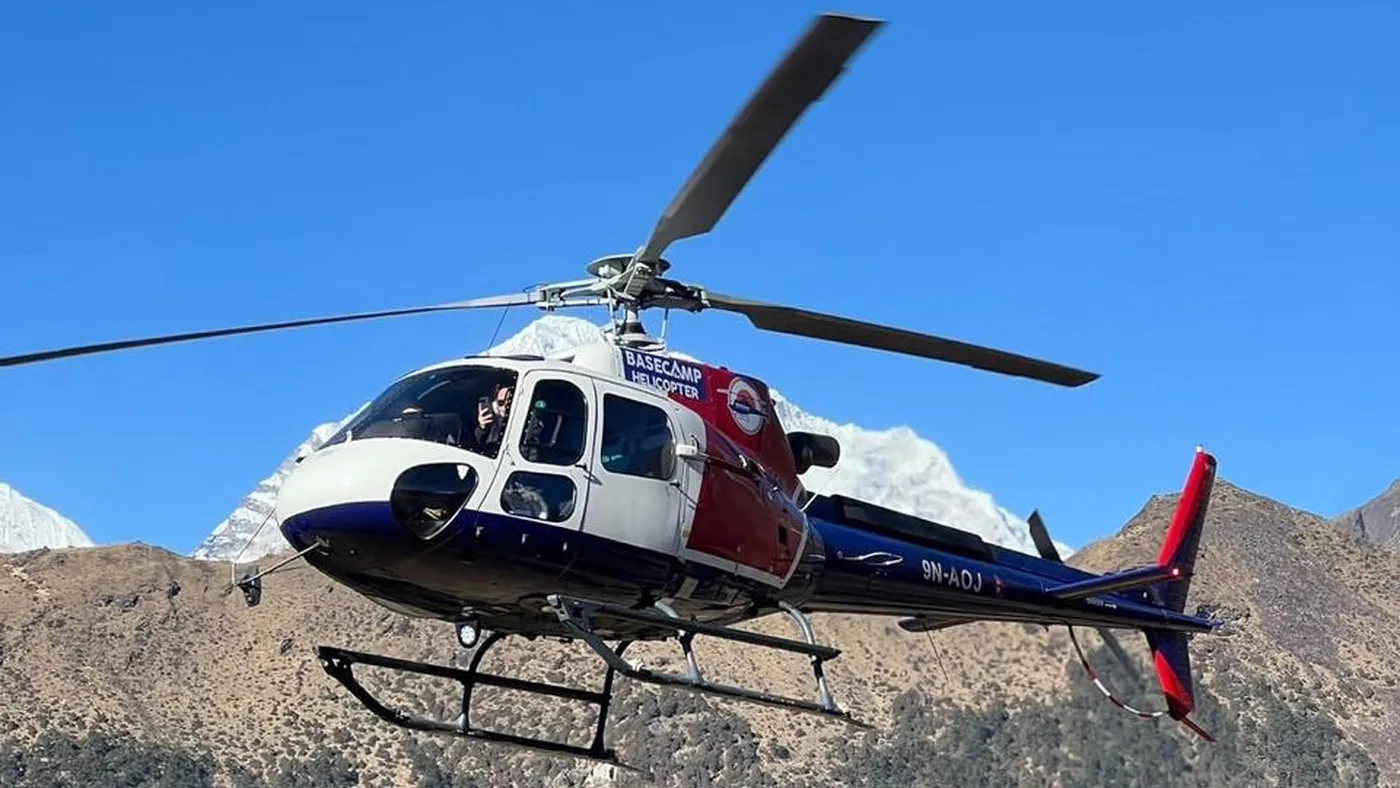

Short answer: there is no single "Everest helicopter tour" — there are four different products, and the price gap between them is real. A seat on the shared Everest Base Camp day flight costs from $1,260 per person and lands at Kala Patthar (5,545m). Chartering the whole aircraft for up to five people is $4,500, which works out cheaper per head from four passengers up. The trek-up, fly-back version is from $1,840 per person across 10 days, and the fixed-wing mountain flight — Everest without landing — starts at $260.
- $1,260shared seat, day flight
- $4,500whole aircraft, charter
- 5,545mhighest landing, Kala Patthar
- ~6 hrsdoor to door on the day flight
The four Everest flights, side by side
Almost every question about this cluster is really a question about which of these four you want. They are not tiers of the same thing: one is a shared morning flight, one is a private aircraft, one is a ten-day trek, and one is an aeroplane that never lands near the mountain.
| Product | Time | Highest point | Lands? | From | Best for |
|---|---|---|---|---|---|
| Everest Base Camp day tour | 1 day, ~6 hrs | 5,545m at Kala Patthar | Yes — Kala Patthar or EBC | $1,260 pp shared | Seeing Everest and being back in Kathmandu for dinner |
| Private Everest charter | 1 day, ~5–6 hrs | 5,545m at Kala Patthar | Yes — plus Everest View Hotel breakfast | $4,500 per aircraft | Families and small groups who want their own schedule |
| Trek up, fly back | 10 days | 5,545m at Kala Patthar | Yes — on foot, then out by air | $1,840 pp shared | Travellers who want to have walked it |
| Everest mountain flight | 1 hour airborne, ~3.5 hrs door to door | Views of 8,849m Everest | No — fixed-wing flyby | $260 pp | Seeing Everest on a tight budget or schedule |
The full cost breakdown for each of these is in how much an Everest helicopter tour costs, and the day flight itself is walked through in the one-day itinerary.
What the landing altitudes actually mean
The number that matters is not the summit of Everest — no flight lands there — but the altitude you step out at. Three sites do the work on this route, and they are chosen on the morning itself, because weather and aviation rules decide which one is open.
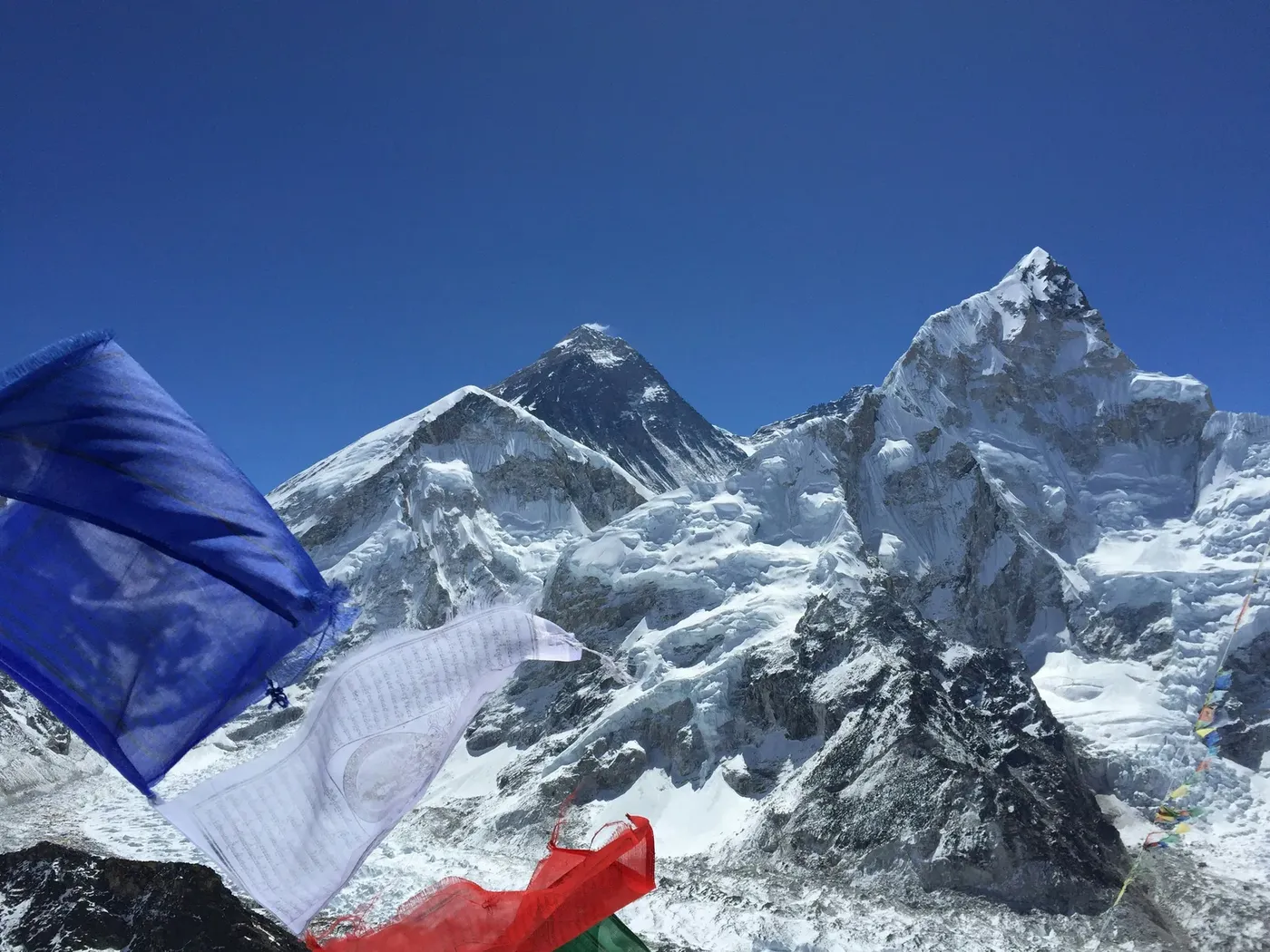
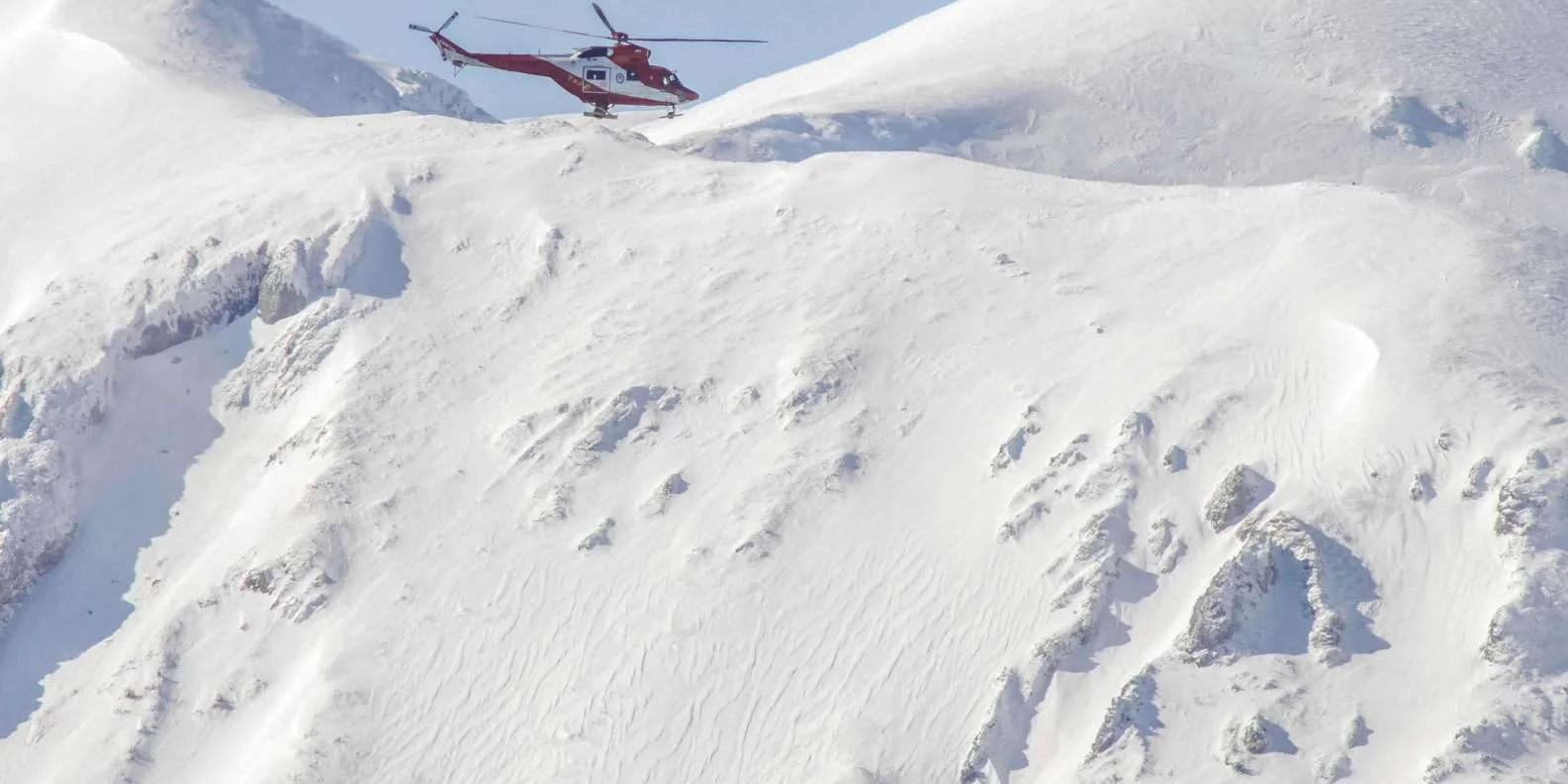
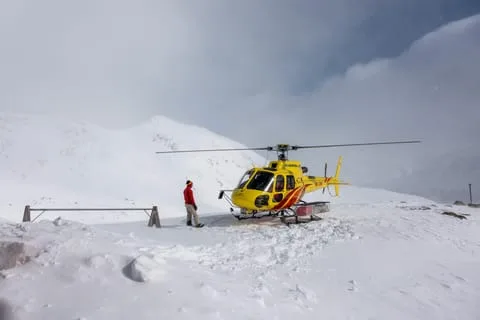
Kala Patthar, 5,545m. The highest point a commercial helicopter tour reaches on foot, and the best ground-level view of Everest anywhere in the Khumbu. This is the headline landing on both the shared day flight and the private charter. What you do here is stand outside for a short, cold, genuinely memorable stretch and look at the mountain over the Khumbu Glacier — you are above Base Camp, looking down the valley at it.
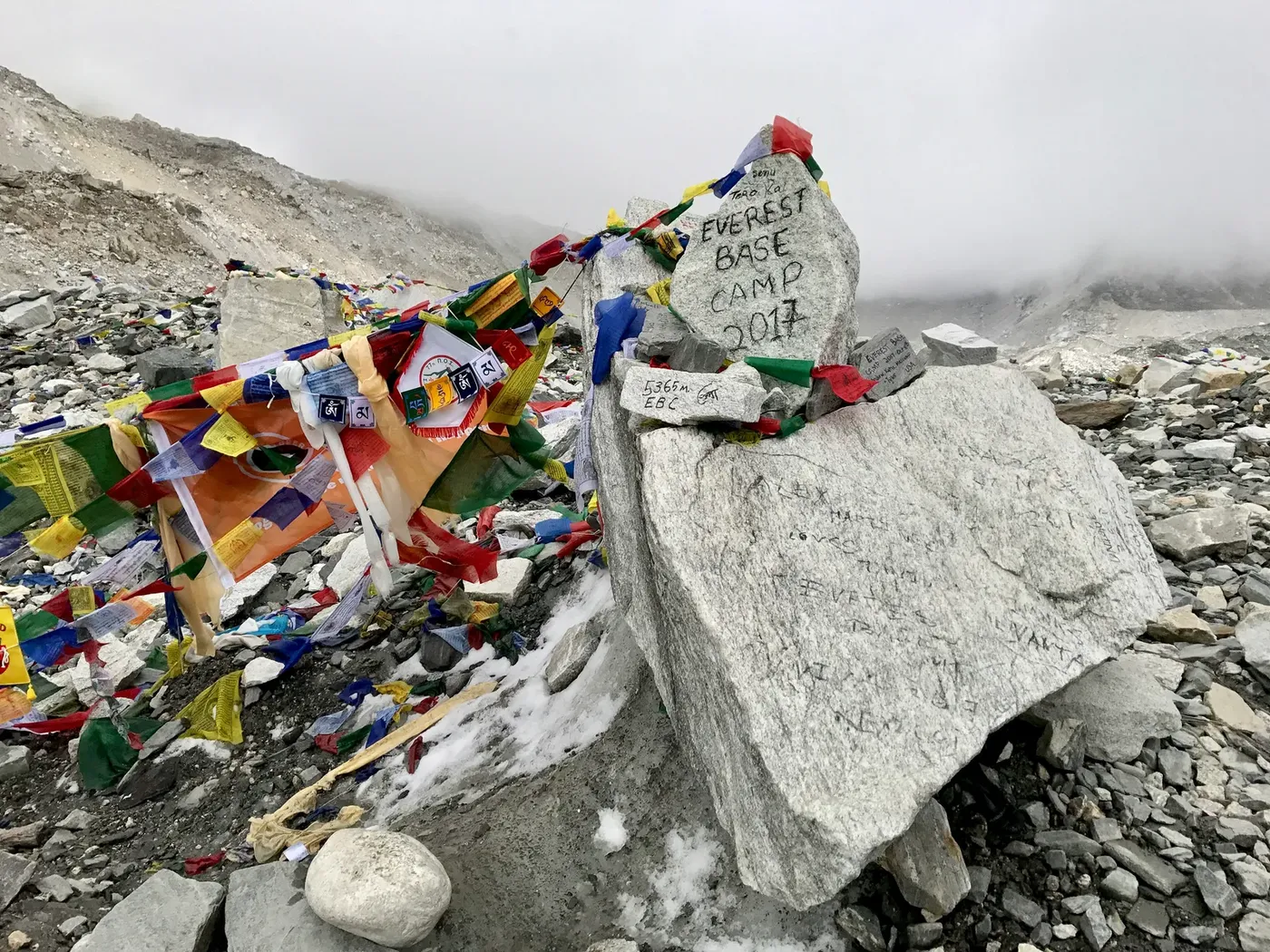
Everest Base Camp, 5,364m. The other possible landing, and the one people ask for by name. It is lower and — honestly — a worse view than Kala Patthar, because you are inside the glacier basin rather than above it, but it is Base Camp, and for a lot of travellers that is the point. Which of the two you land at is confirmed on the day, not booked in advance.
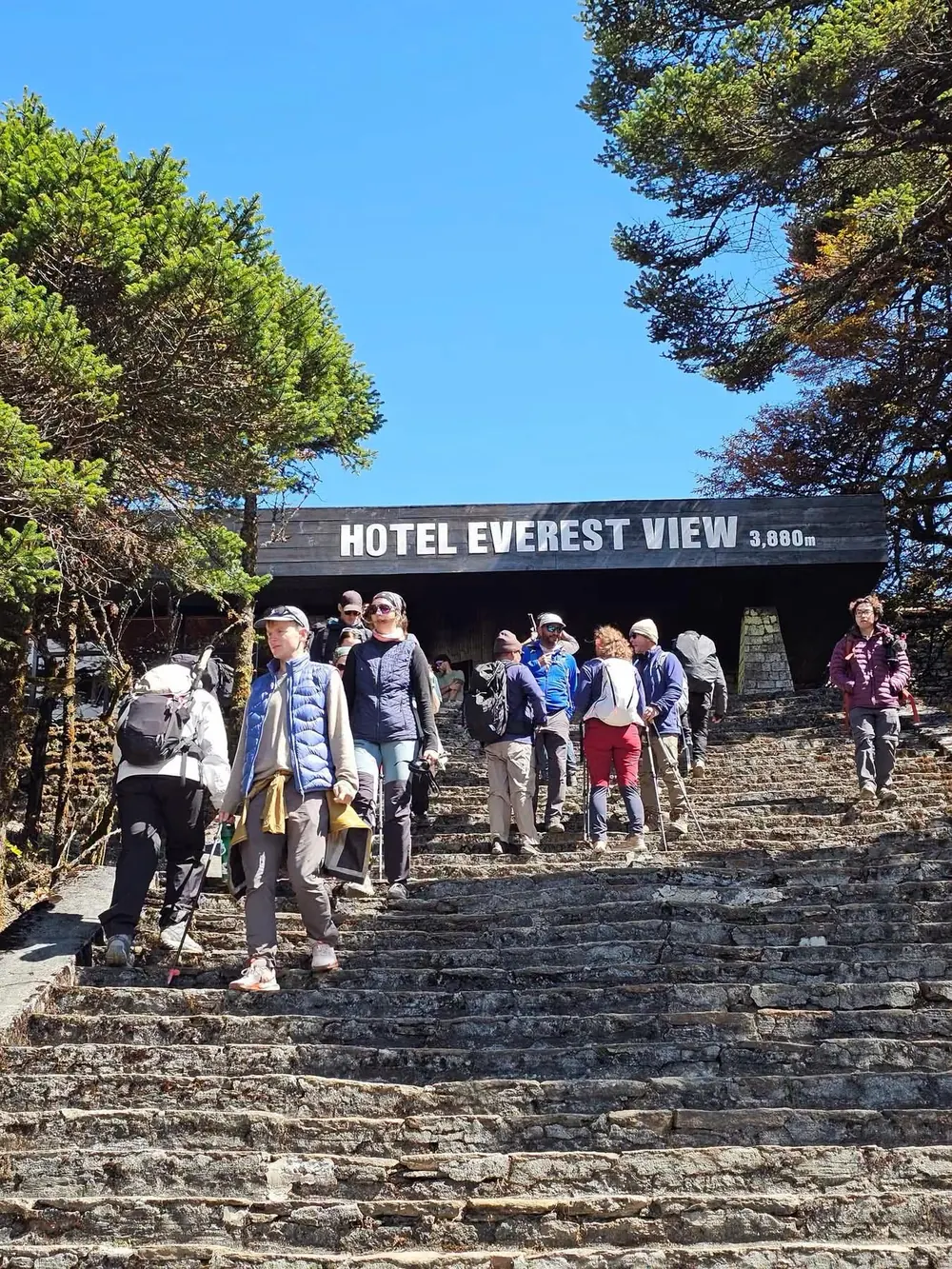
Everest View Hotel, 3,880m. The breakfast stop: one of the highest hotels on earth, with Everest framed in the dining-room window. The private charter includes breakfast here in the price; on the shared day flight it is a separate cost. More on that below, and in the Everest View Hotel guide.
If you want the long version of this — every place a helicopter can put down in the Khumbu, and why some of them are weather-dependent — read where a helicopter can land in Nepal and the Kala Patthar landing guide.
What the price includes — and the three things it usually does not
This is where Everest helicopter quotes stop being comparable. Two operators can both say "$1,260" and be selling different things. On our shared day flight the price covers the round-trip helicopter from Kathmandu, the landing, hotel transfers on both ends, in-flight insurance, oxygen and a basic medical kit, the high-altitude pilot and ground support, and a live guide in English, German, Spanish or French.
It does not cover the Sagarmatha National Park permit (NPR 3,000 per person), breakfast at the Everest View Hotel (about NPR 4,600 per person), or travel insurance — and travel insurance with helicopter evacuation cover is not optional on this route, it is the thing you should not fly without.
Note the difference on the private charter: there the operator permits, breakfast on the Everest View Hotel terrace and rebooking flexibility are all inside the $4,500. That is part of why the charter is not as expensive as it looks once you are four or five people. The line-by-line versions are on the day tour page and the charter cost guide.
Shared seat or private charter? The arithmetic decides it
A shared seat is $1,260 per person. The whole aircraft is $4,500 for up to five. Five shared seats would be $6,300 — so at four passengers the charter is already cheaper per head, and at five it is $900 each. Below four people, the shared seat wins on price and loses on control: the departure date is fixed by the group, the ground time is shared, and you do not choose who else is on board.
The other real difference is flexibility. A charter can hold an extra hour for a gap in the cloud or stay longer at the hotel; a shared departure has to make one decision for everybody. If your trip has slack in it, that matters less. If you have one clear morning and a flight home the next day, it matters a lot. The full comparison — including what happens when a group departure does not fill — is in group joining versus private charter and how group departures are filled.
The day, hour by hour
Every Everest helicopter day runs on the same shape, because the mountain sets it: the air is calmest and the peaks clearest in the early morning, so the whole schedule is built to be at altitude before the cloud builds.
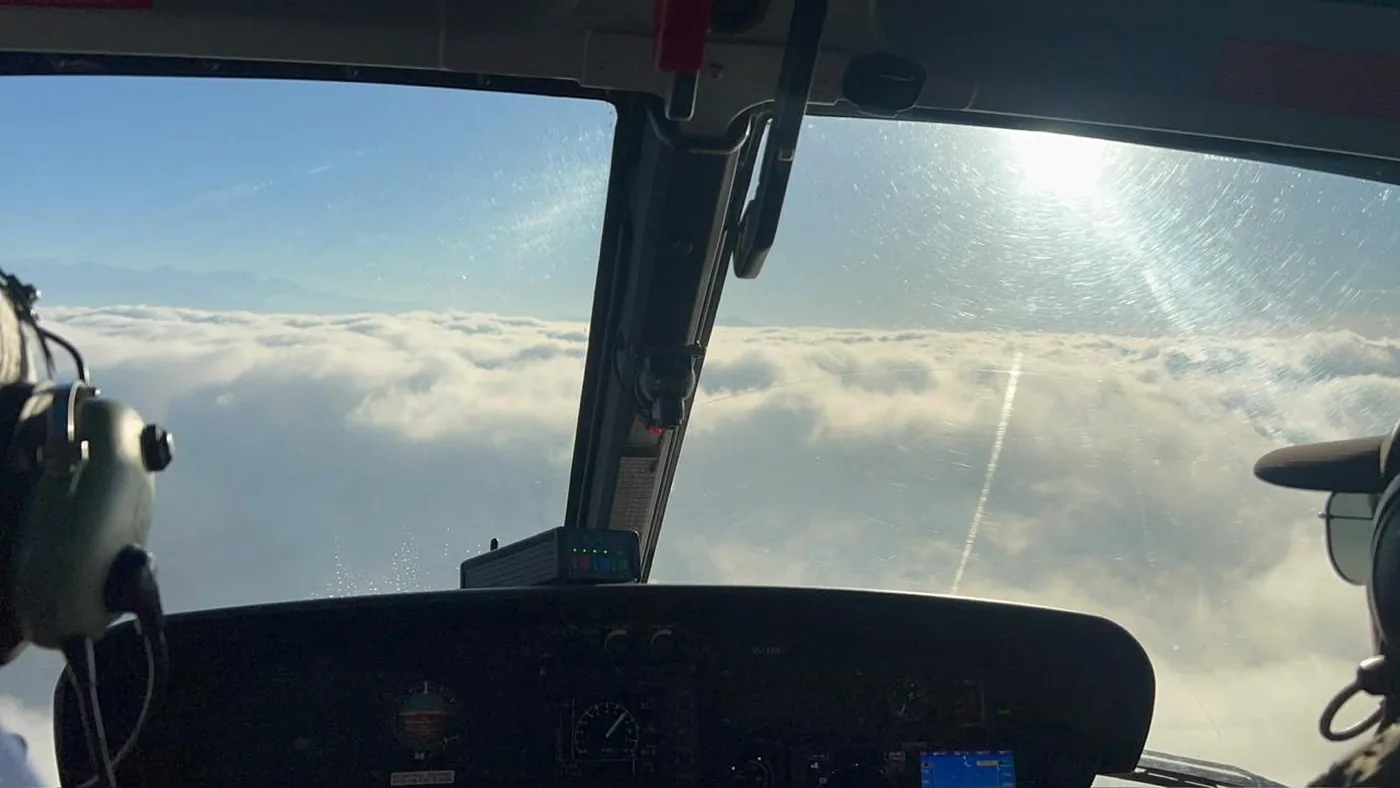
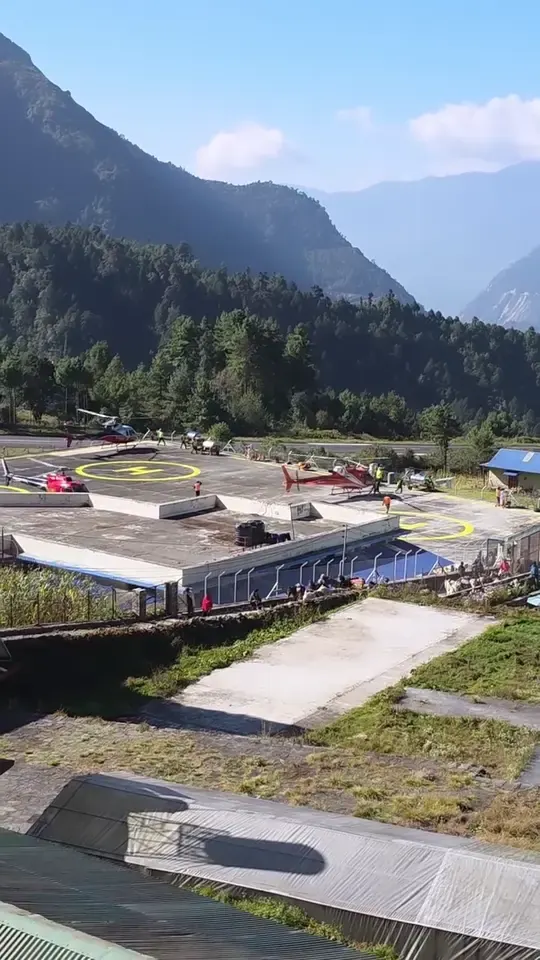
You are collected from your Kathmandu hotel before first light and driven to the domestic side of Tribhuvan International Airport, where the helicopter lifts off from the helipad. The flight east follows the valleys out of the city, past terraced hills and Sherpa villages, with a refuelling stop at Lukla before the aircraft climbs into the Khumbu. Then the landing at Kala Patthar (5,545m) — Base Camp has no helipad and is overflowed, not landed — followed by the short hop to the Everest View Hotel at 3,880m for breakfast with the mountain in the window. You are back in Kathmandu around midday, roughly six hours after pickup.
The detailed version, with timings and what you are looking at on each leg, is in what you see on the route and the trip-to-Base-Camp guide.
Trek up, fly back — the middle option
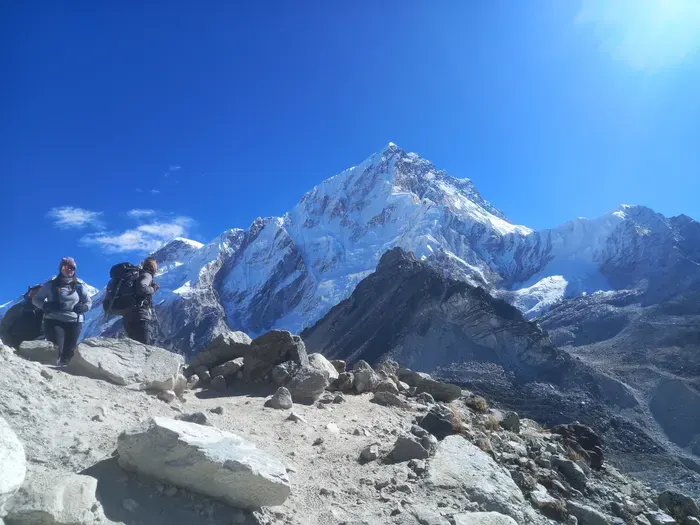
The 10-day version inverts the usual question. Instead of flying to Everest, you walk the classic Khumbu route to Base Camp and Kala Patthar over nine days, with two acclimatisation days built in, and then the helicopter takes the whole group out from Gorak Shep in about twenty minutes instead of four or five days of descending.
That fly-out is what makes it interesting: you get the full trek — the lodges, the rhododendron forest, Namche, Tengboche, the slow acclimatising — and then skip roughly 4,000m of cumulative knee-pounding descent, arriving back with your legs intact. It is $1,840 per person, includes a licensed guide, porters, the Kathmandu–Lukla flights, the Sagarmatha permit and TIMS card, 11–12 nights of twin-share lodges and all trail meals. It excludes travel insurance, personal gear and the extra nights a weather delay can cost you.
If you are weighing the two up properly, read helicopter tour versus Base Camp trek and the trek-and-fly cost breakdown.
The mountain flight: Everest without landing
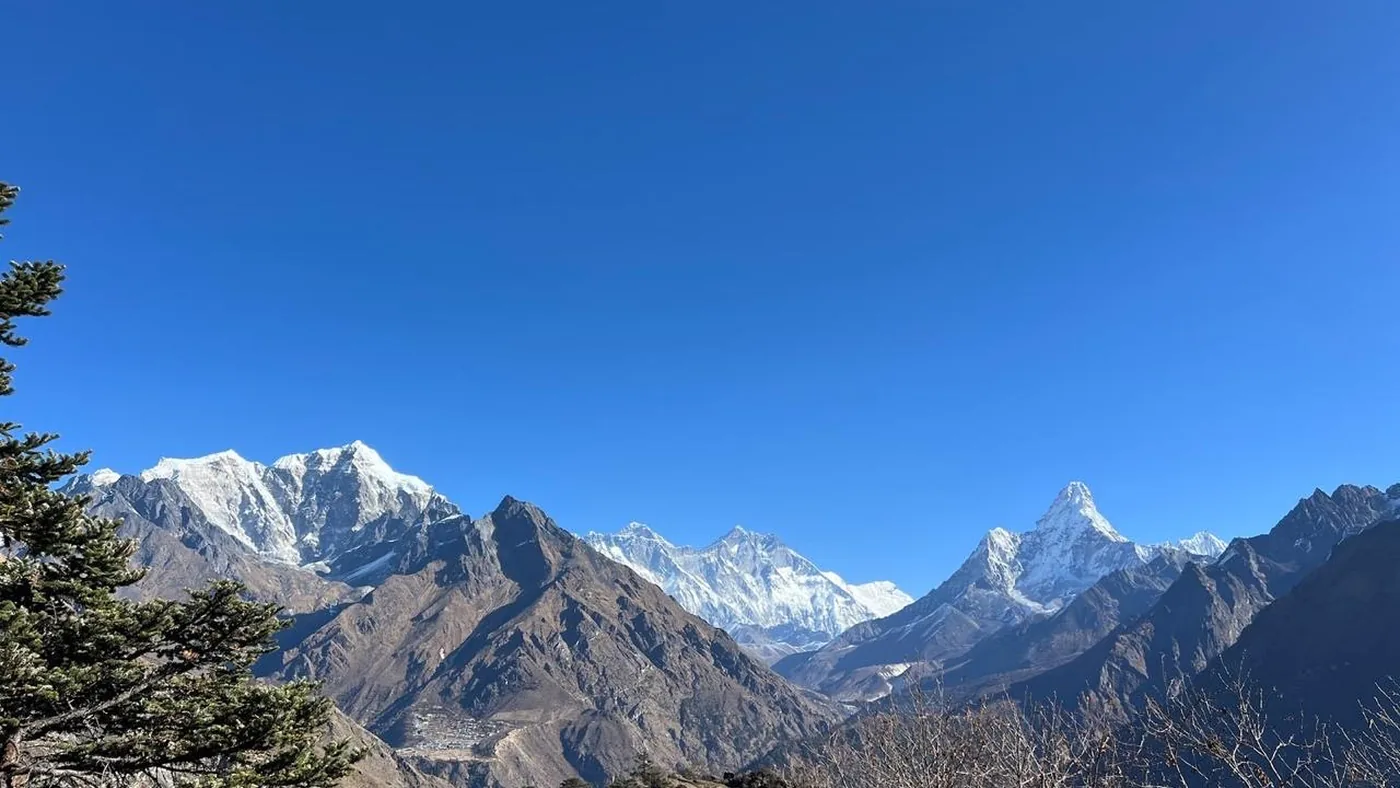
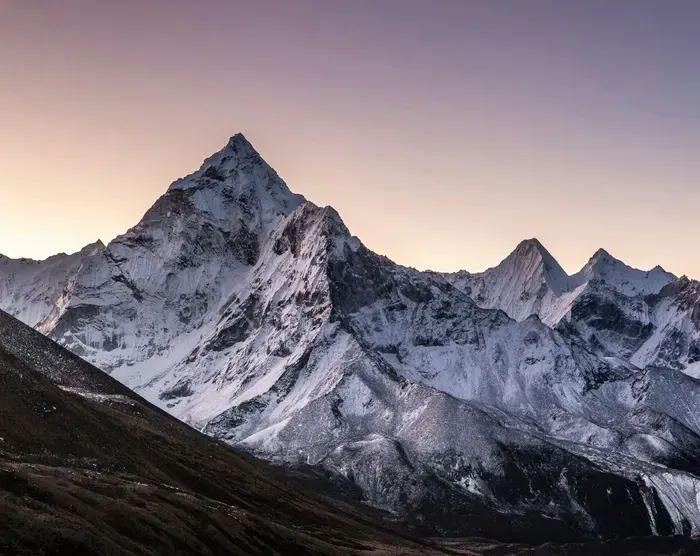
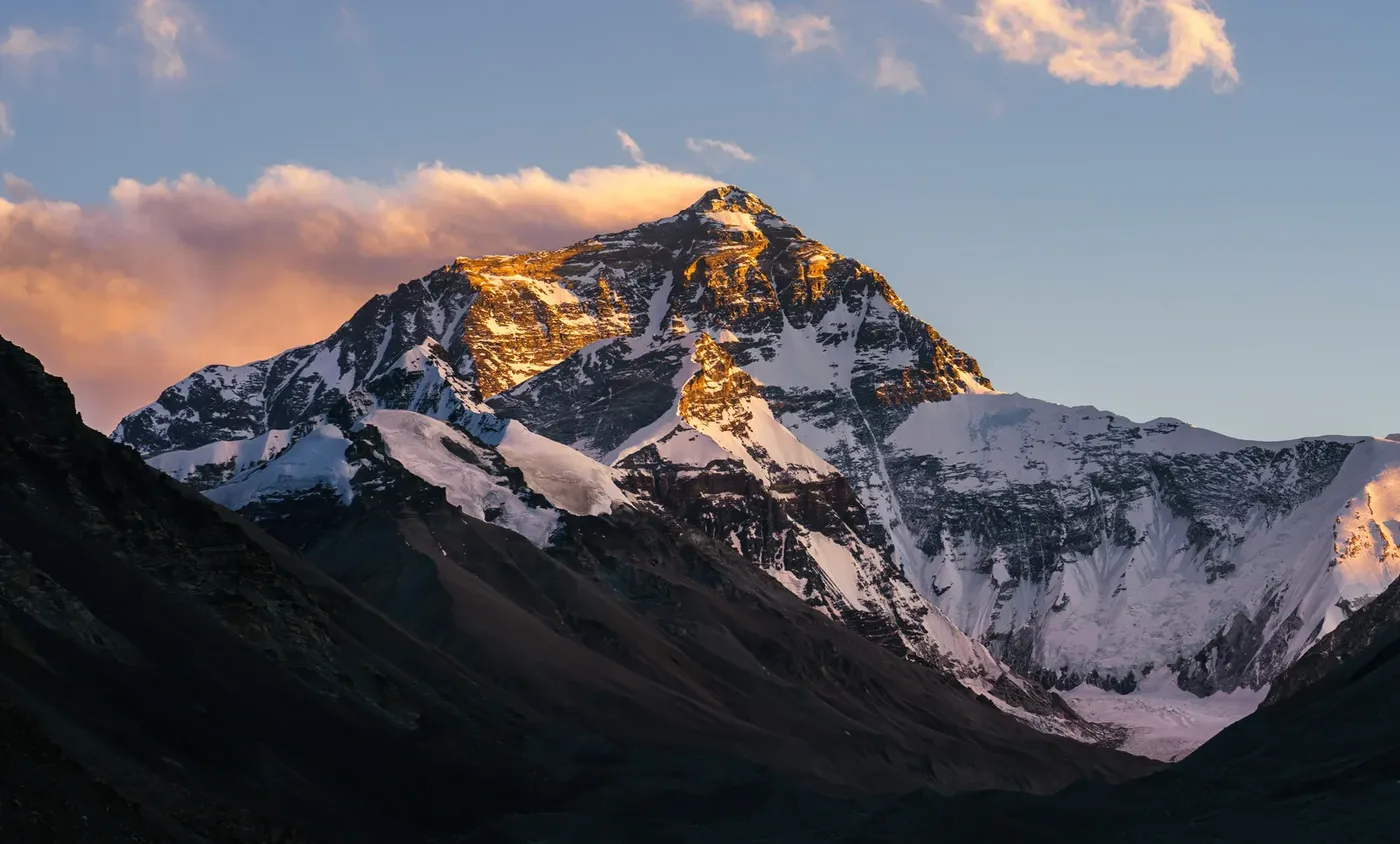
For $260 the fixed-wing mountain flight takes you along the Himalayan crest for an hour, every seat a window seat, with the captain naming the peaks as you go — Everest, Lhotse, Nuptse, Cho Oyu, Gauri Shankar, Makalu — and returns to Kathmandu. It is not a helicopter tour and does not pretend to be: you never land, you see Everest from a distance rather than from Kala Patthar, and you are back at your hotel by mid-morning.
For a lot of travellers that is the right call, especially if the budget or the calendar will not stretch to a helicopter. The comparison that settles it is in helicopter versus plane flight, with fares per airline in the mountain flight cost guide.
Season, weather, and why mornings are everything
Two windows carry almost all Everest flying: March to May and September to November. Outside them you can still fly — the shoulder months run on demand — but the monsoon and the deep winter both cut the number of flyable mornings, and no operator can promise a specific day.
This is the single most useful thing to know before booking: helicopter flights in the Khumbu are weather-dependent and are rescheduled for safety, so build a buffer day into your itinerary. The landing site, the timing and sometimes the day itself are decided on the morning. On a weather cancellation our policy is a full refund or a free rebooking, and the detail is in the cancellation and weather policy and the best-time guide.
Altitude, oxygen and who this is not for
You reach 5,545m, but you only stand there for minutes — long enough for the view, not long enough for altitude sickness to develop, which is what makes a one-day helicopter flight different from a trek. Oxygen is carried on board and the pilot is high-altitude rated. It still is not a casual morning at sea level: it is cold, the air is thin, and it comes as a surprise to people how quickly they feel it climbing out at Kala Patthar.
Tell us about heart or lung conditions before booking, and if you are trekking the 10-day version, take the acclimatisation days seriously — they are in the itinerary for a reason. The physiology is covered in the Everest Base Camp elevation guide, and the straight answer to the most common question is in can a helicopter fly to the top of Everest — it cannot, and nobody's does.
How to book, and what to send us
Booking starts with an enquiry, not a payment: send your dates, how many people, and — for a helicopter — your real body weights, because the aircraft is performance-limited at altitude as well as seat-limited and the load has to be worked out in advance. We confirm the slot, the aircraft and the price in writing, usually within hours, and we arrange the permits. There is no online card payment on this site; the price is agreed in writing first.
For the mountain flight, bring your passport — airline check-in requires it for every passenger. For anything else, the practical answer to what the day actually requires is in the packing list and the Everest booking guide.
Frequently Asked Questions
How much does an Everest helicopter tour cost in 2026?
From $1,260 per person for a seat on the shared Everest Base Camp day flight, or $4,500 to charter the whole aircraft for up to five passengers — which is cheaper per person from four people up. The 10-day trek-up, fly-back version is from $1,840 per person, and the fixed-wing mountain flight starts at $260.
Do you actually land at Everest Base Camp?
You land at Kala Patthar (5,545m), never at Everest Base Camp. Base Camp sits on the Khumbu Glacier at 5,364m and has no helipad; sightseeing aircraft overfly it. The landing point is fixed, though whether the stop happens at all is decided on the morning of the flight, based on weather and aviation regulations, and it is confirmed before you board rather than booked in advance.
How long does the whole Everest helicopter day take?
About six hours door to door on the shared day flight: hotel pickup before dawn, the flight east with a refuelling stop, the landing, breakfast at the Everest View Hotel at 3,880m, and back in Kathmandu around midday.
Can I do Everest by helicopter in one day from Kathmandu?
Yes — that is exactly what the day tour is. You do not need to trek, acclimatise or stay in the Khumbu overnight. It is the only way to stand at 5,545m in the Everest region and sleep in Kathmandu the same night.
Is a shared seat or a private charter better value?
Below four passengers, the shared seat is cheaper. At four or five, the $4,500 charter beats five shared seats ($6,300) on price and gives you control of the schedule, the ground time and who is on board.
What is not included in the price?
On the shared day flight: the Sagarmatha National Park permit (NPR 3,000 per person), breakfast at the Everest View Hotel (about NPR 4,600 per person), travel insurance and tips. Travel insurance with helicopter evacuation cover is mandatory, not optional. The private charter includes the permits and breakfast.
What happens if the weather cancels the flight?
Flights are rescheduled or cancelled for safety, and that is a normal part of flying in the Khumbu rather than a rare event. The policy is a full refund or a free rebooking, which is why we ask you to keep a buffer day in your itinerary.
What is the best time of year for an Everest helicopter tour?
March to May and September to November. Those are the two windows with the most flyable, clear mornings. Flights do run in the shoulder months on demand, but the odds of a weather delay are higher.
Can I fly to the summit of Mount Everest?
No. No helicopter lands on the summit of Everest. The highest landing on a commercial tour is Kala Patthar at 5,545m, which is the best ground-level view of the mountain and as close as a flight can put you.
How far in advance should I book?
In peak season (late March to May, and October to November) book as early as you can, because the aircraft is shared and departures fill. In the shoulder months a few days is often enough. Enquire with your dates and we will tell you honestly what is available.
Ready to pick one? See the day flight, the private charter, the trek-and-fly or the mountain flight — or read the full cost guide first.