
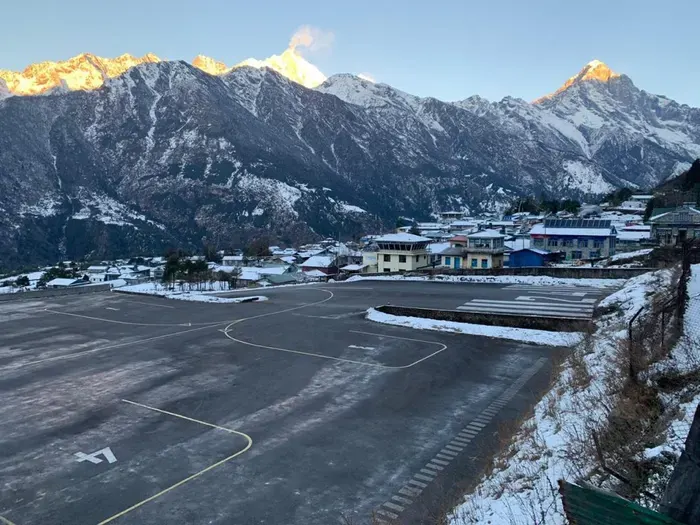
Helicopter Tour Cancellation & Weather Policy in Nepal: What Happens If Your Flight Is Cancelled?
If you are planning a helicopter tour in Nepal, the single most important thing to understand before you book is not the route, the price, or the photo stops. It is what happens when the weather does not cooperate. Mountain flying in the Himalayas is governed by conditions that change by the hour, and cancellations are a normal, expected part of the experience rather than a rare exception. In this guide, we explain exactly how helicopter tour cancellation in Nepal works, what our helicopter tour weather policy covers, and what you can do to protect your booking, your money, and your trip.
- Mar-MayBest spring window
- Sep-NovBest autumn window
- 2,500 m+Where altitude risk begins
- 7 daysRecommended booking lead
We have flown thousands of guests to Everest Base Camp, Annapurna Base Camp, Langtang, and dozens of other Himalayan destinations. We have also had to cancel, delay, and reschedule a meaningful share of those flights. That experience is what this article is built on. Our goal is to make sure you never arrive in Kathmandu confused about your rights, your options, or your refund.
Why Weather Cancels Helicopter Flights in Nepal
Nepal sits on the southern edge of the Tibetan Plateau, where the Indian monsoon collides with some of the tallest mountains on Earth. The result is some of the most dynamic and unpredictable flying weather anywhere in the world. A helicopter tour that looks perfect at 6:00 a.m. can be grounded by 7:30 a.m., and a valley that is clear at Lukla can be completely socked in at Namche Bazaar just a few kilometres away. Understanding why flights cancel is the first step to planning around it.
Mountain Weather Changes by the Hour
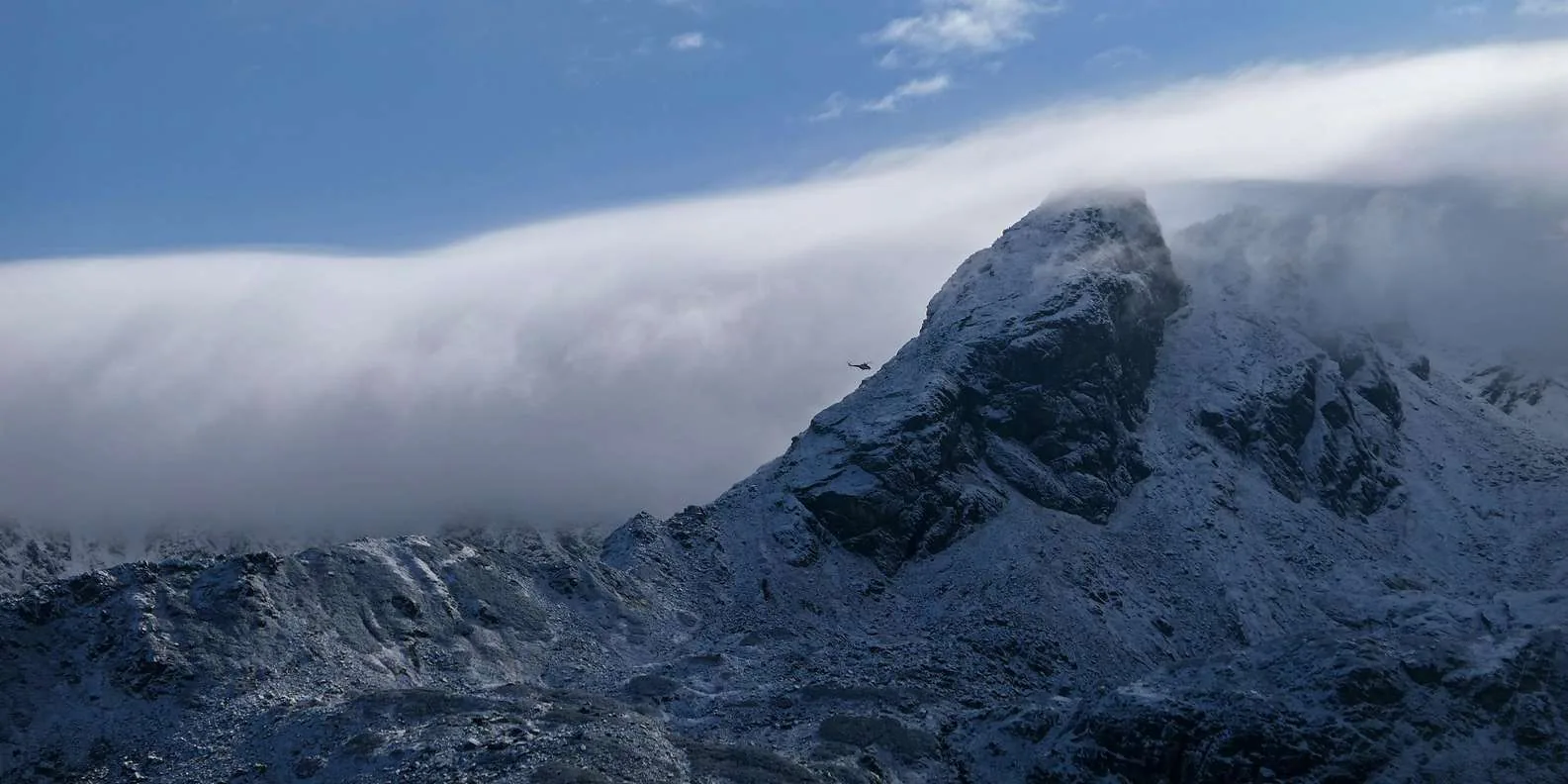
The Himalayas generate their own weather. Warm, moist air from the Indian plains rises against the mountains, cools rapidly, and condenses into cloud. This means that even on a "clear" day, cloud can build over the high passes and peaks within a matter of minutes. For a helicopter flying at altitudes of 4,000 to 5,500 metres, visibility and cloud ceiling are everything. If the cloud base drops below the safe minimum for a given route, the flight simply cannot go.
Wind is the other major factor. High-altitude winds can exceed 80 to 100 kilometres per hour over ridgelines, creating turbulence that is not just uncomfortable but genuinely dangerous for a helicopter operating near its performance ceiling. A helicopter at Everest Base Camp is already flying close to the limit of what the machine can do in thin air, and adding gusting crosswinds to that equation is a risk no responsible operator will take.
The Monsoon: June Through September
The summer monsoon, which typically runs from June through September, is the single biggest cause of helicopter tour cancellations in Nepal. During these months, heavy cloud, persistent rain, and low visibility blanket the mountains for days at a time. Flights to Everest and the high Himalaya are frequently grounded for a week or more in a row. This is why we, and most reputable operators, treat the monsoon as effectively off-season for high-altitude helicopter tours. If you are set on flying during the monsoon, you should expect a very high probability of cancellation and plan your itinerary with that reality in mind.
Winter Fog and the Terai Inversion
Winter brings a different problem. From December through February, the lower valleys and the Terai plains south of the mountains are prone to thick morning fog and temperature inversions that trap cold air and haze close to the ground. Kathmandu itself can sit under a blanket of fog until mid-morning, delaying departures even when the mountains above are perfectly clear. Winter is also when high passes can be scoured by strong jet-stream winds, and when sudden snow squalls can close a route with almost no warning.
Spring and Autumn: The Best, But Not Guaranteed
Spring (March to May) and autumn (October to November) are the classic trekking and flying seasons, and they genuinely offer the most reliable weather. But "most reliable" is not the same as "guaranteed." Even in peak season, we see roughly one in every eight to ten flights affected by weather in some way, whether that is a short delay, a route change, or a full cancellation. The mountains do not read the calendar, and neither should your expectations. For a deeper look at seasonal conditions, see our guide on the best time for a helicopter tour in Nepal.
How Operators Decide to Cancel: CAAN Safety Rules
One of the most common questions we hear is, "Who actually makes the call to cancel?" The answer is that it is a shared decision, but the ultimate authority rests with the Civil Aviation Authority of Nepal (CAAN) and with the pilot in command. No tour operator, no matter how eager to fly, can override a safety decision made by the pilot or by air traffic control.
The Pilot Has the Final Word
Under CAAN regulations and international aviation standards, the pilot in command has absolute authority over whether a flight proceeds. If the pilot determines that visibility, wind, cloud ceiling, or any other condition makes the flight unsafe, the flight is cancelled or delayed. Full stop. We support our pilots in this decision one hundred percent, because a pilot who feels pressure to fly in marginal weather is a pilot who should not be flying at all.
Minimum Visibility and Cloud Ceiling Requirements
Helicopter operations in Nepal are conducted under Visual Flight Rules (VFR), which means the pilot must be able to see the terrain and navigate visually at all times. There are specific minimum visibility and cloud-clearance requirements for mountain flying, and if conditions fall below those minimums at any point along the route, the flight cannot legally or safely proceed. This is not a guideline; it is a hard regulatory limit enforced by CAAN.
Air Traffic Control and Airport Closures
In some cases, the decision is made before the helicopter even starts its engine. If Kathmandu's Tribhuvan International Airport or a mountain airstrip like Lukla is closed due to weather, or if air traffic control issues a weather hold, the flight is grounded regardless of what the operator wants. Lukla in particular is notorious for rapid weather changes, and a closure there can ripple through the entire day's helicopter schedule.
Why "It Looks Fine Here" Does Not Matter
We understand how frustrating it is to stand in clear sunshine in Kathmandu and be told your flight is cancelled. But the weather at your departure point is only one small part of the picture. The route to Everest Base Camp crosses multiple valleys, passes, and microclimates, and conditions can be completely different at 5,000 metres than they are at 1,400 metres. When we cancel, it is because the weather somewhere along your actual route is unsafe, not because we are being cautious for no reason.
What Happens to Your Booking When a Flight Is Cancelled
This is the section that matters most to you as a traveller. When a helicopter tour is cancelled due to weather or any other reason outside your control, you are not simply out of luck. Here is exactly what happens to your booking, and the options we offer.
Option One: Rebook for the Next Day
The most common outcome, and usually the best one, is a free rebooking to the next available day. If your flight is cancelled, we automatically move you to the following morning at no additional cost, provided you have the flexibility in your schedule. This is why we so strongly recommend building buffer days into your itinerary, which we cover in detail below. In peak season, when helicopters are in high demand, we prioritise rebooked guests so that a weather cancellation does not push you to the back of the queue.
Option Two: A Full Refund
If you cannot rebook because your schedule does not allow it, you are entitled to a refund under our cancellation policy. When a flight is cancelled by the operator due to weather, safety, or any reason on our side, we refund your payment in full, including any deposit. You should never lose money because of a weather cancellation that was outside your control. The only amounts that are typically non-refundable in a weather cancellation are third-party costs such as bank transfer fees or credit card processing charges, and we are transparent about those up front.
Option Three: An Alternative Route or Destination
Sometimes the weather closes one route but leaves another open. If Everest is socked in but the Annapurna region is clear, or if a high-altitude landing is impossible but a scenic valley flight is still safe, we will offer you an alternative. This might mean flying a different route on the same day, or swapping your Everest tour for a Langtang or Gosaikunda flight. We always discuss the alternative with you first and adjust the price accordingly, so you are never forced into a flight you did not want.
What About Delays Versus Cancellations?
Not every weather event is a full cancellation. Many flights are simply delayed by an hour or two while a fog bank burns off or a cloud layer lifts. In these cases, we hold your booking and fly as soon as it is safe. A delay is not a cancellation, and it does not trigger a refund, but we keep you informed throughout and will not keep you waiting indefinitely. If a delay stretches to the point where the flight can no longer be completed that day, it becomes a cancellation and the options above apply.
Buffer Days: The Single Most Important Planning Tool
If you take only one piece of advice from this entire article, let it be this: build buffer days into your Nepal itinerary. A buffer day is an extra, unplanned day that you keep free specifically so that a weather cancellation does not destroy your trip.
Why Buffer Days Matter So Much
Imagine you have exactly one day in Kathmandu allocated for your Everest helicopter tour, and you fly out the next morning. If the weather cancels your flight, you have no second chance. You lose the experience entirely, and no refund can replace the once-in-a-lifetime view you came for. Now imagine the same trip with two buffer days. If day one is cancelled, you fly on day two. If day two is also bad, you still have day three. Your odds of actually getting airborne go up dramatically with every buffer day you add.
How Many Buffer Days Do You Need?
Our honest recommendation is to allow at least two buffer days for a high-altitude helicopter tour, and ideally three if you are travelling during the shoulder seasons or the monsoon. In peak spring and autumn conditions, one buffer day is often enough, but two gives you real insurance. The cost of a buffer day is small, usually just an extra night of accommodation and a relaxed day in Kathmandu or Pokhara, compared to the cost of missing the flight you travelled halfway around the world to take.
Buffer Days and Your Overall Itinerary
Buffer days are also why we recommend booking your helicopter tour early in your Nepal trip rather than on your final day. If you schedule the flight for your first or second day, any cancellation can be absorbed into the rest of your stay. If you schedule it for your last day, a cancellation leaves you with no room to recover. This is one of the most common mistakes we see, and it is entirely avoidable with a little planning. For more on structuring your trip, read our guide on how to book a helicopter tour in Nepal.
Travel Insurance and Cancellation Coverage
Travel insurance is the safety net that sits underneath everything else. While our own cancellation policy protects you from losing money on the flight itself, travel insurance protects you from the wider financial consequences of a disrupted trip, including missed connections, extended hotel stays, and non-refundable bookings elsewhere in your itinerary.
What a Good Policy Should Cover
When you buy travel insurance for a Nepal helicopter tour, look specifically for these coverages:
- Trip cancellation and interruption coverage, which reimburses you for prepaid, non-refundable costs if your trip is cancelled or cut short for a covered reason.
- Weather-related delay coverage, which pays for additional accommodation and meals if a weather event strands you for longer than planned.
- Adventure and high-altitude activity coverage, because many standard policies exclude helicopter flights and activities above a certain altitude unless you add a specific rider.
- Emergency medical and evacuation coverage, which is essential in the mountains and is a separate matter from cancellation, but should be part of any responsible Nepal policy.
The Altitude Exclusion Trap
This is a critical point that many travellers miss. A standard travel insurance policy often excludes activities above a certain altitude, commonly around 3,000 to 4,000 metres, or excludes helicopter flights entirely unless you purchase an adventure sports add-on. An Everest Base Camp helicopter tour reaches 5,364 metres at Kala Patthar. If your policy has an altitude cap, you may not be covered at all. Always read the fine print and confirm in writing that your specific helicopter tour is covered before you rely on the policy.
How Insurance Interacts With Our Refund Policy
There is an important distinction to understand. If we cancel your flight due to weather, we refund the flight cost directly, so you do not need to claim that amount from insurance. Your insurance is there for the other costs: the hotel nights you booked, the domestic flights you missed, the onward international connection you had to rebook. We are always happy to provide the documentation you need, such as a written cancellation notice, to support an insurance claim. For a full breakdown of how safety and insurance work together, see our article on helicopter tour safety and insurance in Nepal.
Our Cancellation Policy: Deposits, Refunds, and the Fine Print
Every operator has its own cancellation policy, and the differences between them can be significant. Here is how ours works, in plain language, so you know exactly where you stand before you pay a single rupee or dollar.
Deposits and How They Are Protected
We take a deposit to confirm your booking, with the balance due before your flight date. The deposit secures your seat and your helicopter allocation, which matters in peak season when aircraft are in short supply. If we cancel your flight for weather or safety reasons, your deposit is fully refundable or fully transferable to a new date, your choice. We do not keep deposits on flights that we cancel.
If You Cancel: Our Sliding Scale
The situation is different when you cancel, because at that point we have already committed aircraft, crew, and a seat that we may not be able to resell. Our policy for guest-initiated cancellations is a sliding scale based on how far in advance you cancel:
- More than 30 days before departure: full refund of your deposit, minus any non-recoverable bank or card fees.
- 15 to 30 days before departure: a partial refund, with a cancellation fee applied to cover our administrative and allocation costs.
- 7 to 14 days before departure: a larger cancellation fee, reflecting the reduced chance of reselling your seat.
- Less than 7 days before departure, or a no-show: the deposit is generally non-refundable, because the aircraft and crew have been fully committed to your flight.
These terms are always stated clearly in your booking confirmation, and we encourage you to read them before you pay. A reputable operator will never hide its cancellation terms in fine print you only see after the fact.
altitude sickness carries the authoritative detail if you want it from the source. Useful context — it does not affect pricing or operations.
Weather Cancellations Are Always Different
We want to be absolutely clear on one point, because it is the heart of this article: a weather cancellation is never treated the same as a guest cancellation. If the weather grounds your flight, you are never penalised. You rebook for free, or you get your money back. The sliding scale above applies only when you choose to cancel for your own reasons. This distinction is the single most important thing to confirm with any operator before you book, and it is the reason we state it so plainly here.
How to Minimise Your Cancellation Risk
You cannot control the weather, but you can absolutely control how much the weather controls your trip. Here are the practical steps we recommend to every guest to minimise the chance of a cancellation ruining your helicopter tour.
Book a Morning Flight
Mountain weather in Nepal follows a remarkably consistent daily pattern: the clearest, calmest conditions are almost always in the early morning, and cloud and wind build through the afternoon. This is why the vast majority of our flights depart between 6:00 a.m. and 8:00 a.m. A morning flight gives you the best possible chance of clear skies, and it also leaves the rest of the day as a natural buffer if a short delay occurs. If you have any choice in the matter, always take the earliest departure slot available.
Travel in Peak Season
Spring (March to May) and autumn (October to November) offer the most stable flying weather in Nepal, and they are when your odds of a cancellation are lowest. If your schedule is flexible, aim for these windows. The trade-off is that peak season is also the busiest and most expensive time to fly, but the improved weather reliability is usually worth it. For a full picture of what a flight costs in different seasons, see our breakdown of Everest helicopter tour costs in 2026.
Build in Buffer Days (Again)
We have said it before, and we will say it once more because it is that important: buffer days are the cheapest and most effective insurance you can buy. Two buffer days turn a single roll of the dice into three rolls, and that changes your odds of flying from "maybe" to "very likely." No amount of money can buy you a clear view of Everest, but a couple of flexible days can buy you the chance to wait for one.
Book With an Operator That Prioritises Your Flexibility
Finally, choose your operator carefully. The difference between a good operator and a great one is most visible when things go wrong. Ask these questions before you book:
Worth reading alongside this guide: Best Time for a Helicopter Tour in Nepal: Month-by-Month Guide, How to Book a Helicopter Tour in Nepal: Complete Guide, and Solo Traveler's Guide to Helicopter Tours in Nepal (2026).
- What exactly happens to my deposit if the flight is cancelled for weather?
- Do you rebook cancelled guests at no charge, and do they get priority on the next available day?
- Will you offer an alternative route if my original route is closed?
- Can you provide written cancellation documentation for my insurance claim?
An operator that answers these questions clearly and confidently, in writing, is an operator you can trust. An operator that dodges them is one to avoid. We are happy to answer all of them, and we put our policy in writing precisely so you never have to wonder.
What a Real Cancellation Looks Like, Step by Step
To bring all of this together, here is what actually happens, hour by hour, when a flight is cancelled, so you know exactly what to expect.
The night before: We monitor the forecast and the latest mountain reports. If conditions look marginal, we will often contact you in the evening to set expectations and confirm your pickup time, so you are not surprised in the morning.
Early morning: Our operations team and pilots assess live conditions, including reports from Lukla, Namche, and the high passes. If the flight is a go, we proceed. If it is not, we contact you immediately, usually before you have even left your hotel.
The decision: You are told clearly whether this is a delay or a cancellation, and why. We then present your options: rebook for the next day, take a refund, or consider an alternative route.
The follow-through: If you rebook, we confirm your new time on the spot and prioritise you for the next morning. If you request a refund, we process it promptly and provide written confirmation for your records and your insurer.
Throughout the process, you are never left guessing. A cancellation is disappointing, but it should never be confusing or financially painful, and we work hard to make sure it is neither.
Final Thoughts: Plan for the Weather, Not Against It
The Himalayas are one of the most spectacular places on Earth to fly, and they are also one of the most weather-dependent. The travellers who have the best experience are not the ones who get lucky with a clear day; they are the ones who planned for the possibility of a bad one. Book a morning flight in peak season, build in buffer days, buy the right travel insurance, and choose an operator whose helicopter tour weather policy protects you when the mountains do not cooperate.
If you have questions about helicopter tour cancellation in Nepal, our policies, or how to structure your trip for the best possible chance of flying, we are here to help. The more you understand before you book, the smoother your experience will be, whatever the weather decides to do.
Our Everest Base Camp helicopter tour page carries the exact weather policy and current departure times.