
Trek the classic Khumbu route to Everest Base Camp at 5,364m, then fly back by helicopter from Gorak Shep. 2026 prices, itinerary and what's included.
The Everest Base Camp Helicopter Trek is the classic EBC itinerary with the ending changed: you walk the full route up — Lukla, Namche Bazaar, Tengboche, Dingboche, Gorak Shep, Base Camp itself at 5,364 metres, and the Kala Patthar summit at 5,545 metres — and then, instead of walking the same trail back down for five more days, a helicopter lifts you out of the high valley and lands you in Kathmandu the same afternoon. Twelve days of walking compressed to ten or eleven days door to door, with the descent — the part of the EBC trek that everyone complains about afterward — deleted entirely.
This page is the complete guide to the trek-up, fly-back format: the route, the altitude schedule, what the helicopter exit involves, real 2026 pricing, and who the format suits. The one-day version of Everest by helicopter — for travellers with no trekking days at all — is covered on our Everest Base Camp helicopter day tour page; the same fly-back pattern applied to Annapurna is on our Annapurna helicopter return trek page.
The classic Everest Base Camp trek is roughly 130 kilometres of walking, and the mathematics of its popularity have a problem: almost every step of the way down repeats the way up. After the summit morning at Kala Patthar — the emotional high point of the entire trek — most itineraries hand you four more days of the same lodges, the same trail, and the same villages in reverse, with knees that now hurt and a view you have already photographed.
The fly-back format replaces that return leg with a 45–50 minute helicopter flight from the high valley to Lukla or direct to Kathmandu, depending on the flight plan. The trek keeps everything that makes EBC the EBC — the walk in, the acclimatisation days, Namche, Tengboche at dusk, the thinnest air you will ever breathe at 5,364 metres — and removes only the repetition. Our heli trekking guide covers the same logic applied across Nepal's trekking regions.
There is a second audience for whom this format is not convenience but necessity: trekkers with knee, hip or back conditions that make 4,000+ metres of cumulative descent genuinely dangerous, time-constrained travellers who have ten days but not fourteen, and older trekkers who want the Everest experience without paying for it in joints. For all three groups the fly-back is the difference between doing EBC and not doing it.
The walk up is the classic Khumbu route, unchanged for decades.
Day one: the flight into Lukla (2,860m) — either the 35-minute plane from Kathmandu or, increasingly, the helicopter transfer, which our Kathmandu to Lukla flight guide compares in detail — and a gentle 3–4 hour walk to Phakding. The first night is deliberately low: altitude discipline starts on day one.
Day two: the climb to Namche Bazaar (3,440m), the famous amphitheatre market town — including the Hillary Suspension Bridge sequence and the first clear view of Everest from above the forest. This is the longest single climb of the trek. Afternoon in Namche for acclimatisation.
Day three: acclimatisation day in Namche — the hike to Everest View Hotel and Khumjung, the Sherpa museum, the Saturday market if timing allows. Trekkers who skip this day pay for it later; the schedule is the safety system.
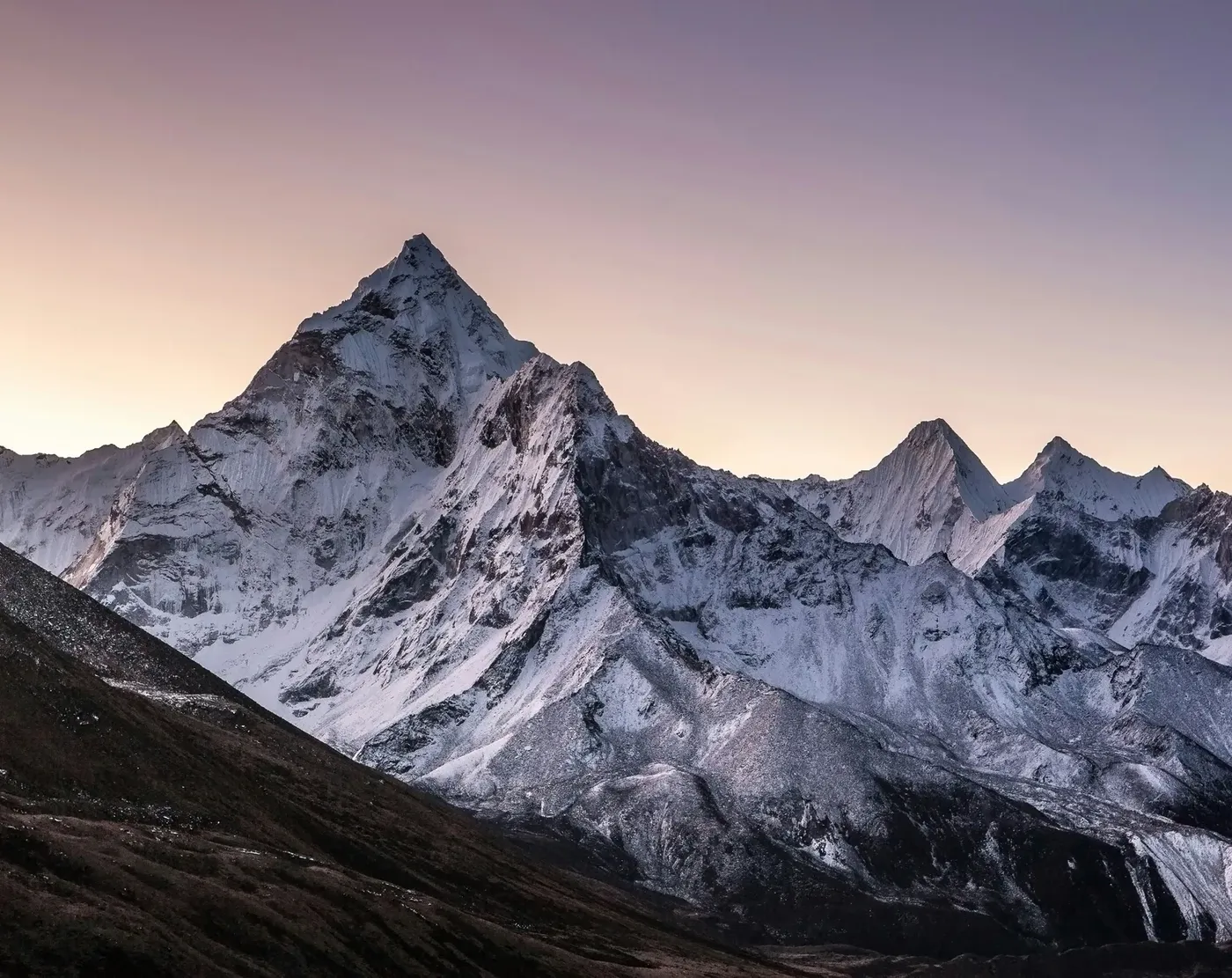
Day four: Namche to Tengboche (3,860m) — the trek's most beautiful single day, through forest and across the morning light on Ama Dablam, ending at the gompa of Tengboche for the dusk puja. The greatest view-to-effort ratio on the entire route.
Day five: Tengboche to Dingboche (4,410m) — crossing the tree line, the Imja valley opening, and the first of the two-above-4,000m nights that build the red blood cell count that the rest of the trek depends on.
Day six: acclimatisation day in Dingboche — the ridge walk to 5,000 metres with Chhukung and Island Peak in view, then back down to sleep. The classic climb-high-sleep-low rhythm.
Day seven: Dingboche to Lobuche (4,940m) — the memorials at Dughla pass, the Khumbu glacier's grey highway beginning, and Pumori straight ahead. A short day by distance, heavy by air.
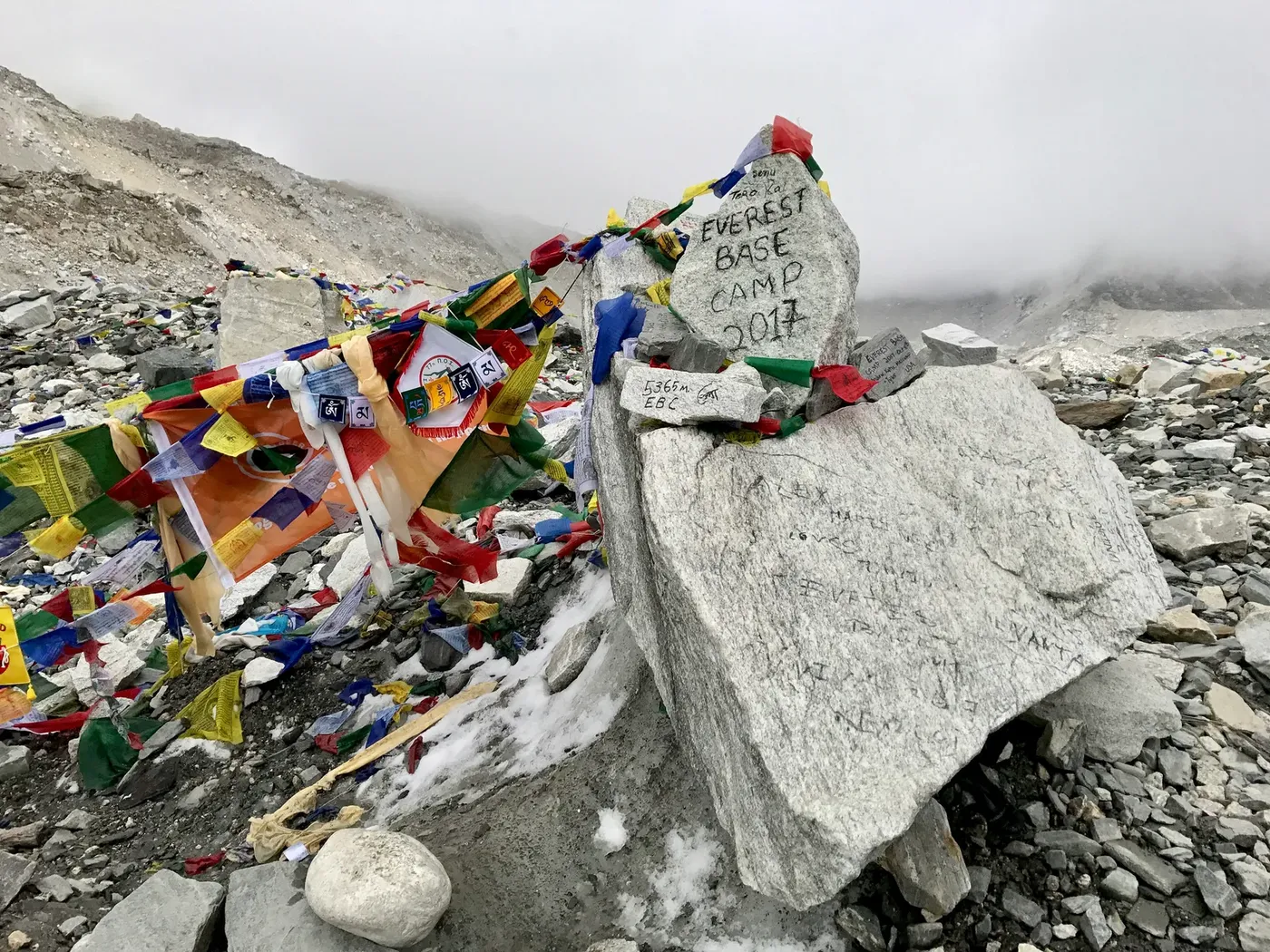
Day eight: Lobuche to Gorak Shep (5,170m) and on to Everest Base Camp (5,364m) — the day the entire trek exists for. The walk to Base Camp is under three hours from Gorak Shep: across the glacier's edge, past the Italian research pyramid, and into the seasonal tent city beneath the Icefall. Back to Gorak Shep to sleep.
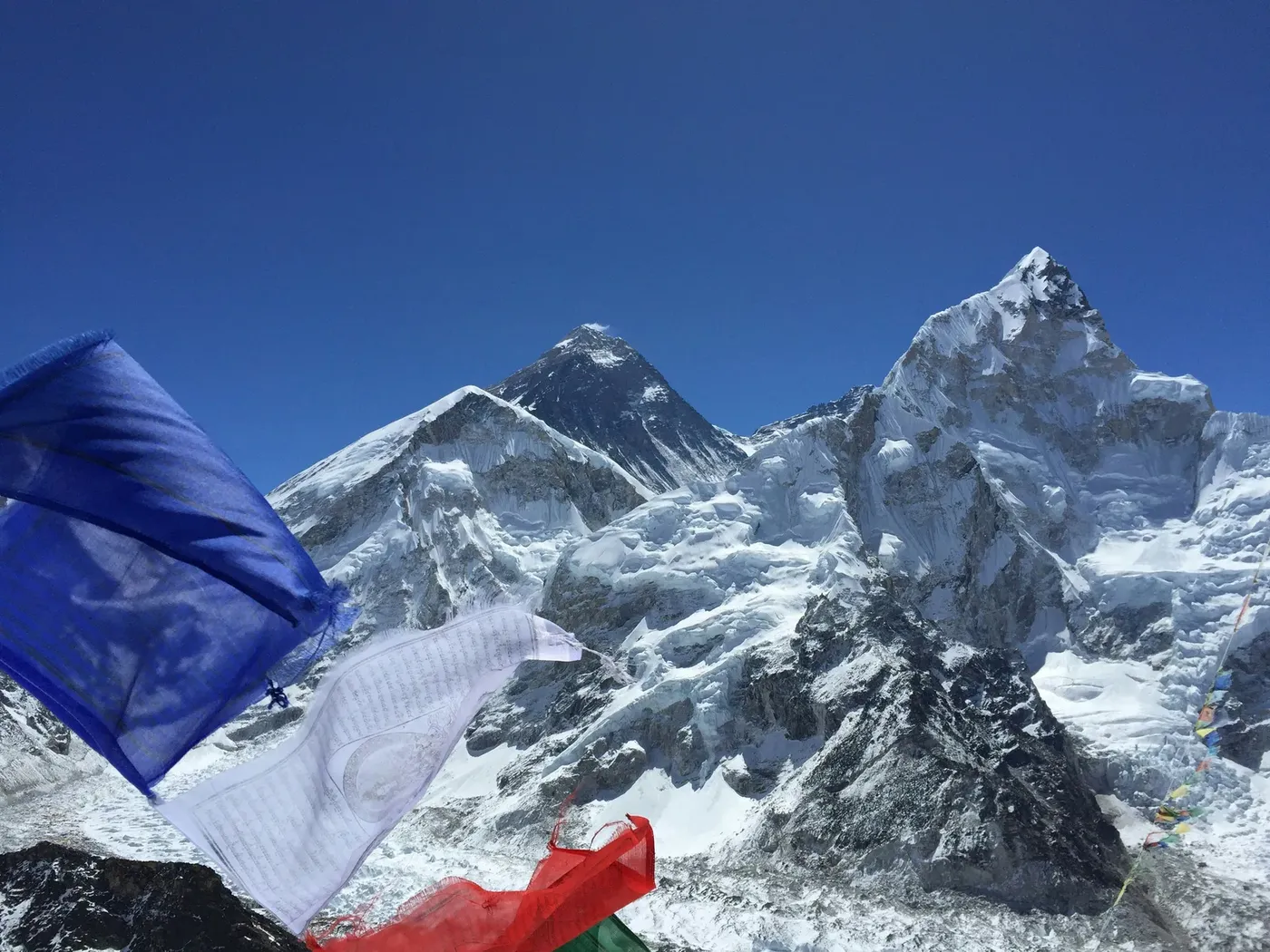
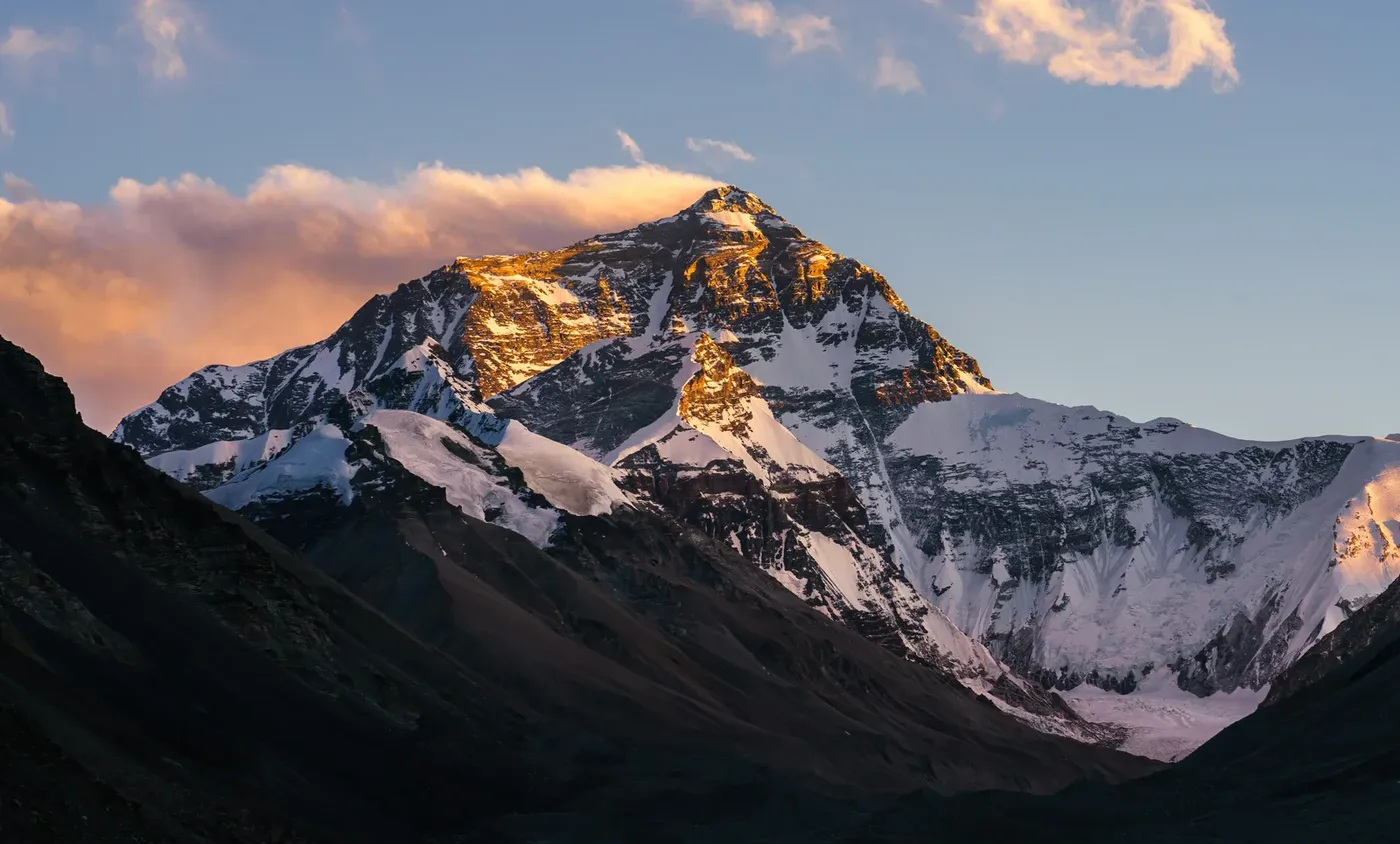
Day nine: pre-dawn Kala Patthar (5,545m) — the highest point of the trek, the viewpoint the photographs are taken from, Everest's summit 2,300 vertical metres above you — then breakfast and the walk down to Pheriche or Lobuche. The helicopter exit is next morning.
Day ten: the fly-back morning. From the Pheriche or Lobuche helipad, the AS350 B3 lifts you over the route you walked — Ama Dablam from above, Tengboche's ridge, Namche's bowl, the Lukla gap — and lands either at Lukla for the plane to Kathmandu or, on direct routings, in Kathmandu itself. Trekkers consistently describe this 50 minutes as the single best hour of the trek: every day of walking made visible in one panorama. Our Kala Patthar landing guide describes the same viewpoint from the air.
The trek's maximum sleeping altitude is 5,170 metres at Gorak Shep, with day walks to 5,545. The classic profile prevents most problems, and the fly-back format does not change the ascent schedule at all — what it removes is the descent, where a different set of problems lives. Two nights above 4,900 metres is the envelope; trekkers with a history of altitude sickness should tell us at booking so the guide can plan slower variants. The golden rules hold: drink before you are thirsty, tell the guide at the first symptom not the third, and never ascend with a headache at rest.
The helicopter exit carries one altitude note of its own: on fly-back mornings from Pheriche (4,370m), you board already acclimatised after ten days — the opposite of the day-tour guests who arrive at altitude in an hour. For most trekkers this makes the flight the relaxed part; the aircraft is also the definitive treatment for any altitude problem that does appear, which is why the guide carries the evacuation authority and our safety and insurance guide walks through what the insurance must say.
The 2026 price is 1,840 USD per person on a shared-fly-back basis. That covers: the guide for the full trek, porter service (one porter per two trekkers), the Lukla flights both directions or the helicopter equivalent on the way in, all Sagarmatha National Park permits and the TIMS card, eleven or twelve nights of lodge accommodation on trek (twin share), all meals on the trail (breakfast, lunch, dinner with tea), and the fly-back helicopter from the high valley to Lukla or Kathmandu including your duffel.
It does not cover: hotels in Kathmandu, personal gear, travel insurance (mandatory, must cover helicopter evacuation and trekking to 6,000 metres — checked before departure), hot showers and charging in lodges, bottled drinks, and tips for the guide, porters and pilot. As a working budget, past guests carry 300–400 USD on the trail for those extras.
The comparison that matters: the classic walk-down itinerary costs nearly the same once the extra three food-and-lodging days are counted — the fly-back premium is small against the total, and it buys three days of your life back. The pure one-day helicopter tour without any trekking is a different product at a lower price; our cost comparison guide lays all three side by side.
The Everest region's flight discipline applies to the exit: morning windows, afternoon cloud, roughly one morning in four lost across the year. On fly-back mornings the aircraft is already committed to the high valley, and departures go in the first stable window after sunrise. If the window closes, the exit moves to the next morning — the itinerary carries a buffer day for exactly this — and our cancellation and weather policy guide covers what that means for the booking. The walk-in flight to Lukla on day one carries the same weather logic; our best-time guide has the monthly numbers.
Trekkers with ten to twelve days who want the complete EBC experience without the return repetition. Trekkers with joint conditions that make the cumulative descent the real obstacle — the format was practically built for you. Families with teenagers who can walk up but should not be asked to walk down four consecutive days. And photographers, for whom the fly-back hour is 50 minutes of the entire route in one panorama — see our what-you-see route guide for the peak-by-peak map of that hour.
Free enquiry through the contact page or WhatsApp with your dates and party details; we confirm guide, permits, lodge availability and the fly-back seat within about 12 hours; a 20 percent deposit holds the departure. Group size runs 2–8 with one guide. October and November dates fill by early September — and the fly-back seats per departure are limited by aircraft capacity, so late bookings in high season sometimes choose between a walk-down classic and a later fly-back date. Ask early.
The honest answer: fit enough to walk 5–7 hours a day for ten days with a day pack, on good mountain trails, at altitude. Not marathon fit — hill-walking fit. The day-by-day demands above are real: the Namche climb day is a sustained 700-vertical-metre ascent, the Gorak Shep day is long and thin-aired, and Kala Patthar starts in the dark. But thousands of ordinary walkers complete this route every year in their 50s and 60s, and the two acclimatisation days exist precisely so the schedule, not your legs, does the adapting.
The training that transfers: weekly hill walks with 300–500m of ascent for eight weeks before departure, stairs instead of lifts for the final month, and — more than any of it — time on your feet. The training that does not: gym cardio alone, which builds an engine that altitude does not respect. If you can walk six hours in your home hills and wake up wanting to do it again the next day, you are ready for the walk up. The fly-back format then removes the part that actually breaks people.
Pack for a ten-day walk between 2,800 and 5,500 metres. The non-negotiables: broken-in boots, a four-season sleeping bag (rentable in Kathmandu), a down jacket for the high nights and the Kala Patthar dawn, base layers and a shell for the afternoon weather, gloves and a warm hat, headlamp, water purification, and a small personal first-aid kit including altitude medication as your doctor advises. The porter carries up to 12 kg of your gear; your day pack holds water, layers, and the camera. The full list with weights, and what is rentable in Kathmandu rather than bought, is in our packing guide — pack light, because every kilogram matters on the trail and on the fly-back aircraft.
Three ways to do Everest now exist and they genuinely suit different travellers. The classic walk-up walk-down trek, thirteen to fourteen days: the complete experience, the same price, four extra days of descent. This fly-back trek, ten to twelve days: the complete walk-up, the descent replaced by the best scenic flight in Nepal. The one-day helicopter tour, one morning: no trekking, the landing and the view, a different product for a different budget — around 1,260 per seat. There is no wrong answer; there is only the answer that matches your days, your knees and your budget. The full price table across every routing is in our charter cost guide.
The Khumbu has the best teahouse infrastructure in the trekking world, and it improves yearly. Lodges are twin-share rooms with shared bathrooms below Gorak Shep and — increasingly — attached bathrooms in the middle villages. Food is a long menu of daal bhaat, pasta, fried rice, soups and the famous Namche bakeries; vegetarian is easy, gluten-free is possible with notice, and the daily tea is bottomless. Connectivity: WiFi is available in most lodges for a small hourly fee, the mobile signal reaches most of the route (strongest in Namche), and the trip does not require being offline — though most trekkers are glad, by Dingboche, that they are. Charging costs a few hundred rupees per device in the high lodges; a power bank halves the bill.
Every season a few guests tell us the fly-back felt like cheating. Here is the honest reply we give them: the walk up is the Everest Base Camp trek — every day of it, every pass, every acclimatisation morning, the Icefall at dawn, the summit pyramid from Kala Patthar. What the helicopter removes is not the experience but the encore. Trekkers have walked this route for fifty years; the fly-back format is simply the first serious upgrade to its second half since the route existed. Walk up, earn it, and fly home with ten days instead of fourteen. Bookings and questions through the contact page or WhatsApp — we answer within about 12 hours.
Helicopter return is subject to weather conditions — have 1-2 buffer days. Helicopters operate on group-sharing basis (4-5 passengers per aircraft). Altitude sickness prevention: the itinerary includes 2 acclimatization days. Baggage allowance on the helicopter: 15kg per person. Lukla flights are subject to weather — allow flexibility. WiFi is available in most lodges for $5-10 per 100MB.
Reviews from travellers who actually flew with us. Your review appears on this page once our office confirms your trip — usually within a day.