
The Core Difference: A View vs. A Journey
Before you compare prices, itineraries, or fitness requirements, you need to understand the single most important distinction between an Everest helicopter tour and a Base Camp trek. They are not two versions of the same trip. They are two fundamentally different experiences that happen to share the same mountain.
- $1,260Everest day tour, per seat
- 5,545 mKala Patthar landing
- 6 hrsTypical door-to-door time
- DailyDepartures in season
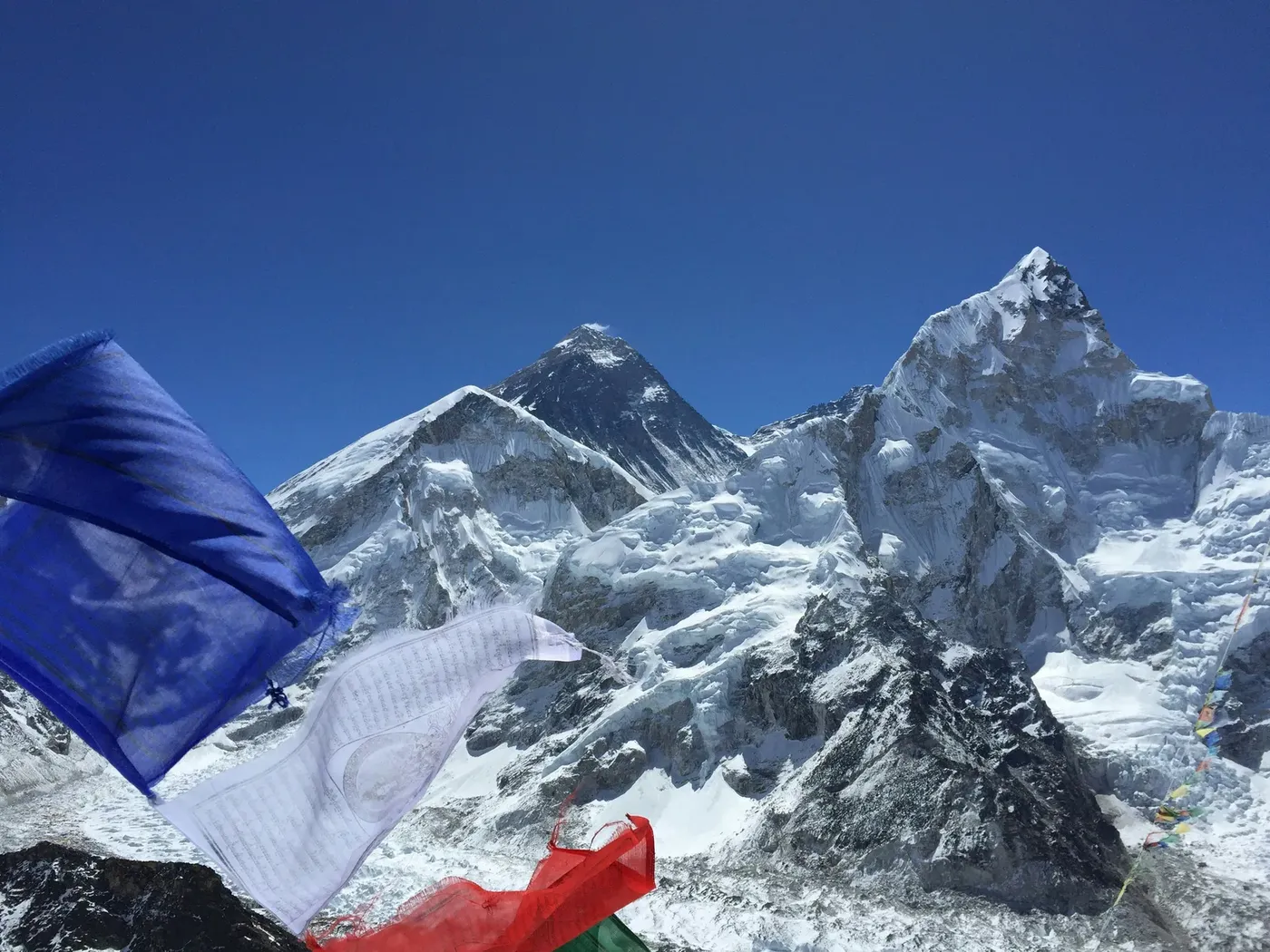
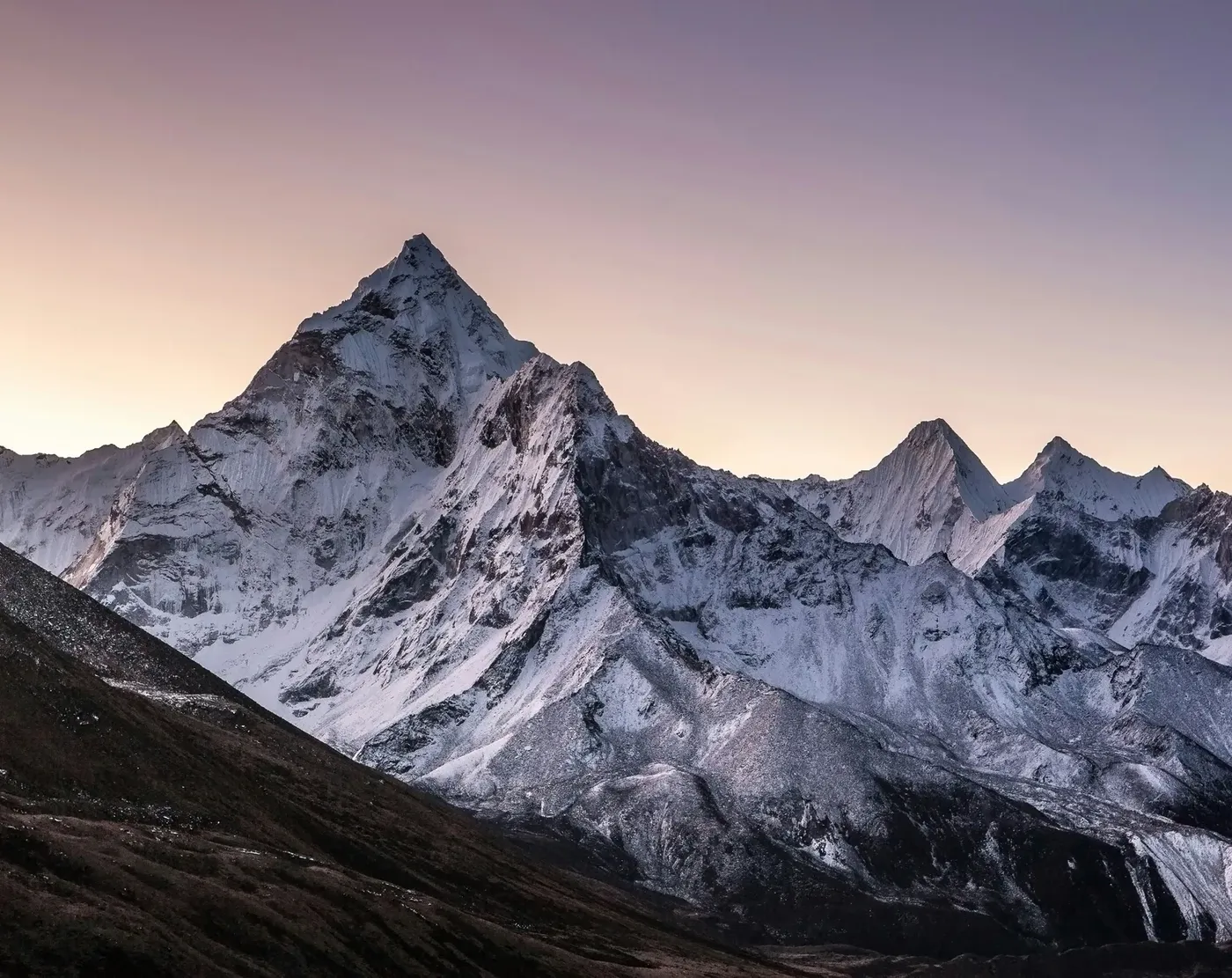
A helicopter tour is a view. You board an aircraft in Kathmandu, fly east along the spine of the Himalaya, and watch Everest, Lhotse, Nuptse, and Ama Dablam unfold through a window over the course of a few hours. The mountain is the destination, and you reach it without taking a single step uphill. A Base Camp trek is a journey. You walk for days through Sherpa villages, suspension bridges, rhododendron forests, and glacial moraine, earning the mountain gradually with your own legs. The mountain is the reward at the end of a long, physical, cultural process.
This distinction drives every other decision you'll make. It determines cost, time, fitness, risk, and what you'll remember when you get home. Someone who wants to see Everest and be back in Kathmandu for dinner is a helicopter customer. Someone who wants to earn Everest, to feel the altitude in their lungs and the trail under their boots, is a trekker. Neither is better — but they are not interchangeable, and choosing the wrong one is the most common mistake first-time visitors to Nepal make.
There is also a third path that blends the two, and it's worth naming early because it solves the biggest complaint trekkers have: the return walk. A trek-up, fly-back Everest Base Camp helicopter trek lets you walk in the traditional way and then fly out, skipping the long descent. We'll return to that option throughout this comparison.
Cost Comparison: What Each Option Actually Costs in 2026
Money is where most people start, so let's be direct about it. The four main ways to experience Everest span a wide price range, and the differences are not arbitrary — they reflect what you're actually buying: aircraft time, permits, guides, accommodation, and days on the ground.
| Option | Typical 2026 Price | Duration | What You Get |
|---|---|---|---|
| Everest scenic mountain flight | From $260 | ~1 hour in the air | Window seat on a fixed-wing flight past Everest; no landing |
| Everest Base Camp helicopter day tour | From $1,260 | ~4–5 hours door to door | Helicopter flight with a landing at Kala Patthar or Base Camp |
| Everest Base Camp trek (classic, round-trip) | $1,400–$2,500 | 12–16 days | Guided trek, teahouse lodging, permits, porters |
| Everest Base Camp helicopter trek (trek up, fly back) | From $1,840 | ~9–11 days | Full trek in, helicopter flight out |
The cheapest way to lay eyes on Everest is the Everest scenic mountain flight, a fixed-wing aircraft that departs Kathmandu early each morning and flies a loop past the massif. At around $260 it's a remarkable value, but understand its limits: you never land, you never get close enough to feel the scale, and your view is through a small window for roughly an hour. It's a sightseeing flight, not an Everest experience.
The Everest Base Camp helicopter day tour is the step up most people actually want. For $1,260 you fly by helicopter — which can fly lower and slower than a fixed-wing plane — and you land, typically at Kala Patthar (5,644 m) or at Base Camp itself, where you step out onto the ground and stand in front of the mountain. The difference between seeing Everest from a plane window and standing on the ground beneath it is the difference between a postcard and a memory. For a full breakdown of what that price includes, see our guide to the Everest Base Camp helicopter day tour cost and how to book.
The classic trek sits in the middle of the price range but at the top of the time range. A standard guided Everest Base Camp trek costs roughly $1,400 to $2,500 depending on group size, season, and the level of service, and it takes the better part of two weeks. You're paying for days of guiding, teahouse beds, meals, permits, and porter support — a completely different cost structure from an aircraft seat.
At the top of the range is the hybrid: the trek-up, fly-back option at $1,840 and up. You pay a premium for the helicopter extraction, but you also save several days of walking and the cost of those extra nights. We've written a dedicated piece on the trek-up, fly-back cost in 2026 if you want the line-by-line breakdown. For a wider look at how helicopter pricing works across the region, our Everest helicopter tour cost guide explains the variables that move the number up or down.
Time Commitment: Hours vs. Weeks
If cost is the first question, time is the second — and for many travelers it's the deciding one. The gap here is enormous, and it's the single most practical reason people choose a helicopter over a trek.
A helicopter day tour consumes a single morning. You're picked up at your hotel, driven to the airport, flown to the mountain, landed, flown back, and returned to Kathmandu — all before lunch. The scenic flight is even shorter, barely an hour in the air. This is why the helicopter option is so popular with travelers on a tight Nepal itinerary: you can see Everest and still have the afternoon free, or fit the whole thing into a layover-style window.
A classic Base Camp trek, by contrast, demands 12 to 16 days of your life, and that's before you account for the two buffer days most sensible itineraries build in for weather and acclimatization. You'll spend roughly eight to ten of those days actually walking, with the rest given over to rest days at Namche Bazaar and Dingboche that your body needs to adapt to the thinning air. There is no shortcut on a trek — the acclimatization schedule is non-negotiable, and skipping it is how people get sick.
The hybrid trek-up, fly-back option splits the difference neatly. You still walk in over the same number of days — the ascent is unchanged — but you eliminate the three to four days of the return descent by flying out from Gorak Shep or Base Camp. That turns a 14-day round trip into roughly a 9-to-11-day trip, which is a meaningful saving for anyone who wants the trek but can't spare a full two weeks.
Altitude and Fitness: Who Can Actually Do Each
This is where the two options diverge most sharply, and where honesty matters most. A helicopter tour has essentially no fitness requirement and, crucially, almost no altitude-sickness risk. A trek has a real fitness requirement and a genuine, medically significant altitude risk. Understanding this difference is not about bravado — it's about safety.
The Helicopter: No Fitness, Minimal Altitude Risk
To take a helicopter day tour you need to be able to climb into and out of an aircraft. That's it. There is no training, no preparation, and no minimum level of fitness. Children, older travelers, and people with knee, hip, or back problems who could never contemplate a two-week trek can all stand at Kala Patthar and look at Everest.
The altitude question is equally forgiving. Because the helicopter flies you up and brings you down within a matter of hours, your body is never exposed to high altitude long enough for acute mountain sickness to develop. You'll spend perhaps 15 to 30 minutes on the ground at 5,000-plus meters, which is well within what a healthy person can tolerate as a brief visit. The aircraft itself is not pressurized to sea level, but the short exposure window is what keeps the risk low. This is the single biggest reason a helicopter tour is the right choice for anyone with a health condition, a fear of altitude, or simply no desire to gamble on how their body handles thin air.
The Trek: Real Fitness, Real AMS Risk
A Base Camp trek is a sustained physical effort. You'll walk six to eight hours a day, every day, for over a week, carrying a daypack over terrain that climbs and descends constantly. The trail is not technically difficult — there's no climbing or scrambling — but the cumulative load of day after day of uphill walking at altitude is what breaks people. You should be able to comfortably walk for several hours on consecutive days before you arrive in Nepal, and the fitter you are, the more you'll actually enjoy the experience rather than merely survive it.
Altitude is the serious variable. Acute mountain sickness (AMS) is a real risk on the Everest trail, and it does not discriminate by fitness — marathon runners get it as often as anyone. The standard itinerary is built around acclimatization precisely because the human body needs time to produce more red blood cells and adapt to reduced oxygen. Symptoms range from headache and nausea to, in rare and serious cases, life-threatening high-altitude pulmonary or cerebral edema. A reputable operator builds rest days into the schedule, carries the means to descend quickly, and watches clients closely. But the risk is inherent to the activity, and it's the reason a trek is not a casual decision.
The Experience Itself: What You'll Actually Feel
Strip away the logistics and the real question is emotional: what will this feel like? The two options deliver two very different kinds of awe, and knowing which one you're chasing is the surest way to pick correctly.
The Trek: Slow, Cultural, Earned
Trekking to Everest Base Camp is as much a cultural journey as a physical one. You walk through the Khumbu, the homeland of the Sherpa people, and the trail is threaded with the texture of daily life: prayer wheels spun by passing monks, mani stones carved with mantras, suspension bridges draped in prayer flags, and teahouses where you eat dal bhat by a wood stove and talk to the family who runs the place. You pass through Namche Bazaar, the trading hub of the region, and visit Tengboche Monastery, one of the most important Buddhist sites in the Himalaya. The mountain, when you finally reach it, is the climax of a story you've been living for a week — and that context is precisely what makes the moment so powerful.
The trade-off is that the experience is slow, uncomfortable at times, and weather-dependent. You'll have cold mornings, basic rooms, and days when clouds hide the very mountain you came to see. The reward is depth: you'll understand the region, not just photograph it.
The Flight: Concentrated, Immediate, Overwhelming
A helicopter tour compresses all of that awe into a few hours. There is no slow build — you lift off from Kathmandu and within minutes the Himalaya is filling the horizon, peak after peak, closer and more massive than any photograph prepares you for. The helicopter flies low enough that you feel the scale of the terrain, and the landing at Kala Patthar delivers the single most concentrated moment of the whole comparison: you step out, and Everest is simply there, filling your field of vision, close enough to feel impossible.
What you give up is the cultural immersion. You won't meet the Sherpa families, won't spin a prayer wheel, won't earn the mountain with your legs. What you gain is certainty and intensity — a guaranteed view (weather permitting, and operators fly only on clear mornings) delivered with no physical cost. For many people, that concentrated awe is exactly what they want, and there's no shame in it.
Which Should You Choose? A Decision Guide
By now the shape of the decision should be clear, but let's make it explicit. Work through these questions in order, and the answer will usually reveal itself.
Choose the helicopter day tour if you have limited time, limited fitness, a health condition, or a fear of altitude — or if you simply want to see Everest without committing two weeks of your life to it. The Everest Base Camp helicopter day tour is the single most efficient way to stand in front of the mountain, and it's the right default for most first-time visitors to Nepal who aren't specifically coming to trek.
Choose the scenic flight if your budget is tight and you only want a glimpse. At $260, the Everest scenic mountain flight is the cheapest way to see the mountain at all, and it's a fine choice if Everest is one item on a longer Nepal trip rather than the centerpiece.
Choose the classic trek if you have the time, the fitness, and a genuine desire for the journey itself — the culture, the villages, the slow earning of the mountain. If the idea of walking for a week through the Khumbu sounds like the point of the trip rather than the price of admission, this is your option, and no flight can substitute for it.
Choose the trek-up, fly-back option if you want the trek but can't spare the full two weeks, or if the thought of the long return walk is the thing holding you back. The trek-up, fly-back helicopter trek gives you the entire cultural and physical journey on the way in, then spares you the descent. It's the best of both worlds for a specific kind of traveler, and it's worth the premium if you're that traveler.
If you're traveling as a group or want the mountain entirely to yourselves, a private Everest helicopter charter is also worth considering — it changes the economics and the flexibility of the whole experience.
For reference, Everest (8,848.86 m) is the authoritative background on this feature. We link it because it is the source, not because it sells anything.
Read these next: Everest Base Camp Helicopter Day Tour: Cost, Landing & How to…, Everest Base Camp Helicopter Trek Cost 2026 — Trek Up, Fly Back…, and How Much Does an Everest Helicopter Tour Cost in 2026?.
Frequently Asked Questions
Is a helicopter tour to Everest safe?
Yes. Helicopter tours in the Everest region are operated by experienced pilots flying modern aircraft, and flights only depart in clear, stable weather. The short time spent at altitude means acute mountain sickness is not a meaningful risk, and the entire operation is regulated and licensed. The main variable is weather, which is why operators schedule flights for the early morning when conditions are calmest.
Do I need to be fit to do the Everest helicopter tour?
No. There is no fitness requirement for a helicopter tour beyond being able to board the aircraft and stand for a short time at the landing site. This is precisely why the helicopter option is so popular with older travelers, families, and anyone with physical limitations that would rule out a trek.
Can I do the Everest Base Camp trek without training?
You can attempt it, but you shouldn't. The trek involves six to eight hours of walking per day for over a week at altitude, and arriving unprepared is the most common reason people turn back or get sick. A few months of regular walking, ideally with some hills and a loaded daypack, will make the difference between enjoying the trek and enduring it.
Which option gives the best view of Everest?
The helicopter day tour, specifically the landing at Kala Patthar, gives the most dramatic and complete view of Everest for the least effort. Kala Patthar is widely considered the finest viewpoint of the mountain, and the helicopter puts you there in hours rather than days. The trek reaches the same viewpoints, but only after a week of walking, and weather can still hide the summit on any given day.
Is the trek-up, fly-back option worth the extra cost?
For the right traveler, yes. The trek-up, fly-back option costs more than a classic trek because of the helicopter extraction, but it saves three to four days of walking and the associated nights of accommodation, and it removes the most physically draining part of the trip. If your time is limited or you dread the return descent, the premium is money well spent.
Whichever path you choose, the mountain is waiting. If you're ready to book — or if you're still weighing the options and want honest advice from people who run these trips every day — get in touch with our team, or browse the full range of Everest helicopter tours and treks to compare itineraries side by side.