
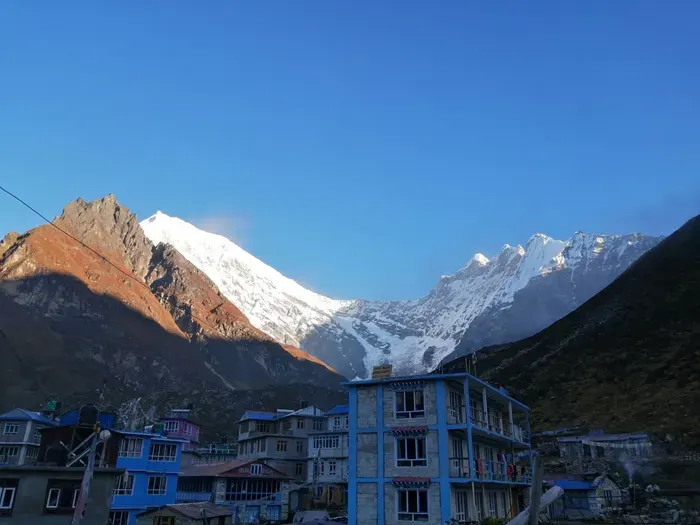
What Is the Langtang Valley — and Why Fly There?
The Langtang Valley sits directly north of Kathmandu, tucked against the Tibetan border inside Langtang National Park. It is the closest true Himalayan valley to the capital, yet it receives a fraction of the visitors who crowd the Everest and Annapurna trails each season. For travellers who want the drama of 7,000-metre peaks, hanging glaciers and high-altitude Buddhist villages without the queues, a Langtang helicopter tour is the most efficient way in.
- 3,710 mMuktinath temple
- $1,080Muktinath, per seat
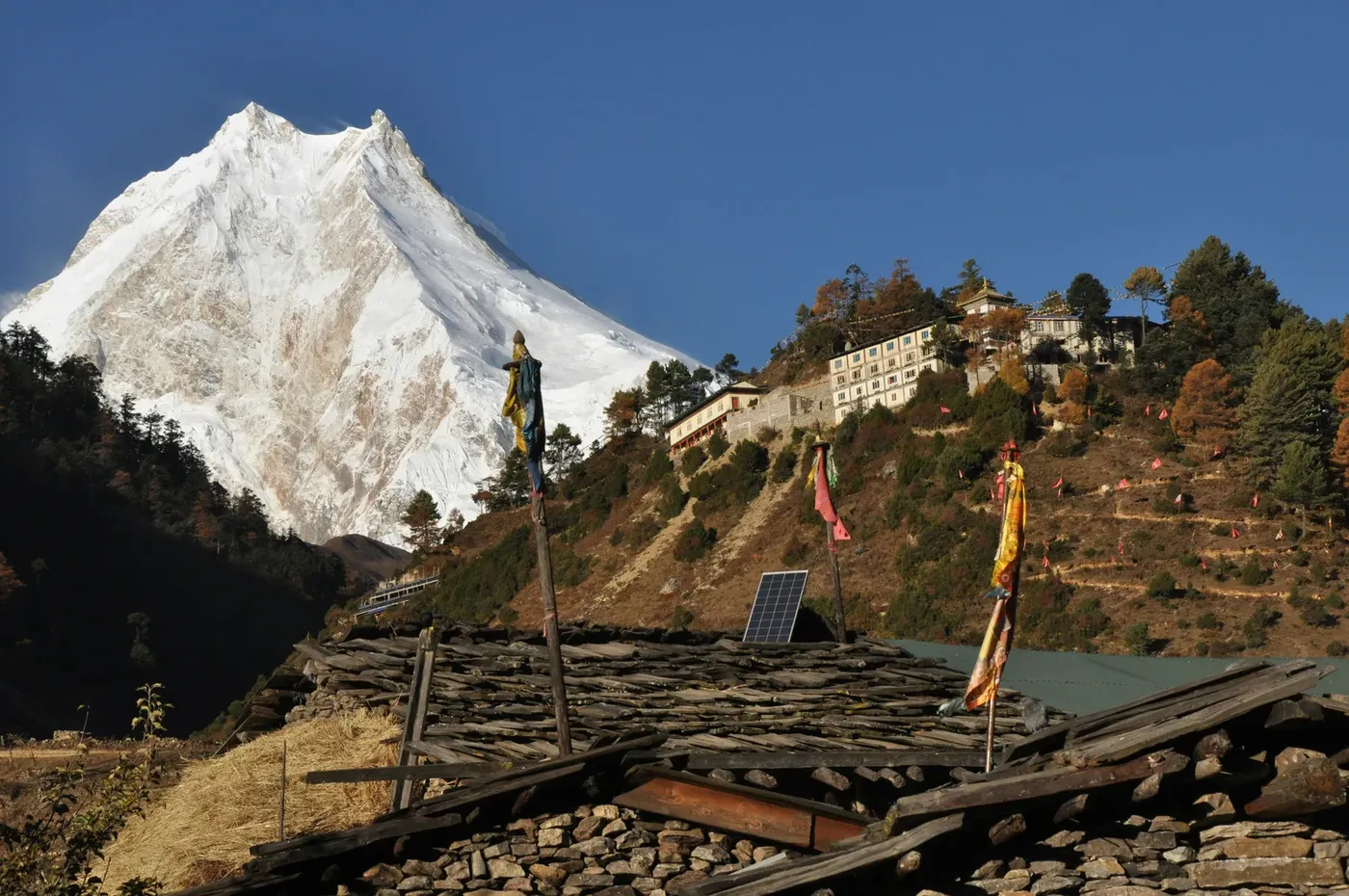
- 8,163 mManaslu, eighth-highest
- 1 dayTypical pilgrimage round trip
Geographically, the valley runs east–west beneath a wall of summits dominated by Langtang Lirung (7,234 m), with the sacred Gosainkunda lakes and the Tamang heartland of the Helambu region on its flanks. The name "Langtang" is said to come from the Tibetan for "yak following" — a nod to the herds that still graze the high pastures around Kyanjin Gompa. Culturally, the valley is Tamang country, and its villages, monasteries and mani walls give the landscape a distinctly Tibetan character that feels a world away from the Sherpa settlements further east.
What makes Langtang genuinely different is the sense of space. On a clear morning you can fly the entire route and share the sky with almost no other aircraft, land at a quiet airstrip or helipad, and walk among prayer flags without the press of a crowd. It is the quiet alternative to the two big-name destinations — and for many visitors, that quiet is exactly the point.
Why Choose Langtang Over Everest or Annapurna?
Everest and Annapurna are extraordinary, but they are also busy. The Everest region sees thousands of trekkers and dozens of helicopter movements a day in peak season, and the Annapurna circuit is one of the most walked trails on earth. Langtang offers a different proposition: comparable mountain scenery, a shorter flight from Kathmandu, and a cultural landscape that has not been reshaped by mass tourism.
There are practical advantages too. Because Langtang is so close to the capital, the flying time is shorter, which keeps the experience compact and, for many operators, more affordable than a full Everest Base Camp rotation. The valley's lower profile also means fewer weather-related cancellations than the Khumbu, where afternoon cloud builds quickly against the high peaks. If you are short on time, travelling with children or older family members, or simply want a first taste of the Himalaya before committing to a longer trek, Langtang is a natural entry point.
That said, the three destinations are not interchangeable. Everest delivers the world's highest mountain and the iconic Khumbu Icefall; Annapurna delivers the vastness of the Annapurna Sanctuary and the Kali Gandaki gorge. Langtang delivers intimacy — a valley you can take in at a glance, with glaciers that feel close enough to touch. The comparison table further down this page lays out the differences side by side.
The Helicopter Route from Kathmandu
A typical Langtang helicopter tour begins at Tribhuvan International Airport in Kathmandu, where the aircraft lifts off and turns almost immediately north. Within minutes the city's sprawl gives way to terraced hillsides, and the helicopter climbs over the Shivapuri ridge that separates the Kathmandu Valley from the mountains beyond.
From there the route follows the Trishuli and Langtang Khola river systems northward, entering Langtang National Park — Nepal's first Himalayan national park, established in 1976 and home to red panda, Himalayan tahr and more than 250 bird species. The flight path tracks the valley floor, giving passengers a continuous view of the villages, forests and yak pastures below before the terrain opens into the wide, glaciated upper valley.
The highlight of the route is Kyanjin Gompa, the last permanent settlement in the valley at roughly 3,800 metres. Here the helicopter typically lands, allowing time to step out, breathe the thin air and stand beneath the monastery that gives the village its name. From Kyanjin, the view opens onto the full sweep of the Langtang range, with Langtang Lirung rising directly overhead and the Langtang and Lirung glaciers spilling down from the high cirques.
Depending on the itinerary, the aircraft may continue toward the Langshisha Kharka area or circle the upper valley to give passengers a closer look at the ice before turning south for the return to Kathmandu. The whole experience — flight, landing and return — is typically completed in a morning, which is part of its appeal for travellers with a tight schedule.
What You'll See Along the Way
Glaciers and High Peaks
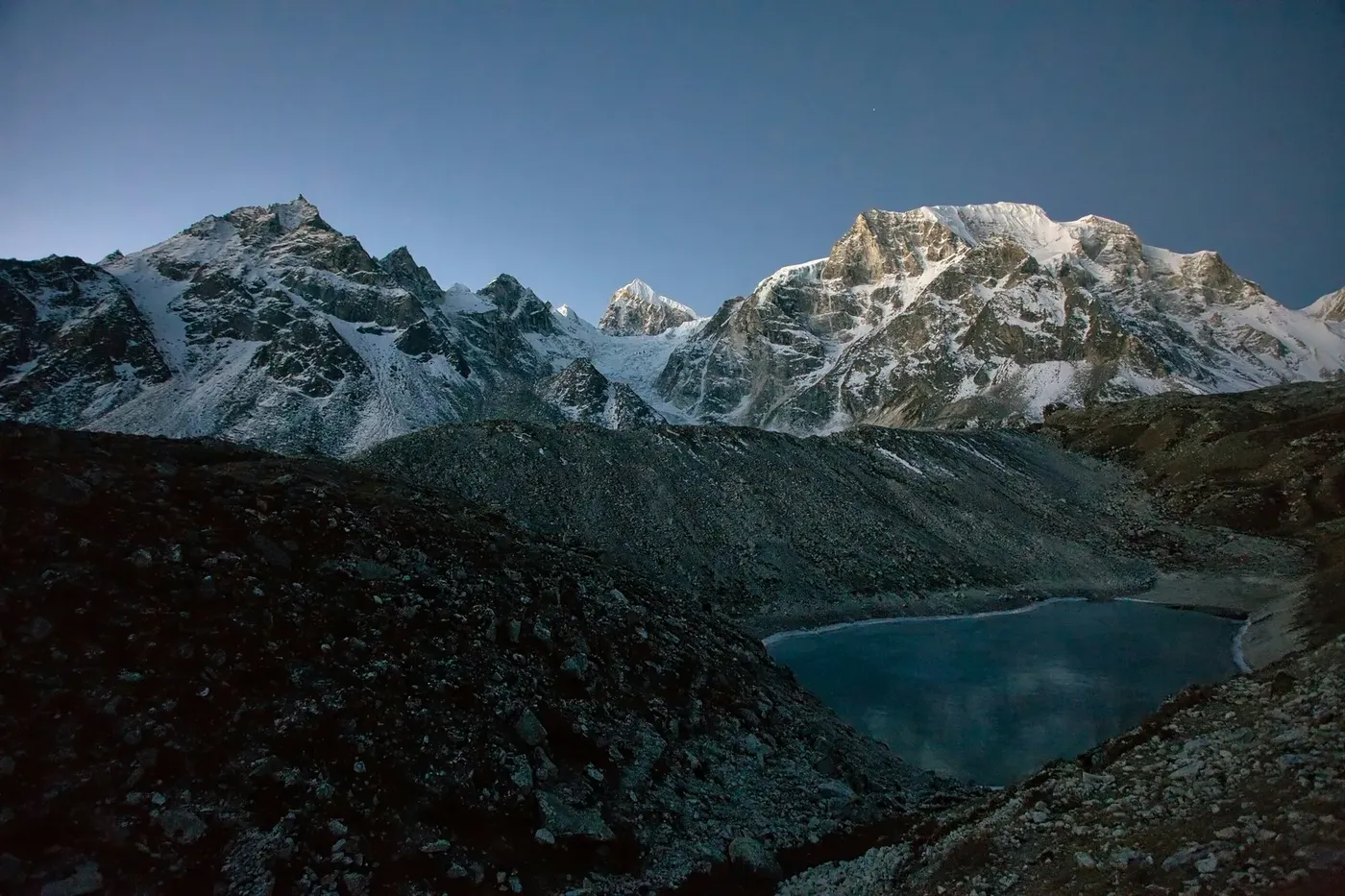
The upper Langtang Valley is a textbook glacial landscape. The Langtang Glacier and the smaller Lirung Glacier descend from the cirques beneath Langtang Lirung, and from the air their crevasses, moraines and meltwater lakes are laid out like a map. On a clear day the panorama extends to the Ganesh Himal to the west and, on the horizon, the distant bulk of the Jugal Himal. It is a view that rewards a window seat on either side of the aircraft.
Tamang Villages and Monasteries
The valley's human landscape is just as compelling as its geology. The Tamang people, one of Nepal's largest indigenous groups, have farmed and herded here for centuries, and their villages — stone houses, carved wooden windows, chortens and long strings of prayer flags — are visible throughout the flight. Kyanjin Gompa itself is a working monastery, and the surrounding mani walls and yak pastures give the upper valley a distinctly Tibetan atmosphere. For many passengers, the chance to land and walk briefly among these settlements is the most memorable part of the tour.
The 2015 Earthquake and the Valley's Recovery
It is impossible to talk about Langtang without acknowledging what happened here. In April 2015, a massive earthquake triggered an avalanche of ice and rock that swept through the village of Langtang, and the valley suffered losses that are still felt today. The community's response has been one of the quieter stories of Nepal's recovery: families rebuilt, the trail was reopened, and the lodges and teahouses of Kyanjin Gompa now welcome visitors again.
Flying over the valley today, you will see both the scars of that event and the evidence of renewal — new buildings beside old foundations, restored trails, and a community that has chosen to keep its doors open to travellers. Visiting Langtang is, in a real sense, a way of supporting that recovery, since tourism income flows directly to the families who live and work here. It is a place to visit with respect, and the helicopter tour is a gentle way to do so for those who cannot make the multi-day trek.
Who a Langtang Flight Suits Best
Langtang tends to attract a particular kind of traveller, and knowing whether you fit the profile will help you decide if it is the right tour for you. It is an excellent choice for first-time visitors to Nepal who want a genuine mountain experience without committing to a two-week trek, and for families — the short flight and gentle landing make it far more manageable for children and older relatives than a full Everest rotation.
It also suits photographers and culture-focused travellers. The valley's monasteries, mani walls and yak pastures offer a depth of subject matter that the more heavily visited routes sometimes lack, and the low aircraft traffic means you are rarely jostling for a view. Finally, it is a strong option for repeat visitors who have already ticked off Everest and Annapurna and are looking for somewhere new — Langtang is, for many, the valley they wish they had found first.
If your priority is standing at the foot of the world's highest mountain, Langtang will not scratch that particular itch, and you should look instead at our Everest Base Camp helicopter day tour. But if your priority is a quiet, beautiful, culturally rich flight that gets you into the high Himalaya and back before lunch, Langtang is hard to fault.
Langtang Helicopter Tour Cost: What Shapes the Price
Helicopter pricing in Nepal is driven by a small number of factors, and Langtang is no exception. The most important is flying time: because Langtang is closer to Kathmandu than Everest, the aircraft burns less fuel and logs fewer hours, which is reflected in the price. A second factor is group size and sharing — a private charter for your own party costs more per person than a shared seat on a group departure, and the trade-offs are worth understanding before you commit.
Other variables include the season (peak autumn and spring dates are in higher demand), the type of aircraft (the AS350 B3e "Squirrel" is the workhorse of Nepali mountain flying), and any add-ons such as a longer landing at Kyanjin Gompa, a breakfast stop, or a combined itinerary that pairs the flight with a short trek.
Rather than quote a figure that may be out of date, we point you to our dedicated cost guides, which are updated for the current season. For a direct comparison, see our Everest helicopter tour cost guide, which breaks down exactly how the Khumbu's longer flying time and higher landing fees translate into a higher price point. The short version: Langtang is consistently one of the more affordable ways to experience the high Himalaya by helicopter, and it is often the best value for travellers who want a genuine mountain landing without the Everest premium.
For the full picture on how group joining versus private charter affects what you pay, our group vs private helicopter tour guide is worth a read before you book.
Best Time to Fly to Langtang
Langtang follows the same seasonal rhythm as the rest of the Nepali Himalaya, with two reliable flying windows and two periods to avoid. The short answer is that October to November and March to May offer the clearest skies and the most stable flying conditions, while the monsoon months of June to September bring cloud, rain and frequent cancellations, and the deep winter of December to February can be cold and hazy in the valley.
There are nuances worth knowing, though. Spring brings rhododendron blooms to the lower slopes and long, bright days, while autumn offers the crispest visibility after the monsoon has washed the dust from the air. Because Langtang sits lower and closer to Kathmandu than the Khumbu, it is sometimes flyable on days when Everest flights are grounded — a useful detail if your dates are fixed.
We have written about this in detail, including month-by-month conditions and what to expect from the weather at altitude. Read our full guide to the best time for a helicopter tour in Nepal before you lock in your dates.
How to Book a Langtang Helicopter Tour
Booking a helicopter tour in Nepal is straightforward, but a few steps will save you money and stress. Start by deciding between a shared group departure (cheaper, but you fly on the operator's schedule and share the aircraft) and a private charter (more flexible, and the only option if you want to set your own departure time or combine the flight with a trek). Then confirm your dates against the seasonal advice above, and check the operator's safety record and insurance cover.
We recommend booking through a licensed Kathmandu operator rather than an overseas reseller, since local operators control the aircraft allocation and can rebook you quickly if weather intervenes. A small deposit usually secures your seat, with the balance payable before departure, and reputable operators will refund or reschedule if the flight is cancelled for weather.
We have laid out the entire process — what to ask, what to check, and how to avoid common mistakes — in our step-by-step guide on how to book a helicopter tour in Nepal. It is the best place to start once you have decided Langtang is for you.
Langtang vs Everest vs Annapurna: Helicopter Tours Compared
Choosing between Nepal's three most popular helicopter destinations is easier when you can see them side by side. The table below summarises the key differences; follow the links for the full picture on each option.
| Factor | Langtang | Everest | Annapurna |
|---|---|---|---|
| Distance from Kathmandu | Closest — shortest flying time | Farthest — longest flying time | Mid-range, via Pokhara |
| Signature view | Langtang Lirung, Langtang Glacier, Kyanjin Gompa | Mount Everest, Khumbu Icefall, Base Camp | Annapurna Sanctuary, Machhapuchhre, Kali Gandaki |
| Typical landing | Kyanjin Gompa (~3,800 m) | Everest Base Camp or Kala Patthar | Annapurna Base Camp or a return-trek option |
| Crowd level | Low — quietest of the three | High in peak season | Moderate to high |
| Relative cost | Generally the most affordable | Highest — see cost guide | Mid-range — see cost guide |
| Best for | First-time flyers, short trips, culture and glaciers | Bucket-list Everest, iconic Base Camp | Combining flight with a trek |
| Explore the tour | This page | Everest scenic mountain flight | Annapurna helicopter return trek |
The honest summary is this: if you want the world's highest mountain and don't mind the price and the crowds, choose Everest. If you want to pair a flight with a classic trek, Annapurna's return-trek format is hard to beat. But if you want a genuine high-Himalaya landing, a living Tamang culture and a valley you can have largely to yourself — at the most accessible price point of the three — Langtang is the choice that keeps surprising people.
Other Quiet Himalayan Destinations
Langtang is not the only alternative to the Everest crowds. Tilicho Lake in Manang is the highest lake in the region and flies from Pokhara — see our Tilicho Lake guide. Rara, Lumbini and the Kathmandu valley all have helicopter options with far less competition for departure slots.
Manaslu carries the authoritative detail if you want it from the source. It is worth reading before you plan, though nothing in it changes what the flight itself can do.
If you are planning this route, these go deeper: Gosaikunda Helicopter Tour: Sacred Lake by Helicopter (2026), Janai Purnima 2026: Gosaikunda Helicopter Tour for the Sacred…, and Kathmandu Valley Tour 2026 — 5-Day UNESCO Heritage & Aerial….
Frequently Asked Questions
How long is a Langtang helicopter tour?
Most Langtang helicopter tours are completed in a morning, with roughly one to two hours of total flying time depending on the exact route and how long you spend on the ground at Kyanjin Gompa. The short distance from Kathmandu is one of the tour's main selling points.
Do I need to trek to reach the helicopter?
No. The tour departs from Kathmandu and returns the same day, so no trekking is required. It is a popular option for travellers who want the mountain experience without the multi-day walk, and for those with limited time or mobility.
Is Langtang safe to fly to?
Yes. Langtang is flown by the same licensed operators and experienced mountain pilots who serve Everest and Annapurna, and its lower altitude and shorter route mean it is often flyable when higher destinations are not. As with any mountain flight, weather is the deciding factor, and reputable operators will not fly in unsafe conditions. See our safety and insurance guide for what to look for in an operator.
What should I wear on the flight?
Dress in layers, with a warm jacket for the landing at Kyanjin Gompa, where temperatures are noticeably colder than Kathmandu. Sunglasses, sun protection and sturdy shoes for walking on uneven ground are also worth having. Our packing list covers the full kit.
Can I combine Langtang with a trek?
Yes. A common format is to fly in, spend time in the valley, and either trek out or fly back — the reverse of the classic "trek up, fly back" model used on Everest. If you are interested in that style of trip, our trek-up-fly-back guide explains how the format works, and the same principles apply to Langtang.
How far in advance should I book?
For peak-season dates in October, November, March and April, booking several weeks ahead is wise, as aircraft and landing slots fill quickly. Outside peak season, a few days' notice is usually enough. Weather flexibility is built into most bookings, so a cancelled flight can typically be rescheduled rather than lost.
Ready to See the Quiet Side of the Himalaya?
A Langtang helicopter tour is one of the most rewarding ways to experience Nepal's mountains — close to Kathmandu, rich in culture, and free of the crowds that define the better-known routes. Whether you are planning a first visit or returning to see a valley you have only read about, we would be glad to help you put the trip together.
Browse our full range of helicopter tours to compare options, or get in touch with our team for current availability, pricing and a tailored itinerary. The mountains are closer than you think.