
Manaslu Helicopter Return Trek: What It Costs in 2026
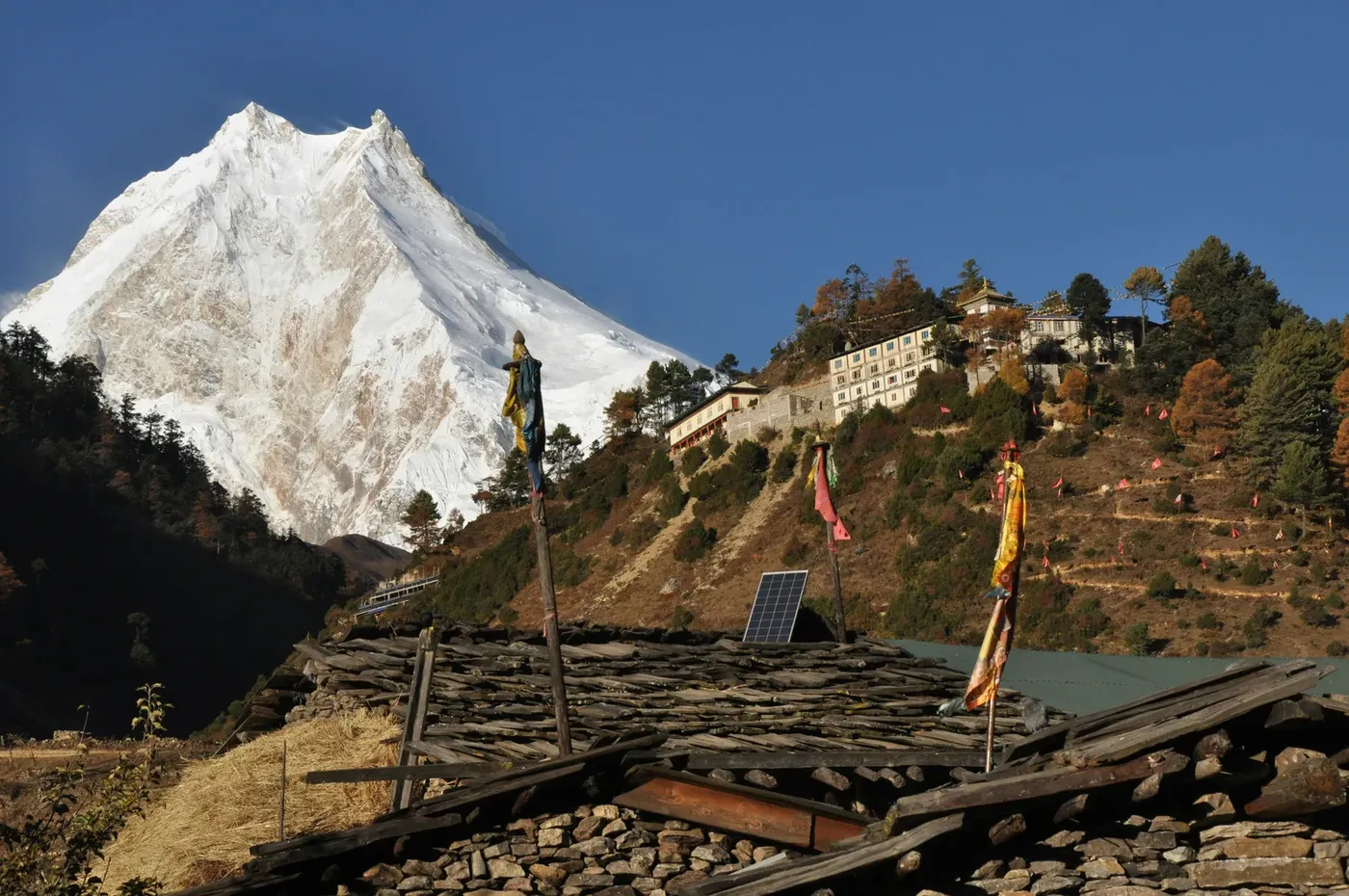
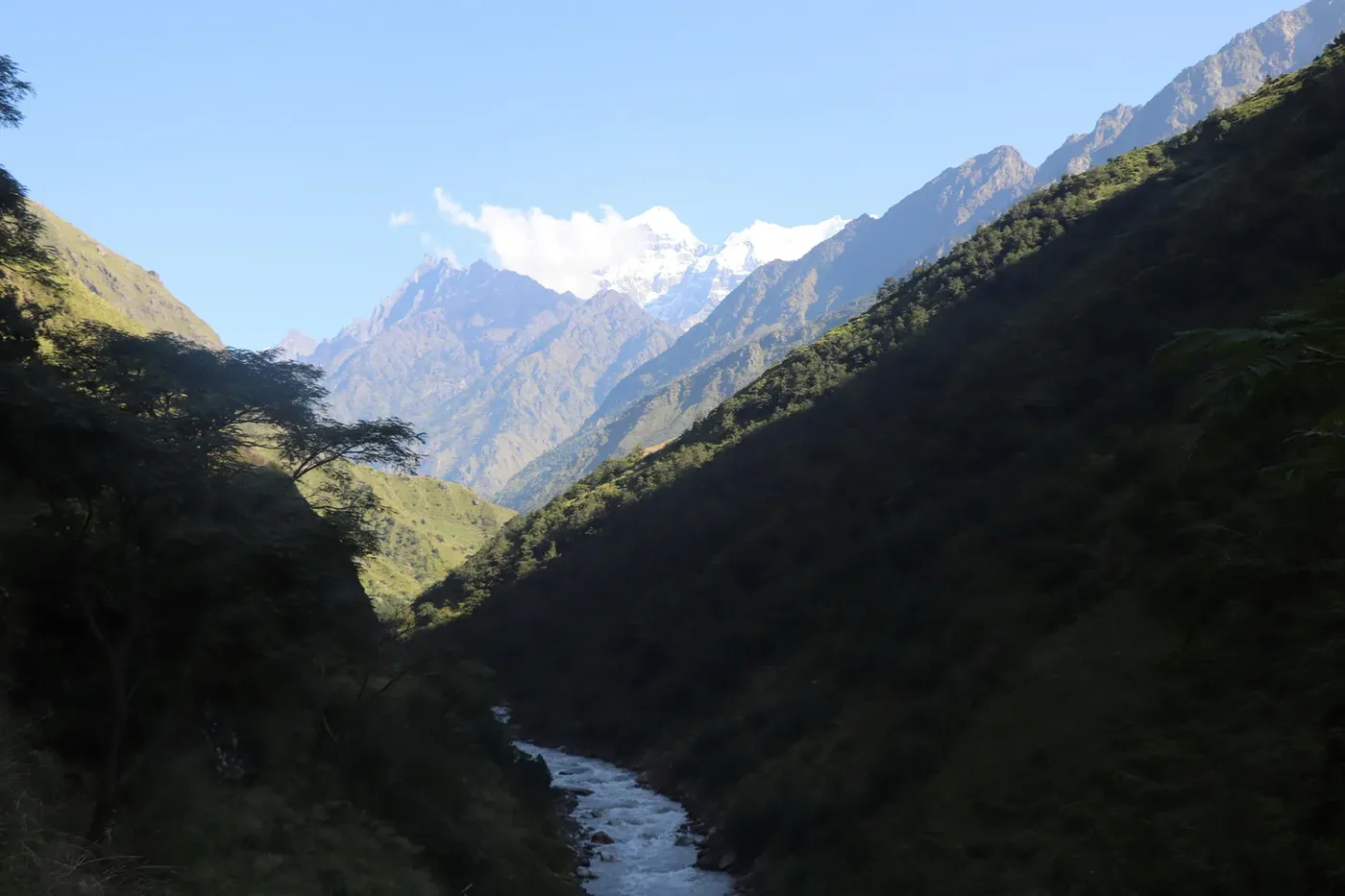
The Manaslu Circuit is one of Nepal's most spectacular — and most remote — treks. It circles Mount Manaslu (8,163m), the world's eighth-highest peak, through a restricted conservation area that sees a fraction of the visitors of Everest or Annapurna. For years, completing the circuit meant committing to a grueling 14–18 day round trip that included a brutal multi-day descent. The Manaslu Helicopter Return Trek changes that: you trek the classic route up and over the Larkya La pass, then fly back by helicopter instead of walking down. This guide breaks down every cost, what's included, and how to book without overpaying.
- 3,710 mMuktinath temple
- $1,080Muktinath, per seat
- 8,163 mManaslu, eighth-highest
- 1 dayTypical pilgrimage round trip
Why Choose a Helicopter Return on the Manaslu Circuit?
The Manaslu Circuit is a one-way teahouse trek that traditionally starts in Soti Khola and ends in Besisahar or Dharapani, after crossing the high Larkya La pass at 5,106 meters. The problem is the exit: after the pass, you face several long days of descent through the Marshyangdi valley to reach a roadhead. That descent is hard on the knees, eats up vacation days, and offers diminishing scenery compared to the dramatic high country you've just crossed.
A helicopter return solves all three problems. After crossing the Larkya La and spending a night at Bimthang or Tilje, you board a helicopter for a 20–30 minute flight back to Kathmandu (or to Besisahar for a road connection). You save 3–4 days, spare your legs the worst of the descent, and get an aerial finale over the very peaks you've been circling. It's the same logic that makes the Everest and Annapurna helicopter-return treks so popular — but applied to one of the Himalaya's wildest and least-crowded routes.
The Three Ways to Experience Manaslu by Air
There isn't one single "Manaslu helicopter" product — there are a few distinct options, and they're priced very differently. Understanding the difference is the key to getting a fair price.
1. Manaslu Helicopter Return Trek (Trek Up, Fly Back)
This is the flagship option and the one most serious trekkers choose. You trek the full Manaslu Circuit from Soti Khola through Machha Khola, Jagat, Namrung, and Samagaon, cross the Larkya La pass at 5,106m, then fly back by helicopter from Bimthang or Tilje. The trek takes about 11–13 days one way, and the helicopter return saves you the 3–4 day descent. In 2026, this package typically costs from $2,900 per person on a group basis. See our Manaslu Helicopter Return Trek itinerary and pricing.
2. Manaslu Scenic Helicopter Tour (Flight Only)
For travelers who want to see Manaslu without trekking at all, a scenic helicopter flight from Kathmandu circles the massif and lands at a viewpoint or at Samagaon for a short stop. It's a half-day experience costing roughly $900–$1,300 per person depending on landing arrangements and group size. This is the fastest way to see the eighth-highest mountain up close.
3. Manaslu Helicopter Rescue / Evacuation Standby
This isn't a tour product but an important cost to understand: if you trek Manaslu and need an emergency evacuation, a helicopter rescue from the high country can cost $4,000–$6,000+ unless you have travel insurance that covers high-altitude helicopter evacuation. This is why insurance is non-negotiable on Manaslu — and why the planned helicopter return is a far better value than an unplanned rescue.
Manaslu Helicopter Return Trek Price Breakdown (2026)
Here's what a typical group package includes and what it costs. Prices vary by operator, group size, and season, but this gives you a realistic baseline for budgeting.
What's usually included in the ~$2,900 package: all teahouse accommodation on the trek, three meals a day while trekking, a licensed Manaslu-region guide and porters, the Manaslu Conservation Area Permit (MCAP), the restricted-area Manaslu trekking permit, the Annapurna Conservation Area Permit (ACAP) for the exit section, ground transport to the trailhead at Soti Khola, and the one-way helicopter flight from Bimthang/Tilje back to Kathmandu. Most operators also include Kathmandu hotel nights before and after the trek and airport transfers.
What's usually excluded: international airfare, Nepal entry visa ($50 for 30 days), travel and evacuation insurance, lunches and dinners in Kathmandu, personal gear, tips for guides and porters (conventionally around 10% of the package), and any extra nights caused by weather delays. The helicopter return is weather-dependent, so a delay can add hotel and meal costs.
Why Manaslu Costs What It Does: The Permit Factor
Manaslu is a restricted area, and the permit structure is the single biggest driver of cost — and the reason you can't trek it independently. The Manaslu restricted-area permit costs $100 per person for the first week and $15 per day thereafter (September–November), or $75 for the first week and $10 per day thereafter (December–August). On top of that, the Manaslu Conservation Area Permit is NPR 3,000 and the ACAP is NPR 3,000. Crucially, the restricted-area permit requires a minimum of two trekkers and a licensed guide — you cannot obtain it solo. This is why Manaslu packages are priced per person on a group basis and why a reputable operator is essential: they handle the permit paperwork, the guide requirement, and the logistics that the restriction imposes.
Best Time to Do the Manaslu Helicopter Return Trek
The two best windows are late September to November (post-monsoon, stable skies, clear mountain views) and March to May (spring, rhododendrons in bloom, warmer temperatures). Autumn is the most popular and offers the most reliable flying weather for the helicopter return. Spring is beautiful but can have more afternoon cloud build-up, which occasionally delays flights. The monsoon (June–August) brings leeches, landslides, and poor flying weather, and winter (December–February) brings heavy snow on the Larkya La that can close the pass entirely. For the helicopter return specifically, you want the stable high-pressure weather of autumn or spring, because the flight out of Bimthang is weather-dependent.
How Difficult Is the Manaslu Circuit?
The Manaslu Circuit is rated moderate to challenging. It's harder than the Annapurna Base Camp trek and comparable to Everest Base Camp, mainly because of the Larkya La pass at 5,106m and the long, sustained days of walking. You'll typically walk 5–7 hours a day over 11–13 days, with the crossing of the Larkya La being the single hardest day — a pre-dawn start, several hours of steep climbing on snow and scree, and a long descent to Bimthang. Good fitness, proper acclimatization, and a solid pair of broken-in boots are essential. The good news is that the itinerary includes acclimatization days (usually at Samagaon and Samdo) to reduce the risk of altitude sickness, and the helicopter return means you don't have to worry about saving energy for a multi-day descent.
What to Expect on the Day of Your Helicopter Return
After crossing the Larkya La and descending to Bimthang (3,720m), you'll spend the night in a teahouse celebrating the hardest part being behind you. The next morning, weather permitting, the helicopter arrives — often a thrilling sight as it drops into the small landing area near the village. You'll board with your duffel (keep it light; helicopters have strict weight limits, typically 15kg per person) and lift off over the valley you've spent days walking. The flight back to Kathmandu takes roughly 30–40 minutes and offers a stunning aerial farewell to Manaslu, the Ganesh Himal range, and the terraced middle hills. You'll land at the Kathmandu helipad and be driven to your hotel, usually arriving by mid-morning — a surreal contrast after two weeks in the mountains.
Manaslu vs. Everest vs. Annapurna: Which Helicopter Return Trek Is Right for You?
All three regions offer helicopter-return treks, but they suit different travelers. Everest is the bucket-list choice — the world's highest peak, the most famous base camp, and the flagship of the three (from ~$1,840). Annapurna is the most accessible and culturally rich, and now the most affordable of the three (from ~$1,199) and the beautiful Sanctuary. Manaslu is the wild, off-the-beaten-path choice — fewer crowds, a more remote feel, a challenging high pass, and the highest price of the three (from ~$2,160). Choose Everest if you want to say you've been to the top of the world. Choose Annapurna if you want beauty and culture with easier logistics. Choose Manaslu if you want a genuine wilderness trek away from the crowds with a dramatic high-pass crossing. For the Everest and Annapurna side, see our guides to Everest helicopter tour costs and Annapurna helicopter tour costs.
Budgeting for Your Manaslu Helicopter Return Trek
Beyond the ~$2,900 package price, factor in a few related costs so there are no surprises. Your Nepal entry visa is $50 for 30 days. Travel insurance with high-altitude trekking and helicopter-evacuation coverage is mandatory for Manaslu and typically costs $80–$200 for a two-week policy — do not skip this. Tips for your guide and porters run around 10% of the package cost. Personal gear (down jacket, sleeping bag, trekking poles) can be rented cheaply in Kathmandu if you don't own it. Kathmandu meals and any extra nights caused by weather delays are usually excluded, so keep a buffer of $150–$300. All told, budget roughly $3,400–$3,800 per person all-in, including international flights, insurance, and spending money.
Why Book With a Licensed Local Operator
Because Manaslu is a restricted area, you must book through a licensed Nepali operator — there's no way around it. But this requirement is actually an advantage: it means you're dealing with a company that's accountable under Nepali law, that handles the complex permit paperwork, and that provides licensed guides who know the route intimately. A good local operator has direct relationships with the helicopter companies, which means better availability and more flexible rescheduling when weather intervenes. They understand the restricted-area permit system inside out and can handle last-minute changes. Most importantly, their prices don't carry the reseller markup you'd pay through an overseas agent. When you book with a company like Heli Tours Nepal, operated by Enticing Himalayas Travel, you're dealing directly with the people who run the treks and the flights.
Common Mistakes to Avoid
First-time Manaslu trekkers make a few predictable mistakes. Booking the cheapest operator without checking licensing is the biggest one — the restricted-area permit requires a legitimate licensed company, and a cut-rate broker can leave you without permits or a guide. Not building in buffer days is another: the helicopter return is weather-dependent, and the Larkya La can close in bad weather, so a couple of flexible days can save your trip. Underestimating the difficulty is a third — Manaslu is a serious trek, and arriving undertrained or without proper acclimatization is the most common cause of problems. Finally, skipping evacuation insurance is a costly gamble, given that an unplanned rescue can run into the thousands. A short conversation with your operator about permits, fitness, insurance, and buffer days prevents all of these.
The Manaslu Circuit Route, Day by Day
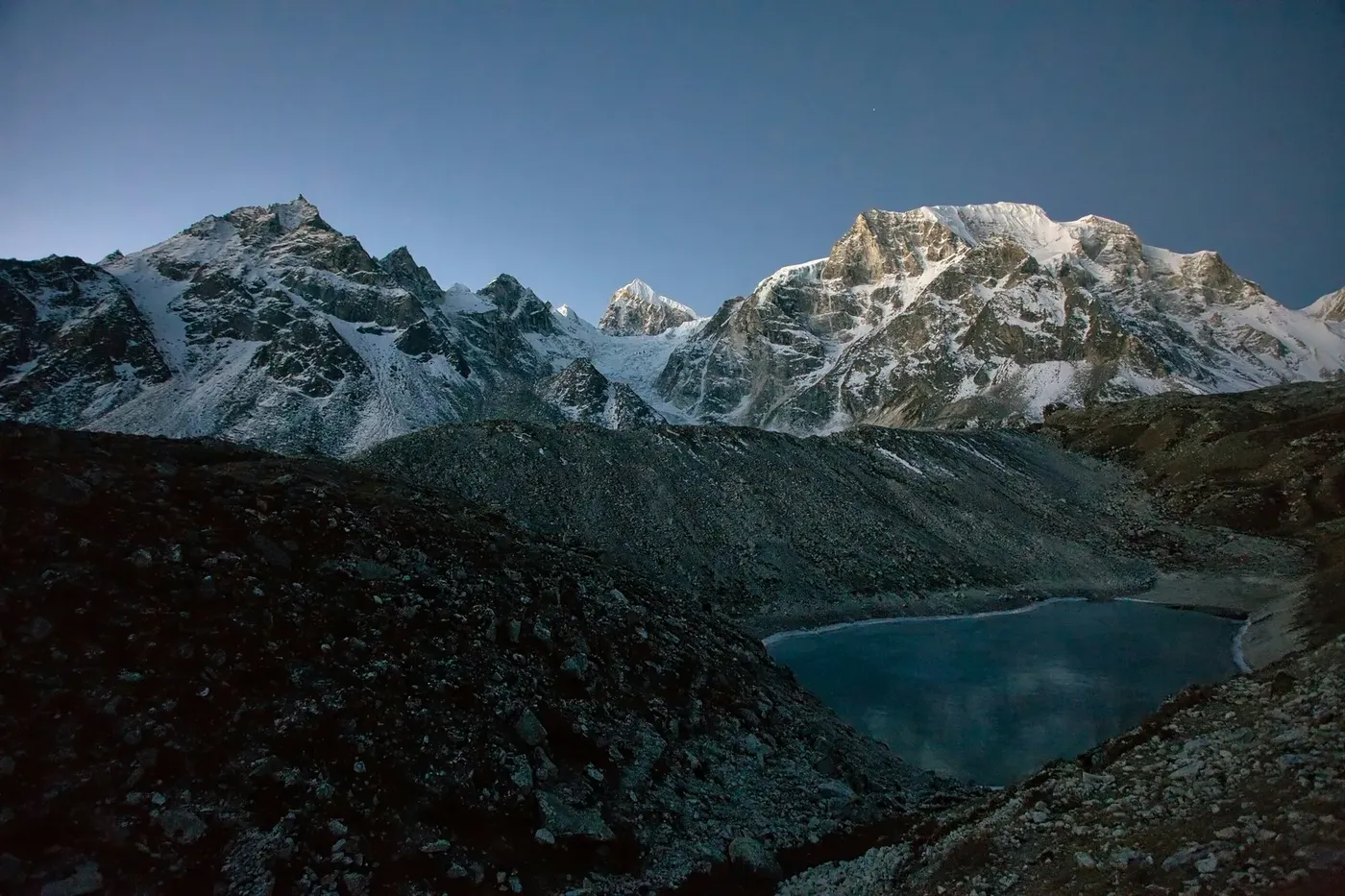
Here's the classic route you'll trek before the helicopter flight home. Day 1 takes you by road from Kathmandu to Soti Khola (700m), a long but scenic drive through the middle hills. Days 2–3 follow the Budi Gandaki river valley upward through Machha Khola and Jagat, passing waterfalls, suspension bridges, and subtropical forest. From Jagat, you enter the restricted area and the landscape begins to change — the valley narrows, the forests give way to alpine scrub, and Tibetan-influenced villages appear. Days 4–6 climb through Namrung and into the high country around Samagaon (3,530m), where you'll typically spend an acclimatization day exploring the glacial lake and viewpoints beneath Manaslu's massive south face. Day 7 continues to Samdo (3,860m), the last village before the pass, with another acclimatization stop. The crossing itself comes around day 9 or 10: a pre-dawn start from Dharamsala (4,460m), four hours of steep climbing to the Larkya La (5,106m) draped in prayer flags, and a long descent on snow and scree to Bimthang (3,720m). After a well-earned night at Bimthang, you board the helicopter and fly home. The whole journey — roadhead to pass to helicopter — is one of the great Himalayan traverses.
What to Pack for the Manaslu Helicopter Return Trek
Packing for Manaslu is the same as for any high-altitude Nepal trek, with one extra constraint: the helicopter return has a strict weight limit, typically 15kg per person including your daypack. The essentials are a warm down jacket, a four-season sleeping bag (teahouses provide blankets but they're not always clean or warm enough), waterproof trekking boots broken in before you fly to Nepal, trekking poles for the long descents, a headlamp for the pre-dawn pass crossing, sun protection (high-SPF sunscreen, lip balm, glacier sunglasses), a water bottle with purification tablets, and a small first-aid kit including blister care and altitude-sickness medication (Diamox, after consulting your doctor). Most of this can be rented cheaply in Kathmandu's Thamel district if you don't own it. Your operator will give you a full packing list, and your porter will carry the main duffel (typically up to 10–15kg) while you walk with a light daypack.
For reference, Manaslu is the authoritative background on this feature. It will not change the itinerary, but it explains what you are looking at.
For the adjacent decisions, see Gosaikunda Helicopter Tour: Sacred Lake by Helicopter (2026), Janai Purnima 2026: Gosaikunda Helicopter Tour for the Sacred…, and Kathmandu Valley Tour 2026 — 5-Day UNESCO Heritage & Aerial….
Frequently Asked Questions
Can I trek Manaslu solo? No. The restricted-area permit requires a minimum of two trekkers and a licensed guide. This is enforced at checkpoints along the route.
What happens if the helicopter can't fly due to weather? Your operator will reschedule the flight, usually within a day or two. If weather stays bad, you'll walk out to Besisahar or Dharapani and return by road — this is why buffer days matter. Any extra hotel and meal costs from delays are typically not included in the package.
Is altitude sickness a real risk? Yes — the Larkya La is 5,106m, and the itinerary is designed with acclimatization days to reduce the risk. Symptoms (headache, nausea, dizziness) should be reported to your guide immediately. Descent is the cure, and in a serious case a helicopter evacuation is available (which is why insurance is mandatory).
How fit do I need to be? You should be comfortable walking 5–7 hours a day over consecutive days with significant elevation gain. Regular cardio training for 2–3 months before the trek makes a big difference.
Is there phone signal or WiFi on the trek? Mobile data works sporadically in lower villages and is mostly absent in the high country. Some teahouses offer paid WiFi. Expect to be largely offline for several days — that's part of the appeal.
Is the Manaslu Helicopter Return Trek Worth It?
For the right traveler, absolutely. If you want a genuine wilderness trek through one of Nepal's most remote and least-crowded regions, with a dramatic high-pass crossing and a spectacular aerial exit, the Manaslu Helicopter Return Trek is one of the best value adventures in the Himalaya. At around $2,900 for a fully-supported 11–13 day trek plus a helicopter flight back to Kathmandu, it's cheaper than the equivalent Everest option and offers a more off-the-beaten-path experience. The key is to book with a licensed, experienced operator, get proper evacuation insurance, and build in a little flexibility for weather. Do that, and the Manaslu Circuit with a helicopter return will be the highlight of your trekking life.