
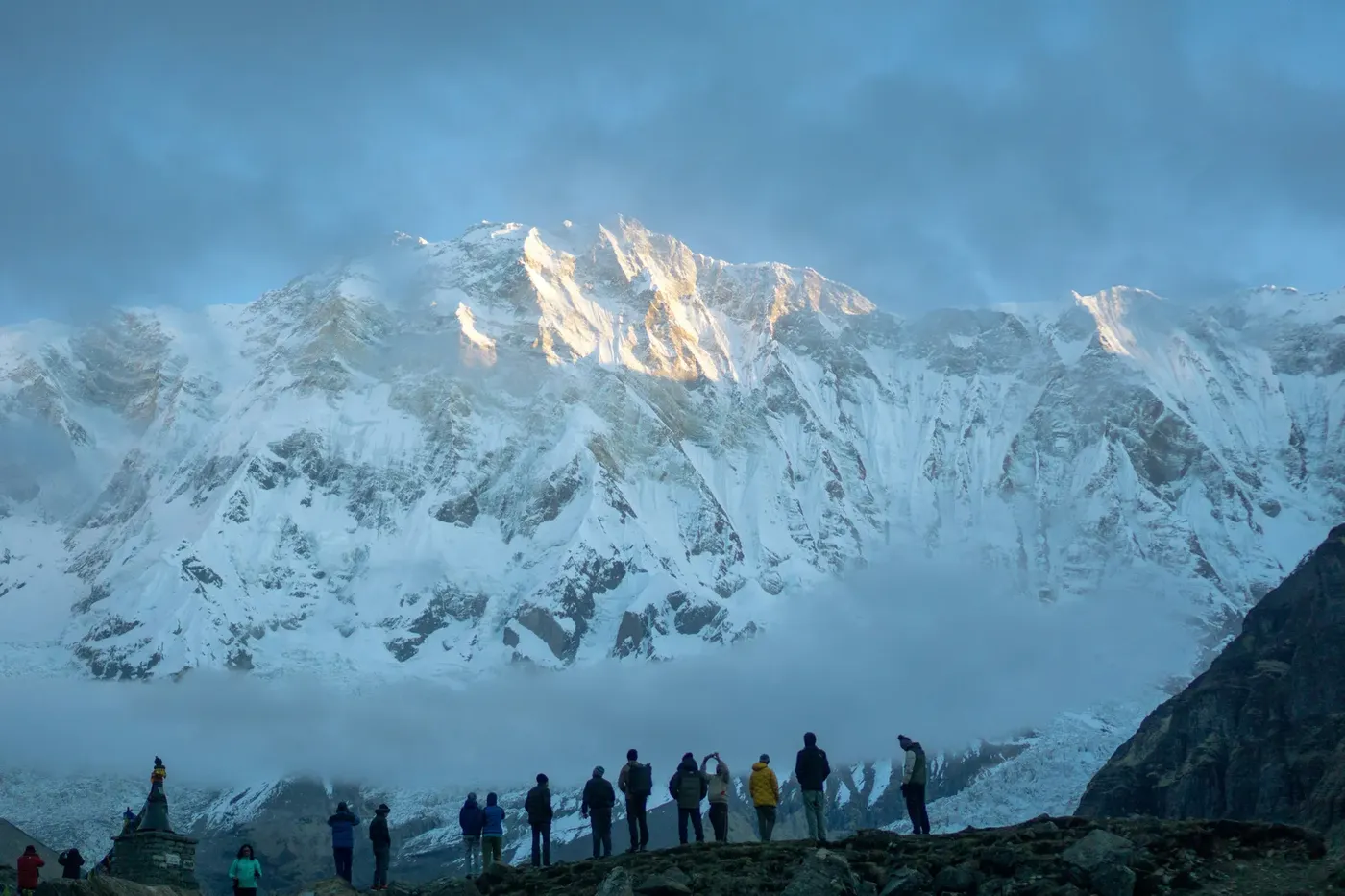
Annapurna Base Camp helicopter day tour from Pokhara: land at ABC (4,130m) and be back by lunch. 2026 price from $860 per person, shared or private.
Annapurna Base Camp Helicopter Day Tour — Stand in the Sanctuary Before Lunch
The Annapurna Base Camp helicopter day tour is the shortest route to one of the great mountain amphitheatres on earth. There is no trek, no permit, no sleeping at altitude and no eight days of walking. You leave Pokhara at first light, land inside the Annapurna Sanctuary at 4,130 metres, stand beneath Annapurna I, and are back in the city before lunch. For travellers with a tight itinerary, older knees, or simply a preference for seeing the Himalayas from the air, it is the single best-value helicopter flight in Nepal.
This page covers what the flight actually is, what it costs, how the shared and private options compare, when to fly, what can go wrong, and how to book it.
| What the flight is | The detail |
|---|---|
| Route | Pokhara – Modi Khola valley – Annapurna Base Camp – Pokhara |
| Time in the air | Roughly 1 hour total, across two legs |
| Time on the ground | 15–30 minutes at 4,130m |
| Door to door | About 3–4 hours from your Pokhara hotel |
| Trekking required | None |
| Permits you need to arrange | None — we handle the aviation permissions |
| Best months | March to May and September to November |
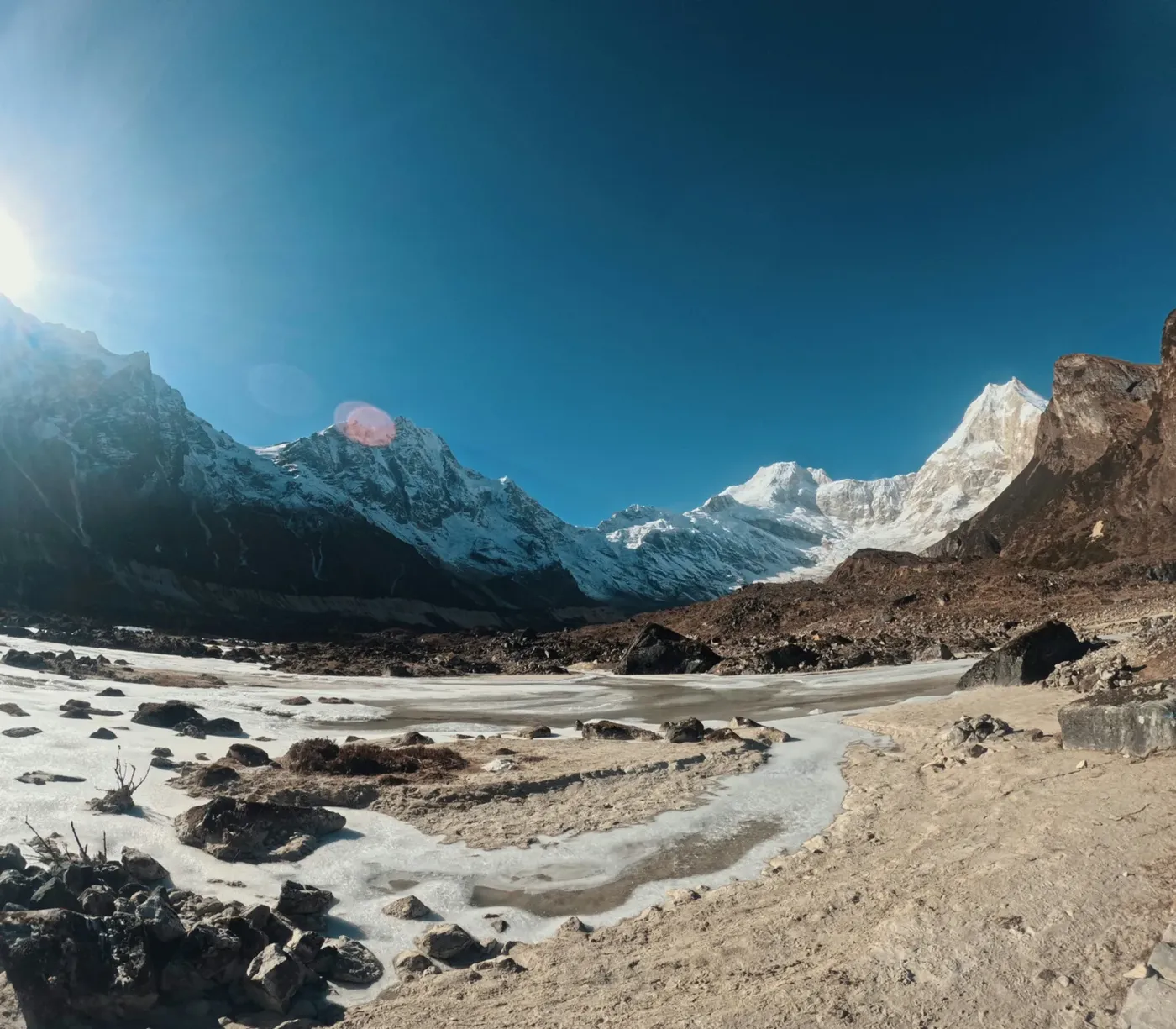
The flight is not a scenic loop that stays at a distance. It flies into the Sanctuary itself, up the Modi Khola gorge, and lands on the basin floor. That matters, because the mountains of the Annapurna massif are arranged in a ring — from the ground at Base Camp you are standing inside the amphitheatre looking up at all of them at once.
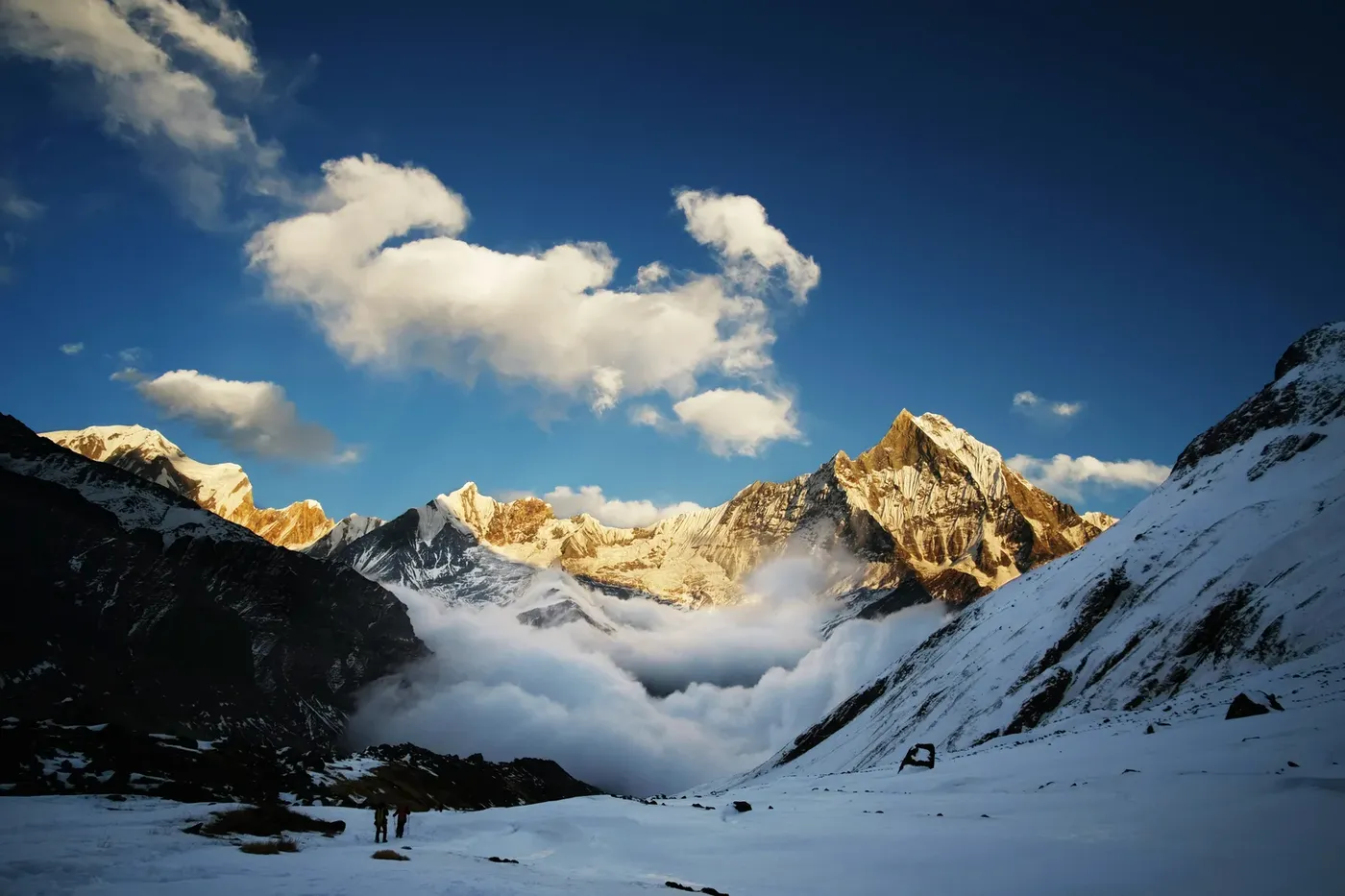
The peaks you see on the way in and from the ground include Annapurna I (8,091m), the tenth-highest mountain in the world and the first 8,000-metre peak ever climbed; Annapurna South, Hiunchuli, and Machhapuchhre, the Fishtail, which is sacred to Nepalis and has never been climbed. Further west on the horizon sits Dhaulagiri, and on clear mornings the Manaslu range shows to the east.
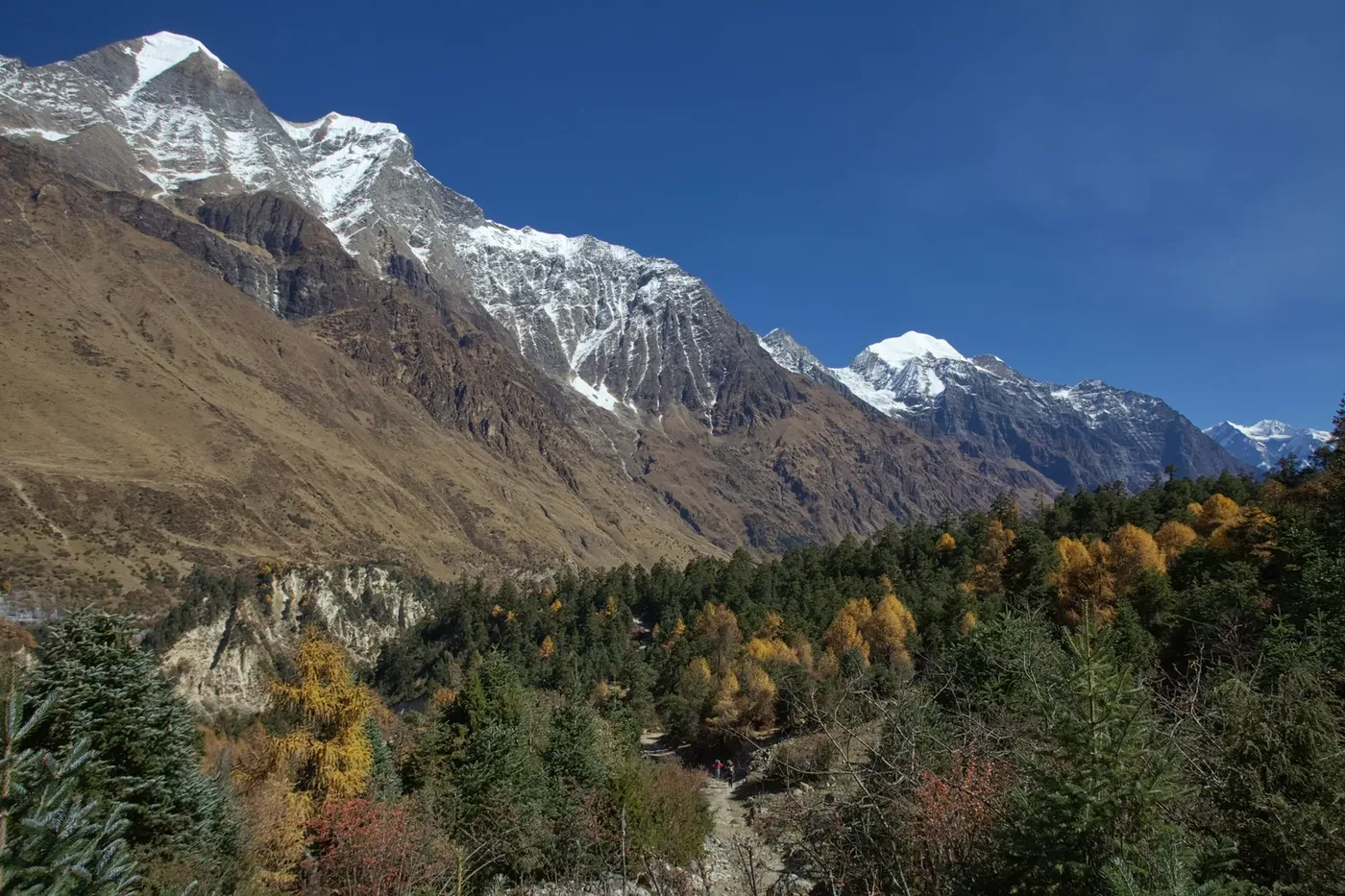
On the approach you fly over the terraced hillsides and Gurung and Magar villages of the Modi valley — settlements that take trekkers three days to reach and that you cover in twenty minutes. The gorge closes in, the forest darkens, and then the valley opens into the Sanctuary and the glacier basin appears below the aircraft.
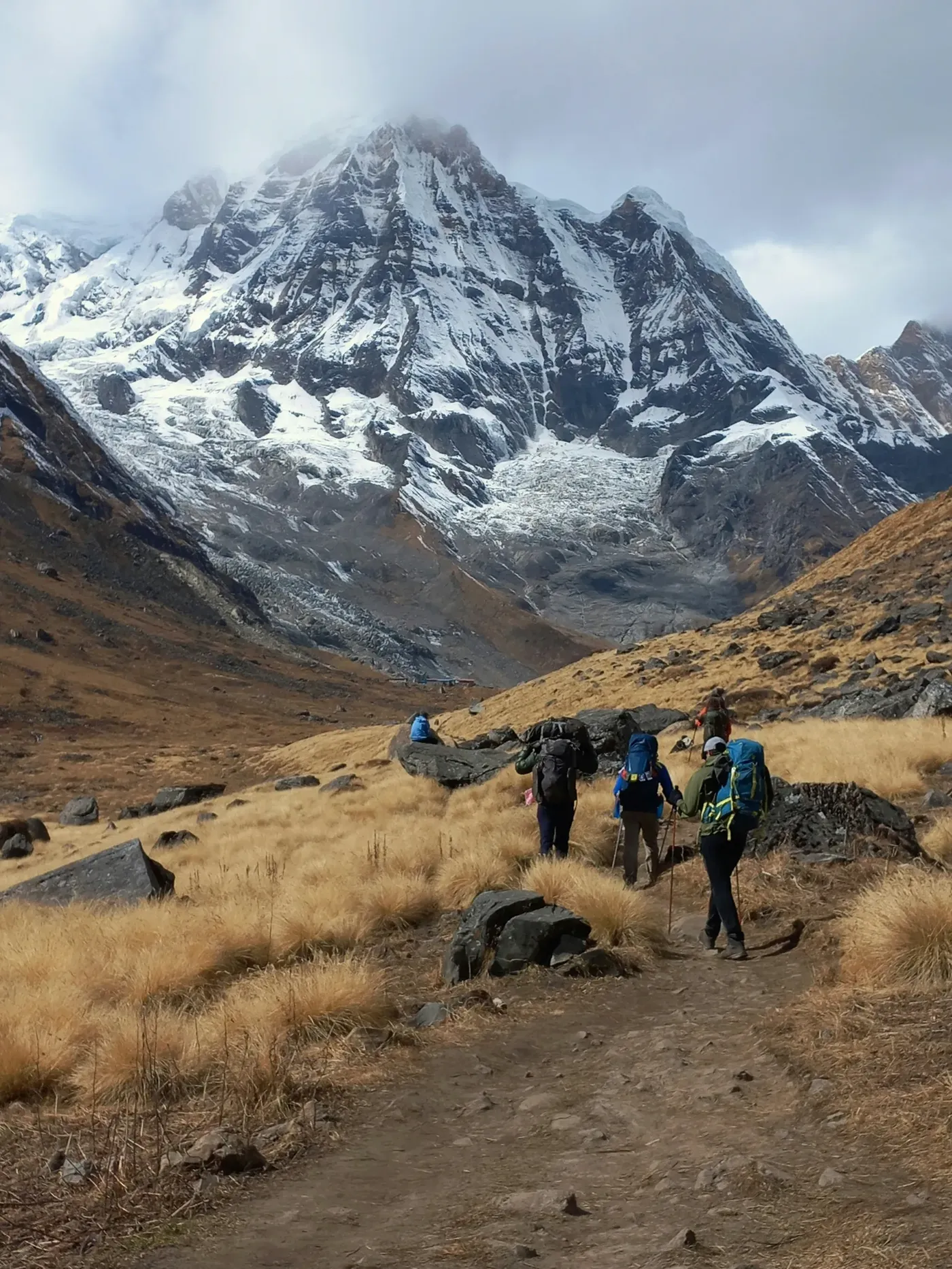
The Annapurna Base Camp trek takes eight to eleven days on the standard itinerary. It is a beautiful trek and we run it. But it demands time, a good level of fitness, teahouse nights at altitude, and a window of weather that a two-week holiday rarely has to spare.
The helicopter day tour compresses the entire journey into a morning. That is not a compromise on scenery — from 4,130 metres on the basin floor you are standing in the same place, looking at the same ring of peaks. What you lose is the walk in and the acclimatisation that comes with it, which is exactly why the time on the ground is limited to 15–30 minutes.
| How the options compare | Shared seat | Private charter |
|---|---|---|
| Price | $860 per person | $2,585 per aircraft |
| Who flies with you | Other travellers on the same rotation | Only your group |
| Aircraft capacity | Up to 5 passengers | Up to 5 passengers |
| Departure time | Fixed early-morning slot | You choose within the safe window |
| Landing time on the ground | 15–30 minutes | 15–30 minutes |
| Flexibility if weather turns | Rescheduled to the next available slot | Rescheduled or re-routed to suit your group |
| Best for | Solo travellers, couples, small budgets | Families, photographers, groups of 4–5 |
The arithmetic on the charter is worth doing if you are a group of four or five. Divided between five passengers, a private charter works out at roughly $517 per seat — and you get the aircraft, the departure time and the route to yourselves. For a group of two, booking two shared seats is almost always the cheaper answer.
The two windows that matter are spring and autumn. From March to May the rhododendron forests below Annapurna are in flower and the skies settle into a stable pre-monsoon pattern. From September to November the monsoon has washed the air clean and the visibility is at its sharpest of the year — this is the best season to fly, and also the busiest.
Winter flights from December to February are cold and very clear, and they run, but snow can close the landing site at short notice. The monsoon months of June to August are the least reliable, though early-morning flights still go on many days.
This is a mountain flight in a real mountain range, and the honest answer is that weather can interrupt it. Cloud can close the Modi Khola valley. Wind can make the landing site unsafe. Visibility at Base Camp can fail while Pokhara is perfectly clear. When that happens the flight is delayed, rescheduled, or in the worst case called off — and no operator who values their licence will fly anyway.
The practical consequence is simple: build a buffer. If you have only one morning in Pokhara and the flight is grounded, you may go home without it. If you have two, you almost certainly will not. Book the flight for your first morning in Pokhara, not your last.
The landing site itself can also change on the day. Annapurna Base Camp is the usual landing point, but the pilot may use an alternative site if weather or aviation rules require it. That is not the operator cutting corners — it is the pilot making a judgement call that keeps everyone safe.
Booking is straightforward, and the useful thing to know is what we need from you: your preferred date, the number of passengers each person's body weight with hand baggage, and whether you want a shared seat or a private charter. Weight is not a formality on this flight — it is the single biggest constraint on how the aircraft is loaded.
We confirm your slot, brief you on the morning's timing, and collect you from your Pokhara hotel. Payment is settled before the flight. If the flight is grounded for weather, we reschedule you to the next available morning at no extra cost, or refund you in full if you are leaving Pokhara.
For the same flight departing from Kathmandu rather than Pokhara, see our guide to helicopter tours from Pokhara and our Everest Base Camp day tour, which follows the same pattern in the Khumbu.
We are Enticing Himalayas Travel, a government-licensed Kathmandu tour operator running helicopter flights in Nepal since 2012. The morning flight to Annapurna Base Camp is one of the most reliable ways to see the high Himalaya in a single day, and it is the flight we recommend most often to travellers who are short on time.
Send us your date and the number of passengers and we will confirm availability, the departure time and the exact cost within 12 hours — usually much faster.
Weather is the deciding factor. This flight, like every helicopter flight into the high Himalaya, is weather-dependent. If the pilot judges the valley or the landing site unsafe, the flight is delayed or cancelled — that is a safety decision and it is not negotiable. Keep a spare morning in Pokhara if you can. Go early, and go empty-stomached. Flights go at first light because the air is calmest and clearest then. Eat lightly beforehand, avoid alcohol the night before, and expect the morning to start before sunrise. Morning departures also mean a smoother ride — the valley thermals that build after 10am make the flight noticeably rougher. The altitude is real. Annapurna Base Camp sits at 4,130 metres. That is high enough to affect people who have never had a problem before. The 15–30 minute window on the ground exists because staying longer is not safe for most visitors. If you feel a headache, dizziness or nausea, tell your pilot immediately and sit down. The landing site can change. Weather and aviation regulations decide where the aircraft sets down on the day. Annapurna Base Camp is the usual site, but the pilot may use an alternative landing point if conditions require it. This is normal and it is not a downgrade — it is how mountain flying works. Weight limits are enforced. The aircraft has a strict payload limit, and every passenger is weighed with their hand baggage. The allowance is approximately 80 kg per person including everything you carry. If your group exceeds the limit, the operator will need to adjust the load, which may mean a second flight or an additional seat. Seating is the pilot's call. On a shared flight, seats are allocated by the pilot to balance the aircraft. Everyone gets a view — the H125 and Bell 505 cabins are both designed for it — but which side you sit on is a weight-and-balance decision, not a preference. Insurance is not optional. Buy a policy that explicitly covers helicopter evacuation above 4,500 metres and trekking at altitude, and check the altitude ceiling written into it. The most common insurance failure we see in Nepal is a policy that looked adequate until the altitude limit was read properly.
Reviews from travellers who actually flew with us. Your review appears on this page once our office confirms your trip — usually within a day.