
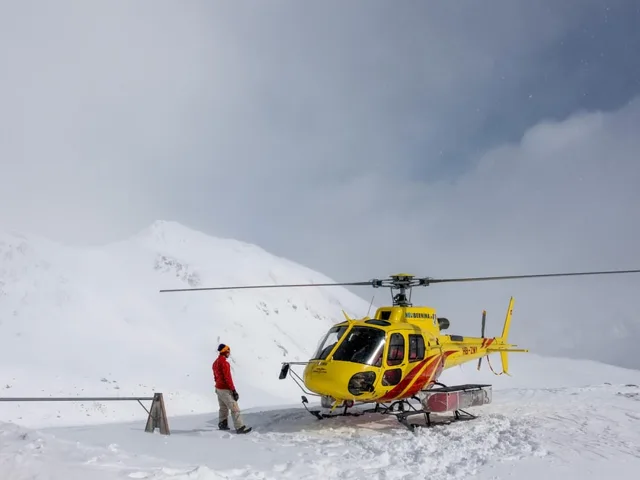
Short answer: Choosing a helicopter tour operator in Nepal comes down to three things you can verify before you pay: an Air Operator Certificate issued by the Civil Aviation Authority of Nepal for the specific route, a pilot roster with genuine high-altitude mountain hours, and a written weather-cancellation policy. Price matters, but the cheapest quote is rarely the one you want at 5,545 m. Kathmandu-based operators fly the Everest region; Pokhara-based operators fly Annapurna and Manang. Ask which approvals an operator holds for the route you are buying, and get the answer in writing.
- CAANRegulator, all operators
- $1,260EBC day tour, per seat
- 5,545 mMax landing altitude
- 2 daysWeather buffer advised
What a Helicopter Tour Operator in Nepal Actually Does
Nepal's helicopter tour industry is unusual, and understanding how it is structured will save you both money and risk.
A tour operator does not generally own the aircraft you fly in. Most flights over the Everest and Annapurna regions are operated by dedicated helicopter companies — the aviation businesses that hold the Air Operator Certificate, employ the pilots, and maintain the fleet. The agency or tour operator you book through handles the commercial side: your enquiry, your itinerary, your payment, and your ground arrangements.
That split matters because it means two separate things can go wrong. The flight can fail on aviation grounds — weather, aircraft serviceability, a pilot's judgement. Or the booking can fail on commercial grounds — a seat that was never actually held, a departure that does not exist, a refund that never arrives. A good operator is competent at both, and transparent about which part they control.
The best operators in this market tend to be the ones who are unambiguous about the distinction. They will tell you plainly that they work with a specific helicopter company, name it, and explain what happens when weather intervenes. Operators who speak as though they own the helicopter, when they do not, are usually the ones whose customers discover the difference at the helipad.
The Regulatory Picture: What "Licensed" Actually Means
Every helicopter flight carrying paying passengers in Nepal requires an Air Operator Certificate issued by the Civil Aviation Authority of Nepal (CAAN). This is not a formality. An AOC specifies the aircraft types an operator may fly, the routes and areas it is approved for, and the maintenance and crew standards it must meet.
Practical implications for a traveller:
- The certificate belongs to the aviation company, not the agency. Ask which helicopter company will operate your flight and confirm that company holds the approvals for that route.
- Route approvals are specific. An operator approved for the Kathmandu valley is not automatically approved for high-altitude landings in the Khumbu. "Are you approved for this route?" is a precise question with a factual answer, and a good operator answers it without hesitation.
- High-altitude operations carry additional requirements. Landings above 4,000 m involve performance limits, payload restrictions and oxygen considerations that a valley flight does not. Experience at altitude is not interchangeable between operators.
You do not need to become an aviation auditor. You need to ask one clear question — which company flies this, and are they approved for this route — and judge the answer.
Kathmandu or Pokhara: Which Base You Actually Need
The single most useful thing to know about Nepal's helicopter map is that the country has two flying bases, and the one you choose determines what you can reach economically.
| Base | Regions reached economically | Typical flights |
|---|---|---|
| Kathmandu | Everest and Khumbu, Langtang, Gosaikunda, Kathmandu valley, eastern Nepal | Everest Base Camp day tour, Kala Patthar landing, Everest View Hotel breakfast, scenic mountain flights |
| Pokhara | Annapurna, Manang, Tilicho, Mardi Himal, western Nepal | Annapurna Base Camp landing, Tilicho Lake, Mardi Himal, Pokhara valley scenic flights |
Trying to fly an Annapurna route from Kathmandu, or an Everest route from Pokhara, is possible but inefficient: you pay for positioning time and fuel, and the day gets longer. Most itineraries are built so that you are already in the right city. If you are flying into Nepal and going straight to Pokhara for an Annapurna flight, that is usually the right shape — and if Everest is the goal, Kathmandu is the base.
Our guides to helicopter tours from Pokhara and the full Nepal route and price map set out what is reachable from each city.
What to Check Before You Pay a Deposit
Six checks, all of which a serious operator will pass comfortably.
1. Who operates the aircraft?
Ask directly. A reputable operator names the helicopter company and confirms the route approval. Vagueness here is the single clearest warning sign in this market.
2. What is the written weather-cancellation policy?
Weather grounds flights in Nepal — it is a fact of mountain flying, not a failure of the operator. What separates operators is what happens next. You want a written policy covering rescheduling, refunds, and how a partially completed flight is treated. Read it before you pay. Our own approach is set out in the cancellation and weather policy guide.
3. What is included in the quoted price?
Quotes in this market are not standardised. Hotel pickup, breakfast at the Everest View Hotel, national park and conservation permits, and landing fees may or may not be in the figure you were given. Ask for an itemised list and compare like with like. A quote that looks cheapest frequently is not once the permits are added.
4. Who is the pilot, and what is their mountain experience?
Mountain flying is a specialism. High-altitude landings, valley winds and rapidly changing cloud demand pilots who have flown these routes for years. You are entitled to ask how much high-altitude experience the crew has, and a good operator will be pleased that you did.
5. Is insurance and evacuation cover clear?
Helicopter evacuation in the mountains is expensive and is not automatically included in a tour fare. Know what you have, what your travel insurance covers, and what an evacuation would cost if you needed one. Our guide to how helicopter rescue works in Nepal explains the system and the costs.
6. Can they answer a technical question without deflecting?
Ask something specific: what happens to the landing site if the wind shifts, or how far in advance departure is confirmed. An operator with real operational knowledge answers easily. One who is reselling a product they do not understand will move the conversation back to price.
Why Booking Direct With a Local Operator Changes the Experience
International booking platforms are convenient and offer protection in the form of buyer guarantees and review systems. They also take a commission, which in this market is typically large enough to matter at the margin of price and service.
What a local Nepali operator offers instead:
- Live weather judgement. Mountain weather is a local, hour-by-hour decision. An operator in Kathmandu or Pokhara who is watching the same sky the pilot is watching can tell you honestly at 6 AM whether the morning is going to work.
- Rescheduling that actually happens. When a flight is weathered out, the difference between a good outcome and a lost day is whether someone is actively rebooking you onto the next feasible morning. That is far easier to arrange from inside the local system.
- Real per-person value at group size. Because charters are priced per aircraft, a local operator can tell you precisely where the break-even point sits between shared seats and a private flight — and will often point out that a charter is cheaper for your group.
- Itinerary flexibility. Want to add a stop, change the landing site, or combine two flights into one day? Much simpler with the person who is arranging the aircraft.
This is not an argument against booking platforms. It is an argument for knowing what you are buying: a guaranteed transaction, or a locally-informed arrangement. Both are legitimate; they are not the same thing.
How Much Should a Nepal Helicopter Tour Cost?
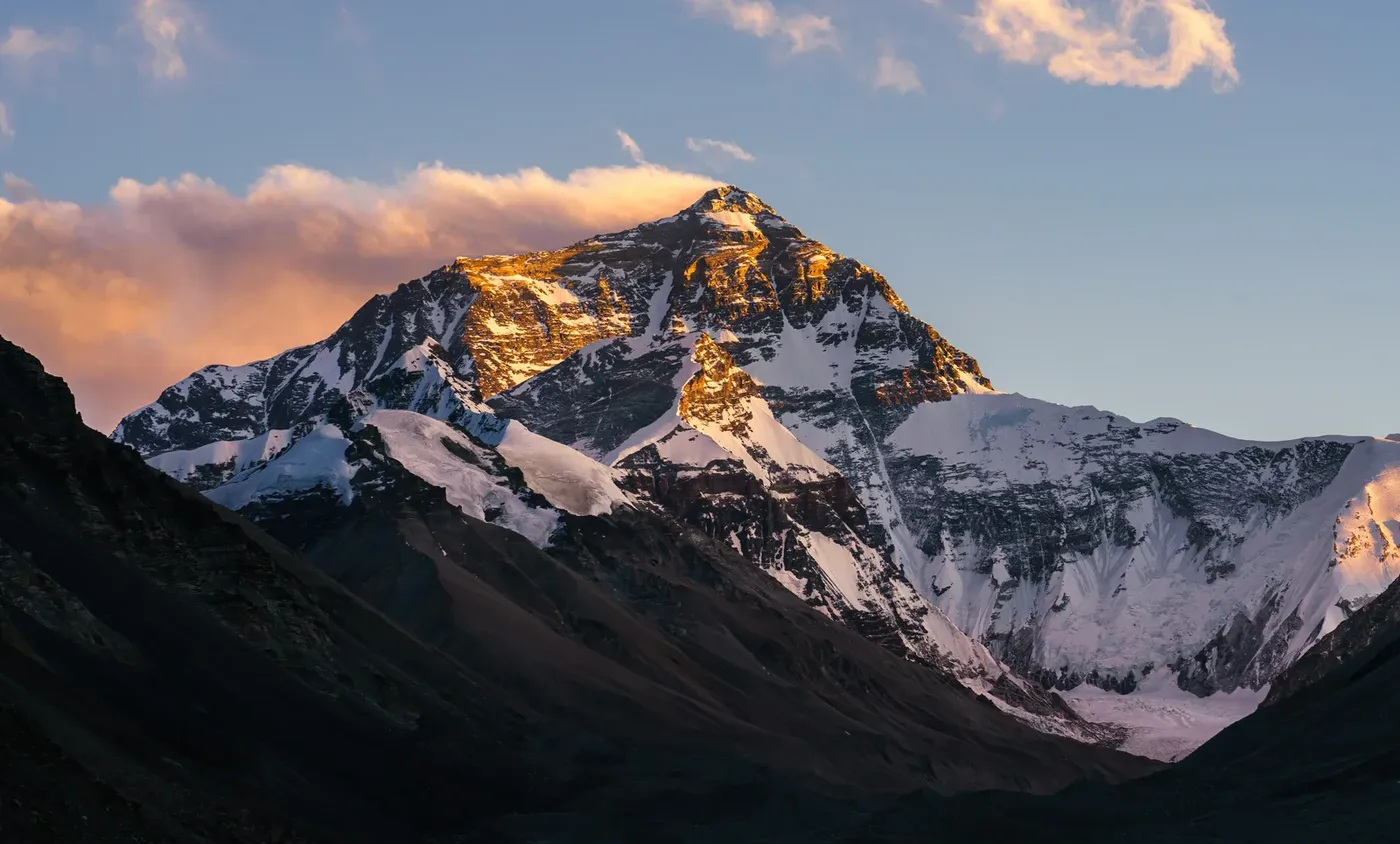
Prices vary widely by route, departure city, and whether you buy a seat or the aircraft. The table below shows what our own 2026 product range looks like, which is representative of the local market for comparable flights.
| Tour | Duration | Pricing | Price |
|---|---|---|---|
| Everest Scenic Mountain Flight | 1 Hour | Per seat | $260 |
| Annapurna Base Camp Helicopter Day Tour | 1 Day (from Pokhara) | Per seat | $860 |
| Muktinath Helicopter Pilgrimage | 1 Day | Per seat | $1,080 |
| Annapurna Helicopter Return Trek | 6 Days | Per seat | $1,199 |
| Everest Base Camp Helicopter Tour | 1 Day | Per seat | $1,260 |
| Everest Base Camp Helicopter Trek | 10 Days | Per seat | $1,840 |
| Manaslu Helicopter Return Trek | 13 Days | Per seat | $2,160 |
| Private Everest Helicopter Charter | 1 Day | Per aircraft | $4,500 |
Two structural points explain most of the variance you will see across quotes. First, a shared seat is a charter price divided by the number of passengers, so per-person cost falls sharply as group size rises — see the group joining versus private charter comparison for the arithmetic. Second, longer distances from the departure city add real fuel and positioning cost; the same lake or base camp can cost 40–60% more from Kathmandu than from Pokhara.
For a full route-by-route breakdown, the helicopter charter price table lists per-aircraft costs across the main destinations.
Everest Region, Annapurna, or Somewhere Quieter?
Most first-time travellers arrive wanting Everest, and that is a reasonable instinct — the Base Camp helicopter day tour landing at Kala Patthar is the most popular flight in Nepal for good reason. But the market is broader than most people realise, and the quieter routes are often better value and better experiences.
- Everest region. The headline product. Base Camp and Kala Patthar landings, the Everest View Hotel breakfast, and the one-hour fixed-wing scenic flight as the low-cost alternative. Weather windows are narrow and demand is high.
- Annapurna and Manang. Annapurna Base Camp, Tilicho Lake, Mardi Himal. Flown from Pokhara, so shorter days and often better prices. Our Tilicho Lake guide covers the highest of these.
- Pilgrimage routes. Muktinath and Gosaikunda carry genuine religious significance and fly year-round for domestic travellers as well as visitors — see the Muktinath pilgrimage guide.
- Quieter destinations. Langtang, Rara, Lumbini and the Kathmandu valley all have helicopter options with far less competition for departure slots. Our Langtang guide and the Rara Lake guide cover two of the best.
A useful rule: if your dates are fixed and your window is short, fly the region nearest the city you are already in. The money you save on positioning buys you another day in the mountains.
If you want the encyclopaedic detail, start at the Sagarmatha National Park office. We link it because it is the source, not because it sells anything.
Worth reading alongside this guide: Helicopter Rescue in Nepal 2026: Evacuation Cost & Insurance and Helicopter Tour Safety & Insurance in Nepal: What to Know.
Frequently Asked Questions
How do I know a Nepal helicopter tour operator is legitimate?
Ask which helicopter company will operate your flight and whether that company holds CAAN approval for the specific route. Route approvals are specific, not general — an operator approved for valley flights is not automatically approved for high-altitude Khumbu landings. A legitimate operator names the aviation company, confirms the approval, and puts the flight arrangement in writing. Vagueness about who actually flies the aircraft is the clearest warning sign in this market.
Should I book my helicopter tour in Nepal direct or through an agency?
Both are legitimate. Booking platforms offer buyer protection and review systems but take a commission that affects the price and the service margin. A local operator offers live weather judgement, faster rescheduling when a flight is weathered out, and a clearer answer on whether a shared seat or a charter is better value for your group size. If direct booking, the operator should still be able to name the aviation company and confirm route approval.
What is the difference between a helicopter tour operator and a helicopter company in Nepal?
The helicopter company owns the aircraft, holds the Air Operator Certificate, and employs the pilots and engineers. The tour operator or agency handles your booking, itinerary, payment and ground arrangements. Many agencies present themselves as though they operate the aircraft. Understanding the distinction tells you which questions to ask — operational questions for the aviation company, commercial ones for the agency.
How far in advance should I book a helicopter tour in Nepal?
In peak season — late September to November and March to May — book as far ahead as your plans allow. Shared departures need a minimum number of seats filled, and the best morning slots go first. Off-season there is usually more flexibility, and charters can often be arranged at shorter notice because they do not depend on filling seats. If your dates are fixed, book early and keep a buffer day.
Do helicopter tours in Nepal include hotel pickup and permits?
It varies, and quotes are not standardised across the market. Hotel pickup in Kathmandu or Pokhara, breakfast at the Everest View Hotel, national park and conservation permits, and landing fees are all items that may or may not be in the figure you were quoted. Always ask for an itemised breakdown and compare quotes on the same basis, or the cheapest-looking option may not be the cheapest once permits are added.
What happens if my helicopter flight is cancelled for weather?
Flights are cancelled for cloud, wind and visibility across all operators in Nepal — it is inherent to mountain flying. What differs is the response: reputable operators reschedule you to the next feasible morning or refund according to a written policy. Ask to see the policy before you pay, and keep a buffer day in your itinerary so a single cancelled morning does not cost you the experience.
Is it safe to fly by helicopter in Nepal?
Nepal's helicopter sector is regulated by the Civil Aviation Authority of Nepal, and passenger flights require an Air Operator Certificate covering the aircraft, routes and maintenance standards. The main variables are the operator's high-altitude experience and its willingness to cancel for weather. Ask about route approval, crew mountain experience, and the weather decision process — a pilot who will call off a marginal departure is a safety asset, not a nuisance.
Which city should I depart from for a helicopter tour — Kathmandu or Pokhara?
Kathmandu is the base for Everest, Langtang, Gosaikunda and the valley. Pokhara is the base for Annapurna, Manang and Tilicho. Flying a route from the wrong city works but adds positioning time and fuel cost, often 40–60% more. Build your itinerary so you are already in the right city on the morning of your flight.
How much does a helicopter tour in Nepal cost?
It depends on route and departure city. As a reference, seats start around $260 for the one-hour Everest scenic mountain flight, with the Everest Base Camp day tour at $1,260 per person, the Annapurna Base Camp flight from Pokhara at $860, and a private Everest charter at $4,500 per aircraft for up to five passengers. Shared seats are a charter price divided by passenger number, so per-person cost drops significantly as group size rises.
Can I charter a helicopter privately in Nepal?
Yes. Private charters are priced per aircraft rather than per seat and typically carry up to five passengers. For a group of four or five this frequently works out cheaper per person than separate shared seats — a $4,500 charter across five passengers is $900 each. Charters also give you control over departure time, route and stops. See the charter guide for how per-aircraft pricing behaves across routes.
How to Start
The most useful thing you can do is tell an operator three facts: your dates, the region you want to see, and how many people are travelling. Those three answers determine the departure city, the aircraft, the price, and whether a shared seat or a charter is the better buy.
We are a Kathmandu-based operator working with licensed helicopter companies across the Everest and Annapurna regions. We will tell you which company flies your route, what it costs per person at your group size, and what happens if the weather turns — before you pay anything.
WhatsApp us on +977 9851144618 or email bookings@helitoursnepal.com with your travel dates and group size. Same-day answers, and an honest one if the morning you want is unlikely to fly.