
Helicopter Tour in Nepal 2026: Every Route, Price and Package
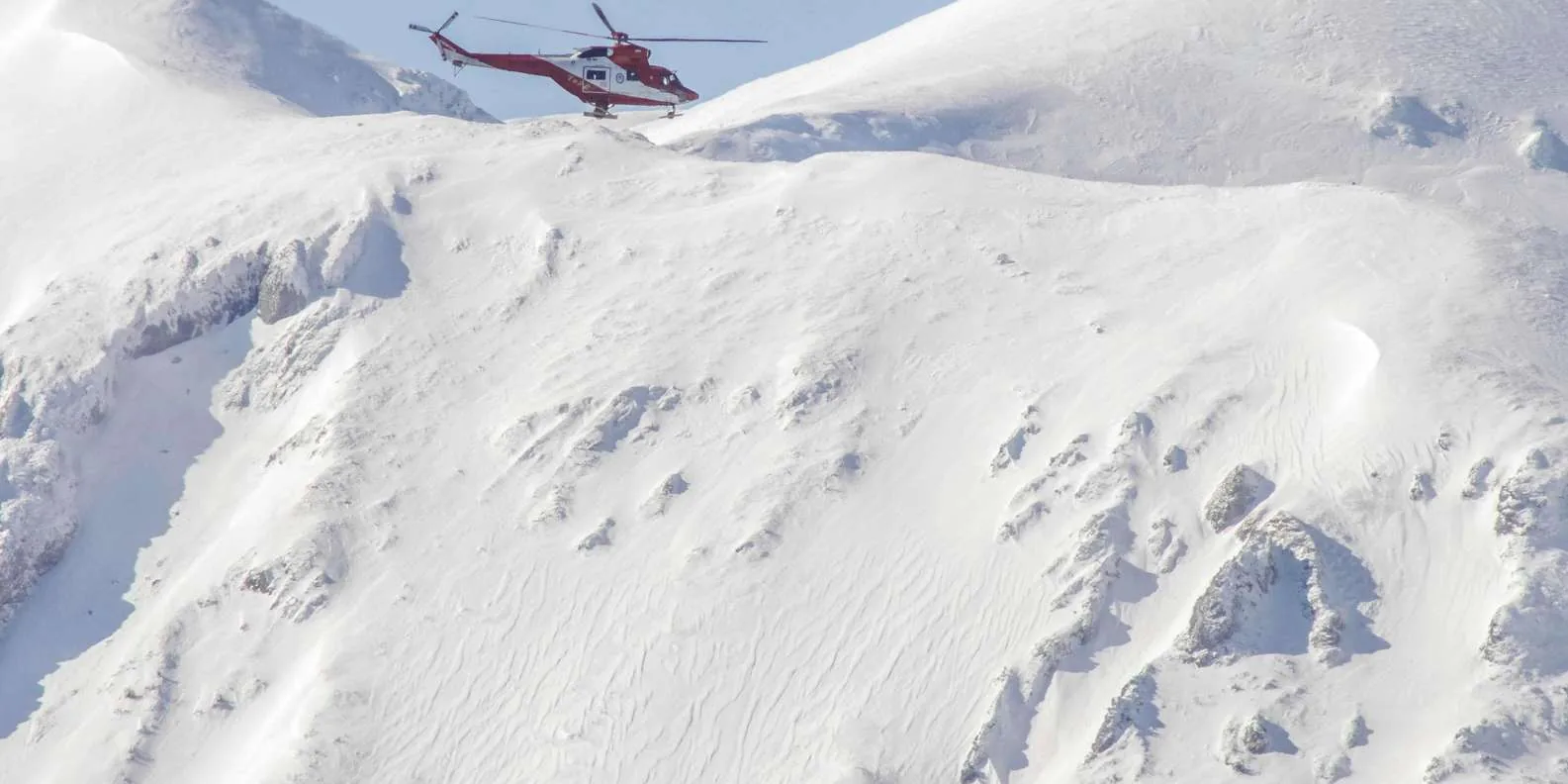
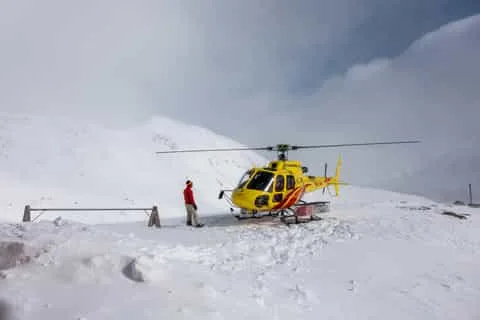
There is no single "Nepal helicopter tour". There are roughly a dozen distinct products flying out of Kathmandu and Pokhara in 2026, and they range from a one-hour sightseeing hop over the Himalaya to a thirteen-day trek that ends with a helicopter lift off a 5,160-metre pass. The price spread between the cheapest and the most expensive is more than twenty times, and the difference between two similarly-priced flights is usually what you land on — not how long you fly.
- $260Cheapest seat, scenic flight
- $860Annapurna Base Camp
- $1,260Everest Base Camp day tour
- $4,500Private charter, whole aircraft
This page is the map of that market: every route we operate, what each one actually costs in 2026, who it suits, and how to tell a real price from a reseller's marked-up one. If you already know which tour you want, jump straight to the 2026 price table.
What a Nepal Helicopter Tour Actually Is
Nepal's helicopter fleet is small and almost entirely charter-based. The aircraft you will fly in are light single-engine or twin-engine turbine helicopters — typically Airbus H125 (AS350) B3, Bell 407, or Eurocopter AS350 variants — operating under Nepali commercial air operator certificates. They carry five to six passengers plus a pilot, cruise between 120 and 160 km/h, and are subject to strict weight limits because of the altitude and the thin air.
Three consequences follow from this, and they explain almost every pricing surprise first-time visitors hit:
- You are usually buying an aircraft, not a seat. The headline price on most tour pages is a per-person shared rate — which only exists if the flight fills. If it does not fill, you either pay the charter rate or wait for other passengers.
- Altitude costs money. The same aircraft burns dramatically more fuel and carries less payload at 5,000 metres than at 1,300 metres. Flying to Everest costs more per minute than flying anywhere else in the country.
- Weather wins. There is no instrument approach into Lukla, Kala Patthar or the Annapurna Sanctuary. If the cloud is in, the flight does not go. A legitimate operator will tell you this before you pay, not after.
The Routes: What Each Nepal Helicopter Tour Actually Delivers
Everest scenic mountain flight — the entry point
The Everest scenic mountain flight is the cheapest way to see Everest. You fly from Kathmandu airport along the Himalayan crest — Langtang, Gauri Shankar, Cho Oyu, Pumori, Everest, Lhotse, Makalu — and return without landing. Total flight time is about one hour, and every passenger is guaranteed a window seat.
Cost from $260 per person. Choose this if you have a single free morning, a tight budget, or you are nervous about altitude. Understand what you are buying: it is a view from the air, not a landing. You will not touch down and you will not get the "I stood at Everest" moment.
Note that this is a fixed-wing mountain flight as often as it is a helicopter — Buddha Air, Shree Airlines and Yeti all fly the same route in pressurised 18-seater aircraft at a similar price. For the full fare comparison across airlines, including the Nepali-citizen rate, see the Everest mountain flight cost guide.
Everest Base Camp helicopter day tour — the most popular product
The Everest Base Camp helicopter day tour adds a landing. You fly Kathmandu to the Khumbu, touch down at Kala Patthar (5,545m) or the base camp area depending on conditions, spend roughly ten to fifteen minutes on the ground, then land at the Hotel Everest View (3,880m) for breakfast before returning. Door to door it is about six hours.
Cost from $1,260 per person on a shared flight. This is the single most requested helicopter tour in Nepal, and for most visitors it is the correct choice: it delivers the Everest experience without any trekking, and it fits inside one day of a normal itinerary. It is also the flight that most often fails to depart on the requested morning, so read the cancellation and weather policy before you book.
Private Everest helicopter charter — the whole aircraft
The private Everest helicopter charter is the same route flown exclusively for your group, with the itinerary set by you rather than by a shared-flight schedule. From $4,500 for the aircraft (up to five guests), which works out cheaper per head than the shared rate once you are four or more.
Charter buys flexibility, not a better view. You choose the departure time, you can extend the ground stop, you can add Gokyo or the Everest View Hotel, and you are not waiting on strangers. For the arithmetic of when a charter beats buying five seats, see the per-route charter price table.
Everest Base Camp helicopter trek — trek up, fly back
The Everest Base Camp helicopter trek is the trekking product: you walk the classic Khumbu route to Base Camp at 5,364m over roughly ten days, then fly out by helicopter from Gorak Shep. From $1,840 per person.
This inverts the usual logic of trekking in Nepal. Instead of the expensive, exhausting and often-cancelled flight into Lukla at the start, you fly out at the end — which removes the single most weather-risky leg of a standard EBC trek and gives you a guaranteed exit date.
Annapurna Base Camp from Pokhara — the best value landing
The Annapurna Base Camp helicopter day tour departs Pokhara rather than Kathmandu and lands in the Annapurna Sanctuary. It is a shorter flight and, at $860 per person, substantially cheaper than the Everest equivalent — because you are not paying for the long transit from Kathmandu to the Khumbu.
If you are already in Pokhara, this is easily the best mountain-per-dollar landing in Nepal. You get Machhapuchhre and the Annapurna massif from ground level, not from a window.
Annapurna helicopter return trek
The Annapurna helicopter return trek walks the classic ABC trail through the Gurung villages to the Sanctuary at 4,130m, then lifts you out to Pokhara in about twenty-five minutes instead of the two-day walk back down. From $1,199 per person.
Muktinath helicopter pilgrimage — the one-day darshan
The Muktinath helicopter yatra flies from Kathmandu or Pokhara to the Muktinath temple at 3,710m for darshan at both the Vishnu temple and the Jwala Mai natural gas flame, and is genuinely doable in one day. From $1,080 per person on a shared flight.
This is the most popular helicopter product for Indian travellers, and the one where the shared-versus-private decision matters most — the shared flight only runs if it fills, and the temple stop is timed. See the guide for Indian travellers for the permit and ID requirements.
Manaslu helicopter return trek
The Manaslu helicopter return trek crosses the Larkya La (5,160m) around the world's eighth-highest mountain — a restricted-area route that requires a special permit and a registered agency — and exits by helicopter. From $2,160 per person.
Kathmandu Valley aerial and heritage tour
The Kathmandu Valley tour is the odd one out in this list: a multi-day heritage itinerary across the valley's seven UNESCO World Heritage sites with an Everest scenic flight and optional paragliding built in. It is not a helicopter product at its core, but it is the right answer for visitors who want the valley's culture rather than a single mountain dash.
Nepal Helicopter Tour Prices 2026
Every figure below is our own published 2026 rate, quoted in US dollars. Shared means a per-person seat on a flight that must fill; charter means the whole aircraft.
| Tour | Duration | 2026 price | Basis |
|---|---|---|---|
| Everest scenic mountain flight | 1 Hour | $260 | per person, window seat |
| Annapurna Base Camp day tour (Pokhara) | 1 Day (approx. 3–4 hours from Pokhara) | $860 | per person, shared flight |
| Muktinath helicopter pilgrimage | 1 Day | $1,080 | per person, shared flight |
| Everest Base Camp helicopter day tour | 1 Day (approx. 6 hours) | $1,260 | per person, shared flight |
| Annapurna helicopter return trek | 6 Days | $1,199 | per person, shared flight |
| Everest Base Camp helicopter trek | 10 Days | $1,840 | per person, shared flight |
| Manaslu helicopter return trek | 13 Days | $2,160 | per person, shared flight |
| Private Everest helicopter charter | 1 Day (approx. 5–6 hours) | $4,500 | per aircraft, up to 5 guests |
Two things about this table matter more than the numbers themselves. First, the shared rates assume the flight fills — if you are travelling alone in the low season, ask for the private rate before you budget. Second, none of these prices include the travel insurance you need for helicopter evacuation, which is a separate purchase and, at high altitude, not optional.
Why the Same Tour Has Three Different Prices Online
Search any of these routes and you will find prices that differ by 40% or more for what looks like an identical product. There are three legitimate reasons and one illegitimate one.
Shared versus private. The most common confusion. A "from $1,260" Everest day tour is a per-person seat on a flight that needs four to five bookings to operate. A charter quote of $4,500 is the whole aircraft. Divide the charter by five seats and the gap mostly disappears — the higher number is not a markup, it is a different product.
What is included. Airport transfers, the breakfast at Hotel Everest View, the national park and Khumbu Pasang Lhamu permit fees, and the landing fees are included by some operators and added later by others. A price that looks $150 cheaper frequently is not.
Season. October-November and March-April are peak: clear skies, and the highest demand of the year. Monsoon and deep winter flights are discounted because the weather risk is real, not because the operator is being generous.
Reseller marking up a local operator. This is the one to watch. Nepal's trekking and tour market has a well-established layer of overseas and online resellers who take a booking, forward it to a Kathmandu operator, and add 15-30% for the introduction. Nothing about the flight changes. The way to detect it is simple: ask who holds the air operator certificate and who the pilot will be employed by. A real operator answers immediately; a reseller deflects.
How to Choose the Right Nepal Helicopter Tour
Work backwards from three questions.
How much time do you have? One free morning in Kathmandu means a scenic flight. One free day means an Everest day tour with a landing. Three days or more and a trekking appetite means a trek-and-fly combination. Do not book a trekking-and-flying product if what you actually wanted was a view — the physical demand is real and the altitude is not a formality.
Do you want to land? This is the single biggest quality difference in the market and the one the marketing least often makes clear. A no-landing scenic flight and a landing tour to the same region are different products at three to five times the price difference. If the itinerary does not say where you touch down, ask.
Are you travelling with people who cannot trek or who have mobility limits? This is where helicopter tours beat every alternative in Nepal. There is no trekking, no altitude acclimatisation schedule, no multi-day commitment, and elderly or less mobile travellers can reach Kala Patthar or Muktinath in a morning. For families and multi-generation groups this alone justifies the price — see the pilgrimage routes for the temple itineraries that suit senior travellers best.
When Not to Book a Helicopter Tour
Being direct about this saves more disappointment than any itinerary description.
If your only available date is fixed and you cannot accept a cancellation, do not build your trip around a mountain flight. The weather in the Khumbu closes in without warning and no operator on earth can guarantee a departure. Book the flight early in your trip, not on the last morning, and keep a buffer day.
If you want to be at Base Camp for a long time, a helicopter is the wrong tool. The ground stop is measured in minutes because of the altitude and the aircraft's turnaround schedule. If you want hours at Base Camp, that is what the trek is for.
If you are shopping purely on price, compare against the fixed-wing mountain flights first. For a passenger whose goal is simply to see Everest from the air, a $260 scenic flight and a $1,260 helicopter day tour both deliver "I saw Everest" — one of them just also lands.
How to Book, and What to Confirm in Writing
Whichever route you choose, five details need to be confirmed in writing before you pay:
- The exact landing point by name — Kala Patthar, Hotel Everest View, the Sanctuary, or none.
- Whether the price is per seat or per aircraft, and what the minimum number of passengers is for the flight to operate.
- The cancellation and rescheduling terms, including whether a weather cancellation is refunded or rebooked.
- What is included — transfers, breakfast, permit fees, landing fees.
- The weight limit per passenger and the baggage allowance, which on high-altitude Everest flights is stricter than most travellers expect.
We operate these flights directly from Kathmandu as a licensed operator, so every price on this page is our own rate with no reseller layer on top. The full booking process is set out step by step in how to book a helicopter tour in Nepal, and the month-by-month weather picture is in the best time to fly guide.
Specialist Guides
Two questions come up more than any other when travellers plan a helicopter trip in Nepal: what the quieter lakes actually cost, and how to tell a good operator from a reseller. Our Tilicho Lake helicopter tour guide covers the flight to the world's highest lake at 4,919 m, including real per-seat and charter pricing from Pokhara. If you are still choosing who to fly with, the guide to choosing a helicopter tour operator in Nepal sets out the three things you can verify before you pay — route approval, altitude experience, and a written weather policy.
Everest (8,848.86 m) carries the authoritative detail if you want it from the source. Useful context — it does not affect pricing or operations.
Read these next: Group Joining Helicopter Flight in Nepal: Shared Seats vs…, Helicopter Charter Cost in Nepal: The Full 2026 Price Table, and Helicopter Charter in Nepal: The Complete 2026 Guide.
Frequently Asked Questions
How much does a helicopter tour in Nepal cost?
In 2026 the range is $260 per person for a one-hour Everest scenic flight with no landing, $1,260 for an Everest Base Camp day tour with a landing, $1,080 for the Muktinath pilgrimage, and up to $4,500 for a private Everest charter covering the whole aircraft. Trek-and-fly combinations run from $1,199 to $1,840 depending on length.
What is the cheapest way to see Everest by helicopter?
The Everest scenic mountain flight at $260 per person is the cheapest option, but it does not land. The cheapest flight that actually puts you on the ground at altitude is the Annapurna Base Camp day tour from Pokhara at $860, and the cheapest way to land in the Everest region is the $1,260 Everest Base Camp day tour.
Do I need to trek to see Everest by helicopter?
No. Both the Everest scenic mountain flight and the Everest Base Camp helicopter day tour reach the Everest region without any trekking at all. The day tour lands at Kala Patthar or the base camp area and returns to Kathmandu the same day. Trekking is only involved in the trek-and-fly products, where you walk up and fly back down.
Is a shared helicopter seat or a private charter better value?
For one or two people, a shared seat is almost always cheaper. From four passengers the private charter usually costs less per head than buying individual shared seats, and it gives you control of the departure time and the ground stops. See the group joining versus private charter comparison for the per-person arithmetic.
Can a helicopter tour in Nepal be cancelled?
Yes, and it happens often. There is no instrument approach into the Everest or Annapurna landing sites, so cloud, high wind or poor visibility will ground the flight regardless of what was booked. Reputable operators rebook you onto the next flying day or refund according to a written policy. Always confirm which before paying, and keep a buffer day in your itinerary.
How far in advance should I book a Nepal helicopter tour?
In peak season (October-November and March-April) book two to four weeks ahead, and longer for private charters, because Nepal's helicopter fleet is small and shared flights only operate when they fill. Outside peak season a few days is usually enough, but you are accepting more weather risk.