
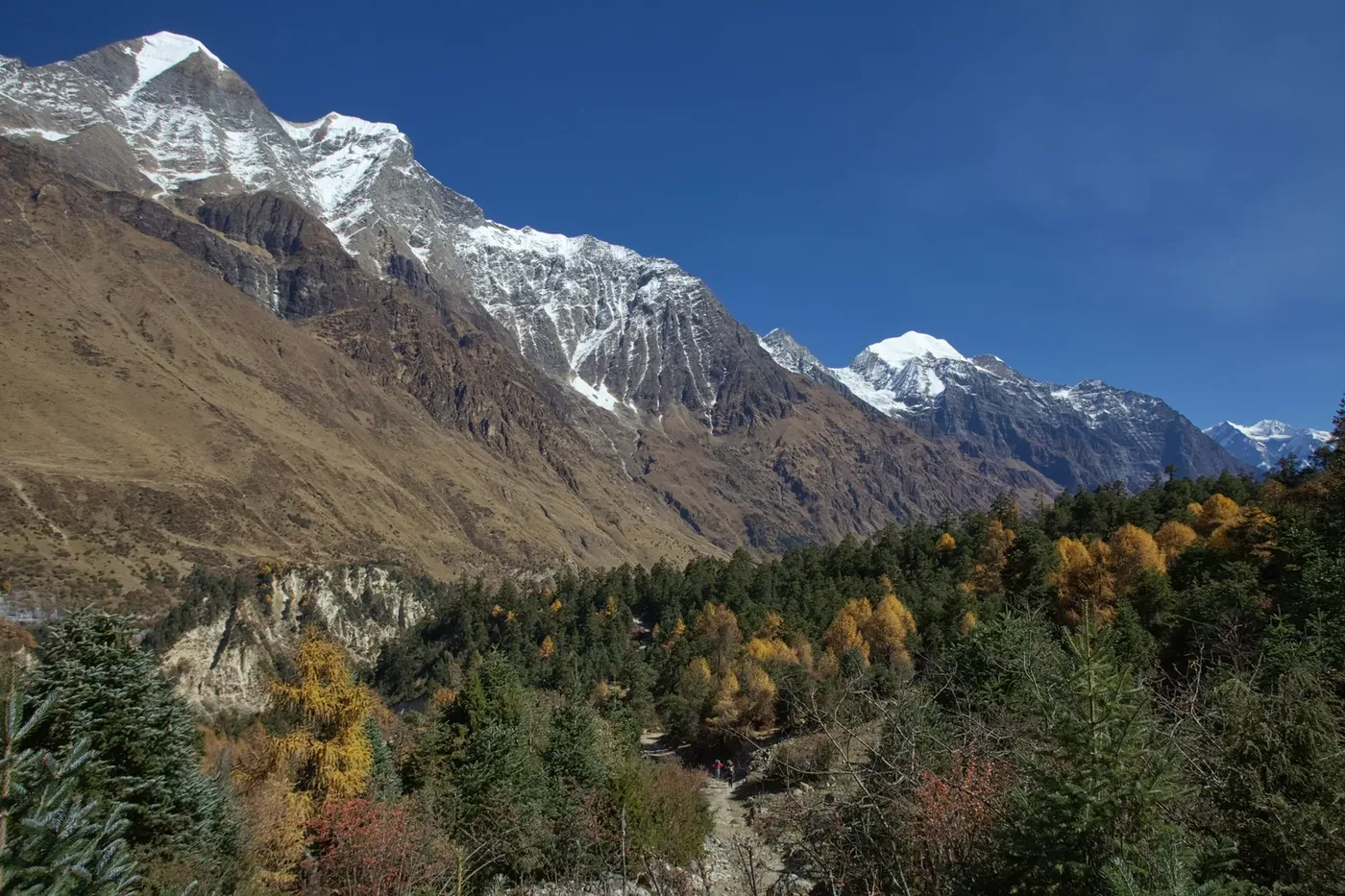
Short answer: A Tilicho Lake helicopter tour flies you to Tilicho Lake at 4,919 m in the Annapurna range of Manang district — the highest lake of its size anywhere on Earth — without the six to eight days of trekking the road route demands. From Pokhara it is a roughly 25–35 minute flight each way; operators quote from about $800–$1,200 per person on a shared basis, or roughly $3,500–$4,900 to charter the whole helicopter (up to five passengers). The landing is short, deliberately: at 4,919 m the air holds about half the oxygen at sea level, so most flights allow 15–25 minutes on the ground.
- $860ABC day tour, per seat
- 4,130 mAnnapurna Base Camp
- 4,919 mTilicho Lake
- 3-4 hrsFlight window from Pokhara
What Is Tilicho Lake — and Why Fly There?
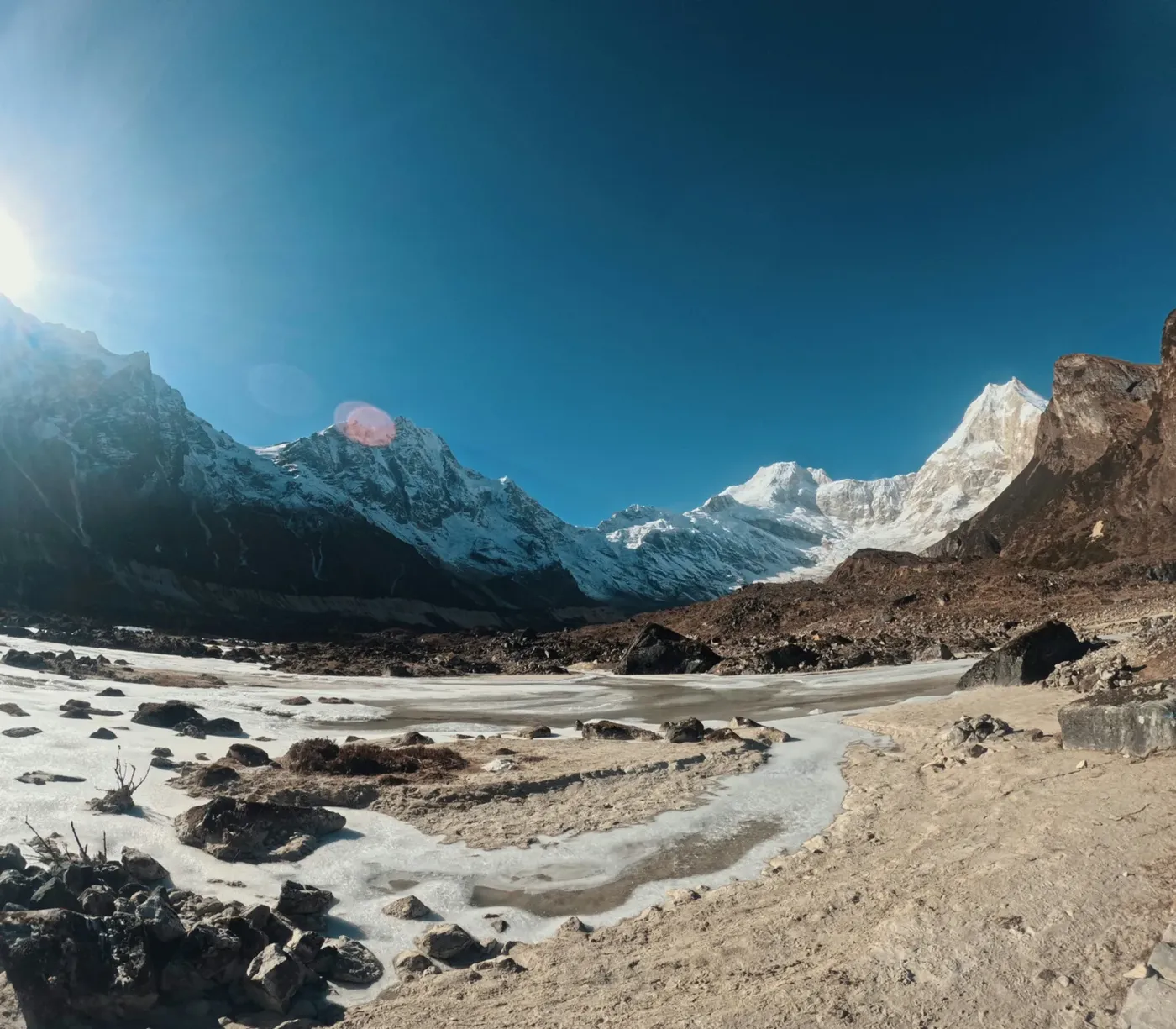
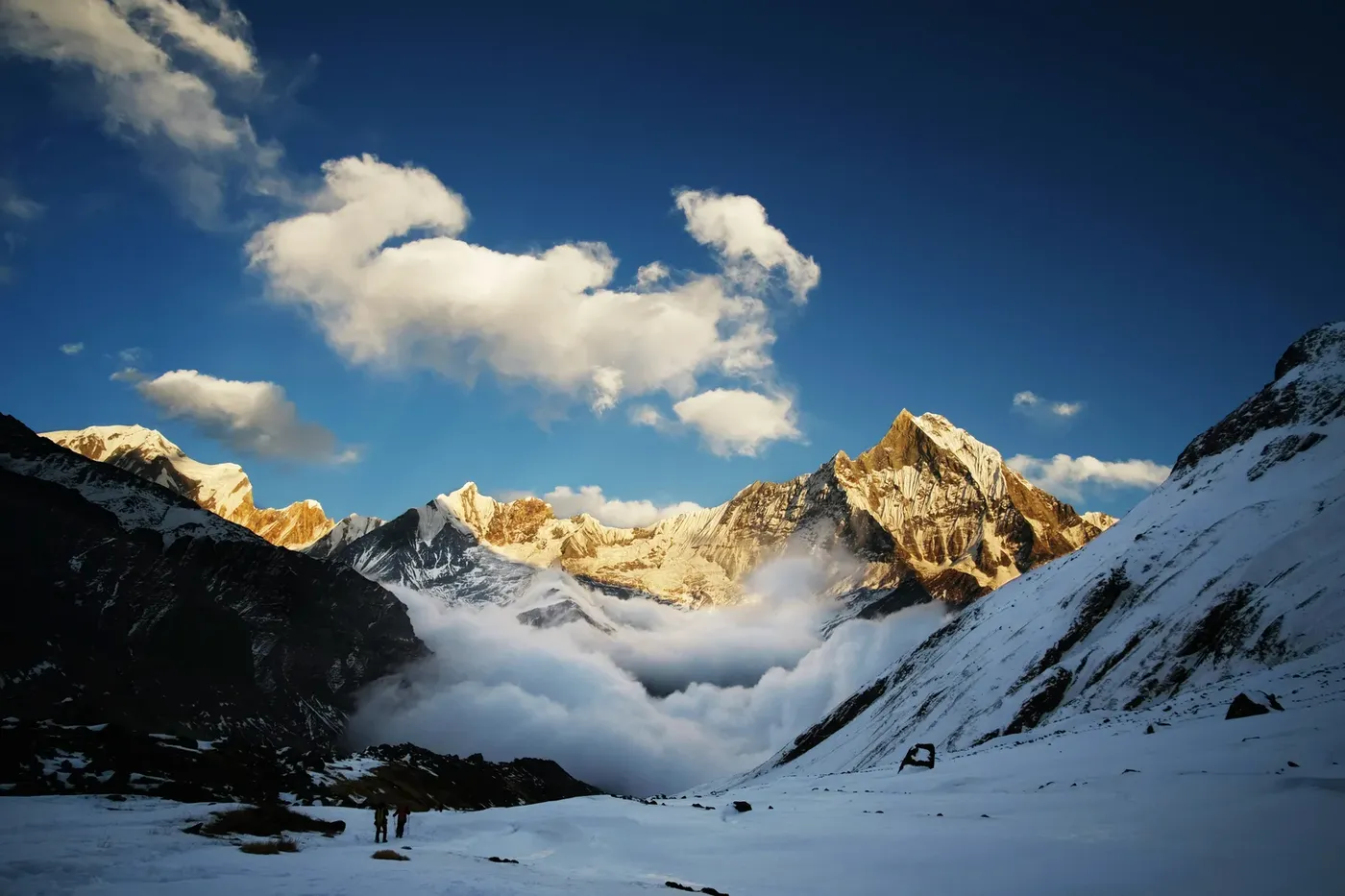
Tilicho Lake sits in a glacial cirque high on the northern flank of the Annapurna massif, in Manang district, at an elevation of 4,919 metres. Fed by meltwater from the glaciers of the Annapurna range, it is routinely described as the highest lake of its size in the world. It is a place of extraordinary scale: a bowl of opaque turquoise water held in raw rock, with Gangapurna and the Great Barrier of Annapurna rising directly above it and almost nothing green anywhere in frame.
For three decades the only way to see it was on foot. The lake is a side trip off the Annapurna Circuit: you walk to Manang, climb to Tilicho Base Camp, sleep badly at 4,150 m, and stagger up to the lake at dawn on day seven or eight. The pass that follows — Mesokanto La or Khangsar La, depending on your route — is genuinely serious. Thousands of trekkers a year reach Manang and turn around rather than face it.
The helicopter changes the arithmetic completely. A flight out of Pokhara reaches the lake in well under an hour, lands, and has you back in the city before lunch. That single change opens the lake to travellers who have the desire and the budget but not the two weeks or the knees — which is why searches for this flight have climbed every year since helicopter tourism through the Annapurna region became routine.
Where Exactly Is Tilicho Lake?
Tilicho lies in the Manang district of the Gandaki province, in the Annapurna Conservation Area. Two access patterns exist and they are not equivalent:
- From Pokhara — the short version. Pokhara is the gateway city for the whole Annapurna region and sits roughly 25–35 flight minutes from the lake. This is what makes a genuine half-day tour possible.
- From Kathmandu — the long version. Kathmandu is considerably further from the lake, and aircraft generally route west along the Himalayan chain. Operators running from Kathmandu charge substantially more and the day runs to three to four hours of flying plus a refuel stop.
If your itinerary already includes Pokhara — and most Annapurna itineraries do — book the flight from there. The saving in both cost and time is large, and the flying is the same.
The Flight Itself: Route, Timings and What You See
A helicopter tour to Tilicho is very much a first-light operation. Mountain weather builds through the morning across the whole Annapurna region, and by early afternoon the valley cloud has closed most of the high routes. Almost every operator flies between about 6:30 and 9:00 AM.
The typical Pokhara departure climbs north-west out of the valley and tracks up the Modi Khola drainage — the same deep gorge that walkers follow to Annapurna Base Camp — before turning north into the Manang district. On a clear morning the sequence from the window runs roughly like this:
- Machhapuchhre (6,993 m) — the fishtail peak that dominates every view from Pokhara, seen close and side-on.
- Annapurna III and Gangapurna — the wall that closes the northern end of the Annapurna Sanctuary.
- The Manang valley — the high, dry, Tibetan-looking country below the lake, with its villages and terraced barley fields laid out beneath you.
- Annapurna I (8,091 m) — the tenth-highest mountain on Earth, and the massif the lake sits beneath.
- Tilicho Lake itself — the turquoise sheet in its rock bowl, which is when you realise the approach is genuinely high.
Fuel range shapes the route. From Pokhara the lake is comfortably within a single hop. From Kathmandu it is not, and flights will typically stage through Pokhara or another airstrip before the high leg. That staging is not padding — it is the reason the Kathmandu version of this tour costs what it does, and it is worth understanding before you compare quotes.
The Landing: What 4,919 Metres Actually Feels Like
This is the part most guides gloss over, and it matters.
Tilicho Lake sits at 4,919 m. At that altitude the barometric pressure is roughly half what it is at sea level, which means each breath delivers about half the oxygen. For a fit, acclimatised trekker who has walked up over eight days, that is manageable. For someone who has flown from Pokhara at 820 m and stepped out of a helicopter forty minutes later, it is a genuine physiological event.
This is why nearly every operator keeps ground time short — commonly 15 to 25 minutes, enough to walk to the shoreline, take photographs and take in the view, and not enough for the altitude to become a problem. It is also why a helicopter flight to a high lake is not a substitute for trekking fitness in the way people expect. You are not acclimatising on the way up. You are relying on a short exposure and a rapid descent.
Practical consequences:
- Tell the operator your medical history. Cardiac conditions, uncontrolled hypertension, recent surgery and advanced pregnancy are all reasons a high-altitude landing may be declined. Reputable operators ask; if nobody asked you, that is itself a warning sign.
- Acclimatise for a day or two first if you can. A night or two in Pokhara does not acclimatise you to 4,919 m, but arriving off a long-haul flight and flying straight to a high lake is the worst possible sequence.
- Walk slowly on the ground. The instinct is to hurry to the shore, take the photo and hurry back. Slow, deliberate movement is what keeps a short visit comfortable.
- Say something if you feel unwell. Headache, nausea, dizziness and breathlessness at rest are the early signs of acute mountain sickness. The pilot would far rather cut the stop short than have a medical emergency at 4,919 m.
Tilicho Lake Helicopter Tour Cost: What You Are Actually Paying For
Prices for this flight vary more than for almost any other helicopter tour in Nepal, and the variation is almost entirely explained by three things: where you depart from, whether you are buying a seat or the aircraft, and how many passengers are on board.
What the market currently charges across Nepali operators:
| Option | Typical market range | What it covers |
|---|---|---|
| Shared seat, from Pokhara | About $800–$1,200 per person | One seat on a scheduled departure, up to 5 passengers on board, short lake landing |
| Shared seat, from Kathmandu | About $1,300–$1,500 per person | The same flight logic over a much longer distance, with a staging or refuel stop |
| Full charter, from Pokhara | About $3,500–$4,200 per flight | The whole aircraft for your group of up to 5 — your schedule, your stops |
| Full charter, from Kathmandu | About $4,200–$4,900 per flight | Whole aircraft plus the extra flying time and fuel the longer routing demands |
Two consequences follow from that table, and they are worth stating plainly:
Departure point is the single biggest lever. The same lake, the same landing, the same view — and the Kathmandu version costs roughly 40–60% more. If your itinerary passes through Pokhara, take the Pokhara flight and spend the difference on another day in the mountains.
Chartering becomes the cheaper option surprisingly early. A charter at around $3,800 for five passengers works out to about $760 per person — less than a shared seat, with a schedule you control. Sharing is the right choice for one or two travellers; for a group of four or five, a private flight is often both cheaper per head and far more comfortable. Our helicopter charter price table breaks that arithmetic down route by route.
What Shapes the Price — and Why Quotes Differ So Much
Four variables move this number, and understanding them will let you tell a fair quote from an inflated one.
1. Shared seat versus whole aircraft
Charter pricing is per flight, not per person. Every shared fare is effectively a charter price divided by however many seats the operator fills. That is why a shared seat is cheap for a solo traveller and comparatively poor value for a group of five.
2. Departure city
As above — Pokhara is the efficient base for Tilicho. Flying from Kathmandu means more airborne hours, more fuel, and often a staging stop, all of which you pay for.
3. Season and demand
The flying windows are narrow. March to May and September to November are the reliable months, and within those windows the best morning departures book out. Peak-season seats command a premium; the shoulder months can be better value. Our guide to the best time for a helicopter tour in Nepal covers how the monsoon and winter windows behave month by month.
4. Number of passengers
Nepal's light helicopters typically carry up to five passengers plus crew. A group of four or five splits a charter four or five ways; a solo traveller pays for a seat. The economics improve sharply with group size.
Is a Helicopter the Only Way? How It Compares With Trekking
The honest answer is that these are two different experiences, not two prices for the same thing.
| Factor | Trek to Tilicho Lake | Helicopter tour |
|---|---|---|
| Time required | Typically 10–14 days including the approach and exit | A single morning from Pokhara |
| Acclimatisation | Gradual over many days — far safer at 4,919 m | Rapid arrival; short ground time is essential |
| Physical demand | High — sustained altitude trekking, a serious high pass to exit | Low, but the altitude exposure is real |
| Cost shape | Permits, guides, lodges, food and days off work | A single flight cost, often lower than the trek's total |
| What you get | Manang, the villages, the culture, the slow approach | The lake, the aerial panorama, and your itinerary intact |
| Weather dependency | Rain and cloud slow you but rarely stop you | Flights are cancelled for cloud and wind — build in a buffer day |
If you have the time, walk it. The Annapurna region rewards slow travel and the trek to the lake is one of the great journeys in Nepal. If you do not have two weeks, the helicopter is not a compromise on the view — the view from the air over the Manang valley and the Annapurna wall is arguably better than anything you get on foot, because you see the whole structure of the range at once. It is a compromise only on the journey.
Best Season for a Tilicho Lake Helicopter Flight
Mountain flying in Nepal is governed by two weather systems, and the windows between them are what you are booking.
- Spring (March to May) — the most reliable window. Stable mornings, clear air, and long daylight. Late spring can bring pre-monsoon haze that softens the long-range views.
- Autumn (late September to November) — the sharpest visibility of the year, with the monsoon having scoured the atmosphere clean. This is the peak trekking and flying season, so book early.
- Winter (December to February) — flyable on many days and beautiful in fresh snow, but cold and more prone to morning fog and wind aloft. Ground temperatures at 4,919 m are extreme.
- Monsoon (June to early September) — largely unsuited to high mountain flying from Pokhara. Operators generally will not schedule this route.
Whatever the month, keep a buffer day. Cloud can close the high route on a morning that looked perfect at dawn, and a flight cancelled by weather is rescheduled, not refunded as a failure — see our guide to the cancellation and weather policy for how that works in practice.
How to Book a Tilicho Lake Helicopter Tour
Booking is straightforward, and it helps to know what a good operator will ask you.
- Fix your departure city first. Decide whether you are flying from Pokhara or Kathmandu. This changes the price more than any other single decision.
- Decide seat or charter. Solo or a couple — take a shared seat. Four or five — price a charter and compare per-person.
- Give the operator your dates and group size. Shared departures run on fixed days and fill; charters can be scheduled around you.
- Expect a weight question. Light helicopters are weight-limited, and passengers are weighed before boarding. This is a safety requirement, not a formality.
- Confirm the ground time. Ask how long you get at the lakeshore and whether the pilot can extend it weather permitting.
- Ask about the buffer day. A good operator will tell you openly how often the route is weathered out and what happens if it is.
For the wider context on how shared and private departures differ, including who pays what and how waiting works, see our group joining versus private charter guide. For the practical end of the process — deposits, documents and timings — our step-by-step booking guide is the place to start.
Tilicho Lake Compared With Other Annapurna Flights
Tilicho is not the only lake or landing site in the Annapurna region, and it is worth knowing how it differs from the alternatives before you commit.
| Flight | Landing altitude | Time from Pokhara | Best for |
|---|---|---|---|
| Tilicho Lake | 4,919 m | Roughly 25–35 minutes | The highest lake, dramatic glacial scenery, serious altitude |
| Annapurna Base Camp | 4,130 m | Roughly 20–30 minutes | Standing inside the Sanctuary amphitheatre |
| Mardi Himal | About 4,500 m | Short hop from Pokhara | A quieter high viewpoint with Everest visible on clear days |
| Pokhara valley and Sarangkot | Low | Minutes | Short scenic flights, no altitude exposure |
Tilicho goes higher than any of them. That is precisely why the ground stop is shorter: it is the same safety logic that governs the Everest flights, applied to a lake instead of a base camp. If you are comparing the whole set, our helicopter tours from Pokhara guide covers every route out of the city, and the Annapurna Base Camp day tour page sets out what a Sanctuary landing involves.
Practical Detail: Permits, Weight and What to Bring
Three practicalities catch people out.
Permits. Trekking to Tilicho requires an ACAP entry permit and, for the wider Annapurna Circuit, a TIMS card. A helicopter tour does not follow the trekking permit regime in the same way, but the conservation area and any landing inside it are still regulated. Your operator handles the paperwork — confirm that they do, in writing, rather than assuming.
Weight and baggage. Helicopters are weight-limited and passengers are weighed with their bags before boarding. Soft bags are strongly preferred over hard cases. Expect a strict allowance on a shared departure and more flexibility on a private charter. Our packing list covers what actually goes in the bag.
What to wear. The temperature at 4,919 m in the early morning is far colder than Pokhara at the same hour — a difference of twenty degrees or more is normal. Layers, a windproof outer shell, gloves, a hat and sunglasses are not optional. Sunglasses matter more than most people expect: at that altitude, on snow and glacier, the glare is intense.
Safety: Questions Worth Asking Before You Book
Nepal's helicopter sector is regulated by the Civil Aviation Authority of Nepal, and operators hold an Air Operator Certificate for the routes they fly. That said, standards vary, and a short conversation will tell you a great deal.
- Is the route within your operating approval? A direct question with a factual answer. An operator who cannot answer it clearly is not one to fly with.
- What is your weather decision process? The good answer involves the pilot making the call, with a defined turnaround point, not a commercial office pushing a departure.
- What insurance and evacuation cover is included? Helicopter evacuation in the mountains is expensive and not automatically included in a tour fare. Know what you have before you need it. Our guide to how helicopter rescue and evacuation work in Nepal explains how the system responds and what it costs.
- Will you cancel if the morning is marginal? The right answer is yes, with a reschedule or refund policy you have seen in advance.
Our own approach is set out in the safety and insurance guide: weather cancels flights, and we say so before you pay rather than after.
If you want the encyclopaedic detail, start at the Annapurna Massif. Useful context — it does not affect pricing or operations.
For the adjacent decisions, see Annapurna Base Camp Helicopter Day Tour from Pokhara: Price &…, Annapurna Base Camp Helicopter Tour: Cost, Options & How to…, and Helicopter Tours from Pokhara 2026: Everest, Annapurna &….
Frequently Asked Questions
How much does a Tilicho Lake helicopter tour cost?
From Pokhara, operators currently quote roughly $800–$1,200 per person for a shared seat, or about $3,500–$4,200 to charter the whole helicopter for up to five passengers. From Kathmandu the same flight costs meaningfully more — commonly $1,300–$1,500 per person or $4,200–$4,900 per charter — because of the extra flying time and staging. Always confirm what a quote includes: pickup, landing time, permits and insurance are not uniform.
How high is Tilicho Lake?
4,919 metres (about 16,138 feet), in the Manang district of Nepal, on the northern side of the Annapurna range. It is widely described as the highest lake of its size in the world. The altitude is the single most important fact about the destination and the reason ground time on any helicopter visit is kept short.
Can you land a helicopter at Tilicho Lake?
Yes — landing near the lake is the standard practice on these tours, with ground time usually limited to about 15–25 minutes. The stop is deliberately brief: arriving rapidly at 4,919 m gives your body no time to acclimatise, so a short exposure followed by a fast descent is the safe pattern. Conditions on the day are always the pilot's decision.
How long is the flight from Pokhara to Tilicho Lake?
Roughly 25 to 35 minutes each way, depending on aircraft, routing and wind. That is what makes a genuine half-day tour possible from Pokhara, with a departure at first light and a return to the city before lunch.
Is a Tilicho Lake helicopter tour safe at that altitude?
The flight itself is routine for experienced mountain pilots. The altitude is the consideration: 4,919 m means roughly half the oxygen of sea level, and a rapid arrival without acclimatisation is a real physiological stress. Reputable operators keep ground time short, ask about your medical history before booking, and will decline a landing where health or weather makes it unwise. Disclose any cardiac, respiratory or blood-pressure condition in advance.
What is the best time of year to fly to Tilicho Lake?
Spring (March to May) and autumn (late September to November) offer the most reliable flying weather, with autumn giving the sharpest visibility. Winter flights are possible on settled days but colder and more prone to morning fog. The monsoon months from June to early September are generally unsuited to high mountain flying from Pokhara.
Do I need a permit for a Tilicho Lake helicopter tour?
A helicopter tour is not a trek, so the trekking permit regime does not apply in the same way, but the Annapurna Conservation Area and any landing within it are still regulated. Your operator should handle the necessary permissions as part of the arrangement. Ask them to confirm that in writing before you pay a deposit.
Can I do a Tilicho Lake helicopter tour in one day?
Yes, from Pokhara. A first-light departure, the flight to the lake, a short landing, and a return to Pokhara comfortably before lunch is the standard model. From Kathmandu it becomes a longer day — typically three to four hours of flying plus a staging or refuel stop — and operators generally recommend an overnight in Pokhara to make it practical.
How many passengers can a helicopter take to Tilicho Lake?
Nepal's light helicopters typically carry up to five passengers plus the crew, subject to passenger weights and altitude performance on the day. Above 4,000 m, payload limits tighten, which is one reason operators weigh passengers and baggage before boarding — and one reason a group of four or five may find a charter both cheaper per person and more comfortable than separate shared seats.
What happens if the flight is cancelled for weather?
High-altitude flights are cancelled for cloud and wind, and it happens at every operator in Nepal. Reputable companies reschedule you to the next feasible morning or refund according to a written policy. Build a buffer day into your itinerary so a single cancelled morning does not cost you the whole experience, and read the cancellation policy before you pay rather than after.
Where Tilicho Fits in a Himalayan Itinerary
Tilicho works best as a half-day inserted into a wider Annapurna trip rather than as a standalone pilgrimage. Pokhara is the base, and the city rewards a couple of nights on its own. From there the region's other flights are all short hops, and combining two is often better value than either alone.
If you are weighing the wider options, the complete guide to Nepal helicopter tour routes and prices maps every major destination in one place, and the charter guide explains how per-aircraft pricing behaves when you are building a custom day rather than buying a seat. For travellers weighing whether to fly or walk anywhere in the Annapurna region, our trek up, fly back guide sets out the hybrid approach that suits most people best.
Ready to price a Tilicho Lake flight for your dates? Send us your travel window and group size and we will tell you honestly whether a shared seat or a charter is the better buy — and which departure point makes sense for your itinerary. Message us on WhatsApp at +977 9851144618 for a same-day answer.