
Muktinath Helicopter Pilgrimage: The 1-Day Sacred Journey (2026 Cost Guide)
Muktinath is one of the most sacred places in the Himalaya — a temple complex at 3,710 metres in Nepal's Mustang region where an eternal flame burns on water, where 108 ice-cold spouts pour sacred water in an unbroken stream, and where Hindus and Buddhists have come for centuries seeking liberation and blessing. For most pilgrims, reaching it meant weeks of trekking over high passes or days of brutal mountain roads. Not anymore. The Muktinath Helicopter Pilgrimage flies you from Kathmandu to the temple and back in a single day — darshan at the shrine, bathing in the 108 sacred waters, witnessing the Jwala Mai eternal flame, and home by evening. In 2026 it costs from $1,080 per person on a shared flight. This guide covers the real cost, the full day's schedule, what the temple means, and how to book without overpaying. You can also view the full Muktinath Helicopter Pilgrimage details and book directly.
- 3,710 mMuktinath temple
- $1,080Muktinath, per seat
- 8,163 mManaslu, eighth-highest
- 1 dayTypical pilgrimage round trip
What Is the Muktinath Helicopter Pilgrimage?
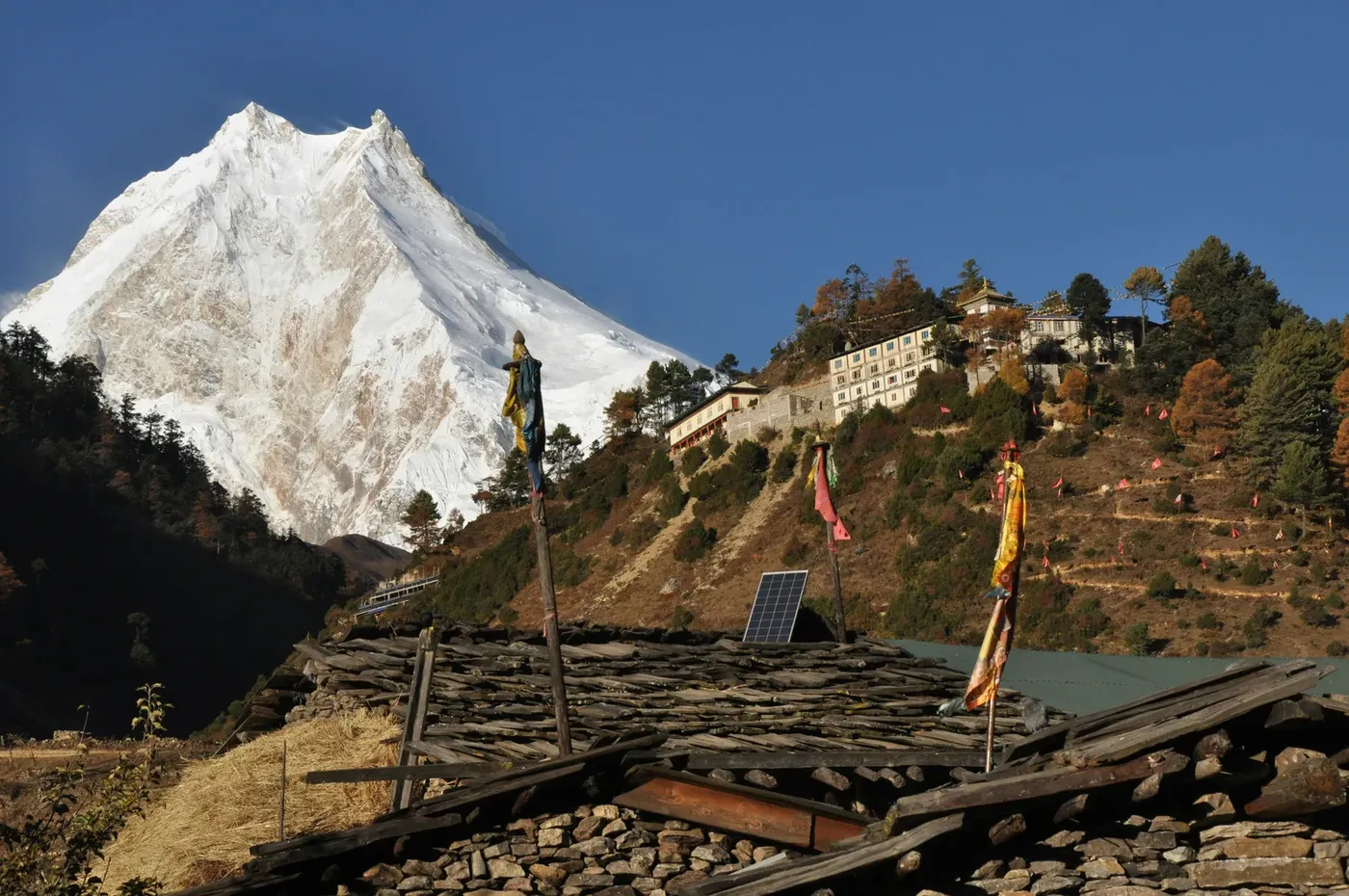
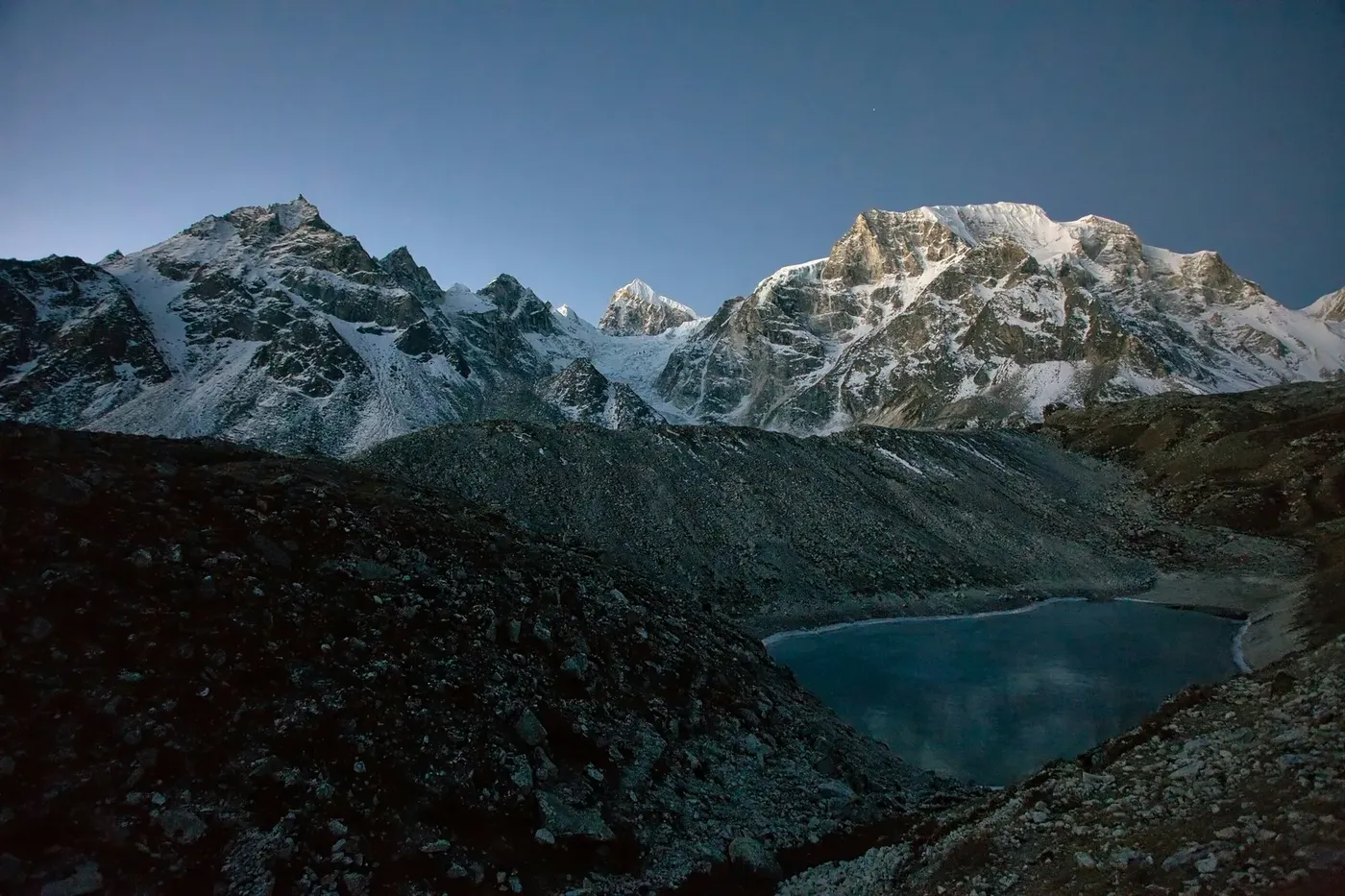
The Muktinath Helicopter Pilgrimage is a one-day sacred journey from Kathmandu to the Muktinath Temple complex at Ranipauwa (3,710m) in the Mustang region — and back the same day. You fly west across the great Himalayan wall in roughly 90 minutes, land at Ranipauwa (the gateway to Muktinath), walk a short distance to the temple complex, perform darshan, bathe in the sacred waters, witness the eternal flame, and then fly back to Kathmandu. The whole journey — one of the most spiritually significant trips you can take in Nepal — fits into a single day.
Here's why that matters. Muktinath sits in the remote rain-shadow of the Annapurna and Dhaulagiri ranges, and for centuries it was one of the hardest major pilgrimage sites in the world to reach. The traditional routes — the Annapurna Circuit trek or the overland journey via Pokhara and Jomsom — take anywhere from five days to two weeks, involve high-altitude walking or rough mountain roads, and demand a level of fitness and time that many pilgrims simply don't have. The helicopter removes every barrier: no trekking, no rough roads, no weeks away from home. You leave Kathmandu in the morning, touch the sacred waters by midday, and sleep in your own hotel that night. For elderly pilgrims, families, and anyone whose body or schedule can't manage the traditional routes, it's the only realistic way to make this pilgrimage — and it's become one of the most requested helicopter journeys in Nepal.
Muktinath Helicopter Pilgrimage Cost in 2026
Here's the number: the Muktinath Helicopter Pilgrimage costs from $1,080 per person in 2026, on a shared-flight basis. That's the price we charge at Heli Tours Nepal, and it's a fair, transparent rate for a genuine one-day pilgrimage with a real round-trip helicopter flight — not a budget cut-corner version and not a reseller markup.
To put that in context: the traditional overland-and-trek route to Muktinath, once you add up transport, lodging, meals, permits and guides over a week or more, typically costs $800–$1,500 per person — and takes five to fourteen days. The helicopter pilgrimage costs roughly the same as the upper end of the traditional route, but compresses the entire journey into a single day. For pilgrims who value their time, who can't manage high-altitude trekking, or who simply want to focus on the spiritual experience rather than the logistics of getting there, it's an extraordinary value. You're not paying for a luxury — you're paying to make a sacred journey possible in one day.
What's Included in the $1,080 Price
A genuine Muktinath Helicopter Pilgrimage at this price should include: the round-trip helicopter flight from Kathmandu to Ranipauwa (shared with other passengers), all necessary flight permits and landing fees, ground transfer between the Ranipauwa helipad and the Muktinath temple complex, sufficient ground time at the temple for darshan, bathing and prayers (typically 2–3 hours), and an experienced flight crew familiar with the Mustang route. It's a genuinely all-inclusive pilgrimage price — the only extras are the items you'd pay for on any Nepal trip.
What's Not Included
A few items are paid separately, and it's worth knowing them up front. Your international airfare to and from Nepal is not included. The Nepal entry visa costs $50 USD for 30 days and is obtained on arrival at Kathmandu airport. Travel and medical insurance is your own responsibility — and for any high-altitude flight, it's essential, so don't skip it. Meals during the day (a vegetarian meal is typically available near the temple, but confirm with your operator) and personal expenses — offerings at the temple, priest-led puja fees, souvenirs, extra beverages — are on you. Any additional temple donations are, of course, at your discretion. Everything else is in the price.
The Sacred Significance of Muktinath
To understand why thousands make this journey, you have to understand what Muktinath means. The name itself tells the story: Muktinath means "the place of liberation" — mukti is salvation or release from the cycle of rebirth, and nath means lord or master. For Hindus, it is one of the 108 Divya Desams — the most sacred temples of Lord Vishnu — and one of the eight most sacred shrines in the Vaishnava tradition. For Buddhists, it is Chumig Gyatsa, "the Hundred Waters," a sacred site of the dakini (female wisdom beings) and a place of profound tantric significance. It is one of the very few places in the world revered equally by both faiths — a living symbol of the harmony between Hinduism and Buddhism in the Himalaya.
The temple complex holds several extraordinary sacred features. The main shrine houses a golden statue of Lord Vishnu, and it is one of the few temples where Vishnu is worshipped in his Shaligram form — the sacred black fossil stones found in the nearby Kali Gandaki river that are considered natural manifestations of the divine. But the two features that draw pilgrims most powerfully are the 108 sacred water spouts and the eternal flame.
The 108 Sacred Waters (Mukti Dhara)
Around the temple, 108 gilded spouts pour ice-cold sacred water in an unbroken stream — the Mukti Dhara, the "waters of liberation." Pilgrims believe that bathing under these waters washes away the sins of a lifetime and brings one closer to moksha (liberation from the cycle of rebirth). The water comes from 9 sacred sources (the Mukti Kunda pools) and is fed by the sacred Kali Gandaki river. The water is freezing — it comes straight from the Himalayan snows — and bathing under all 108 spouts is an act of devotion that many pilgrims undertake despite the cold. Even touching the water and offering prayers is considered deeply auspicious. This is the heart of the Muktinath experience, and it's the moment most pilgrims remember for the rest of their lives.
The Eternal Flame (Jwala Mai)
Just below the main temple, in a small shrine called Jwala Mai, burns one of the most remarkable sacred phenomena in the world: an eternal flame that burns on water. Natural gas seeps from the rock and ignites, producing a flame that appears to burn directly on the surface of flowing water — a sight that has drawn pilgrims and astonished visitors for centuries. The Jwala Mai temple is one of the 51 Shakti Peethas (sacred sites of the goddess) in the Hindu tradition, and the flame is worshipped as a manifestation of the divine feminine. There are actually three flames in the shrine — one in the earth, one in the water, and one in the rock — and witnessing them is considered a rare and powerful blessing. It's a genuinely awe-inspiring sight, and one you'll have time to take in during your visit.
The Muktinath Helicopter Pilgrimage, Hour by Hour
Here's how the day unfolds, from Kathmandu to the sacred waters and back.
Early morning — Departure from Kathmandu. You're picked up from your hotel in the pre-dawn hours and transferred to the domestic helipad. After a safety briefing and weather check, you board the helicopter and lift off west, climbing over the Kathmandu Valley and setting course for Mustang. The flight itself is one of the great scenic experiences of Nepal: you cross the great Himalayan wall, with the Annapurna and Dhaulagiri ranges filling the windows — a view that would take trekkers weeks to earn, unfolding before you in minutes.
Mid-morning — Landing at Ranipauwa. After roughly 90 minutes, you descend into the arid, wind-sculpted landscape of Mustang — a landscape utterly different from the green hills you left behind, more like Tibet than Nepal. You land at Ranipauwa, the small settlement that serves as the gateway to Muktinath, at 3,710 metres. The air is thin and crisp, and the temple complex is a short walk (or brief drive) away.
Midday — Darshan at Muktinath. This is the heart of the day. You enter the temple complex and perform darshan at the main Vishnu shrine, offering prayers and receiving blessings. You walk to the Mukti Dhara — the 108 sacred water spouts — and bathe in the ice-cold waters, or at least touch them and offer prayers. You descend to the Jwala Mai shrine to witness the eternal flame burning on water. If you wish, you can arrange a priest-led puja (a personal blessing ceremony) for an additional offering. You'll have 2–3 hours at the complex — enough time for darshan, bathing, prayers, and quiet reflection without feeling rushed. A vegetarian meal is typically available near the temple.
Afternoon — Return flight to Kathmandu. You board the helicopter for the return journey, soaring back over the Annapurna and Dhaulagiri ranges with the afternoon light on the peaks. You land in Kathmandu by late afternoon or early evening and are transferred back to your hotel — usually arriving in time for dinner. The entire pilgrimage, from hotel pickup to hotel drop-off, fits within a single day.
Who Is the Muktinath Helicopter Pilgrimage For?
This journey is for anyone who wants to experience one of the Himalaya's most sacred sites without the weeks of trekking or days of rough roads that the traditional routes demand. It's especially right for four kinds of travelers. Elderly pilgrims — for whom the high-altitude trek or the long overland journey is physically impossible, the helicopter is the only way to reach Muktinath, and it's designed to be gentle: minimal walking, no altitude exertion, and a comfortable flight. Families with children — who want to share this sacred experience without subjecting young ones to a grueling journey. Time-constrained travelers — who have a few days in Nepal and want to make the most spiritually significant journey possible in a single day. And devotees on a specific religious purpose — who want to focus entirely on darshan, prayer and ritual, without the distraction and exhaustion of a long overland approach. If any of these describe you, this is the right journey.
Is the Muktinath Helicopter Pilgrimage Safe?
Yes — when you fly with a licensed, experienced operator. The helicopters used for the Mustang route — typically Airbus H125 (AS350 B3e) or similar high-altitude models — are the workhorses of Himalayan aviation, maintained to international standards and flown by some of the most experienced mountain pilots in the world. The route from Kathmandu to Ranipauwa is one of the most established helicopter corridors in Nepal, flown regularly for pilgrims, trekkers and supply missions. The main consideration is weather: Mustang flights are weather-dependent, and morning departures are the most reliable, which is why the pilgrimage leaves in the pre-dawn hours. A good operator monitors the weather continuously and will reschedule at no extra charge if conditions aren't right — never fly on a marginal forecast. At 3,710m, the altitude is noticeable but mild compared to Everest-region flights; most visitors feel only a slight breathlessness, and the short ground time means altitude isn't a significant concern for healthy travelers. If you have a heart or lung condition, check with your doctor before booking.
Best Time for the Muktinath Helicopter Pilgrimage
One of the great advantages of the Muktinath pilgrimage is that it's possible year-round — unlike Everest-region flights, which are heavily seasonal. Mustang sits in the rain-shadow of the Annapurna and Dhaulagiri ranges, which means it stays dry even during the monsoon (June–August), when much of the rest of Nepal is soaked. That said, the most comfortable and reliable windows are March to May (spring, with clear skies and mild temperatures) and late September to November (autumn, with the most stable weather and the crispest mountain views). Winter (December–February) is possible but cold, with occasional snow at Ranipauwa. Whatever season you choose, morning departures are the most reliable for mountain flying, and a good operator will always prioritize a safe weather window over a rigid schedule.
Muktinath Helicopter vs. Trekking vs. Overland: Which Should You Choose?
Travelers typically weigh three ways to reach Muktinath, so here's the honest comparison. The traditional trek (part of the Annapurna Circuit, 5–14 days, $800–$1,500) is for those who want the full Himalayan trekking experience and have the time and fitness for it — it's a magnificent journey, but it's a serious commitment. The overland route (drive to Pokhara, then to Jomsom, then up to Muktinath — 2–4 days of rough mountain roads, $400–$800) is cheaper but grueling, with long hours on unpaved roads and a real risk of landslides and delays. And the helicopter pilgrimage (1 day, from $1,080) is for those who want to focus entirely on the sacred experience — darshan, bathing, prayer — without the weeks of trekking or days of rough roads. It costs roughly the same as the upper end of the traditional routes, but compresses the entire journey into a single day. For most pilgrims — especially the elderly, families, and the time-constrained — it's the clear choice. For a broader look at all the helicopter pilgrimage and tour options in Nepal, see our Everest Helicopter Tour Cost guide and our other Nepal helicopter guides.
How to Book the Muktinath Helicopter Pilgrimage (Without Overpaying)
The pilgrimage-helicopter market has a markup problem: overseas agents and resellers routinely add 20–40% on top of the local operator price, and some cut corners on the aircraft, the ground time, or the permits to hit a low headline number. Here's how to book smart. First, book with a licensed local operator — a company registered in Nepal with its own flight operations and direct helicopter partnerships. Local operators quote the real price without reseller markup. Second, confirm the ground time is genuine — some cheap "pilgrimages" give you only 30–45 minutes at the temple, which isn't enough for proper darshan and bathing. Ours gives you 2–3 hours. Third, get the inclusions in writing — the round-trip flight, the permits, the ground transfer, and the temple time should all be itemized. Fourth, ask about the weather policy — what happens if the flight is delayed, and whether you get a free reschedule. A confident operator answers all of these instantly. You can request a pilgrimage quote from us directly — we respond with a full written breakdown, usually within a few hours.
What to Bring on the Muktinath Helicopter Pilgrimage
The day is short, but pack thoughtfully. Warm layers — even in season, Ranipauwa at 3,710m is cold in the early morning, so bring a fleece or light jacket. A change of clothes or a towel — if you plan to bathe under the 108 sacred waters, you'll want something dry to change into afterward. Your passport and a copy of your travel insurance. Sun protection — sunglasses, sunscreen and a hat, because the high-altitude sun is intense. A small offering — many pilgrims bring flowers, rice, or a small donation for the temple; your operator can advise on appropriate offerings. Comfortable walking shoes — the walk from the helipad to the temple is short but on uneven ground. A camera — the flight over the Annapurna and Dhaulagiri ranges is one of the most scenic in Nepal, and you'll want to remember the temple. And any personal medications — there are no pharmacies at Ranipauwa. Travel light; you only need a small daypack.
For the official background on this landmark, see Manaslu. It is worth reading before you plan, though nothing in it changes what the flight itself can do.
For the adjacent decisions, see Gosaikunda Helicopter Tour: Sacred Lake by Helicopter (2026), Janai Purnima 2026: Gosaikunda Helicopter Tour for the Sacred…, and Kathmandu Valley Tour 2026 — 5-Day UNESCO Heritage & Aerial….
Frequently Asked Questions
How much does the Muktinath Helicopter Pilgrimage cost in 2026? From $1,080 per person on a shared-flight basis, including the round-trip helicopter from Kathmandu, all flight permits, ground transfer to the temple, and 2–3 hours at the complex. International airfare, the Nepal visa ($50), travel insurance, meals and personal offerings are extra.
How long is the whole journey? One day. You leave Kathmandu in the early morning, fly roughly 90 minutes each way, spend 2–3 hours at the temple, and are back in Kathmandu by late afternoon or early evening.
Can elderly or less-mobile pilgrims do this? Yes — this is one of the main reasons the helicopter pilgrimage exists. There's minimal walking (a short distance from the helipad to the temple), no altitude exertion, and a comfortable flight. It's the only realistic way for many elderly pilgrims to reach Muktinath.
Do I get enough time at the temple? Yes — 2–3 hours, which is enough for darshan at the main shrine, bathing at the 108 sacred waters, witnessing the Jwala Mai eternal flame, and quiet reflection. Some cheap operators give only 30–45 minutes; we don't.
Can I bathe in the 108 sacred waters? Yes — bathing under the sacred spouts is permitted and is the central act of devotion for many pilgrims. The water is very cold (Himalayan snowmelt), so bring a change of clothes and a towel. Even touching the water and offering prayers is considered deeply auspicious.
Is there a priest-led puja available? Yes — you can arrange a personal puja (blessing ceremony) with a temple priest for an additional offering. Let us know in advance and we'll arrange it.
What if the flight can't go on my scheduled day? Mustang flights are weather-dependent. If your flight is delayed, it's rescheduled to the next suitable window at no extra charge. Morning departures are the most reliable, which is why we leave in the pre-dawn hours.
Is Muktinath only for Hindus? No — Muktinath is sacred to both Hindus and Buddhists. Hindus revere it as one of the 108 Divya Desams of Lord Vishnu; Buddhists know it as Chumig Gyatsa, a sacred site of the dakini. It's one of the few places in the world equally revered by both faiths, and visitors of all backgrounds are welcome.
Why Book Your Muktinath Pilgrimage With Heli Tours Nepal
Heli Tours Nepal is operated by Enticing Himalayas Travel, a licensed Nepali trekking and tour company with years of experience arranging sacred and scenic helicopter journeys across Nepal. That means you're booking with the people who actually run the flights — not a reseller adding a markup. We quote transparent, all-inclusive prices, confirm every detail in writing, and handle the permits, the ground transfers, and the weather contingencies so your only job is to focus on the sacred experience. Whether you want the Muktinath pilgrimage, an Everest journey, or a private charter, we'll build the trip around you. Get your Muktinath Helicopter Pilgrimage quote today — most enquiries receive a full written breakdown within a few hours.