
Annapurna Base Camp Helicopter Day Tour from Pokhara: Price, Landing and the 1-Day ABC Itinerary
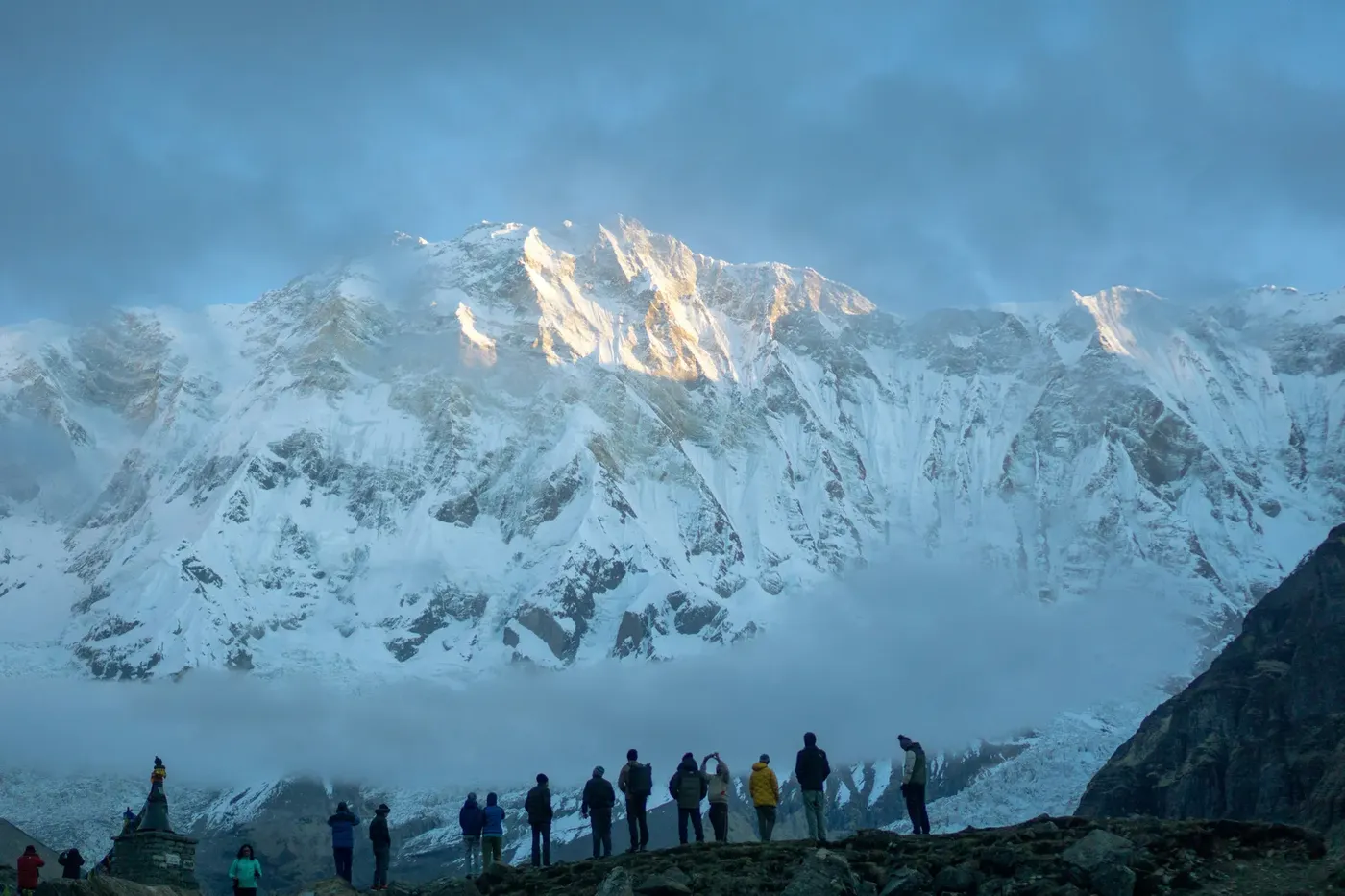
The Annapurna Base Camp Helicopter Day Tour is the shortest route into the heart of the Annapurna Sanctuary. One 20-25 minute flight from Pokhara lifts you off the lakeside runway, over the Modi Khola gorge, past Machhapuchhre's sacred fishtail summit, and sets you down inside the natural amphitheatre of ABC at 4,130 m — surrounded by Annapurna I (8,091 m), Annapurna South, Hiunchuli and the glacier basin that trekkers walk five days to reach. You are back in Pokhara for lunch.
- $860ABC day tour, per seat
- 4,130 mAnnapurna Base Camp
- 4,919 mTilicho Lake
- 3-4 hrsFlight window from Pokhara
For travellers who want the Sanctuary's peaks without the five-to-six-day walk, this is the honest alternative: no acclimatisation nights, no leech-covered trail sections in the wet season, no knees worn down by stone steps. You trade the slow earn of the trek for a single engineered morning at altitude — with the same peaks filling your eyes at the end.
What the ABC Day Tour Actually Delivers
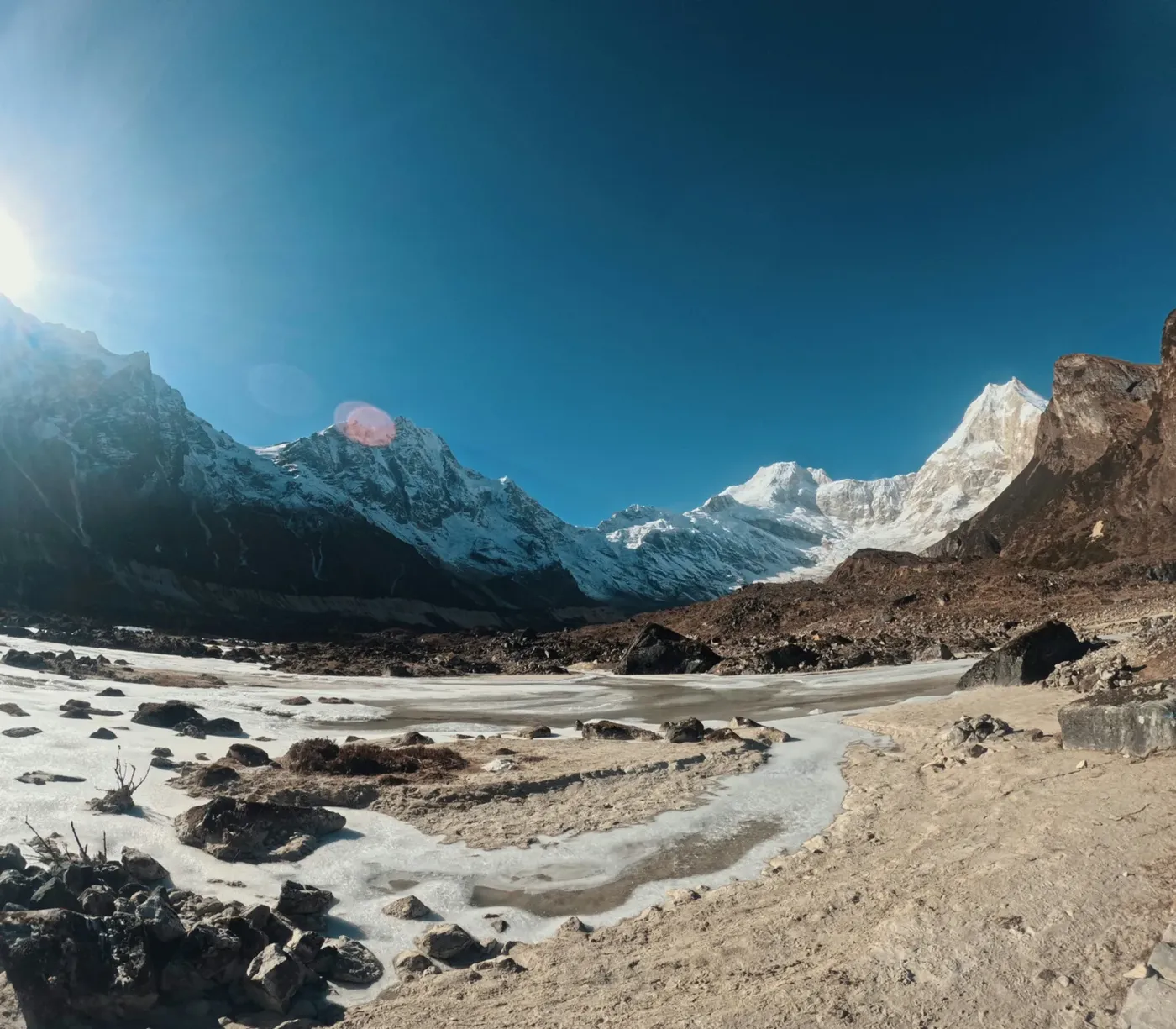
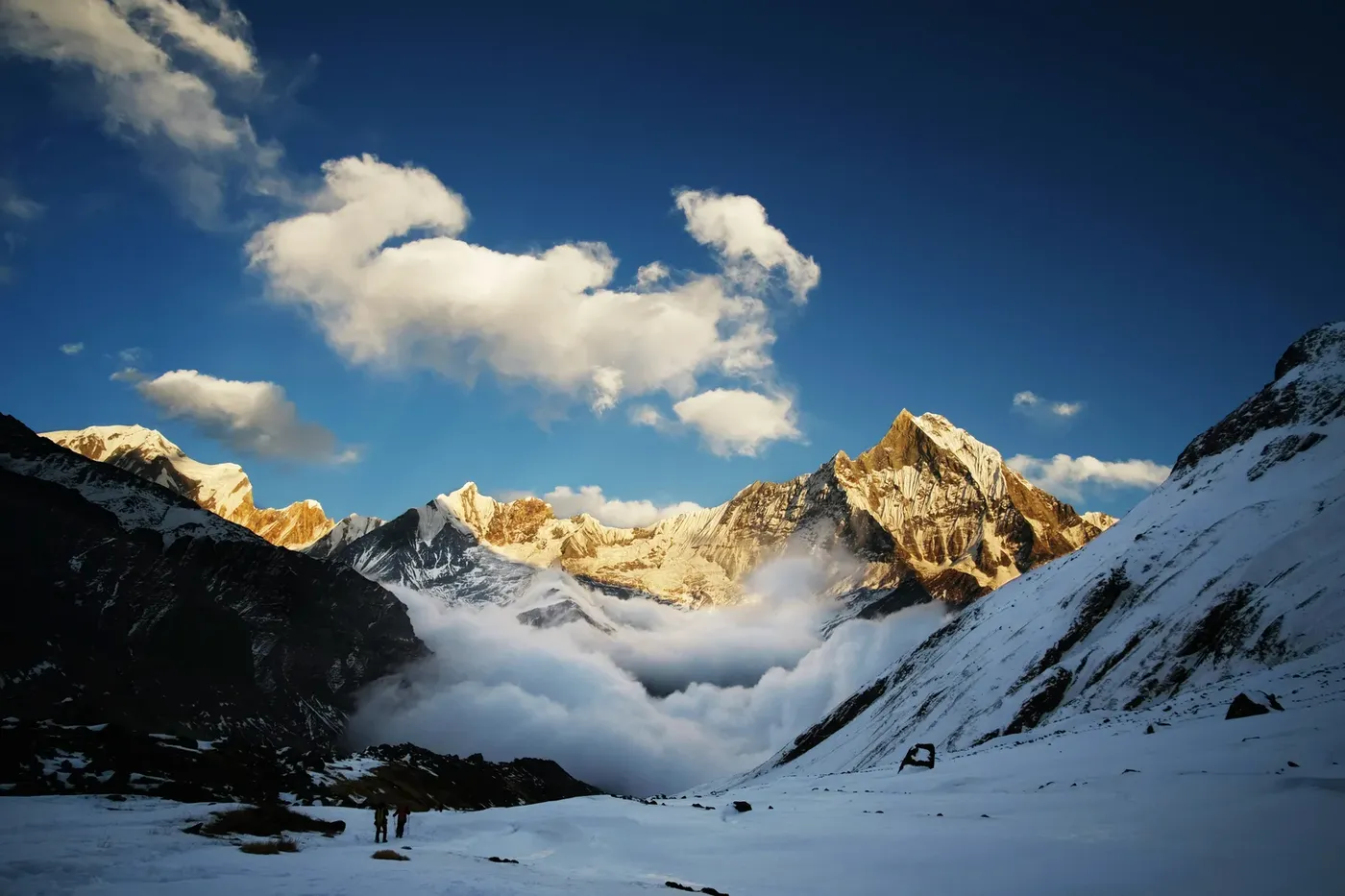
Base camp itself sits inside a grassy bowl ringed by 7,000-metre walls. On the ground you have roughly 30 minutes: time for photos at the teahouses and prayer flags, the Annapurna Glacier viewpoint, and the sign every trekker queues for. In October and November, and again in March to May, the bowl is typically clear by 7-8 AM — which is exactly why departures are timed before the clouds build.
- Landing at or beside ABC (4,130 m) — the aircraft sets down at the base camp helipad when conditions allow; otherwise at the upper Sanctuary meadows a short walk from the stone teahouses.
- ~30 minutes of ground time inside the amphitheatre for photos and the viewpoint.
- Optional hike-out — active travellers can descend part of the trail toward Himalaya/Deurali (2-3 hours) while the helicopter repositions, then fly the return leg. Ask us to build this variant in.
- Pokhara return by early afternoon — the entire trip fits between breakfast and dinner.
Route and Timeline: Pokhara → ABC → Pokhara
Most departures leave Pokhara's domestic apron between 7:00 and 8:30 AM. The aircraft crosses Fewa Tal's edge, tracks north over the terraced hills of Kaski, then enters the Modi Khola gorge — the same corridor the trek follows, compressed into minutes. Machhapuchhre Base Camp (3,700 m) appears below the sacred peak's sheer south face; a few minutes later the terrain opens into the Sanctuary bowl and ABC's cluster of stone lodges slides into view.
After the landing and ground time, the return retraces the gorge with the light better for photography. Clients who choose the hike variant land once, walk down, and are collected at a lower pick-up point. Total door-to-door time in the standard version: about 3 hours.
From Kathmandu, the same product is possible as a longer day: fly Kathmandu-Pokhara (or helicopter the whole way, adding ferry legs and cost), tour the Sanctuary, and return by evening. See our Kathmandu-Pokhara helicopter transfer guide for how the ferry legs change the budget.
ABC Helicopter Tour Price (2026)
See the Annapurna Base Camp helicopter day tour for the full itinerary and to book. Sharing-basis seats run from USD 860 per person depending on season and load factor. The aircraft is the same Airbus H125 used on our Everest routes — up to 4-5 passengers, a strict ~80 kg per-person allowance including body weight and bags. A private charter of the full aircraft is USD 2,585, which works out to the same $517 a seat once five of you travel together, with the aircraft and the departure time entirely yours.
| Factor | 1-Day Heli Tour | 6-Day ABC Trek | Poon Hill Trek |
|---|---|---|---|
| Time needed | 1 day (3 hrs door-to-door) | 6 days walking | 4-5 days walking |
| Max altitude reached | 4,130 m (landing) | 4,130 m (sleep at 3,230 m) | 3,210 m |
| Typical cost per person | USD 860 (sharing) | USD 700-1,100 all-in | USD 350-600 |
| Fitness required | None beyond walking to the aircraft | Good — 6 days of stone steps | Moderate |
| Altitude-sickness exposure | Minutes at 4,130 m, no nights high | Acclimatisation profile required | Low |
| Best for | Families, seniors, tight schedules | Trekkers earning the walk | First-time trekkers, sunrise viewpoint |
If what you want is the five-day experience with a helicopter exit instead, that product exists too — our Annapurna heli-return trek walks you up the classic route and flies you back down.
Landing Conditions: Why ABC Is Different from Everest Landings
The Annapurna Sanctuary is a tighter, more weather-sensitive bowl than the Khumbu. Cloud funnels up the Modi Khola gorge most afternoons from spring through autumn, and the monsoon (late June-September) fills it early. This is why ABC flights are a morning product and why we hold the same weather policy as every serious operator: if conditions are not right, you do not go — you rebook free or take a full refund.
Ground time is kept to about 30 minutes because 4,130 m is genuine altitude: we keep oxygen on board, ask anyone with cardiac or respiratory conditions to clear the trip with a doctor, and treat mild dizziness the way we do on Everest flights — sit, breathe, oxygen, tell the crew. Seniors and children fly regularly and safely; the medical gates are the standard ones for any altitude exposure.
Who This Tour Suits Best
We fly three groups repeatedly: Pokhara visitors who booked a trek holiday and discovered their knees disagree; families with mixed fitness who refuse to split up; and photographers who want the Sanctuary light without carrying a week of camera gear uphill. The 1-day tour also fits conference and wedding groups in Pokhara — it is the only 7,000 m-ampitheatre in the world you can visit between sessions. Our Pokhara helicopter tours guide covers the other flight options from the same base.
It does not suit travellers whose dream is the walk itself. The trek is a rite of passage; the helicopter is a different product with the same destination. If earning base camp matters to you, do the trek — the mountains reward it. If the amphitheatre matters more than the approach, this is your tour.
Booking: Weights, Seasons and the Buffer Rule
Send real body weights with your enquiry — payload at 4,130 m is physics, not policy, and honest weights are what keep the landing safe. Seasons: October-November delivers the sharpest post-monsoon air; March-May gives spring warmth with good clarity; winter (Dec-Feb) offers crystal mornings if you accept the cold; the monsoon is a rebooking lottery we do not recommend planning around. Always keep a buffer morning in Pokhara — the same rule that governs every helicopter flight in Nepal: the mountain sets the schedule, and a cancelled last morning cannot be recovered.
Check current-day pricing and availability for your dates via the contact form, call +977 9851144618, or message us on WhatsApp — we confirm the slot, aircraft and written price the same day. Bookings are handled by Enticing Himalayas Travel Pvt. Ltd., a licensed Kathmandu operator running Himalayan helicopter tours since 2012.
Photography Notes from the Cockpit Seats
The ABC flight is arguably the best aerial photography product in Nepal that nobody talks about. The gorge section gives you Machhapuchhre's south face — a 3,000-metre wall of rock and ice that trekkers never see from below — in a continuous five-minute frame. Inside the bowl, the amphitheatre is close enough to fill a 70-200 mm lens with Annapurna South's hanging glaciers. Morning light in October-November is the operative word: the bowl is clear by 7-8 AM and fills with cloud by 11. On the ground, the prayer flags and teahouse roofs give the scale that pure landscape shots lack. Drones are prohibited inside the Sanctuary — the helicopter IS the aerial platform.
Pack the same camera logic as an Everest flight: polarizer for window glare, burst mode through moving glass, and keep the phone charged for the ground shots. A 24-70 mm and a 70-200 mm cover the whole flight from the standard seating.
Best Time of Year for the ABC Day Tour
October-November is the premium window: post-monsoon air is at its cleanest, the monsoon has washed the gorge green, and the daytime temperatures at 4,130 m sit around 5-10°C. March-May is the spring alternative — warmer in Pokhara, rhododendron season on the lower hills, clarity that is very good but not October-perfect. December-February offers the sharpest mornings of the year if you accept real cold at the landing (-5 to -10°C); we run flights on demand in this window. Late June-September is monsoon: the gorge clouds early, the trail sections flood, and we only book this season with a buffer morning attached. The same calendar governs every Pokhara-based flight — the details for the other routes are in our Pokhara helicopter tours guide.
The Hike-Out Variant: Fly Up, Walk Part Way Down
For travellers who want the taste of the trail without the six days, we offer a hybrid: fly into the Sanctuary, then after ground time descend on foot with a guide part-way down the classic route — through Machhapuchhre Base Camp, Himalaya and Deurali's bamboo-rhododendron forest — while the helicopter repositions to a lower pickup point. Two to three hours of genuine Annapurna trail, all downhill, no overnight gear. It is the product for the trekker's spouse: one partner earns the views, the other earns the story, and the aircraft carries everyone home.
The variant needs a full morning, stable weather and honest fitness disclosure — the stone steps below Deurali are real even downhill. We quote it per-group since it books the aircraft for longer. If this compromise appeals more than either extreme, mention the hike-out variant when you enquire.
Fitness, Health and What to Wear
The standard tour has no fitness requirement beyond walking to and from the aircraft. What we do ask for: real body weights at booking (payload at 4,130 m is strict — about 80 kg per person including bags), and a doctor's clearance for the standard altitude gates: pregnancy, serious cardiac or respiratory conditions. A severe cold on the day is a real reason to rebook — sinus pressure at 4,000 m is genuinely painful, and we do it free of charge for the next morning.
Clothing is simpler than Everest but the same logic: layers. Pokhara mornings run 10-15°C; the Sanctuary bowl at landing time runs 5-10°C in season, colder in winter. A warm jacket, hat, gloves, sunglasses and closed shoes cover it. Sunscreen is not optional at 4,000 m — the UV off snow and rock burns faster than at the beach. Leave the main luggage at the hotel: a small camera bag is all the aircraft wants.
Comparing the Two Sanctuaries: ABC vs Everest Day Tours
Clients who fly both always ask which they should choose with one morning to spend. The honest answer: Everest is the bucket list; Annapurna is the better-kept secret. The Everest day tour reaches higher (5,545 m vs 4,130 m), has the famous names and the Everest View Hotel breakfast — it is the experience with the bigger story. The ABC tour is more intimate: a tighter amphitheatre, fewer aircraft in the sky, the fishtail face you cannot see from the ground, a lower price (about a third of the Everest day tour), and a base camp that is genuinely green rather than glacial moraine. If your itinerary starts in Pokhara and time is the constraint, ABC wins on logistics alone.
The Kande Trailhead Alternative
Some ABC day flights route via Kande or Pothana on the Annapurna rim rather than direct into the Sanctuary. If your itinerary mentions Kande, this is why: the trailhead at 2,200 m is a weather-friendlier entry point, and flights landing there connect with the classic Australian Camp ridge — a balcony view over the whole Annapurna chain plus Dhaulagiri to the west, without entering the bowl at all. It is the milder alternative for mornings when the Sanctuary is clouded but the rim is clear, and operators who pretend the bowl is guaranteed every day are selling weather that does not exist. We tell clients the truth: ABC is the target, the rim is the fallback, both are spectacular, and the difference is decided at dawn.
One last operational note: Pokhara's helipad sits beside the domestic terminal at Pokhara Airport, five minutes from Lakeside — most hotels are a ten-minute pickup from wheels-up. On the morning, wear the layers, bring the passport, and leave everything else in the hotel safe. The rest — the aircraft, the permit-free routing, the weather call, the safe landing — is our job.
Ready to see the Sanctuary without the six-day walk? The morning slot is the scarce resource — send dates and weights today and we will confirm your seat in writing before you finish planning the rest of the Pokhara stay. The amphitheatre has been waiting eleven million years; it only needs one clear morning of yours.
The underlying facts are documented at the Annapurna Massif. It will not change the itinerary, but it explains what you are looking at.
Take this further with Annapurna Base Camp Helicopter Tour: Cost, Options & How to…, Helicopter Tours from Pokhara 2026: Everest, Annapurna &…, and Kathmandu to Pokhara Helicopter Transfer: Price, Duration and….
Frequently Asked Questions
How much does the ABC helicopter day tour cost?
From USD 860 per person on a sharing basis, or USD 2,585 to charter the whole helicopter for up to 4-5 passengers. The price covers the Pokhara-ABC-Pokhara flight, the landing, ground time at the Sanctuary, and crew. There are no hidden permit fees for this route — unlike Everest flights, no national-park permit is charged for the day-landing.
Is 4,130 m dangerous? Can I get altitude sickness on the ABC tour?
The exposure is minutes, not nights — altitude sickness develops over 6+ hours at altitude, and your ground time at ABC is about 30 minutes with no sleeping high. Oxygen is carried on board. The standard medical gates apply: pregnant travellers and anyone with serious cardiac or respiratory conditions should not fly to altitude without a doctor's clearance. Mild dizziness at the landing is possible and passes quickly — the protocol is sit, breathe, oxygen, tell the crew.
Where exactly does the helicopter land?
At the ABC helipad inside the Sanctuary when conditions allow — stone's throw from the teahouses and the famous base camp sign. When the bowl is cloudy or the wind is wrong, the pilot lands at the upper Sanctuary meadows instead, a short walk from the lodges. The pilot makes the call on the morning; safety is not negotiable.
Can children and elderly parents do this tour?
Yes — this is one of our most common family products. There is no walking requirement in the standard version, the aircraft seats children securely beside parents, and the 30-minute ground time is on flat grass. Elderly travellers with the Annapurna dream and no trekking legs are exactly who we built this for. The medical gates are the standard ones for any altitude flight.
What happens if the weather cancels the flight?
Full refund or free rebooking to the next available morning — your choice, no penalty. The Annapurna Sanctuary is weather-sensitive: cloud funnels up the gorge most afternoons, so we fly mornings only and we never gamble. This is why we tell every client to keep a buffer morning in Pokhara before planning anything unmovable.
Can the tour start from Kathmandu instead of Pokhara?
Yes, as a longer day. The standard version departs Pokhara because that is the short leg to the Sanctuary. From Kathmandu we either add a fixed-wing connection to Pokhara or fly the helicopter the whole way — both change the day's shape and the price. Tell us your base city and dates and we will quote the right version.