
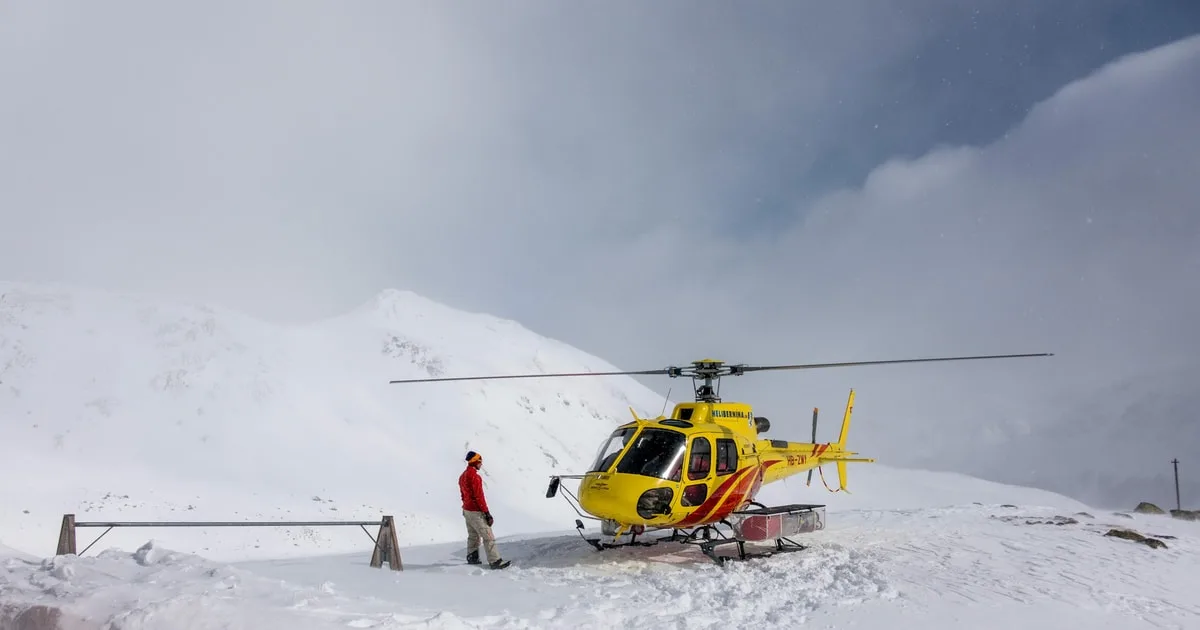
What a Helicopter Charter Actually Means in Nepal
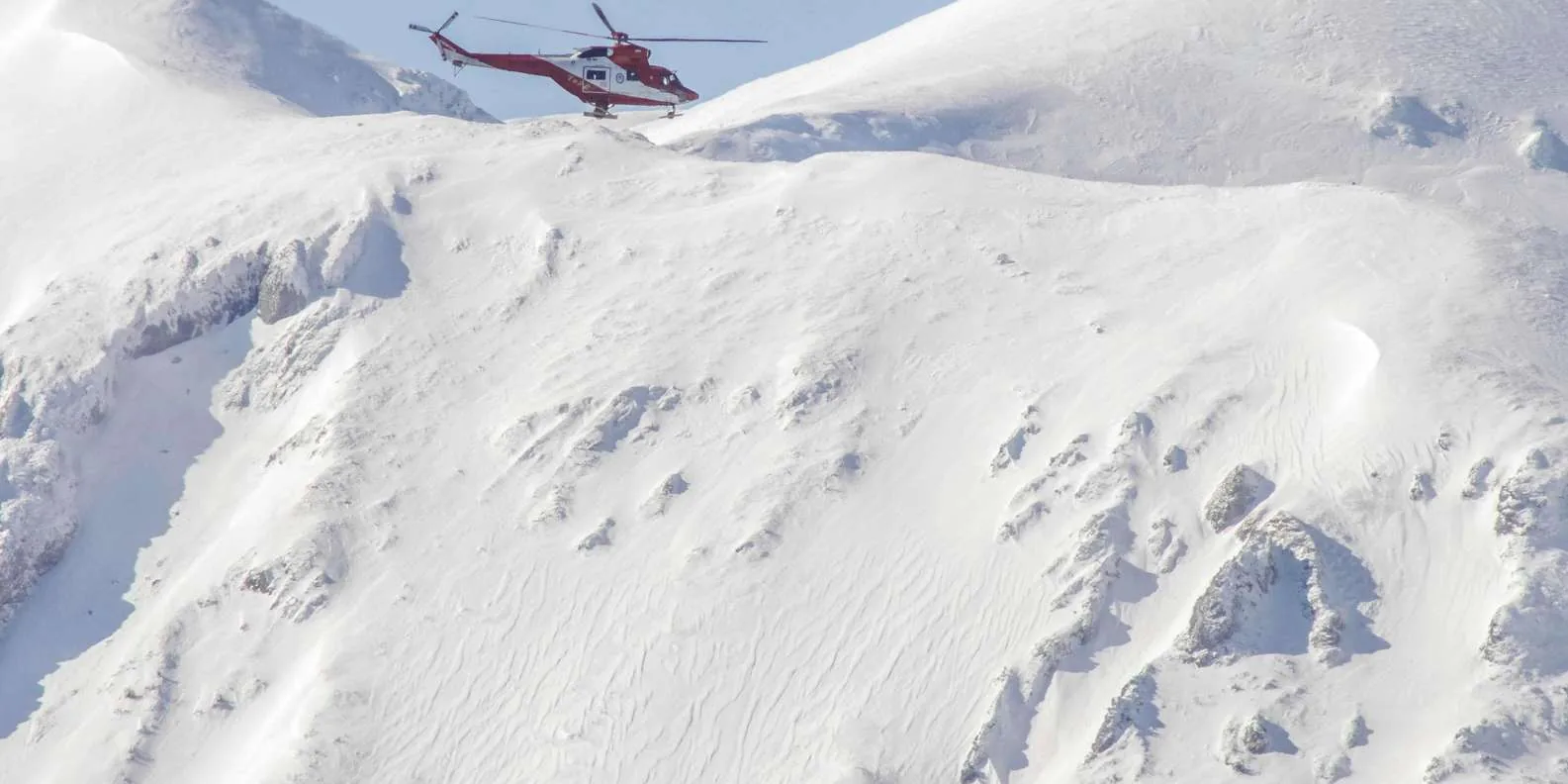
A charter is simple: you hire the entire helicopter, not a seat on one. The aircraft, pilot, and schedule work for you. No fixed departure times, no waiting for other passengers to fill the cabin, no standard route. You decide when to fly, where to land, and how long to stay on the ground.
- $260Cheapest seat, scenic flight
- $860Annapurna Base Camp
- $1,260Everest Base Camp day tour
- $4,500Private charter, whole aircraft
Shared tours — like our Everest Base Camp day tour from $1,260 per person — sell individual seats on a scheduled rotation. They are the right choice for most travelers because the cost is split five ways. A charter costs more in total but buys you control: your group only, your timing, your routing.
In Nepal, charters are not a niche product. The same helicopters that fly tourist rotations also serve expeditions, film crews, rescue operations, and government contracts. The fleet is small and in constant demand, which is why charter bookings need lead time and why prices move with the season. Understanding how this market works is the difference between a smooth booking and an expensive disappointment.
We have arranged charters since 2012 through our parent company Enticing Himalayas Travel Pvt. Ltd., a government-licensed operator in Thamel, Kathmandu. This guide covers everything we tell clients before they book: aircraft, routes, pricing logic, timing, and safety.
The Aircraft: What Actually Flies in Nepal
The Airbus H125 (AS350 B3) — the Himalayan workhorse
Nearly every charter in Nepal flies on an Airbus H125, the modern designation of the legendary AS350 B3 "Écureuil" (Squirrel). This is the helicopter that in 2005 landed on the summit of Mount Everest at 8,848m — still the highest landing ever recorded — to prove its high-altitude capability. If it can perform there, it can handle any charter route in the country.
The H125 is a single-engine, five-passenger machine. Its Turbomeca Arriel engine is specifically rated for "hot and high" operations, which is exactly what Nepal demands: thin air, high density altitudes, and landing zones above 4,000m where most helicopters cannot operate at all.
- Passenger capacity: 5 passengers plus pilot on tourist configuration
- Weight limit: roughly 80kg per person including day bag on shared operations; charters allow more flexible loading but the pilot calculates the final load sheet based on fuel, altitude, and temperature
- Cruise speed: around 220 km/h
- Range: sufficient for any single-day Nepal route with a fuel stop where needed
Twin-engine options
For larger groups or clients who prefer twin-engine redundancy, operators can arrange machines like the Airbus H130 (seven passengers) or, for utility work, the AS350 B3's bigger siblings. Twin-engine charters cost significantly more — often double — because the aircraft are scarcer and burn more fuel. For groups of six or more, we usually recommend splitting across two H125s, which is cheaper and more flexible than one large aircraft.
Why you will not find "luxury cabin" helicopters here
Nepal's charter market is operational, not luxury. The H125 cabin is comfortable and the views are unmatched, but do not expect leather interiors or champagne service. Weight is the enemy at altitude, and every kilogram of interior trim is a kilogram of fuel or payload given up. The mountains are the luxury.
Popular Charter Routes
Every route below is one we arrange regularly. Durations assume a Kathmandu departure; flights from Pokhara change the math for western routes.
| Route | Typical Duration | Aircraft | Typical Use |
|---|---|---|---|
| Everest region — Kala Patthar (5,545m), Everest View Hotel (3,880m), optional Base Camp landing | 5–6 hours | H125 | The classic: proposals, photography, once-in-a-lifetime trips |
| Everest + Gokyo Lakes — extended circuit over the turquoise Gokyo valley | 6–7 hours | H125 | Photographers and repeat visitors who want beyond the standard route |
| Annapurna Base Camp (4,130m) with Machhapuchhre views | 3–4 hours from Pokhara, 4–5 from Kathmandu | H125 | Short-holiday travelers based in Pokhara |
| Muktinath temple (3,710m) — sacred pilgrimage site | Full day with ground transfer | H125 | Pilgrims, families, elderly travelers avoiding the overland route |
| Langtang Valley — Kyanjin Gompa (3,870m) | 3–4 hours | H125 | Quiet alternative to Everest; close to Kathmandu |
| Rara Lake — Nepal's largest lake, far west | Full day with fuel stop | H125 | Expedition-style trips; few tourists ever see it |
| Multi-day charters — overnight mountain stays, custom circuits | 2–7 days | H125 (dedicated or on-call) | Film crews, expeditions, bespoke itineraries |
The Everest charter in detail
The standard private Everest charter leaves Kathmandu at first light, refuels at Lukla or Syangboche, lands at Kala Patthar (5,545m) for the definitive Everest photo, then descends to the Everest View Hotel at 3,880m for breakfast before returning. Total door-to-door: five to six hours.
What a charter adds over the shared version: you choose the departure window, you can request a Base Camp landing when conditions allow, you can extend ground time at each stop, and you can add detours — Thame valley, Namche bazaar overflight, or the Gokyo extension. Our private Everest charter tour page describes the standard itinerary; everything beyond it is negotiable.
Multi-day charters
These are the most interesting charters we arrange. A typical example: day one, Kathmandu to Everest View Hotel with an afternoon Gokyo flight; overnight at the hotel; day two, sunrise flight over the Khumbu and return. Film crews book dedicated aircraft for a week or more, with the helicopter on standby between shots. Expedition support charters ferry loads and personnel between base camps. If you can describe the trip, our operations team can route it.
How Charter Pricing Works
Charters are priced per aircraft, not per seat. You pay for the machine's flight time and positioning, whether one person or five are on board. This is the single most important thing to understand about charter economics.
We quote each charter individually rather than publishing fixed rates, because four variables move the price:
- Route and flight hours. Fuel burn and crew time scale with distance. An Everest charter and a Rara Lake charter are very different flights.
- Season. Peak windows (October–November, March–May) see the fleet fully booked by expeditions and tour rotations. Off-season, aircraft are more available and pricing softens.
- Landing fees and permits. Some landing zones and national parks carry fees that pass through to the client.
- Repositioning. If the aircraft must fly empty from another base to reach you (for example, a Pokhara departure when the fleet is in Kathmandu), that empty leg is part of the cost.
As a rough orientation: a private Everest charter for the full aircraft typically runs to several thousand dollars. Split across five passengers, the per-person cost often lands close to — sometimes below — buying five individual shared seats at $1,260 each. For groups of four or five, a charter is frequently the better value, not just the better experience. If your budget is tighter, the full Everest helicopter cost guide breaks down every shared option, and the scenic mountain flight from $260 remains the cheapest way to see the mountain.
One honest warning: if a quote looks dramatically cheaper than others, ask what aircraft and operator are actually being used. The fleet is small, costs are real, and deep discounts usually mean a broker adding risk, not value.
How to Book: Step by Step
The process from enquiry to wheels-up:
- 1. Enquiry. Send your dates, group size, route idea, and any special requirements (photography, proposal, medical considerations). Email bookings@helitoursnepal.com or call +977 9851144618. We reply the same day with availability and a quote.
- 2. Quote and itinerary. You receive a written quote with the route, timing, what is included, and the cancellation policy. We refine it together — routes are flexible at this stage.
- 3. Deposit. A deposit secures the aircraft and date. The balance is due before departure. We never ask for full payment upfront at the enquiry stage.
- 4. Passenger details. Names, passport numbers, and weights. Weighing is not optional — it is how the pilot builds a safe load sheet. Be accurate.
- 5. Weather briefing. The evening before departure, our team confirms the flight plan and the morning weather window. Mountain flights are go/no-go decisions made at first light.
- 6. Flight day. Hotel pickup, domestic terminal transfer, safety briefing, and wheels-up. You fly.
How far ahead to book
- Peak season (October–November, March–May): 2–4 weeks minimum. The H125 fleet is limited and expeditions book large blocks.
- Off-season: 3–7 days is usually sufficient.
- Last-minute: sometimes possible — ask us and we will check fleet availability immediately. But never build an international trip around a same-week charter in peak season.
Best Season to Charter
The same weather logic that governs all Himalayan flying applies to charters:
- October–November: the prime window. Post-monsoon air is crystal clear, mornings are stable, and visibility is at its best. Also the busiest — book early.
- March–May: second prime window. Slightly hazier than autumn but warmer, with longer usable flying mornings. Rhododendron season in the mid-hills.
- December–February: cold, crisp, and quiet. Flights operate but mornings can be windier and high landing zones occasionally close after snowfall. Good availability, better pricing.
- June–September: monsoon. Cloud, rain, and frequent delays. We accept charter enquiries but set honest expectations: weather cancellations are common, and we will not fly marginal conditions for anyone.
Whatever the season, charters fly in the morning. Afternoon mountain weather degrades predictably, so departure slots are early — typically between 6 and 8 AM.
Safety: What to Verify Before You Pay
Nepal's aviation safety record has improved enormously, but the responsibility to choose a proper operator is yours. Before paying any deposit, confirm:
- CAAN certification. The operating company must hold a current Civil Aviation Authority of Nepal air operator certificate. We only work with CAAN-certified operators — never foreign-registered or uncertified aircraft.
- Mountain-rated pilots. Himalayan flying is a specialization. Ask how many mountain hours the pilot has. Our partner crews have thousands of hours in high-altitude operations, including rescue work.
- Maintenance standards. Aircraft must be maintained to manufacturer schedules by certified engineers. The H125 fleet in Nepal is modern and heavily worked — maintenance discipline is what keeps it safe.
- Weather discipline. The right operator cancels. If a company guarantees any flight in any weather, walk away. We assess conditions before every departure and reschedule — never risk — when the window is marginal.
- Insurance. For any charter involving trekking or high-altitude landings, carry travel insurance covering helicopter evacuation to 6,000m. On pure scenic charters, the operator's passenger insurance applies, but personal coverage is still wise.
One more point: weight honesty. Passengers who understate their weight endanger everyone on board, because the pilot's fuel and balance calculations depend on accurate numbers. Reputable operators weigh everyone. That is a sign of professionalism, not rudeness.
Who Charters Are For
Some of the charters we arrange most often:
- Proposals and anniversaries. A private landing at 5,545m with Everest behind you is the hardest proposal setting on Earth to beat. We coordinate timing so the moment happens undisturbed — and yes, we have done this many times.
- Photography and film. Window seats for everyone, flexible routing for light, doors-off options where the pilot approves, and the ability to hold position or return to a valley for the second take. Documentary and feature crews book with us season after season.
- Expedition support. Load ferries, base camp supply, personnel rotation, and standby rescue cover for climbing expeditions. This is where the H125 earned its reputation.
- Time-limited travelers. Executives and professionals with two free days in Nepal can see Everest, breakfast at the world's highest hotel, and be back for dinner. No other country offers that.
- Corporate and incentive trips. Small teams splitting the aircraft cost find it comparable to a day of conference facilities — and incomparably more memorable.
- Medical context. The same fleet performs Nepal's helicopter evacuations. If you are arranging cover for a trekking group, we can explain how rescue coordination works and what insurance must include.
Charter vs Shared Flight: Which Should You Choose?
The honest comparison:
- Choose shared if you are one or two travelers, your dates are flexible, and you want the standard route at the lowest per-person cost. The shared EBC day tour from $1,260 is the benchmark.
- Choose charter if you have a group of three to five (the per-person math improves fast), you need specific timing, you want non-standard routing or extended landings, or the occasion demands privacy.
- Choose the scenic flight if your goal is simply to see Everest from the air on a budget — $260 with a guaranteed window seat, no landing.
There is no wrong answer between these; there is only the wrong match between the product and the trip. Tell us what you are actually trying to experience and we will recommend the cheapest way to get it — even when that is not a charter.
Charter Myths We Hear Every Week
After more than a decade arranging these flights, the same misconceptions come up constantly. Clearing them up saves everyone time:
"Charters are only for the rich"
For solo travelers, yes — a whole aircraft for one person is expensive. But for a group of four or five, the per-person cost of a charter regularly lands near the price of shared seats, and sometimes below it. The privacy, timing control, and routing flexibility come effectively free. Do the math for your actual group size before dismissing the option.
"I can just show up and charter tomorrow"
Occasionally, in low season, yes. In peak season, the fleet is committed weeks ahead to expeditions, rescue standby, and tour rotations. The travelers who get last-minute charters are flexible about route and timing. If your heart is set on a specific date in October, book weeks ahead — that is simply how the market works.
"A charter guarantees we will land at Base Camp"
No flight in the Himalaya guarantees anything except the pilot's judgment. Charters improve your odds enormously — the pilot can wait, reposition, and try alternate zones — but weather, wind, and snow conditions on the day decide. Anyone selling a guaranteed Base Camp landing in all conditions is selling fiction. What we guarantee is the attempt, the honesty, and the reschedule policy.
"Bigger helicopters are safer"
Safety comes from certification, maintenance, pilot hours, and weather discipline — not engine count. The single-engine H125 has the best high-altitude record in Himalayan aviation, including the Everest summit landing record. Choose the operator, not the size of the aircraft.
"Booking through a broker is cheaper"
Brokers add margin, not value. Many "helicopter companies" online are booking agents reselling seats from the same small fleet, sometimes with unclear cancellation terms. Booking with a licensed operator means one contract, one accountable party, and direct communication with the people who actually fly. We are transparent about which operator flies your charter — ask any company you consider to do the same.
For the official background on this landmark, see Everest (8,848.86 m). It will not change the itinerary, but it explains what you are looking at.
Read these next: Group Joining Helicopter Flight in Nepal: Shared Seats vs…, Helicopter Charter Cost in Nepal: The Full 2026 Price Table, and Helicopter Tour in Nepal 2026: Every Route, Price and Package.
Frequently Asked Questions
How much does it cost to charter a helicopter in Nepal?
Charters are priced per aircraft, not per seat, and quoted individually based on route, season, and positioning. A private Everest charter typically runs to several thousand dollars for the full aircraft (up to 5 passengers), which often works out close to or below the cost of buying five shared seats at $1,260 each. Send your dates and group size for a same-day quote.
Can I charter a helicopter to Everest Base Camp?
Yes. Private charters have the best chance of an actual Base Camp (5,364m) landing because the pilot can wait for the right fuel-and-weather window. The standard private itinerary lands at Kala Patthar (5,545m) and the Everest View Hotel for breakfast; Base Camp is added when conditions permit. Tell us your must-have landing when booking.
How many people fit in a charter helicopter?
The standard Airbus H125 carries five passengers plus the pilot. Weight limits apply — roughly 80kg per person including day bag, with the pilot building the final load sheet from actual weights, fuel, and altitude. For groups of six or more, we arrange two aircraft or a larger type on request.
How far in advance should I book a charter?
In peak season (October–November, March–May) book two to four weeks ahead — the H125 fleet is small and expeditions reserve large blocks. Off-season, three to seven days is usually enough. Last-minute requests are sometimes possible; ask us and we will check fleet availability immediately.
What happens if weather cancels my charter?
Mountain flights need a morning weather window. If forecasts are poor, we shift your charter to the next available day at no extra charge — this is why we recommend keeping a buffer day in Kathmandu. If you cannot reschedule, we refund per the agreed policy. No reputable operator will fly marginal conditions, and any operator who guarantees all-weather flying is telling you what you want to hear, not the truth.
Can I do a multi-day helicopter charter in Nepal?
Yes — these are our favorite charters to arrange. Examples: overnight at the Everest View Hotel with a sunrise Gokyo flight the next morning, or a dedicated aircraft for a film crew held on standby between locations. Multi-day charters can combine regions (Everest plus Annapurna) that would take weeks on foot. Describe the trip and our operations team will route it and price it.