
What Is Gosaikunda?
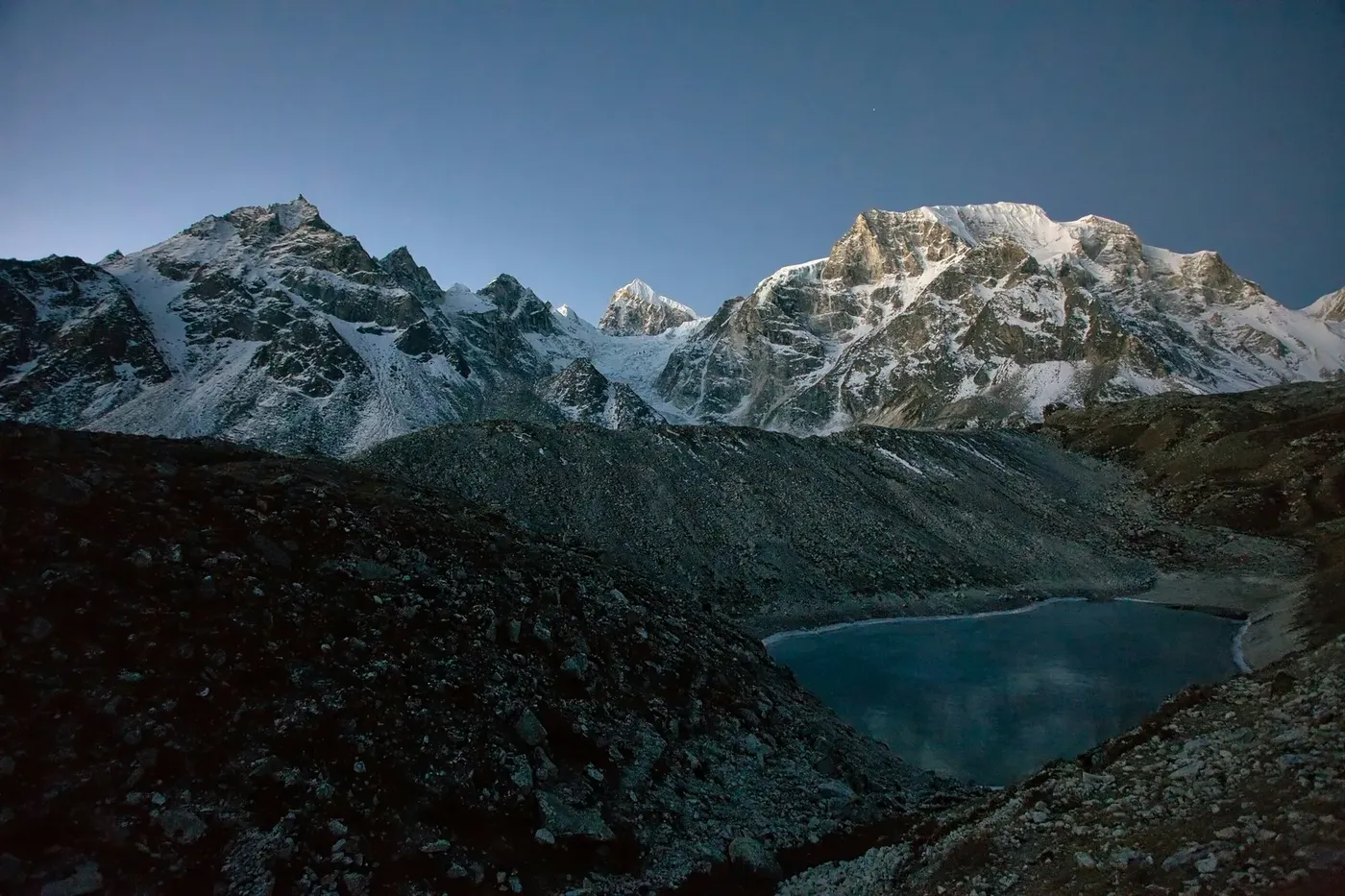
Gosaikunda is a high-altitude alpine lake in the Langtang region of Nepal, sitting at roughly 4,380 metres above sea level inside Langtang National Park. It is not a single body of water but a cluster of more than a hundred glacial lakes scattered across the Gosaikunda basin, with the main lake — the one pilgrims and trekkers make the journey for — being the largest and most sacred of them. The name translates loosely to "the lake of the gods," and for good reason: Gosaikunda is one of the most important pilgrimage sites in the Nepalese Himalaya, held sacred by both Hindus and Buddhists.
- 3,710 mMuktinath temple
- $1,080Muktinath, per seat
- 8,163 mManaslu, eighth-highest
- 1 dayTypical pilgrimage round trip
For most of the year the lake is reached only on foot, via a demanding multi-day trek that climbs from the village of Dhunche or Sundarijal through rhododendron forest and high yak pastures. A Gosaikunda helicopter tour changes that entirely. Instead of days of walking and nights in teahouses, a helicopter lifts you from Kathmandu and sets you down beside the lake in under an hour of flying, giving you the same sacred shoreline, the same turquoise water, and the same ring of snow peaks — without the altitude grind. It is the fastest, most comfortable way to stand at one of Nepal's holiest high places, and it has become one of the most requested scenic flights we arrange.
The Helicopter Route from Kathmandu
Every Gosaikunda helicopter tour begins at Tribhuvan International Airport in Kathmandu, where our helicopters are based. From the moment the rotors spin up, the flight is a continuous panorama rather than a simple A-to-B transfer. The route heads north out of the Kathmandu Valley, climbing quickly over the terraced hills and ridgelines that separate the valley from the high Himalaya.
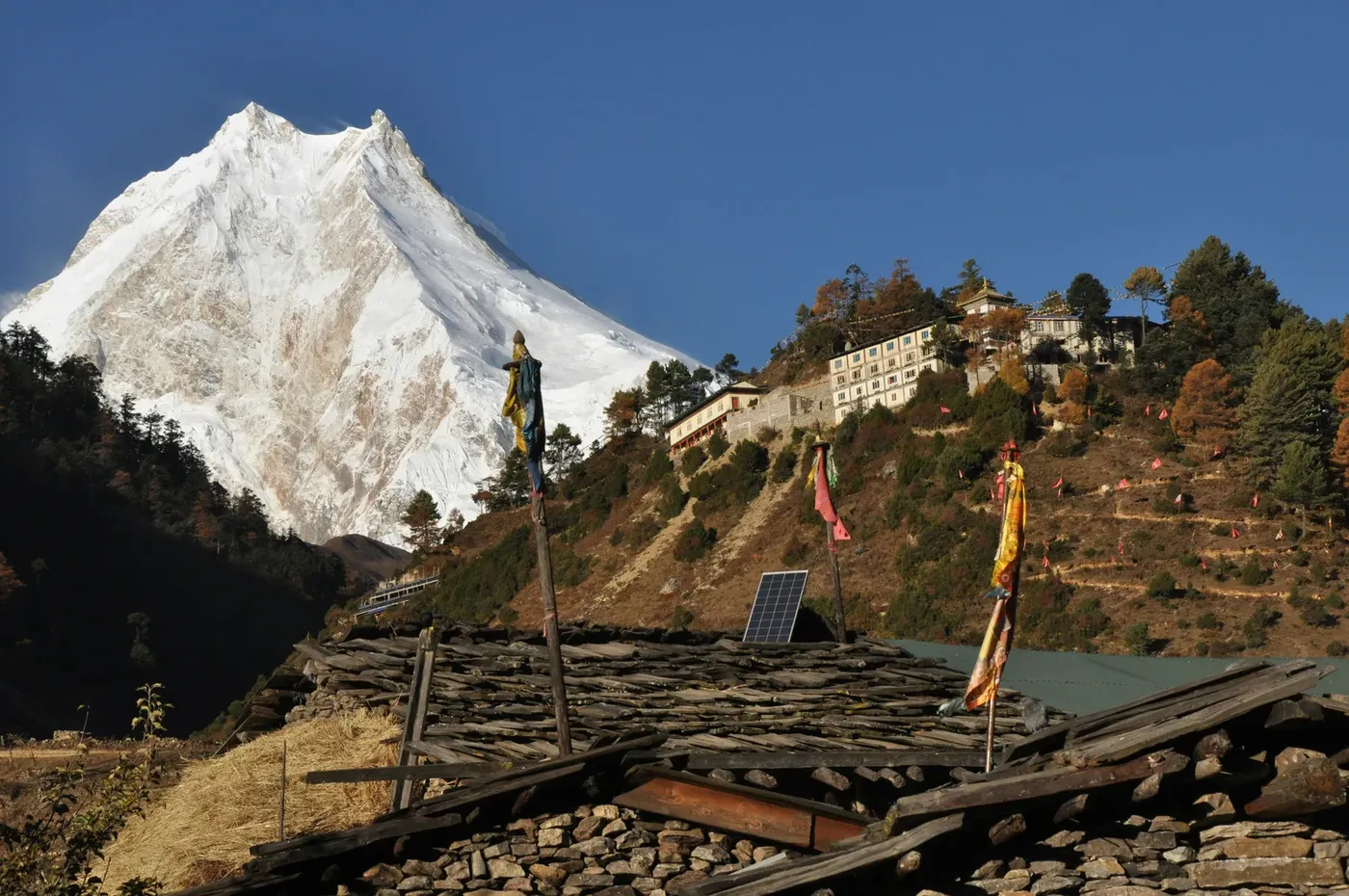
Within minutes the landscape changes character. The green, cultivated middle hills give way to the steeper, forested slopes of the Langtang range, and the helicopter threads its way up the Trishuli and Langtang river valleys. On a clear morning you will pick out the snow summits of the Langtang Himal — Langtang Lirung, Ganesh Himal, and, on the horizon, the distant bulk of the Annapurnas and Manaslu. The pilot follows the natural corridor that trekkers walk for days, compressing that entire journey into a single, sweeping flight.
The approach to Gosaikunda itself is the highlight. The helicopter climbs above the treeline into a bare, glacial world of rock, scree, and scattered snowfields, then banks over the ridge that hides the lake basin. The first sight of the main lake — a deep, cold blue set in a bowl of grey stone — is the moment most passengers remember long after the flight is over. Depending on the itinerary and the weather, the helicopter either lands on a flat area near the lake shore or performs a low scenic pass before touching down, giving you time to walk the shoreline, make an offering, and take in the view before the return flight to Kathmandu.
Total flying time is typically around 45 minutes to an hour each way, with a stop at the lake of roughly 20 to 30 minutes. The whole experience, from airport check-in to landing back in Kathmandu, usually fits comfortably into a single morning or afternoon.
Religious and Cultural Significance
Gosaikunda is far more than a scenic lake. In Hindu tradition it is tied directly to the Samudra Manthan, the churning of the ocean of milk, and to Lord Shiva. The story holds that when Shiva swallowed the poison that emerged from the churning to save the world, the burning in his throat became unbearable, and he struck the mountainside with his trident to release a spring of cold water to cool it. That spring is said to be Gosaikunda, which is why the lake is so closely associated with Shiva and why its water is considered purifying.
That belief drives one of the largest pilgrimages in the Nepalese Himalaya. Every year, on the full moon of the month of Shrawan (usually late July or August), thousands of Hindu pilgrims climb to the lake for the Janai Purnima festival. The festival marks the day when men ritually change the sacred thread — the janai — worn across the chest, and it is also known as Raksha Bandhan, when sisters tie protective threads around their brothers' wrists. At Gosaikunda, pilgrims bathe in the freezing water of the lake, believing it washes away sin, and many take a dip in the smaller lakes nearby as well.
Buddhists hold the lake in equal regard. The Tamang and Sherpa communities of the Langtang region consider Gosaikunda a sacred site, and the lake is linked in local Buddhist tradition to Padmasambhava, the tantric master credited with bringing Buddhism to the Himalaya. On the same full-moon night, Buddhist pilgrims gather at the lake alongside their Hindu neighbours, and the two traditions share the shoreline in a way that is rare and moving to witness.
For a visitor, this context matters. A Gosaikunda helicopter tour is not simply a sightseeing flight; it is a visit to a living place of worship. The lake is treated with genuine reverence by the people who live around it, and a respectful, low-impact visit — no swimming, no litter, no loud behaviour — is part of what makes the experience meaningful. If you fly during the Janai Purnima period, you may see the shoreline crowded with pilgrims, which is a spectacle in its own right, though most travellers prefer the quieter months when the lake is serene and the snow peaks are at their clearest.
What You See on the Flight
The Gosaikunda helicopter tour is a visual experience in three distinct acts, and each one is worth the trip on its own.
The Lake Itself
The main lake is the centrepiece. Its colour shifts with the light and the season — a deep sapphire in the clear autumn months, a milky turquoise when glacial melt feeds it in spring, and a frozen white sheet in the depths of winter. Around it sit the smaller lakes of the basin, including Saraswatikunda and Bhairavkunda, which are visible from the air and, on a clear day, from the shoreline. The scale is hard to convey in photographs: the main lake is large enough that the far shore feels distant, and the silence at 4,380 metres is almost total.
The Surrounding Peaks
From the lake you are ringed by mountains. The Langtang Himal dominates the view to the north, with Langtang Lirung (7,234 m) the most prominent summit. To the west and north-west, the Ganesh Himal and the Manaslu range rise on the horizon, and on exceptionally clear days the Annapurna massif is visible in the far distance. Because the lake sits above the treeline, there is nothing to block the view — you stand in a natural amphitheatre of rock and ice, with snow summits in almost every direction.
The Alpine Landscape
Between the peaks and the water is a stark, beautiful high-altitude world. In spring and early summer the basin is dotted with alpine flowers and low juniper, and the surrounding slopes are grazed by yaks and the occasional herd of blue sheep. In autumn the ground is a patchwork of rust and gold. The flight in and out also crosses the terraced farmland and dense rhododendron forest of the lower Langtang valley, so the tour gives you the full vertical sweep of the region — from subtropical valley floor to glacial lake — in a single morning.
What a Gosaikunda Helicopter Tour Costs
Helicopter pricing in Nepal is driven by a small number of factors, and Gosaikunda is no exception. Rather than quote a figure that will be out of date by the time you read this, we point you to the factors that actually move the price, and to our cost guides where the current numbers live.
The single biggest variable is whether you fly private or join a group. A private charter gives you the whole aircraft and the flexibility to set your own departure time and linger at the lake; a group-joining seat shares the helicopter with other travellers and is priced per person, which is almost always the cheaper way to fly. Our guide to group joining versus private helicopter tours explains the trade-off in detail.
Beyond that, the price is shaped by the duration of the stop at the lake, the season (peak autumn and spring months command higher rates than the monsoon and winter shoulder seasons), and the number of passengers, since the cost of a charter is divided across the seats. Fuel, the pilot, airport fees, and the national park permit are all bundled into the quoted rate, but it is worth confirming exactly what is included before you book.
For a directly comparable pilgrimage flight, our Muktinath helicopter pilgrimage cost guide breaks down the same cost structure for the other great sacred-site flight in Nepal, and the numbers there are a useful reference point for what a Gosaikunda flight should cost. For the Everest side of things, the Everest helicopter tour cost guide shows how the same factors play out on the most popular route of all. We would always rather you read a current guide than rely on a number quoted in an article that may be months old.
Best Time to Fly
Gosaikunda is flyable for much of the year, but the experience changes dramatically with the season, and the right window for you depends on what you want to see.
The autumn months (October and November) are the classic choice. The monsoon has cleared the air, the skies are a deep, dry blue, and the snow peaks are at their sharpest. This is when the lake is at its most photogenic and when the flight is most reliable. Spring (March to May) is the other strong window, with warmer temperatures and rhododendron in bloom on the lower slopes, though afternoon haze can build as the day warms up.
The monsoon (June to September) is the least predictable period. Flights can and do run, but cloud and rain make scheduling uncertain, and the views are often obscured. Winter (December to February) brings the clearest skies of all but also the coldest temperatures, and the lake may be frozen — beautiful, but a very different experience from the blue water of autumn.
If you want to time your flight around the Janai Purnima festival, that falls on the full moon of Shrawan, usually in late July or August, which sits inside the monsoon window — so festival flights are a trade-off between cultural spectacle and weather reliability. For a full month-by-month breakdown of flying conditions across Nepal, see our guide to the best time for a helicopter tour in Nepal.
How to Book a Gosaikunda Helicopter Tour
Booking a Gosaikunda flight is straightforward, but a few steps make the difference between a smooth trip and a stressful one. The first is to book through a licensed operator. Helicopter tours in Nepal are run by a small number of certified companies, and going through a government-licensed Kathmandu operator — as we are, under Enticing Himalayas Travel — means your flight is insured, your pilot is properly rated, and your booking is protected.
The second is to confirm the details in writing: the exact route, the length of the stop at the lake, the number of passengers, what is included (park permit, airport transfers, taxes), and the cancellation and weather policy. Mountain flying is weather-dependent, and a reputable operator will have a clear policy for rescheduling if the lake is clouded in.
The third is to book early for peak season. Autumn and spring slots fill weeks in advance, and festival-period flights are in especially high demand. For the full step-by-step process — from choosing a route to what to expect on the day — read our guide on how to book a helicopter tour in Nepal. And if you are weighing Gosaikunda against other flights, our full list of helicopter tours lays out every route we run side by side.
Gosaikunda vs Muktinath: Two Sacred Flights Compared
Gosaikunda and Muktinath are the two great pilgrimage helicopter flights in Nepal, and travellers often weigh one against the other. Both are sacred to Hindus and Buddhists, both reach high-altitude holy sites, and both are flown as day trips from Kathmandu or Pokhara. But they are very different experiences, and the table below sets out the key differences.
| Factor | Gosaikunda Helicopter Tour | Muktinath Helicopter Pilgrimage |
|---|---|---|
| Altitude of the site | ~4,380 m (alpine lake) | ~3,710 m (temple complex) |
| What the site is | A sacred glacial lake in a high mountain basin | A temple with 108 water spouts and an eternal flame |
| Religious focus | Lord Shiva and the Janai Purnima festival | Lord Vishnu (Muktinath) and the Hindu–Buddhist Mukti Kshetra |
| Departure point | Kathmandu | Kathmandu or Pokhara |
| Scenery | Langtang Himal, Ganesh Himal, alpine lakes and yak pastures | Annapurna and Dhaulagiri ranges, Kali Gandaki gorge, Mustang |
| Best season | Autumn and spring; lake freezes in winter | Autumn and spring; drier Mustang climate |
| Typical stop | Short stop at the lake shore | Longer stop to visit the temple and bathe under the spouts |
| Cost reference | See our pilgrimage cost guide for comparable pricing | Full breakdown in the Muktinath cost guide |
The short version: choose Gosaikunda if you want a raw, high-alpine lake experience tied to Shiva and the Janai Purnima festival, and choose Muktinath if you want a temple pilgrimage with the dramatic Kali Gandaki gorge and the Annapurna range as your backdrop. Many travellers do both, and the two flights pair naturally with a longer stay in Nepal. You can read the full details of the Muktinath flight on our Muktinath helicopter pilgrimage tour page.
Background worth reading before you plan: Manaslu. Handy background; your pilot will cover the operational side.
For the adjacent decisions, see Janai Purnima 2026: Gosaikunda Helicopter Tour for the Sacred…, Kathmandu Valley Tour 2026 — 5-Day UNESCO Heritage & Aerial…, and Langtang Helicopter Tour: Cost, Route & How to Book (2026).
Frequently Asked Questions
How long is the Gosaikunda helicopter tour?
Plan on roughly two to three hours door to door from Kathmandu. Flying time is around 45 minutes to an hour each way, with a stop at the lake of about 20 to 30 minutes, plus airport check-in and briefing time on either end.
Do I need to be fit or acclimatised?
No. Because the helicopter does the climbing for you, there is no trekking involved and no multi-day acclimatisation required. You will spend a short time at 4,380 metres, so a basic level of comfort with altitude is helpful, but the stop is brief enough that most people manage it without issue. If you are concerned about altitude, mention it when you book.
Can I land at the lake, or is it a flyover only?
Landing is the standard arrangement, weather and ground conditions permitting. The helicopter sets down on a suitable flat area near the lake, and you have time to walk the shoreline and take in the view. In poor weather or when the ground is unsuitable, the flight may be run as a scenic pass instead, which your operator will confirm with you.
Is Gosaikunda inside a national park, and do I need a permit?
Yes, Gosaikunda lies within Langtang National Park, and a park entry permit is required. On a helicopter tour the permit is normally arranged and included by your operator, but confirm this when you book so there are no surprises on the day.
Can I fly during the Janai Purnima festival?
You can, and it is a remarkable time to be there, with thousands of pilgrims at the lake. Bear in mind that the festival falls in the monsoon season, so weather is less predictable, and the shoreline will be crowded. If your priority is the festival itself, it is worth the trade-off; if your priority is clear views and a quiet lake, the autumn months are the better bet.
How does the Gosaikunda flight compare in price to Everest?
Gosaikunda is generally a shorter, lower-altitude flight than the Everest routes, and pricing reflects that, but the exact figure depends on whether you fly private or join a group and on the season. For current numbers, see our Everest helicopter tour cost guide and the Muktinath cost guide, which together give you a clear sense of the range.
What should I wear and bring?
Dress in layers — it is cold at 4,380 metres even on a warm Kathmandu morning, and the temperature drops sharply at the lake. A warm jacket, a hat, gloves, sunglasses, and sturdy shoes are the essentials, along with sun protection. For a complete list, see our helicopter tour packing list.
Is the flight safe and insured?
Helicopter tours in Nepal are operated by certified companies with rated pilots and are covered by standard aviation insurance. We recommend flying with a government-licensed operator and confirming the insurance and safety arrangements when you book. Our guide to helicopter tour safety and insurance in Nepal covers what to look for.
Fly to the Lake of the Gods
Gosaikunda is one of those places that feels earned, even when a helicopter does the earning for you. In a single morning you can stand on the shore of a lake that has drawn pilgrims for centuries, ringed by snow peaks and silence, and be back in Kathmandu in time for lunch. Whether you are making the journey for faith, for the mountains, or simply to see one of Nepal's most sacred landscapes, a Gosaikunda helicopter tour is the fastest and most comfortable way to get there.
Browse our full range of helicopter tours to compare Gosaikunda with our Everest, Annapurna, and Muktinath flights, or get in touch with our team to check availability, confirm current pricing, and plan your flight. We would be glad to help you reach the lake of the gods.