
Kathmandu Valley Tour 2026: The 5-Day UNESCO Heritage & Aerial Adventure Itinerary
Kathmandu is not one city — it is three ancient kingdoms pressed into a single green valley, ringed by hills and watched over by the distant wall of the Himalaya. Within a few kilometres of each other stand seven UNESCO World Heritage monuments: medieval durbar squares where kings once held court, stupas whose painted eyes have watched over the valley for centuries, and temple towns where the Middle Ages never really ended. Most visitors rush through them in a day or two, ticking boxes between flights. Our 5-Day Kathmandu Valley Tour does the opposite: it slows the valley down, pairs every heritage site with real cultural depth, and then — because this is a tour company that believes in the sky — adds two aerial experiences that most itineraries never mention: tandem paragliding over the valley and the Chandragiri cable car to a 2,500-metre ridge with Himalaya views. This guide walks through the full itinerary day by day, explains what the tour costs and what drives the price, and helps you decide if this is the right way to spend your Nepal days in 2026.
- 3,710 mMuktinath temple
- $1,080Muktinath, per seat
- 8,163 mManaslu, eighth-highest
- 1 dayTypical pilgrimage round trip
What Is the Kathmandu Valley Heritage & Aerial Tour?
This is a five-day, fully guided package based entirely in the Kathmandu Valley — no internal flights, no long road journeys, no trekking boots required. It is built around three ideas.
First: the seven UNESCO World Heritage sites of the valley, done properly. The Kathmandu Durbar Squares of all three old kingdoms (Kathmandu, Patan, Bhaktapur), the two great stupas (Swayambhunath and Boudhanath), and the two most sacred Hindu temple complexes (Pashupatinath and Changu Narayan). Most tours compress these into two exhausting days; we spread them across three unhurried ones with a guide who can explain what you're looking at — the woodcarving traditions, the living goddess, the funeral ghats, the Newari architecture that survived eight centuries.
Second: the valley from the air. On day four you launch on a tandem paraglider from a ridge above the valley and soar over terraced fields with the snow peaks on the horizon, then ride the Chandragiri cable car — a 2.5-kilometre gondola over subtropical forest up to 2,520 metres, where a viewing tower and the Bhaleshwor Mahadev temple crown the ridge. On clear days the Himalayan panorama from Chandragiri stretches from Annapurna to Everest.
Third: comfort and zero logistics. Private airport transfers, private vehicle and driver for every sightseeing day, hand-picked hotels, and a guide for every excursion. You never queue for a taxi, never negotiate an entrance fee, never wonder which way to turn. The valley is dense and chaotic; this tour removes all the friction so you only get the experience.
Day-by-Day Itinerary
Day 1: Arrival and the Lanes of Thamel
You are met at Tribhuvan International Airport with a traditional silk khada scarf — the Nepali welcome that sets the tone for the whole week — and driven privately to your hotel. The rest of the day is deliberately unstructured: check in, shake off the flight, and spend the evening walking Thamel, Kathmandu's famous traveller quarter. Narrow lanes lined with trekking shops, bakeries, rooftop bars and the smell of momos from a hundred kitchens. It is the gentlest possible landing into Nepal, and your guide will brief you over dinner on everything ahead.
Day 2: Kathmandu Durbar Square and Swayambhunath
The morning belongs to Kathmandu Durbar Square — the ancient brick precincts of the Malla kings. You'll stand before the fierce Kaal Bhairav relief, walk the courtyards of the old royal palace, and visit Kumari Ghar, home of the world's only Living Goddess, a young girl worshipped as the incarnation of the divine feminine until she reaches puberty. It is one of the most extraordinary living traditions anywhere on Earth, and your guide will explain the selection, the rituals, and what it means to the Newar people.
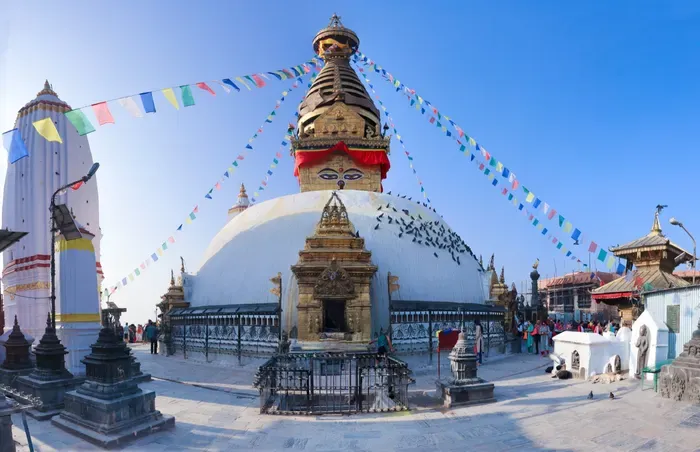
At midday you climb the 365 stone steps to Swayambhunath — the Monkey Temple — on its forested hilltop. The golden spire's all-seeing eyes look out over the entire valley, and the prayer flags snapping in the wind carry mantras across the city. The monkeys are resident, bold and endlessly entertaining. Sunset from the stupa, with the valley lights coming on below, is one of Kathmandu's great moments.
Day 3: Patan, Bhaktapur and the Medieval Cities
Cross the river to Lalitpur — Patan, the City of Fine Arts — where the durbar square holds the stone-carved Krishna Mandir and the shimmering brass facades of the hidden Golden Temple. Patan's craftsmen have been casting bronze and carving stone for a thousand years; the workshops behind the square are still at work today, and you can watch them.
Then Bhaktapur — the best-preserved medieval city in the valley, entirely free of heavy traffic. The 55-Window Palace, the Golden Gate, the five-roofed Nyatapola Temple towering over the pottery squares: Bhaktapur feels less like a sightseeing stop and more like walking onto a film set of the fifteenth century. You'll have time to wander the pottery quarter, taste the famous juju dhau (king curd), and watch potters throw clay exactly as their ancestors did.
Day 4: Paragliding, Chandragiri and Kirtipur
The adventure day. Early morning, you strap into a tandem harness with a certified pilot and launch from a scenic ridge, soaring over terraced fields and villages with aerial views of the valley and — on clear mornings — the distant snow peaks. No experience needed; the pilot does everything except let you enjoy it.
At midday, the Chandragiri cable car: a modern gondola gliding 2.5 kilometres over pristine subtropical forest up to 2,520 metres. At the top, the Bhaleshwor Mahadev temple, a viewing tower, and on clear days one of the widest Himalayan panoramas accessible without trekking. The afternoon brings Kirtipur, the quiet Newari town on its own hilltop, where the culture is unperformed and the views back across the valley are superb. A fitting, gentle end to the biggest day of the tour.
Day 5: Pashupatinath, Boudhanath and Departure
Depending on your flight time, the final morning visits the valley's two most sacred sites. Pashupatinath, Nepal's holiest Hindu temple on the banks of the Bagmati river, where cremation ghats burn day and night and sadhus meditate in the temple courtyards — a profound, unflinching encounter with the Hindu relationship between life and death. Then Boudhanath, the great white stupa circled by Tibetan Buddhist pilgrims turning prayer wheels, the spiritual heart of Nepal's Tibetan community. Last-minute shopping in Thamel — Himalayan tea, pashmina, handmade lokta paper — and a private transfer to the airport.
Kathmandu Valley Tour Cost 2026: What Drives the Price
This tour is priced per enquiry rather than at a fixed sticker rate, because three variables change the cost significantly — and we would rather quote you accurately than publish a number that only applies to someone else's trip.
Hotel standard. The valley offers everything from clean budget houses in Thamel to five-star heritage properties in old palace courtyards. The itinerary is identical at every level; only your bed changes. Tell us your comfort preference and we price accordingly.
Group size. Solo travellers pay a single-room supplement; couples share it away; groups of four or more bring the per-person cost down noticeably because the private vehicle, driver and guide costs divide across the group.
Season. Peak months (October–November, March–May) carry higher hotel rates than the quiet season. The tour runs year-round — the valley's heritage sites are not weather-dependent the way mountain flights are.
What is always included regardless of those variables: all private airport and sightseeing transfers, the tandem paragliding flight with certified pilot, the Chandragiri cable car tickets, all guided sightseeing with entrance coordination, and a dedicated guide throughout. Send us your dates and hotel preference and you'll receive a full written quote — typically within a few hours.
Why Five Days in the Valley Instead of Two?
The standard guidebook gives Kathmandu two days and moves on. Here is what that misses. Rushed visitors see the durbar squares as piles of old brick; with time and a guide, they become the political and artistic story of three rival kingdoms. Rushed visitors photograph Swayambhunath from below; unhurried visitors climb at dawn when the monks are doing puja and the light comes through the prayer flags. Rushed visitors never get to Bhaktapur's pottery squares, never watch a bronze-caster at work in Patan, never sit with a cup of butter tea in a Boudhanath courtyard while the kora circles endlessly around them.
And rushed visitors certainly never fly. The paragliding and Chandragiri experiences exist precisely because the itinerary has room for them — they are the reward for slowing down. Most travellers leave Nepal saying they wish they'd given the valley more time. This tour is designed so you won't.
Best Time to Do the Kathmandu Valley Tour
October–November (best overall). Post-monsoon clarity, festival season (Dashain and Tihar light up the valley), comfortable temperatures. The busiest period — book hotels early.
March–May (excellent). Warm days, blooming hillsides, and the clearest mountain views from Chandragiri and the paragliding ridge. Spring is also when the valley's jacarandas flower.
December–February (good, quiet). Cool mornings, fewer crowds, lower prices. Heritage sightseeing is unaffected by cold; you'll just want a jacket for the cable car ridge.
June–September (monsoon — still workable). The heritage sites are visitable year-round, and monsoon rains typically come in afternoon bursts. Paragliding windows are more weather-dependent in these months, and we will always be honest about the odds when you enquire.
Who Is This Tour Perfect For?
First-time Nepal visitors. The valley is the gentlest introduction to the country — culture, food, and mountains without any physical demands. It pairs perfectly with a scenic flight or helicopter day tour later in your trip.
Pre- or post-trek travelers. Most trekkers fly through Kathmandu without seeing it. Adding this tour before or after your trek turns a transit stop into one of the richest cultural experiences in Asia.
Families and multi-generation groups. The pace is easy, the vehicle is private, and the mix of temples, monkeys, paragliding and cable cars keeps every age engaged. Children especially love the Living Goddess, the monkeys, and the gondola.
Culture-first travelers who still want one adventure. If trekking isn't your thing but you want one unforgettable physical experience, tandem paragliding over an ancient valley is it — zero skill required, maximum memory.
Photographers. Three durbar squares, two stupas, cremation ghats, potters, and an aerial day make this one of the most visually dense five days available anywhere.
Practical Information Before You Arrive
Visa on arrival. Most nationalities get a visa on arrival at Tribhuvan. Bring a passport valid for at least six months and two passport-sized photos. Fees are payable in cash (USD or other major currencies accepted).
Currency. The Nepalese Rupee (NPR) is the local currency. Cards work in hotels and larger shops, but carry cash for entrance fees, small restaurants and market shopping — ATMs are plentiful in Thamel.
Temple etiquette. Remove shoes before entering temples and many courtyards. Walk clockwise around stupas. Ask permission before photographing people, sadhus, or religious ceremonies — some will expect a small tip, and your guide will advise you.
What to pack. Comfortable walking shoes (the squares are uneven brick), modest clothing for temples (shoulders and knees covered), a light jacket for early mornings and the Chandragiri ridge, and sun protection — the valley sun is strong at 1,400 metres.
Health. Kathmandu sits at 1,400m — no altitude concerns whatsoever. Drink bottled or purified water, and the food in the valley is excellent; Newari cuisine (try bara, chatamari, and the famous king curd) is one of the tour's quiet highlights.
Combining the Valley Tour With a Mountain Experience
The most popular combination we book is this tour plus one mountain experience — because after five days of culture, the mountains are the other half of Nepal's story. The options by budget:
Under $400: the Everest Scenic Mountain Flight from $260 — one morning, the entire Himalayan range from your window seat. It slots into any day of the tour without disrupting the itinerary.
$1,260–$1,500: the Everest Base Camp Helicopter Day Tour — land at Kala Patthar, breakfast at Everest View Hotel, back in Kathmandu by lunch. Or the Muktinath Helicopter Pilgrimage from $1,080 for the sacred-journey experience.
Custom: the Private Everest Helicopter Charter — your group, your aircraft, quote on request. See our Everest helicopter cost guide for the full picture.
Because everything is booked through one Kathmandu operator, combining packages is seamless — one point of contact, one set of transfers, no coordination headaches.
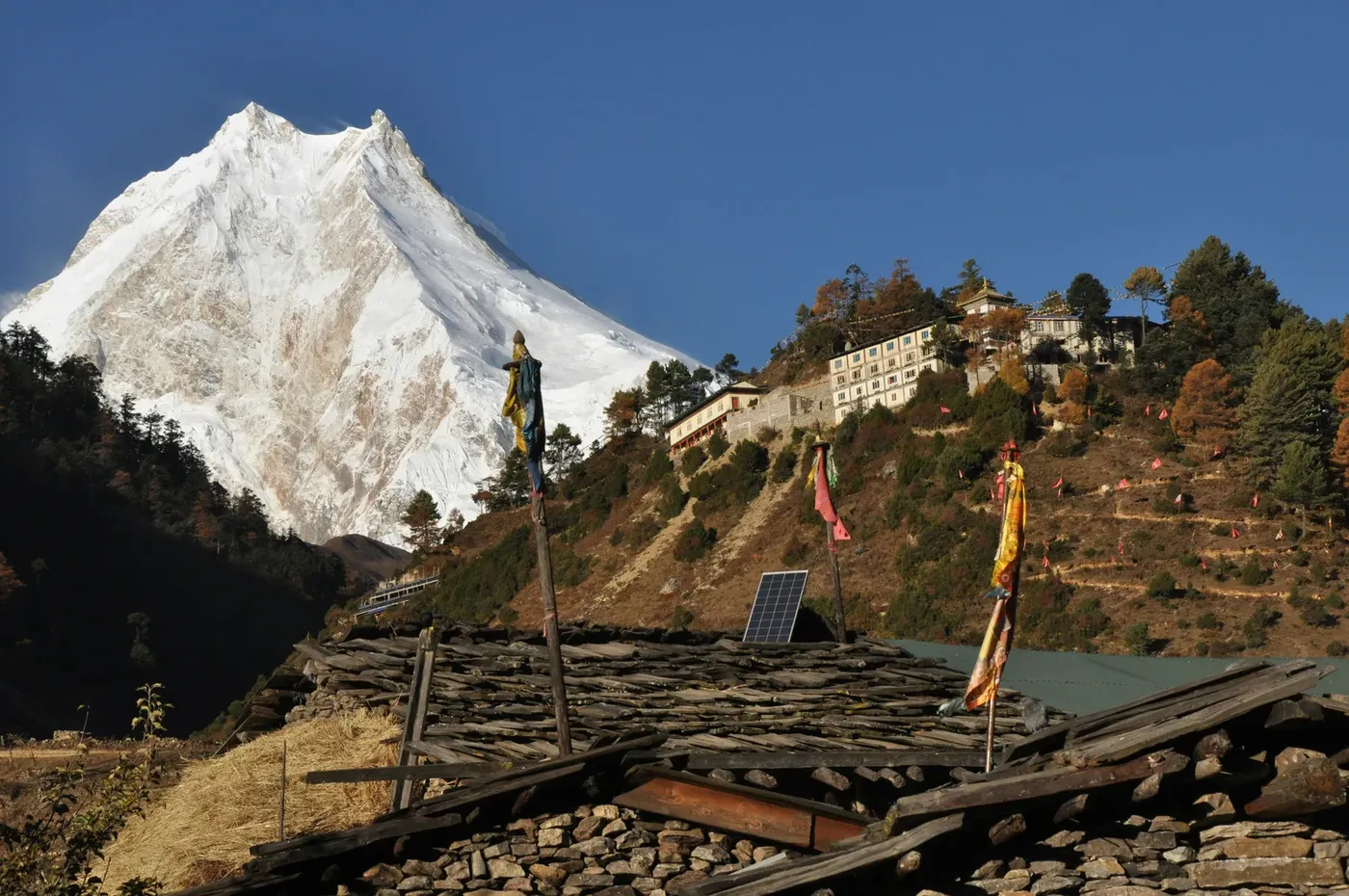
Manaslu carries the authoritative detail if you want it from the source. Worth a look, though the flying decisions are made locally on the day.
For the adjacent decisions, see Gosaikunda Helicopter Tour: Sacred Lake by Helicopter (2026), Janai Purnima 2026: Gosaikunda Helicopter Tour for the Sacred…, and Langtang Helicopter Tour: Cost, Route & How to Book (2026).
Frequently Asked Questions
How much does the 5-day Kathmandu Valley tour cost?
The price depends on hotel standard, group size and season, so we quote each enquiry individually. Send your dates and preferences via the contact page and you'll receive a full written breakdown — usually within a few hours.
Is the paragliding safe? Do I need experience?
No experience needed — you fly tandem with a certified pilot who handles everything from launch to landing. Paragliding in Nepal is regulated, and we only work with operators whose safety records we trust. Weather is assessed before every launch.
Can I see the Himalayas from the Kathmandu Valley?
Yes — from Chandragiri ridge (2,520m), from the paragliding launch, and from viewpoints around the valley rim on clear days. For guaranteed close-up mountain views, add the Everest scenic flight or a helicopter day tour.
Is five days too long for Kathmandu?
Only if you rush. The seven UNESCO sites alone deserve three unhurried days with a guide who can explain them; the aerial day and the living culture of the Newar towns fill the rest. Most guests tell us the valley was the surprise highlight of their Nepal trip.
Is this tour suitable for children and older travelers?
Yes. The pace is easy, all transport is private, and there are no altitude or fitness demands. The only physical moment is the 365 steps at Swayambhunath — and there is a slower path up for those who prefer it.
What is the best season for this tour?
October–November and March–May offer the best weather and clearest mountain views, but the heritage sites are visitable year-round and the tour runs in every season.
The Bottom Line
Kathmandu Valley is where Nepal begins — three ancient kingdoms, seven UNESCO monuments, living goddesses and eternal flames, all in one green bowl under the Himalaya. This five-day tour gives the valley the time it deserves, adds two aerial experiences you won't find on a standard itinerary, and handles every logistic so you can simply be present. Whether it stands alone as your Nepal trip or opens a bigger mountain adventure, it is five days you will remember in detail for years.
We are Enticing Himalayas Travel, a government-licensed Kathmandu operator founded in 2012, and we run this tour for guests every month of the year. Send us your dates and we'll build your quote — hotel options, day-by-day plan, and any mountain add-ons you want, all in one written breakdown.