
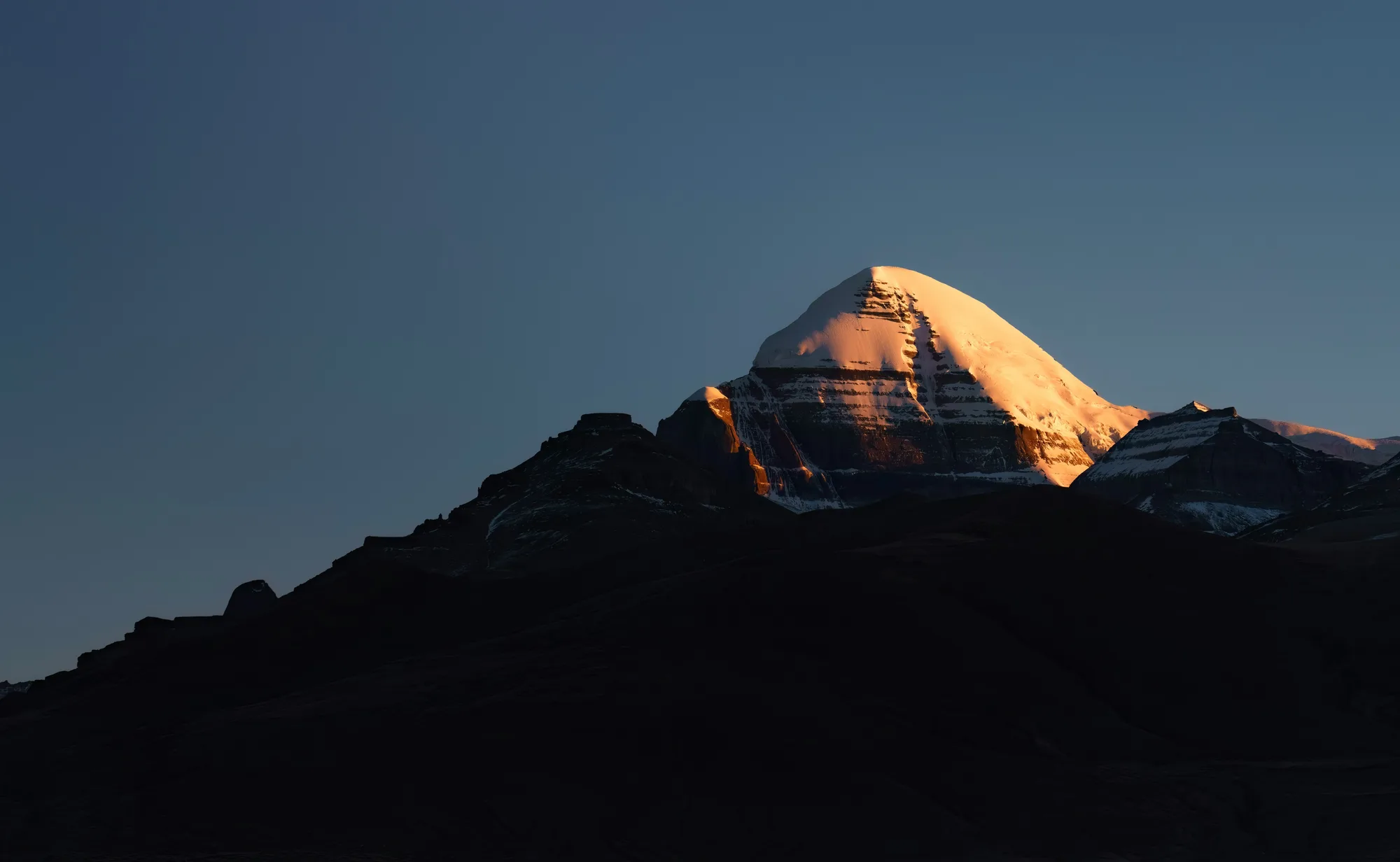
Short answer: There are four practical ways to stand at Everest Base Camp, and the choice is decided by how many days you have rather than by money alone. You can walk in from Lukla at 2,860 m and walk back out, a twelve to fourteen day round trip. You can walk up the classic route and fly out from Gorak Shep at 5,140 m, which is our ten-day package at $1,840 per person on a shared flight. You can fly out and back in a single morning on the one-day helicopter tour at $1,260 per person. Or you can charter the whole aircraft from $4,500 for up to five guests. Base Camp itself sits at 5,364 m on the Khumbu Glacier, and the closest view of the summit is from Kala Patthar at 5,545 m. Every one of those routes begins with the same unsolved problem: getting to Lukla.
- 5,364 mEverest Base Camp
- 5,545 mKala Patthar viewpoint
- 10 daysTrek up, fly back
- $1,840Per person, shared flight
Most people who search for how to get to Everest Base Camp are not really asking for directions. There is only one trail, and it goes up the Khumbu valley. What they are trying to work out is which version of the journey they can actually afford in time, money and knee cartilage, and what each version quietly commits them to. A twenty-four year old with three months in Nepal and a fifty-eight year old with eleven days of annual leave are asking the same question and need opposite answers.
This guide lays the four routes out side by side, then walks through the parts that decide the outcome: how you reach the trailhead at Lukla, what the walking actually demands, what permits you pay for yourself, how to book the whole thing from the United States before you leave home, and what the morning weather rule means for a departure you have planned for months. Every figure below is a price we publish for 2026 or an altitude we fly to. Nothing here is an estimate dressed up as a fact.
If you already know you want the walking and only want the descent removed, the trek up, fly back cost guide covers that format line by line. This page is the wider decision.
The four ways to reach Everest Base Camp
Base Camp is not a destination you arrive at by one method. It is the end of a valley, and the valley can be entered on foot, by helicopter, or by a combination of both. The four options below are the ones people actually book. Two of them involve walking to the camp, two of them land you at altitude without walking at all.
| Route | Days | How it works | Who it suits |
|---|---|---|---|
| Walk in, walk out | 12 to 14 days | Fly or helicopter to Lukla at 2,860 m, walk up the Khumbu valley to Base Camp at 5,364 m and Kala Patthar at 5,545 m, then retrace the trail to Lukla | Trekkers with three weeks in Nepal who want the full journey and do not mind three to four days of downhill at the end |
| Trek up, fly back | 10 days | Same walk in, then a helicopter from Gorak Shep at 5,140 m to Lukla in about 20 minutes instead of the walk out | Trekkers with two weeks who want the walking but not the descent, and anyone protecting a fixed return flight home |
| One-day helicopter tour | 1 day, about 6 hours | Leave Kathmandu at dawn, land at Kala Patthar at 5,545 m, return the same morning | Visitors with two or three days in Nepal, older travellers, and anyone who wants the view without the altitude exposure |
| Private charter | 1 day, 5 to 6 hours | The whole aircraft on your own schedule, with a landing at Kala Patthar and breakfast at the Everest View Hotel at 3,880 m | Families and small groups of up to five who want the corridor to themselves and a flexible departure time |
Read that table again with one thing in mind: the days column is not the whole cost. The twelve to fourteen day trek consumes almost two weeks of a holiday and a season of fitness. The one-day helicopter consumes a morning and returns you to your hotel for lunch. Between those two extremes sits the format most of our own guests choose, the ten-day trek with the helicopter exit, because it keeps the part people came for and deletes the part they endure.
Step one: how you get to Lukla, where every route starts
Lukla at 2,860 m is the gateway to the Khumbu, and it is the single most unreliable part of any Everest itinerary. The airstrip is short, it slopes uphill into the mountain, and it has no approach aids, which means fixed-wing aircraft need a visual window in the Dudh Koshi valley to land at all. In the off season, scheduled flights run from Kathmandu and take roughly 25 to 35 minutes. In the peak trekking months of April to May and October to November, the Kathmandu congestion pushes those departures south to Manthali airport in Ramechhap, and the day begins with a four to five hour bus ride each way, usually leaving before dawn to catch the morning window.
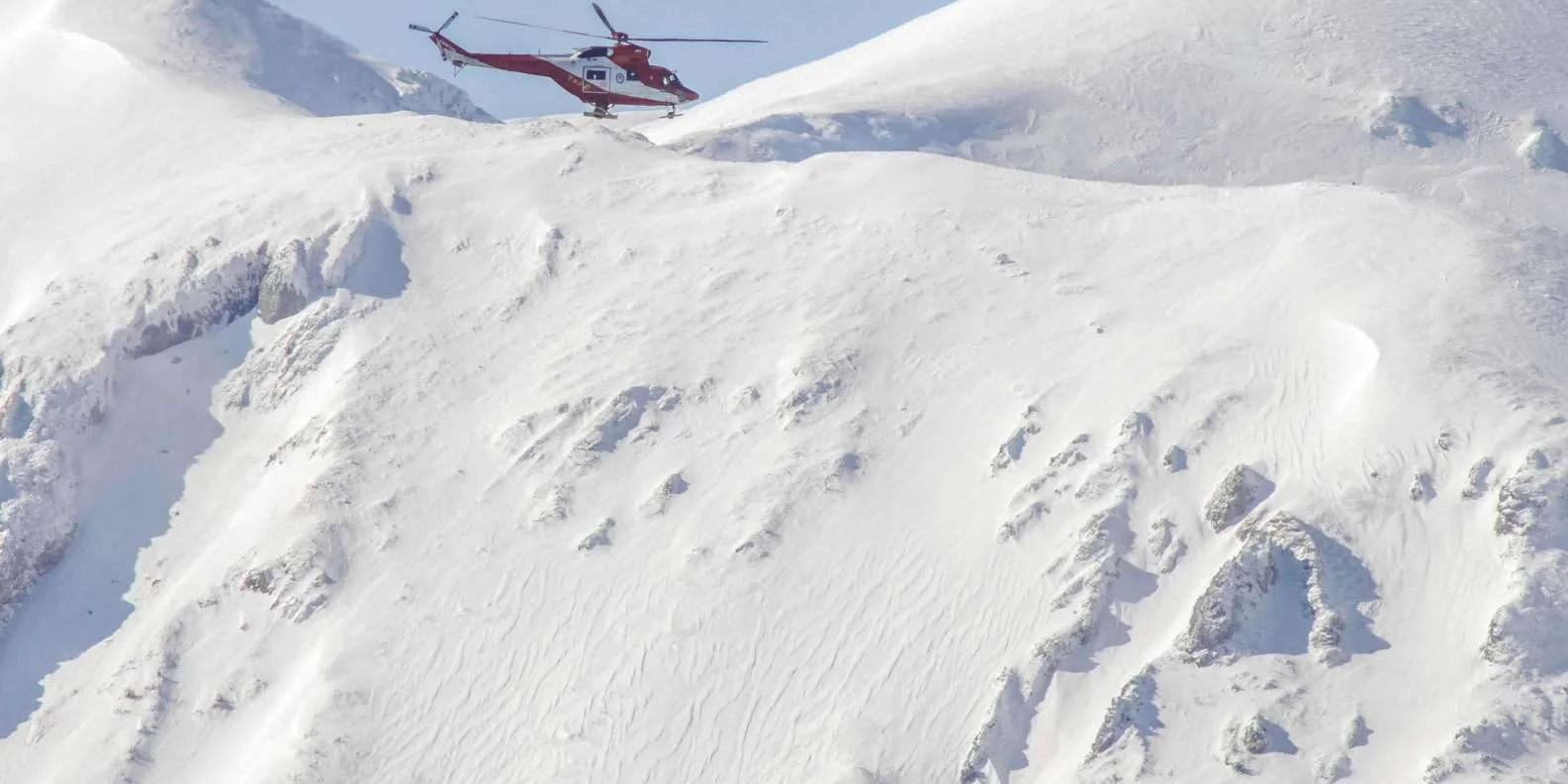
That relocation is the reason so many trekkers now price a helicopter instead of a plane seat. A helicopter is exempt from it. It departs Kathmandu domestic terminal directly, takes about 45 minutes to Lukla, and can route around isolated cloud rather than waiting for a valley-wide gap. It is also, seat for seat, a meaningful premium, because a helicopter is chartered by the aircraft and split between four or five passengers rather than sold as an airline ticket. If you are weighing the two, our guide to the helicopter alternative to the Lukla flight sets out the operational difference honestly.
The practical consequence for a foreign booking is simple. Your trip has two fragile mornings, not one: the morning you leave for Lukla and the morning you fly out of it. Anything you can do to remove one of those dependencies is worth more than a discount on either. That is the argument for flying in by helicopter and trekking out, or trekking in and flying out, rather than gambling both ends of the trip on the same mountain airstrip.
Step two: what the walk in actually asks of you
The trail from Lukla to Base Camp is well made, well walked and generously supplied with teahouses. It is not a technical climb, and thousands of ordinary people do it every season. What makes it hard is accumulation. You gain height every single day while your body is trying to build red blood cells, and those two processes run on different clocks. Above roughly three thousand metres each breath delivers fewer oxygen molecules, and the adaptation takes days, not hours.
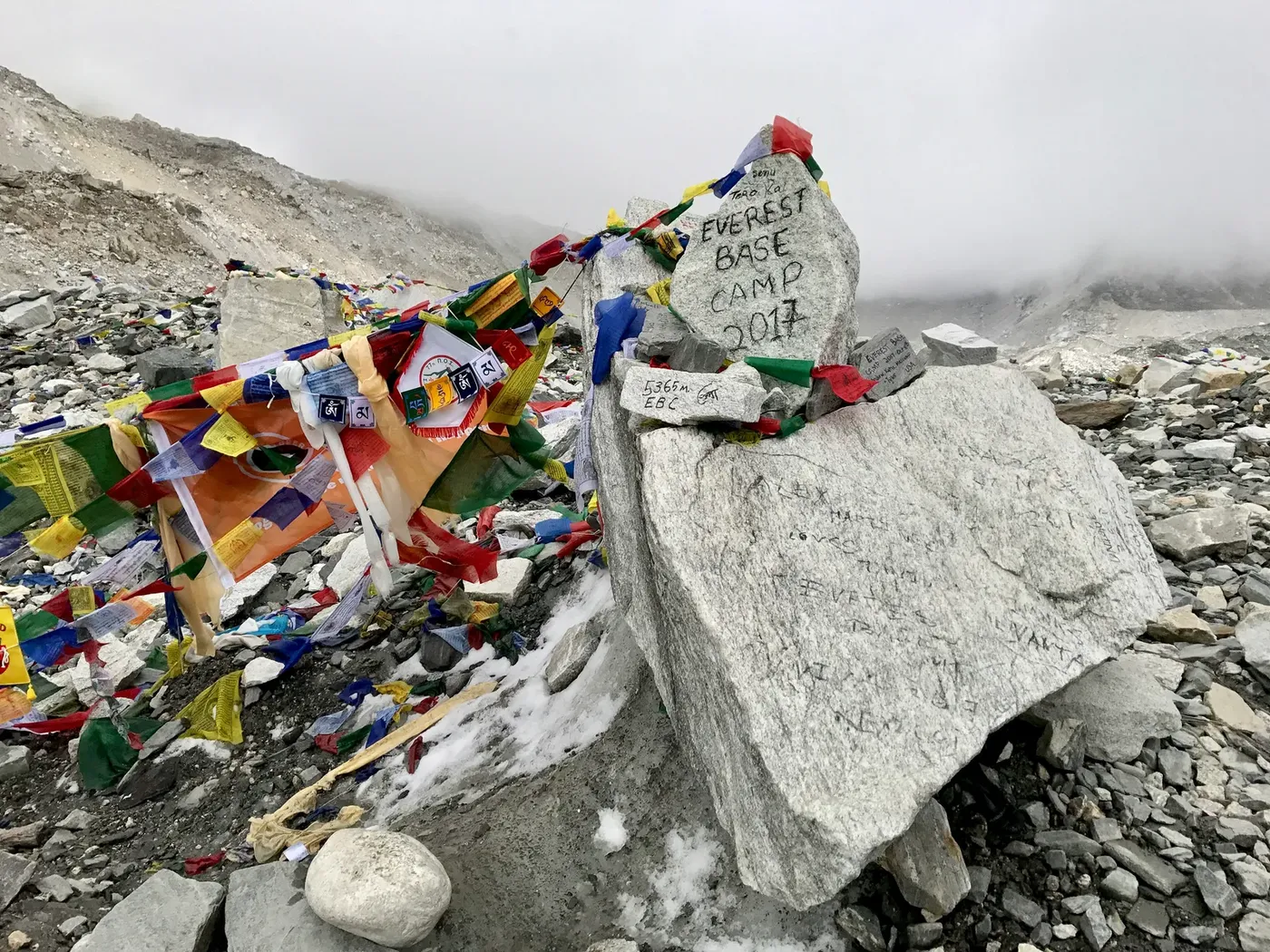
That is why every sensible itinerary on this route has the same shape: a short first day to Phakding, the first real climb to Namche Bazaar on day two, an acclimatisation day at Namche, then Tengboche, Dingboche, a second acclimatisation day, Lobuche, Gorak Shep, and finally Base Camp at 5,364 m with Kala Patthar at 5,545 m above it. The two acclimatisation days are the part people cut when they are short of time, and cutting them is the single most common planning mistake on the mountain. The people who turn around are rarely the unfit ones. They are the ones whose bodies could not adapt fast enough.
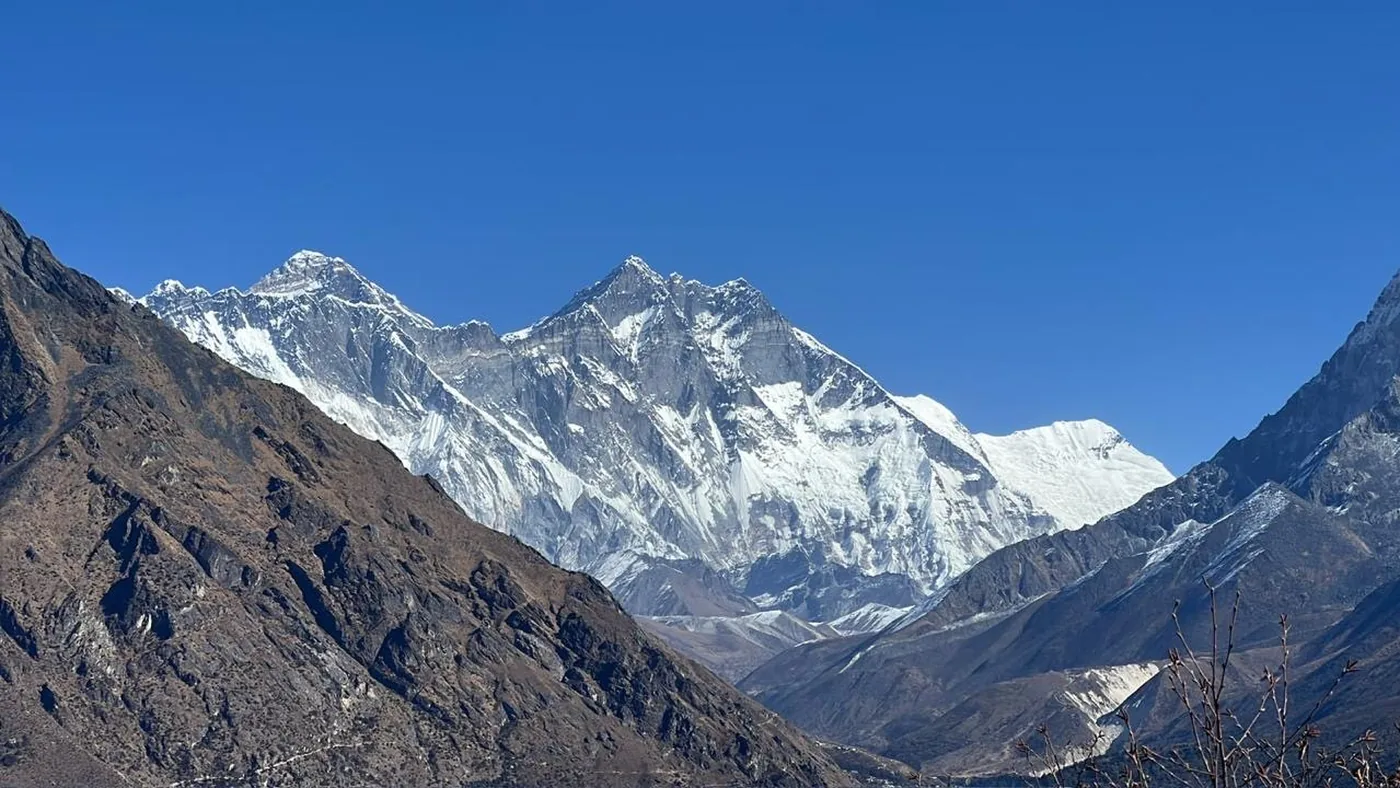
It is also worth knowing that the highest point of the walk is not Base Camp. Kala Patthar is 181 m higher than the camp, and it is the only place on the route where Everest itself is visible as a summit rather than hidden behind the bulk of Nuptse. If you walk in, budget the energy for that last ridge. If you fly in for a day, the landing is at Kala Patthar for exactly the same reason.
The walking itself is covered in detail, stage by stage, in our guide to hiking to Everest Base Camp, including where each day catches people out. If you want to know who should be walking beside you, the piece on Everest Base Camp trek guides explains what a licensed guide actually does on this route.
What each way costs in 2026
Prices on this route are per person for shared flights and per aircraft for charters, and the distinction matters more than the numbers. A helicopter seat is only cheap because four or five people are aboard. A charter is the same machine at the same hourly rate with one booking against it. Below are the published 2026 figures for the products we sell, including the one that does not land anywhere.
| Product | Duration | Price | What the price buys |
|---|---|---|---|
| Everest Base Camp helicopter day tour | 1 day, about 6 hours | $1,260 per person, shared flight | Kathmandu departure, landing at Kala Patthar 5,545 m, Everest View Hotel stop, return the same morning |
| Everest Base Camp helicopter trek, trek up and fly back | 10 days | $1,840 per person, shared flight | The full walk in, guides and porters, lodge nights, permits, and the helicopter from Gorak Shep to Lukla |
| Private Everest helicopter charter | 1 day, 5 to 6 hours | $4,500 per aircraft, up to 5 guests | Your own aircraft and schedule, Kala Patthar landing, breakfast at the Everest View Hotel 3,880 m |
| Everest scenic mountain flight | 1 hour | $260 per person, window seat | A fixed-wing hour past the range with Everest views. No landing, no Base Camp |
| Manaslu helicopter return trek | 13 days | $2,160 per person, shared flight | The same trek up, fly back format in a quieter valley, crossing Larkya La and flying out from 5,160 m |
Two honest observations about that table. The first is that the day tour is not a cheaper version of the trek. It is a different product with a different purpose, and it lands at Kala Patthar rather than at Base Camp because the moraine at 5,364 m is not a surface for a passenger pickup. The second is that the $1,840 trek is the only line that includes the walking, which is where most of the cost actually sits: guides, porters, lodge nights, meals on the trail and the permits. The helicopter exit is one component inside it, not the reason for the price.
For anyone assembling a private departure, the per-aircraft arithmetic is worth doing properly. Five guests on a $4,500 charter is $900 each, which is less than the day tour seat and buys a schedule nobody else controls. Two guests on the same aircraft is $2,250 each. The quote should always state the passenger count, because a charter price without a count is not a price.
Permits: the part you pay for yourself
There are two layers of paperwork on any Everest flight or trek, and only one of them is your problem. The operator holds the air operator certificate from the Civil Aviation Authority of Nepal and files the flight clearance for the route. You are the person who needs the area permit. On Everest routings that means the Sagarmatha National Park entry permit, which is charged at NPR 7,000 per person, roughly $55, and paid at the gate rather than folded into the fare. On our day tours and scenic flights the operator arranges everything else and includes it in the quoted price.
| Permit | Where it applies | Cost | Who pays |
|---|---|---|---|
| Sagarmatha National Park entry permit | Anything in the Khumbu, including Base Camp, Kala Patthar, Gokyo and Namche | NPR 7,000 per person, about $55 | You, at the gate, on Everest routings |
| Annapurna Conservation Area permit | Pokhara, Annapurna Base Camp, Tilicho and Muktinath | NPR 3,000 per person | You, arranged with the operator |
| Manaslu restricted-area permit | Manaslu circuit, September to November | $100 per person for the first week | You, through a licensed agency |
The full breakdown of which permit belongs to which region, and which ones sit inside our published prices, is in the Nepal helicopter flight permits guide. It is worth reading before you pay a deposit, because the most common permit complaint is not the amount but the surprise: a traveller who was quoted one price and asked for cash at a gate.
Booking from abroad: the sequence that actually works
If you are booking from the United States or Europe, the order of operations matters more than the choice of operator. Start with the calendar, not the aircraft. Fix your international arrival and departure dates first, then decide how many days of the trip the mountain can have, then choose the route that fits those days. Doing it the other way round is how people end up with a ten-day trek and an eight-day gap.
Second, put a buffer day at the end of the mountain section, before the international flight. Weather in the Khumbu is a morning-by-morning decision, and a cancelled helicopter or a cancelled Lukla sector costs you a night, not a week, provided the night exists in the itinerary. A same-day connection from Lukla to an international departure is a gamble that occasionally loses, and the cost of losing it dwarfs the cost of a spare hotel night in Kathmandu.
Third, confirm what the quote includes before you pay. On a shared-flight product you want the passenger count, the landing altitude, whether the Everest View Hotel breakfast is included, whether the Sagarmatha permit is inside the price or payable at the gate, and what the cancellation terms are if the aircraft cannot fly. On a charter you want the aircraft type, the number of passengers the price covers, and the repositioning terms.
Fourth, buy insurance that covers helicopter evacuation at altitude. This is not a formality on this route. A helicopter that comes up the valley to collect an uninsured trekker is an expensive aircraft, and the policies that exclude mountaineering above a certain height are the ones that cause trouble. Our guide to helicopter tour safety and insurance sets out what a policy needs to say.
Finally, book the flight product and the buffer day together, in US dollars, with a written confirmation that names the operator. Resellers exist on this corridor, and a seat sold by a company that does not own or contract the aircraft is the most common way a booking becomes a negotiation on the morning of the flight.
If you are booking from Kathmandu
Local bookers face a different set of constraints from overseas ones, and most international booking pages ignore them. The first is permit logistics: the Sagarmatha National Park entry permit at NPR 7,000 per person is paid in rupees at the gate, so a Kathmandu-based group should carry cash rather than assume it is inside the package.
The second is festival demand. The trekking windows of March to May and September to November overlap with Dashain and Tihar, when demand for aircraft across the country peaks and available machines tighten. A local booker feels that in availability rather than in price, and the effective response is to confirm the flying legs at the same time as the trek rather than a week before departure.
The third is the Indian pilgrim market, which has its own logic. Groups flying from Kathmandu for darshan usually combine the Everest corridor with Muktinath, and the Muktinath helicopter pilgrimage at $1,080 per person is a one-day product that fits a short visit far better than a ten-day trek. The guide to Nepal helicopter tours for Indian travellers covers the documentation and the routing for that combination.
When to go, and why every route is a morning route
The flying season and the trekking season are the same two windows: March to May, and September to November. October is the most reliable month of the year for clear mornings and stable air, November is colder and quieter, and spring trades some haze for warmer nights at altitude. The monsoon months of June to September bring cloud, rain and a real risk of cancelled sectors, and December to February is cold enough that the question stops being about views and starts being about equipment.
Whatever the month, the aircraft flies early. Mountain wind builds through the day, cloud gathers in the valleys by late morning, and the calm window is shortly after sunrise. That single fact explains most of the schedule on this corridor: the day tour leaves Kathmandu at dawn to be at altitude before the wind, the trek exit from Gorak Shep happens in the morning, and the Lukla sectors are timed for the same reason. It also explains why an afternoon departure is not a cheaper option, it is a different risk.
If your dates are fixed and the weather turns, the answer is usually to wait a day rather than to substitute a different mountain. The guide to the best time for a helicopter tour in Nepal sets the windows out month by month, and the piece on winter helicopter tours covers what December and January actually deliver.
The mistakes that keep people off the mountain
The first mistake is treating Base Camp as the destination and Kala Patthar as optional. Base Camp at 5,364 m is a marker on a glacier with no view of the summit. Kala Patthar at 5,545 m is 181 m higher and is where the mountain is actually visible. Walkers who run out of energy before the ridge miss the photograph they came for, and day-tour passengers who expect the aircraft to land at the camp itself are surprised by the altitude they are actually taken to.
The second is cutting acclimatisation days to fit a shorter holiday. That trade does not shorten the trip, it changes the odds. A day saved at Namche or Dingboche is the day most often spent descending early with a headache, which costs more days than it saved.
The third is booking a fixed-wing sector in peak season without understanding the Ramechhap bus. A four to five hour drive each way, at two in the morning, in exchange for a 25 to 35 minute flight is a real part of the itinerary in April, May, October and November, and it is the reason a helicopter transfer exists as a product at all.
The fourth is no buffer before the international flight. The mountain does not care about your booking, and a single spare night in Kathmandu is the cheapest insurance in the entire plan.
The fifth is buying a seat from a reseller rather than the operator. Ask who owns or contracts the aircraft, and if the answer is vague, the price is not a price.
Why this particular valley is worth the paperwork
Every metre of the route into Base Camp sits inside Sagarmatha National Park, a UNESCO World Heritage site that protects the upper Dudh Koshi basin and the Sherpa settlements inside it. That status is why the entry permit exists, why lodge construction is restricted, and why the valley still feels like a national park rather than a resort. It is also the reason the journey is worth the planning: whether you walk in over ten days or fly in over forty minutes, you are entering a protected Himalayan valley whose villages have been on the Tibet trade route for centuries, not a theme park built around a viewpoint.
Frequently asked questions
Can a helicopter land at Everest Base Camp itself?
No. The ground at 5,364 m is moving ice, rubble and moraine with no prepared surface, so passenger flights land at Kala Patthar at 5,545 m, a ridge above Gorak Shep, or set down at Gorak Shep at 5,140 m. The camp is reached on foot from there.
Where does a helicopter land on the Everest route?
The landings we use are Lukla at 2,860 m, Gorak Shep at 5,140 m, Kala Patthar at 5,545 m and the Everest View Hotel at 3,880 m. Namche and Pheriche are used for drop-offs and pick-ups on trekking itineraries.
How long does it take to get to Everest Base Camp?
Walking in and out takes twelve to fourteen days round trip from Lukla. Walking up and flying back takes ten days. The one-day helicopter tour reaches Kala Patthar and returns to Kathmandu in about six hours, with no walking at all.
How much does it cost to go to Everest Base Camp?
Our published 2026 prices are $1,840 per person for the ten-day trek up, fly back package, $1,260 per person for the one-day helicopter tour, and $4,500 per aircraft for a private charter of up to five guests. The Sagarmatha National Park permit is NPR 7,000 per person, about $55, paid at the gate.
Do I need to be fit to go to Everest Base Camp?
For the trek, yes, in the ordinary sense: you need to walk for days on rough ground carrying a day pack. Fitness is not what decides who reaches the camp, though. Acclimatisation does, which is why the itinerary includes two acclimatisation days. For the helicopter day tour there is no walking requirement, only the short ground stop at altitude.
Can I go to Everest Base Camp without trekking?
You can reach Kala Patthar, the viewpoint above the camp, by helicopter and be back in Kathmandu the same morning. You cannot land at the camp itself. If standing at the marker matters to you, the ten-day trek up, fly back format is the shortest way to do it on foot.
Can a helicopter land on the summit of Everest?
No. At 8,848.86 m the air is too thin for a helicopter to land and take off with passengers, and the summit is a knife-edge of snow and rock. The explanation of why helicopters cannot land on the summit covers the physics and the highest landing points that are actually used.
What is the best month to go to Everest Base Camp?
October, for clear mornings and stable air, followed by November and the spring window of March to May. All of those months share the same rule: the aircraft and the walkers both move early, because the wind builds through the day.
Can I book the whole trip from the United States?
Yes, and most of our guests do. The booking is confirmed in US dollars, the permits and flight clearances are arranged by the operator, and the only item you settle yourself is the Sagarmatha National Park entry permit at the gate. Keep one buffer day before your international departure.
Is there a different rate for Nepali travellers?
Flying legs are quoted per person for shared flights, and the practical difference for a Kathmandu-based booker is that park permits are paid in rupees at the gate and that aircraft availability tightens around Dashain and Tihar. Ask for a rupee quote if you are booking locally rather than converting a dollar price.
Does the same approach work for Manaslu Base Camp?
Yes, and the format is identical: walk the circuit, then fly out instead of walking the road back. Our Manaslu helicopter return trek runs thirteen days with a maximum of 5,160 m and is published at $2,160 per person on a shared flight. The valley is quieter, the restricted-area permit is $100 for the first week, and the flying is every bit as good.
How many people fit in the helicopter?
Four to five passengers with day bags in the Airbus H125 that works this corridor. Charter prices are per aircraft, so the per-person figure depends entirely on how many of you are aboard.
Whichever route you choose, the decision comes down to two numbers: how many days the mountain can have, and how much of the walking you actually want. If the answer is all of it, walk in and walk out. If it is most of it, walk in and fly out, which is what most of our guests book at $1,840 per person. If it is none of it, the one-day tour at $1,260 lands you at 5,545 m and has you back in Kathmandu for lunch. The Everest Base Camp helicopter day tour is the product page for the shortest version, and the wider helicopter tours hub is where the routes beyond Everest sit, including the valley on the Manaslu trek for anyone who wants the same journey without the crowd.