
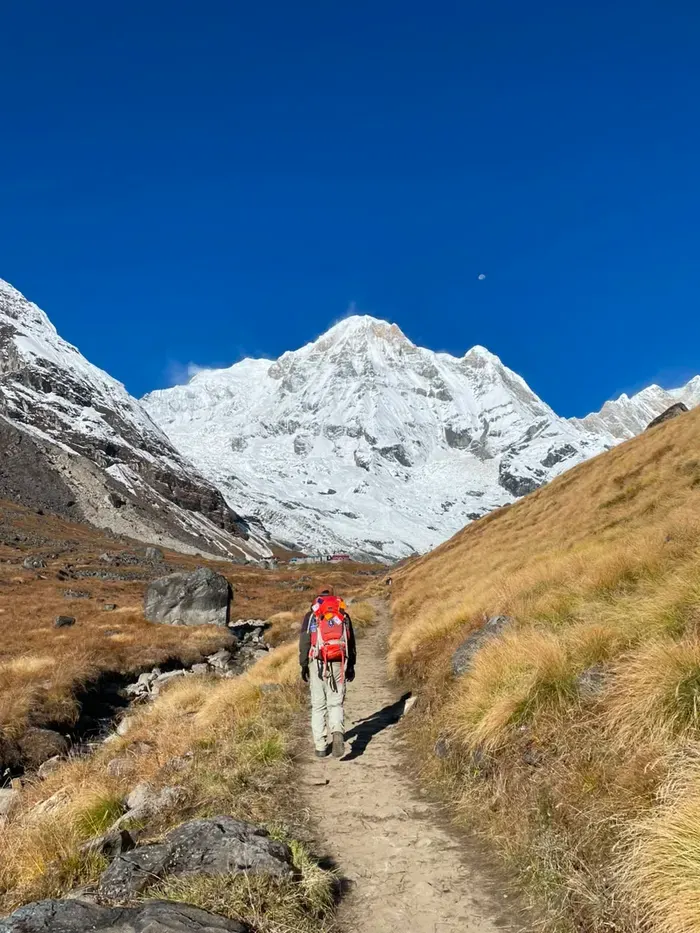
Winter Helicopter Tours in Nepal: December & January Guide (2026)
Most travelers assume the Himalaya shuts down in winter. The truth is closer to the opposite. December, January, and February are some of the finest months of the year to fly a helicopter over Nepal, and after more than a decade of running scenic flights and pilgrimage charters through the cold season, we can say it with confidence: a winter helicopter tour in Nepal is not a compromise, it is often the single best version of the trip. The air is dry, the skies are startlingly clear, and the mountains stand out against a deep blue that you simply do not get during the hazy, monsoon-fed months of summer.
- Mar-MayBest spring window
- Sep-NovBest autumn window
- 2,500 m+Where altitude risk begins
- 7 daysRecommended booking lead
In this guide we cover everything you need to know about flying in December and January: what the weather actually does, why the cold works in your favor, which routes perform best, what to wear, what temperatures to expect at altitude, what a winter flight costs, and the practical tips our pilots and ground crew rely on every season. If you are weighing a helicopter tour Nepal December departure, this is the page to read first.
What Winter Weather Is Really Like in the Himalaya
The single biggest misconception about winter flying in Nepal is that the mountains are buried in cloud. In reality, the winter months bring the opposite of what most people picture. The summer monsoon, which runs roughly from June through September, is what fills the valleys with cloud and hides the peaks for days at a time. By December, that moisture has long since drained out of the atmosphere. What replaces it is a cold, dry, high-pressure air mass that produces the clearest skies of the entire year.
Here is what that means in practical terms for a scenic flight:
- Crystal-clear visibility. On a good winter morning you can see from the Kathmandu Valley all the way to the Everest massif, a distance of well over 150 kilometers, with almost no atmospheric haze in between.
- Stable, predictable mornings. Winter weather in the Himalaya tends to settle into a rhythm: clear and calm at dawn, with any cloud building later in the afternoon. This is ideal for helicopter operations, which we schedule for the early part of the day.
- Snow-dusted peaks. The mountains carry fresh snow through the winter, which makes them photograph dramatically better than the bare, dusty rock of late spring.
- Cold, dry air. Temperatures are low, but the air is dry, so the cold feels far less biting than a damp winter day at sea level in Europe or North America.
There is a trade-off, and we want to be honest about it. Winter days are shorter, and the window of ideal flying conditions is narrower than in the long days of April or October. We also watch the jet stream closely, because high winds aloft can occasionally delay a flight for a day. But when the conditions line up, and they line up more often than not, a winter flight delivers visibility that even the famous autumn season struggles to match.
Why Winter Is a Great Time for Scenic Flights Despite the Cold
It is easy to look at a forecast showing minus temperatures and assume winter is the wrong time to fly. In practice, the cold is the least important part of the equation, and the things that actually determine whether a scenic flight is memorable or forgettable all tilt in winter's favor.
First, consider what ruins a scenic flight. It is not the temperature inside the cabin, which is heated and comfortable. It is cloud, haze, and poor visibility. Those are precisely the conditions that winter removes. The dry winter air means no monsoon cloud, no valley fog lingering past mid-morning, and no thick haze from the pre-monsoon dust of spring. You are left with the purest possible view of the world's highest mountains.
Second, winter is the quiet season. The autumn trekking crowds have gone home, the trails are empty, and the mountain airstrips and viewpoints are far less busy. For a helicopter tour, this translates into a calmer, more personal experience. You are not sharing the sky or the landing sites with the peak-season rush, and the pace of the whole day feels more relaxed.
Third, the light is extraordinary. The low winter sun rakes across the snowfields at a shallow angle, throwing the ridges and glaciers into sharp relief. Photographers who know the Himalaya well will tell you that winter light is the best light of the year for mountain photography, and a helicopter puts you right in the middle of it.
Finally, there is the simple fact that winter flying is often more affordable. Because demand drops after the autumn peak, operators including us adjust pricing, and you can frequently secure a winter helicopter tour Nepal at a meaningfully lower rate than the same flight in October or November. We cover the numbers in detail further down.
The Best Winter Helicopter Routes in Nepal
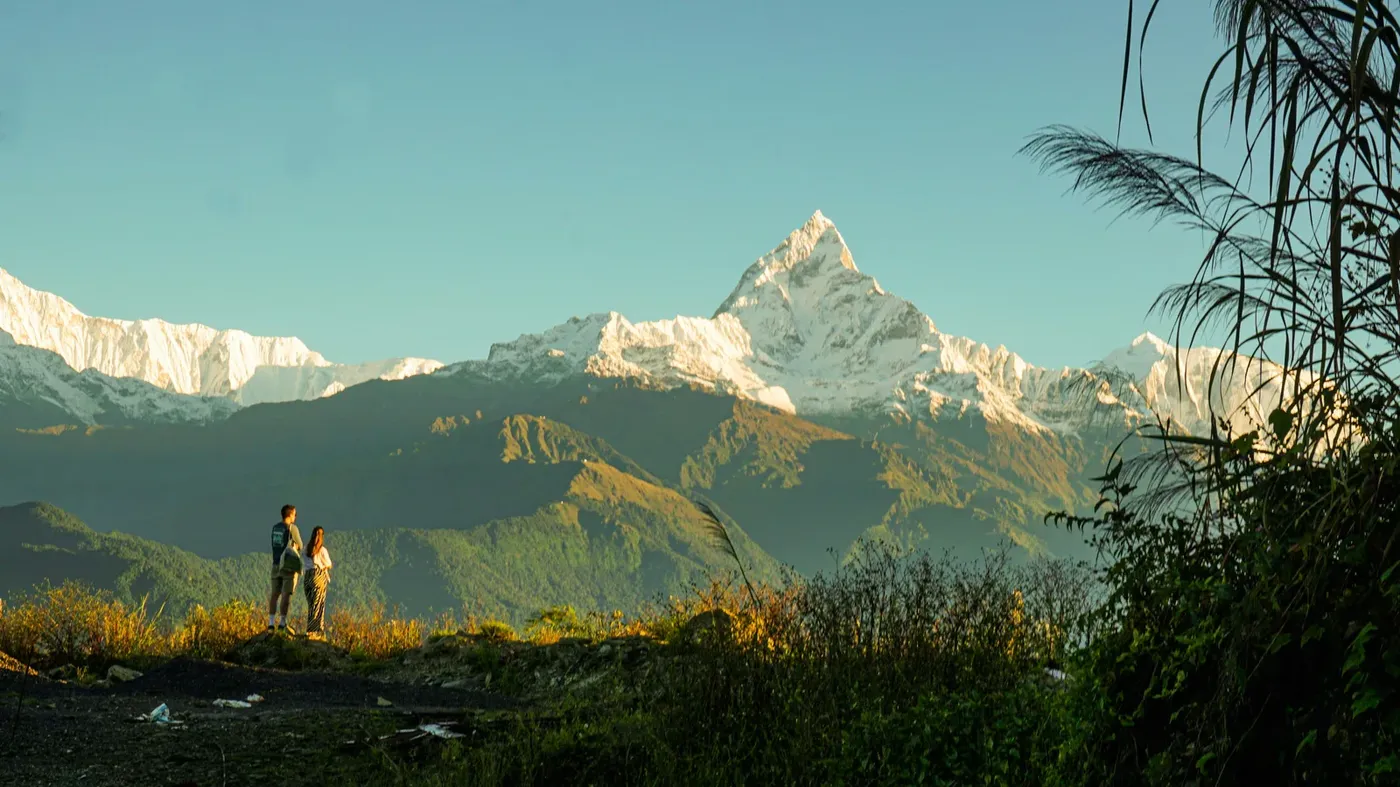
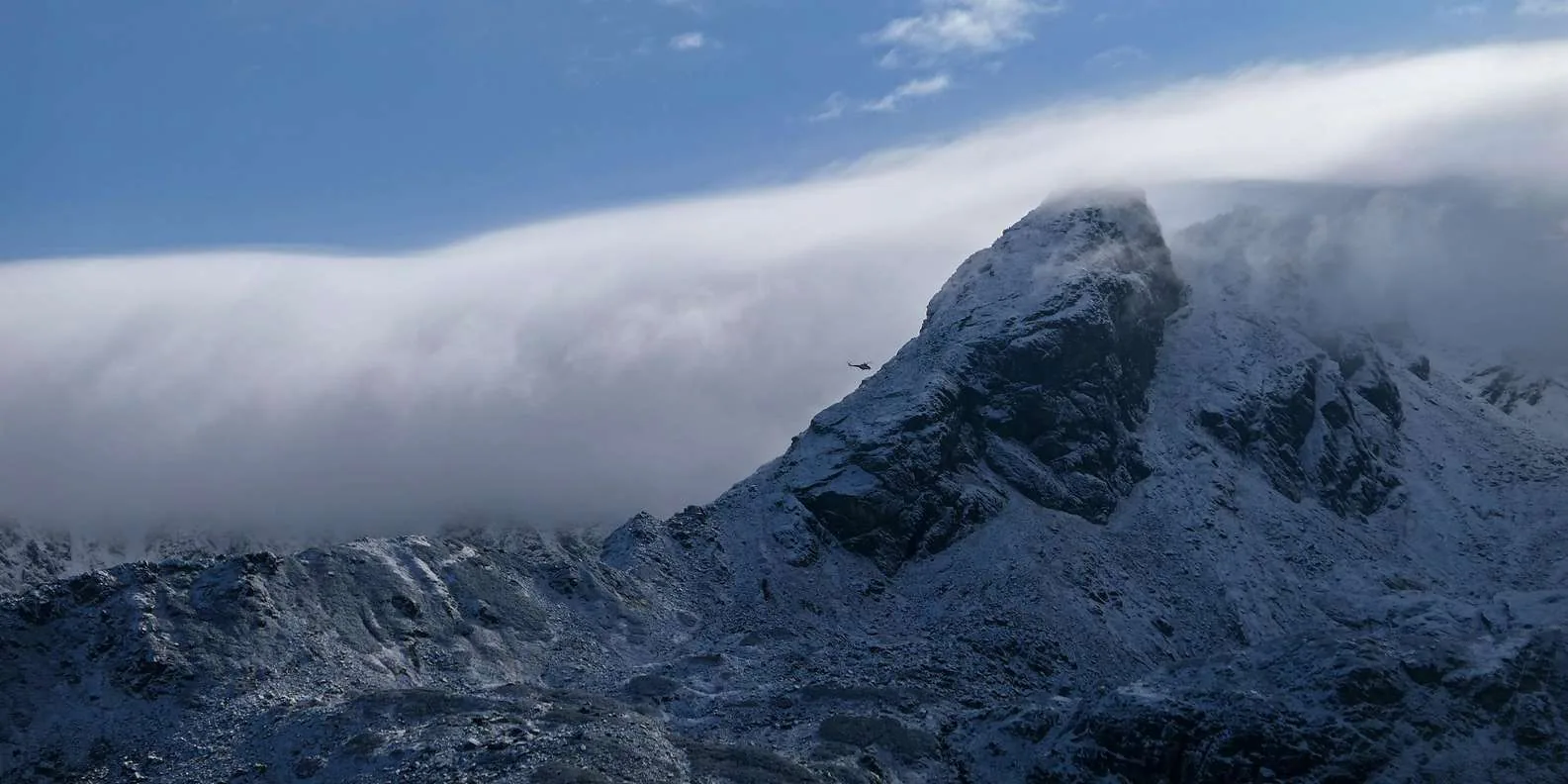
Not every route is equally suited to the cold season. Some high-altitude landing sites become more challenging when snow and ice are present, while others actually improve. Based on years of winter operations, these are the routes we recommend most strongly for December, January, and February.
Everest Scenic Flight (with Optional Landing at Kala Patthar)
The Everest scenic flight is the flagship of any Nepal helicopter operator, and winter is arguably its best season. The flight departs Kathmandu, crosses the foothills, and climbs into the Khumbu region, where you fly face-to-face with Everest, Lhotse, Nuptse, Ama Dablam, and the rest of the world's highest ridgeline. In winter, the snow cover is at its most complete and the visibility at its most transparent, so the panorama is as good as it ever gets.
Most winter Everest flights include a landing at Kala Patthar, the famous viewpoint at roughly 5,545 meters, or at the Everest View Hotel near Syangboche. A landing at Kala Patthar in winter is a genuinely cold experience, with temperatures well below freezing, but the view of Everest from that spot on a clear December morning is something you will never forget. We manage the timing carefully so that you are on the ground for only a short, safe window before descending to warmer air.
For a full breakdown of what this flight costs and what is included, see our dedicated guide on the Everest helicopter tour cost in 2026.
Muktinath Pilgrimage Flight
Muktinath is one of the most important pilgrimage sites in the Himalaya, sacred to both Hindus and Buddhists, and it sits at around 3,710 meters in the Mustang region. The remarkable thing about Muktinath in winter is that it is one of the most reliable high-altitude destinations in Nepal during the cold months. The Mustang region lies in the rain shadow of the Annapurna and Dhaulagiri ranges, which means it receives far less snow and cloud than the wetter southern slopes, and the flight corridor up the Kali Gandaki valley stays open and flyable through most of the winter.
This makes a Muktinath helicopter pilgrimage an excellent winter choice, whether you are traveling for religious reasons or simply want a spectacular flight into the high desert of the trans-Himalaya. The contrast between the snow-covered peaks and the dry, ochre landscape of Mustang is one of the most striking sights in Nepal, and it is at its most vivid in winter. For details on the one-day pilgrimage itinerary and pricing, read our guide to the Muktinath helicopter pilgrimage cost for a 1-day trip in 2026.
Kathmandu Valley and Short Scenic Flights
If you want a taste of helicopter flying without committing to a full mountain expedition, the Kathmandu Valley is a superb winter option. The valley sits at around 1,400 meters, so temperatures are mild even in January, and the winter air gives you crisp views of the entire Himalayan chain on the northern horizon. A short scenic flight over the valley takes in the city's UNESCO-listed monuments, the terraced hills, and, on a clear day, a full sweep of the high peaks from Langtang to Everest.
These shorter flights are also the most flexible in winter, because they are less exposed to high-altitude wind and can be scheduled with very little notice. They are a great choice for families, for travelers with limited time, or for anyone who wants to see the mountains without the cold of a high-altitude landing.
What to Wear on a Winter Helicopter Tour
Dressing correctly is the difference between enjoying a winter flight and merely enduring it. The good news is that the cabin of the helicopter is heated, so you will be comfortable in the air. The challenge comes at the landing sites, where you step out into genuinely cold mountain air, and in the early morning at the helipad, which is often the coldest part of the whole day.
The golden rule for winter is layers. Layers trap warm air, and they let you add or remove insulation as you move between the heated cabin, the cold landing site, and the mild valley. Here is the system we recommend to every winter passenger:
- Base layer. A thermal or merino wool top and leggings worn against the skin. This is the single most important layer for staying warm at altitude.
- Mid layer. A fleece or a light insulated jacket. This is the layer you will most likely remove inside the heated cabin.
- Outer layer. A down jacket or a warm, windproof shell. A proper down jacket is essential for the high-altitude landings, where the wind chill can be significant.
- Warm trousers. Insulated or lined trousers, or thermal leggings under regular hiking trousers. Jeans are a poor choice in the cold.
- Head and hands. A warm beanie, a scarf or neck gaiter, and insulated gloves. You lose a surprising amount of heat through your head and hands.
- Feet. Warm socks, ideally wool, and sturdy, closed, insulated footwear. Avoid thin sneakers.
- Eyes. Sunglasses are not optional in winter. The glare off the snow at altitude is intense, and good UV protection matters even on a cold day.
We have written a complete, item-by-item packing list that covers every season, including a dedicated winter section. You can find it in our guide on what to wear on a Nepal helicopter tour.
For the official background on this landmark, see altitude sickness. We link it because it is the source, not because it sells anything.
Temperature Expectations at Altitude
Understanding the temperature profile of a winter flight helps you pack and plan properly. The key thing to remember is that temperature drops with altitude, and it drops fast. As a rough rule of thumb, you lose about 6.5 degrees Celsius for every 1,000 meters you climb, and winter starts from a colder baseline than the rest of the year.
Here is what you can realistically expect on a typical winter flight:
- Kathmandu (about 1,400 meters). Winter daytime temperatures in the valley typically range from roughly 2 to 20 degrees Celsius, with cold mornings and pleasantly mild afternoons. January is the coldest month.
- Lukla and the lower Khumbu (about 2,800 meters). Expect daytime temperatures around 5 to 12 degrees Celsius, dropping below freezing at night and in the early morning.
- Kala Patthar and high viewpoints (about 5,000 to 5,600 meters). This is where it gets serious. Temperatures at these altitudes in winter are commonly between minus 10 and minus 20 degrees Celsius, and the wind chill can make it feel colder still. You will only be here for a short time, but you need to be dressed for it.
- Muktinath (about 3,710 meters). Winter daytime temperatures here are typically around 0 to 8 degrees Celsius, with cold nights. The dry Mustang air makes the cold feel more manageable than the damp cold of lower altitudes.
The pattern to remember is that the valley is mild, the mid-mountain is cold, and the high viewpoints are genuinely freezing. Dress for the coldest point of the trip, and you can always shed a layer in the heated cabin.
What a Winter Helicopter Tour Costs in 2026
One of the most appealing things about flying in winter is the price. Because December and January fall outside the peak autumn season, demand softens, and operators adjust their rates accordingly. In practice, this means a winter helicopter tour Nepal can be noticeably cheaper than the identical flight in October or November.
If you are planning this route, these go deeper: Best Time for a Helicopter Tour in Nepal: Month-by-Month Guide, Helicopter Tour Cancellation & Weather Policy in Nepal: What…, and How to Book a Helicopter Tour in Nepal: Complete Guide.
To give you a realistic sense of 2026 pricing, here are the figures we work with for the winter season. These are per-person prices for shared, group-departure flights, which are the most economical way to fly:
- Everest scenic flight with Kala Patthar landing. In peak season this flight typically runs around USD 1,100 to 1,200 per person on a shared basis. In winter, the same flight is commonly available for around USD 950 to 1,050 per person, a saving of roughly 10 to 15 percent.
- Muktinath pilgrimage flight. A one-day Muktinath pilgrimage by helicopter generally costs around USD 500 to 600 per person on a shared basis in winter, compared with USD 600 to 700 in the autumn peak.
- Kathmandu Valley scenic flight. Short valley flights are the most affordable option, typically starting around USD 250 to 350 per person depending on duration and routing.
- Private charters. If you want the helicopter to yourself, a private Everest charter in winter generally runs from around USD 4,000 to 4,500 for the aircraft, with the exact figure depending on the routing and the number of landings.
These are honest, current figures, but we always recommend confirming the exact price for your dates, because winter pricing can shift with fuel costs and demand. The important takeaway is that winter is the off-peak season, and off-peak means savings. For a complete, up-to-date breakdown of Everest flight pricing, see our Everest helicopter tour cost guide, and for the broader question of when to fly, our guide to the best time for a helicopter tour in Nepal compares every season side by side.
Practical Winter Flying Tips
After years of winter operations, our pilots and ground crew have settled on a set of practices that make the cold season run smoothly. If you are planning a helicopter tour Nepal December or January departure, these tips will help you get the most out of it.
- Book the earliest departure you can. Winter mornings are the calmest and clearest part of the day. The earlier you fly, the better your visibility and the lower the chance of afternoon cloud or wind.
- Build in a buffer day. Winter weather is mostly stable, but high winds aloft can occasionally ground a flight for a day. If your schedule allows, keep one flexible day in Kathmandu so a delay does not ruin your trip.
- Dress in layers, not one heavy coat. The heated cabin and the freezing landing site are two very different environments. Layers let you move between them comfortably.
- Protect your camera and phone. Cold drains batteries quickly. Keep spare batteries in an inside pocket close to your body, and let your camera acclimatize before shooting to avoid condensation.
- Stay hydrated and eat before you fly. Cold, dry air and altitude both dehydrate you faster than you expect. Drink water before the flight, and have a proper breakfast, because an empty stomach makes altitude symptoms worse.
- Watch for altitude symptoms. Even a short landing at Kala Patthar puts you above 5,000 meters. If you feel dizzy, nauseous, or unusually breathless, tell your pilot or guide immediately. We carry oxygen on all high-altitude flights.
- Wear sunscreen. The winter sun at altitude is fierce, and snow reflects it back at you. Sunburn on a cold day is surprisingly common and easy to avoid.
- Trust the pilot's call. If the weather is marginal, your pilot may delay, reroute, or reschedule. This is always a safety decision, and it is always the right one. Winter flying rewards patience.
Is Winter Right for You?
Winter helicopter touring is not for everyone, and we would rather you choose the right season than be surprised. If you are looking for the warmest possible conditions, the long days of spring and autumn are a better fit. If you are nervous about the cold, a Kathmandu Valley flight in winter is a gentle introduction, while a Kala Patthar landing is a more demanding experience.
But if your priority is the view, and it usually is, then winter is hard to beat. The clearest skies of the year, the most complete snow cover, the best light for photography, quieter skies, and lower prices all point in the same direction. A winter helicopter tour in Nepal is not the off-season consolation prize that many travelers assume it to be. It is, in our experience, one of the finest ways to see the Himalaya, full stop.
If you are ready to plan a December or January flight, start with our guide to the best time for a helicopter tour in Nepal to confirm your dates, then check the Everest helicopter tour cost and our winter packing list so you arrive prepared. The mountains are waiting, and in winter, they are at their most spectacular.