
Short answer: A trek to Everest Base Camp means walking the Khumbu valley from Lukla at 2,860 m to the Base Camp marker at 5,364 m over six walking days with two acclimatisation days built in, then climbing Kala Patthar at 5,545 m for the closest view of Everest at 8,848.86 m. Our ten-day trek-up, fly-back package costs from $1,840 per person sharing and replaces the walk out with a 20-minute helicopter lift from Gorak Shep to Lukla. With no trekking days at all, the one-day helicopter tour lands at Kala Patthar for $1,260.
- 5,364 mEverest Base Camp
- 5,545 mKala Patthar viewpoint
- 10 daysTrek up, fly back
- $1,840Per person, shared flight
Most people searching for a trek to Everest Base Camp are not really deciding whether to walk. They are deciding how many days they can take off work, what the whole thing costs in dollars once flights, insurance and tips are counted, and whether they can get out of the high valley without five days of downhill walking at the end. This page answers those three questions in that order, because they are the ones that decide whether the trip happens at all. The sensory side of the trail, what it feels like underfoot and what a night in a teahouse at 4,410 m does to your sleep, is covered separately in our guide to what hiking to Base Camp is actually like.
Everything below is priced for 2026 and built around the itinerary we actually run: the ten-day trek-up, fly-back version that walks you from Lukla at 2,860 m to Base Camp at 5,364 m, puts you on Kala Patthar at 5,545 m for sunrise, and then lifts you out of Gorak Shep by helicopter instead of marching you back down the same valley.
What a trek to Everest Base Camp involves in 2026
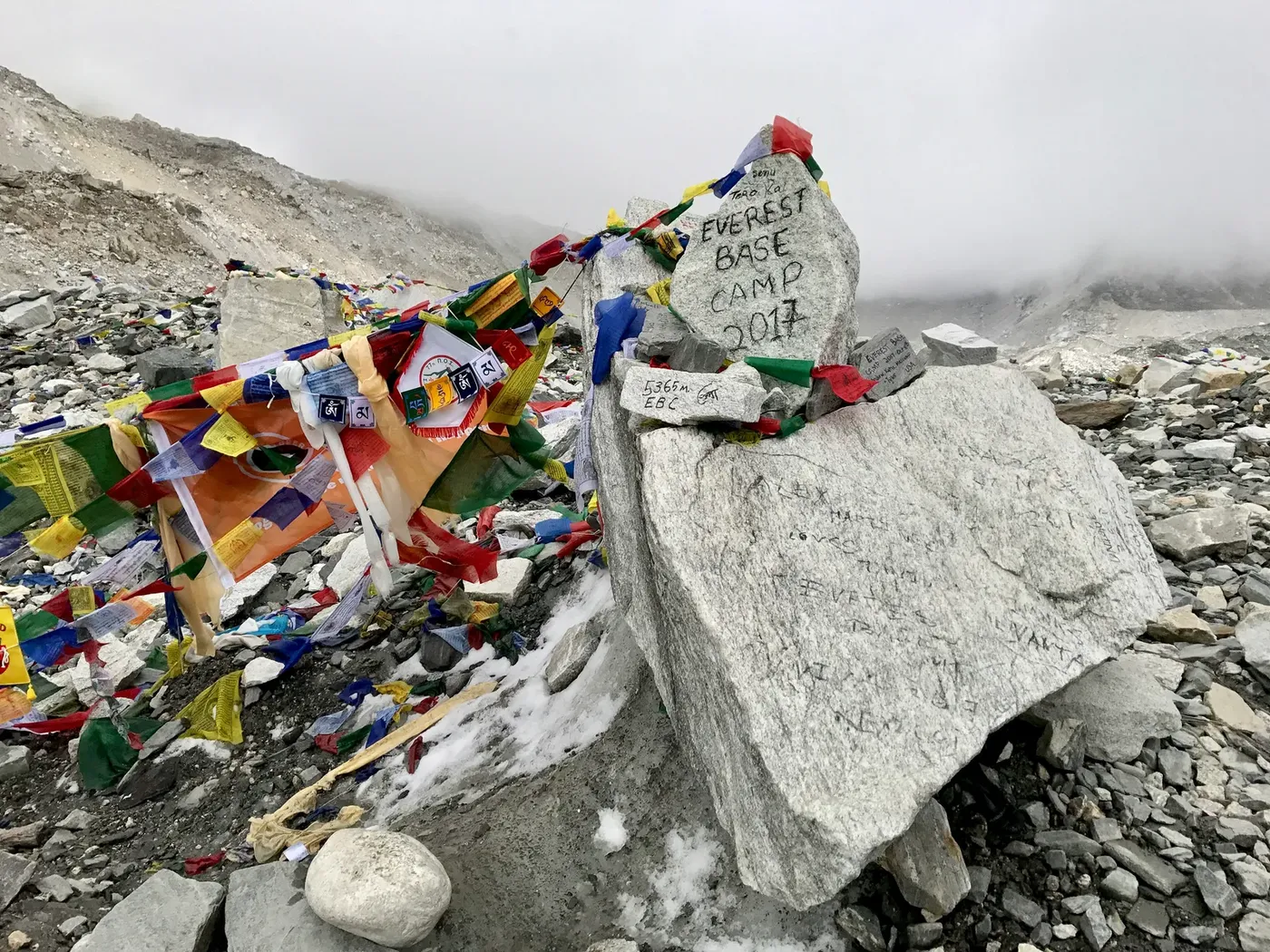
There is one trail into the Khumbu and the same trail out. It begins at Lukla, where the aircraft lands uphill and stops against a wall, and it ends at the cluster of prayer flags, stone markers and expedition tents that everyone calls Base Camp, at 5,364 m. In between, the route follows the Dudh Kosi north through Phakding, climbs to Namche Bazaar, crosses the river again below Tengboche, leaves the tree line at Dingboche, and reaches Gorak Shep on a moraine that looks and feels like the surface of another planet.
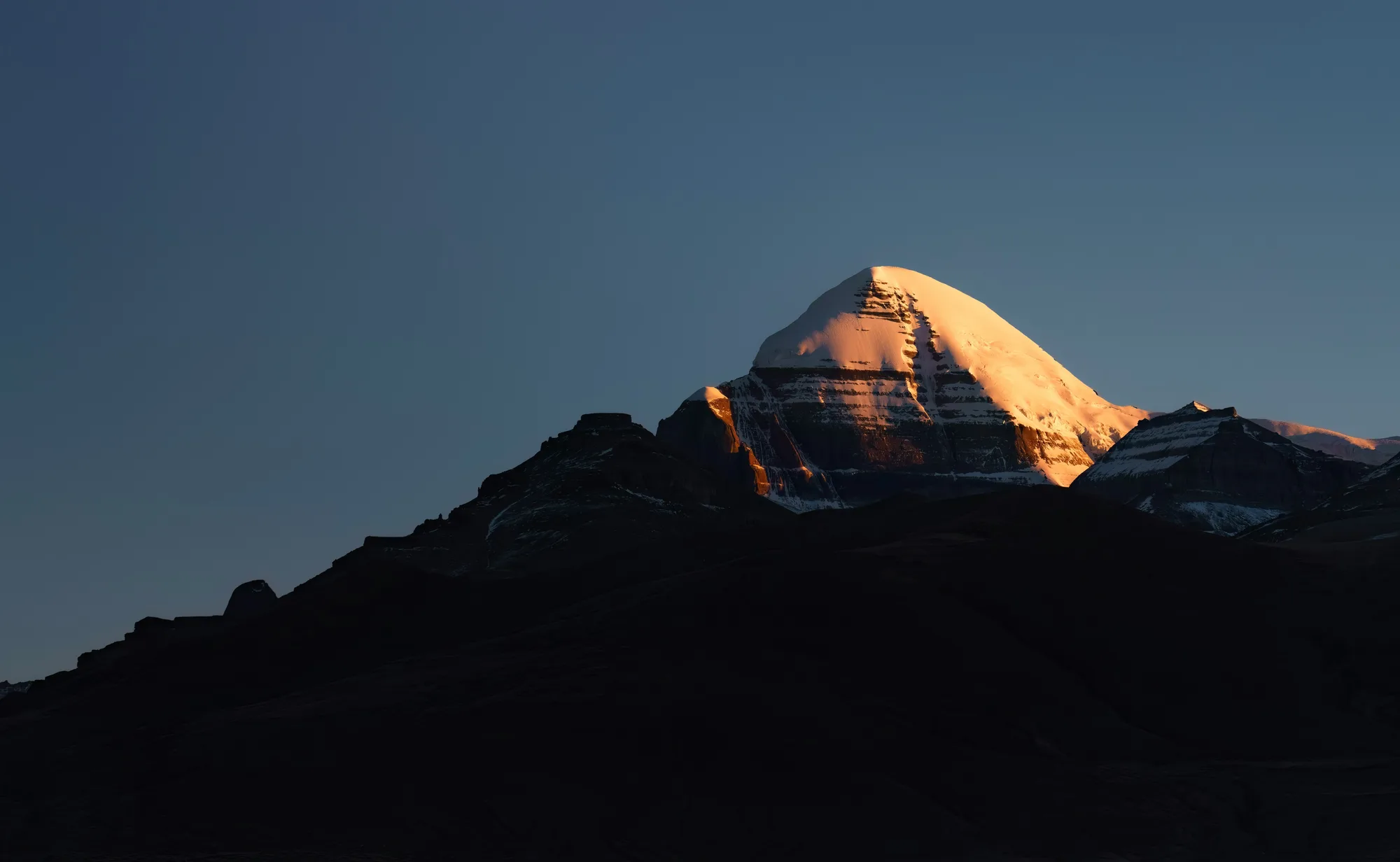
Nothing on that trail is technical. There is no rope work, no ice axe, no crampons and no climbing. What makes the trek to Everest Base Camp hard is height and repetition: six walking days that gain roughly 2,754 m between the trailhead and Base Camp, with bodies that adapt on their own schedule rather than yours. The summit of Mount Everest at 8,848.86 m is not part of the trip and is not visible from Base Camp itself. The view people actually travel for is from Kala Patthar, and that is included in the itinerary.
The ten days, stage by stage
This is the shape of the ten-day itinerary, with the altitude you sleep at each night and the walking time on the trail. The two acclimatisation days are not rest days in the sitting-around sense. They are the days that make the rest of the schedule work.
| Day | Stage | Sleeping altitude | On foot |
|---|---|---|---|
| 1 | Arrive Kathmandu, meet the guide | 1,400 m | Airport transfer only |
| 2 | Fly to Lukla 2,860 m, walk to Phakding | 2,610 m | 3 to 4 hours |
| 3 | Climb to Namche Bazaar | 3,440 m | 5 to 6 hours |
| 4 | Acclimatisation hike to Everest View Hotel 3,880 m | 3,440 m | 3 to 4 hours |
| 5 | Trek to Tengboche, 10 km | 3,860 m | 5 to 6 hours |
| 6 | Trek to Dingboche, 9 km | 4,410 m | 5 hours |
| 7 | Acclimatisation hike to Nangkartshang Peak 5,083 m | 4,410 m | 4 to 5 hours |
| 8 | Lobuche 4,940 m, Gorak Shep 5,140 m, Everest Base Camp 5,364 m | 5,140 m | 6 to 7 hours |
| 9 | Kala Patthar 5,545 m at sunrise, helicopter to Lukla | 2,860 m | Walk plus 20-minute flight |
| 10 | Fly Lukla to Kathmandu | 1,400 m | 35-minute flight |
The pattern in that table is deliberate. Day two is short and mostly downhill into Phakding, the only day of the trek that loses height. Day three is the hardest single climb of the trip, the steep pull into Namche Bazaar at 3,440 m, and the following day does not move you higher at all: it walks you up to the Everest View Hotel at 3,880 m and brings you back down to the same bed. The same logic repeats at Dingboche, where the acclimatisation hike to Nangkartshang Peak at 5,083 m is the first time most trekkers stand above five thousand metres.
By day eight you are moving through Lobuche at 4,940 m to Gorak Shep at 5,140 m and then out to Base Camp at 5,364 m, the longest day on the trail at six to seven hours. Day nine is the one that makes this format different from the classic trek: a pre-dawn walk to Kala Patthar for sunrise over Everest, Nuptse and Pumori, breakfast back in Gorak Shep, and then a twenty-minute helicopter flight over the Khumbu valley to Lukla. Day ten is the thirty-five minute flight to Kathmandu.
The altitude ladder, and why the rest days are not optional
Every failed Everest Base Camp trek fails the same way, and it is rarely a fitness problem. It is a schedule problem. The trail gains height faster than a body adapts to it, and the fix is not walking faster, it is spending an extra night at the right altitude and going higher during the day than the altitude you sleep at. That is the whole logic of day four and day seven.
| Point on the route | Altitude | What happens there |
|---|---|---|
| Kathmandu | 1,400 m | Trip briefing, permits, gear check |
| Lukla | 2,860 m | Trailhead and mountain airstrip |
| Phakding | 2,610 m | First night, slightly lower than Lukla |
| Namche Bazaar | 3,440 m | Two nights, acclimatisation day |
| Everest View Hotel | 3,880 m | Day hike from Namche, sleep back at 3,440 m |
| Tengboche | 3,860 m | Monastery village, last of the forest |
| Dingboche | 4,410 m | Two nights, acclimatisation day |
| Nangkartshang Peak | 5,083 m | Day hike from Dingboche, sleep back at 4,410 m |
| Lobuche | 4,940 m | Passed on the way to Gorak Shep |
| Gorak Shep | 5,140 m | Last lodge before Base Camp |
| Everest Base Camp | 5,364 m | The marker, the icefall, the expedition tents |
| Kala Patthar | 5,545 m | Highest point of the trip, sunrise viewpoint |
Read that ladder from the bottom up and the shape of the trip is obvious: the biggest single jump is the one into Namche, and it is immediately followed by a day that goes higher and sleeps lower. The second big jump is Dingboche to Gorak Shep, and it is immediately followed by a morning on Kala Patthar and a flight out. A trek that removes either acclimatisation day is a shorter trip on paper and a much less reliable one in practice, which is why our ten-day version keeps both even though the descent has already been deleted.
Kala Patthar deserves a word of its own, because it is where a good trip can still go wrong. It sits at 5,545 m, higher than Base Camp by 181 m, and it is climbed before sunrise when the temperature is at its lowest. It is a walk, not a scramble, but it is the one morning where the schedule should be governed by how the group feels rather than by the clock. On the fly-back format, the helicopter is waiting at Gorak Shep rather than at Lukla, which means the decision to turn around on Kala Patthar costs nothing but a photograph.
What the trek costs, and the four ways to stand at Base Camp
There are four prices that matter on this mountain, and they cover four very different amounts of effort. All of them are per person and shared unless stated otherwise, and all are 2026 rates.
| Option | Price | Time | What you get |
|---|---|---|---|
| Everest scenic mountain flight from Kathmandu | $260 per person, window seat | 1 hour | Views of the range to 8,849 m, no landing |
| Everest Base Camp helicopter day tour | $1,260 per person, shared flight | 1 day, about 6 hours | Landing at Kala Patthar 5,545 m, breakfast at Everest View |
| Everest Base Camp helicopter trek, trek up and fly back | $1,840 per person, shared flight | 10 days | The full walk to Base Camp 5,364 m, Kala Patthar sunrise, helicopter out |
| Private Everest helicopter charter | $4,500 per aircraft, up to 5 guests | 1 day, about 5 to 6 hours | Your own aircraft and schedule, breakfast at Everest View Hotel 3,880 m |
The arithmetic is worth doing in public. The ten-day trek works out at $184 per day for a guided walk with lodges, meals, permits, the Kathmandu to Lukla flight and the helicopter out. The one-day helicopter tour is $1,260 for a single morning, and the gap between the two is $580: that $580 buys six walking days, two acclimatisation days and the Base Camp marker itself. The scenic flight at $260 is $1,580 cheaper than the trek, and it is a different product entirely, one hour in the air with no landing and no altitude.
The private charter is the option people misread. At $4,500 per aircraft for up to five guests it is $900 per person when the aircraft is full, which is less than the shared day tour per seat, and it is the cheapest way for a family or a small group of five to have the mountain to themselves for a morning. It is a one-day flight, not a trek, and it is not a substitute for the ten-day itinerary if standing at Base Camp on foot is the point of the trip.
What the $1,840 includes, line by line
Package prices on this route are only comparable when you know what is inside them. These are the lines that are in our ten-day price, and the ones that are deliberately not.
| Included in the trek price | Paid separately on the ground |
|---|---|
| Licensed trekking guide for the full trek | Hotels in Kathmandu before and after the trek |
| Porter service, one porter per two trekkers | Travel insurance, which is mandatory and must cover helicopter evacuation and trekking to 6,000 m |
| Kathmandu to Lukla flight in, or helicopter equivalent | Personal gear, sleeping bag and down jacket |
| Sagarmatha National Park permit and TIMS card | Hot showers, device charging and bottled drinks in lodges |
| Lodge accommodation on trek, twin share | Tips for guide, porters and pilot crew |
| All meals on the trail with tea | Extra nights caused by a weather-delayed exit |
| Helicopter fly-back from the high valley with your duffel |
The insurance line is the one that catches people out, and it catches them out at home rather than on the mountain. A policy that covers trekking to 4,000 m is not adequate for a route that sleeps at 5,140 m and stands at 5,545 m. Ask for helicopter evacuation cover and a trekking ceiling of 6,000 m, and check that the policy covers Nepal specifically. Our guide to helicopter safety and insurance in Nepal sets out what the policy has to say in writing before you fly.
Booking a trek to Everest Base Camp from the United States or Europe
The booking itself is simpler than the trip. The sequence that works is: choose the season, hold the trek dates, confirm the insurance, then book the long-haul flights around the trek rather than the other way round.
Season first, because it governs everything else. Our trekking season runs March to May and September to November. The spring window gives you the clearest mornings and the most stable flying weather; the autumn window follows the monsoon, when the air is at its cleanest and the valley is at its busiest. Winter treks happen, but the helicopter becomes more rather than less important, and the summer monsoon is the one window we do not sell this itinerary in.
Dates second. Groups on this itinerary run from one to ten trekkers, so a solo traveller is joining a shared flight rather than paying for a private aircraft, and a family of five is filling one. In the two peak months, the constraint is not the aircraft or the guide, it is beds in Namche and Gorak Shep, and those go first.
Insurance third, and before you pay a deposit rather than after. Insurers ask for the itinerary and the maximum altitude when you buy the policy, and the numbers they need are 5,545 m for the highest point reached and helicopter evacuation cover for the flight out. Buy the policy once the dates are fixed, then book flights.
Flights last, and with a buffer. Long-haul arrivals into Kathmandu land in the afternoon or evening, the trek briefing happens that evening, and the Lukla flight leaves the following morning. Give yourself a full day in Kathmandu at the end of the trek before the international departure, because the Lukla to Kathmandu flight is a mountain flight and mountain flights move with the weather.
Group joining or private: where the money actually changes
On the ten-day trek the price is per seat on a shared helicopter, so the marginal cost of being one more person is close to zero and the marginal cost of being alone is not much higher. That is why solo travellers are not penalised on this itinerary the way they are on some Nepal treks, and why a couple usually pays the same per person as a group of six.
The private option changes shape rather than price. A private Everest helicopter charter is $4,500 per aircraft for up to five guests, which is $900 per person when it is full, and the thing you are buying is control of the clock: your departure time, your breakfast stop at the Everest View Hotel at 3,880 m, and your decision about how long to stay at Kala Patthar. That is a one-day flight. If your group wants the walk as well, the ten-day trek-and-fly is the product, and it stays per person. The full comparison of shared and private flying is in our guide to group joining versus private helicopter tours in Nepal.
The fly-out clause: what happens when the weather closes Gorak Shep
A helicopter flying into Gorak Shep at 5,140 m is flying visually, which means cloud, snow and wind can stop it. That is not a rare edge case on this route; it is a normal part of planning a mountain itinerary, and the honest way to sell it is to say so before you book.
What happens in practice is that the flight moves to the next morning. The itinerary has a built-in buffer at Lukla on day nine, which absorbs one lost flying day without touching your international flight. If the weather holds for two days, the group walks down to Pheriche and flies from lower ground, or waits in Lukla. Extra nights caused by a weather-delayed exit are listed as an exclusion on the tour page rather than buried in the small print, because a traveller who discovers that at Gorak Shep stops trusting the invoice. The mechanics of cancellation, rebooking and refunds are set out in our weather cancellation policy guide.
Trekking in, or landing at Kala Patthar: which trip is yours
The choice between the ten-day trek and the one-day helicopter tour is a choice about what you want to have done, not about what you want to have seen. Both end with the same view of Everest, Nuptse and Pumori, and the day tour lands at 5,545 m, higher than Base Camp. The difference is the six walking days and the two acclimatisation days in between.
Choose the trek if you want the marker at Base Camp on foot, if you have ten days, and if you can walk five to seven hours a day for six days at altitude with a light pack. Choose the day tour at $1,260 if your time in Nepal is short, if altitude and walking are a genuine constraint, or if you want the view and the landing without the schedule. Our helicopter tour versus Base Camp trek comparison goes through that decision in detail, and the Everest Base Camp helicopter day tour page has the hour-by-hour version of the flight.
What we would not recommend is the halfway version people sometimes ask for: fly to Lukla, walk two days to Namche, and fly out. It spends the money of a trek and the days of a trek without reaching Base Camp, and the altitude gain that makes the trip worth anything has not happened yet.
Where this trek leads next: Gokyo, Manaslu and Annapurna
The Everest valley is one of four helicopter-accessible trekking regions we run, and the same fly-back logic applies to all of them. The quietest version is the Gokyo lakes route at 4,790 m, which sees a fraction of the Base Camp traffic and delivers a different panorama from Gokyo Ri. Our Gokyo lakes helicopter guide covers that valley.
If you want a longer walk with a restricted-area permit and a helicopter exit over the Larkya La at 5,160 m, the Manaslu helicopter return trek is thirteen days from $2,160 per person sharing, and it is the version of this format for people who have already done Everest or want to avoid the crowds entirely. For a shorter, gentler introduction, the Annapurna helicopter return trek is six days from $1,199 and tops out at Annapurna Base Camp, 4,130 m. The full map of routes beyond the Everest valley, including Langtang, Gosaikunda, Rara and Lumbini, sits in our Nepal helicopter tours beyond Everest guide.
Frequently asked questions about trekking to Everest Base Camp
How many days does it take to trek to Everest Base Camp?
Our trek-up, fly-back itinerary runs ten days door to door: one day in Kathmandu, six walking days, two acclimatisation days at Namche Bazaar and Dingboche, a sunrise on Kala Patthar, and the flights at each end. The walking itself is six days on the trail, with two further days spent hiking high and sleeping low.
Can I walk to Base Camp and fly back instead of walking down?
Yes, and it is the format most of our guests now choose. You walk the entire ascent, sleep at Gorak Shep at 5,140 m, visit Base Camp at 5,364 m and Kala Patthar at 5,545 m, and then fly from Gorak Shep to Lukla in about twenty minutes instead of repeating five days of trail in reverse. The descent is the part of the classic trek that people complain about most, and this itinerary removes it.
Where can a helicopter land on the Everest route?
The landing points that matter on this side of Nepal are Lukla at 2,860 m, the Everest View Hotel at 3,880 m for breakfast stops, Gorak Shep at 5,140 m where the trek-and-fly itinerary collects you, and Kala Patthar at 5,545 m, which is the landing used by the one-day Base Camp helicopter tour. Each one is a real landing site on a real itinerary, not a hover-and-look.
Can a helicopter land on the summit of Everest?
No. Everest stands at 8,848.86 m and the summit is not a landing site; no helicopter lands there. The highest landing on any of our itineraries is Kala Patthar at 5,545 m, and the closest most travellers get to the summit is the view of it from that ridge or from Base Camp at 5,364 m.
How much does a trek to Everest Base Camp cost in 2026?
The ten-day trek-up, fly-back package is $1,840 per person sharing, which includes the guide, porters, the Kathmandu to Lukla flight, the Sagarmatha National Park permit and TIMS card, lodge accommodation, all trail meals and the helicopter out. The one-day helicopter tour with a Kala Patthar landing is $1,260 per person, and a private charter is $4,500 per aircraft for up to five guests.
Is the trek to Everest Base Camp difficult?
We grade it moderate to challenging. The trail is well made and there is no technical climbing, but you walk five to seven hours a day for six days and sleep as high as 5,140 m. Fitness helps; acclimatisation matters more, which is why the schedule keeps both rest days rather than shortening the trip.
Do I need a guide and permits to trek to Base Camp?
The Sagarmatha National Park permit and the TIMS card are both required, and both are inside our package price rather than added at the trailhead. A licensed guide is included for the full trek and is not a formality on a route where the daily decision is about altitude rather than navigation. Our Everest Base Camp trek guide explains what the guide actually does across the ten days.
When is the best time to trek to Everest Base Camp?
March to May and September to November. Spring gives the clearest mornings and the most reliable flying weather; autumn follows the monsoon and brings the cleanest air and the busiest lodges. Both windows sit outside the summer monsoon, when we do not run this itinerary.
Can I join a group as a solo traveller?
Yes. Groups run from one to ten trekkers and the helicopter seats are sold per person on a shared flight, so a solo traveller pays the same per-person price as anyone else on the same departure rather than covering an empty aircraft.
What happens if the helicopter cannot fly out of Gorak Shep?
The flight moves to the next morning. The itinerary has a buffer at Lukla that absorbs one lost flying day without touching your international flight; if the weather holds longer, the group walks down to lower ground and flies from there, or waits in Lukla. Extra nights caused by a weather delay are the one cost the package does not cover, and they are listed as an exclusion rather than discovered at 5,140 m.
Do I need travel insurance for this trek?
Yes, and it is mandatory rather than optional. The policy needs helicopter evacuation cover and a trekking ceiling of at least 6,000 m, because the itinerary sleeps at 5,140 m and stands on Kala Patthar at 5,545 m. A standard policy that stops at 4,000 m will not pay for the flight that matters.
Everest Base Camp or Manaslu, if I have already done one?
Manaslu is the answer for anyone who has walked the Khumbu and wants a longer, quieter route with a restricted-area permit and a helicopter exit over the Larkya La. The Manaslu helicopter return trek is thirteen days from $2,160 per person sharing and tops out at 5,160 m.
The short version
A trek to Everest Base Camp in 2026 is a ten-day plan, not a fourteen-day one, if you stop pretending the walk out has to be part of it. Six walking days get you to the marker at 5,364 m, two acclimatisation days get you there safely, Kala Patthar at 5,545 m gives you the view, and a twenty-minute flight replaces the five days of downhill that nobody enjoys. The price for that, guide and permits and lodge and meals and helicopter included, is $1,840 per person sharing.
If you want to see the day-by-day route in full, with inclusions and live pricing, the Everest Base Camp helicopter trek page is the booking version of this guide. If you are still deciding between flying, walking and a shorter trekking region, start with our four ways to reach Everest Base Camp and then come back to the ten-day itinerary once you know your dates.