
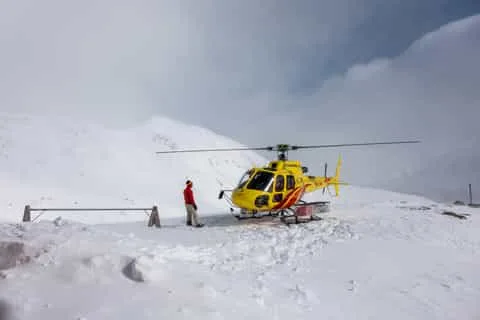
Short answer: There is no single “Nepal heli tour package price”, because a package is priced on one of three bases: a seat on a shared flight, the whole aircraft as a charter, or a flight attached to a guided trek. In our published 2026 rates that runs from $260 per person for the one-hour Everest scenic mountain flight, through $860 for the Annapurna Base Camp day tour and $1,260 for the Everest Base Camp day tour, up to $4,500 per aircraft for a private Everest charter carrying up to five guests. Multi-day packages price the walking, lodging and permits around the flight — from $1,080 for the one-day Muktinath pilgrimage to $2,160 per person for the thirteen-day Manaslu trek with a helicopter exit. Decide which of the three price bases you are being sold before you compare any two quotes.
- $260Cheapest published seat, scenic flight
- $860Annapurna Base Camp day tour
- $1,260Everest Base Camp day tour
- $4,500Private charter, whole aircraft
The phrase “heli tour package” gets used for at least half a dozen different products in Nepal, and two of them can carry the same route name and a price difference of more than a thousand dollars. The gap is almost never about how long the rotor turns. It is about the unit you are buying, what the operator has bundled around the flight, and how many of the seats on your aircraft are being filled by strangers.
This guide does one job: it pulls a Nepali helicopter package apart into its price lines so you can see what each one costs, what each one includes, and which numbers in a quote are fixed by the flight and which are negotiable. If you want the route-by-route catalogue instead, our 2026 route and package overview covers every tour we fly; the Nepal helicopter tour prices hub collects the rest of the cost guides in one place.
The three price bases hiding inside one label
Every legitimate quote you will receive in Nepal is built on one of these three foundations, and the foundation determines what happens when the flight does not fill, when the weather closes a valley, and when you want to change your date.
- Per seat, shared flight. You buy one place on a departure the operator assembles. The published price is what you pay if the aircraft fills to the operator's minimum. This is how the Everest Base Camp day tour at $1,260 and the Annapurna Base Camp day tour at $860 are sold.
- Per aircraft, private charter. You buy the machine, the pilot and the day. The price does not move with the number of passengers because the cost does not either. The private Everest helicopter charter is the clearest example at $4,500 for up to five guests.
- Per day, inside a guided trek. The helicopter becomes one leg of a longer itinerary, and its cost is spread across lodges, meals, permits, guides and porters. The ten-day Everest Base Camp helicopter trek at $1,840 and the thirteen-day Manaslu helicopter return trek at $2,160 are priced this way.
Once you know which of the three you are looking at, most of the confusion in package pricing disappears. A $260 product and a $1,260 product are not competing with each other, and neither of them is competing with a $1,840 ten-day package. They are three different transactions that all involve a helicopter.
The 2026 package price table
These are the figures this site publishes for its own departures, each on the price basis it is actually sold on. Read the fourth column as carefully as the second — a per-person rate and a per-aircraft rate cannot be compared without knowing how many people are flying.
| Package | Published 2026 price | Price basis | Duration and high point |
|---|---|---|---|
| Everest scenic mountain flight | $260 | Per person, window seat | 1 hour from Kathmandu, summit views of 8,848.86 m, no landing |
| Annapurna Base Camp helicopter day tour, from Pokhara | $860 | Per person, shared flight | 1 day, approximately 3–4 hours, landing at 4,130 m |
| Muktinath helicopter pilgrimage | $1,080 | Per person, shared flight | 1 day, temple and 108 waters at 3,710 m |
| Annapurna helicopter return trek | $1,199 | Per person, shared flight | 6 days, maximum 4,130 m |
| Everest Base Camp helicopter day tour | $1,260 | Per person, shared flight | 1 day, approximately 6 hours, landing 5,545 m at Kala Patthar |
| Everest Base Camp helicopter trek, trek up and fly back | $1,840 | Per person, shared flight | 10 days, maximum 5,545 m |
| Manaslu helicopter return trek, Larkya La and heli exit | $2,160 | Per person, shared flight | 13 days, maximum 5,160 m |
| Private Everest helicopter charter | $4,500 | Per aircraft, up to 5 guests | 1 day, approximately 5–6 hours, breakfast at Everest View Hotel, 3,880 m |
Two products sit outside that table on purpose. The Kathmandu Valley aerial and UNESCO tour runs five days but is not sold as a fixed-price helicopter package, and the multi-day treks are quoted per person against a fixed departure list rather than per aircraft. If a quote you have received does not tell you which column it belongs in, ask before you compare it to anything here.
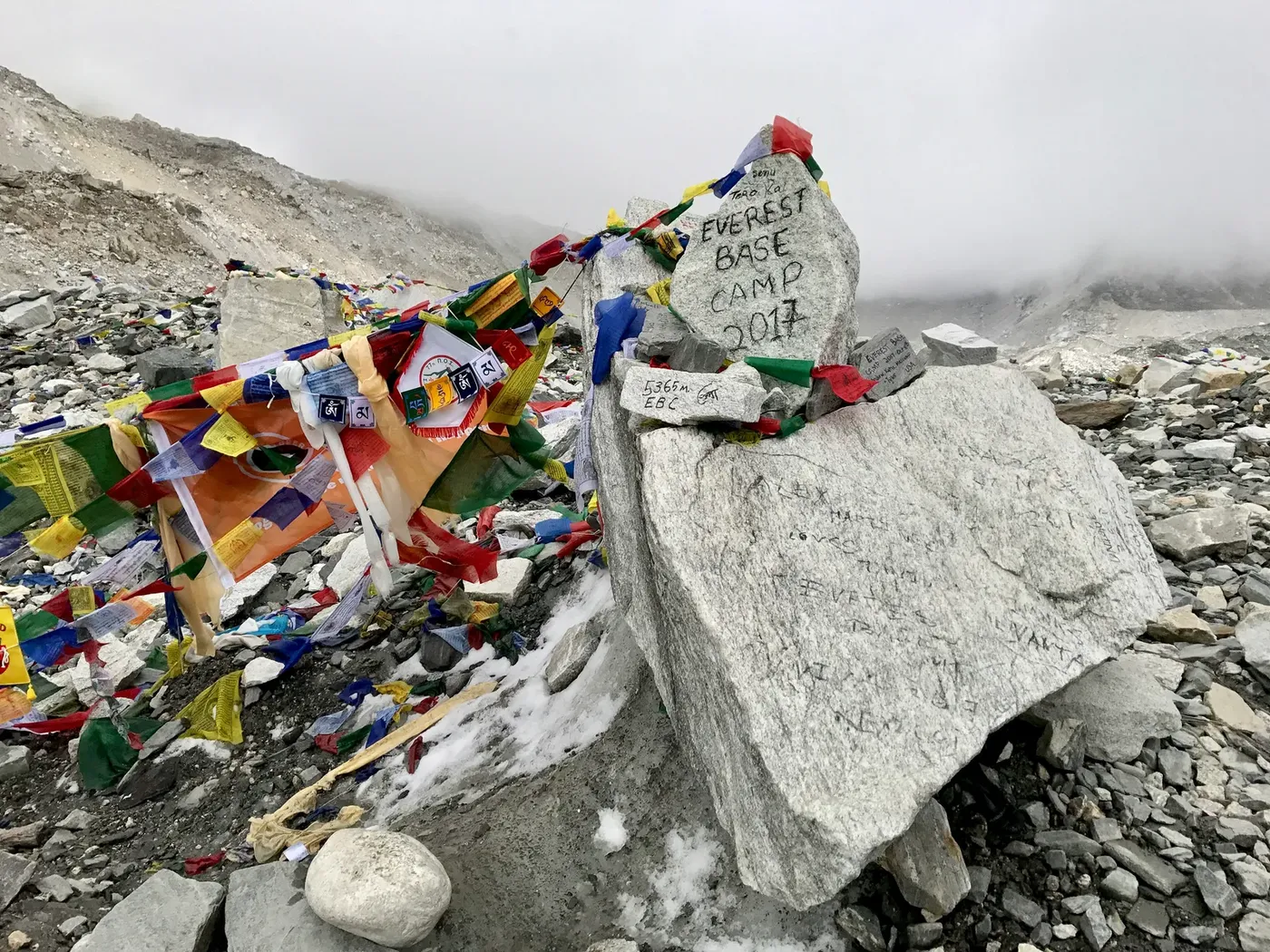
Price base one: what a shared seat actually costs
A shared-seat price is a fraction of an aircraft cost divided across the passengers the operator expects to carry. That is why the same Everest Base Camp day tour can be quoted at $1,260 per person on a full departure and refused, or re-priced, when only two people have booked. The operator is not being difficult. At two passengers the aircraft still burns the same fuel to Kala Patthar and back, and the arithmetic no longer closes.
This has three practical consequences for anyone shopping on price:
- The cheapest dates are the fullest dates. A departure with five confirmed passengers is cheaper per head for everyone than one that leaves with two, and operators discount to fill rather than to reward early booking.
- The published number is conditional. A shared rate assumes the minimum is met. Ask, in writing, what happens if it is not — whether the departure is cancelled, whether you are moved to another morning, or whether you are offered the aircraft at a charter rate.
- Sharing is not the same as group joining. On a shared flight you are buying a seat, not a companion. If you specifically want to be matched with other travellers on a fixed departure, that is a different product with its own scheduling rules — see how group Everest helicopter departures work before you assume a shared rate means the same thing.
The scenic mountain flight is the one product where the shared model is genuinely clean. It is a one-hour flight with no landing, seats are sold individually, every passenger gets a window, and the $260 fare is the price of that seat rather than a share of a charter. It is also the correct purchase for anyone whose real objective is to see Everest rather than stand under it — the Everest scenic mountain flight page sets out the route and the summit views you get for the fare.
Price base two: what a charter is really buying
A charter price is the aircraft's cost for the day: pilot, fuel, maintenance reserve, permits and positioning. It is fixed, which makes it the only price basis in Nepal where the per-head cost genuinely falls as the group grows.
The private Everest charter is published at $4,500 per aircraft for up to five guests. That number does not change whether one person flies or five. Run the arithmetic and the reason charter operators tell larger groups they are better off private becomes obvious:
| Guests sharing the charter | Cost per head | Compared with the $1,260 shared day tour |
|---|---|---|
| 1 | $4,500 | Three and a half times the shared seat |
| 2 | $2,250 | Still well above the shared seat |
| 3 | $1,500 | Close to the shared seat, with the aircraft to yourselves |
| 4 | $1,125 | Below the shared seat |
| 5 | $900 | Cheapest published way to reach Kala Patthar |
Those per-head figures are simple arithmetic on the $4,500 aircraft rate, not a quotation — the charter rate itself is what you pay, and it is the figure that appears on the invoice. What the table shows is where the crossover sits: at three passengers a charter is roughly the price of three shared seats, and at four it is cheaper than the shared product while giving you the departure time, the route and the ground stops.
Charter also buys things a shared seat cannot. You choose the morning, so you can take the first weather window rather than the operator's scheduled one. You choose the ground stops, which is why a proposal, a wedding shoot or a photography trip is almost always a charter rather than a seat. And you are not waiting on strangers to confirm. The private Everest charter cost guide breaks down what those extras are worth against the shared fare, and the charter tour page lists the day as it actually runs.
Price base three: the flight inside a trek package
Multi-day heli packages are priced per person and include the walk. That makes them look expensive beside a day tour and cheap beside the equivalent number of trekking days plus a separate flight out, which is exactly how they should be judged.
The ten-day Everest Base Camp helicopter trek at $1,840 per person is the clearest case. You walk up the Khumbu over roughly a week, then fly out from the upper valley instead of walking back down. The flight is not sold separately inside that figure; the package prices the itinerary, and the helicopter leg is one line of it. Compared with a return-trek itinerary the saving is time — the descent days come off the trip rather than the price — and that is the trade a trek-and-fly package is designed to make.
The same logic scales. The six-day Annapurna helicopter return trek at $1,199 per person uses a helicopter exit at the end of a short Sanctuary itinerary, with a maximum altitude of 4,130 m. The thirteen-day Manaslu helicopter return trek at $2,160 per person ends with a lift off the far side of the Larkya La, a 5,160 m high point that would otherwise cost two or three more walking days. None of those prices are per aircraft, and none of them should be compared with a $4,500 charter.
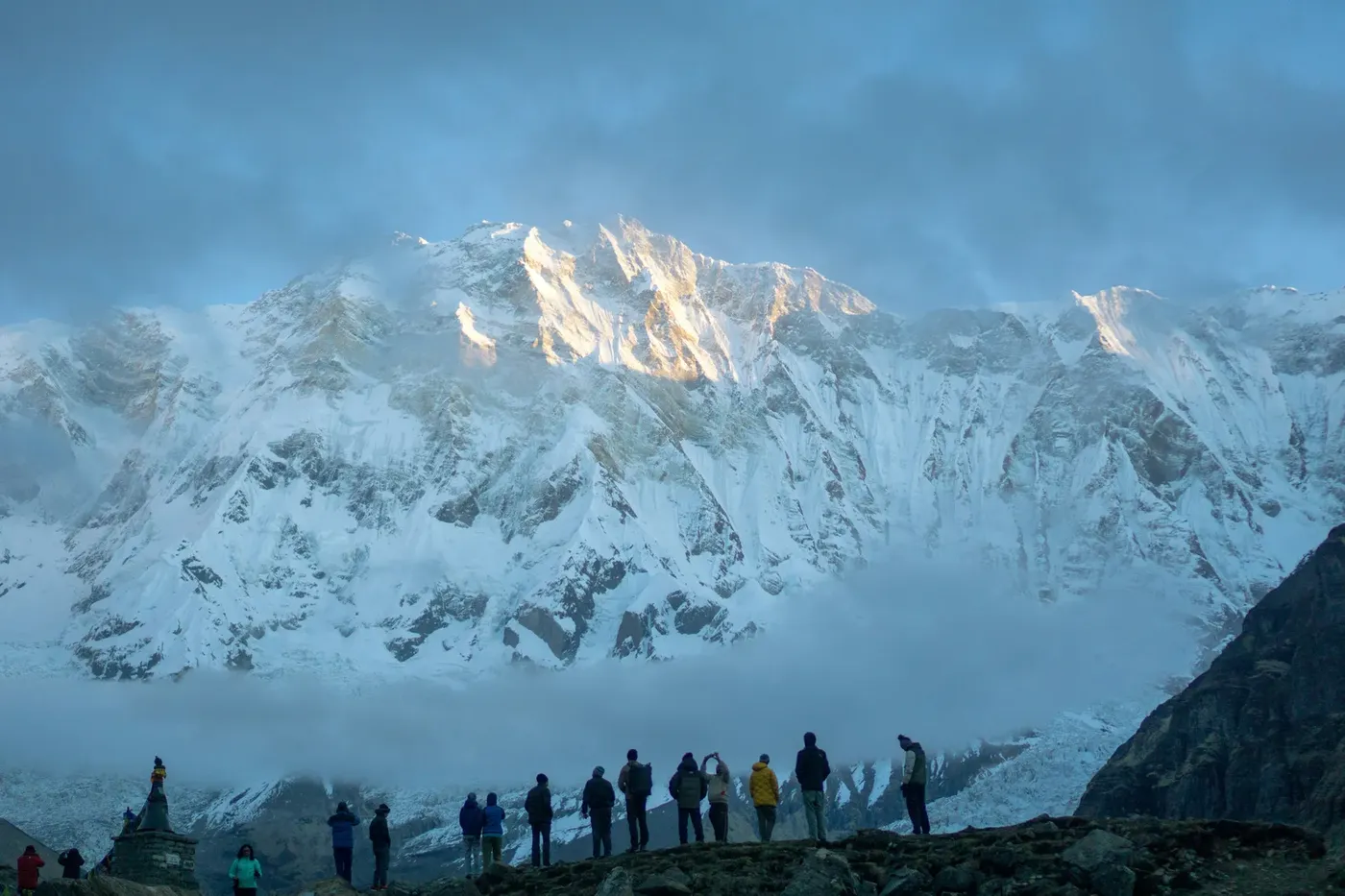
Why two Everest day tours can differ by hundreds of dollars
Almost every price difference between two Everest day packages comes down to four variables. None of them is the length of the flight, which is broadly similar across operators because the route is dictated by the terrain and the air traffic rules.
- Where the aircraft starts. A departure from Kathmandu pays for the transit to the Khumbu and back. A departure that begins closer to the mountains spends less of the day on positioning, which is why the Pokhara-based Annapurna Base Camp day tour is published at $860 against $1,260 for the Everest equivalent.
- Whether the landing is included. The $260 scenic flight lands nowhere. The moment a package includes a ground stop at Kala Patthar at 5,545 m, the aircraft is operating at the edge of its performance envelope, payload drops, and the price moves accordingly.
- What happens on the ground. A breakfast stop at the Hotel Everest View at 3,880 m is a real cost line — table, service, time on the apron — and packages that include it are not comparable with ones that fly past.
- How full the aircraft is. A shared departure that fills spreads the same aircraft cost over five passengers instead of two. The price per seat follows the load factor, not the itinerary.
When a quote comes in far below the market for the same route, one of those four has usually been quietly removed. The commonest is the landing: a “helicopter tour of Everest” that never touches down is a scenic flight with a different name, and $260 is the honest price for that product.
What is inside the headline figure, and what is not
Package prices in Nepal are quoted at different levels of completeness, and the gap between two quotes is more often inclusions than airtime. Before comparing numbers, get both operators to answer the same list.
Usually inside a day-tour or charter price: the aircraft and pilot, fuel, the ground stop at the landing site, and the return to your starting airport. On the Everest day tour and the private charter, the breakfast stop at the Hotel Everest View is part of the day as published.
Usually inside a trek-and-fly price: the walking itinerary, lodge accommodation on the route, meals as specified, guide and porters, the trekking and conservation permits required for that route, and the helicopter leg at the end.
Usually outside the headline price: travel insurance, including the helicopter-evacuation cover a trek at altitude requires; international flights; Nepal visa fees; lunches and dinners not listed in the trek inclusions; personal gear; tips; and any extra flying caused by a change of plan on the day. Ask specifically whether your insurance covers helicopter evacuation above the altitude your itinerary reaches — that is a policy question, not a tour question, and it is the one gap that turns a cheap package into an expensive problem.
Comparing two quotes: the eight lines that decide the number
Put two quotes side by side and work down this list. The differences that matter are almost always in the left-hand column, not the headline.
| Line to compare | Why it moves the price | What to ask for in writing |
|---|---|---|
| Price basis | Per seat and per aircraft are not comparable units | “Is this per person or per aircraft, and how many passengers is it based on?” |
| Landing included | A ground stop is the difference between a scenic flight and a tour | “Do we land, where, and for how long?” |
| Starting airport | Positioning to the mountains is a real cost | “Does the day start in Kathmandu or Pokhara?” |
| Departure time | Early departures get the morning weather window | “What time do we check in, and who decides the go/no-go?” |
| Minimum passengers | A shared rate collapses if the flight does not fill | “What happens if the minimum is not met?” |
| Weather policy | Re-booking versus refund is the difference between a delay and a loss | “If cloud closes the valley, do we re-fly, refund or lose the deposit?” |
| Meals and transfers | Breakfast and airport transfers are quotable costs | “Are hotel transfers and the Everest View breakfast in this figure?” |
| Permits and insurance | Trekking permits and evacuation cover sit outside most flight quotes | “Which permits are included, and what must my insurance cover?” |
If an operator cannot answer all eight in writing, the price is not yet a package price — it is an indication. That matters most for anyone booking from abroad, where you are committing to a flight on the strength of an email.
Group size, fill rates and the arithmetic of a shared departure
Nepal's light turbine helicopters carry five to six passengers plus the pilot, and payload falls sharply as altitude rises. On a Kala Patthar landing at 5,545 m the usable payload is a real constraint, which is why operators weigh passengers and bags and why a full aircraft is not always a full five seats on a high-altitude day.
That single fact explains most of the pricing behaviour travellers find strange. A shared Everest day tour at $1,260 depends on filling enough seats to cover an aircraft day. When a departure does not fill, the operator has three options: cancel it, fly it at the charter rate and pass the difference on, or move everyone to another morning. A well-run operator tells you which of the three applies before you pay a deposit, and a package price that omits the answer is a price with a hole in it.
For groups of four or five, this arithmetic usually argues for a charter even when the headline per-person fare looks higher. For solo travellers and couples, it argues the opposite: the shared day tour at $1,260 and the shared Annapurna day tour at $860 exist precisely because most visitors cannot fill an aircraft on their own.
Season and departure time: the invisible price line
Nepal's helicopter tours are visual-flight-rules flying. There is no instrument approach into Lukla, into the Annapurna Sanctuary or onto the snow at Kala Patthar. If the cloud is in the valley, the flight does not operate — not because the operator is being cautious, but because there is no legal way to fly the approach.
That makes the time of year and the time of morning genuine parts of the price. A morning departure that gets into the mountains before the valley cloud builds is worth more than an afternoon one, and operators schedule accordingly. If you are choosing between two packages on price alone, check whether the cheaper one flies later in the day. It may be cheap because it is more likely to be turned around.
It also means the weather clause deserves as much attention as the fare. A package that re-flies you at no extra charge on the next available morning is a different product from one that refunds the flight and leaves you to re-book your own accommodation. Our guide to cancellation and weather policies sets out how the clauses differ in practice.
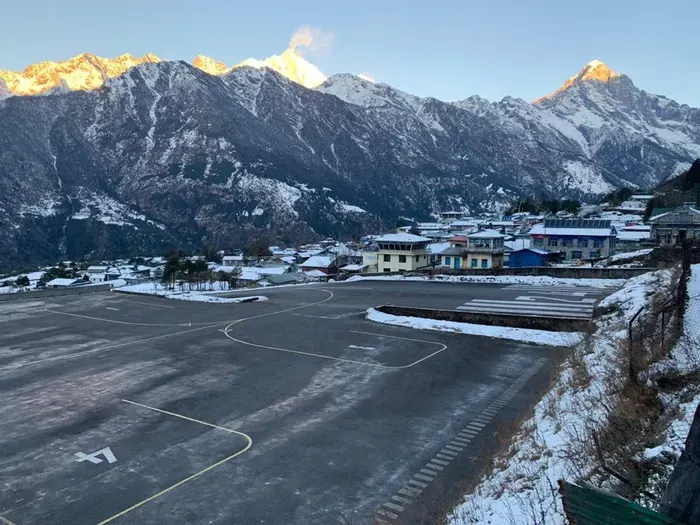
Red flags in a Nepali helicopter package price
Most of the market is straightforward, and the operators who fly these routes are licensed commercial operators working under Nepali aviation rules. The problems cluster in a few recognisable places.
- A price below the market for the same route with no explanation. It is usually a scenic flight sold as a landing tour, or a shared seat sold as a private one.
- No named operator. The helicopter is flown by a certified air operator with its own certificate; a reseller who will not say which one is flying you is adding a margin and no safety value. Our guide to choosing an operator covers what to check.
- Altitude promises the aircraft cannot keep. Everest is 8,848.86 m and no tour lands on the summit; a package that implies otherwise is selling a photograph, not a flight.
- No weather clause at all. In a country where mountain flying is weather-dependent, the absence of a re-booking policy is the policy.
- Payment in full, up front, to a personal account. Deposits are normal; a request for the entire charter cost before any documentation is not.
How the price changes when you add days
One-day products and multi-day packages are not on the same curve, and travellers often overpay by treating them as if they were. A day tour buys a flight. A multi-day package buys an itinerary in which the flight replaces several days of walking. The comparison that matters is against the alternative itinerary, not against the day tour.
Take the Everest region. The Everest Base Camp helicopter day tour at $1,260 gets you to Kala Patthar and back in a day, with no acclimatisation and no walking. The ten-day package at $1,840 gets you there on foot, sleeping in lodges, with the helicopter taking you out. For someone with two weeks and a wish to walk, the second is the product. For someone with three spare days in Kathmandu, only the first exists.
Annapurna shows the same split at a lower altitude. The Annapurna Base Camp day tour from Pokhara at $860 lands at 4,130 m and returns the same day; the six-day helicopter return trek at $1,199 walks in and flies out. The price difference between them — $339 per person — buys five extra days of trekking, lodges and permits. Priced per day of experience rather than per flight, the package is the better value of the two, and it is not close.
The Muktinath pilgrimage sits in a third category. At $1,080 per person for a single day it is priced like a day tour, but what you are buying is access to a temple at 3,710 m that would otherwise take a flight to Pokhara and a long road transfer. The Muktinath pilgrimage cost guide explains why the day is priced the way it is.
What to confirm before you pay a deposit
Four confirmations turn a quoted number into a bookable package, and all four should arrive in writing before money moves.
- The price basis and the passenger count. Per person or per aircraft, and the number of seats the figure assumes.
- The departure airport and check-in time. Kathmandu and Pokhara price differently, and the early slot is part of what you are buying.
- The weather and minimum-passenger clause. What happens if the flight cannot operate, and what happens if the aircraft does not fill.
- The permit and insurance position. Which permits are included on a trek package, and the altitude your own insurance must cover for evacuation.
Everything else — the exact ground time, the breakfast menu, the seating — is detail. These four are the terms on which the price is valid.
For the wider context on how packages are assembled by region, the Nepal helicopter tour prices hub links every cost guide on the site, and the planning hub covers permits, seasons and booking timelines. The altitude figures quoted throughout this page — Everest at 8,848.86 m, Base Camp at 5,364 m, Kala Patthar at 5,545 m — follow the surveyed summit height recorded for Mount Everest.
Frequently asked questions
How much does a helicopter tour package in Nepal cost?
Published 2026 rates run from $260 per person for the one-hour Everest scenic mountain flight to $4,500 per aircraft for a private Everest charter carrying up to five guests. In between sit the Annapurna Base Camp day tour at $860 per person, the Muktinath pilgrimage at $1,080, the Everest Base Camp day tour at $1,260, the six-day Annapurna helicopter return trek at $1,199, the ten-day Everest Base Camp helicopter trek at $1,840 and the thirteen-day Manaslu helicopter return trek at $2,160.
Why is one Everest helicopter tour $260 and another $4,500?
Because they are different products on different price bases. The $260 flight is a one-hour seat on a scenic flight with no landing. The $4,500 figure is the whole aircraft for a day with a landing, a breakfast stop at the Hotel Everest View at 3,880 m, and a departure time you choose. Per person, the charter works out to $900 when five guests share it.
Is a shared seat or a private charter better value?
It depends on group size. At one or two passengers the shared day tour at $1,260 per person is far cheaper than a $4,500 aircraft. At four passengers the charter works out to $1,125 per head and at five to $900, both below the shared fare, with the aircraft and the schedule to yourselves.
What does the price of a multi-day heli package include?
The walking itinerary, lodge accommodation on the route, the meals specified for that trek, guide and porters, the trekking and conservation permits required for the route, and the helicopter leg at the end. The Everest Base Camp helicopter trek runs ten days to a maximum of 5,545 m at $1,840 per person; the Annapurna version runs six days to 4,130 m at $1,199.
What is not included in a Nepal helicopter package price?
Travel insurance, including helicopter evacuation cover at the altitudes your itinerary reaches; international flights; Nepal visa fees; meals not listed in the itinerary; personal gear; tips; and any extra flying caused by a change of plan. Permits are usually inside a trek package and outside a day flight, so confirm which applies to your booking.
Does the price change if the flight does not fill?
It can. A shared-seat rate such as $1,260 for the Everest day tour assumes the departure reaches the operator's minimum. If it does not, the departure may be cancelled, moved to another morning, or offered as a charter at the aircraft rate. Ask which of those applies before paying a deposit.
What happens if the weather cancels my helicopter flight?
Mountain flying in Nepal is visual-flight-rules only, so cloud in the valley means the flight cannot legally operate. Reputable operators re-book you onto the next available morning. Whether that re-flight is free, and what happens to accommodation and onward plans, depends on the cancellation clause — which is why it should be in writing before you book.
Do I need to acclimatise for a one-day Everest helicopter tour?
The day tour is designed for visitors with no trekking schedule: you fly from Kathmandu, land briefly at Kala Patthar at 5,545 m, and spend the rest of the stop lower at the Hotel Everest View at 3,880 m. Ground time at the highest point is deliberately short. Anyone with a heart or lung condition should take medical advice before flying to that altitude.
Can I book a helicopter package for a group of five?
Yes, and for five the private Everest charter at $4,500 per aircraft is the cheapest published way to reach Kala Patthar, at $900 per head. Larger groups need more than one aircraft, since Nepali light helicopters carry five to six passengers plus the pilot, and payload at 5,545 m is a real constraint.
Is a scenic mountain flight worth it compared with a landing tour?
They answer different questions. The $260 scenic flight gives you summit views of Everest at 8,848.86 m from a guaranteed window seat in about an hour, with no landing and no altitude exposure. The $1,260 day tour puts you on the ground at 5,545 m. If your goal is a photograph of the peak, the flight is enough; if it is standing under it, only the landing tour delivers.
How far in advance should I book a helicopter tour package?
Earlier is better in the trekking seasons, when aircraft and pilots are committed across the Everest and Annapurna regions, and a shared departure needs time to fill. For a day tour in a quieter month a few days can be enough, but anyone flying to a fixed date — a wedding, a proposal, a flight home — should treat the aircraft as the constraint rather than the seat.