

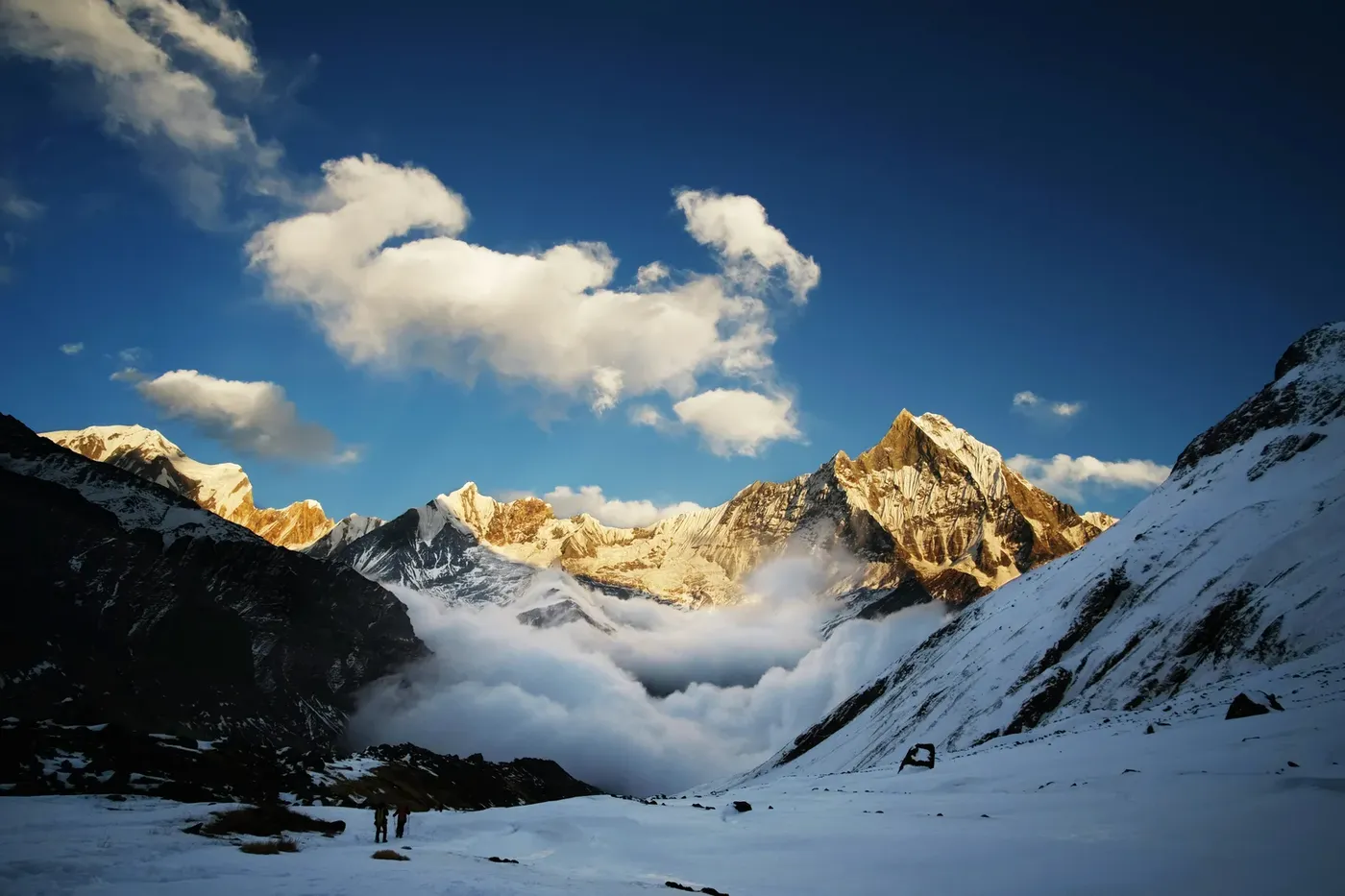
Short answer: The Pokhara to Mardi Himal helicopter price is quoted per aircraft or per seat, not as a fixed tariff, because the Mardi sector is a ridge circuit that may or may not include a landing. Our published Pokhara benchmark is the Annapurna Base Camp day tour at $860 per person on a shared flight, or $2,585 to charter the whole Airbus H125 for up to five passengers. Mardi Himal itself stands at 5,587 m, Machhapuchhre at 6,993 m, and the flight out of Pokhara runs under an hour.
Pokhara is the only sensible place to start a Mardi Himal flight. The ridge rises directly north of the valley, the trailhead is about an hour's drive from town, and the aircraft is airborne and level with the Fishtail before a Kathmandu departure would still be climbing out over the hills. That geography is also why the Pokhara to Mardi Himal helicopter price behaves differently from the Everest products: this is a short sector flown as a half-day, so what you pay is decided less by distance than by how the aircraft is filled, whether you land, and how long you keep the machine on the ground.
- 5,587 mMardi Himal summit
- 6,993 mMachhapuchhre, the Fishtail
- 80 kgManifest weight per seat
- $860Published Pokhara day-tour seat
Where the Pokhara to Mardi Himal Helicopter Price Actually Comes From
There is no published sheet of Mardi Himal fares, and any operator who hands you one without asking your date, your group size and your landing preference is guessing. What a serious quote is built from is four cost blocks, and once you can see them you can tell a fair number from an optimistic one.
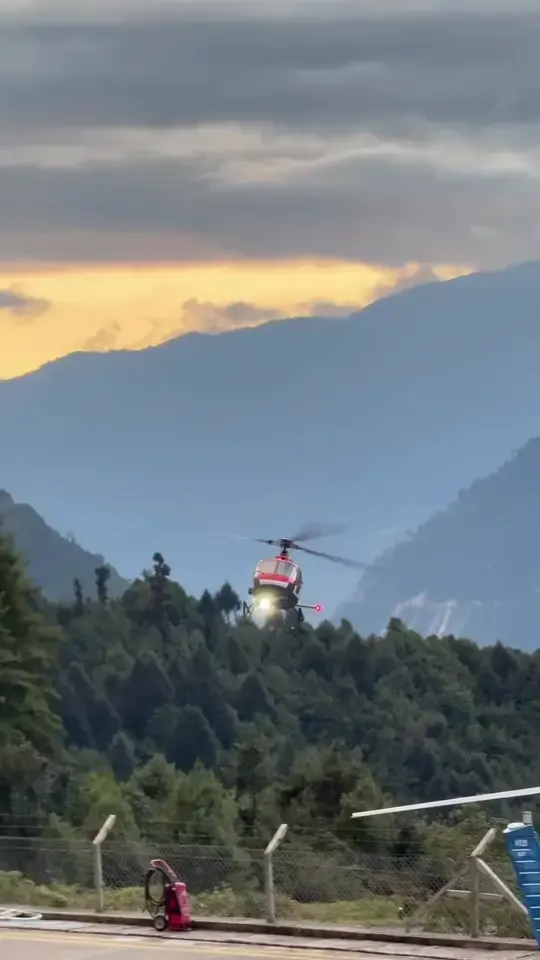
The first block is aircraft time. The machine is an Airbus H125, the AS350 B3e that is the workhorse of Nepali commercial helicopter flying, and it carries five passengers plus the pilot. It is billed by the flight block, and a Mardi circuit from Pokhara inside an hour is a short block compared with a two to three hour Annapurna Base Camp round trip. Ask explicitly whether your quote is charged on a minimum block, because a very short sector can end up billed at the same floor as a longer one.
The second block is the landing. A touchdown at a high viewpoint on the Mardi ridge means the aircraft sits on the ground with rotors turning, and every minute on the ground is a minute the machine is not earning elsewhere. Ground time is normally the single most negotiable line in a Mardi quote. The third block is permissions and handling: the Mardi ridge sits inside the Annapurna Conservation Area, so the ACAP framework applies to the region, and passengers who overfly the trekking checkpoints do not need the TIMS card that walkers carry. The fourth block is seat fill. Five seats is the capacity; a group of five pays a very different per-person figure from a solo traveller buying one seat in a shared departure.
Published Benchmarks to Hold Any Quote Against
Because we do not publish a separate Mardi tariff, the honest way to price this sector is to compare it with the products we do publish, all of which are live on the site today. The Annapurna Base Camp day tour is the closest analogue: same departure city, same aircraft, same half-day structure, landing at 4,130 m. Its published rate is $860 per person shared, or $2,585 per aircraft for up to five guests. Those two numbers are the anchors a Mardi quote should sit near, and any figure far above them needs a reason you can name.
| Published product, 2026 | Route | Price | Basis |
|---|---|---|---|
| Annapurna Base Camp day tour | Pokhara, landing 4,130 m | $860 | Per person, shared flight |
| Annapurna Base Camp private | Pokhara | $2,585 | Per aircraft, up to five guests |
| Annapurna Base Camp return trek | 6 days, helicopter out | $1,199 | Per person, shared flight |
| Muktinath one-day pilgrimage | Kathmandu, 3,710 m | $1,080 | Per person, shared flight |
| Everest Base Camp day tour | Kathmandu, landing 5,545 m | $1,260 | Per person, shared flight |
| Private Everest charter | Kathmandu | $4,500 | Per aircraft, up to five guests |
| Everest scenic mountain flight | Kathmandu, one hour | $260 | Per person, window seat |
| Fixed-wing Pokhara to Jomsom | Pokhara | $90 to $120 | Per seat, airline fare |
Read the table as a map of the market rather than a menu. The Everest scenic flight at $260 shows what a one-hour fixed-route sightseeing seat looks like when no landing is involved. The Pokhara day tour at $860 shows what a landing adds when the round trip stretches to two or three hours. Mardi sits between those two shapes: closer to Pokhara, shorter than the Base Camp circuit, and optional on the landing.
Seat Share or Whole Aircraft: Two Prices for the Same Ridge
Almost every pricing argument about the Mardi Himal helicopter tour comes down to a misunderstanding between these two products. A seat share means you buy one of five places on a departure that someone else has filled, and you accept the schedule that comes with it. A charter means you buy the aircraft, the departure time and the landing decision, and you pay for the empty seats yourself.
The arithmetic is unforgiving. Charter a five-seat machine for a couple and you are paying for three seats nobody sits in. Fill all five and the per-person figure falls towards the published day-tour seat rate. That is why solo travellers and couples are usually better off joining a shared Pokhara departure, while families, photographers and anyone who wants a specific landing or a specific hour are better off chartering and treating the empty seats as the price of control. If you are weighing the two structures on a longer route, the same logic is worked through in our guide to group joining versus a private helicopter tour.
Flight Time from Pokhara and Why the Sector Is Short
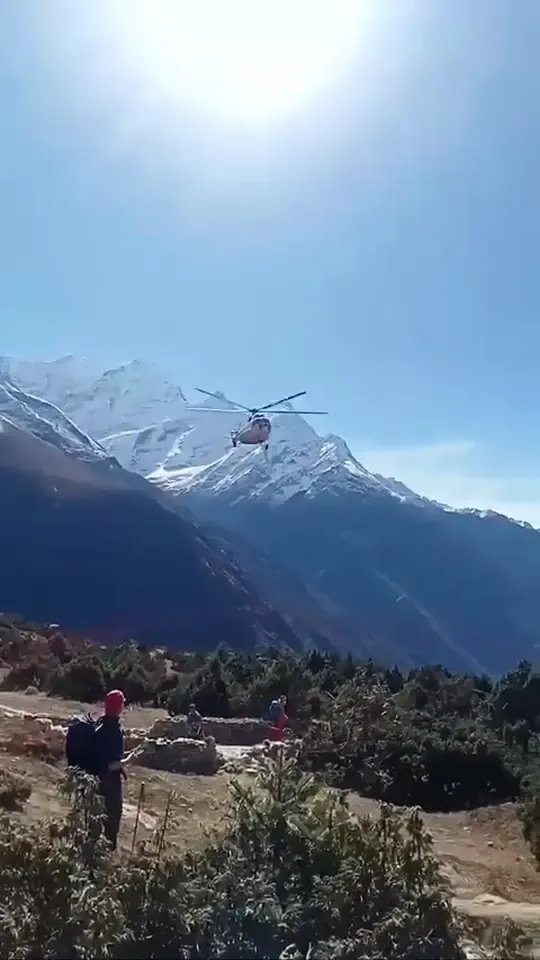
Published flight time for the Mardi circuit is under an hour out of Pokhara. In practice the airborne portion splits into three parts: the climb out of the valley, the run north along the ridge, and the circuit around the Fishtail before returning. The reason it stays short is that Pokhara sits at roughly 1,400 m and the ridge is close, so the aircraft does not spend long transiting. On an Everest product the transit alone is a substantial share of the block; here it is minutes.
That has a practical consequence for anyone comparing prices by the hour. A short sector means a higher share of the cost is fixed: crew duty, handling, the landing, the paperwork. Two operators quoting the same Mardi circuit can differ by a few hundred dollars on ground time and seat fill alone, with no difference in the flying. When you compare quotes, compare the block time, the landing allowance and the passenger count, not just the headline figure.
Landing on the Ridge: What the Touchdown Point Actually Is
The flight is usually sold with a short touchdown at a high viewpoint on the ridge, or near the Mardi Himal high camp, and that stop is weather dependent. It is worth being precise about what that means, because the photographs online can mislead. Mardi Himal's summit stands at 5,587 m. A helicopter landing in this terrain does not put you on the summit; it puts you on prepared ground at a viewpoint below it, with the Fishtail filling the sky and the Annapurna Sanctuary opening to the north.
For scale, the published Annapurna Base Camp landing is 4,130 m, and that is a sanctuary floor, not a ridge. Ridge landings are more exposed, which is why the pilot keeps the decision. If the wind is running hard across the ridgeline, the stop is dropped and the flight becomes a circuit. High-altitude winds over Nepali ridgelines can exceed 80 to 100 kilometres per hour, and no operator with a licence puts a passenger landing into that to protect a brochure promise.
| Way to see Mardi Himal from Pokhara | Time | Cost anchor | Landing |
|---|---|---|---|
| Helicopter, seat share | Under one hour airborne | Quoted against the $860 day-tour seat | Optional high viewpoint |
| Helicopter, whole aircraft | Under one hour airborne | Quoted against the $2,585 aircraft rate | Optional, pilot's call |
| Mardi Himal trek | Four to five days on the ridge | Trek package quote | On foot, at the high camp |
| Annapurna Base Camp day tour | Two to three hours round trip | $860 per person | Included, 4,130 m |
| Fixed-wing Pokhara to Jomsom | Short hop up the Kali Gandaki | $90 to $120 per seat | Airstrip, not a ridge |
The trek column is there on purpose. The ridge walk takes four or five days, starts about an hour's drive from Pokhara, and threads rhododendron forest before breaking out onto the open ridge opposite the Fishtail. It is a genuinely good trek, and the flight is not a replacement for it; the flight is what you buy when the days are not available. Our Mardi Himal helicopter tour guide walks the trek and the flight side by side if you are still deciding which one you are.
What Pushes a Mardi Himal Quote Up or Down
Five variables do almost all the work. Knowing them lets you ask for a lower number without arguing about the flying.
Seats filled. Every empty seat on a charter is paid for by someone. A group of four or five will always beat a couple on a per-person basis, and a shared departure is the cheapest way for one or two people to fly the ridge.
Ground time. Ten minutes at the viewpoint and forty minutes at the viewpoint are different products. Be explicit about how long you want on the ground, and expect the quote to move with it.
Season. October and November are the transparent months, and March to May is the strong spring window. Both are peak, both price at peak. The monsoon runs roughly June to mid-September and grounds most flights; December to February is often brilliantly clear but genuinely cold at altitude.
Weight and baggage. Our manifests work to 80 kg per seat including hand baggage. A passenger over that figure, or a photographer carrying heavy kit, changes the load calculation and sometimes the aircraft.
Add-ons. A Pokhara hotel pickup, a landing that also takes in Annapurna Base Camp, or a same-morning transfer to the airport all add. None of them are large, but they should appear as named lines, not folded into a round number.
Booking from Abroad: How to Lock a Price in US Dollars
Most of our Mardi enquiries come from outside Nepal, and the pattern is consistent: someone has three days in Pokhara between a trek and a flight home, and wants the Fishtail from the air rather than from a viewpoint in town. Booking that from Colorado or Queensland is straightforward if you insist on three things in writing.
First, a named aircraft and a named landing. A line that reads "helicopter tour, Mardi Himal" is not a specification. You want the type, the passenger count, the intended touchdown point and the airborne duration, because those are the four things that determine whether the price was fair. Second, the weather policy. Mountain flying is weather dependent by nature, and a good operator will tell you before you pay what happens if the morning is closed: rebooking the next clear day, a refund of the unflown portion, or a credit. Our published position is set out in the cancellation and weather policy guide, and it is worth reading before you compare deposits. Third, the payment path. International cards work, USD is the quoting currency for foreign travellers, and a deposit secures the slot while the balance is settled in Pokhara.
Book about a week ahead in the shoulder months and further out in October and November. If your dates are fixed and the flight is the centrepiece of the trip, build one spare morning into the itinerary; that single buffer converts a weather cancellation from a disaster into an inconvenience. Travellers weighing the ridge flight against the sanctuary landing usually end up reading both our Annapurna Base Camp cost guide and this page before deciding.
The Nepali Rate and the Indian Pilgrim Market
Nepali travellers are a large part of the Pokhara market, and they do not pay the dollar rate. Domestic seats and local departures are quoted on enquiry in Nepali rupees, and the answer is genuinely different from the published international price, so it is always worth asking. Three questions get you a usable figure: the rate in rupees, whether it is per seat or per aircraft, and what ground arrangements are included. Nepali families flying with parents to Muktinath are the core of that demand, and they are buying the temple, not the flight time.
Indian pilgrims are the other half of the same story, and the Mardi sector is not usually what they are flying. Their route is Pokhara to Muktinath, the one-day pilgrimage priced at $1,080 per person shared, landing at 3,710 m and the 108 waterspouts. Mardi appeals to a different Indian buyer: younger groups, photographers, travellers who have already done Muktinath and want the Fishtail. Our guide to helicopter tours for Indian travellers covers the documentation and the overland comparison in detail.
Pokhara or Kathmandu: Which Departure Changes the Price
Flying the Mardi ridge from Kathmandu is possible and almost always the wrong buy. You would be paying for the transit across the country before the sightseeing begins, and the ridge is a short circuit once you arrive. Kathmandu exists as a departure point for the Everest products and for the Muktinath pilgrimage; Pokhara exists for Annapurna, Mardi, Tilicho and Jomsom.
The logistics are friendlier in Pokhara as well. Pokhara International Airport opened in January 2023, about 15 to 20 minutes east of Lakeside, while the older domestic field sits five minutes from Lakeside, so a hotel pickup to a morning departure is a short ride rather than an expedition. If you are already flying into Pokhara from Kathmandu, the airline seat runs around $90 to $120 one way in 25 to 35 minutes, and the helicopter transfer on that same corridor is a separate product covered in our Kathmandu to Pokhara transfer guide.
A Realistic Half Day, From Pickup to Lunch
Mountain flying rewards early starts. The pattern most Pokhara departures follow is a dawn pickup, a short brief at the helipad, and a lift-off while the valley is still in shadow and the ridgelines are catching first light. Passengers are back in Pokhara before lunch, which is what makes the sector usable on a short trip: you can fly the ridge in the morning and still drive to Sarangkot or sit by the lake in the afternoon.
Two things about that timetable matter when you are booking. The early slot is not a marketing preference; it is when the air is most stable and the peaks least obscured. And the return time is not guaranteed, because a landing that gets dropped for wind, or a departure held for a passing front, shifts everything downstream. Plan the flight for a morning when nothing else in your day depends on it.
What the Price Does Not Cover
Travel insurance is the big one, and it should be in place before you fly: helicopter evacuation cover is a separate line on most policies, and a claim is not the moment to discover the exclusion. Tips for crew, meals in Pokhara, and any ground transport beyond the included pickup are usually outside the quote. On the permit side, passengers overflying the Annapurna checkpoints do not need the TIMS card that trekkers carry, and the ACAP framework for the conservation area is handled by the operator as part of the flight arrangements. If you are combining the flight with days on the trail, that changes, and the permit logic is set out in the helicopter permits guide.
Frequently Asked Questions
What does the Pokhara to Mardi Himal helicopter price include?
A seat or an aircraft, the pilot and crew, the landing where one is scheduled, and the permits and handling that go with the sector. It does not include travel insurance, tips, meals in Pokhara, or transport beyond the agreed pickup.
Is there a fixed Mardi Himal helicopter price per person?
No. The sector is quoted per aircraft or per seat because the landing and the ground time vary. Hold any quote against our published Pokhara benchmark: $860 per person shared, or $2,585 per aircraft for up to five guests on the Annapurna Base Camp day tour.
How long is the flight from Pokhara to Mardi Himal?
Under an hour airborne for the circuit, out of Pokhara. The climb out of the valley and the run along the ridge are short, which is why the total flying time stays inside a half day even with a landing.
Can the helicopter land on Mardi Himal itself?
No. Mardi Himal stands at 5,587 m and the flight lands at a high viewpoint below the summit, or near the high camp, weather permitting. The summit is not a landing site.
How many passengers fit in the helicopter?
The Airbus H125, the AS350 B3e used across these routes, carries five passengers plus the pilot. That five-seat limit is what drives the difference between a seat-share price and a charter price.
What is the baggage and weight limit?
Our manifests work to 80 kg per seat including hand baggage. Heavier passengers, or heavy camera kit, change the load calculation, so declare it when you book rather than at the helipad.
Do I need an ACAP permit or a TIMS card?
The Mardi ridge lies inside the Annapurna Conservation Area, and the ACAP framework applies to the region. Helicopter passengers who overfly the trekking checkpoints do not need the TIMS card that walkers carry; the operator arranges the flight permissions.
Is the Mardi flight cheaper than the Annapurna Base Camp day tour?
It should be, because the airborne time is shorter and the landing is optional. Whether it actually is depends on seat fill and ground time, which is why a written quote naming both is the only fair comparison.
Can I book from the US and pay in US dollars?
Yes. Foreign travellers are quoted in USD, a deposit secures the slot, and the balance is settled in Pokhara. Card payment is standard, and the weather policy should be confirmed in writing before the deposit is paid.
What happens if weather cancels my Mardi flight?
Mountain flying is weather dependent. The usual options are a rebooking on the next clear morning, a refund of the unflown portion, or a credit, depending on the terms you booked under. Build one spare morning into the trip.
Do Nepali nationals pay the same rate?
No. Domestic seats and local departures are quoted on enquiry in Nepali rupees and differ from the published international price. Ask for the rupee rate, the basis, and what is included on the ground.
Which season gives the best chance of a clear Fishtail view?
October and November are the most transparent months of the year, and March to May is the strong spring window with warmer air and rhododendron in bloom on the lower ridge. The monsoon runs roughly June to mid-September and grounds most flights.
Getting a Written Mardi Himal Quote
The sensible way to price this flight is to settle three things before you ask anyone for a number: how many of you are flying, whether you want the landing, and how flexible your morning is. With those decided, a quote either matches the published Pokhara benchmarks or it does not, and you can see why. Our Annapurna Base Camp helicopter day tour from Pokhara is the product we publish at $860 per person, and it remains the clearest way to fly from this city. If the ridge is what you want, ask for the Mardi sector specifically, and ask for the landing as a separate line.
For the wider picture of what else leaves this valley, including Tilicho Lake at 4,919 m and the Muktinath pilgrimage, the Annapurna and Pokhara helicopter tours hub collects every route with its published price. Mardi Himal was a footnote on the trekking map for years; the flight is the reason it is no longer one. The peak itself is described on Wikipedia for anyone who wants the climbing history before they see it from the air.