
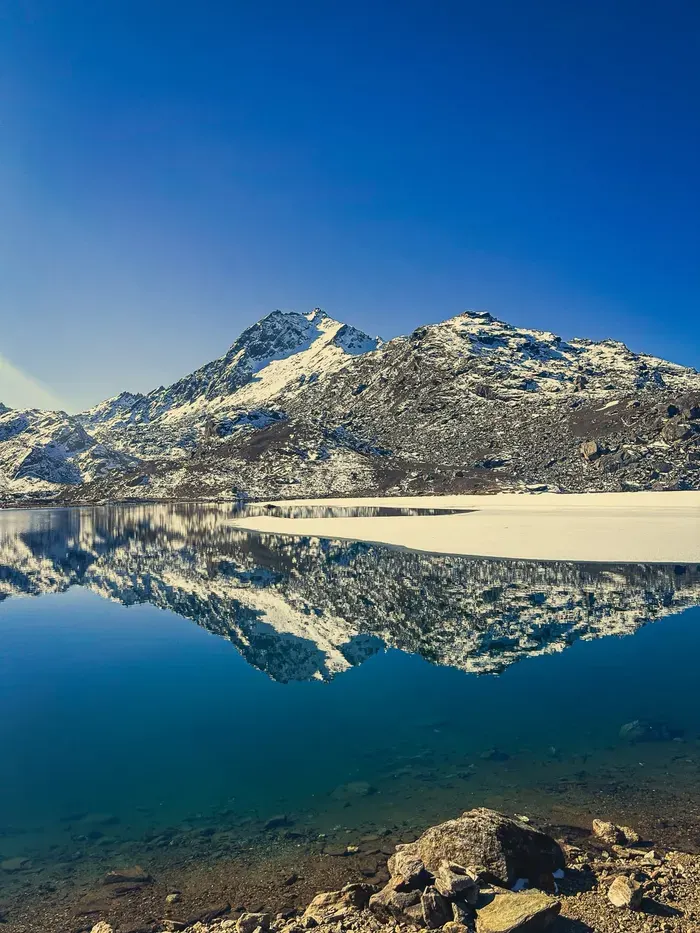
What Is Mardi Himal?
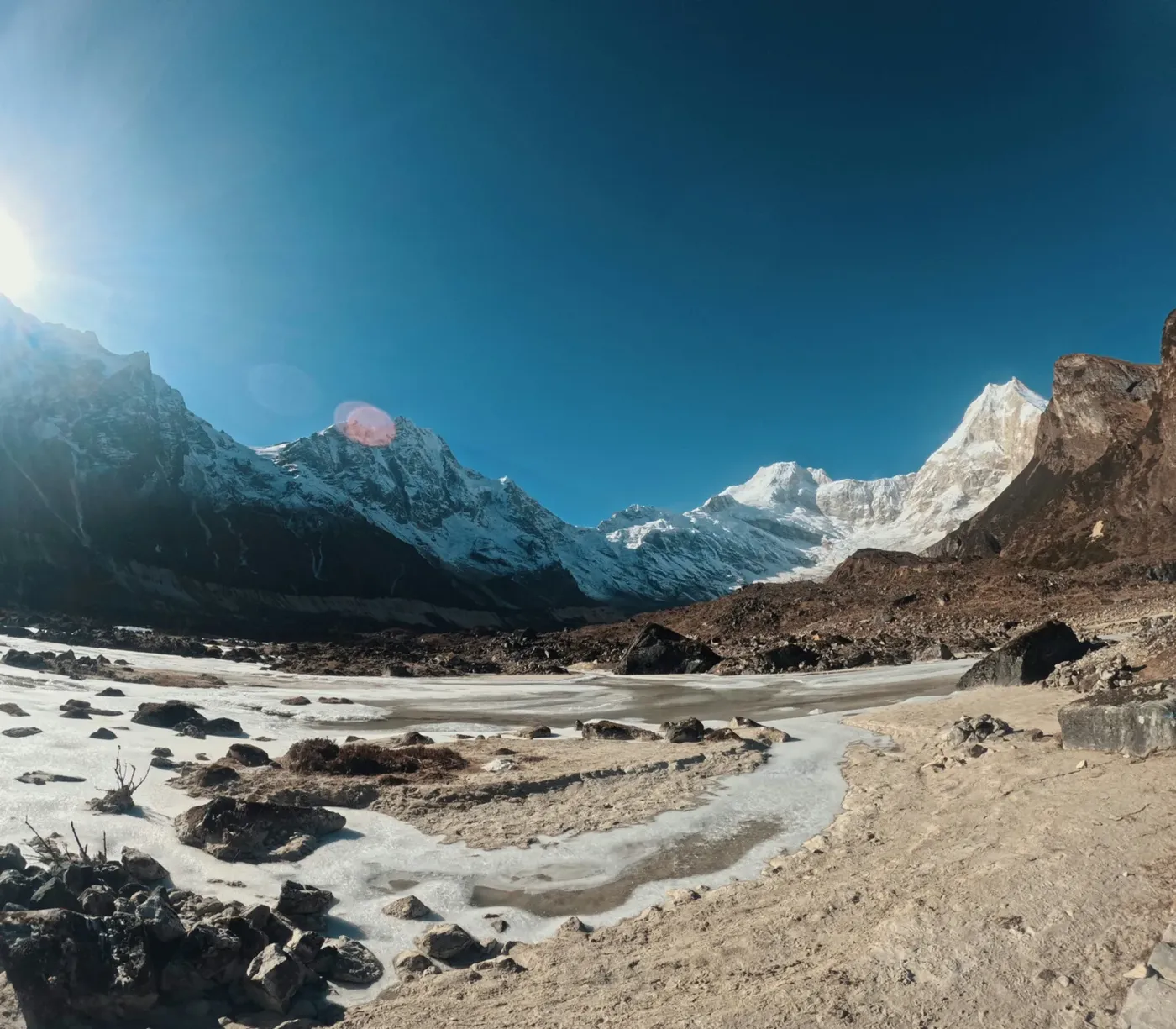
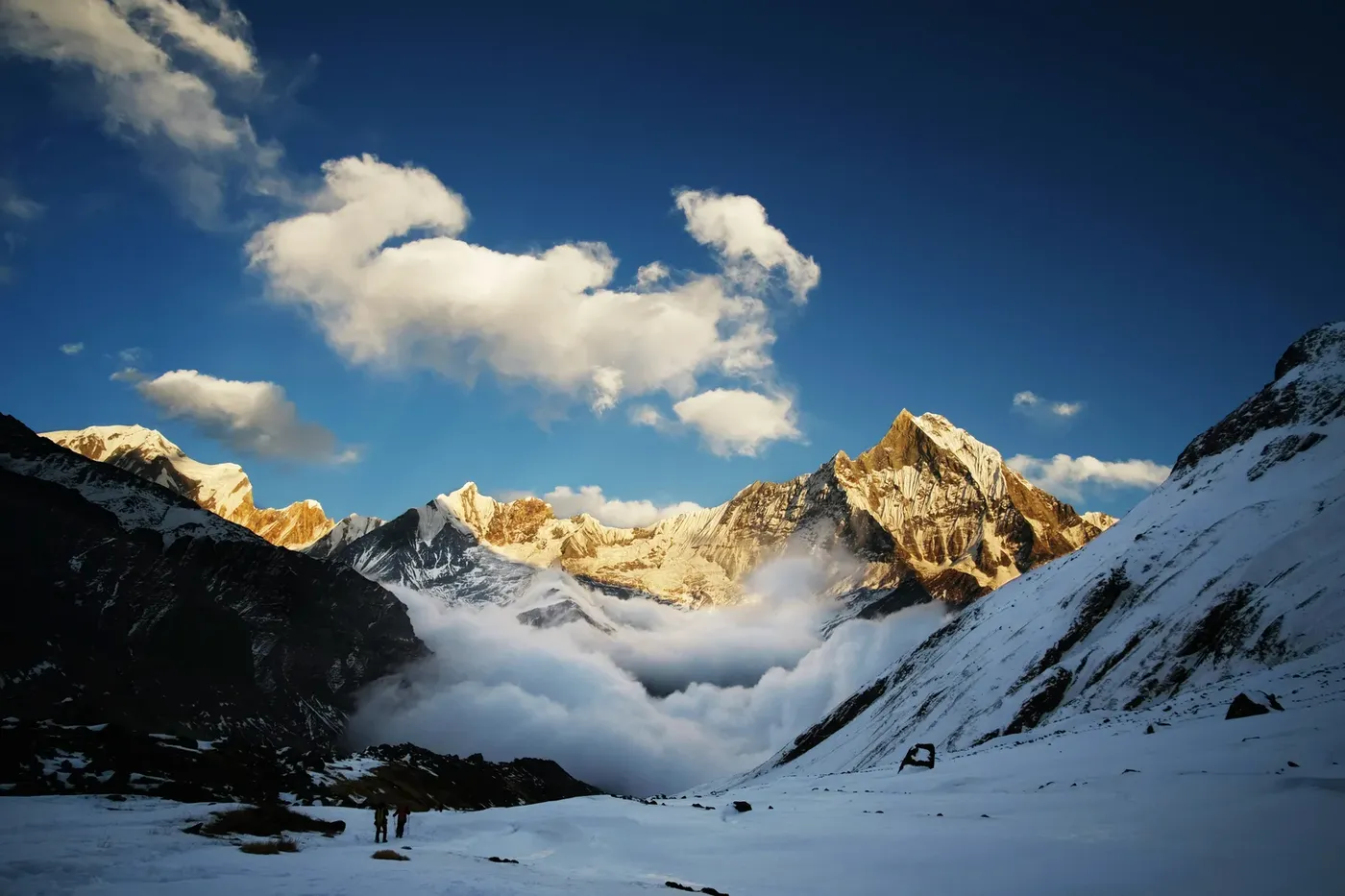
Mardi Himal is a 5,587-metre peak tucked into the Annapurna massif of central Nepal, sitting just south of the far more famous Machhapuchhre (Fishtail). For years it was a footnote on the trekking map — a name trekkers passed on the way to Annapurna Base Camp without ever really noticing. That has changed quickly. The Mardi Himal trek has become one of the fastest-growing short treks in the country, prized for the way it delivers a full Himalayan panorama in a fraction of the time the classic Annapurna routes demand.
- $860ABC day tour, per seat
- 4,130 mAnnapurna Base Camp
- 4,919 mTilicho Lake
- 3-4 hrsFlight window from Pokhara
The reason is simple: the trail climbs a long, forested ridge that rises directly opposite Machhapuchhre, so for most of the walk you are staring straight at the Fishtail's twin summits. From the upper camps and the high viewpoint above them, the view opens out to include Mardi Himal itself, Annapurna South, Hiunchuli and, on a clear morning, the whole sweep of the Annapurna Sanctuary. It is one of the most concentrated mountain views in Nepal for the effort involved.
That same geography is what makes a Mardi Himal helicopter tour so compelling. Where trekkers spend four or five days climbing the ridge, a helicopter covers the same ground in under an hour, and it does so from an angle no footpath can offer — flying level with the summit, banking around the Fishtail, and hovering over the rhododendron forest that blankets the lower slopes. For travellers short on time, or anyone who wants the Mardi Himal experience without the multi-day commitment, the flight is the natural alternative.
Why the Mardi Himal Trek Has Taken Off
It is worth understanding the trek's popularity, because it explains the demand for the flight. The Mardi Himal route is short enough to fit into a long weekend, it starts barely an hour's drive from Pokhara, and it does not require the permits, altitude acclimatisation or logistical planning that the Annapurna Circuit or even the full Base Camp trek involve. Teahouses now line the route, so trekkers can walk light and sleep in comfort rather than carrying tents.
The payoff is the Machhapuchhre view. Because the ridge runs parallel to the Fishtail rather than towards it, the mountain stays in front of you for almost the entire trek — a rare thing in the Himalaya, where most routes only reveal their headline peak in the final hour. Photographers and first-time trekkers have flocked to it for exactly this reason, and the route's reputation has spread quickly through word of mouth and social media.
A helicopter tour captures all of that in a single morning. You get the same Fishtail view, the same ridge, and the same forest — but from above, and without the four days of uphill. For many visitors, that is the deciding factor.
The Helicopter Route: From Pokhara or Kathmandu
Most Mardi Himal helicopter flights depart from Pokhara, which is the logical gateway to the Annapurna region and sits far closer to the mountain than the capital. A typical Pokhara departure climbs north over the Seti River valley, crosses the lower foothills, and then follows the Mardi Khola drainage up towards the ridge. The pilot gains altitude steadily, keeping the forested slopes in view, before levelling out to circle the Mardi Himal high camp and the viewpoint above it.
From there the flight turns towards Machhapuchhre, giving passengers a close, eye-level view of the Fishtail's distinctive double peak, before swinging south again to trace the ridge back down. Depending on the package, the helicopter may land briefly at a high viewpoint or simply perform a slow scenic circuit before returning to Pokhara. Total flying time is typically under an hour, which makes the whole experience — hotel pickup to drop-off — comfortably achievable in a single morning or afternoon.
For travellers based in Kathmandu, the flight is longer and usually structured differently. A Kathmandu departure either flies directly west towards the Annapurna range, or pairs the Mardi Himal circuit with a broader Annapurna scenic flight. Because the distance is greater, these departures cost more and burn more fuel, and they are generally offered as a private charter rather than a shared seat. If your priority is the Mardi Himal view specifically, starting from Pokhara is almost always the more efficient and economical choice.
Where the Flight Can Land
Not every Mardi Himal flight includes a landing, and it is worth clarifying this when you book. Some operators offer a short touchdown at a high viewpoint or near the Mardi Himal high camp, where passengers can step out for a few minutes of photographs before reboarding. Others keep the aircraft airborne for the entire circuit. Landings at altitude are weather-dependent and add to the cost, so a "scenic only" flight and a "landing" flight are genuinely different products. Ask which one you are buying.
What You See on a Mardi Himal Helicopter Tour
The flight is short, but it packs an unusual amount of variety into that time. These are the highlights, roughly in the order you will encounter them on a Pokhara departure.
Mardi Himal Itself
The peak that gives the tour its name is a sharp, rocky summit that rises at the head of the Mardi Khola valley. From the air it appears as a dramatic fin of rock and ice, and because the helicopter can climb to its altitude, you see it close up rather than as a distant white triangle. It is the mountain most trekkers on the route never actually reach — the standard trek stops at the viewpoint below the summit — so the flight offers a perspective even many trekkers miss.
Machhapuchhre (Fishtail)
Machhapuchhre, at 6,993 metres, is the star of the show. Its twin summits and the sharp notch between them give it the fishtail shape that makes it one of the most recognisable mountains in Nepal. It is also a sacred peak that has never been officially summited, which adds to its mystique. From the helicopter you circle it at close range, seeing the full profile that the trek only ever shows you from one side.
Annapurna South and the Sanctuary
Beyond Machhapuchhre, the view opens into the Annapurna Sanctuary, the great amphitheatre of peaks that includes Annapurna South (7,219 metres), Hiunchuli and the Annapurna I massif. On a clear day the helicopter can position you to see the whole bowl at once — a panorama that normally requires trekking all the way to Annapurna Base Camp to witness.
The Rhododendron Forests
The lower half of the Mardi Himal ridge is covered in dense rhododendron and oak forest, and in spring (roughly March to April) the rhododendrons bloom in red, pink and white. From the air the forest reads as a patchwork of colour across the hillsides, and it is one of the few things a helicopter tour shows you that the high-altitude trek largely leaves behind. If you can time your flight for the bloom, the lower section of the route is transformed.
How Much Does a Mardi Himal Helicopter Tour Cost?
We deliberately do not quote a single price here, because helicopter tour pricing in Nepal moves with fuel costs, the season, the exchange rate and whether you are booking a shared seat or a private charter. What we can do is explain the factors that determine the figure, and point you to the guides that break the numbers down properly.
The single biggest variable is shared versus private. A shared flight spreads the cost of the helicopter across a group of passengers, which brings the per-person price down considerably but means you fly on the operator's schedule and share the cabin. A private charter gives you the aircraft to yourself — you choose the departure time, the route and whether to land — at a meaningfully higher cost. Our guide to group joining versus private helicopter tours walks through the trade-offs in detail.
The second variable is departure point. A Pokhara departure is shorter and cheaper than a Kathmandu one, for the simple reason that the helicopter burns less fuel. The third is whether the flight lands, since a high-altitude touchdown adds time and complexity. The fourth is season, with peak-season demand pushing prices up.
For a concrete sense of what a comparable Annapurna flight costs — the Mardi Himal flight sits in the same region and price band — see our detailed breakdown of the Annapurna Base Camp helicopter tour cost. The same cost logic applies: shared seats are the budget option, private charters are the premium one, and the final figure always depends on the specifics of your booking.
Best Time to Fly
Mardi Himal flights run year-round in principle, but the experience varies enormously with the season, and the weather is the deciding factor. The clearest, most reliable flying conditions fall in the autumn (October to November) and spring (March to May), when the air is dry and the mountains stand out sharply against a blue sky. Spring has the added bonus of the rhododendron bloom on the lower slopes.
The monsoon months (roughly June to September) bring cloud, rain and poor visibility, and while flights still operate on clear breaks, you are gambling on the weather. Winter (December to February) can be spectacularly clear but cold, and high winds occasionally ground flights at short notice. We have written a full guide to the best time for a helicopter tour in Nepal that covers the seasonal trade-offs in more depth — it is worth reading before you lock in a date.
How to Book a Mardi Himal Helicopter Tour
Booking is straightforward, but a few decisions are worth making before you contact an operator. First, decide whether you want a shared seat or a private charter, and whether you want a landing. Second, decide your departure point — Pokhara is the sensible default for this particular flight. Third, have a rough date window in mind, and be prepared to be flexible, since mountain weather can shift a departure by a day.
When you are ready, book through a licensed operator rather than an unvetted middleman. A reputable company will confirm the aircraft type, the exact route, whether a landing is included, the cancellation and weather policy, and what insurance covers. Our step-by-step guide to how to book a helicopter tour in Nepal explains the whole process, including what to check before you pay.
If you are weighing the Mardi Himal flight against a longer Annapurna experience, note that we also run a combined Annapurna helicopter return trek, which pairs a trek up with a helicopter flight back down — a popular way to get the best of both worlds.
Mardi Himal vs Annapurna Base Camp Helicopter Tours
These two flights are often compared, because they cover neighbouring ground and appeal to similar travellers. The table below summarises the key differences.
| Factor | Mardi Himal Helicopter Tour | Annapurna Base Camp Helicopter Tour |
|---|---|---|
| Main highlight | Machhapuchhre (Fishtail) and the Mardi Himal ridge | The Annapurna Sanctuary amphitheatre and Annapurna I |
| Typical departure | Pokhara (short flight) | Pokhara (most common) |
| Flight duration | Under an hour, circuit-style | Longer, often with a landing at Base Camp |
| Landing | Optional, at a high viewpoint | Usually included, at Annapurna Base Camp (4,130 m) |
| Forest scenery | Rhododendron forest prominent on lower slopes | Less forest, more high-alpine terrain |
| Best for | Short trips, Fishtail views, first-time flyers | Those wanting the full Sanctuary panorama and a Base Camp landing |
| Cost guide | See the Annapurna cost guide for the regional price band | Detailed in the Annapurna Base Camp cost guide |
The short version: choose Mardi Himal if your priority is the Fishtail and a quick, forest-framed flight; choose Annapurna Base Camp if you want the full Sanctuary panorama and a landing at the foot of Annapurna I. Many visitors do both on separate days, since they depart from the same city.
Who a Mardi Himal Flight Suits Best
The Mardi Himal helicopter tour is not a one-size-fits-all product, and knowing who it is for will help you decide whether it is the right choice for your trip. It suits travellers on a tight schedule who still want a genuine Himalayan mountain experience — people passing through Pokhara for a day or two who would otherwise miss the Annapurna range entirely. It suits photographers, because the close, circling view of Machhapuchhre is hard to replicate from any trekking trail. And it suits anyone who is curious about the mountains but not prepared for the physical demands or time commitment of a multi-day trek.
It is also a strong option for families and older travellers, since there is no altitude exposure, no fitness requirement and no rough terrain to negotiate. The whole experience is seated, guided and over within a couple of hours, which makes it one of the most accessible ways to see the high Himalaya up close.
What it is not is a substitute for the trek, if the trek itself is what you are after. Walking the Mardi Himal ridge over several days, sleeping in teahouses and watching the Fishtail change with the light is a different experience from seeing it from a helicopter window. Plenty of visitors do both — flying for the overview, then trekking for the immersion — and the two complement each other well. If that combination appeals, our Annapurna helicopter return trek is designed around exactly that idea.
For reference, the Annapurna Massif is the authoritative background on this feature. Handy background; your pilot will cover the operational side.
Worth reading alongside this guide: Annapurna Base Camp Helicopter Day Tour from Pokhara: Price &…, Annapurna Base Camp Helicopter Tour: Cost, Options & How to…, and Helicopter Tours from Pokhara 2026: Everest, Annapurna &….
Frequently Asked Questions
How long is a Mardi Himal helicopter tour?
From Pokhara, the flying time is typically under an hour, with the whole experience — pickup, briefing and flight — fitting into a single morning or afternoon. Kathmandu departures are longer because of the greater distance.
Can the helicopter land on Mardi Himal?
Helicopters do not land on the summit of Mardi Himal itself. Some packages include a short touchdown at a high viewpoint or near the high camp, but this is optional and weather-dependent. Confirm with your operator whether a landing is included.
Is the Mardi Himal helicopter tour safe?
Yes, when flown by a licensed operator using well-maintained aircraft and experienced mountain pilots. Nepal's helicopter operators are regulated, and reputable companies carry proper insurance. We cover the safety and insurance questions in our guide to helicopter tour safety and insurance in Nepal.
Do I need to be fit or acclimatised?
No. Because the flight climbs and descends quickly, there is no meaningful altitude exposure and no fitness requirement. This is one of the main reasons travellers choose the flight over the multi-day trek.
What should I wear?
Layers, and a warm outer layer even in summer — it is cold at altitude, and you may step out at a high viewpoint. We have a full packing list for Nepal helicopter tours if you want the detail.
Can I combine Mardi Himal with other flights?
Yes. Many operators will combine a Mardi Himal circuit with a broader Annapurna scenic flight, or pair it with a trek. If you want to trek up and fly back, see our Annapurna helicopter return trek.
What happens if the weather is bad?
Flights are weather-dependent, and a reputable operator will reschedule rather than fly in poor conditions. Check the cancellation and weather policy before you book — this is one of the most important things to confirm, and our booking guide explains what to look for.
Ready to See the Fishtail Up Close?
A Mardi Himal helicopter tour is one of the most efficient ways in Nepal to get face-to-face with Machhapuchhre, and it suits travellers who want the drama of the Annapurna range without the days of trekking. Whether you are planning a short Pokhara stopover or building a longer Himalayan itinerary, we can arrange the flight, the landing and the timing to match your plans. Get in touch with our team to discuss dates and options, or browse our full range of helicopter tours to see how a Mardi Himal flight fits alongside Everest, Annapurna and the rest of our routes.