

Short answer: A Pokhara to Jomsom helicopter is a short mountain sector flown up the Kali Gandaki valley at first light, and it is not sold as a shelf-priced seat. With no published per-seat fare on that sector, the price is quoted per aircraft for your date, your group size and the waiting time on the ground. The published figures on this site are the anchors to hold any quote against: $1,080 per person for the one-day Muktinath pilgrimage that flies the same corridor from Kathmandu, $860 per person for the Annapurna Base Camp day tour that departs Pokhara, and roughly $90 to $120 for a fixed-wing Pokhara to Jomsom seat booked directly. The helicopter becomes the sensible buy when four or five passengers split the machine, or when the airstrip has closed on the morning you need it.
- $1,080One-day Muktinath pilgrimage, per person shared
- 3,710 mMuktinath temple, the landing above Jomsom
- $860Annapurna Base Camp day tour, per person from Pokhara
- 8,167 mDhaulagiri, the western wall of the valley
Jomsom is reached by air from two directions, and the two directions produce very different prices. From Kathmandu it is the long western leg, roughly 90 minutes each way on the published day tour. From Pokhara it is a short sector up a valley the aircraft is already inside. Because the second version is short, travellers assume it must be cheap per seat, and because it is short, no operator sells it that way. Almost every search for a Pokhara to Jomsom helicopter price ends with a number that was quoted for somebody else: a couple asking about a shared seat, a family of five asking about the whole machine, or a travel desk quoting the fixed-wing fare at the airstrip.
This guide separates those cases. It gives the anchors that are actually published, explains what the person on the other end of the phone is counting when they build the quote, and sets out the two markets that buy this sector for completely different reasons: international travellers booking months ahead in dollars, and Nepali and Indian pilgrims flying the same valley on a domestic rate, often on a Tuesday morning with their parents.
Three buyers, three different numbers
The first buyer is on foot. They are finishing the Annapurna Circuit, or walking down the Kali Gandaki from Kagbeni, and their itinerary has run out of days before it has run out of valley. They do not want a tour, a temple visit or a briefing. They want an aircraft at the airstrip tomorrow morning that takes four people and their duffels out of the wind. That request has a price, and it is a positioning and aircraft-hour price, not a seat price.
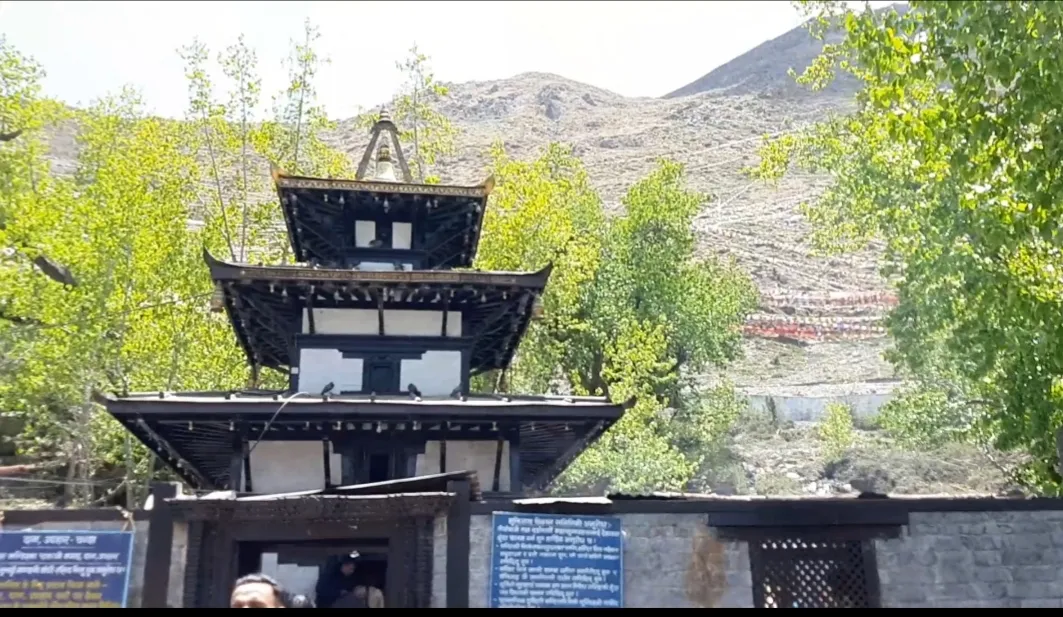
The second buyer is a pilgrim. Muktinath is one of the most important shrines in the Himalaya, sacred to Hindus as a temple of Vishnu and to Buddhists as Chumig Gyatsa, and a large share of the morning manifest on this corridor is Nepali and Indian families travelling with elderly parents who cannot do two to four days of rough road. They usually want the temple rather than the airstrip, and they want it done in a morning. For them the full pilgrimage product is the right purchase, and the price question is really a question about what is included on the ground.
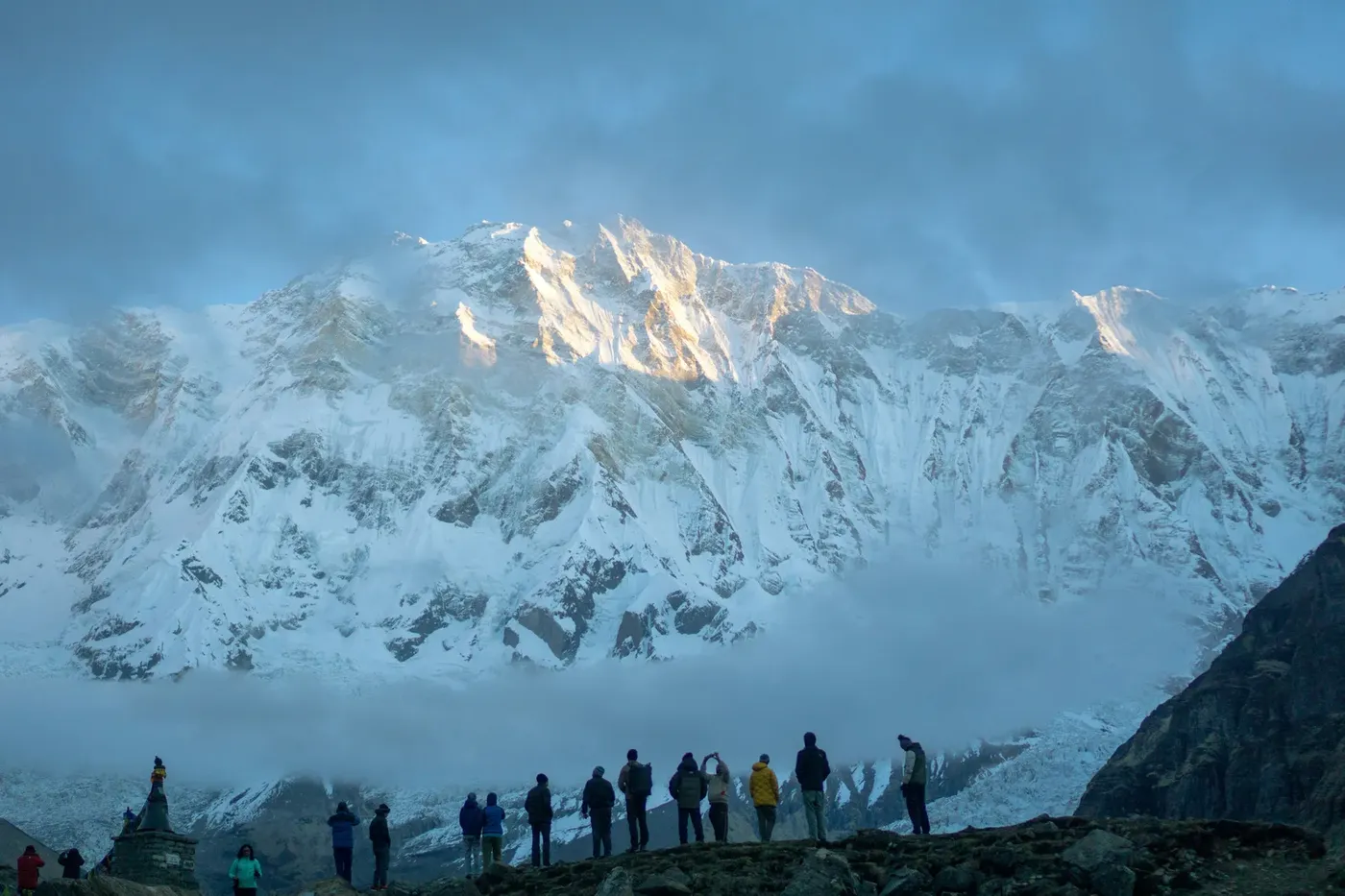
The third buyer is in Pokhara with two clear days and a camera. They have seen the photographs of the Kali Gandaki, the deepest gorge on earth, with Dhaulagiri at 8,167 m on the western wall and the Annapurna massif along the eastern one, and they have worked out that the only way to see it properly in the time available is from the air. For them the flight is the excursion. That is the brief where a whole-aircraft price makes the most sense, because the machine is being bought for the view rather than for the transport.
What the Pokhara to Jomsom sector actually is
Pokhara sits in a basin at the foot of the Annapurna range, which is why it is the launch point for so much of what happens in this part of Nepal. A helicopter transfer from Kathmandu to Pokhara covers that 200 kilometre corridor in 35 to 40 minutes in an Airbus H125, an aircraft that carries four to five passengers plus bags. Once the machine is in Pokhara the geography changes completely: the Kali Gandaki runs north out of the Pokhara valley into the mountains, and Jomsom sits on its floor, below the temple at Muktinath.
That matters for the price in two ways. First, the aircraft is already on the correct side of the Himalaya, so the sector is a climb up one valley rather than a traverse along the whole mountain front. Second, the weather window is narrower than people expect, because a valley that runs north between two 8,000 m walls behaves like a chimney once the sun is on it. Every departure on this line in the published day tour is between 6:00 and 7:00 in the morning, and the return is scheduled for early afternoon, because the window is a morning window.
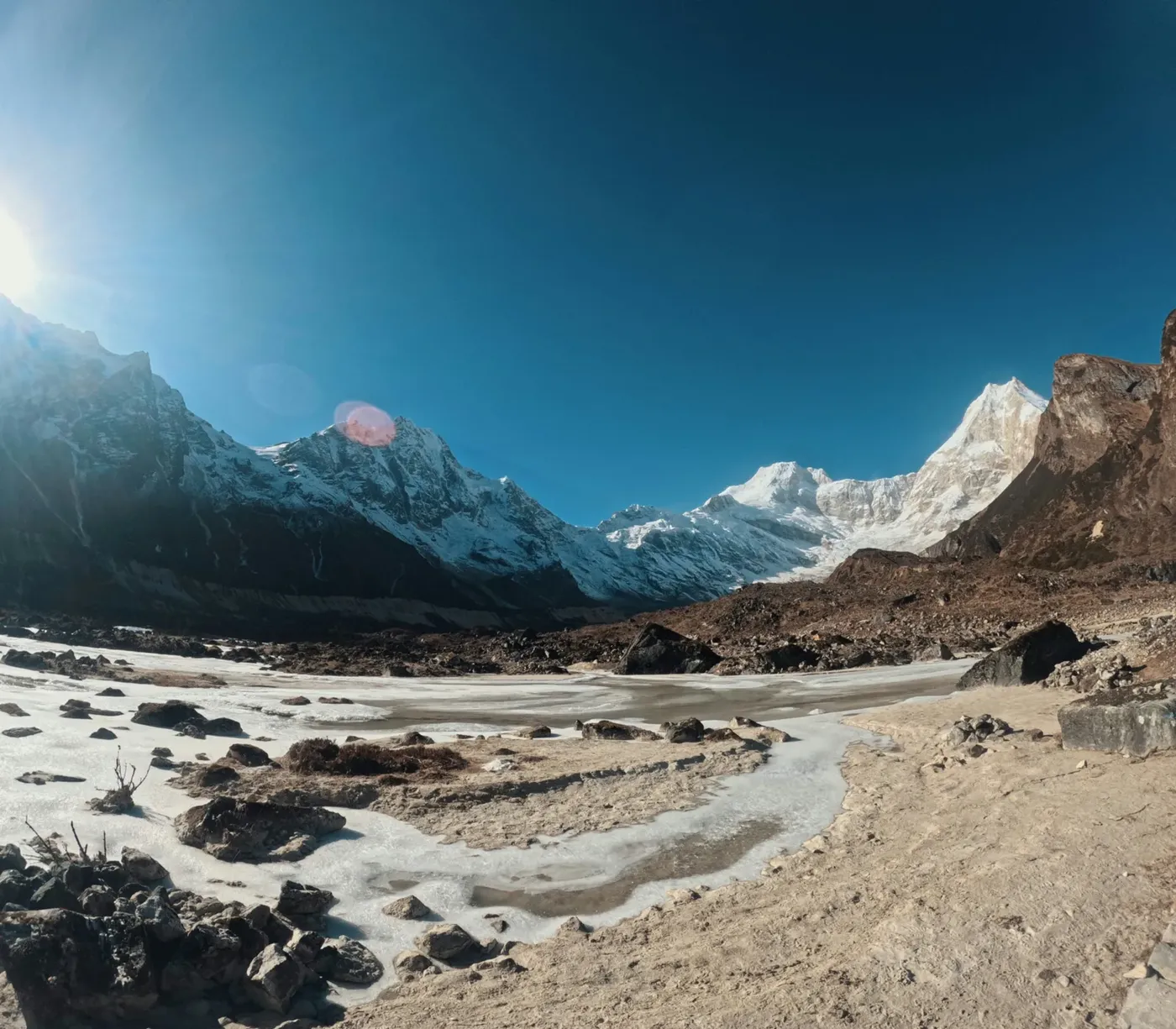
The valley itself is the reason people book it. The Kali Gandaki Gorge separates Dhaulagiri from the Annapurnas, and it is the deepest gorge on earth: the river at the bottom, 8,000 m peaks on both walls, and a wind system that funnels up the valley every day as the sun heats the ground. Entering it low and following the gravel riverbed and the terraced side valleys north is what the last part of the flight looks like out of the window, and it is nothing like the Everest sector most visitors book first.
Landing at Jomsom puts you at the administrative town of Mustang: an airstrip, a row of lodges, apple orchards, and the beginning of the dry Trans-Himalayan landscape that runs north towards Kagbeni. Continuing up the valley for the last stretch puts you at the helipad beside Ranipauwa, the village below the temple at 3,710 m. Those are two different landings on the same line, and they are priced differently because they are two different flights. A Jomsom drop is a transport job. The temple circuit is a package with a ground segment, a walking or jeep transfer to the complex, and a fixed wait at altitude.
Why there is no published per-seat price
A helicopter is priced by the aircraft hour, not by the passenger. When you buy a seat on the published one-day Muktinath pilgrimage at $1,080 per person, you are buying a share of a flight that is going anyway, on a date the operator has scheduled, with other passengers filling the other seats. When you ask for Pokhara to Jomsom and nothing else, you are asking for an aircraft that has to be positioned, flown up the valley, landed, waited with, and flown back. That cost does not divide by five unless there are five of you.
The honest position, and the one this site takes on the Kathmandu version of the same question, is that a sector with no scheduled seat has no published seat price. Inventing a clean number for a search engine would be easy and would be wrong on the day you called. What can be published is published: the full pilgrimage products, the fixed-wing fare, the road cost, and the published guidance that a Pokhara departure is usually quoted slightly below the Kathmandu price, because the aircraft is already on the northern side of the range.
So the useful question is not what a Pokhara to Jomsom helicopter costs in the abstract, but which of the published products your trip is closest to. The table below sets the options side by side, with the price basis for each one named rather than averaged.
| Option from Pokhara | What it covers | Published price | Price basis |
|---|---|---|---|
| One-day Muktinath pilgrimage, departing Pokhara | Flight up the valley, temple circuit, ground transfer to Ranipauwa, return the same morning | Quoted for your date; published guidance is that it is often slightly less than the $1,080 Kathmandu price | Per aircraft or per seat, on enquiry |
| One-day Muktinath pilgrimage, from Kathmandu | About 90 minutes each way, two to three hours on the ground, the 108 spouts and the flame | $1,080 | Per person, shared flight |
| Jomsom landing only, from Pokhara | The airstrip or helipad and nothing else: no temple segment, no ground tour | Quoted per aircraft | Positioning, waiting time and the empty return leg are all inside the number |
| Private aircraft, up to five guests | The whole machine and your own timing, including a photography stop if the pilot agrees | Quoted per aircraft | Often competitive per person once split five ways |
| Scheduled fixed-wing flight to Jomsom | An airline seat into the airstrip, subject to mountain weather | Roughly $90 to $120 | Per seat, booked directly with the airline |
| Road via Pokhara and Beni | Jeep on unpaved Kali Gandaki roads, riverbed crossings, landslide risk | $400 to $800 | Per person, part of the overland cost to Muktinath, two to four days |
Six things that move your quote
Every operator on this corridor works from the same handful of variables. Ask about each one by name, in the first email, and the quote stops being a mystery.
Aircraft hours. A quote is built from block time, out and back, plus the time the machine spends on the ground with the rotors stopped or turning. The published flight time for the Kathmandu day tour is about 90 minutes each way; from Pokhara the airborne time is a fraction of that, but the aircraft still has to be committed for the morning, and that commitment is what you are paying for. Ask whether the quote is for one aircraft or for a share of one.
Where the machine sleeps. A helicopter based in Pokhara is at the right end of the valley at dawn. A machine that has to be ferried in from Kathmandu the evening before, or at five in the morning, carries a positioning cost that has to land somewhere, and it lands on the passenger who did not ask. This is the single most common reason two quotes for the same sector differ by several hundred dollars.
Waiting time on the ground. Sitting at altitude with the aircraft and crew is billed time. A twenty minute stop for photographs and a two hour temple visit are not remotely the same purchase. Published day tours build in a fixed ground segment, usually one and a half to two hours at the temple, which is why they can quote per seat and a custom stop cannot.
The ground segment. At Muktinath the aircraft lands at the helipad beside Ranipauwa, from where it is a short walk of about ten minutes up to the complex, or a jeep shuttle that shortens it further. The jeep, the local guide and the temple protocol are separate line items in this market. A low quote that excludes them is not a low quote.
Permits and conservation charges. Jomsom sits inside the Annapurna conservation area, so a conservation charge applies to the flight, and the operator normally files it with the manifest. Paperwork does not disappear because you flew over the checkpost, and the guide to helicopter flight permits in Nepal sets out what is filed and by whom.
Group size and the empty seat. Four passengers in a five seat cabin means one seat is being flown empty, and somebody pays for it. Five passengers means nobody does. This is the arithmetic that decides whether a private charter is expensive or reasonable, and it is entirely under your control if your dates are flexible enough to find another couple.
| What changes | Why it changes the number | What to ask before you pay |
|---|---|---|
| Aircraft base | A machine ferried in from Kathmandu carries a positioning cost | Is the aircraft based in Pokhara on the morning of my flight? |
| Time on the ground | Rotors stopped or crew waiting is billed time | How many minutes at Jomsom or at the temple are inside this quote? |
| Ground transfer at Muktinath | Jeep shuttle and local guide are separate line items | Does the price include the transfer from the helipad to Ranipauwa? |
| Permits | The conservation charge applies to the flight, not to a seat | Is the conservation charge in the quote or added at the helipad? |
| Seats filled | An empty seat in a five seat cabin is still flown | Is this a shared departure I can join, or a private charter? |
| Season and notice | Clear-season dates on shared flights sell out first | What is the latest date I can move to if the valley closes? |
The per-seat math, done honestly
Take a group of five and the arithmetic becomes obvious. A private aircraft quoted for the morning, split five ways, frequently lands within reach of the per-seat price of a scheduled shared departure, and it buys three things a seat does not: your own departure time, your own ground time, and the ability to stop where the light is good. Groups of four should ask for both numbers, because the gap is smaller than they expect. Couples should not pretend otherwise: two people buying a whole machine are paying for four empty seats, and the published shared products exist precisely so that two people do not have to.
The same logic runs through the rest of the catalogue on this site. A private Everest charter of the whole aircraft, up to five guests, is published at $4,500, which is a different purchase from the $860 Annapurna Base Camp day tour sold per person out of Pokhara, and both are honest prices for what they are. The mistake is comparing a per-aircraft number with a per-seat number and concluding that one operator is cheating you. They are quoting two different products, and the only fair comparison is at the same group size.
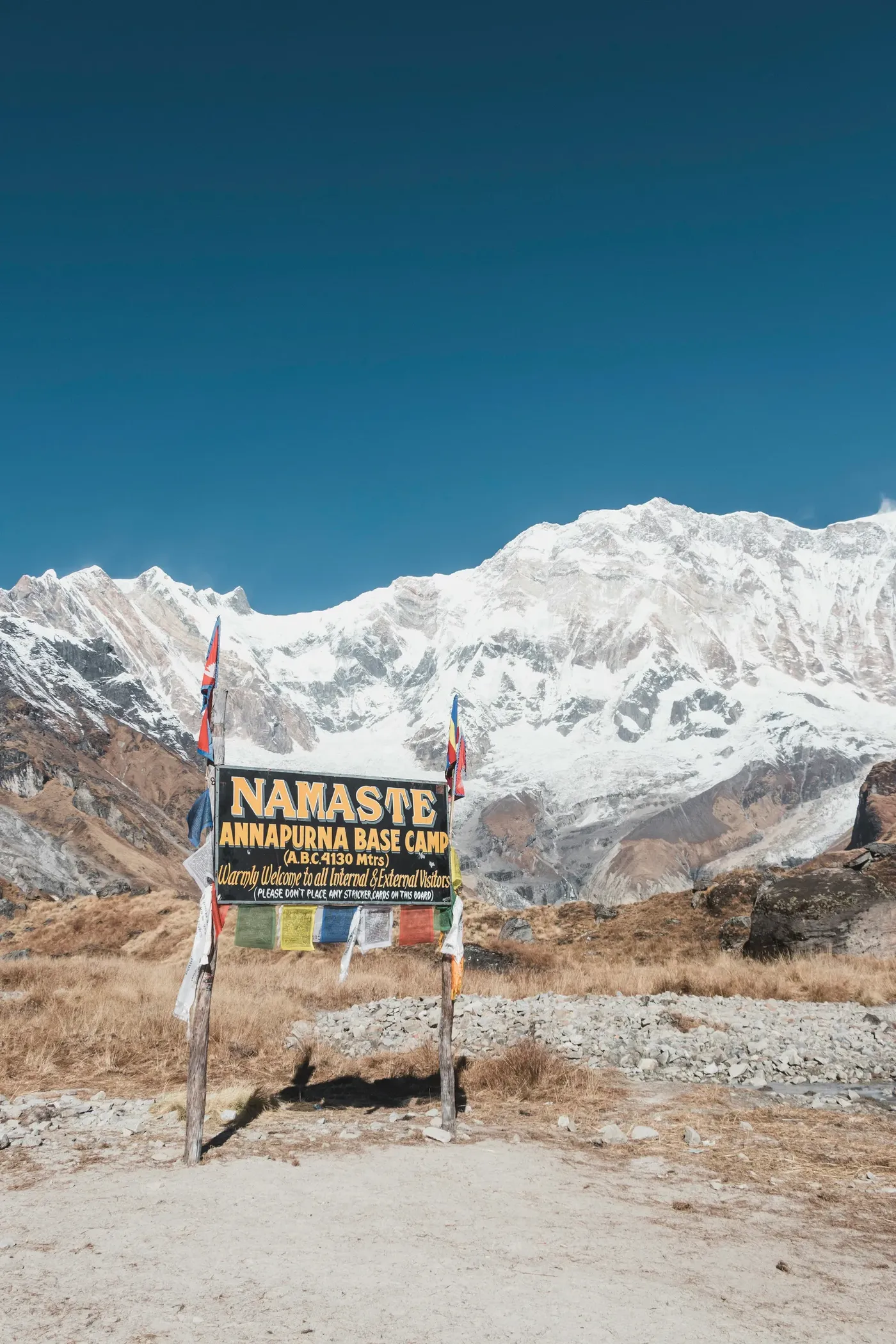
If your goal is the base camp itself rather than the valley, the Annapurna Base Camp helicopter day tour from Pokhara is the published product to book: $860 per person on a shared flight, landing at 4,130 m, roughly three to four hours out of Pokhara. It is the closest thing this region has to a fixed-price helicopter morning, and it is worth knowing its shape before you ask for a custom Jomsom quote, because it shows you what a scheduled departure buys.
Booking it from the United States or Europe
This is a morning flight sold months in advance to people in another time zone, and almost all of the friction in booking it comes from that, not from the flying. Four things make the difference.
Start with the season, because it decides everything else. The clear windows are October to November, when the monsoon has just scrubbed the air and visibility is at its best for the year, and March to May, which is warmer, greener and a close second. The monsoon runs roughly June to mid-September and grounds most flights; December to February is brilliantly clear and properly cold. If your dates are fixed by a wedding, a school holiday or a work calendar, book the flight anyway, but build a buffer day into the itinerary, because no operator in Nepal can promise a specific morning in advance.
Pay in dollars against a written quote. The quote should name the aircraft, the departure point, the landing point, the number of passengers, the ground arrangements and whether your date is a shared departure or a private charter. If it names a price and nothing else, you have not been quoted, you have been given a number. Ask for it in writing, in USD, and ask what happens to the money if the valley closes.
Book a week out at minimum, longer in the clear seasons, because the good dates on shared flights fill first, and the October window is the busiest month of the year on this corridor. Send passport details for every passenger when you book rather than at the airport: manifests are filed in advance, and a missing passport number at six in the morning is a delay nobody needs.
Take the altitude seriously. The temple lands at 3,710 m, which is higher than most ski resorts and higher than anything in the Alps, and if you have flown in from sea level the day before, that is worth treating as a real consideration rather than a formality. The published guidance for the day tour is to move slowly, stay hydrated, and declare any heart or respiratory condition when booking; the operators carry oxygen. A Jomsom-only landing sits lower than the temple, which is one quiet argument in its favour for a passenger who is unsure how they will handle the height.
The other time zone problem is communication. Nepali operators answer email in the morning, which is the middle of the night in Colorado or Berlin, so a two day turnaround per question is normal and three questions can eat a week. Put every question in one email, with your dates, group size and the landing you actually want, and you will get a usable quote back in one exchange instead of five.
The Nepali rate, and the Indian pilgrim market
This corridor is not only an international product, and writing about it as if it were would be dishonest. On a typical October morning the manifest is more likely to be a Nepali family from Butwal or an Indian group from Chennai than a couple from Colorado, and they are not paying the dollar rate.
For Nepali travellers the domestic market has its own pricing conventions. The published one-day pilgrimage is quoted at $1,080 per person for the international product; domestic seats and local departures are quoted on enquiry in Nepali rupees, and it is always worth asking, because the answer is not the same number. Ask three things: the rate in rupees, whether it is per seat or per aircraft, and what the ground arrangements include. Nepali families flying with parents to Muktinath are the core of this market, and most of them are buying the temple, not the flight time.
For Indian pilgrims the flight solves a specific problem. The overland route via Pokhara and Jomsom takes two to four days of rough roads, which is exactly the part that elderly parents cannot do, and the helicopter turns the temple into a single morning. Indian citizens need a valid passport or voter ID card in original with photocopies, children need birth certificates or school IDs, and no Nepal visa is required. The operator handles the flight manifest and the checkpoint paperwork, and the documents need to be with the booking at least three days before departure. The dedicated guide to helicopter tours for Indian travellers covers the darshan side in more detail, including what to expect at the 108 spouts.
Helicopter, airstrip or road: the three ways up the valley
Pokhara is where three of the four routes to this valley begin, which is why the price question is really a route question. The scheduled fixed-wing flight is the cheapest in cash at roughly $90 to $120 a seat, and it is also the one most exposed to the same weather that grounds a helicopter: the same valley wind that stops the rotors stops a Twin Otter, and a cancelled morning at the airstrip leaves you standing outside a lodge at seven with a bag and a decision to make. The road is the cheapest in cash per day and the most expensive in time, two to four days of unpaved Kali Gandaki roads and riverbed crossings for $400 to $800. The helicopter is the only one of the three that is a decision you can make at six in the morning and be back in Pokhara for lunch.
| Route | Cash cost | Time | Weather risk |
|---|---|---|---|
| Fixed-wing from Pokhara | Roughly $90 to $120 per seat | Same morning, weather permitting | High, shares the valley wind |
| Road via Beni and the Kali Gandaki | $400 to $800 per person to Muktinath | Two to four days | Landslides and riverbed crossings, not flight cancellations |
| Helicopter from Pokhara | Quoted per aircraft; $1,080 per person on the published Muktinath day tour from Kathmandu | One morning, first light departure | Same wind, but a movable departure |
The comparison that surprises people is the road against the helicopter, because the road is genuinely cheaper and, for a fit traveller with spare days, genuinely good: the Kali Gandaki by road is one of the great journeys in Nepal, and the jeep stops are worth the dust. But it is measured in days, and days are the scarcest thing in a two week trip. If your Nepal itinerary has six other things in it, spending two to four of them on a rough road to save a few hundred dollars does not work.
Fitting the flight into a Pokhara itinerary
Two rules, both learned from watching people miss the flight. Put the helicopter on your first clear morning in Pokhara, not your last, so that a weather cancellation costs you a reshuffle rather than a departure. And keep the following morning free as well, because the honest probability of a grounded morning in the Kali Gandaki is not small, and a two day buffer converts a ruined trip into a rearranged one.
The flight also pairs well with the rest of what Pokhara offers as a helicopter base. The Annapurna Base Camp day tour runs three to four hours out of Pokhara and lands at 4,130 m; a Tilicho Lake flight reaches 4,919 m; the Mardi Himal option sits between them. Doing one of those and a Jomsom or Muktinath morning on consecutive days is a lot of altitude in a short time, so build the lower landing first and give yourself an afternoon on the lakeside between them. The broader guide to Annapurna and Pokhara helicopter tours lays the departures out side by side, and the sister article on helicopter tours from Pokhara covers the logistics of the departure side, including where the machines are based.
When this flight is the wrong purchase
It is the wrong purchase if you came to walk. The point of the Annapurna Circuit is the walking, and a helicopter at the end of it removes the part you came for, however good the view. It is the wrong purchase if you have three spare weeks and a modest budget, because the road through the Kali Gandaki is one of the great journeys in Nepal. And it is the wrong purchase if the airstrip flight is running normally and your only goal is to reach Jomsom: the fixed-wing seat does that for roughly $90 to $120, and the helicopter is not three figures better at being a bus.
It is also the wrong purchase if the only reason you are considering it is that your trek ended early and you are improvising at the airstrip. In that case you are buying a rescue from a bad morning, and the better plan is usually to move the whole itinerary by a day and fly the valley in the clear light the following morning, which costs a hotel night rather than a charter.
It is the right purchase in one situation, and it is worth being blunt about it. You are in Pokhara, your days are finite, and the thing you want to see is on the other side of a two to four day road: the temple with your parents, the gorge from above, the Trans-Himalaya beyond Kagbeni. The flight costs more, and it buys you the valley and the afternoon back. Everything else on this page is detail around that trade.
Frequently asked questions
How much does a helicopter from Pokhara to Jomsom cost?
There is no published seat price for the Pokhara to Jomsom sector, because it is quoted per aircraft for your date, your group size and your ground time. The published products on the same corridor are the anchors: the one-day Muktinath pilgrimage at $1,080 per person on a shared flight from Kathmandu, the Annapurna Base Camp day tour at $860 per person out of Pokhara, and the fixed-wing Jomsom seat at roughly $90 to $120. Ask for a written quote that names the aircraft, the landing point and the ground arrangements, then compare it at your real group size.
Is there a per-seat fare, or do I have to charter the whole aircraft?
Both exist, but only one of them is published. Shared departures are sold per seat on scheduled products such as the Muktinath day tour, where the flight is going anyway and you are filling an empty seat. A Jomsom landing on your own dates is a charter: the aircraft is positioned, flown, waited with and returned, and the price is per machine. Groups of four or five often find the charter competitive once it is split, and couples are usually better off joining a scheduled departure.
How long is the flight from Pokhara to Jomsom?
The published figure on this corridor is about 90 minutes each way from Kathmandu, with a Jomsom landing falling short of that because it stops before the temple. From Pokhara the aircraft is already inside the valley, so the sector is a short one, and the exact block time is confirmed with your quote because it depends on the routing that day and where the machine is based. What does not change is the window: departures are at first light, and the aircraft is normally back down before the afternoon wind builds.
Can I land at Jomsom and still reach Muktinath the same morning?
Yes, and that is what the published day tour does: the flight continues up the valley past Jomsom and sets down at the helipad beside Ranipauwa, from where the temple is a short walk or a jeep shuttle. The published pattern for the day is one and a half to two hours on the ground, enough to walk the 108 spouts and see the eternal flame without spending the afternoon at 3,710 m. If you want the temple, book the temple product rather than a Jomsom drop and a separate jeep.
What time do the departures leave?
Between 6:00 and 7:00 in the morning on the published day tour, and earlier rather than later is always better. The valley wind builds through the morning as the sun heats the ground, which is why every departure on this line is at first light and why a flight booked for ten in the morning is not a late flight, it is a different and worse flight. A good operator moves the departure rather than the plan.
When is the best time of year for this flight?
October to November, when the monsoon has cleaned the air and visibility is at its best for the year, and March to May, which is warmer and greener. December to February is clear and cold, and the monsoon from June to mid-September grounds most flights. The month by month detail, including what each month actually delivers rather than what the averages suggest, is in the guide to the best time for a helicopter tour in Nepal.
Can I book this from the United States and pay in dollars?
Yes. Book at least a week out, longer in October and November, and pay in US dollars against a written quote that names the aircraft, the departure point, the landing point and the inclusions. Send passport details for every passenger when you book, and build a buffer day into the itinerary, because no operator can promise a specific morning months in advance.
Is there a cheaper rate for Nepali travellers?
Domestic seats and local departures are quoted on enquiry in Nepali rupees, and the number is not the same as the international dollar rate. Ask for the rate in rupees, ask whether it is per seat or per aircraft, and ask what the ground arrangements include, because a low quote that excludes the jeep transfer to Ranipauwa is not a low quote. Nepali families flying to the temple with parents are the core of this market.
What documents do Indian pilgrims need for the flight?
A valid passport or voter ID card in original, with photocopies, and for children a birth certificate or school ID. No Nepal visa is required for Indian citizens. The operator handles the flight manifest and the checkpoint paperwork, and the documents need to be with the booking at least three days before departure.
What happens if the flight is cancelled by weather?
A grounded morning in the Kali Gandaki is a normal event rather than an emergency, and the published policy is written for it. Read the weather cancellation and refund policy before you pay a deposit, because it explains how a rescheduled flight works and what happens to your money if the valley closes for two days.
Do I need a permit to fly to Jomsom?
Jomsom sits inside the Annapurna conservation area, so the conservation charge applies to the flight and the operator normally files it together with the manifest. You do not queue for it yourself, but you should confirm it is inside your quote rather than added at the helipad, and the permits guide sets out what is filed and by whom.
Is a Pokhara to Jomsom helicopter cheaper than the flight from Kathmandu?
Usually, yes, and the site publishes that guidance directly: a pilgrimage departing Pokhara is often quoted slightly less than the Kathmandu price, because the aircraft is already on the northern side of the range and does not have to cross the whole mountain front. It is not automatically cheaper, because a Pokhara based machine still has to be committed for the morning, so ask both operators for a written quote on the same date and the same group size.
Where to go next
If you are still deciding between the two ends of this corridor, the Kathmandu to Jomsom guide covers the long western leg and what it costs against the road, and the Jomsom to Muktinath guide is written for the person already standing at the airstrip with a cancelled boarding pass. For the valley beyond Jomsom, including Kagbeni and the dry Trans-Himalaya, read the Mustang helicopter tour guide. The full cost breakdown of the temple product sits in the Muktinath pilgrimage cost guide, and every departure this operator flies out of Pokhara is collected in the Annapurna and Pokhara helicopter tours hub.
To price a Pokhara to Jomsom helicopter for your own dates, send the date, the number of passengers and the landing you want, and ask for the aircraft base, the ground time and the conservation charge to be named separately. That one email is the difference between a number and a quote, and it is the only part of this purchase you fully control.