

Short answer: A Jomsom to Muktinath helicopter flight is the last, highest stretch of the Kali Gandaki valley flown instead of driven or walked. You lift off from Jomsom, follow the gravel riverbed up the valley and land at the helipad beside Ranipauwa, the village below the temple, at 3,710 m. It is a short morning segment rather than a package with a shelf price: our published one-day Muktinath pilgrimage from Kathmandu is $1,080 per person on a shared flight, and a Jomsom pickup is quoted per aircraft on your dates, so ask for the number instead of subtracting a leg from the Kathmandu price. Either way you land above the road, do the temple circuit in about 1.5 to 2 hours, and are back down the valley before the afternoon wind arrives.
- 3,710 mTemple altitude at Muktinath
- 108Sacred water spouts at the temple
- $1,080Published one-day pilgrimage, per person
- 8,167 mDhaulagiri, across the valley
Jomsom is where a surprising number of Muktinath plans stall. You have flown the short sector in from Pokhara, or walked down off the Annapurna Circuit into the valley, or taken the jeep as far as the road was willing to go. The temple is up there at 3,710 m. On a map the remaining distance looks like nothing. In practice it is the part of the journey people remember for the wrong reasons: unpaved switchbacks, dust, a riverbed that rearranges itself every monsoon, and slopes that occasionally close the road for a day at a time.
A helicopter removes exactly that stretch. It does not shorten the pilgrimage and it does not turn Muktinath into a mountain-top experience; it simply puts you at the helipad beside the temple village in the early morning, in the same hour the wind is still asleep, and takes you back down again. That is the whole product. Most of the confusion around it comes from people buying it as if it were a full tour, or comparing its price to the Kathmandu day tour without noticing that the two start from different places.
This guide covers the Jomsom end of the route only: who ends up there, what the flight actually does, why the price is quoted rather than listed, how to book it from abroad, which months work, and what happens at 3,710 m once the skids touch down. If you want the full day out of Kathmandu, with the temple circuit, the ground transfers and the return included, the Muktinath helicopter pilgrimage page is the product. This page is about the segment.
Why a Muktinath trip ends up in Jomsom
Every overland route to Muktinath in this valley funnels through Jomsom. The classic line runs from Pokhara, up the Kali Gandaki to Jomsom, and then on to the temple, which is why the published overland option is quoted as several days on rough mountain roads rather than as a drive. The Annapurna Circuit walking route comes down the same valley. Jomsom also has an airstrip, served by the short flights from Pokhara whose weather record every trekker in Nepal complains about, and those flights are the reason a lot of people are standing in Jomsom at seven in the morning with a bag and a decision to make.
Three kinds of traveller end up taking the helicopter from here. The first is the trekker whose itinerary has run out of days and who would rather fly the last stage than spend it on a road. The second is the pilgrim family that flew to Jomsom to save the long drive, and then discovered that the hardest part of the journey was still ahead. The third is the traveller who wants the temple and the Mustang landscape without committing to a trek at all, and who has worked out that the valley floor is the one place where a helicopter saves a genuine day rather than a cosmetic one.
All three are asking the same question, which is whether the flight can be bought on its own, from Jomsom, without paying for legs they do not need. The answer is yes, and the honest version of it comes with a caveat about how segments are priced, which is covered further down.
What the hop replaces: the road, the trail, or the rotor
It helps to see the three ways up the valley side by side, because they are sold in completely different units. The trail is sold in trekking days, the road in driving days and discomfort, the helicopter in aircraft hours. Only one of those units is priced per person by default.
| Way up to Muktinath | Time | Published cost | What it costs you in practice |
|---|---|---|---|
| On foot, Annapurna Circuit route | Part of a multi-day trek | Trek package price, quoted with permits and lodges | Fitness, days, and an ACAP permit; the walk is the point of the trip |
| Overland via Pokhara and Jomsom | 2 to 4 days | $400 to $800 | Long hours on unpaved mountain roads, with real landslide and delay risk |
| Jeep-and-trek circuit from Pokhara | 3 to 4 days | Quoted on your dates | Jomsom flight weather lottery plus the final hike up from the Ranipauwa trailhead |
| Helicopter from Jomsom | Morning window, same day | Quoted per aircraft | No road, no walking; entirely dependent on the wind staying down |
| Published one-day helicopter, from Kathmandu | 1 day, about 8 hours door to door | $1,080 per person, shared flight | The whole pilgrimage in one morning, at the highest per-seat price |
The comparison that matters is not really money. It is what the missing days are worth to you. Two to four days on the road is cheap in cash and expensive in a two-week Nepal itinerary; a helicopter morning costs more and gives the days back. For a family travelling with older parents, the calculation usually tips immediately, because the road is not merely slow, it is uncomfortable in a way that turns a pilgrimage into an endurance test.
What the flight itself actually does
The route is short by design. You leave Jomsom and climb up the valley, with Dhaulagiri at 8,167 m closing the western side and the Annapurna massif standing along the eastern wall, then set down at the helipad beside Ranipauwa. From the helipad it is about a ten-minute walk to the temple complex, or a short jeep shuttle if the group includes anyone who would rather not climb the last path at altitude. Our published day tours handle the same ground transfer, and the arrangement is no different when you arrive on a Jomsom segment.
The aircraft you will most likely be in is an Airbus H125, which seats five passengers. That detail matters more than it sounds, because it is the reason segment pricing behaves the way it does: on a short hop the aircraft is the unit of cost, not the seat, and a family of four or five filling one machine is usually in a different position from a solo traveller looking for a single place.
What you see on the way up is the reason people who have already done the drive still describe the flight as worth it. The Kali Gandaki is the deepest gorge in the world, and from the air that reads as two enormous walls with a grey braided river at the bottom and the dry, terraced folds of Mustang opening ahead of you. The temple itself appears as a cluster of pagoda roofs and whitewashed walls on a shelf of ground, with the helipad below it and the village of Ranipauwa strung along the path.
Why every flight in this valley is a morning flight
The Kali Gandaki has a daily weather system of its own. In the afternoon a strong wind runs up the valley almost every day of the year, which is why the published day tours leave Kathmandu at first light, between 06:00 and 06:30, and why nobody sensible plans a Muktinath landing for two in the afternoon. A helicopter can fly in that wind. It is simply not the flight anybody wants, and on a short valley segment the margin for a comfortable landing is thinner than on a long tour with a wide schedule.
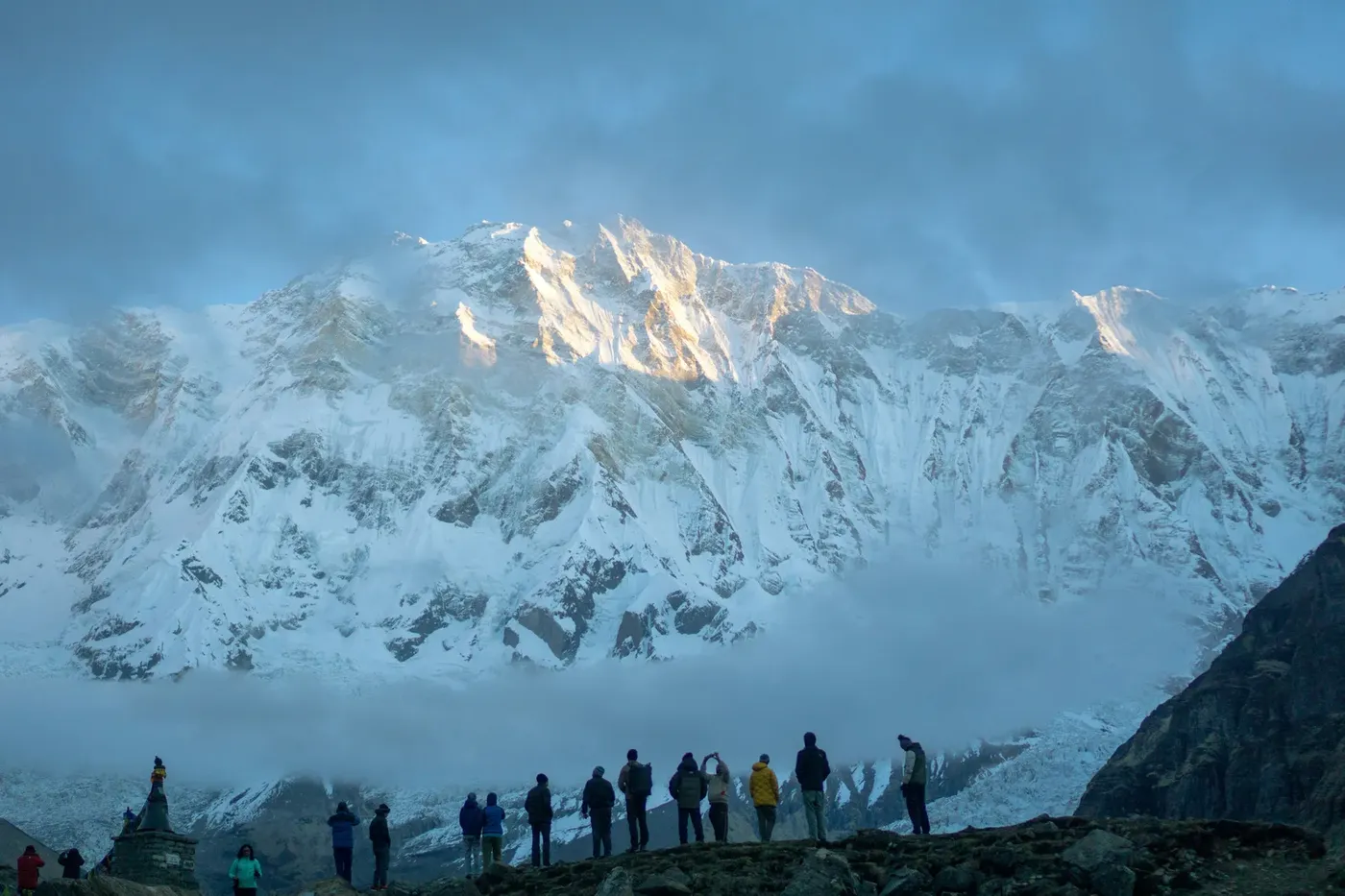
For you as a passenger this has a practical consequence that catches people out. If you are arriving in Jomsom on the morning flight from Pokhara, your helicopter has to be positioned and ready when you land, because the good part of the day is being spent while you are still in the terminal. If your Jomsom flight is delayed or cancelled, the segment flight moves with it, and in the worst case moves to the next morning. Build the buffer into the itinerary rather than into the conversation at the helipad.
What it costs, and why the segment price is quoted
Our published prices are per person on a shared flight, which works when the flight is a scheduled product leaving from Kathmandu or Pokhara with seats to sell. A Jomsom pickup is not that. It is a positioning movement with an aircraft that has to be where you are, at a specific hour, and come back empty or full depending on who else is on the manifest. So it is quoted per aircraft on your dates, and the quote depends on the machine, the empty legs, the number of passengers and whether another group is sharing the movement.
| Starting point | Product | Published price | Notes |
|---|---|---|---|
| Kathmandu | One-day Muktinath pilgrimage | $1,080 per person, shared flight | Flight, guided temple circuit, ground transfers and standard offerings included; puja samagri, special priest arrangements and insurance are extra |
| Pokhara | One-day Muktinath pilgrimage | Quoted on request, usually below the Kathmandu figure | Shorter flying time to the temple because the aircraft starts closer |
| Jomsom | Segment flight up to the temple and back | Quoted per aircraft | Priced as a positioning movement, not as a seat on a scheduled departure |
| Jomsom, private | Whole aircraft for your group | Quoted per aircraft, up to five passengers | An Airbus H125 seats five, so a family usually fills one machine |
The mistake to avoid is arithmetic. It is tempting to take the $1,080 Kathmandu figure and knock off a leg or two, and the result will not resemble the quote you receive. A segment is not a discounted package; it is a different purchase with a different cost base. Ask for the current number for your date and group size, and ask what it includes: the landing and ground time, the return to Jomsom, and whether the temple circuit is guided or self-guided.
The other thing to ask about is the empty leg. If an aircraft has to fly from Kathmandu or Pokhara to collect you in Jomsom, someone pays for that positioning flight. Sometimes a group already booked on the same corridor absorbs it and the segment becomes cheap; sometimes it does not, and the honest answer is that a full day tour from Kathmandu would have cost less per person. A good operator will tell you which of those two situations you are in.
Booking a Jomsom pickup from the US or Europe
For a traveller booking from abroad, the mechanics are simpler than the price conversation suggests, but they reward a little care. You will want a written quote in US dollars, valid for specific dates, showing what the aircraft is, how many passengers it carries, what the ground arrangement at the temple is, and what the weather policy says. If you are a family or a group of four, say so at the outset, because the aircraft capacity changes the arithmetic completely.
Documents are ordinary: passport details for the manifest, a weight declaration for every passenger, and travel insurance that covers helicopter evacuation. That last one is a requirement on our flights, not a suggestion, and it is the item people most often leave until the week before departure. Nobody at the helipad will weigh you with a scale in front of your children, but the aircraft has a real limit and the manifest has to be honest for it to fly.
Pay a deposit to hold the slot and keep the balance for arrival, and get the cancellation terms in writing. Then do the one thing that foreign itineraries rarely allow for: leave a spare morning. A weather day in this valley is not an exotic event, it is an ordinary Tuesday in the wrong season, and a group with a buffer morning flies; a group with an international connection the same evening does not. Our weather and cancellation policy explains what happens to your money when a flight is scrubbed.
Book with the operator that flies the aircraft rather than a reseller selling a seat on it. The planning cluster covers this in more detail, and the short version is that the company holding the manifest, the permits and the engineer is the one who can move your flight when the valley does not cooperate.
Best months to fly the Kali Gandaki
The season question has a different answer here than on the Everest corridor, because the constraint is wind and visibility in a deep valley rather than cold at altitude. The two reliable windows are September to November and April to June, with the autumn window doing the heavier lifting: cleared monsoon air, stable mornings, and the clearest sightlines of the year.
| Window | What to expect on this route | Verdict |
|---|---|---|
| September to November | Post-monsoon clarity, stable mornings, the year's best mountain views | Peak. Book early, especially around festivals |
| December to February | The clearest skies of the year, with temperatures around minus 10 degrees at the temple and fog sitting in the gorge some mornings | Good, if you dress for it and accept a fog delay |
| March to May | Warm, with pre-monsoon haze building through the afternoon | Workable in the early morning; the second reliable window |
| April to June | Stable mornings, warm valley, haze later in the season | Good, with the caveat that June is a gamble |
| July to September | Monsoon. Cloud in the valley, rain on the slopes, the hardest conditions of the year for a landing | Avoid if the flight is the reason for the trip |
Winter deserves a note of its own, because it is the season people misjudge. The skies in December and January are frequently the cleanest of the year and the flight is often beautiful, but the temple at 3,710 m is genuinely cold, the wind chill on the exposed path is real, and the gorge sometimes holds fog that clears late. None of that is a reason to avoid it, provided you are dressed for minus ten and have not scheduled the flight into a two-hour connection.
Flying as an Indian pilgrim, or as a Nepali family
This route is not only an international product, and the Jomsom end is where that shows most clearly. Indian pilgrims make up a large share of the traffic to Muktinath, and for them the journey is simpler than for anyone else: no visa is required under the open-border arrangement, a passport or voter ID is enough for the manifest, Indian currency is accepted widely around the temple at roughly 100 rupees to 160 Nepali rupees, and Hindi-speaking staff are the norm on this route rather than the exception. Groups of five often find a private charter competitive with per-seat pricing once it is split across the family, which is exactly the arithmetic that works best on a Jomsom segment.
For Nepali travellers the question is different again, and it is worth asking directly whether a domestic rate applies to your dates before you compare the USD figure to anything. Families flying elderly parents to the temple for darshan are the most common Nepali booking on this corridor, and the reason is not the view: it is that a two-to-four-day road journey is not something you ask a 75-year-old to do twice. The temple circuit itself is gentle, the path from the helipad is short, and the jeep shuttle removes even that if needed.
If you are combining the temple with the rest of the valley, the Pokhara helicopter routes guide sets out what else can be flown from the same base, and the beyond-Everest guide covers the quiet alternatives when Muktinath is booked out.
Altitude at 3,710 m: the honest version
Muktinath is high enough to be felt and not high enough to require acclimatisation for most healthy adults, which is exactly the profile that makes a one-morning visit reasonable. The temple sits at 3,710 m. You will notice the altitude on the path, particularly on the steps and in the cold, and you will notice it more if you have flown straight from sea level in the previous 48 hours.
What helps is unglamorous: walk slowly, drink water, do not treat the circuit as a race, and skip the cigarette and the celebratory drink until you are back below 3,000 m. Oxygen is carried on board the aircraft, and the crew watch passengers rather than trusting them to self-report. If you are travelling with someone who has heart or lung conditions, or who is pregnant, talk to a doctor before you book rather than to the pilot at the helipad. Children generally do better than their parents expect.
The jeep shuttle from the helipad to the temple gate is worth taking if anyone in the group is unsteady at altitude. There is no prize for walking the last path, and the ten minutes it saves are ten minutes spent at the temple instead.
Permits, manifests and the checkposts you skip
Walkers on this route carry an Annapurna Conservation Area permit and stop at the checkposts along the way. Helicopter passengers overfly those checkpoints, which is one of the quieter advantages of the flight: the paperwork moves from your pocket to the operator's manifest. That does not mean there is no paperwork. Landing permissions, the manifest and the passenger weights all have to be in place before the aircraft departs, and they are arranged by the company that flies you, not by you at the counter.
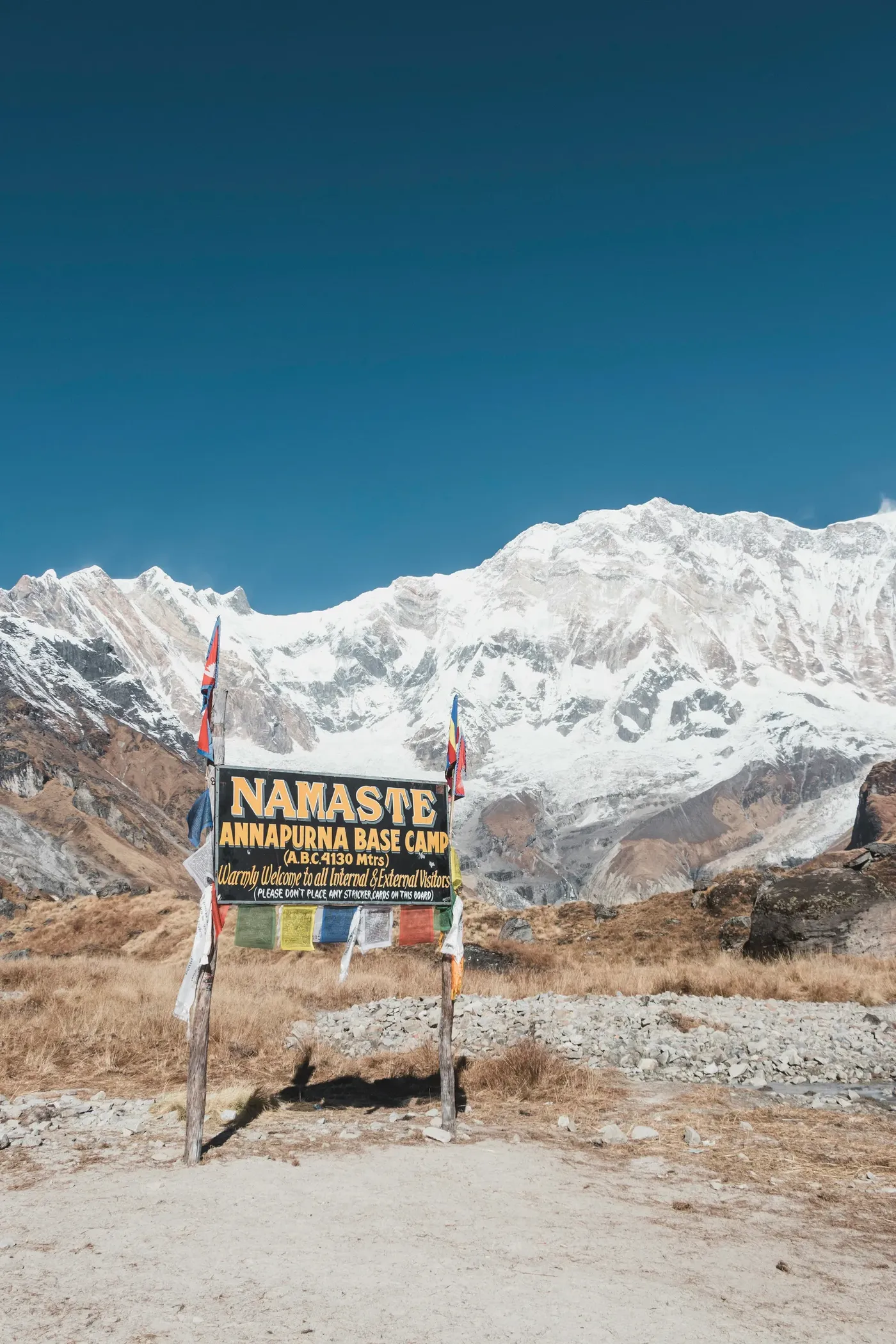
The one thing worth checking yourself is that the operator actually holds the aircraft and the permits rather than subcontracting at the last minute. The permits guide covers which permissions attach to which route, and the landing points guide explains why the helipad below the temple village is where the aircraft puts down rather than the temple courtyard.
At the temple: what the 1.5 to 2 hours are for
Muktinath is one of the few places in the Himalaya that is simultaneously one of Hinduism's most important Vishnu shrines and a Buddhist site of comparable standing. The temple complex is known in Tibetan tradition as Chumig Gyatsa, a hundred waters, and the number is close to literal: the 108 spouts of the Muktidhara complex ring the shrine, and pilgrims pass through them. The eternal flame at Jwala Mai burns from a natural gas seep in the ground beside the water, and has done so long enough that nobody treats it as a curiosity any more.
The circuit itself is unhurried. You walk the spouts, you visit the Vishnu temple, you look at the flame, and if you are lucky you find a saligram, the fossil ammonite that pilgrims collect from the Kali Gandaki riverbed and carry home. The history and religious significance of Muktinath are worth reading before you go rather than after, because the site is much less legible to a first-time visitor than its reputation suggests, and a guide who knows the sequence turns a scattering of shrines into a coherent place.
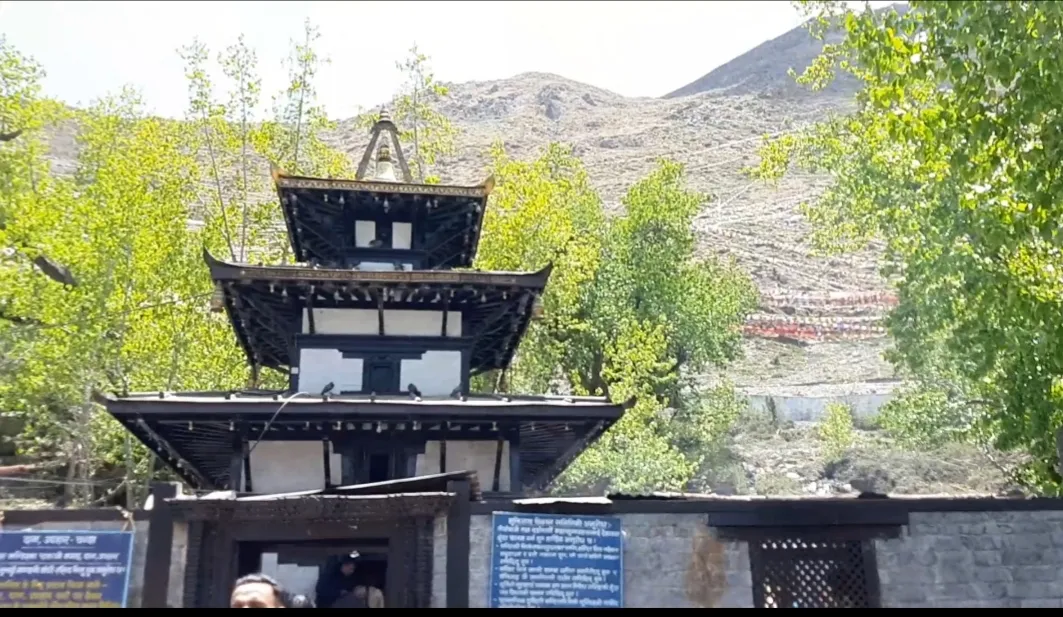
Because you have arrived by air rather than on foot, the temptation is to compress the visit into a photo stop. Do not. The published day tours allow the temple circuit 1.5 to 2 hours, and that is roughly the right amount of time to do the spouts properly without hurrying a queue of pilgrims behind you. What you should not plan is a long lunch and a stroll: the wind is the clock here, and the aircraft is waiting on the same morning window as everyone else.
When this flight is the wrong purchase
There are a few situations where the honest advice is to keep your money. If the walk is the point of your trip, flying the last stage removes the part you came for; the Annapurna Circuit and the heli-return treks exist precisely because the two experiences are different products. If you are trying to save money rather than time, the road is cheaper by a wide margin, and the published overland range of $400 to $800 for several days of driving is not a figure a helicopter can compete with.
If you have a fixed international departure within 24 hours of the flight, think hard. A single weather morning in this valley can cost you the segment, and rebooking into a departure that no longer exists is not a refund problem, it is a missed-flight problem. And if what you actually want is to land at the temple gate and step out among the spouts, adjust the expectation now: the aircraft lands at the helipad below Ranipauwa, and the last stretch is on foot or in a jeep.
The flight is the right purchase in one simple case: you are in Jomsom, the days are finite, and the road up the valley is the thing standing between you and the temple. In that situation it is not a luxury, it is the only sensible way to spend a morning.
Frequently asked questions
How much does a helicopter from Jomsom to Muktinath cost?
It is quoted per aircraft on your dates rather than published as a per-seat price, because it is a positioning movement and the quote depends on the machine, the empty legs and how many passengers are on the manifest. For reference, our published one-day pilgrimage from Kathmandu is $1,080 per person on a shared flight, and a Pokhara departure is usually a little below that. Ask us for the current Jomsom figure for your group size and we will quote it in writing.
Can I book just the Jomsom to Muktinath leg, or do I have to buy the whole day tour?
You can book the leg on its own. Plenty of people arrive in Jomsom by the Pokhara flight, or walk down off the Circuit, and only need the final stretch flown. Tell us how many of you there are and whether you are already holding seats on an inbound Jomsom flight, because the schedule has to line up with the morning wind window rather than with a convenient departure time.
Does the helicopter land at the temple itself?
No. It lands at the helipad beside Ranipauwa, the village below the temple complex, and from there it is about a ten-minute walk up to the spouts, or a short jeep shuttle if anyone in the group would rather not walk at 3,710 m. Landing points on this route are fixed by the authorities, not by the operator, which is why every company uses the same helipad.
What time of day do these flights operate?
Early morning, without much flexibility. The Kali Gandaki develops a strong up-valley wind almost every afternoon, which is why our day tours leave Kathmandu between 06:00 and 06:30 and why a Jomsom pickup is scheduled for first light. If you are arriving in Jomsom on a morning flight, the helicopter needs to be ready when you land.
How long do we get at the temple?
Plan on 1.5 to 2 hours for the temple circuit: the 108 spouts, the Vishnu temple and the eternal flame at Jwala Mai, at a pace that does not push past other pilgrims. The whole ground stop including the transfer from the helipad and back sits comfortably inside a morning.
Is it suitable for elderly parents?
It is one of the best uses of a helicopter in Nepal for exactly that reason. There is no trekking, the path from the helipad is short, and a jeep shuttle covers even that. Families flying elderly parents to the temple for darshan are among the most common bookings on this corridor. Anyone with significant heart or lung conditions should clear it with a doctor first, because the site is at 3,710 m.
What happens if the weather cancels the flight?
You get a refund or a free rebooking onto the next available morning, in line with the written policy you receive with your quote. The realistic advice is to hold a buffer morning. Groups that build one in fly; groups that do not are the ones who end up negotiating at the helipad.
Do I need permits for a helicopter pilgrimage?
Not the trekking permits that walkers carry, since the aircraft overflies the conservation checkposts on the valley route. The operator arranges the landing permission and the manifest, and you supply passport details and honest passenger weights. The conservation charge still applies to visiting the area, and it is included in the arrangements rather than collected from you at a gate.
Is it worth it compared with the jeep road up from Jomsom?
If your only measure is cost per kilometre, no. If your measure is a morning against a rough day on an unpaved mountain road with a real chance of a landslide delay, then for most visitors the flight wins. The published overland route from Pokhara takes 2 to 4 days and costs $400 to $800; the helicopter gives the days back.
Do Indian pilgrims need a visa or passport?
No visa, under the open-border arrangement. Carry a valid passport, which is accepted first for air travel, or a voter ID. Indian currency is accepted widely around the temple at roughly 100 rupees to 160 Nepali rupees, and Hindi-speaking staff are standard on this route. Groups of five often find a private charter works out cheaper per head than shared seats.
Which is the best month for this flight?
September to November for the clearest air and the most stable mornings, with April to June as the second window. December and January are often the clearest of all but genuinely cold at the temple, with fog possible in the gorge. July to September is monsoon and the worst time to depend on a landing.
Can I combine it with a trek in the Annapurna region?
Yes, and it is a common pattern: walk for several days and fly the exit rather than reversing the route on foot. Our Annapurna helicopter return trek is the packaged version of that idea. If you are already in Jomsom with days to spare, the segment flight fits neatly into the same itinerary as a morning excursion.
Booking the segment
If you are standing in Jomsom with a day in hand, or planning a Muktinath pilgrimage that starts from the valley floor rather than from Kathmandu, send us the date, the number of passengers and the weights, and we will come back with an aircraft quote for the morning window. The full day product, with the temple circuit and the return from Kathmandu included, is on the Muktinath helicopter pilgrimage page. If you want to see how this route compares with the cost of the one-day tour out of Kathmandu, the one-day pilgrimage cost guide breaks that price down line by line.