

Short answer: The Mount Everest Base Camp helicopter tour price in 2026 is $1,260 per person on a shared flight from Kathmandu, or $4,500 per aircraft for a private charter that seats up to five guests, which works out at $900 each if you fill all five seats. Both products land at Kala Patthar (5,545 m), fly over Everest Base Camp itself (5,364 m), and take about six hours door to door. Two items sit outside the seat price: the Sagarmatha National Park permit (NPR 3,000) and breakfast at the Everest View Hotel (about NPR 4,600).
- $1,260Shared seat, per person
- $4,500Private charter, up to 5
- 5,545 mKala Patthar landing
- 6 hrsTypical day, door to door
Everest is sold three ways from Kathmandu, and the number you are quoted depends almost entirely on which of the three you are looking at. A shared seat and a whole aircraft burn the same fuel, pay the same pilot hours and hold the same landing slot; what changes is how many people are splitting that cost. That is the single most useful idea to carry into any comparison, because nearly every confusing figure in this market resolves into one of the products in the table below. The full hour-by-hour itinerary lives on the Everest Base Camp helicopter day tour page; this guide stays on the money.
What the Mount Everest Base Camp Helicopter Tour Price Actually Buys
You are not paying for the mountain. You are paying for a machine, a crew and a slot in some of the most weather-sensitive airspace on earth. The aircraft on this route is the Airbus AS350 B3e, sold as the H125: a single-engine, five-seat mountain helicopter with the power margin to climb into the Khumbu with passengers aboard and enough reserve to leave again. It is flown by CAAN-licensed pilots who work the Khumbu corridor routinely, and that experience is a large part of what a serious operator is charging for.
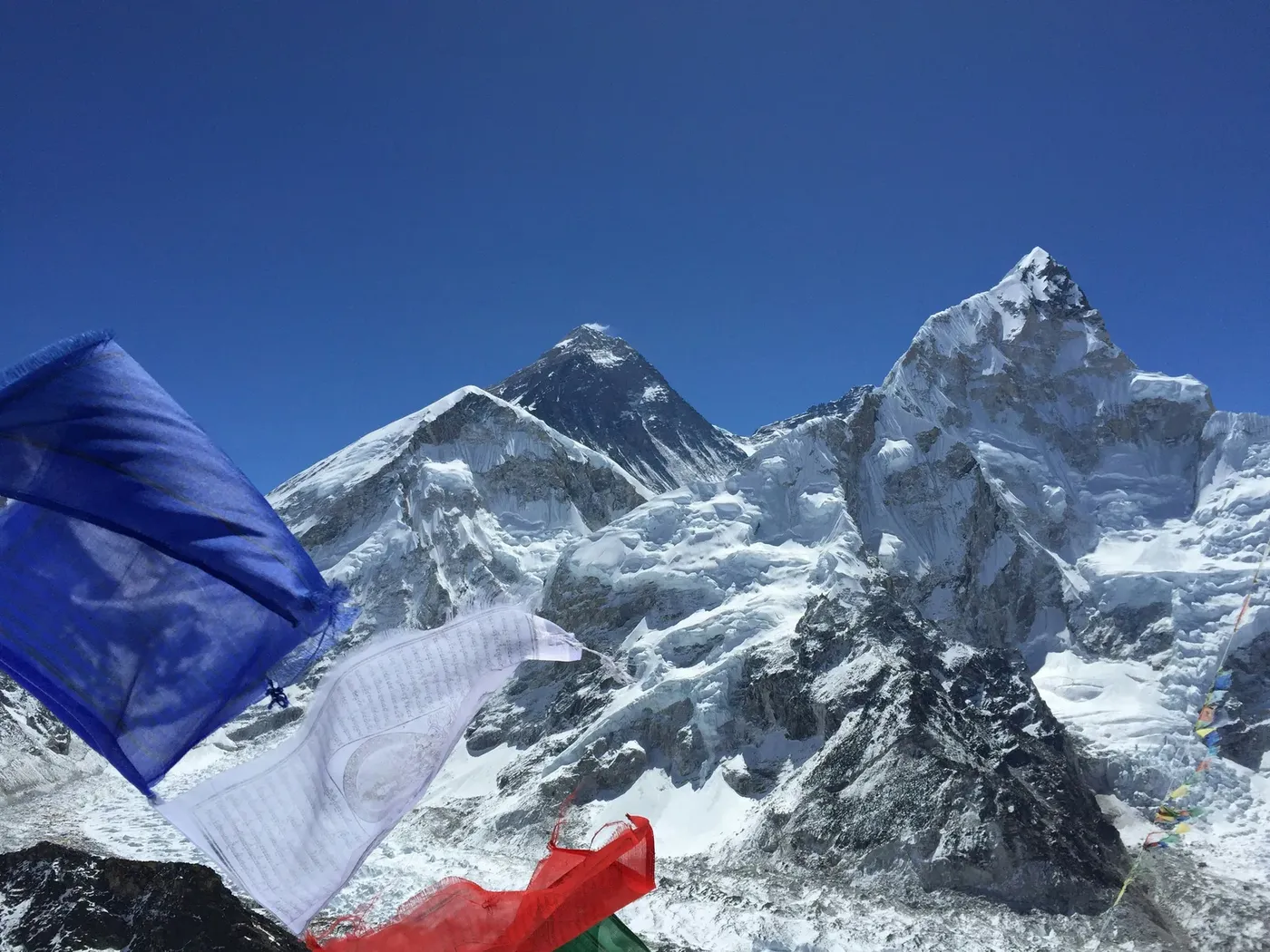
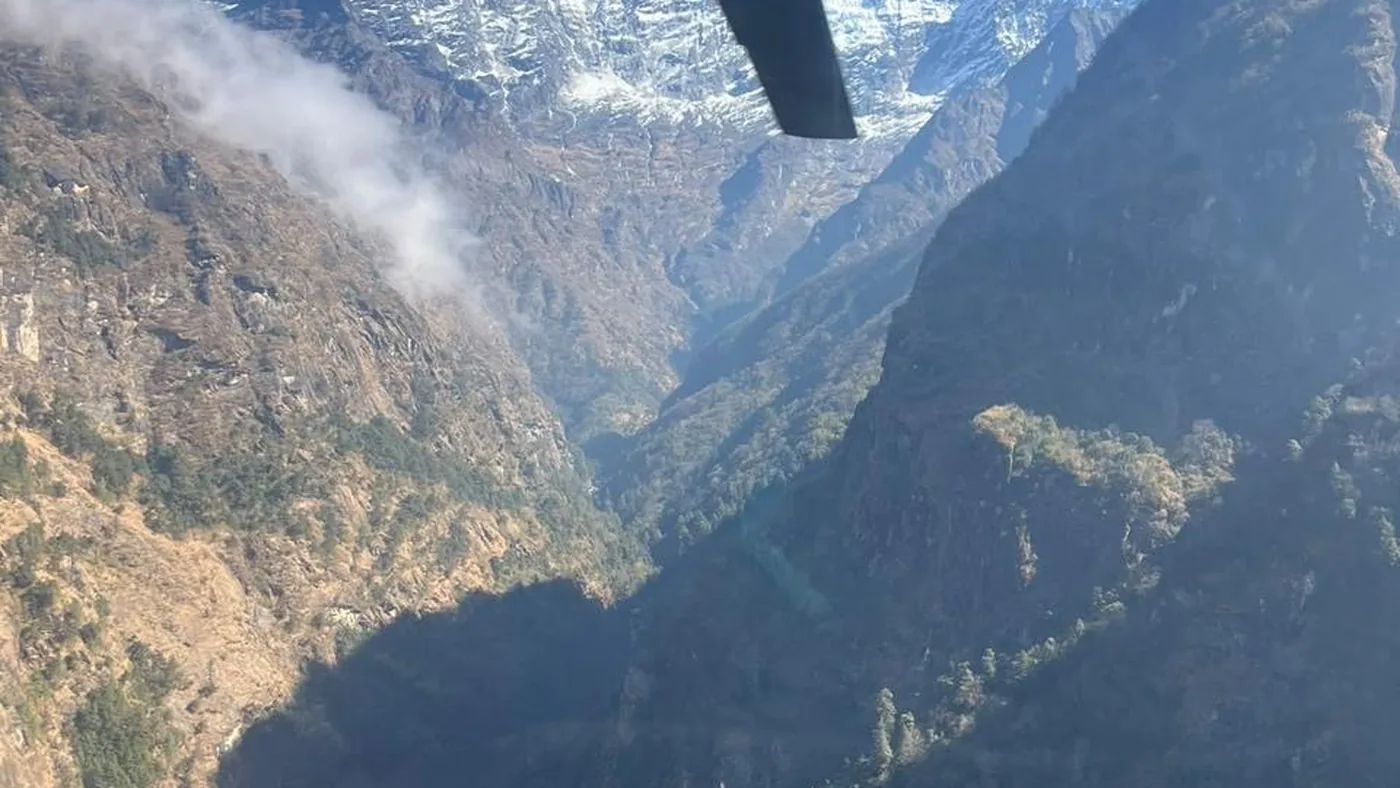
The day itself has a fixed shape. Pickup in Kathmandu before first light, wheels up from Tribhuvan International Airport (1,400 m), east over the Langtang and Rolwaling ranges, a refuelling stop at Lukla (2,845 m), then north past Namche Bazaar and Tengboche with the Khumbu Glacier and the Nuptse wall filling the windows. The aircraft lands at Kala Patthar (5,545 m) for a short ground stop, drops to the Everest View Hotel (3,880 m) for breakfast, and returns you to Kathmandu by early afternoon. Ground time at the high landing is deliberately brief, on the order of ten to fifteen minutes, and that is a safety decision rather than a cost cut: nobody acclimatises at 5,545 m, they simply stand, look and get back in.
Three products, three prices in 2026
Everything sold as an Everest helicopter experience is one of five things. Two of them land, one only flies over, one is a trek with a helicopter exit, and one is an overnight stay at altitude. Sorting your quote into the right row is the fastest way to spot a bad price.
| Product | 2026 price | Unit | Landing | Time |
|---|---|---|---|---|
| Everest scenic mountain flight (fixed wing) | $260 | per person | Flyover only, no landing | About 1 hour |
| Shared day tour, group joining | $1,260 | per person | Kala Patthar, 5,545 m | 1 day, approx. 6 hours |
| Private charter, AS350 B3 / H125 | $4,500 | per aircraft, up to 5 guests | Kala Patthar, 5,545 m | 1 day, approx. 5 to 6 hours |
| Trek up, fly back | $1,840 | per person, shared flight | Kala Patthar, on foot | Multi-day trek with a helicopter exit |
| Two-day Everest View Hotel stay | Quoted per group | per group | Kala Patthar the next morning | 2 days, 1 night at 3,880 m |
The $260 line is the one that confuses people most. It is a fixed-wing mountain flight, roughly an hour long, that never lands and never enters the Khumbu. It is a genuinely good product for a traveller with one free morning, and it is not an Everest Base Camp helicopter tour in any sense. If a listing promises a landing at 5,545 m for anything near that figure, the listing is not describing what you think it is.
The two landing products are the shared day tour at $1,260 a seat and the private charter at $4,500 an aircraft. Both reach Kala Patthar. Both include the round-trip helicopter from Kathmandu, the landing, flight-sector insurance and oxygen, hotel transfers, the government-permitted routing, a ground support team, and guiding in English, German, Spanish or French. The difference is not the mountain. It is who is in the other four seats.
Seat or charter: the arithmetic that decides it
This is the part of the Everest Base Camp helicopter tour price that most travellers get wrong, and it is simple multiplication. A shared seat costs $1,260 each. A charter costs $4,500 for the aircraft regardless of how many of the five seats you fill. Below four passengers, sharing wins. At four, the two are close. At five, the charter is dramatically cheaper per head.
| Group size | Shared seats | Private charter | Cheaper option |
|---|---|---|---|
| 2 people | $2,520 | $4,500 | Shared seats, by $1,980 |
| 3 people | $3,780 | $4,500 | Shared seats, by $720 |
| 4 people | $5,040 | $4,500 | Charter, by $540 |
| 5 people | $6,300 | $4,500 | Charter, by $1,800, or $900 each |
Two consequences follow. First, a couple or a solo traveller should almost always buy shared seats and let the operator fill the aircraft; paying $4,500 for two people is paying for three empty seats. Second, a family or a group of four or five should ask for a charter price before booking five seats, because at that point the charter is both cheaper and more flexible. You get your own departure time, your own routing decisions where weather allows, and no waiting for strangers at the refuelling stop. The private Everest charter cost guide breaks down what the extra flexibility is worth and when it is wasted.
One caveat on the shared price: it assumes the aircraft fills. If you are travelling in a quiet week and the departure is not full, an operator may still fly, and the seat price you were quoted stands. That is one of the reasons the published per-seat figure is a genuinely useful anchor rather than a teaser rate.
What the $1,260 includes, and what is genuinely extra
A fair quote distinguishes three things: what the seat price covers, what is collected locally by somebody else, and what is simply not part of the product. Our day tour includes the round-trip helicopter from Kathmandu, the Kala Patthar landing, all flight-sector insurance and oxygen, hotel pickups and drops, government-permitted flight routes, the ground support team, and multilingual guiding. What it does not include is money that goes to the park, the municipality and the hotel, because those bodies set their own charges and we have no interest in hiding them inside a headline number.
| Item outside the seat price | Amount | Set by | How it is charged |
|---|---|---|---|
| Sagarmatha National Park permit | NPR 3,000 | The park | Per person, arranged for you in advance |
| Khumbu Pasang Lhamu rural municipality permit | NPR 3,000 | The municipality | Per person |
| Everest View Hotel breakfast | About NPR 4,600 | The hotel | Per person, paid at the hotel |
| Landing and operation allowance | NPR 3,000 | Charged per operation | Per aircraft, where the quote itemises it |
Those figures are published NPR rates, not our margin, and they are the same whoever you book with. What varies between operators is how honestly they are presented. A quote that folds the permits into a single all-in number is not automatically better or worse than one that lists them, but you should be able to see which of the four lines above are inside your total and which will be collected on the day. Ask directly, in writing. The Nepal helicopter permit guide explains what each document is for and which zones require one.
The other thing worth separating out is the trekking cost you are not paying. A conventional Everest Base Camp trek takes roughly two weeks of lodge nights, meals, guides, porters and domestic flights. The helicopter day tour replaces all of it with one morning. When people say the flight is expensive, what they usually mean is that it is expensive compared with a bus; compared with the trek it replaces, the arithmetic looks very different for anyone whose time is worth more than their money.
Why the flight lands at Kala Patthar and only flies over Base Camp
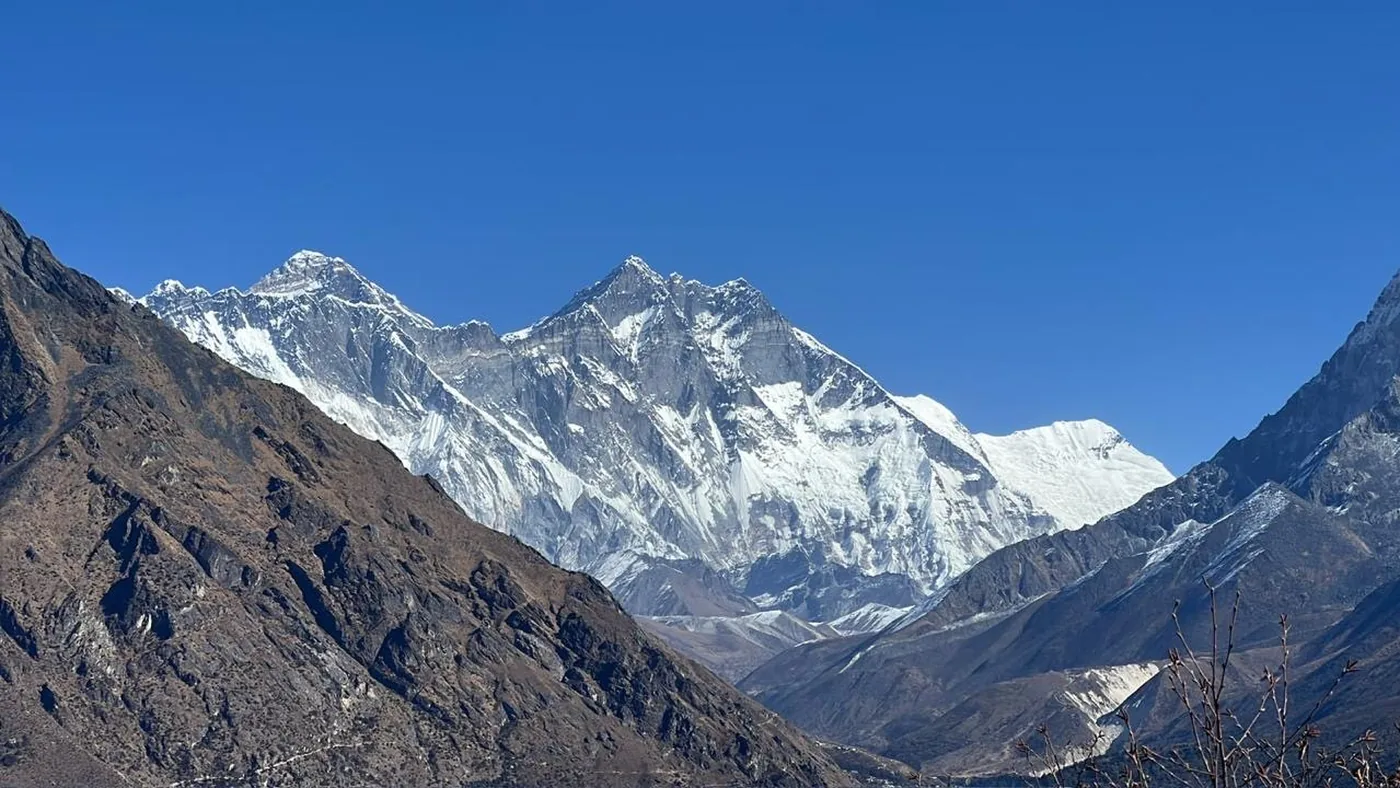
Any honest page about the Everest Base Camp helicopter tour price has to be clear about one detail, because it affects what you are buying. Sightseeing flights do not land inside Everest Base Camp (5,364 m). They fly over it, then land at Kala Patthar (5,545 m), the black rock ridge directly opposite Everest summit face. That is not a shortcut or a substitution: Kala Patthar is the better viewpoint, it sits 181 m higher than the base camp, and from it you look straight at the summit rather than up the glacier.
Since May 2026, the high landing is also reached differently. Groups stage the final hop from Pheriche (4,371 m), where the party divides and each pair flies the last sector in a lighter configuration, because at that altitude the aircraft can only lift two or three passengers at a time. This is a safety procedure under CAAN rules, not a downgrade, and every guest still gets their own landing. It does, however, explain why the day is scheduled the way it is, and why the price is tied to aircraft time rather than to a ticket.
That last point matters commercially. Kala Patthar is not a place you can linger. The ground stop is short by design, the aircraft waits with the rotors running or shuts down briefly depending on conditions, and the schedule is built around getting up and back down inside the calm morning window. You are buying access and altitude, not hours on the ground.
Booking from abroad: how to read a quote in US dollars
Most of our Everest bookings come from travellers who are not in Nepal yet, and the process is deliberately boring. You send your dates and your group size, we confirm the aircraft, the slot and the price in writing, and nothing about the mountain changes because you paid from another time zone. Three things are worth checking in any quote you receive, from us or from anyone else.
- Is the price per person or per aircraft? A figure that looks like a bargain is often a per-seat rate for a flight that only departs if it fills, or a per-aircraft rate being presented as if it were per person.
- Is the landing included, and at what altitude? A flyover with a hotel breakfast is a different product from a Kala Patthar landing, and roughly a fifth of the price of one.
- Are permits, breakfast and the landing allowance inside the number? Compare totals, not headlines. A quote that lists NPR 3,000 and NPR 4,600 openly is easier to compare than one that hides them and surprises you at the helipad.
Payment is quoted in US dollars because that is the currency most international travellers hold, and it protects you from a moving exchange rate between booking and flying. Get the inclusions in writing before you pay anything, and check that the operator is a licensed Nepali company rather than a reseller adding a margin to somebody else’s flight. The full Everest helicopter tour cost comparison sets all five products side by side if you want the wider market view.
On timing, the honest answer is that Everest is a small-fleet product. In peak season, October to November and March to May, book two to four weeks ahead, because the H125 fleet is limited and expedition charters reserve large blocks of aircraft time. Outside those windows you can often book inside a week.
When weather changes the day, and what that costs
Every flight on this route leaves early for a reason that has nothing to do with photography. Mountain wind builds through the morning, cloud banks form against the Khumbu walls, and the window in which a light helicopter can safely land at 5,545 m closes. That is why departures bunch before seven in the morning and why a late-afternoon Everest landing is not something a serious operator will promise you at any price.
When a flight is cancelled for weather, the money question is simple and should be answered before you pay: you are rebooked onto the next available morning at no extra charge, or refunded if your itinerary cannot wait. What the tour price does not cover is the extra hotel night in Kathmandu if you choose to stay and try again, which is why we tell people to keep a buffer day at the end of a Nepal trip rather than flying home the same evening. The cancellation and weather policy guide sets out the mechanics in full. A cheap quote with no rebooking policy is not cheap; it is a bet against the weather that you are financing.
Five seats, altitude and luggage: why the price has a ceiling
The H125 carries up to five passengers, but altitude changes what that means. An aircraft carrying five adults at 5,545 m cannot also carry unlimited fuel, so the operator plans the sectors around weight, and on the high landing this shows up as the Pheriche shuttle described above: pairs go up in a lighter configuration rather than the whole party at once. Declare body weights and luggage honestly at the time of booking, because the load sheet is built before the day and adjustments at the helipad are how departures get delayed.
Practically, this is also why the per-seat price is available at all. Shared seats work because the aircraft fills with five average adults and the fuel plan is calculated for that. A group of five very heavy passengers, or a group carrying expedition baggage, may end up paying for a configuration that carries fewer people, and no operator can absorb that quietly. If your group is unusual, ask for the charter price and treat it as the honest number. Luggage on a day tour is minimal anyway: a small daypack, a camera, and layers you will not need once the sun is up.
The $1,840 alternative: trek up, fly back
There is a third way to buy the same mountain, and for some travellers it is the better value. The trek-up, fly-back product costs $1,840 per person on a shared flight, takes ten days, reaches a maximum of 5,545 m, and replaces the walk out with a helicopter. You get the Khumbu on foot, the lodges, the acclimatisation days and the Sherpa villages, and you skip the least interesting week of the standard itinerary, which is the walk back down the same valley you just climbed.
Compared with the $1,260 day tour, you are paying $580 more for ten days in the mountains instead of six hours. Compared with a conventional two-week trek, you are paying for a helicopter exit that saves four or five days of walking. Whether that is good value depends entirely on how much leave you have. The trek-up, fly-back cost breakdown covers the lodges, permits and timing in detail.
Nepali and Indian travellers: local rates and pilgrimage demand
The figures in this guide are the published USD prices for international visitors, and they are what a traveller booking from abroad should expect to pay. Nepali citizens are quoted separately, in rupees, by local operators, and Indian pilgrims flying to Muktinath or into the Khumbu are usually quoted in INR or NPR rather than USD. The published USD numbers are not the local rate, and a Nepali traveller comparing this page with a quote from a Kathmandu office should not assume the two are meant to match.
Two practical notes for regional travellers. First, the permit structure is the same for everyone, so the NPR 3,000 park fee and the NPR 3,000 municipal fee apply regardless of passport. Second, demand from India concentrates hard around pilgrimage dates and school holidays, which is when aircraft availability, not price, becomes the constraint. If your dates are fixed by a festival, book early and treat the seat as the scarce item. Our guide for Indian travellers covers the darshan itineraries, and the Nepali rate explainer shows how local pricing is structured on a comparable route.
Is $1,260 a fair price? What a good quote looks like
A fair quote for this flight has four characteristics. It names the aircraft and the operator. It states the landing altitude, not just the destination. It separates the park and hotel charges that somebody else sets. And it states the weather policy in writing. If a quote does all four, the number is probably honest even if it is not the cheapest you will find. If it does none of them, the number is not comparable to anything.
The wider market context is that Everest helicopter pricing has converged around a narrow band, because the inputs are fixed: aircraft hours, fuel, pilot hours, landing slots and permits. Anyone quoting far below the published figures is either selling a different product, a flyover, or a departure that will not run. Our Everest helicopter tours hub compares every route in the cluster, from the one-hour mountain flight to the private charter, if you want to see where this price sits against the alternatives.
It is worth restating one point about the Mount Everest Base Camp Helicopter Tour Price: the number is set by the aircraft and the landing slot, not by how many photographs you take at the top. That is why two operators quoting the same itinerary can differ by a few hundred dollars and still both be telling the truth about a different configuration.
Frequently asked questions about the price
Is the price per person or per helicopter?
Both products exist and they are not interchangeable. A shared seat on a scheduled departure is $1,260 per person. A private charter is $4,500 per aircraft, which carries up to five guests. When you compare quotes, check which unit the number is in before anything else.
How much is a helicopter from Kathmandu to Everest Base Camp?
$1,260 per person on a shared flight, or $4,500 for the whole aircraft. The flight flies over Everest Base Camp at 5,364 m and lands at Kala Patthar at 5,545 m, which is the higher and better viewpoint of the summit face.
Does the tour actually land at Everest Base Camp?
No. Sightseeing flights overfly Base Camp and land at Kala Patthar, 181 m higher. From Kala Patthar you look directly at Everest summit rather than up the glacier, which is why it is the standard landing point for every operator on this route.
Is the mount everest base camp helicopter tour price all inclusive?
It includes the round-trip helicopter, the landing, flight-sector insurance and oxygen, hotel transfers, the permitted routing, ground support and guiding. The Sagarmatha National Park permit, the municipal permit and the Everest View Hotel breakfast are charged separately at published NPR rates.
Does the price include the national park permit?
No. The Sagarmatha National Park permit is NPR 3,000 per person and the Khumbu Pasang Lhamu municipal permit is NPR 3,000 per person. We arrange the park permit in advance so the paperwork is done before you land, but the fee is a government charge, not part of the seat price.
Can I book this from the United States or Europe?
Yes, and most of our bookings are made that way. Send your dates and group size, and we confirm the aircraft, the slot and the total in writing, quoted in US dollars. In peak season, October to November and March to May, book two to four weeks ahead.
Is a private charter cheaper for a group of five?
Substantially. Five shared seats cost $6,300. The charter is $4,500 for the aircraft, which is $900 each, a saving of $1,800, and you get your own departure time and routing choices where weather allows.
What happens if the flight is cancelled for weather?
You are rebooked onto the next available morning at no extra charge, or refunded if your itinerary cannot wait. The tour price does not cover an extra hotel night in Kathmandu, which is why a buffer day at the end of the trip is worth planning.
Why is the $260 mountain flight so much cheaper?
Because it is a different product. The scenic mountain flight is a fixed-wing flight of about an hour that never lands and never enters the Khumbu. It is an excellent hour, and it is not a helicopter landing at altitude, which is what most of the cost of the day tour pays for.
How far in advance should I book?
Two to four weeks in peak season, because the H125 fleet is small and expedition charters reserve large blocks of aircraft time. Outside October to November and March to May, a week is usually enough, and last-minute seats are sometimes available.
Do I need to be fit for the Everest helicopter tour?
No trekking is involved: you step out, take your photographs and step back in. The constraint is altitude, not fitness, and ground time at 5,545 m is kept to roughly ten to fifteen minutes. If you have heart or lung conditions, speak to your doctor before booking.
Is the two-day Everest View Hotel version better value?
It is a different product, quoted per group rather than per seat. You sleep at 3,880 m, see sunrise over Everest, and land at Kala Patthar the next morning. For travellers who want the mountain at dawn rather than mid-morning, it is worth the extra night; for a single free day, the day tour is the efficient choice.
Book the Everest flight with the operator
Heli Tours Nepal runs these flights from Kathmandu as a licensed Nepali operator, so the price you are quoted is the operator price rather than a reseller markup on top of it. The day tour page carries the full itinerary, inclusions and departure details, and it is the page to book from. If you want the mountain itself in context, Everest stands at 8,848.86 m according to the surveyed height recorded for Mount Everest, and the flight puts you within sight of the summit face for a fraction of the cost of climbing it.
Send your dates, your group size and whether you want shared seats or the aircraft, and we will confirm the total in writing, including the permit and breakfast charges, before you pay anything. For travellers still deciding between routes, the Everest helicopter tours guide compares the landing flights, the flyovers and the trek combinations, and the route guide explains what fills the windows on the way north.