

Short answer: No operator publishes a seat fare for the Lukla to Everest Base Camp helicopter leg, because on this corridor a helicopter is sold as aircraft time and not as a ticket. What you pay is a whole-aircraft quote divided by the number of people aboard. The published 2026 anchors around that quote are $1,700 for a one-way Kathmandu to Lukla sector, $4,500 for a private Everest charter carrying up to five guests, and $1,260 per person for the shared one-day landing tour that flies the same mountains from Kathmandu. A Lukla start sits inside that band, and the way to pin it down is to ask for the aircraft price and the intended load in the same message.
- $1,700One-way Kathmandu to Lukla, per aircraft
- $4,500Private Everest charter, up to 5 guests
- $1,260Shared seat on the one-day landing tour
- 5,364 mEverest Base Camp, the landing itself
Most people who search this phrase are not casually shopping for a holiday. They are either standing at the bottom of the Khumbu with a trek already paid for, or sitting at a desk in Colorado or Manchester with a Lukla flight in the calendar and a growing suspicion that the walk in is about to eat a week they cannot spare. The question is narrow: if I pick up a helicopter at Lukla and land near Base Camp, what does that leg cost me?
The honest answer is that nobody publishes a fare for it, and the operators who fire back a number without explaining the basis are usually quoting an aircraft rather than a seat. What follows is the arithmetic, the published anchors, the line items that appear on a real quote, and the questions that turn a vague range into something you can put in a budget. Every figure here is either published on this site or a published government fee. Nothing has been invented to fill a table.
Why the Lukla to Everest Base Camp leg has no ticket price
An airline sells seats and carries the risk of the empty ones. A helicopter operator sells aircraft time: the machine, the crew, the fuel, the block hour and the insurance behind all three. That difference explains almost every confusing conversation about this route. The operator has to recover the cost of the flight whether one passenger climbs aboard or five, so the number on the invoice is a per-aircraft number, and the per-person figure is a division you and four strangers perform after the fact.
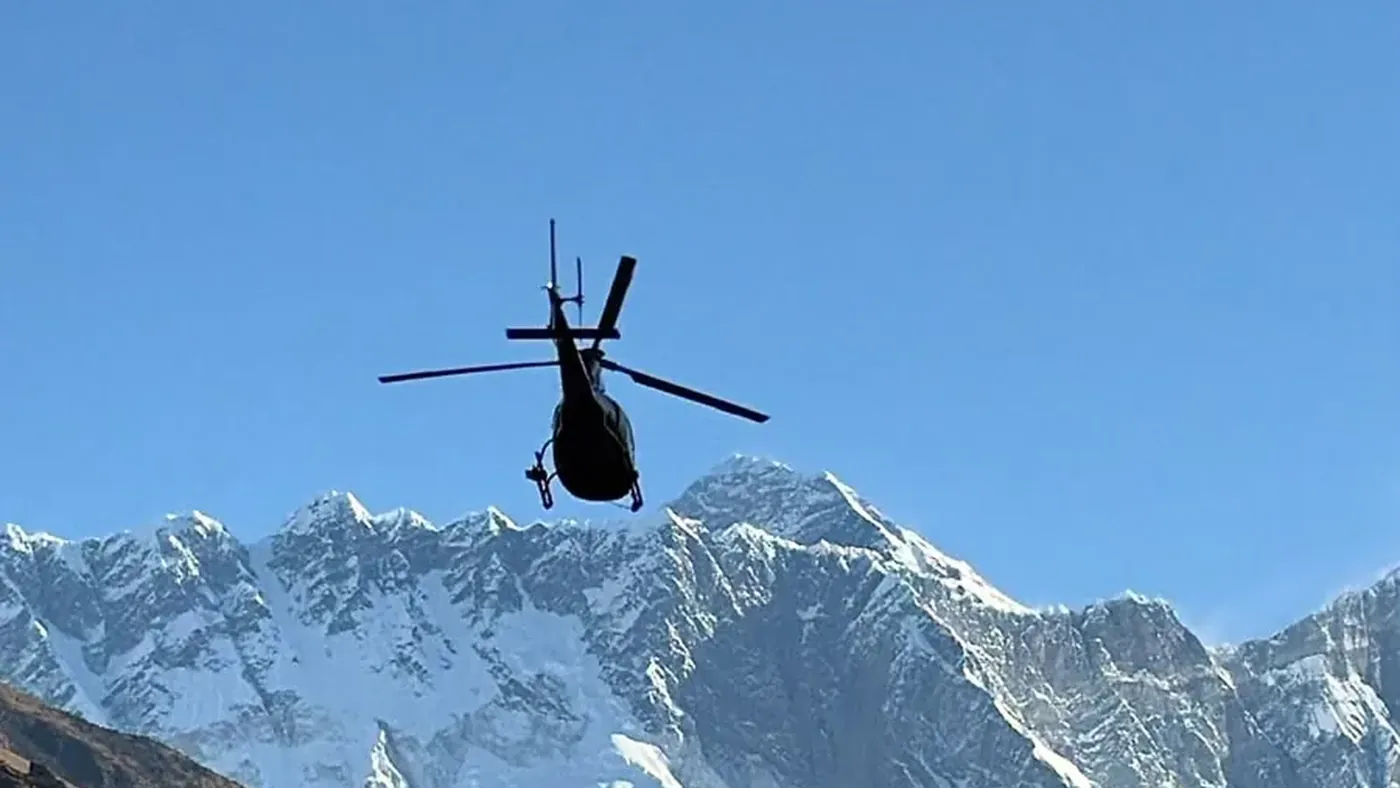
On the Everest corridor the realistic load in an Airbus H125, the type that carries almost all of this traffic, is four to five passengers once trekking duffels are aboard. The cabin limit is five. That is why two operators can quote the identical aircraft at the identical price and still produce per-person figures that differ by a factor of three: one is filling five seats and the other is flying a couple who wanted the mountain to themselves.
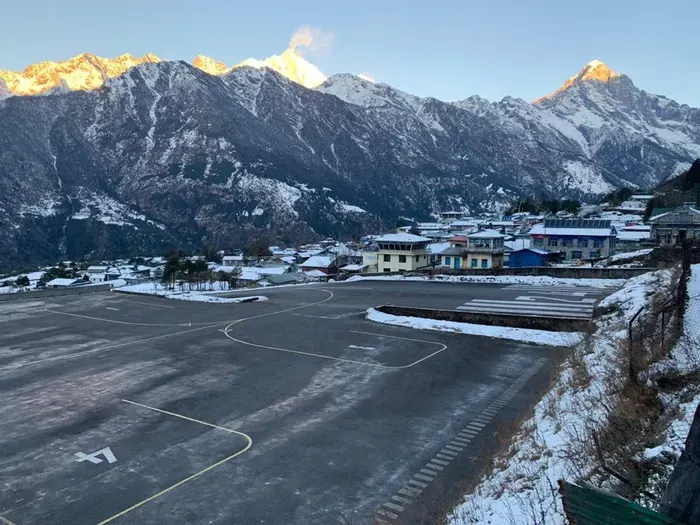
There is a second reason the leg rarely sells alone. A helicopter based in Kathmandu has to fly an hour and a half north to reach Lukla before it can begin your sector, and then fly back south afterwards. If your flight starts at Lukla, either the aircraft was already in the valley on a rotation, or you are paying for the empty positioning legs as well. That single fact, more than distance or altitude, is what separates a cheap-looking quote from an expensive one. Our Lukla to Base Camp connection timetable walks through how those rotations are actually sequenced in a morning.
The five published prices that bracket the answer
Because the sector itself is quoted privately, the only defensible way to budget is to look at what the corridor does publish, and then reason from there. These are the 2026 products on this site, all of them flown by the same aircraft type over the same valleys.
| Product | 2026 price | Basis | What it contains |
|---|---|---|---|
| Everest scenic mountain flight | from $260 | per seat, fixed wing | One hour of flying, a window seat, no landing anywhere |
| One-way Kathmandu to Lukla helicopter | from $1,700 | per aircraft | The southern approach sector only, ending on the Lukla helipad at 2,845 m |
| One-day Everest landing tour from Kathmandu | $1,260 | per person, shared | Roughly six hours door to door, Lukla refuel, Kala Patthar landing at 5,545 m, breakfast at 3,880 m |
| Everest Base Camp helicopter trek, trek up and fly back | $1,840 | per person, shared | Ten days of walking, eleven or twelve lodge nights, permits, guide, porters, and the 20 minute exit from Gorak Shep |
| Private Everest charter | $4,500 | per aircraft, up to 5 guests | Five to six hours, hotel pickup, the Everest corridor flown to your own timing |
Read that table as a set of fixed points rather than competing offers. The $260 flight never lands, so it is not a substitute for anything. The $1,700 sector ends at Lukla and does not touch the high valley. The $1,260 and $4,500 products both reach the mountains, one sold by the seat and one by the aircraft. And the $1,840 trek is the only one where the helicopter is a single line inside a ten-day itinerary rather than the product itself.
What a real quote is made of, line by line
A quote for the up-leg is not one number with a margin attached. It is a stack of costs, and knowing which of them sit inside the aircraft price and which are paid separately at a counter is the difference between a budget that holds and one that grows by a few hundred dollars on the morning.
| Cost line | 2026 figure | Who charges it | Paid when |
|---|---|---|---|
| Helicopter block time, Lukla to the high valley and back to Lukla | quoted per aircraft | The operator | On confirmation, usually with a deposit |
| Sagarmatha National Park entry | NPR 3,000 per person | Park gate | At the gate, cash or card |
| Sagarmatha entry for SAARC nationals | NPR 1,500 per person | Park gate | At the gate |
| Sagarmatha entry for Nepali citizens | NPR 100 per person | Park gate | At the gate |
| Khumbu Pasang Lhamu Rural Municipality permit | NPR 3,000 per person | Municipality counter | Before departure |
| Landing and hovering fee | NPR 3,000 per operation | Park authorities | Per landing, a charter counts as one operation |
| Extra seat for payload | one additional passenger fare | The operator | When the group is weighed |
Two of those lines surprise people. The first is the landing fee, which is charged per operation rather than per passenger, so it barely moves whether you land with two people or five. The second is the payload problem. The aircraft has a working allowance of roughly 80 kg per person including hand baggage, and on the trek products the duffel allowance on the helicopter is 15 kg per person. A group of five large adults with camera bags can therefore find itself one seat short of its own weight, and the fix is a second aircraft or a lighter party, not a negotiation with the pilot.
Ask for the airport transfer, the permits and the landing fee to be listed separately even when they are bundled. An operator who can break the number down is an operator who knows what the flight costs, and that is the operator you want when the weather turns and the schedule has to be rebuilt at 6am.
The division that decides what you actually pay
Here is the part that no amount of comparison shopping can change. The aircraft price is fixed by the flight, and the per-person price is that number divided by the seats you fill. Take the published one-way sector at $1,700 per aircraft: shared between two people the arithmetic reads $850 each, between three it reads $567, and between five it reads $340. Those are divisions, not quotes, and they illustrate the only structural fact about helicopter pricing in Nepal that matters. The mountain does not get cheaper when you bring friends. It only gets cheaper per head.
The same logic runs through the $4,500 private charter, which is the closest published anchor to a Lukla-side high-valley flight with your own aircraft. Filled to its five-guest limit it divides to $900 a seat. Flown for a couple it divides to $2,250. Neither figure is the price of the Lukla to Base Camp sector, and neither is a quote, but together they explain why a solo traveller who asks for a private up-leg is quoted something that looks three times the advertised price of a group tour.
This is the single most useful thing to understand before you email an operator from abroad. Decide whether you are buying seats or buying the aircraft, and say so in the first line. If you are a couple, ask to join a shared rotation and accept that the departure time belongs to the group. If you are five, ask for the whole aircraft and be pleasantly surprised by the division. If you are two and want the aircraft to yourselves, expect to pay for three empty seats, because that is exactly what you are doing.
Flying the leg or walking it: what the money actually buys
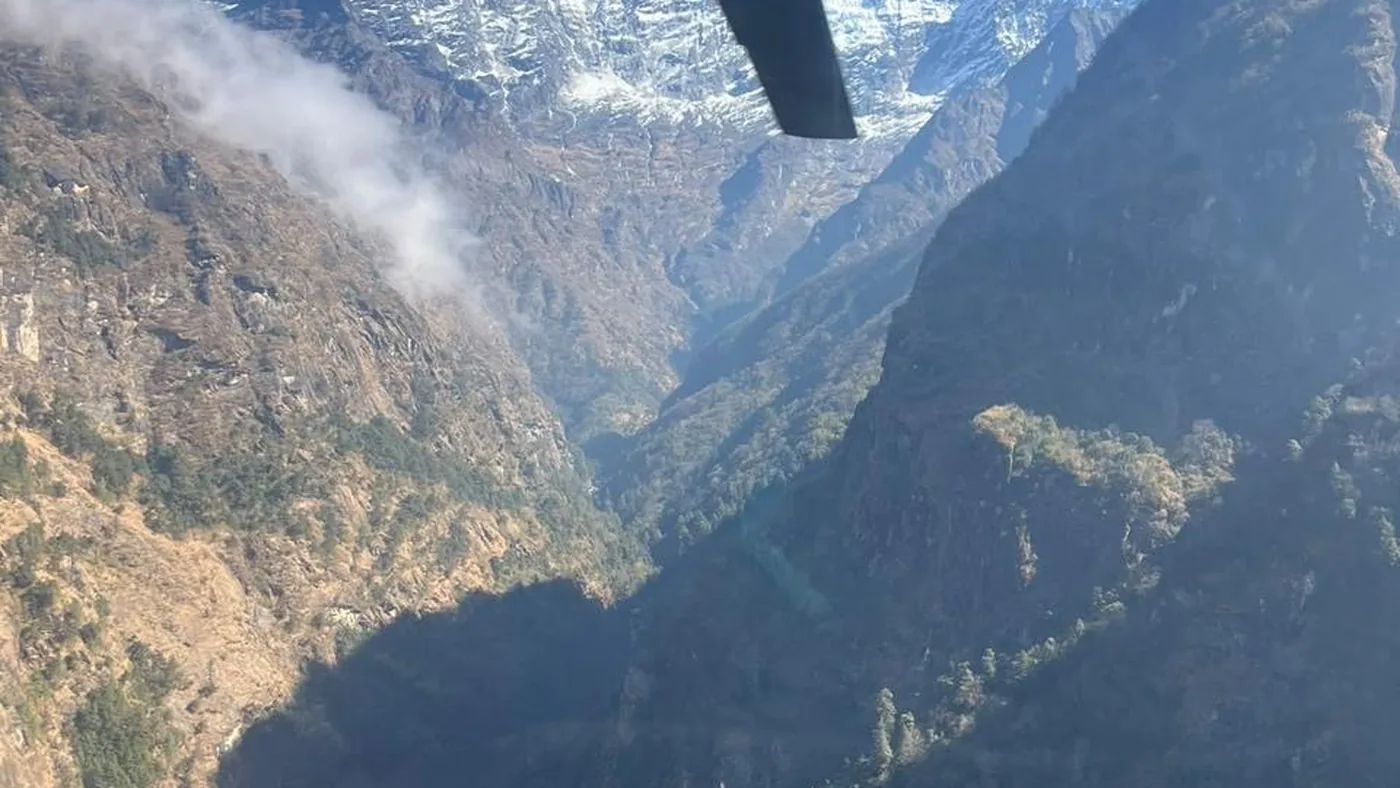
The price only means something against the alternative, and on this route the alternative is a famous walk. The published trek itinerary on this site puts you on the ground at Lukla on day one and at Everest Base Camp on day eight, with the Kala Patthar morning on day nine. That is eight days of walking between the airstrip and the glacier, roughly 130 km of the classic route in total, and two acclimatisation days built into the schedule because the altitude will not be rushed.
| Option | Time from Lukla to Base Camp | What it costs on the published products | Who it suits |
|---|---|---|---|
| Walk the classic route | Eight walking days, arriving on day eight of the itinerary | Inside the $1,840 ten-day trek, with lodge nights, meals, guide and permits | Anyone with the days and the knees who wants the walk itself |
| Helicopter up-leg from Lukla | About an hour of flying, landings included | Quoted per aircraft, inside the $1,700 to $4,500 band published on this corridor | Trekkers short of days, or anyone whose knees will not take eight days of climbing |
| Shared one-day tour from Kathmandu | Six hours door to door, no trekking at all | $1,260 per person | Visitors with a single free morning in Kathmandu |
The comparison that matters is not the airfare against the trek. It is the airfare against the days. A helicopter up-leg buys you back the better part of a week, and if your international ticket is fixed and your leave is finite, those days are the most expensive thing in the whole plan. Trekkers who reverse the logic and walk up with a helicopter exit already know the arithmetic: the fly-back format costs close to the walk-down itinerary once the extra food and lodge nights are counted, which is why the $1,840 product exists at all.
Booking it from the United States or Europe
Booking a Lukla-side flight from abroad is mostly a matter of asking for the right things in the right order, because you cannot walk into a Kathmandu office and point at an aircraft. Start with the date, the number of passengers and each person’s body weight with hand baggage. Weight is not a formality here: it decides whether your party flies in one aircraft or two, and an operator who does not ask has not yet done the load sheet.
Then ask three questions. Is this quote per aircraft or per person? Does it include the park entry, the municipality permit and the landing fee, or are those paid at the gate? And what happens to the money if the valley closes for weather? On this corridor roughly one morning in four is lost to weather across the year, so the answer to the third question is not a detail, it is the terms of the deal. A full refund or a free rebooking onto the next flyable morning is the standard we hold ourselves to, and it is worth confirming in writing before a deposit moves.
Pay in US dollars and expect a deposit rather than the full amount. Our own trek products hold a departure on a 20 percent deposit, and day flights are typically settled before boarding. Keep a spare morning in Kathmandu before your international flight home: the single most expensive mistake in this market is booking the helicopter for the last morning of a trip and discovering that the mountain has other plans.
Travel insurance is not optional and the wording matters more than the price. The policy has to cover helicopter evacuation and flying at altitude, and the altitude ceiling written into it has to be above the height you are actually going to. Our safety and insurance guide lists exactly what the certificate has to say, and it is the document we check before anyone boards.
Season, weather and why the quote moves with the calendar
The flying year has two good halves. March to May brings stable pre-monsoon air and flowering rhododendron on the lower trails, and September to November brings the clearest visibility of the year after the monsoon washes the sky. Those are the months when the corridor is busiest and when a Lukla-side sector is hardest to find at short notice, because the same aircraft are committed to the day tours and the trek exits.
Winter flights in December, January and February are cold, very clear and weather-fragile at the landing points. The monsoon months of June to August are the least reliable of all, though early-morning flights still operate on many days. None of this changes the aircraft price much. It changes your probability of flying, and therefore the value of the buffer you build around the booking, which is where the real money sits.
The landing point changes the price less than you expect
People assume that landing at Kala Patthar at 5,545 m must cost more than landing at Everest Base Camp at 5,364 m, or that the Everest View Hotel at 3,880 m must be the bargain option. In practice the landing fee is charged per operation rather than by altitude, and the flying time between those three points is minutes. What changes is the ground time and the risk profile. Ten to fifteen minutes is the working window at the high landing points, with the engine running, while the hotel terrace at 3,880 m can hold you for the better part of an hour.
That has a practical consequence for anyone booking the up-leg specifically. If your reason for flying is to stand at Base Camp, say so, because the aircraft does not land on the glacier itself. The Base Camp sign at 5,364 m sits on moving ice below the Khumbu Icefall, and the commercially flown landing is the ridge at Kala Patthar, which looks straight at Everest rather than up the glacier. Operators who blur that distinction in a quote will blur it in the flight plan too. Our Kala Patthar landing guide explains the viewpoint in detail.
What is not in the price
Hotels in Kathmandu, meals beyond what a package states, tips for the pilot and ground crew, and personal gear all sit outside the number. So does anything caused by a delay: an extra night in Lukla or Kathmandu because the valley closed is a real cost and it belongs in the budget rather than in the argument afterwards. On the trek products, past guests carry $300 to $400 on the trail for showers, charging, drinks and tips, and a day flight has a smaller version of the same list.
The one line people forget entirely is time. A helicopter up-leg from Lukla is a morning, not a day, and it will not wait for a late breakfast. If your party cannot be at the helipad before sunrise, tell the operator at booking rather than at the pad, because the departure slot belongs to the weather window and not to the group.
For Nepali travellers and Indian pilgrims
Bookings made inside Nepal look different from bookings made from abroad, and not because the aircraft costs less. Local agencies quote in rupees, families and pilgrim groups usually charter the whole machine rather than a couple of seats, and the park entry drops to NPR 1,500 per person for SAARC nationals and NPR 100 for Nepali citizens. Those are real savings on the permit line. The flying itself is priced the same way it is priced for everyone: per aircraft, divided by the load.
If you are booking from Kathmandu, ask the two questions that settle the matter quickly. How many passengers is this price for, and is the landing fee inside it? A quote that answers both is a quote you can compare. One that answers neither is a number waiting to grow at the park gate.
Frequently Asked Questions
How much does a helicopter from Lukla to Everest Base Camp cost in 2026?
There is no published seat fare for the sector, because the aircraft is chartered rather than ticketed. The published anchors on this corridor are $1,700 per aircraft for a one-way Kathmandu to Lukla sector, $4,500 per aircraft for a private Everest charter with up to five guests, and $1,260 per person for the shared one-day landing tour from Kathmandu. A Lukla start is quoted inside that band, and the per-person figure depends entirely on how many seats you fill.
Is a Lukla to Base Camp helicopter cheaper than the tour from Kathmandu?
Usually, for the aircraft, because you are not paying for the long approach over the middle hills in both directions. Per person it can go either way, since the Kathmandu day tour fills its seats with strangers while a small group starting at Lukla often charters the whole machine. Compare the per-aircraft numbers and the load, not the headline per-person price.
Can I book just one seat on the up-leg?
Sometimes, if an operator already has a rotation in the valley with space aboard, and that is the cheapest way to fly this sector. It also means accepting someone else’s departure time and route. Ask specifically for a shared seat on an existing rotation rather than a private up-leg, and be flexible on the morning.
Does the price include the Everest Base Camp helicopter landing?
Only if the quote says so. The landing and hovering fee is a separate government charge of NPR 3,000 per operation, and the park entry is NPR 3,000 per person for foreign visitors. Confirm both in writing, along with whether the landing point is Kala Patthar at 5,545 m, Base Camp at 5,364 m or the Everest View Hotel at 3,880 m, because they are not the same flight plan.
How many people fit in the helicopter?
Five passengers in an Airbus H125, which is the aircraft used on almost all of this traffic. In practice four or five is the working load once trekking duffels are aboard, and the payload allowance is roughly 80 kg per person including hand baggage. Large groups are split across two aircraft rather than squeezed into one.
What is the baggage limit on the flight?
The trek products state 15 kg per person for the duffel on the helicopter, and the aircraft itself has a payload limit that the pilot works out at the pad. Camera bags, boots and layers all count. If your party is heavy, the extra seat is cheaper than being turned around at the helipad.
When is the best time to fly this leg?
March to May and September to November, when the air is stable and the visibility is at its best. Flights go at first light in every season because the valley wind builds through the morning. Roughly one morning in four is lost to weather across the year, so build a spare morning into the trip rather than treating the flight date as fixed.
What happens if the weather cancels my flight?
The flight is delayed, moved to the next flyable morning, or called off, and no operator who values a licence will fly into a closed valley. Confirm the rebooking and refund terms before paying a deposit. If your international flight home is the next day, say so at booking, because that changes which morning the operator will put you on.
Do I need a permit for the flight?
Yes. Everyone entering the Khumbu pays the Sagarmatha National Park entry, NPR 3,000 per person for foreign visitors, NPR 1,500 for SAARC nationals and NPR 100 for Nepali citizens, plus the Khumbu Pasang Lhamu Rural Municipality permit at NPR 3,000 per person. Good operators arrange these in advance and list them separately on the quote.
Can I fly up and walk down instead?
Yes, and it is a sensible format for anyone with a fixed return date but a taste for the trail. The published version of that idea runs the other way, walking up over ten days and flying out from Gorak Shep in about 20 minutes. Flying up and walking down through Namche and Lukla is the mirror image of the same itinerary, and it is worth pricing both before you decide.
How far ahead should I book?
Earlier than most people expect for October and November, when demand concentrates into a short window and the aircraft pool in the valley is finite. Booking two to three months ahead secures both the machine and the price, and it leaves room to absorb a weather delay without touching your international flight.
Where to go next
If you want the flight described rather than costed, the Lukla to Everest Base Camp helicopter tour guide takes the route leg by leg. If you are comparing this sector against the fixed-wing alternative into Lukla, the Kathmandu to Lukla helicopter guide covers the airport at Tenzing-Hillary Airport, the Ramechhap bus reality and the one-way versus round-trip pricing. For the opposite direction, the Base Camp to Lukla price guide explains why the exit leg has no published fare either, and the Nepal charter price table puts every route in the country side by side.
The full landing product, with breakfast at 3,880 m and the Kala Patthar stop, is on the Everest Base Camp helicopter day tour page, and the complete set of Everest itineraries sits in the Everest helicopter tours guide. If you are still deciding between flying the leg and walking it, send us your dates and the number of passengers and we will quote the aircraft, the load and the permits as three separate lines so you can see exactly what you are buying.