
Short answer: A helicopter from Kathmandu to Lukla is a charter, not a seat. You hire the whole aircraft, it carries four to five passengers with their trek bags, and it flies the corridor from the domestic terminal in Kathmandu to the Lukla helipad at 2,860 m in roughly 45–50 minutes. The published 2026 anchors are from $1,700 for the one-way leg and from $2,800 for the round trip with the aircraft waiting at Lukla — per aircraft, not per person, so the per-head number falls sharply as the group grows. The practical advantage over the fixed-wing schedule is that the helicopter leaves Kathmandu directly and is not relocated to Ramechhap in peak season, so you spend a morning in your hotel instead of a night on a bus.
- 2,860 mLukla airport elevation
- 1,400 mKathmandu airport elevation, where the flight begins
- $1,260Everest Base Camp day tour, per shared seat
- $4,500Private charter, whole aircraft, up to five guests
The question behind the search phrase is usually not really about aircraft. Somebody typing helicopter from Kathmandu to Lukla is standing in a trekking agency in Thamel, or at a kitchen table at home, trying to work out one thing: how do I get myself and three other people to the foot of the Khumbu trail without losing a day to a bus, a cancellation, or both. The helicopter is the answer everybody asks about, because the fixed-wing alternative has a reputation for cancelling that is not entirely unfair. So this guide treats the flight as what it commercially is — a transport product you buy by the aircraft — and works through what it costs, how the price behaves, what happens in the hour after you land, and the small number of decisions that decide whether it is worth buying at all.
A charter, not a seat: what the flight actually is
Almost every confusion about Kathmandu–Lukla helicopter pricing comes from one word: seat. A scheduled airline sells you a seat on a 19-seat turboprop and fills the rest of the aircraft with other passengers. A mountain helicopter is not scheduled and has no seats to sell. You book the aircraft for a block of time, it flies your route, and everyone aboard is your party or a party we have combined with. The realistic configuration on this corridor is four to five passengers with trek bags in an Airbus H125 — the AS350 family aircraft that is the workhorse of the Nepal fleet, and the type that demonstrated its ceiling by landing on the summit of Everest itself in 2005.
That single fact drives the second one: the price is quoted per aircraft, and the per-person number is a division, not a published fare. Which is why the same flight can be an extraordinary deal for four travellers and a silly one for a couple, and why we always ask for the passenger count before we quote anything. We also quote in block time, not flying time. A "45-minute flight to Lukla" is a 60–75 minute block once you count engine start, taxi, the climb and the descent, and a quote that looks like it is selling you 45 minutes of flying is really selling you an hour and a quarter of aircraft time.
The four ways to get from Kathmandu to Lukla
Before the helicopter, it is worth being honest that there are four realistic ways to cover this corridor, and only one of them starts in Kathmandu at a civilised hour. The table below uses our published 2026 charter rates, which are whole-aircraft figures, and the published seasonal relocation rules for the fixed-wing service.
| Option | Block time | 2026 price basis | Seats | Where it starts |
|---|---|---|---|---|
| Helicopter, one way | ~1 h | from $1,700, whole aircraft | 4–5 | Kathmandu domestic terminal, year-round |
| Helicopter, round trip with wait at Lukla | ~2–3 h | from $2,800, whole aircraft | 4–5 | Kathmandu domestic terminal, year-round |
| Fixed-wing seat, off-peak | ~35 min flight | per seat | 1 | Kathmandu |
| Fixed-wing seat, peak season | 4–5 h bus + ~35 min flight | per seat | 1 | Ramechhap, after a night bus |
| Helicopter direct to Namche Bazaar | ~45–60 min | quoted per aircraft | 4–5 | Kathmandu — skips Lukla entirely |
Two features of that table decide most enquiries. First, the helicopter is the only option on it that does not change its departure point between April–May and October–November, when fixed-wing Lukla services relocate to Ramechhap/Manthali. Second, the fixed-wing rows are the only ones you can buy as a single traveller: every helicopter row is an aircraft booking, and an aircraft booking for one person is an aircraft booking for one person.
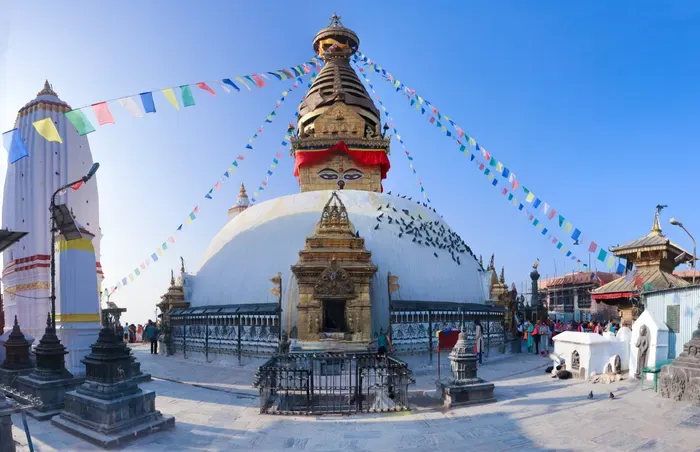
What it costs, and why the size of your group changes the answer
The two published numbers to hold on to are these: from $1,700 for the one-way Kathmandu–Lukla leg and from $2,800 for the round trip with the aircraft waiting at Lukla, quoted for the full aircraft in high season, with fuel and season able to move the final figure. Everything else on this route is arithmetic on those two numbers. Here is the arithmetic, done out, because it is the single most useful thing a traveller can work out before enquiring.
| Passengers in the aircraft | Per person, one-way charter | Per person, round trip with wait | What that buys |
|---|---|---|---|
| 1 | $1,700 | $2,800 | The whole aircraft, to yourself |
| 2 | $850 | $1,400 | Still the most expensive per head of any option here |
| 3 | $567 | $933 | Where the helicopter starts to make sense |
| 4 | $425 | $700 | The sweet spot for a group of friends |
| 5 | $340 | $560 | Best per-head figure, provided the weights work |
Read that last column carefully: five passengers only reaches $340 per head for the one-way leg if the aircraft's weight limit allows it. Lukla charters carry a hard 450–550 kg total, which works out at roughly 80 kg per person including bags, and at 2,860 m a helicopter lifts about half what it lifts at sea level. Five trekkers at 85 kg each with expedition duffels is a different aircraft day from five trekkers at 70 kg with compact bags, and the honest answer to a heavy group is a split across two aircraft rather than a promise. We quote both and let you choose.
How the Lukla transfer prices against the rest of the fleet
It helps to know what else the same aircraft costs in Nepal, because the Lukla transfer is the cheapest serious helicopter product on our board and it looks expensive only until you compare it with the rest. These are the published 2026 Kathmandu-based rates for the full aircraft, and they are the numbers we work from when we write a quote.
| Charter route | Block time | 2026 price, whole aircraft |
|---|---|---|
| Kathmandu – Lukla (one way) | ~1 h | from $1,700 |
| Kathmandu – Lukla (round trip, wait) | ~2–3 h | from $2,800 |
| Wedding or proposal flight, Kathmandu Valley | ~1 h | from $1,500 |
| Kathmandu – Pokhara transfer (one way) | ~1 h | from $1,900 |
| Kathmandu – Langtang Valley day tour | ~2 h | from $2,400 |
| Kathmandu – Everest region day tour (Kala Patthar + Everest View Hotel) | ~4–5 h | from $3,500 |
| Kathmandu – Muktinath day tour (with ground time) | ~4 h | from $4,200 |
The Lukla transfers look like poor value per minute until you remember what the alternative is: the world's most famous short runway. The Everest day tour is the most expensive product on the board because it is the longest block at the highest altitudes, with two landings and the tightest weather window of anything we fly. The Muktinath day costs nearly as much as the Everest day because it carries a full hour on the ground at the temple. The Lukla hop is short, clean and has no landing at altitude at all — and that brevity is exactly what a transferring trekker is paying for.
The arrival: what happens in the hour after you land
Here is the part that surprises people. The helicopter does not drop you at a tea house with the trailhead next door. It lands on the Lukla helipad, beside Tenzing–Hillary Airport — the 527-metre sloped strip that the fixed-wing service uses, built in 1964 under Edmund Hillary's Himalayan Trust and named for Hillary and Tenzing Norgay together — formally Tenzing–Hillary Airport. From the helipad you walk out of the airport, pick up your luggage, and start walking the trail like everybody else. The helicopter saves you the bus and the cancellations; it does not save you the walk.
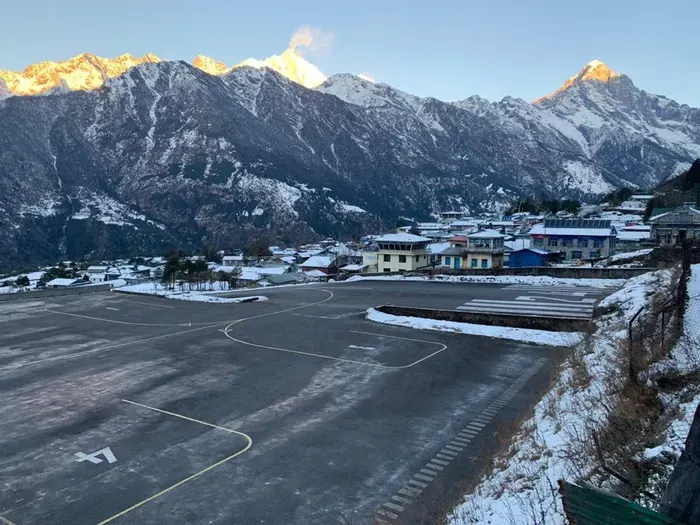
On a typical morning the timing looks like this: hotel pickup around 06:30, wheels up from the domestic terminal at about 07:15, and wheels down on the Lukla helipad at about 08:05. Boots on the trail before the Ramechhap buses have even reached the highway. From Lukla the first night is normally Phakding, and the walk from there to Namche Bazaar at 3,440 m takes a day that most trekkers use to acclimatise. If you would rather skip that step, the direct-to-Namche helicopter does the same job in one flight and skips Lukla's weather window entirely — that routing is covered in detail in our Kathmandu to Namche Bazaar helicopter guide.
One way or round trip: the decision that moves the price most
For most trekkers the helicopter is bought in one direction only, and which direction is a question about your itinerary rather than about the aircraft. The classic patterns are these.
- Helicopter in, fixed-wing out. You spend the worst travel day of the trip in a helicopter seat rather than a bus seat, then walk back down to Lukla at the end of the trek and take a scheduled flight out. This is the cheapest way to buy schedule certainty, because you pay for one leg of aircraft time and one helicopter's worth of reliability at the point where the schedule is most fragile.
- Helicopter in, helicopter out. The full no-lottery version of the Khumbu. You can also build it as a full private charter across the trek, and our heli-trekking guide explains how the trekking half of that package is priced.
- Round trip with wait at Lukla. The aircraft stays with you — you land, the aircraft stays, you board again and it flies you home. Waiting time on the ground is billed, which is why the round trip carries a different price from the one way: you are buying the aircraft's availability, not just its flying time.
- One way with the aircraft repositioning. If the aircraft is flying on to a second job, a one-way leg is quoted on the reality of that repositioning rather than on a return you have paid for. This is why a one-way quote is not simply half of a round-trip quote.
The number of variables behind a quote is short enough to list, and it is worth knowing them before you compare two quotes that look wildly different: block time, repositioning to and from your departure point, waiting time on the ground, landings, and the season and day of the week. A quote that looks cheap often simply contains fewer landings or a shorter block, and a quote that looks expensive may simply include a round trip your plan did not need.
Weight, luggage and the 80 kg line
Weight is the number that most often turns a booked helicopter transfer into a problem at the domestic terminal, and it is worth understanding why before you arrive rather than at the counter. Every aircraft has a maximum all-up weight: passengers, bags, fuel and crew combined. Lukla charters carry a hard 450–550 kg total. At 2,860 m the air is thin and the aircraft lifts roughly half what it lifts at sea level, so the margin on a hot afternoon is real and it is not negotiable. Weigh-ins happen at the domestic terminal and the pilot's weight-and-balance sheet is the last word, every day, in every weather.
- Give real weights when you enquire. An estimate that runs 10 kg light per passenger is the classic way to turn a workable configuration into a denied boarding.
- Soft duffels beat framed packs for helicopter loading; they strap down cleanly in the rear cabin.
- Porters' loads do not fly with you unless the quote says so. The charter covers the passenger payload, and crew bags ride on a separate basis.
- If the group is five-plus and heavy, ask for the split. Two flights, or one helicopter plus one fixed-wing seat. We quote both and you choose.
The same 80 kg line matters more on the way out of the Khumbu than on the way in, because duffels are heavier with layers, souvenirs and a boot full of walking sticks. If you are flying home from Lukla, pack the return weight in mind from the first day.
Weather, cancellations and the buffer day
Helicopters cancel too, and any article that says otherwise is selling you something. The H125 flies visual rules exactly as the Twin Otters do, and when the gap above Lukla is socked in, nothing lands — plane or helicopter. What genuinely differs is the size of the usable window. A helicopter can launch in a slot that fixed-wing scheduling cannot use, re-route around an isolated buildup, and hold at Kathmandu for a late-morning clearing instead of committing at dawn. That is the whole of the advantage: a wider window, not a different physics.
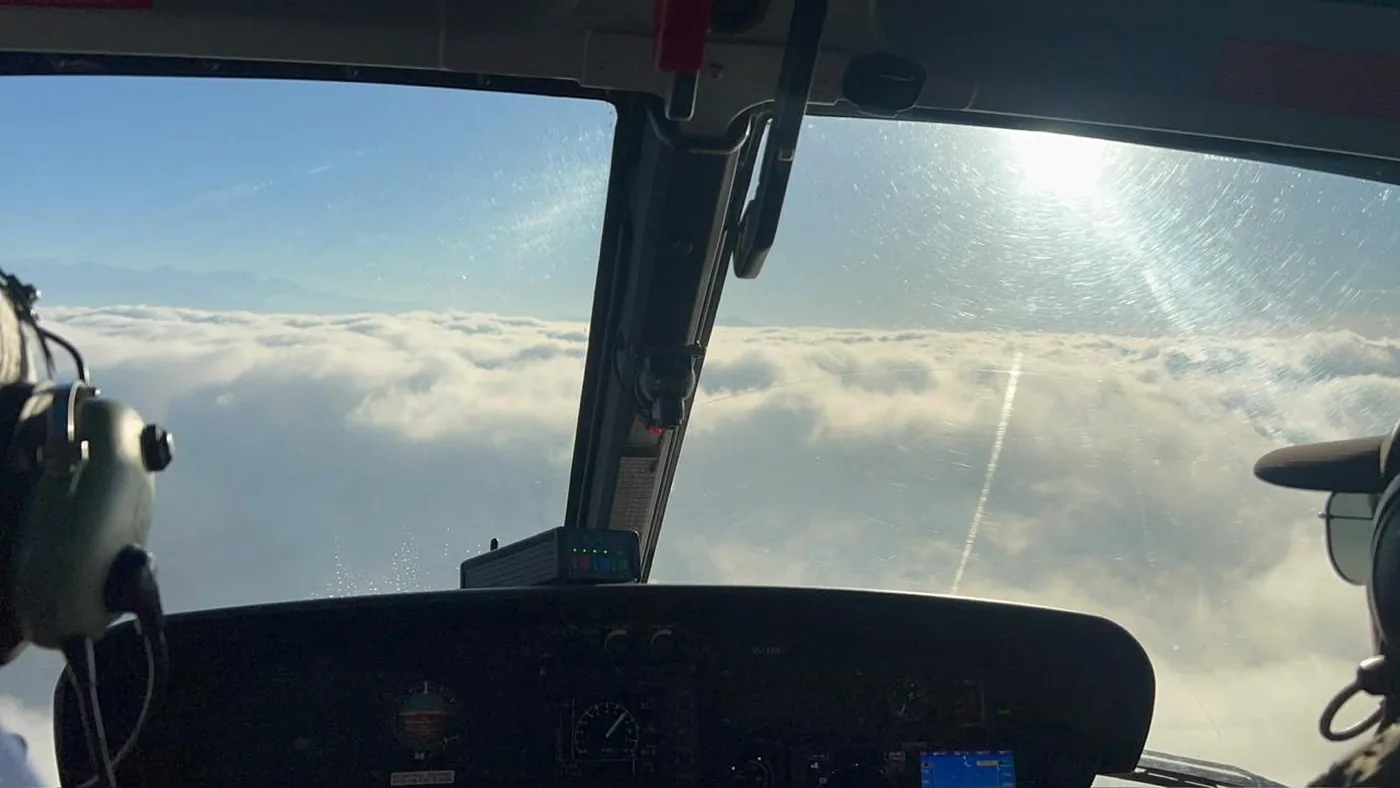
Two practical rules come out of that. Never bet your international departure on any single Lukla flight, and if the schedule is critical, put the helicopter on the morning before your final day in Kathmandu. On cancellation, the standard Nepal aviation terms we apply to every flight are a refund or a free rebooking — our cancellation and weather policy guide sets out exactly how that works, including the buffer-day argument in full.
The booking checklist
Getting a written quote that you can trust takes four numbers and about ten minutes of your time. Send them together rather than in stages, because each one changes the price.
- Dates and direction. One way in, one way out, or a round trip with waiting time — this is the single biggest driver of the quote.
- Passenger count. Four or five changes the per-head figure completely, as the table above shows.
- Real body weights and bag weights. Not estimates. This decides whether you fly together or get split.
- Your international flight time and any fixed commitments in Kathmandu, so we can build the buffer properly.
What you should get back is a written quote naming the aircraft type, the departure window, the routing, what is included on the ground and the cancellation terms. Hotel pickup in Kathmandu is included for our departures — the driver collects the group about an hour before the flight window — and our general booking procedure is written out in the how-to-book a helicopter tour in Nepal guide.
Two practical items that catch people out. If you are continuing into Sagarmatha National Park on foot after the flight, the park entry permit is NPR 7,000 per person and is paid at the gate on Everest routings rather than folded into the fare — the full permit structure is in our helicopter flight permits guide. And the Nepal entry visa costs $50 for 30 days, obtained on arrival at Kathmandu airport, so have that ready before you come to the terminal for a 07:15 departure.
Frequently Asked Questions
How much does a helicopter from Kathmandu to Lukla cost?
The published 2026 baseline is from $1,700 for the one-way leg and from $2,800 for the round trip with the aircraft waiting at Lukla, quoted for the whole aircraft. Per person that works out at $425 each for a group of four, or $340 each for five, provided the group is within the weight limit. Fuel and season move the final number, so treat these as the planning baseline and confirm the day's quote in writing.
Can I fly to Lukla by helicopter without booking a tour?
Yes. The flight is a charter of the aircraft for a block of time, not a seat on a scheduled service, and plenty of travellers buy only the leg they need — fly in by helicopter, then walk out and take a fixed-wing seat home. That one-way-plus-plane arrangement is the most common way we sell it.
How long does the helicopter flight from Kathmandu to Lukla take?
About 45–50 minutes of flying. Quoted as aircraft time it is a 60–75 minute block, because the block includes engine start, taxi, climb and descent. The fixed-wing service on the same corridor is a roughly 35-minute flight, which is the one respect in which the plane wins.
Do I have to go to Ramechhap for the helicopter?
No, and that is the helicopter's biggest practical advantage. In peak season — April–May and October–November — fixed-wing Lukla services relocate to Ramechhap, four to five hours from Kathmandu by road, and the trip begins with a night bus. Helicopters depart Kathmandu's domestic terminal year-round.
How many people can fly on the Kathmandu to Lukla helicopter?
Four to five passengers with trek bags is the realistic configuration in the H125, at roughly 80 kg per person total weight including baggage, within a hard 450–550 kg all-up limit. Five light travellers with compact duffels fit comfortably; five travellers with expedition kit usually need a split across two aircraft.
What happens if the flight is cancelled by weather?
Standard Nepal aviation terms apply: a refund or a free rebooking. What you cannot do is rely on the same flight the same afternoon. Build a buffer day, and if your international departure is fixed, put the helicopter on the morning before your last full day in Kathmandu.
Is the helicopter to Lukla safer than the plane?
Both are safe in qualified hands. Lukla's fixed-wing accident record has improved dramatically and its crews are among the most experienced short-strip pilots in the world; the helicopter's advantage is operational rather than safety-related. It flies from Kathmandu directly, it uses a wider weather window, and it can re-route around isolated cloud.
Does the helicopter land in the middle of the Khumbu trail?
It lands on the Lukla helipad beside the airport, not at a tea house. You walk out, collect your luggage and start the trek exactly like a fixed-wing arrival. If you want to be flown higher into the valley, our direct Kathmandu to Namche helicopter lands at Namche Bazaar at 3,440 m and saves the first two trekking days.
Should I fly in by helicopter and out by plane, or both ways by helicopter?
Fly in by helicopter and out by plane if you want to spend the premium where the schedule is most fragile and keep the rest of the trip on the cheaper published fares. Fly both ways by helicopter if your itinerary cannot survive a weather delay at all, and accept that the round trip with waiting time carries a different price. The trade is between certainty and cost, and it is a personal one.
What should I bring on the helicopter flight from Kathmandu?
Your trek bags, but within the weight line — soft duffels rather than framed packs, and a realistic answer on your weight when you enquire. Bring the visa money ($50 for 30 days) and, if you are continuing into the park on foot, the Sagarmatha National Park entry permit at NPR 7,000 per person, which is paid at the gate rather than included in the flight.
For the wider decision, our KTM–Lukla helicopter route guide covers why trekkers make the switch and what the fixed-wing alternative actually costs you in time, and our Lukla flight alternative guide covers what to do when the schedule breaks down. If you are still deciding how the rest of the trip should fit together, start with the planning a helicopter tour in Nepal guide, which sets out season, booking mechanics, permits, cancellation terms and what to wear in one place.
Send us your dates, passenger count, real weights and the direction you want to fly, and we will send exact numbers in writing — usually within hours during season. Email bookings@helitoursnepal.com or call +977 9851144618, and a human in Kathmandu answers.