
Short answer: A Kathmandu to Namche Bazaar helicopter flight takes roughly 45–60 minutes and lands you at 3,440 m in the Khumbu — the Sherpa capital and the acclimatisation gateway to Everest Base Camp — instead of the two days of walking (or the weather-plagued Lukla flight plus a day of trekking) the overland route requires. It is the fastest way to start a Khumbu trek, and the only way to reach Namche when Lukla is fogged in.
- 3,440 mNamche Bazaar elevation
- 45–60 minKathmandu to Namche flight time
- 2,860 mLukla alternative airport
- 2 daysTrekking time saved
Why Fly to Namche Instead of Walking
Namche Bazaar sits at 3,440 metres in a natural amphitheatre of pine and rhododendron, and it is the place every Khumbu itinerary passes through. Trekkers who fly from Kathmandu to Lukla still face a full day of walking to reach it. Trekkers who fly directly to Namche are drinking tea in the Sherpa capital by mid-morning.
There is a second, less obvious reason people book this flight. Lukla — Tenzing-Hillary Airport, at 2,860 m — is one of the most weather-exposed airstrips in the world, and its departures cancel with a frequency that has shaped how experienced trekkers plan Khumbu trips. A helicopter can lift out of Kathmandu and route directly to Namche's helipad without depending on Lukla's cloud window at all.
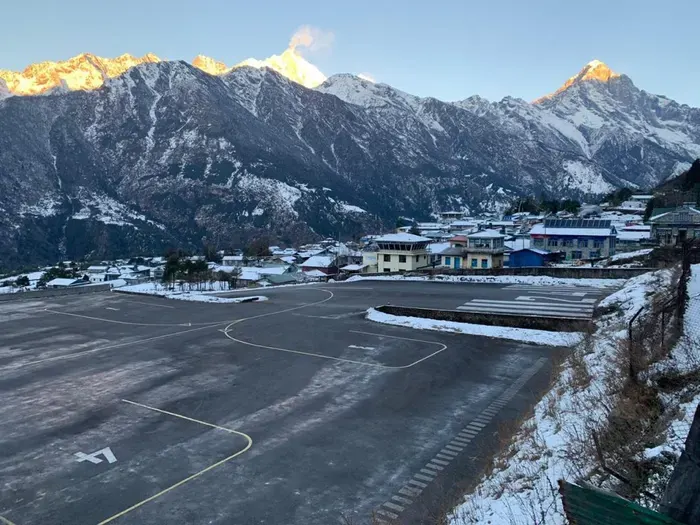
What the Flight Actually Looks Like
The route leaves Kathmandu's domestic terminal and climbs east-northeast, and the first twenty minutes are the ones people remember. You pass over the terraced middle hills, then the ridgelines rise and the snow peaks come into view in a single sweep — Ganesh Himal and Langtang to the north, then the Jugal Himal, then the first of the Khumbu giants.
Depending on the routing and the day's conditions, the aircraft typically enters the Khumbu from the south, passing the Dudh Koshi valley below and the confluence at Benkar, then climbing over the terraced hillside village of Monjo and into the Sagarmatha National Park. Namche appears below as a horseshoe of rooftops folded into the hillside.
The landing is on the Namche helipad, a short walk from the town's lodges. If the routing takes you via Lukla, you refuel there and the second leg is only about fifteen minutes — but on a direct routing, you skip that stop entirely.
Which Aircraft, and Why It Matters
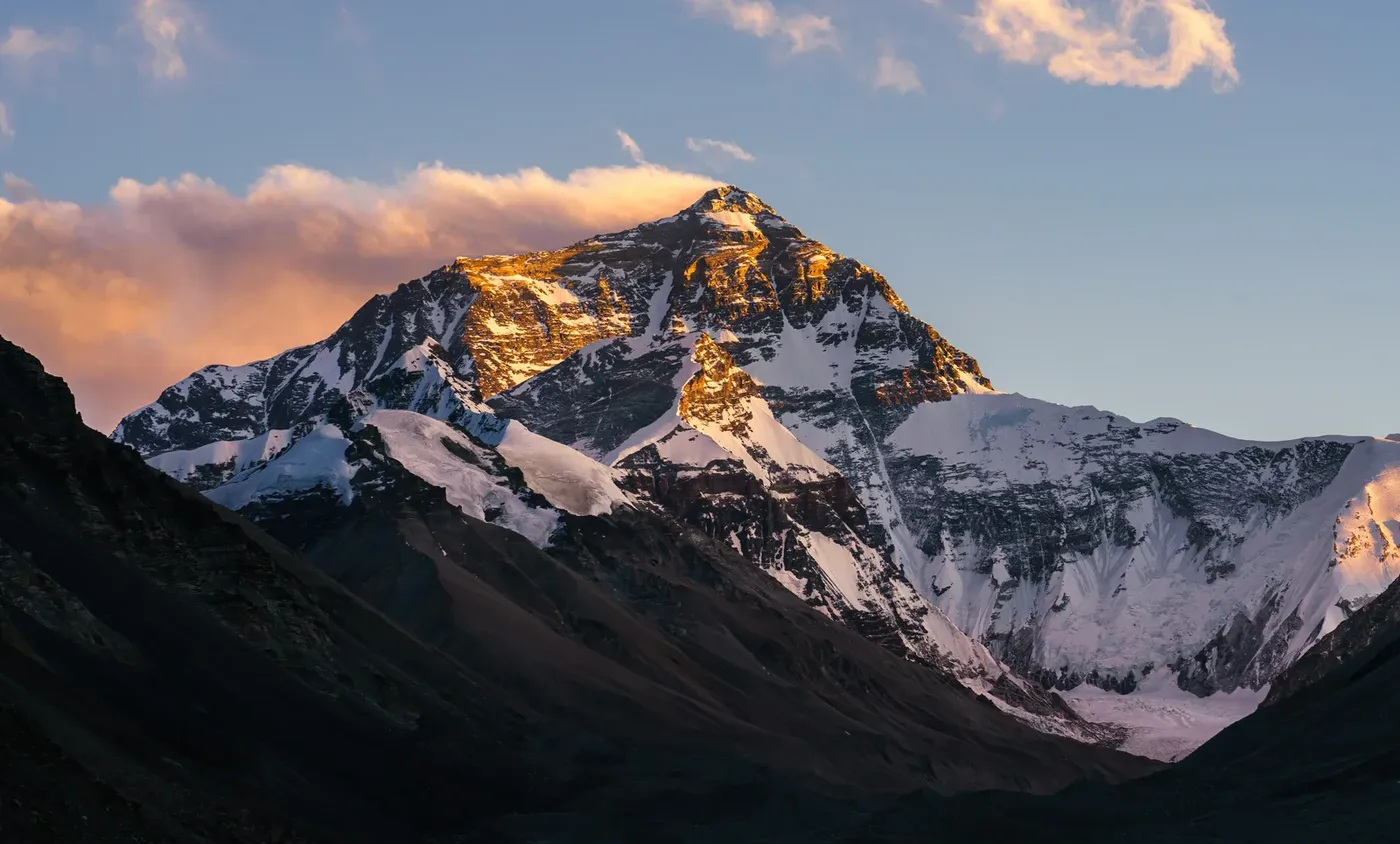
Nepal's mountain helicopter fleet is dominated by the Airbus H125 (the AS350 B3, in its high-altitude variant) and the smaller H125-family airframes, alongside Eurocopter AS350s and a handful of Bell and Robinson types. For Namche the relevant distinction is a high-altitude-capable aircraft with an experienced mountain pilot, because 3,440 m is close to the altitude band where engine performance and rotor efficiency start to matter on a warm day.
Passenger capacity is typically up to five guests per aircraft alongside the pilot. That number matters commercially: if you are a group of four or five, the per-person cost of a private helicopter can approach the cost of five individual seats, which is why charters become competitive at that group size.
Kathmandu to Namche: What It Costs
There is no published fixed fare, and any page quoting you a single number without qualifying it is guessing. Helicopter pricing in Nepal depends on the aircraft, the group size, whether the flight is shared or private, the season, and the positioning cost. What is genuinely useful is understanding how the price is constructed.
| Pricing Factor | Why It Changes the Price |
|---|---|
| Shared seat vs private charter | Charged per seat, or for the whole aircraft — the gap narrows as your group grows toward five |
| Kathmandu origin vs Pokhara origin | A Pokhara departure is a shorter flight; a Kathmandu departure carries more positioning time |
| Season | High season (March–May, September–November) carries the strongest demand and the least flexibility |
| Routing | A direct Namche routing differs from one that must transit Lukla and refuel |
| Weight | Total passenger and baggage weight is a genuine performance limit at altitude, not a formality |
For context on what Nepal helicopter flying generally costs, our own bookable products are a fair reference point for the market rather than for this specific route: the Everest Base Camp day tour runs from $1,260 per person on a shared basis, the Annapurna Base Camp day tour from Pokhara from $860 per person, the Muktinath pilgrimage from $1,080 per person, and the Everest scenic fixed-wing flight from $260 per person. A private Everest charter runs from $4,500 per aircraft for up to five guests.
Those are our published prices for our own products — not a quote for the Namche route. If you want a Namche figure, ask for it in writing with the aircraft type and the routing included, and treat any operator who will not itemise those two things as one to avoid.
Altitude: The Reason to Fly Here Instead of Higher
Namche is the standard acclimatisation stop on the Everest trail, and that is not an accident of geography. At 3,440 m it sits low enough to sleep at without the risk profile of Gorak Shep or Everest Base Camp, and high enough to begin the acclimatisation process that makes the days above 4,000 m survivable for a trekker who has come from sea level.
Flying to Namche rather than walking avoids the lower-altitude walking days, which has a real consequence people often overlook: you arrive at 3,440 m without the gradual ascent the trekking route provides. The two days of walking you skipped are also two days of adaptation you skipped. Arriving fit and unacclimatised at 3,440 m is a genuine risk factor, and the standard advice is to treat the first 24–48 hours in Namche as rest, not as a training day.
Symptoms of acute mountain sickness — headache, nausea, dizziness, disturbed sleep — are common at this altitude and usually settle with rest and hydration. They should never be pushed through. Our own guidance on how helicopter rescue and evacuation works in Nepal explains the evacuation thresholds honestly, and it is worth reading before you fly rather than after.
Namche vs Lukla vs Walking: The Honest Comparison
| Option | Time from Kathmandu | Reached Altitude | Weather Risk |
|---|---|---|---|
| Fly to Lukla, trek to Namche | 1 day flight + 1 to 2 days walking | 2,860 m → 3,440 m | High — Lukla cancels frequently |
| Walk in from Jiri or Salleri | 6 to 8 days walking | Gradual | Low, but slow and physically demanding |
| Fly directly to Namche | 45 to 60 minutes | 3,440 m immediately | Lower — not dependent on Lukla |
The trade-off is honestly stacked. Flying directly to Namche saves the most time and carries the least weather risk, but it costs the most and it removes the acclimatisation days. Walking in from Jiri is the cheapest and the safest for acclimatisation, and costs you a week.
If your itinerary is tight, or if you are joining a fixed-date trek and cannot afford to lose a day to a cancelled Lukla departure, the direct Namche flight is the option that solves that specific problem. If you have the days to spare, walking from Lukla remains the better acclimatisation and the better value.
When to Fly
The Khumbu's stable flying windows are the same as the trekking windows: March to May and September to November. In these months you get the clearest mornings, the most reliable departures and the best visibility on the peaks.
The monsoon, roughly June to September, brings cloud and rain to the Khumbu and makes mountain flying genuinely unreliable — flights operate on clear breaks, but you are gambling. Winter, December to February, brings stable air and famously clear skies, but cold temperatures and shorter days, and occasional high-wind days that ground small aircraft.
One practical rule applies year round: mountain flights are scheduled early. Morning air is denser and calmer, visibility is better before the valley cloud builds, and a morning departure leaves the whole day for a weather delay if one is needed. An afternoon slot in the Khumbu is a slot you may not get to use.
How to Book This Flight
Book through a licensed operator rather than an unvetted middleman, and ask three specific questions before you pay. First, which aircraft type and registration will fly you — not "a helicopter", the type. Second, whether the quoted routing is direct to Namche or via Lukla, because the two are not the same product. Third, what happens if the weather grounds the flight, in writing.
Weight matters more than most passengers expect. At 3,440 m the aircraft's performance envelope is genuinely tighter than at sea level, and operators will ask for accurate passenger and baggage weights. Under-declaring is not a formality you can talk your way out of — it is a safety limit.
We are a licensed Nepal operator and we arrange the Everest and Annapurna routes directly, including the Everest Base Camp helicopter tour that many Namche-bound travellers combine with a Base Camp landing, and the full Everest Base Camp trek with a helicopter return for guests who want to walk up and fly back. Our Kathmandu to Lukla helicopter guide covers the sibling route in the same detail, and the planning hub collects everything else you need before booking — permits, packing, insurance and cancellation policy.
For reference, Namche Bazaar (3,440 m) is the authoritative background on the town itself and the Khumbu's geography — worth reading before you plan, though nothing in it changes what the flight can do.
Frequently Asked Questions
How long does it take to fly from Kathmandu to Namche Bazaar?
Roughly 45 to 60 minutes of flight time, depending on the aircraft and the routing. A routing that transits Lukla for refuelling takes longer than a direct routing. Compare that to a full day of flying to Lukla plus one to two days of walking, or six to eight days walking in from Jiri.
Do I need a permit to fly to Namche?
Namche sits inside Sagarmatha National Park, so park entry and the Khumbu Pasang Lhamu rural municipality fee apply to visitors entering the area — this is true whether you arrive by helicopter, by fixed-wing to Lukla, or on foot. Your operator should arrange the park formalities as part of the booking; ask them to confirm it in writing.
Can a helicopter land at Namche in bad weather?
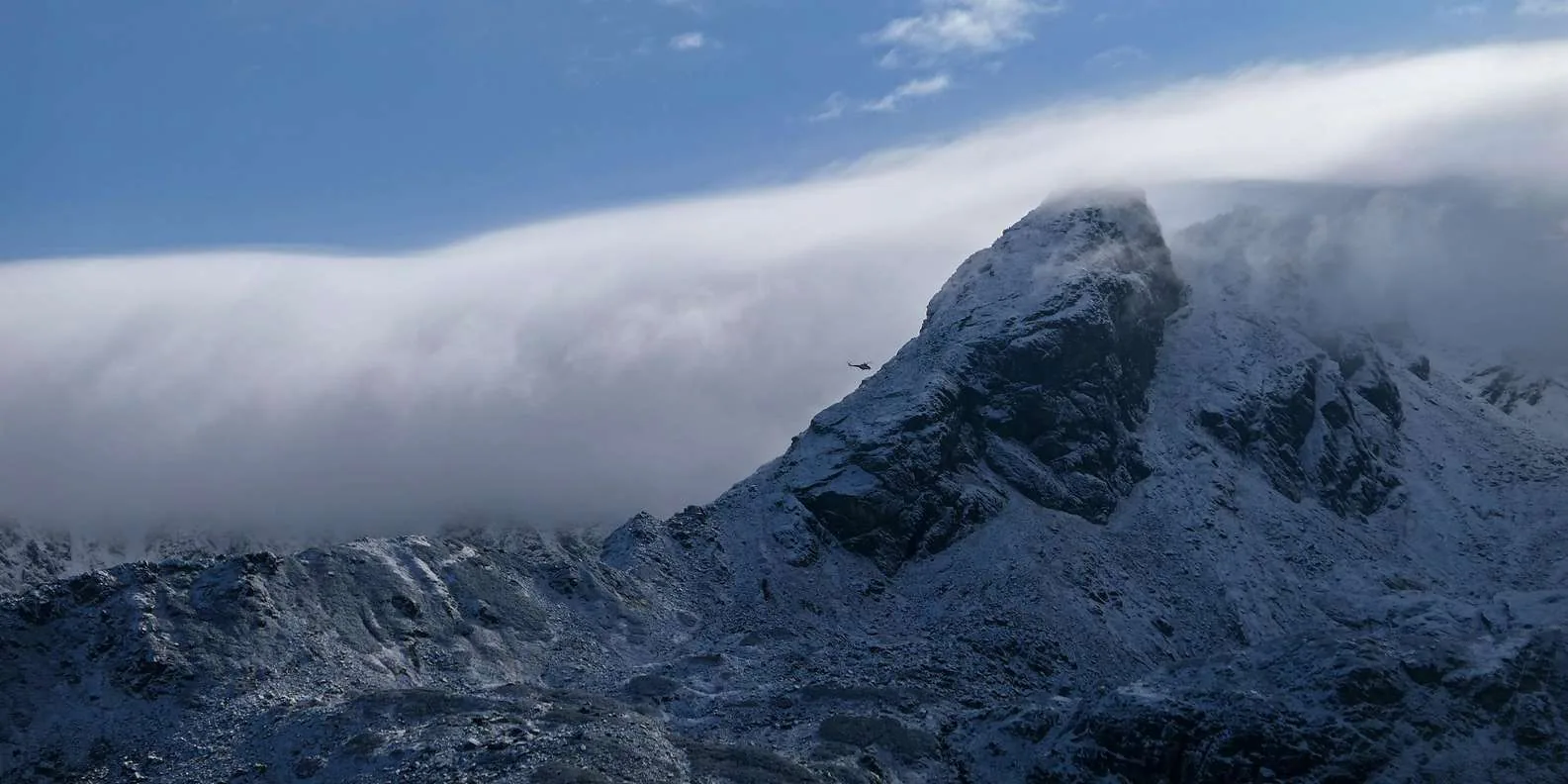
Not in genuinely bad weather — no aircraft flies into cloud in mountain terrain, and no reputable operator will try. The advantage of the helicopter is not that it ignores weather; it is that it is not dependent on Lukla's specific cloud window, so it can often complete a flight on a day when the Lukla fixed-wing departures are cancelled.
Is flying to Namche dangerous because of the altitude?
The flight itself is safe with a competent operator and a high-altitude-capable aircraft. The altitude risk is about what happens after you land: arriving at 3,440 m from Kathmandu without the gradual ascent of a trek removes your acclimatisation days. Treat the first 24 to 48 hours in Namche as rest and hydration, not exercise.
How many passengers can the helicopter carry?
Typically up to five guests plus the pilot, but the real limit at Namche is weight rather than headcount. Total passenger and baggage weight is a genuine performance constraint at 3,440 m, and operators will ask for accurate figures. In practice a heavy group of five may not be able to fly with full luggage.
Is it cheaper to charter the helicopter or buy seats?
Buying individual shared seats is cheaper for one or two travellers. Once you are a group of four or five, the cost of chartering the whole aircraft divided by your group size approaches the per-person seat price — and a charter gives you control over departure time, which matters in a weather-dependent environment.
What is the best time of year for this flight?
March to May and September to November, the same windows as trekking. These months offer the clearest mornings and the most reliable departures. The monsoon months are genuinely unreliable for mountain flying, and winter, while often beautifully clear, brings cold and occasional high-wind days.
Can I combine a Namche flight with an Everest Base Camp landing?
Yes, and many guests do. A common pattern is to land at Kala Patthar or Everest Base Camp for the view and the photographs, then continue to Namche to begin a trek or to break the journey. Our Everest Base Camp helicopter day tour covers the Base Camp landing element; the Namche leg is arranged around it.
What happens if the flight is cancelled by weather?
Reputable operators reschedule rather than fly in poor conditions, and you should confirm the exact policy in writing before paying. Ask specifically whether a weather cancellation is refunded, rebooked at no cost, or rebooked at a fee — the answer varies by operator, and it is the single most common source of dispute in Nepal's helicopter market.
Do I need travel insurance for a helicopter flight in the Khumbu?
Yes, and you should confirm your policy explicitly covers helicopter evacuation above 4,000 m — many standard travel policies exclude high-altitude activities or cap the altitude at which evacuation is covered. Our guide to helicopter tour safety and insurance in Nepal sets out what to check before you rely on a policy.
How far in advance should I book?
For the high season, book as early as your plans allow — demand is strongest in March to May and September to November, and the aircraft fleet is limited. In the shoulder months a few days' notice is usually enough, though weather can compress everyone's plans into the same clear mornings.
What should I wear on the flight?
Layers, plus a warm outer layer even in summer. Cabin heating in these aircraft is limited, and you may step out at 3,440 m where the temperature is far below the Kathmandu valley. Our helicopter tour packing list covers this in detail, and the same advice applies to a Namche flight as to a Base Camp one.
Ready to Fly to the Sherpa Capital?
Tell us your dates, your group size and accurate total weights, and we will reply within 12 hours with the aircraft type, the routing, availability, and the final price in writing — including what happens if the Khumbu weather decides otherwise.