
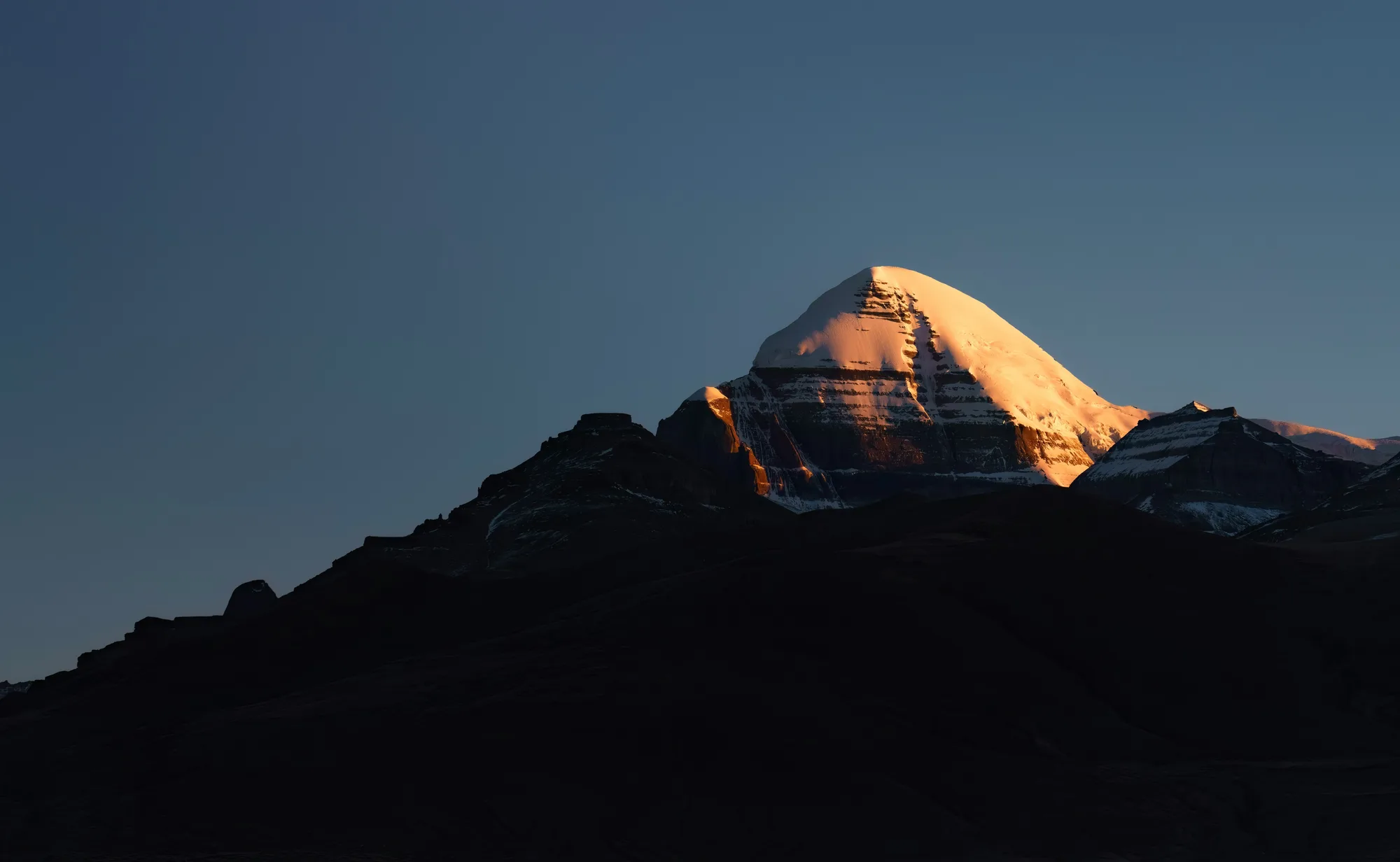
Short answer: The Everest mountain flight tour is the least physically demanding way to see the mountain: a one-hour fixed-wing flight out of Kathmandu at 1,400 m, published at $260 per person for a window seat, that takes off and lands at the same airport without setting down anywhere in the mountains. If you can sit upright for an hour, manage a short walk through a domestic terminal and use a set of aircraft steps, the flight itself is not the obstacle. The part that needs planning is the airport day around it, and the difference between this product and the helicopter versions, which put you on the ground at 3,880 m or 5,545 m and expose a fragile body to real altitude.
- $260Published fare per person, window seat
- 1 HourPublished flight duration, no landing
- 1,400 mKathmandu, where the flight starts and ends
- 8,848.86 mEverest, the summit you see from the window
Most of the people who ask us this question are not nervous flyers. They are travellers who have already been told, by a surgeon, a cardiologist or their own knees, that the Everest Base Camp trek is off the table. Some are travelling with a parent in their eighties. Some use a wheelchair. Some have a heart condition that is stable, managed and boring, and simply do not want to spend money on a product that will turn them back at the aircraft door. The frustration in the question is almost always the same: everybody talks about Everest as a thing you walk to, and nobody explains what the flying version actually asks of you.
So this page is about the body, not the mountain. It covers where the walking really happens on a mountain flight, what a wheelchair traveller can expect between the hotel and the aircraft, which medical conditions need a doctor's letter rather than a booking form, why the altitude question changes completely the moment a landing is added, and how to choose between the one-hour flight and a helicopter day tour when the answer depends on somebody's lungs rather than somebody's budget. The peaks, the route and the photography are covered elsewhere, because they are the easy part. The Everest mountain flight hub is the place to start for those.
One thing worth saying plainly at the top: none of what follows is medical advice, and none of it is a clearance. We fly aircraft; we do not assess hearts. What we can do is describe honestly what each product involves physically, so that you and your doctor are making a decision about a known set of facts rather than an imagined one.
What the mountain flight actually asks of your body
Strip away the scenery and the Everest mountain flight tour is a short domestic hop with an unusually good view. You are driven to the domestic terminal at Tribhuvan International Airport, which sits at 1,400 m in the Kathmandu Valley. You check in, you walk a few tens of metres to a bus or directly to the apron, you climb a set of aircraft steps, you sit down in a window seat, and you stay there for one hour. The aircraft climbs, runs east along the range so that Everest at 8,848.86 m fills the windows, turns, and comes back. Then you get off the same aircraft at the same airport and are driven back to your hotel in time for a late breakfast.
There is no landing in the mountains to prepare for. That single fact is what makes this product accessible to people who cannot trek, because the two hardest moments in a Himalayan flight are both removed: the walk at altitude and the ground stop where thin air does the damage. On this flight there is no altitude to acclimatise to beyond Kathmandu's own 1,400 m, no trail, no uneven ground, no distance to cover on foot and no schedule that depends on your legs.
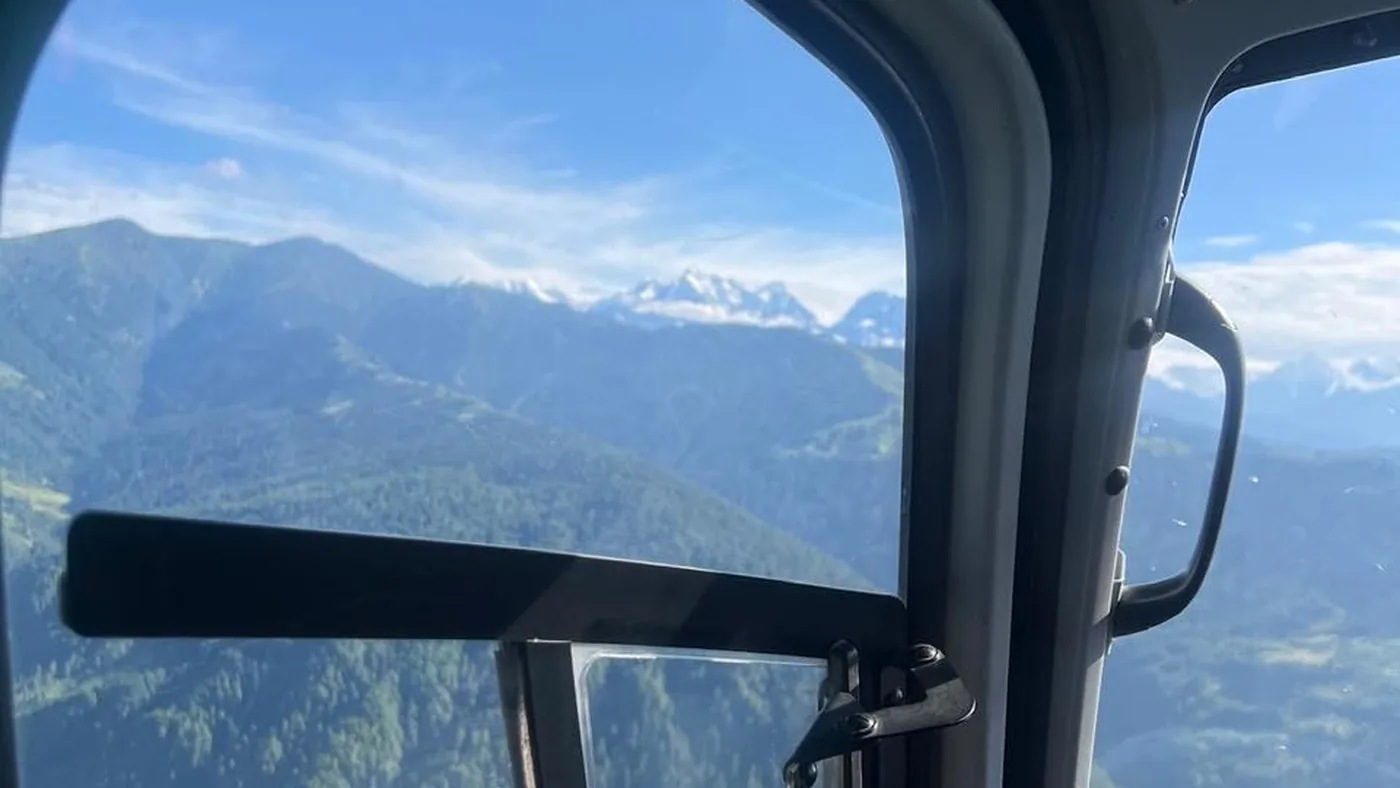
What remains is ordinary airport friction. The terminal is busy in the early morning, because every mountain flight and most of the Lukla departures leave in the same narrow window. There are queues at security, a bus ride to the aircraft on some departures, and a set of steps up to the cabin door. None of that is dangerous, and all of it can be smoothed with a phone call in advance. It is simply worth knowing that the demanding part of the day is the ninety minutes on the ground at either end, not the hour in the air.
If walking is the limit: knees, hips, backs and wheelchairs
Joint replacements, spinal problems and general frailty are the most common reasons people write off Everest entirely, and they are also the reasons this flight exists in the itinerary of so many older travellers. The walking is limited to the terminal and, on some departures, the apron. The steepest thing you will meet all morning is the aircraft's own airstair, which is short but narrow, with a handrail on one side. If that is a problem, say so when you book rather than at the gate, because the assistance that solves it has to be arranged with the airline, not improvised on the apron.
Wheelchair users and travellers with limited mobility
Kathmandu's domestic terminal handles wheelchairs routinely, and the airlines that fly the mountain route carry them as a matter of course. The practical sequence is usually this: you are met at the terminal entrance, pushed or accompanied to check-in, taken through a separate security line where one exists, and then either driven to the aircraft or assisted to it. Boarding is done with an aisle chair if you cannot manage the steps under your own power, and your own wheelchair is stowed in the hold and returned to you at the door on arrival. Give the airline as much notice as you possibly can. The equipment and the staff are all there, but they are rostered, and a request made at check-in is a request made too late.
Two honest caveats. The first is the aisle chair itself: it is narrow, it requires a transfer out of your own chair, and passengers who cannot bear weight at all should discuss the transfer with the airline in advance so that the right crew is assigned. The second is that ground handling at a busy South Asian domestic terminal is not the same experience as a European hub. It works, it is done every week, and it is not elegant. Knowing that in advance is worth more than any amount of reassurance.
Walking aids, and why the helicopter is harder
Sticks, crutches and folding walkers travel in the hold without fuss; a walking frame is bulkier but is normally accepted as checked baggage. What surprises people is that the helicopter versions of this trip are harder to board than the aeroplane, not easier. Helicopters are entered over the skid, often with a step up and a duck of the head, and the landing sites themselves are the real obstacle: packed snow at Kala Patthar, rock and gravel at other pads, and no paved surface anywhere. A passenger who manages a turboprop airstair comfortably may still find a snow landing at 5,545 m genuinely difficult, quite apart from the altitude. If mobility is the limiting factor and not altitude, the fixed-wing flight is the gentler product, and it is also the cheaper one.
| Product | What you physically do | Time | Published price |
|---|---|---|---|
| Everest scenic mountain flight (fixed-wing) | Sit in a window seat for the flight. No landing, no walking beyond the terminal and the airstair | 1 Hour | $260 per person |
| Everest Base Camp helicopter day tour | Board over a skid, then step out briefly at a landing site at 5,545 m | 1 Day (approx. 6 hours) | $1,260 per person, shared flight |
| Private Everest helicopter charter | The same landings, with the aircraft to yourselves for up to five guests | 1 Day (approx. 5–6 hours) | $4,500 per aircraft, up to 5 guests |
| Everest Base Camp helicopter trek | Walk uphill for days, then fly back out from altitude | 10 Days | $1,840 per person, shared flight |
The table is the honest summary of the choice. Three of those four rows require you to stand on ground that is above 5,000 m or to walk to it. Only the first asks nothing of your legs at all.
Heart, lung and blood pressure questions
This is the section people read most carefully, so it deserves the least salesmanship. A stable, well-managed cardiac condition and a seat on a one-hour scenic flight are not automatically in conflict, but the decision belongs to your cardiologist, and any operator who tells you otherwise before seeing your notes is an operator to walk away from. What we can tell you is what the flight involves physiologically, so that the conversation with your doctor is a specific one.
The aircraft used on the mountain route are pressurised turboprops, and the cabin is maintained at a pressure that keeps the effective altitude well below the summit you are looking at. You are still starting from a city at 1,400 m rather than at sea level, which matters to anybody with reduced lung function, and you will spend an hour seated and largely immobile, which matters to anybody with circulation problems. In practical terms: compression stockings if your doctor recommends them, all medication in your hand luggage rather than the hold, and a word with the crew on boarding if you would rather they knew.
Many airlines ask for a medical clearance form for passengers who have had a cardiac event or surgery within a recent period, or who need supplemental oxygen on board. The exact window varies by airline and by route, so the right move is to tell us the situation when you enquire and let us check the operating carrier's current requirement on your dates. Do not assume a form is needed, and do not assume it is not.
Lung conditions split the same way. Well-controlled asthma that is stable on your normal inhalers is a different proposition from severe COPD with a resting oxygen requirement, and only a respiratory physician can place you on that spectrum. One genuinely useful point: on the fixed-wing flight you never leave the aircraft, so there is no moment where you must exert yourself in thin air. That is not true of any landing product, which is the subject of the next section.
What changes the moment the flight lands
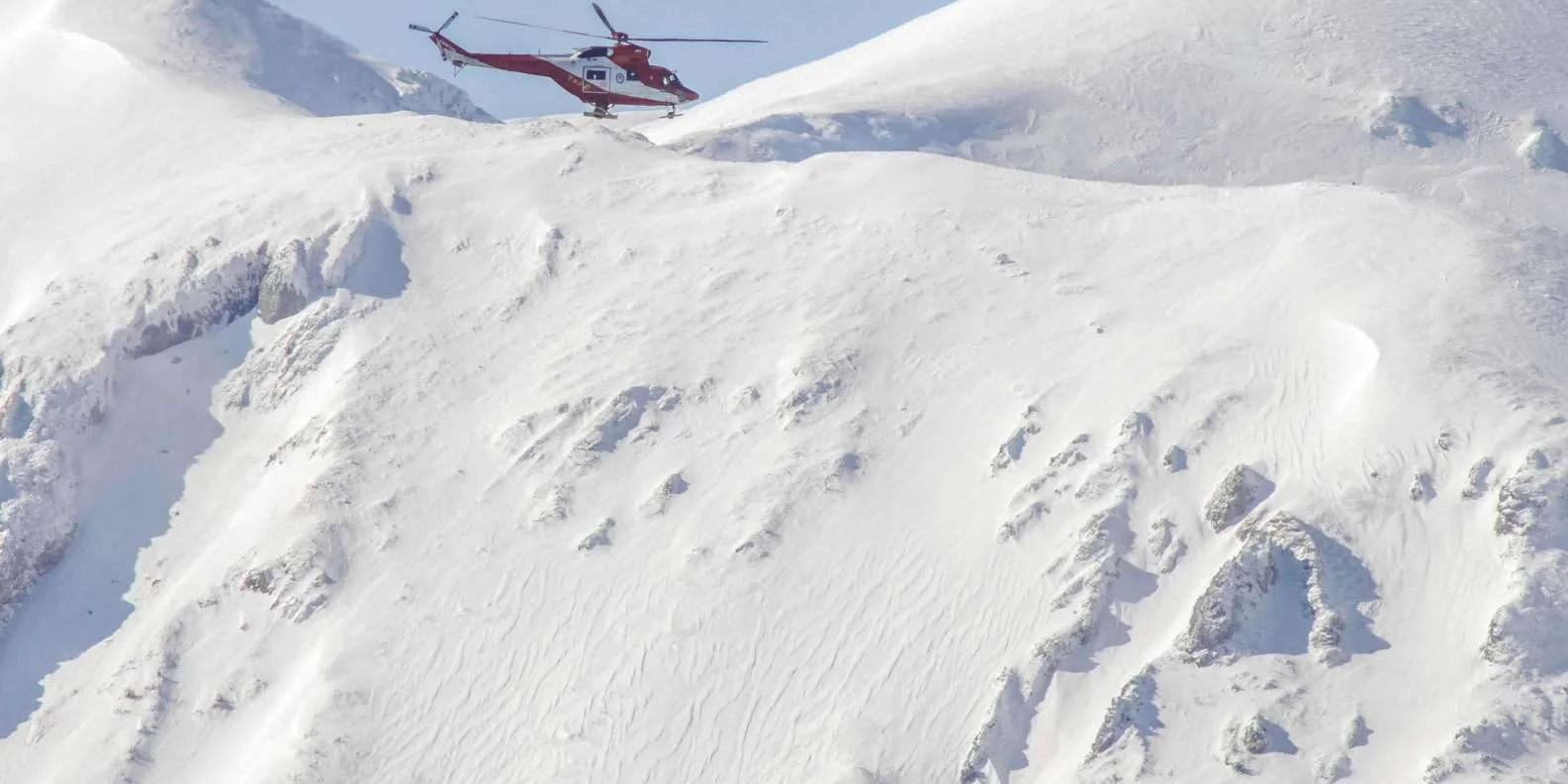
The altitude question does not exist on the mountain flight in any meaningful sense, because the highest ground you touch is Kathmandu. It exists intensely on the helicopter products, and the difference is worth being blunt about. A helicopter is not pressurised. It climbs to a landing site, you get out, and you are standing at whatever altitude that site sits at, with the aircraft's oxygen bottle as your only margin. That is fine for most healthy travellers and it is a real risk for a passenger whose heart or lungs are already working hard at 1,400 m.
| Place on the route | Verified altitude | What you are doing there |
|---|---|---|
| Kathmandu (Tribhuvan International) | 1,400 m | Take-off and landing for every product on this page |
| Lukla | 2,860 m | Where the walking routes begin and where many helicopter flights stage |
| Everest View Hotel | 3,880 m | Breakfast landing on the private charter; the lowest landing site on any Everest product |
| Annapurna Base Camp | 4,130 m | Landing on the Annapurna day tour, for comparison with the Everest sites |
| Everest Base Camp | 5,364 m | Landing when conditions and fuel allow, on the day tour and the charter |
| Kala Patthar | 5,545 m | The standard high landing on the Everest Base Camp day tour |
| Everest summit | 8,848.86 m | Seen from the window. Nobody lands here, on any product |
If a passenger in your group has a heart or lung condition, the column that matters is the second one, and the decision is usually made for you by it. A charter that lands for breakfast at the Everest View Hotel at 3,880 m is a very different physical event from a day tour that puts you on the ground at 5,545 m. The difference between those two numbers is the difference between a beautiful morning and a medical incident, and it is worth choosing deliberately rather than accepting whatever itinerary is offered first.
Altitude illness is not a mystery and it is not a matter of toughness. The symptoms to watch for are headache, nausea, unusual breathlessness and dizziness, and the response at a landing site is always the same: get back on the aircraft, descend, and do not wait to see whether it improves. The clinical description of altitude sickness is worth ten minutes of reading before you fly, whichever product you choose, because the early signs are easy to mistake for tiredness after an early start.
Children, infants and passengers in their eighties
A mountain flight is a good product for a three-generation group, which is why we see so many of them. A grandparent who cannot manage the trek can sit in the window seat while the rest of the family walks in from Lukla, and everybody meets the same mountain. That is a genuinely good use of the product and it is the reason the fixed-wing flight outsells every other option for family groups with an older member.
For small children, the considerations are ear pressure on the descent, the length of the morning and the fact that there is nowhere to run. A one-hour flight with a guaranteed window seat is manageable; a six-hour helicopter day with a high landing is not, for most under-fives, and the altitude adds a risk that small children cannot describe. Infant and child fare rules are set by the operating airline rather than by us, and they change, so ask at the time of booking rather than relying on a figure you read somewhere. Airlines also set their own rules on lap infants and on whether a child seat can be used, and those rules are worth confirming in writing before you pay.
For passengers in their seventies and eighties the flight itself is rarely the problem. The early start usually is. Departures stack into the first hours of the morning, hotel pickups happen before dawn, and a passenger who needs a slow, unhurried morning will find the standard schedule brisk. The fix is simple: ask for the latest departure of the morning rather than the first, take the flight on the second or third morning of the trip rather than on arrival day, and treat the rest of that day as lost to a nap. The window-seat photography guide covers what to expect in the cabin itself, including how much of the hour is spent at the window rather than moving about.
Motion sickness, vertigo and ears
Mountain flights are flown in the calmest air of the day, which is one reason the schedule is stacked so early, but calm is not the same as still. The aircraft banks to give both sides of the cabin a view, and the turn at the eastern end of the route is the part most likely to disagree with a sensitive stomach. If you know you are prone to motion sickness, take whatever your pharmacist recommends about an hour before departure, ask for a seat towards the front, keep your eyes on the horizon rather than on a screen or a book, and eat something plain rather than nothing at all.
Vertigo and inner-ear problems are a different matter and worth raising with your doctor rather than self-managing. The visual load on this flight is unusual: a wall of white peaks moving past the window with no visible horizon reference in the middle distance, and a turn at each end of the route. Most passengers find it thrilling. A small number find it disorienting, and it is much easier to plan for that in advance than to discover it at 6 a.m. over the Khumbu.
Pregnancy, recent surgery and other temporary reasons to wait
Pregnancy is a conversation with an obstetrician, not a booking decision. The general travel-medicine position is that uncomplicated pregnancy and a short pressurised flight are usually compatible, and that late pregnancy and any flight with a landing at altitude is a different question. The fixed-wing product, which never leaves the aircraft, is the gentler of the two by a wide margin; a day tour that lands at 5,545 m is not something to book on the strength of a blog post, ours included.
Recent surgery raises two separate issues. The first is gas expansion in the body at altitude, which is why surgeons impose a waiting period after abdominal, chest, eye and joint procedures, and why that period is theirs to set and not ours. The second is the practical business of sitting still for an hour and then climbing aircraft steps. If you are within a few weeks of an operation, tell us the date, ask your surgeon for a fit-to-fly note, and we will hold a seat on a later date rather than push you onto an earlier one.
What to tell us before you book
None of the above requires a medical file. It requires a short, honest message at the enquiry stage, and the difference between a smooth morning and a difficult one is almost always whether that message was sent. The list we actually need is short:
- Whether anyone in the group uses a wheelchair, and whether they can transfer into an aisle chair without bearing weight.
- Whether anyone needs assistance with the aircraft steps, and whether a walking aid travels with them.
- Any heart, lung or blood-pressure condition that is being actively treated, and any medication taken daily.
- Any surgery in the last few months, with the date, and whether a fit-to-fly note has been issued.
- Whether anyone is pregnant, and how far along.
- The ages of any children under twelve, and whether an infant will be on a lap.
- Whether anyone in the group has flown at high altitude before, and how they reacted.
- Whether the priority is a guaranteed landing or the best possible view of the summit, because those pull towards different products.
That last point decides more bookings than any other. A passenger who wants to stand at Everest Base Camp needs a helicopter, a good weather window and a body that tolerates 5,364 m. A passenger who wants to see Everest, photograph it and be back at the hotel for breakfast needs the one-hour flight and none of the rest. The Everest Base Camp helicopter day tour guide sets out exactly what the landing version involves, and it is the honest comparison for anybody weighing the two.
Insurance: the part that matters when the body is the issue
Travellers who come to Nepal to trek buy evacuation cover because the trail is dangerous. Passengers on a mountain flight often buy nothing, on the assumption that an hour in the air is not an insurable event, and that is mostly true, right up to the point where it is not. The policy question is not whether you will need a helicopter out of the mountains, because on this product you will not. It is whether your ordinary travel medical cover includes helicopter transfer and treatment in Nepal, and whether it excludes pre-existing conditions that you have already disclosed to your doctor.
If you are travelling with a known cardiac or respiratory condition, the exclusion clause matters more than the headline cover. Declare the condition when you buy the policy, accept the loading if there is one, and check that the emergency assistance line actually operates in Nepal. A policy that covers a sprained ankle on the trail and excludes the thing you already know about is not cover, it is a receipt. The helicopter rescue and evacuation guide explains how the system works in practice, which is useful context even for a passenger who never intends to leave the aircraft.
Choosing: one hour in the air, or a landing you have to survive
The table below is the one we use on the phone, and it is deliberately unromantic. It is not about which product is better, because the helicopter day tour is a magnificent thing for a healthy traveller. It is about which one fits the body that is actually going.
| If this describes you | Book this | Because |
|---|---|---|
| Cannot walk far, or uses a wheelchair | The fixed-wing mountain flight | No landing, no trail, and the easiest boarding of any product here |
| Stable heart or lung condition cleared by your doctor for a short flight | The fixed-wing mountain flight | Pressurised cabin, no ground exposure, highest ground touched is 1,400 m |
| Healthy but short of time | The fixed-wing mountain flight | One hour in the air, back at the hotel before mid-morning |
| Want to stand at altitude, and cleared to do so | Everest Base Camp helicopter day tour | Lands at 5,545 m for the view that made you book |
| Group of up to five, want to control the timing | Private Everest charter | One aircraft, one schedule, breakfast at the Everest View Hotel at 3,880 m |
| Want to walk in and fly out, with ten days to spare | Everest Base Camp helicopter trek | The only product here that gives you the trail as well as the view |
Notice how many rows resolve to the cheapest product on the page. That is not a coincidence and it is not a pitch: the mountain flight is the version that removes every physical demand, and physical demand is exactly what this page is about. For a large share of the travellers who ask us whether Everest is still possible for them, the answer is yes, in an hour, and without leaving the aircraft.
Booking it: the two things that still cause trouble
The first is the early start, which no amount of planning abolishes. Mountain flights leave in the first hours of the morning because that is when the air over the range is clearest and the wind is lowest. If the passenger you are booking for needs a slow morning, book a later departure, book it for the middle of the trip rather than the first day, and keep the rest of that day empty. A hotel pickup before dawn followed by a full day of sightseeing is how a good flight turns into an exhausting one.
The second is the weather, which is not a medical problem but has a medical dimension: a cancellation means a second early start. Build at least one spare morning behind the flight, and read the cancellation and weather policy guide before you pay, so that you know what happens to the money if the cloud wins. Passengers with a health condition should not be asked to absorb three consecutive dawn alarms because nobody left room in the itinerary for a rebooking. The Everest scenic mountain flight page carries the current departure window and the fare, and the rest of the mountain-flight picture, from aircraft type to route, sits in the hub.
Documents are the third, smaller item. Carry the same identification you used on the booking, because the manifest has to match, and carry a printed copy of any fit-to-fly note rather than a photograph of it. Nepali domestic terminals still prefer paper, and a note on a phone that has run out of battery at 5 a.m. is not a note.
Frequently Asked Questions
Can I take the Everest mountain flight tour if I cannot walk far?
Yes, and it is the only Everest product where that is straightforwardly true. The flight is a one-hour fixed-wing round trip from Kathmandu with no landing in the mountains, so the walking is limited to the domestic terminal, a possible bus to the aircraft and the airstair. Ask the airline for assistance when you book, not at the gate, and tell them if the steps are a problem.
Does the mountain flight land anywhere in the Everest region?
No. The aircraft takes off from Kathmandu at 1,400 m, flies east along the range so that Everest at 8,848.86 m is visible from the windows, and returns to the same airport. The only ground you touch is Kathmandu. If you want a landing, that is a helicopter product, and the standard day tour sets down at Kala Patthar at 5,545 m.
Is the cabin pressurised on the mountain flight?
The aircraft used on the scenic route are pressurised turboprops, so cabin pressure is maintained well below the altitude of the peaks you are looking at. It is not the same as sitting at 8,000 m, and no passenger on this flight is exposed to summit altitude. Helicopters on the Everest route are not pressurised, which is the significant difference between the two products.
Is a one-hour flight a problem with a heart condition?
That is a question for your cardiologist, not for an operator. What we can tell you is that you start from 1,400 m, stay seated, and never leave the aircraft, so there is no exertion at altitude and no ground stop. Stable, well-managed conditions are commonly cleared for short flights, but the clearance has to come from your doctor after seeing your actual history.
Can I bring oxygen on board?
Some airlines allow supplementary oxygen with advance arrangement and a medical clearance, and the rules differ between carriers, so this has to be checked against the operating airline on your dates rather than assumed. Tell us at enquiry stage that oxygen is needed and we will confirm what the carrier requires. Helicopter operators on the landing routes carry oxygen on board as standard practice.
Can a wheelchair user board the mountain flight?
Yes, with notice. Kathmandu's domestic terminal handles wheelchairs routinely, an aisle chair is used for boarding if you cannot manage the steps, and your own chair travels in the hold and is returned at the aircraft door. The constraint is rostering rather than equipment, so give the airline as much warning as you can and confirm the transfer method in writing.
Is the flight suitable for someone with a pacemaker?
Passengers with pacemakers fly on commercial aircraft routinely, and the mountain flight is a normal commercial turboprop operation rather than anything specialised. Security screening is the point to raise with the airline and with airport staff, since the device should not go through a walk-through detector. Confirm with the device clinic before you travel, and bring the device card.
Can children and infants come on the mountain flight?
Children generally can, and a guaranteed window seat is a good way to keep a child engaged for the hour. Infant rules, lap policies and child fares are set by the operating airline and change between carriers, so confirm them at booking. Ear pressure on the descent is the usual issue for small children, and a helicopter day tour with a 5,545 m landing is a much harder day for a young child than this flight.
Is the mountain flight safe during pregnancy?
Ask your obstetrician. An uncomplicated pregnancy and a short pressurised flight are usually treated as compatible, but late pregnancy and any product that lands above 4,000 m are a different conversation. The fixed-wing flight is the gentler option because you never leave the aircraft; the landing products add altitude exposure and uneven ground.
How soon after surgery can I fly?
Your surgeon sets that period, and it varies with the operation, so there is no general answer we can give. Abdominal, chest, eye and joint procedures all carry their own waiting time because of gas expansion at altitude. Tell us the surgery date when you enquire, bring a fit-to-fly note if one is issued, and we will hold a later date rather than move you onto an earlier one.
I get motion sickness. Will the flight be rough?
The mountain flights run in the calmest part of the day, which is why they leave so early, but the aircraft banks at each end of the route to give both sides a view and that is the moment most likely to trouble a sensitive stomach. Take your usual remedy beforehand, ask for a forward seat, and keep your eyes on the horizon rather than on a camera screen.
What happens if the flight is cancelled because of weather?
Mountain flights are cancelled when the range is obscured or the wind is wrong, and the response is a rebooking, a refund or an alternative route, depending on the fare conditions you booked. This is why a spare morning matters more than usual for older or unwell passengers: a rebooking means a second pre-dawn start, and that is the part that wears people down.
Two pages worth reading next: the real price list by airline, and which aircraft flies the route and how high it goes — the second one matters if mobility or cabin pressure is your concern.
The short version
Everest does not have a fitness requirement. It has a terrain requirement, and the mountain flight is the one product that takes you around the terrain rather than through it. A passenger who cannot walk a kilometre can still see the summit at 8,848.86 m from a window seat at $260, be back at the hotel before mid-morning and spend the rest of the day on something gentle. What that passenger cannot do is stand at 5,545 m on snow, and no operator should pretend otherwise.
So the useful way to approach this is not to ask whether you are fit enough for Everest, but to ask which Everest you are buying. If it is the view, the answer is a one-hour flight and a phone call to the airline about assistance. If it is the ground at Base Camp, the answer is a helicopter, a doctor's clearance and a weather margin. Both are honest products. Only one of them is available to everybody, and it happens to be the cheapest.