
Short answer: On the way out of the Khumbu the helicopter does not lift off the moraine at Base Camp. You walk the last stretch back down to Gorak Shep at 5,140 m, board the aircraft there, and fly to Lukla at 2,860 m in about 20 minutes, which replaces the three to four days of walking the descent would otherwise take. That leg is built into our ten-day Everest Base Camp helicopter trek, published at $1,840 per person on a shared-flight basis, along with the guides, the lodge nights and the Lukla sectors. It is not sold as a stand-alone bus ticket, because a mountain helicopter is chartered by the aircraft and not by the seat.
- 20 minGorak Shep to Lukla by helicopter
- 5,140 mGorak Shep, where the flight starts
- $1,840Per person, 10 days, trek up and fly back
- 3 to 4 daysWalking the flight replaces
People find this page in the last week of a trek, usually from a lodge dining room at Dingboche or Lobuche with a phone balanced on a thermos, and the question is always slightly different from the one they typed. Nobody seriously wants a helicopter between Everest Base Camp and Lukla as a sightseeing product. What they want to know is whether the walk back down can be avoided, what it costs to avoid it, whether the aircraft will actually come, and what happens to the money if the weather shuts the valley.
Those are four separate answers, and this guide gives them separately. It covers where the flight physically starts and why it is Gorak Shep rather than Base Camp, what the descent on foot really involves and who should skip it, how the price is constructed when a helicopter is chartered rather than ticketed, how to book the whole thing from the United States before you fly, and what the morning weather rule means for a departure you have been looking forward to for ten days. Everything below uses our own published 2026 figures and route facts. If you want the full itinerary rather than this single leg, the Everest Base Camp helicopter trek is the product page, and the Everest helicopter hub covers every flight in the region.
Where the Everest Base Camp to Lukla helicopter actually starts
The single most misunderstood fact about this leg is the departure point. Base Camp sits at 5,364 m on the Khumbu Glacier. The ground there is rubble, moving ice and moraine, and there is no prepared surface for a skidded aircraft. So the flight does not start at Base Camp. It starts at Gorak Shep, the last settlement in the valley at 5,140 m, which is where the trail from Lobuche ends and where the walking route to Base Camp and Kala Patthar begins. Trekkers come down off the glacier to Gorak Shep, spend the night, climb Kala Patthar at 5,545 m for the sunrise, walk back to the lodge for breakfast, and then walk out to the open ground where the aircraft can put down.
That is the shape of the last morning. You are not lifted out of the icefall. You are lifted out of a stony flat a few hundred metres below the glacier, and the difference matters for planning: the flight is a descent of roughly 2,280 vertical metres in about 20 minutes, which is one of the reasons it feels the way it does. It also means the aircraft is landing at 5,140 m to collect passengers who have just spent several nights above 4,900 m, so the turnaround on the ground is quick by design. Nobody lingers at Gorak Shep with the engine running.
From the air the route drops east and then south down the Khumbu, past the confluence above Pheriche, with the Imja valley and Ama Dablam off the left shoulder, before turning for the Dudh Koshi gorge and the airstrip at Lukla. Twenty minutes for a walk that took three days on the way up is not an exaggeration, and it is worth understanding why the arithmetic works: the aircraft does not follow the trail. It flies the line the valley actually takes.
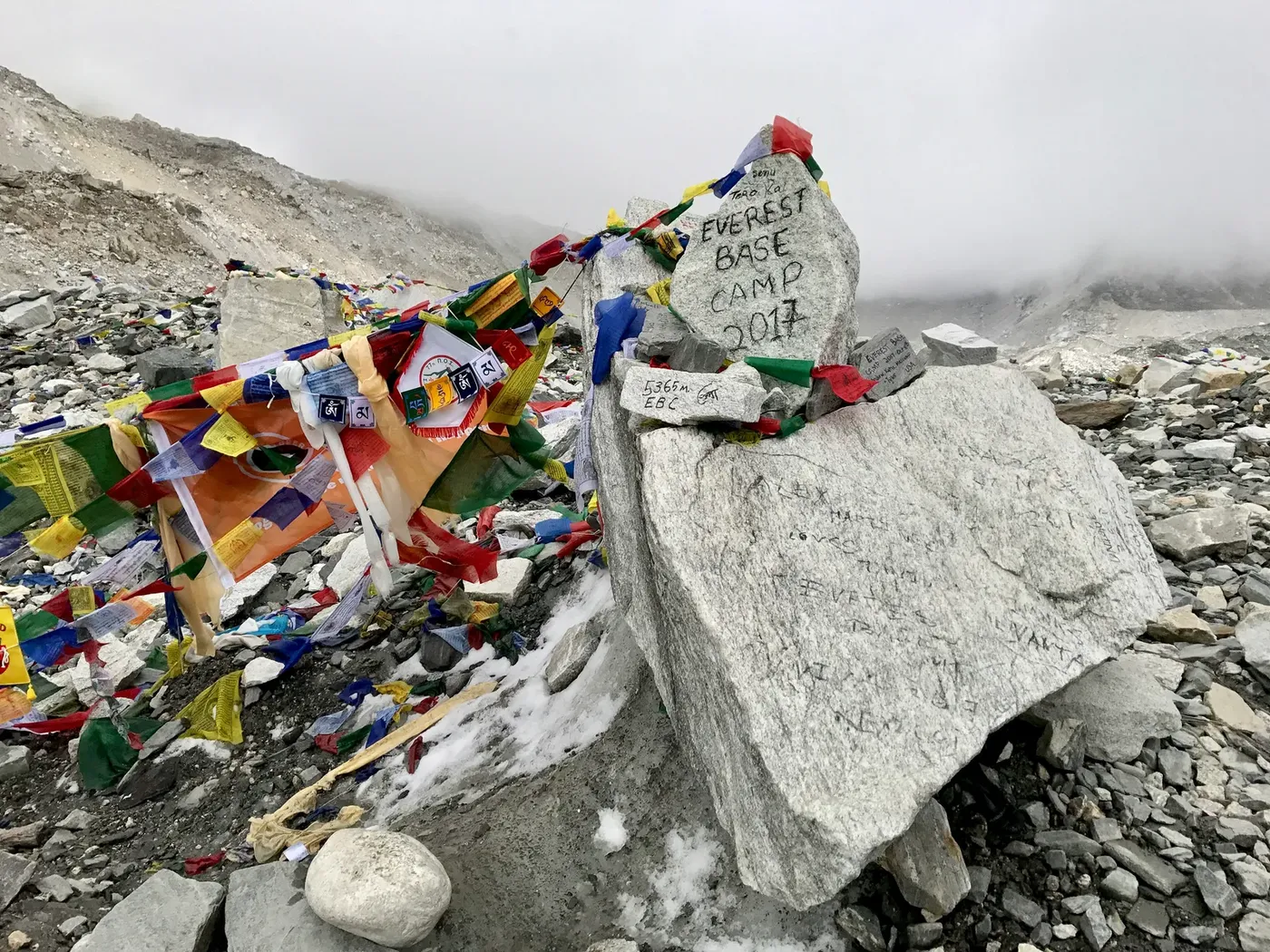
Why most trekkers fly out instead of walking down
The conventional Everest Base Camp trek is a twelve to fourteen day round trip, and the return leg is the part people underestimate. You climb to Base Camp and Kala Patthar at the high point of the whole journey, and then you turn around and retrace eleven days of trail in the opposite direction, with the views behind you and the achievement already banked. Three to four days of that, on knees that have already carried you up 5,000 metres, is not the memorable part of the trip. It is the part you get through.
There is a health argument as well, and it is the one that decides the question for a lot of people. Walking down slowly is genuinely good for you, because the descent is when altitude symptoms resolve. But the descent is also when tired legs on loose rock produce the injuries that end trips in a Kathmandu clinic, and when a stomach bug picked up in a lodge turns three days of walking into three days of misery. Flying from Gorak Shep removes both at once. You drop 2,280 metres in twenty minutes, which is the fastest acclimatisation reset available anywhere on the route, and you arrive at Lukla with your knees and your stomach intact.
There is a third reason that never makes it into a brochure. The walk out is where itineraries slip. A group that walks down can absorb a lost day without consequence. A group that flies down has a hard weather dependency at the end of the trip instead, and the two failure modes are not equivalent. A cancelled flight at Gorak Shep costs you a night in a lodge you have already paid for and a re-attempt the next morning. A cancelled flight at Lukla at the start of a trek costs you the itinerary. That asymmetry is the real argument for flying out rather than flying in, and it is why the trek-up, fly-back format exists. If you are weighing the two directions, our guide to the helicopter alternative to the Lukla flight works through the inbound version.
What you give up is real, and worth naming. The walk down is where a lot of people finally relax: the altitude pressure is off, the conversation is better, and the villages you rushed through on the way up get a second reading. Trekkers who fly out sometimes say the trip ended too abruptly, that they were in thinning air at breakfast and in a hotel in Kathmandu by mid-afternoon with no interval between the two. If you have the days, walking out through Namche is the gentler ending. If you do not, the helicopter is not a shortcut around the mountain. It is a shortcut around the car park.
The ways off the mountain, compared honestly
Four options are usually on the table at Gorak Shep, and only one of them is a scheduled product. The table below compares them on the things that decide the choice: how long it takes, how the price is structured, and what the morning actually feels like.
| Way out | Time to Lukla | How it is priced | The honest version |
|---|---|---|---|
| Walk out by the trail, Gorak Shep to Pheriche, Namche, Lukla | 3 to 4 days | No transport cost beyond lodges and meals already in a trek package | Free, reliable, hard on knees, and the part of the trek most people remember least fondly |
| Helicopter, Gorak Shep to Lukla | About 20 minutes | Inside the shared-flight trek package at $1,840 per person | The whole descent in one hop, weather dependent, and no re-acclimatisation problems on the way |
| Helicopter, Gorak Shep to Kathmandu in one lift | Under two hours | Whole-aircraft charter, quoted per aircraft rather than per seat | Only sensible for a full group or an evacuation; the aircraft has to be positioned up the valley first |
| Helicopter to Lukla, then fixed-wing to Kathmandu | 20 minutes plus a sector | Seat fare on the airline, subject to seasonal relocation of the Lukla service | The standard combination, and the reason the heli exit stops at Lukla rather than continuing |
Two things about that table are worth spelling out. The first is that the helicopter leg stops at Lukla for a commercial reason, not a technical one. Lukla is where the trail, the lodges and the airline network meet, so it is the cheapest place to rejoin the normal transport system. A machine that continues to Kathmandu is flying an hour it does not need to fly, and the charter price reflects that. The second is that the walk out is not free in any real sense either: three or four extra nights of lodges, meals and guide time are already inside the price of a trek that includes them, which is why removing them does not make the helicopter leg look expensive by comparison. It replaces them.
How the price of the helicopter exit is built
Almost every confusing conversation about this leg comes down to one word: seat. A scheduled airline sells you a seat on a nineteen-seat turboprop and fills the rest of the cabin with strangers. A mountain helicopter does not work that way. You book the aircraft for a block of time, it flies your route, and everyone aboard is your party or a party the operator has combined with yours. On the Everest corridor the realistic load is four to five passengers with trek bags in an Airbus H125, the workhorse of the Nepal fleet. The consequence is that the price is quoted per aircraft, and the per-person figure is a division rather than a published fare.
On our ten-day Everest Base Camp helicopter trek that division has already been done for you, which is why the package carries a per-person price of $1,840 on a shared-flight basis. What you are buying at that number is the trek itself, not the flight: the Kathmandu hotel nights, the Lukla sectors, nine nights in lodges on the route, all trekking meals, a senior Sherpa guide and porter support. The helicopter from Gorak Shep is one component inside that, and on most departures it is the component with the smallest share of the total. Anyone quoting you a stand-alone price for Gorak Shep to Lukla that is a fraction of the aircraft cost is either sharing the machine with strangers you have not met or is not flying the route you think.
| Product | 2026 price | Basis | What it covers |
|---|---|---|---|
| Everest Base Camp helicopter trek, 10 days | $1,840 | Per person, shared flight | Trek up, helicopter exit from Gorak Shep to Lukla, lodges, meals, guide and porters |
| Everest Base Camp helicopter day tour, 1 day | $1,260 | Per person, shared flight | Return flight from Kathmandu with a landing at Kala Patthar, 5,545 m |
| Private Everest helicopter charter, 1 day | $4,500 | Per aircraft, up to 5 guests | The whole machine, your own departure time, Everest View Hotel at 3,880 m |
| Kathmandu to Lukla helicopter, one way | From $1,700 | Per aircraft | Positioning the aircraft into the Khumbu, which is what makes a one-way exit possible |
| Everest scenic mountain flight | $260 | Per person, window seat | One hour fixed-wing, every seat a window seat, no landing |
Read the second and fourth rows together and the logic of the exit becomes obvious. A helicopter that is already in the Khumbu has to get back to Kathmandu anyway, so the empty leg out of the mountains is the one an operator can sell most cheaply. A helicopter that has to be sent up to collect you is a positioning flight plus a passenger flight, and the positioning is the expensive half. That is why the exit leg inside a trek package costs far less per person than a one-off charter booked from a hotel in Thamel, and why booking the trek as a whole rather than assembling the parts usually wins on price as well as on logistics.
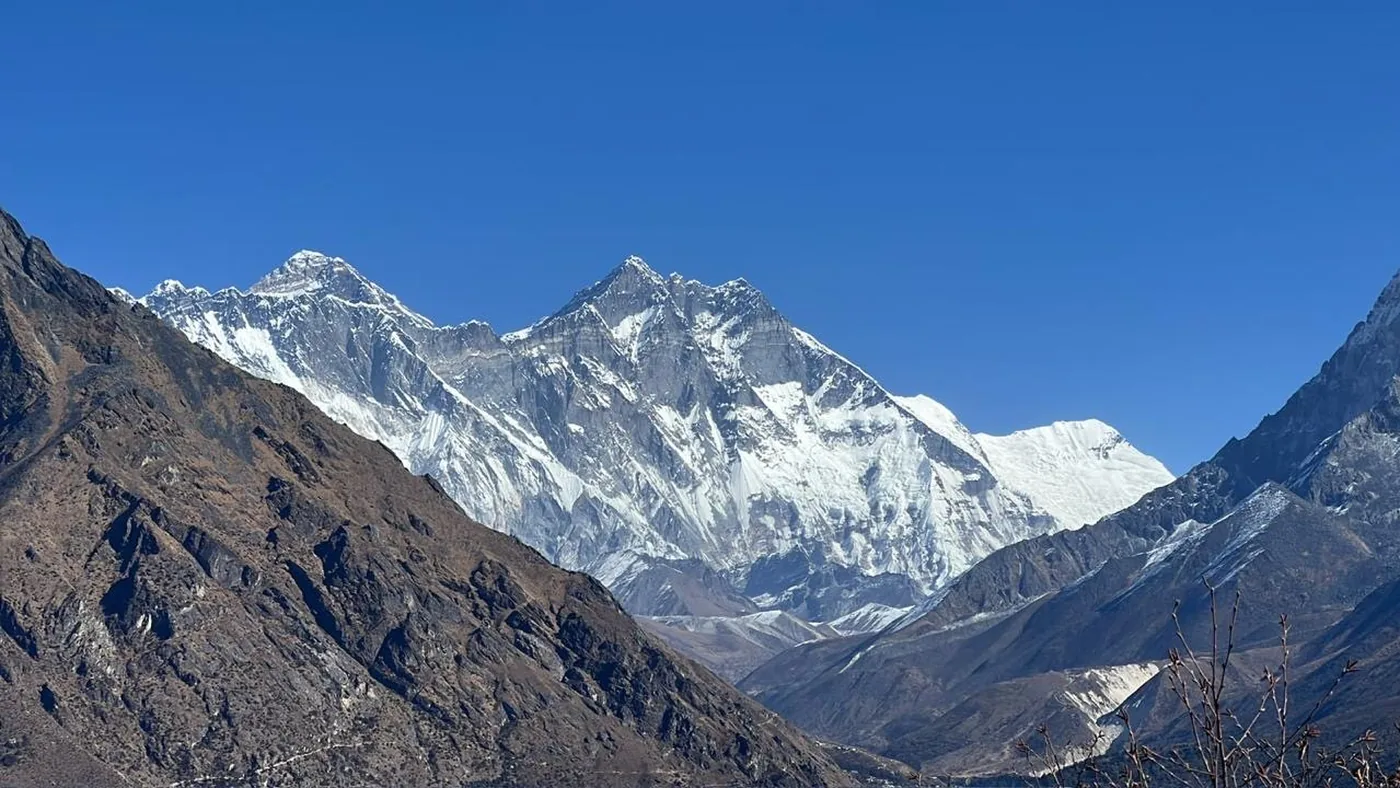
Booking the flight out from the United States or Europe
Most of the people searching this phrase are not in Nepal yet. They are at a kitchen table somewhere in Colorado, Manchester or Sydney, planning a trek for the following spring and trying to work out whether the helicopter element can be locked in before they fly. The answer is yes, and it should be, because the flight is not something you arrange at Gorak Shep on the morning. It is a component of a booked trek, confirmed months ahead, with the aircraft held against a departure date.
The practical sequence from abroad is short. You pick the trek format, and for this leg that means the ten-day trek up and fly back rather than the one-day tour, because the one-day tour starts and ends in Kathmandu and never puts you on the trail. You confirm the dates inside one of the two good windows, March to May or September to November, and you pay a deposit to hold the Lukla sectors and the helicopter slot. The published guidance on lead time is seven days at a minimum and considerably longer in the peak weeks, because the constraint is not the operator diary so much as the number of serviceable aircraft in the country during Dashain and the October rush. Everything else, the permits, the lodge bookings, the guide allocation, is handled on the ground.
Budget for the extras that sit outside every published package price, because they are the same for everyone and they surprise people. The Nepal visa on arrival is $50 for most Western passports. Travel insurance with helicopter evacuation cover is not optional on this route and should be bought before departure, not in Kathmandu. International airfare, personal spending and any hotel nights outside the itinerary are separate. And on the trek itself the duffel you hand to a porter is limited to ten to fifteen kilograms, which is the figure our trek packages publish, so the rest of your luggage stays in Kathmandu.
Two booking details decide whether the last morning goes smoothly. The first is insurance: confirm in writing that your policy covers helicopter evacuation above 5,000 m and that it covers the flight you are taking, because a policy that excludes high-altitude air transport is common and useless here. The second is the passport photograph and permit paperwork, which is collected in Kathmandu before the Lukla sector, not at the park gate. Neither is difficult. Both are the kind of thing that turns into a lost day if it is discovered at the airport.
The morning rule: why the flight leaves early or not at all
Mountain flying in the Khumbu is a morning business and the reason is thermodynamic rather than administrative. The valley heats up through the day, the warm air rises off the sunlit slopes, and by late morning the wind is organising itself into the cross-valley gusts that make a landing at 5,140 m a different and much worse proposition. The calmest window is shortly after sunrise. Every operator schedules the upper-valley work first for exactly that reason, and a departure that slips past mid-morning is one that is likely to be cancelled rather than delayed.
That single fact is the most useful planning advice on this page. If the helicopter exit matters to your itinerary, build a spare day into the end of the trek rather than the middle. A group with a buffer accepts a cancelled morning, sleeps an extra night at Gorak Shep or Lukla, and flies the next day with nothing lost but a hotel night. A group that has timed the exit to the same day as an international flight is one morning of cloud away from a very expensive rebooking, and cloud in the Dudh Koshi gorge in October is not unusual. The flight is short and it is beautiful. It is not guaranteed.
What happens when it does not go is usually more civilised than people expect. The aircraft stays positioned, the operator re-books the slot for the next morning, and the group stays where it is. The costs that move are lodge nights and meals, not the flight itself, which is one of the reasons a shared-flight package is easier to absorb than a private charter. Our weather and cancellation policy guide sets out how that works in detail, including the question of what refunds when a flight never happens at all.
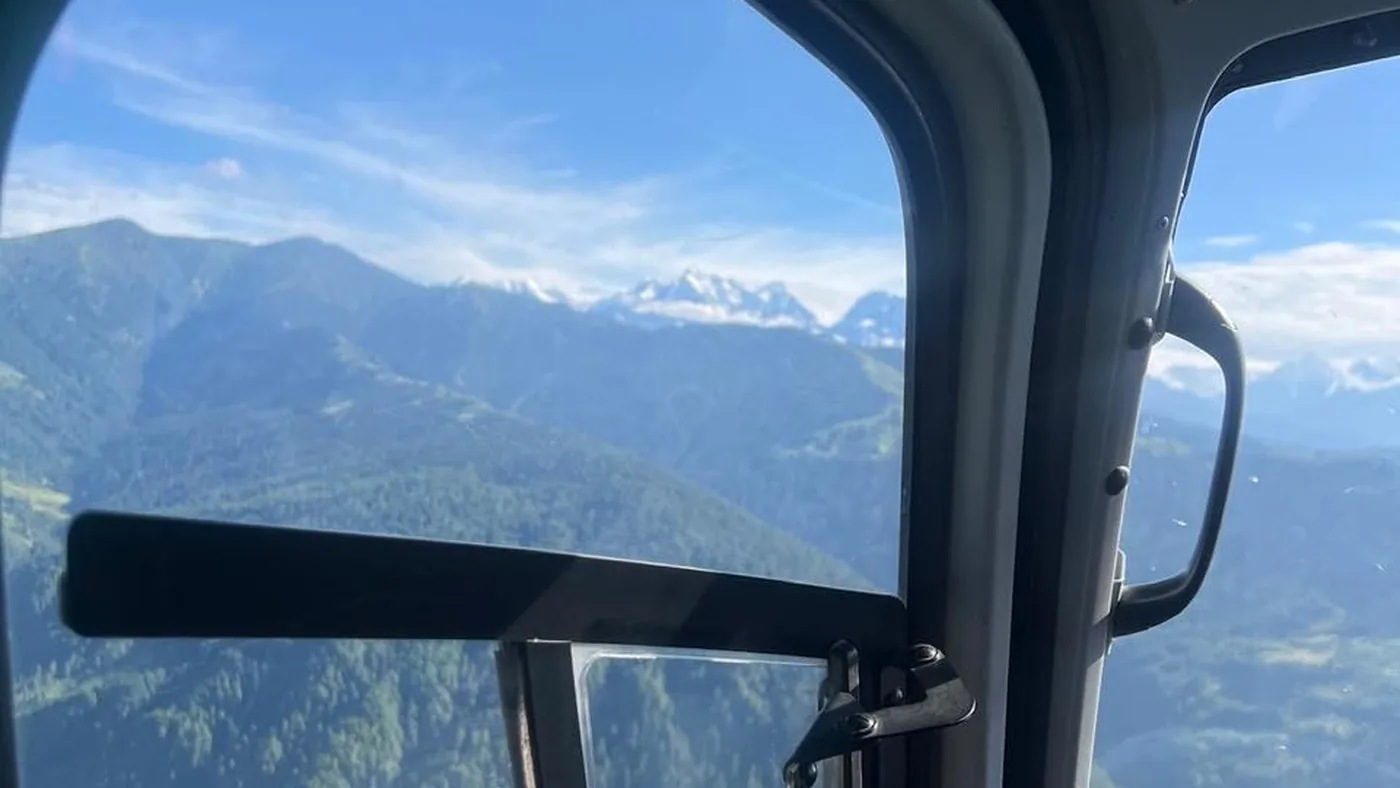
If you are booking from Kathmandu, Delhi or Lucknow
Not everyone searching this phrase is flying in from the other side of the planet. A meaningful share of the demand is local: trekkers already in Kathmandu, Nepali families booking for relatives, and Indian groups who have come across the border and are assembling the Khumbu leg on the ground. The economics are the same for all of them, because the aircraft does not care where the passengers were born, but the booking route is different and the way to save money is different too.
The saving available to a local booker is group size, not nationality. A Himalayan helicopter carries four to five passengers, so a party of five divides the whole-aircraft cost five ways and a party of two divides it two ways. That is why group joining works so well for the exit leg: if you are flexible about the morning and willing to share with another party, the per-head figure falls sharply, and that is the mechanism behind the $1,840 shared-flight price on the ten-day trek. Indian groups coming through Delhi or Lucknow tend to have the numbers already, which makes the private charter arithmetic more attractive for them than it is for a couple. Either way, the price you are quoted should be per aircraft with the passenger count stated, and any quote that does not state the count is not a quote.
For Nepali travellers there is a second consideration that rarely appears on an international booking page: departure timing around festivals. The trekking windows in March to May and September to November overlap with Dashain and Tihar, when demand for aircraft across the country peaks and available machines tighten. A local booker feels that directly in availability. Booking the exit leg at the same time as the trek, rather than leaving it until a week before, is the single most effective thing anyone in Kathmandu can do about it.
What happens after you land at Lukla
Lukla at 2,860 m is a working trailhead rather than a town, and the twenty minutes on the ground after landing are more of a decompression than people expect. You go from 5,140 m to air thick enough to breathe without thinking, and the body notices within a few minutes. The usual plan is a meal at a lodge while the fixed-wing sector to Kathmandu is confirmed, then a short walk to the airstrip, which sits at the top of a steep shelf with one end sloping uphill into the mountain.
The fixed-wing sector is where the day can still go wrong, and it is worth understanding why. In April to May and October to November, scheduled Lukla services relocate to Ramechhap, several hours by road from Kathmandu, and the sector becomes a bus and a flight rather than a single hop. A helicopter exit does not change that for the onward leg, but it does change which end of the journey absorbs the risk: the difficult, weather-sensitive, high-altitude part is done, and what remains is a valley flight that has far more recovery options. Most trekkers are back in a Kathmandu hotel the same evening, or the next morning if the sector slips.
If you want the last morning of the trip to be the best hour of it, ask for a departure that puts the group at Gorak Shep with the sunrise already done. Climbing Kala Patthar at 5,545 m before breakfast and then flying out at 8 a.m. is a considerably better sequence than the reverse, and it is the sequence the ten-day itinerary is built around. The Kala Patthar viewpoint guide explains why that particular ridge, rather than Base Camp itself, is the place to be at first light.
Four mistakes that cost people the flight
First, treating the exit as a taxi. The aircraft is booked against a morning and a passenger count; changing the count or the day late is what breaks bookings, and in peak season there may be nothing to re-book into. Second, no buffer day. A same-day connection from Lukla to an international departure out of Kathmandu is a gamble that occasionally loses, and the cost of losing it dwarfs the cost of a spare night.
Third, walking to Base Camp on the departure morning. Groups that try to fit the glacier and the flight into the same few hours routinely end up at Gorak Shep after the wind has arrived. The itinerary puts Kala Patthar and the walk to Base Camp on the day before the flight for that reason. Fourth, not reading the cancellation terms before paying. A shared-flight package and a private charter fail in different ways when the weather closes in, and the differences are financial rather than technical. If you are still deciding between formats, the full cost guide to the trek up, fly back itinerary sets out what is included line by line, and the Lukla to Base Camp helicopter route guide covers the inbound direction for anyone assembling the trek themselves.
One thing to understand about the ground you are flying over
Every metre of this route sits inside Sagarmatha National Park, a UNESCO World Heritage site that protects the upper Dudh Koshi basin and the settlements inside it. That status is why the permits exist, why lodge construction is restricted, and why the trail feels like a national park rather than a resort. It is also why the flight is not simply a transfer: twenty minutes over a protected valley, past the highest peaks on earth, is the most concentrated view of the Himalaya that money can buy in Nepal, and it happens at the end of a trek you have earned rather than at the start of one you have not.
Frequently asked questions
Does the helicopter leave from Everest Base Camp itself?
No. There is no landing surface on the glacier that is suitable for a passenger pickup, so the flight leaves from Gorak Shep at 5,140 m, a short walk below Base Camp. You reach Base Camp at 5,364 m on foot the day before, sleep at Gorak Shep, and board there in the morning.
How long is the flight from Gorak Shep to Lukla?
About 20 minutes. It descends roughly 2,280 vertical metres from 5,140 m to Lukla at 2,860 m, which is why the change in how the air feels is so abrupt.
How much does the Everest Base Camp to Lukla helicopter cost?
It is not sold as a separate ticket. It is built into the ten-day Everest Base Camp helicopter trek, published at $1,840 per person on a shared-flight basis, which also includes the Lukla sectors, nine nights of lodges, trekking meals, a guide and porter support.
Can I book just the helicopter out without the trek?
Only as a whole-aircraft charter, because a helicopter is booked by the aircraft rather than by the seat. That is a positioning flight into the Khumbu plus the passenger leg, and it is priced accordingly. For most people the trek package is both cheaper per head and far easier to arrange.
Is the flight included if I book a group joining departure?
Yes, and group joining is what makes the shared-flight price work. Sharing the aircraft with another party is the mechanism behind the $1,840 figure, so a group joining departure and a shared-flight exit are the same idea seen from two angles.
What happens if the weather cancels the flight?
The aircraft stays in the valley and the slot moves to the next morning, with the group staying an extra night at Gorak Shep or Lukla. This is why a buffer day at the end of the trek is worth more than any other single planning decision on this route.
Can the helicopter take me all the way to Kathmandu instead?
Technically yes, as a charter, and it is what an evacuation does. Commercially it rarely makes sense: the machine has to be positioned up the valley first, and Lukla is where the trail and the airline network meet, so the standard exit stops there and continues by fixed-wing.
How many people fit in the helicopter?
Four to five passengers with trek bags in the Airbus H125 that works this corridor. The price is per aircraft, so the per-person figure depends entirely on how many of you are aboard.
Do I need to be acclimatised before flying out?
You will be, if you trekked up. The ten-day itinerary reaches Base Camp on foot with two acclimatisation days built in, so by the time you board at Gorak Shep your body has already done the work the flight is about to undo in twenty minutes.
Which month is best for flying out of the Khumbu?
March to May and September to November, the same windows as the trek itself. Mornings are calmer in all of them, and October in particular rewards an early departure because the post-monsoon haze and the afternoon wind both arrive later in the day.
Is a helicopter landing at Kala Patthar part of this?
Not on the exit leg. The landing at 5,545 m belongs to the one-day Everest Base Camp helicopter tour, which flies out and back from Kathmandu for $1,260 per person. On the trek, Kala Patthar is a sunrise you walk up to, not a place the aircraft puts down.
If you are planning the whole thing rather than this one leg, start with the Everest Base Camp helicopter trek for dates and inclusions, and use the Everest helicopter tours hub to compare it against the day tour, the private charter and the Gokyo option. The exit leg is twenty minutes. Getting the ten days that precede it right is the part worth the planning.