

Short answer: A custom helicopter flight in Nepal starts from a published price and changes only the parts that are yours to change — the departure time, the landing stops, how many seats you take and who fills them. In 2026 the private Everest charter is $4,500 per aircraft for up to five guests, and the shared flights it can be rebuilt around run from $260 per window seat on the one-hour scenic flight up to $1,260 per seat on the Kala Patthar landing day tour. What does not change is the weather, the airspace and the altitude limits the pilot flies to.
- $4,500Private Everest charter, per aircraft, up to 5 guests
- $1,260Kala Patthar landing day tour, per seat
- 5,545 mKala Patthar landing altitude
- 1,400 mKathmandu Valley floor at Tribhuvan airport
Most people who ask us about a custom helicopter flight in Nepal are not asking for something exotic. They are asking for one or two things to be different: a later start because their international flight lands at noon, a stop in the Khumbu and a stop at Muktinath on the same day, one empty seat kept for a photographer, or a departure from Pokhara instead of Kathmandu. On a shared flight none of that is negotiable. On a charter it usually is — but only some of it, and the difference between the parts that bend and the parts that do not is the whole subject of this page.
We run both kinds of flight, so this is written from the operator's side of the desk rather than the brochure's. The prices below are the ones we publish on our own tour pages. The altitudes are surveyed figures. Where a number does not exist — a per-minute rate, an airport handling fee, a permit cost — the sentence does not carry one, because a quoted figure you cannot verify is worse than no figure at all.
What a Custom Helicopter Flight in Nepal Actually Means
Three different products get called "custom" in Kathmandu, and they cost very different amounts.
The first is a rebuilt shared flight. You and your group take all the seats on a flight that normally sells seat by seat, and because you have bought the aircraft you decide when it leaves and how long it sits on the ground. The route stays the standard one. This is the cheapest form of customisation and, for families and small groups, usually the only one worth paying for.
The second is a charter with a modified route. You keep the aircraft for the day but change where it goes: Kala Patthar instead of the Everest View Hotel, or Annapurna Base Camp added to a Pokhara day, or a landing at Gokyo instead of the standard Khumbu stop. The route is still constrained by airspace, by the altitude the aircraft can hold, and by what the pilot considers safe on the day.
The third is a bespoke multi-day operation: a helicopter that stays with your group across several days, moving you between valleys, waiting through a weather window, and repositioning overnight. This is where most of the money goes, and it is the form most often misquoted, because the aircraft is charged for the days it is reserved, not just the hours the rotors turn.
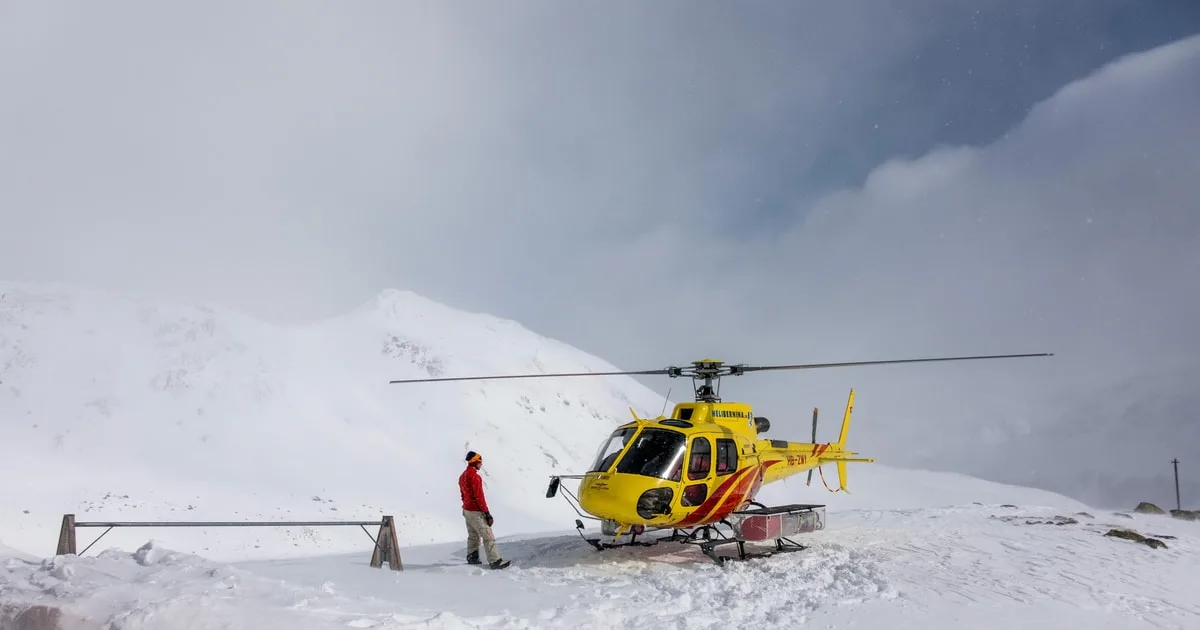
Everything on this page is about the second and third forms, because the first one is really just a seat-block booking with a private departure time. If that is all you need, our group joining versus private charter comparison covers the trade-off in more detail than this page will.
What You Can Change and What You Cannot
This is the table we wish every enquiry started with. It saves a week of email.
| Element of the flight | Customisable? | What that looks like in practice |
|---|---|---|
| Departure airport | Yes, within limits | Kathmandu at 1,400 m or Pokhara, depending on where your route begins. A route that starts in one valley and ends in another needs the aircraft repositioned, which is a day charge rather than an airport charge. |
| Departure time | Yes, inside daylight | Morning departures are the norm because mountain weather builds through the day. A later start is possible on a charter; it is not possible on a shared seat. |
| Landing stops | Yes, subject to altitude and permission | Kala Patthar at 5,545 m, Everest View Hotel at 3,880 m, Annapurna Base Camp at 4,130 m, Muktinath at 3,710 m and Gokyo at 4,790 m are the landings we operate regularly. |
| Seats and passengers | Yes, up to the aircraft limit | The private Everest charter carries up to five guests per aircraft. Below that, you are buying empty seats, which is a legitimate choice when one of them is for camera gear. |
| Ground time at a landing | Yes | Longer stops are the single most common request. They are also the most constrained: above 5,300 m the pilot keeps the stop short by design. |
| Route between stops | Partly | The pilot will fly the scenic line where airspace allows, but the corridor into the Khumbu is a corridor, not a free canvas. |
| Price per seat | Only by filling seats | A charter is priced per aircraft. Five passengers pay the same total as two; the per-seat figure falls as the group grows. |
| Weather | No | Not negotiable at any price. This is the one line item every operator in Nepal has in common. |
| Permits and park entries | No | Fixed by the authorities for the areas you enter. They are collected, not negotiated. |
Read the "no" rows carefully, because they are where disappointment comes from. A custom flight is not a flight without rules. It is a flight where the decisions that belong to the customer have been handed to the customer.
The Published Building Blocks You Can Recombine
A custom itinerary is not designed from nothing. It is assembled from products that already exist, which is why we can quote it without inventing numbers. Every line below is a live 2026 product on this site.
| Published flight | Price | Duration | Highest point |
|---|---|---|---|
| Everest Base Camp helicopter day tour | $1,260 per person, shared flight | 1 day, approx. 6 hours | Landing 5,545 m at Kala Patthar |
| Private Everest helicopter charter | $4,500 per aircraft, up to 5 guests | 1 day, approx. 5–6 hours | Everest View Hotel, 3,880 m |
| Everest scenic mountain flight | $260 per person, window seat | 1 hour | Views of an 8,848.86 m summit from the air |
| Annapurna Base Camp day tour from Pokhara | $860 per person, shared flight | 1 day, approx. 3–4 hours from Pokhara | Landing 4,130 m |
| Muktinath helicopter pilgrimage | $1,080 per person, shared flight | 1 day | 3,710 m |
| Annapurna helicopter return trek | $1,199 per person, shared flight | 6 days | Max 4,130 m |
| Manaslu helicopter return trek | $2,160 per person, shared flight | 13 days | Max 5,160 m |
A custom day is normally two of these stitched together, or one of them with the departure and the ground time moved. A custom week is normally a trek from this list with the walking days compressed and the helicopter segments expanded. If you want the full inventory in one place, the route and package overview lists every flight we sell.
How a Custom Flight Is Priced
The single most useful sentence on this page: a charter is priced per aircraft, not per person.
The private Everest charter is $4,500 per aircraft for up to five guests. Two passengers pay $4,500. Five passengers pay $4,500. Divide that by the seats you fill and the arithmetic is obvious — five seats works out to $900 each, two seats works out to $2,250 each — which is why a group of five that wants privacy usually gets it for less per head than a couple that wants the same aircraft to themselves.
That is the entire logic behind custom pricing in Nepal, and it is the reason a "custom quote" can look wildly expensive or surprisingly reasonable for the same route. Nothing about the mountain changed. The number of seats that were sold changed.
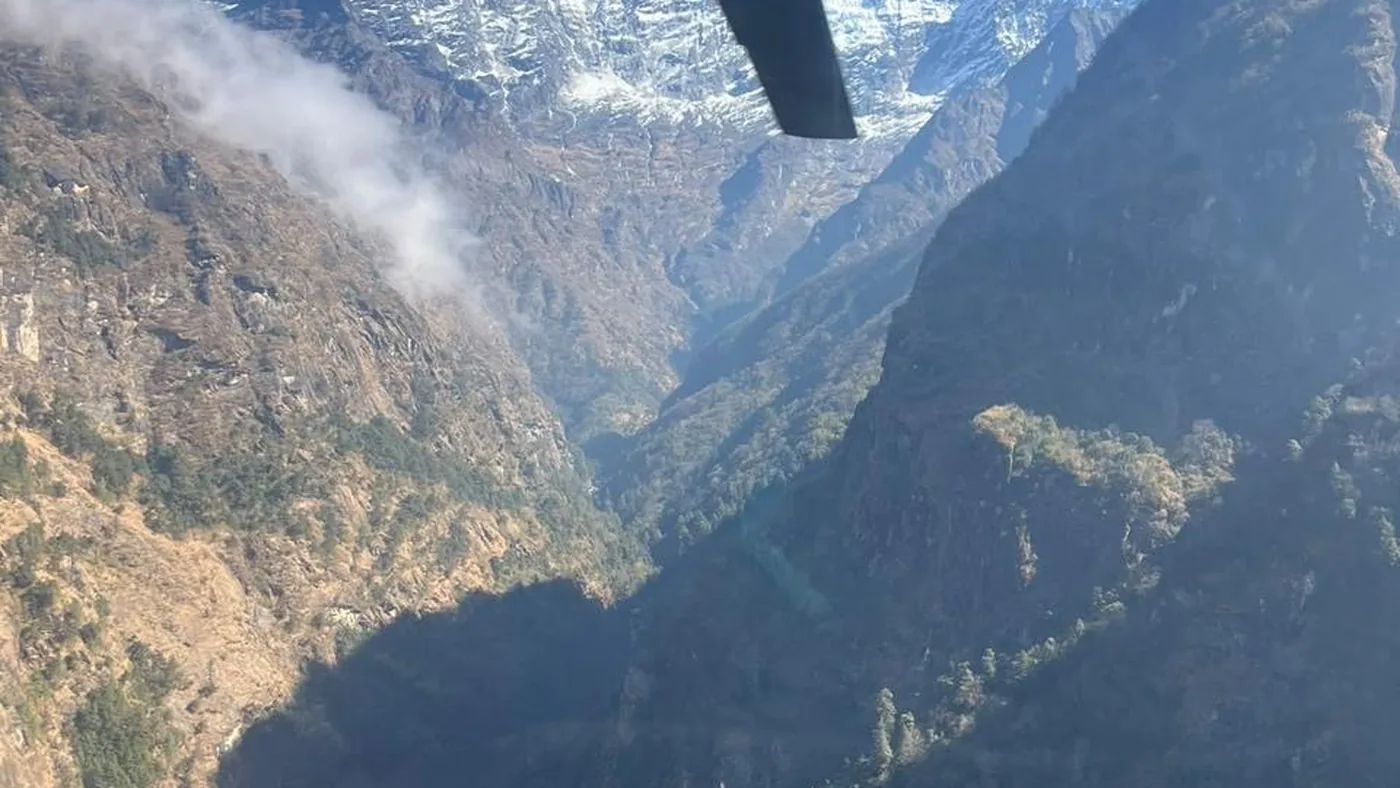
For multi-day work, the aircraft is reserved for the days it is unavailable to anyone else. That is why a four-day custom operation does not cost four times a one-day charter in the way people expect, and why it very much does cost more than one day. Ask for the day rate and the positioning separately; any operator who quotes a lump sum without breaking those out is either guessing or hiding something.
Route One: A Custom Everest Day
The standard Everest day runs from Kathmandu to the Khumbu, lands at Kala Patthar at 5,545 m, and returns — roughly six hours door to door on the shared product, five to six on the charter with breakfast at the Everest View Hotel at 3,880 m.
The customisations that work:
- Later departure for a group arriving on a midday international flight, accepting that the afternoon build-up may scrub the day.
- Everest View Hotel breakfast added to a Kala Patthar landing, which turns a fast up-and-down into a proper half day.
- Gokyo instead of Kala Patthar at 4,790 m for a group that has already stood at Base Camp and wants a different view.
- One seat held empty for camera equipment on a five-seat charter.
The customisation that does not work: asking to land at Base Camp itself. Base Camp sits at 5,364 m on moving glacier ice — Mount Everest itself is 8,848.86 m — and the landing everybody actually makes is Kala Patthar at 5,545 m, which is higher and has the better view of the summit. The Everest cost breakdown explains what each version includes.
Route Two: A Custom Annapurna Day from Pokhara
The Pokhara product is the most flexible in the country because the aircraft starts close to the mountains. The published day tour lands at Annapurna Base Camp at 4,130 m and takes roughly three to four hours from Pokhara, which leaves room in the same day for a second landing if the weather is stable.
That second landing is where custom requests usually land: a stop at Mardi Himal's viewpoint side, or a low pass over the Modi Khola valley on the way out, or a return leg that overflies Phewa Lake instead of tracking straight back. None of it changes the highest point of the day, which is why it is the cheapest form of customisation on this site — you are rearranging an aircraft that is already airborne, not buying a new sector.
If your group is trekking the Sanctuary and wants the helicopter to meet you at the end rather than the start, that is the six-day Annapurna helicopter return trek pattern with the days reordered.
Route Three: Muktinath, Mustang and the Pilgrimage Custom
The Muktinath pilgrimage is a one-day flight to 3,710 m, sold at $1,080 per person shared. It is also the flight most often customised for reasons that have nothing to do with sightseeing: a family group of a particular size, a specific darshan timing, an elder who cannot manage the steps, or a route that adds Jomsom on the return.
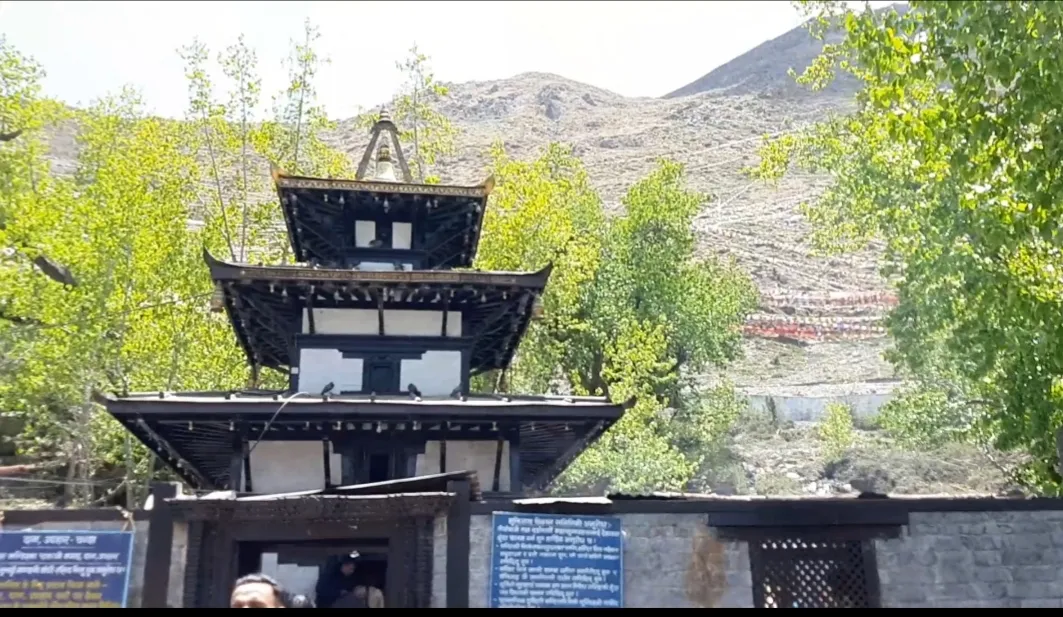
Two things make this route easy to customise. First, it sits outside the deep-mountain weather pattern that governs the Khumbu, so the go/no-go decision is often made on a different morning than an Everest flight would be. Second, the ground segment is short and fixed, which means delays come from the air, not the temple.
What we will not do is promise a fixed arrival time weeks in advance. The flight is one day; the mountain decides when that day starts.
Route Four: Langtang, Gosainkunda and the West
Not every custom request is about Everest, and the site's quieter routes are where customisation pays the most, because there is no shared product to fall back on. Langtang tops out at 4,984 m, Gosainkunda at 4,380 m, Rara at 2,990 m. These are flights where the itinerary genuinely is yours, since nothing about the day is standardised.
They are also the flights where the honest answer is sometimes "not this week". Remote landings depend on a combination of altitude, surface and permission that changes with the season, and a route that works in one month can be closed in another. The other Himalayan helicopter tours hub covers what is operating and when.
Multi-Stop Days: What Is Realistic
Two landings in one day is realistic when they are close together and the second is lower than the first. Three is possible on a long summer day with a private aircraft and perfect weather. What is not realistic is a Khumbu landing and a Mustang landing on the same day: they sit on opposite sides of the country, and the transit between them is a repositioning flight, not a scenic detour.
The rule we use when quoting is simple. A custom day is built around one high landing, one lower landing, and the transit between them. Every additional stop eats ground time, and ground time at altitude is the first thing the pilot will cut if the weather is moving.
| Question | Shared seat on a scheduled flight | Custom charter |
|---|---|---|
| Who sets the departure time | The operator | You, within daylight and weather |
| Who else is on board | Whoever bought the other seats | Your group only, up to five guests |
| Can the route change on the day | No | Yes, with the pilot's agreement |
| Ground time at a landing | Fixed by the schedule | Yours to extend, within the pilot's limits |
| What you pay for | One seat | The aircraft, whether or not the seats are filled |
| Weather cancellation | Reschedule or refund under the operator's policy | Same policy, larger exposure because the aircraft was reserved for you |
That last row is the one people forget. A custom charter carries more cancellation risk in cash terms, because the aircraft was held for you and could not be sold to anyone else. Our cancellation and weather policy guide sets out exactly how that is handled, and the planning hub puts it alongside everything else you need to arrange before you fly.
Passenger Count, Weight and Seating
Custom work is usually about people, not places. A five-seat charter with four adults and a child is not the same problem as five adults with luggage, and a group that includes someone over the operator's weight threshold for a front seat is a different loading plan again.
We ask for passenger weights and luggage at the enquiry stage, not at the helipad, because the answer changes what can be carried and sometimes which aircraft is assigned. It is not a personal question and it is not negotiable: it is the same calculation every operator in Nepal runs before a mountain flight. If your group is larger than five, the custom plan becomes two aircraft flying the same route, which is a genuinely different quote rather than a bigger version of the same one.
Departure Point and Timing
Almost every custom request we receive is really a timing request. The reason is simple: the mountain weather is best early, and international arrivals are worst in the middle of the day. A custom departure time is how those two facts get reconciled, and it is also where a custom itinerary can fail — a 10 a.m. departure into the Khumbu is a different proposition from a 6 a.m. one, and no amount of money changes that.
If your schedule forces a late start, the honest customisation is not a later departure into the high mountains. It is a lower route, a shorter route, or a different day. We would rather move the day than sell you a flight that turns back at the first cloud.
What Weather Does to a Custom Plan
Weather is the one variable that custom money cannot buy. Cloud in the Khumbu closes the corridor; wind at altitude closes the landing; morning fog in the Kathmandu Valley delays everything downstream. The standard response is a buffer day, and the standard mistake is not booking one.
On a custom multi-day operation the buffer is built into the itinerary from the start, because the aircraft is already reserved. On a one-day charter the buffer is your problem to plan, which is why we tell people to put the flight early in their trip rather than on the last morning before an international departure.
Photography, Film and Work Flights
A meaningful share of custom requests are work, not tourism: a production that needs a specific peak in a specific light, a brand shoot that needs the aircraft repositioned twice in an hour, a documentary that needs a landing at a location nobody has filmed before. These are legitimate charters and they are priced the same way as any other — per aircraft, per day — with the understanding that a work flight usually needs more ground time and more flexibility than a sightseeing one.
What we cannot promise is a specific shot. The light and the cloud decide that. What we can do is put the aircraft where the shot is, at the hour the shot is possible, and give the crew the ground time to take it.
How to Brief a Custom Flight: Six Questions
- Where do you want to be standing? Name the landing, not the mountain. "Kala Patthar" is bookable; "Everest" is not.
- How many people, and what do they weigh? This sets the aircraft and the seat count.
- Which day, and what is your buffer? Give us the preferred day and the day you could move to.
- What time can you realistically be at the airport? Not the time you would like to leave — the time you can be there.
- What is the one thing you will not give up? A landing, a breakfast, a photograph, a family photograph at a specific marker. Everything else is negotiable.
- What is your total budget for the aircraft? Not per person. The aircraft. That single number determines whether the plan is a rebuilt shared flight or a multi-day charter.
Answer those six and a quote takes an hour rather than a week. Leave them vague and the only honest quote is a range so wide it is useless. The complete charter guide explains the aircraft and route side of the same process.
What a Custom Flight Cannot Fix
It cannot fix altitude. A custom landing above 5,000 m is still a landing above 5,000 m, and the short ground time is a safety measure rather than a scheduling preference. It cannot fix your fitness either: a flight that saves you six days of walking does not acclimatise you, and people who fly straight to 5,545 m feel it.
It cannot fix a permit you do not have, a passport that expires in three months, or an insurance policy that excludes helicopter evacuation. And it cannot fix the calendar. October and November are the months when the range is clearest from the air and the months when every aircraft in the valley is booked; a custom request in peak season is a request for whatever is left.
Is a Custom Flight Worth It?
For a solo traveller, usually not. The shared Everest day tour at $1,260 per seat does the same route for a fraction of a $4,500 aircraft. For a group of four or five who all want to go to the same place on the same day, a charter is often cheaper per head than five shared seats and infinitely more comfortable. For anyone whose reason for flying is not on the standard menu — a wedding party, a production crew, a family with an elder who cannot manage a fixed schedule — there is no alternative to a custom plan.
The decision is almost always arithmetic, not aspiration. Count the seats, compare the total, and the answer usually appears on its own. If you are still undecided between a private Everest charter and the standard day tour, the private charter page sets out what the extra money buys, and the scenic mountain flight is the honest floor for anyone who only wants to see the range from the air.
Frequently Asked Questions
Can I customise a helicopter flight in Nepal, or are the routes fixed?
Both. The scheduled flights are fixed — the shared Everest day tour, the Muktinath pilgrimage and the mountain flight all run to a set route and time. A charter is customisable: departure time, landing stops, ground time and passenger count can all be changed, within airspace, altitude and weather limits.
How much does a custom helicopter flight cost in Nepal?
It is priced per aircraft, not per person. The private Everest charter is $4,500 per aircraft for up to five guests. Rebuilt shared flights start lower: $1,260 per seat for the Kala Patthar landing day tour, $860 per seat for the Annapurna Base Camp day tour from Pokhara, $1,080 per seat for Muktinath.
Can I land at Everest Base Camp itself?
No. Base Camp sits at 5,364 m on moving glacier ice. The landing that helicopters actually make is Kala Patthar at 5,545 m, which is higher and has a better view of the summit. Any operator offering a "Base Camp landing" is describing Kala Patthar.
Can I combine Everest and Muktinath in one day?
Not realistically. They sit in different parts of the country and the transit between them is a repositioning flight rather than a scenic leg. Two landings in a day work when they are close together — Kala Patthar and the Everest View Hotel, or Annapurna Base Camp and a second Pokhara-area stop.
How many passengers can a private charter take?
Up to five guests per aircraft on the private Everest charter. Larger groups are flown as two aircraft on the same route, which is quoted separately because it is a second aircraft, not a bigger version of the first.
Can I choose a later departure time?
On a charter, yes, within daylight. It is not always wise: mountain weather builds through the day, and a late departure into the Khumbu is more likely to turn back. If your arrival time forces a late start, a lower or shorter route is the better customisation.
Does a custom flight avoid weather cancellations?
No. Weather is the one variable money cannot change. A private aircraft gives you the freedom to move the flight to a better day, which is the real advantage — not immunity from the cloud.
How long can we stay on the ground at a landing?
Longer than on a shared flight, within the pilot's limits. Above 5,300 m the stop stays short by design, because ground time at that altitude is a safety constraint rather than a scheduling choice. At lower landings such as Muktinath at 3,710 m or the Everest View Hotel at 3,880 m there is far more room.
Do custom flights include park permits and landing fees?
Permits for the areas you enter are fixed by the authorities and are collected, not negotiated. Ask for them to be itemised on the quote rather than bundled, so you can see what is government cost and what is aircraft cost.
Can I book a custom flight for photography or film work?
Yes. Work flights are chartered on the same per-aircraft basis as sightseeing flights, usually with more ground time and more flexibility built into the day. A specific shot cannot be guaranteed — the light and the cloud decide that — but the aircraft can be positioned for the hour it is possible.
How far in advance should I book a custom flight?
As early as your dates are fixed, particularly in October and November when every aircraft in the valley is booked. Peak-season custom requests are requests for whatever capacity is left, not for the ideal plan.
Can the route change on the day of the flight?
On a charter it can, with the pilot's agreement. On a shared seat it cannot. The pilot always has the final say, because the decision is about the aircraft, the wind and the cloud rather than the itinerary.
The Short Version
A custom helicopter flight in Nepal is not a secret product or a premium tier. It is the same aircraft that flies the scheduled routes, reserved for your group, with the parts of the day that belong to the customer handed over to the customer. The mountain, the airspace and the weather stay exactly where they were. Everything else — who is on board, when you leave, where you land and how long you stand there — is negotiable, and it is priced per aircraft rather than per seat.
If you know your group size and the one landing you will not give up, you already have enough to ask for a quote. Tell us those two things and we will tell you honestly whether a custom flight is the right answer or whether the shared product does the job for less.
Send us the six answers and we will come back with a plan and a number, not a brochure.