
Short answer: The best things to do in Kathmandu fall into three tiers. First, the valley's sacred and royal heritage - Pashupatinath, Boudhanath, Swayambhunath and the three Durbar Squares, seven UNESCO World Heritage monument zones in one valley. Second, the living city: the market lanes of Ason and Indra Chowk, Newari food, rooftop coffee and the museum courtyards of Patan. Third, the sky - a one-hour Everest mountain flight at $260 per person, or a one-day helicopter tour that actually lands at Kala Patthar, 5,545 m, for $1,260 per person on a shared flight. Kathmandu itself sits at 1,400 m, so nothing on this list demands altitude fitness, and October to November or March to May gives the clearest mountain views.
- 1,400 mKathmandu's elevation
- 7UNESCO monument zones in the valley
- $260Everest mountain flight, per seat
- NPR 13,776Published Nepali fare, Buddha Air
Why Kathmandu Deserves More Than One Day
Almost every Nepal itinerary opens in Kathmandu, and almost every traveller treats it as a transit lounge: land, sleep, fly to the mountains. The result is that the valley gets a rushed half-day and the mountains get a week. It is worth reversing part of that. Kathmandu is not one city but three medieval kingdoms pressed into a single green bowl, ringed by terraced hills and watched over by the Himalaya on the northern horizon. Within a few kilometres of each other stand seven UNESCO World Heritage monument zones, a living goddess, a temple where the pyres have burned for centuries, and the largest concentration of Newar craft and food culture in the country.
It is also the cheapest place in Nepal to buy time in the sky. A one-hour Everest mountain flight leaves from the domestic terminal here every clear morning, and the helicopter tour operators who fly to Base Camp, Kala Patthar and the Annapurna and Muktinath shrines all stage from Kathmandu's airports. That means you can pair a heritage morning with an aerial afternoon, or use a spare day at the end of a trek to fly over the range you just walked through.
This guide covers the full menu: what to see, what to do when it rains, what is worth doing with children or older parents, what to do on a budget, and what a helicopter flight from Kathmandu actually costs in 2026 - including the different rates that Nepali citizens, Indian pilgrims and international visitors pay.
What to Do in Kathmandu, Nepal: The Three Tiers at a Glance
If you are deciding how to spend limited days, sort the options by what they cost you in time. Heritage and street culture need days, not hours. Aerial experiences need a single clear morning. The table below is the honest version.
| What to do | Best for | Time needed | How the cost works |
|---|---|---|---|
| Sacred and royal heritage - Pashupatinath, Boudhanath, Swayambhunath, the three Durbar Squares | First-time visitors, culture-led trips | 1-2 full days, comfortably 3 | Entry tickets are paid locally at each site; a private guide adds a day rate |
| City life - Ason and Indra Chowk markets, Thamel, Newari kitchens, museums | Anyone who wants the city rather than the checklist | Half a day to a full day | Free to walk; you pay only for food and what you carry home |
| Everest mountain flight from Kathmandu | The Himalaya in one morning, no landing | 1 hour in the air, about 3 hours door to door | $260 per person, window seat |
| Everest Base Camp helicopter day tour with landing | Standing at 5,545 m without trekking | 1 day, roughly 6 hours | $1,260 per person on a shared flight |
| Muktinath helicopter pilgrimage | Pilgrims, families, darshan travellers | 1 day | $1,080 per person, 3,710 m temple |
| Valley rim day trip - Chandragiri cable car and ridge | Sunset Himalaya views without a flight | Half to a full day | Transport and cable car ticket paid locally |
| Longer treks with a helicopter return | Walkers who want the mountains, not the airport queue | 6 to 13 days | Annapurna 6 days $1,199, Everest Base Camp 10 days $1,840, Manaslu 13 days $2,160 |
Places to Visit in Kathmandu: The Heritage Core
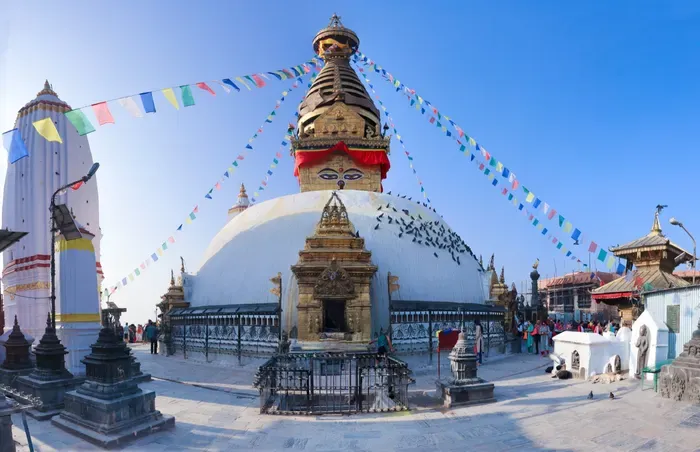
Start with the sites that made the valley a UNESCO property. There are seven monument zones in total, and they are spread across the three old kingdoms, so you are moving around the valley rather than standing in one queue.
Pashupatinath Temple
Nepal's most important Shiva temple sits on the Bagmati river, a complex of pagoda-roofed shrines, cremation ghats and pilgrim shelters rather than a single building. Non-Hindus cannot enter the inner temple, but the terraces on the far bank look straight across the river into the courtyard, and the atmosphere there - priests, sadhus, families, funeral smoke, monkeys on the roof beams - is the most concentrated dose of living religion you will find in the valley. Come early, budget a couple of hours, and go with someone who can explain what you are looking at. It is also the temple Indian pilgrims arrive for first: many trips begin with darshan here before heading to Muktinath or the mountains.
Boudhanath Stupa
Boudhanath is the great white dome whose painted eyes watch over the north of the city, and the centre of Tibetan Buddhist life in Nepal. Walk the kora - the clockwise circuit around the base - in the early evening when the butter lamps are lit and the resident Tibetan community is out. The roof terraces ringing the stupa are the best place in Kathmandu for a slow coffee with a view of the dome, and the surrounding lanes are full of monastery courtyards you can usually step into quietly.
Swayambhunath, the Monkey Temple
Swayambhunath sits on a hill above the western city with the valley spread out below it. The classic approach is the long eastern stairway - 365 steps, one for each day of the year - past the painted Buddha eyes and a large population of resident macaques who are entirely unimpressed by you. The golden spire and the ring of prayer wheels at the top are the reward, along with a view that makes the geography of the valley obvious in one look. There is a gentler path up from the west side if the steps are not for you.
The Three Durbar Squares
The Durbar Squares of Kathmandu, Patan and Bhaktapur were the royal courtyards of the three Malla kingdoms, and they are the architectural highlight of the valley. Kathmandu's is the most visited and the most damaged by the 2015 earthquake, with reconstruction still visible. Patan's, a short taxi ride south, is the most complete and the least crowded, with the excellent Patan Museum in its old palace. Bhaktapur, half an hour east, is the most atmospheric of the three and worth a half day on its own - brick lanes, potters working in the open, and the famous juju dhau, the thick set "king curd" sold in clay pots.
Together these sites are best spread over two or three unhurried days. If you would rather have it arranged day by day, we run the whole circuit as a guided package in our five-day Kathmandu Valley heritage and aerial itinerary, which pairs the monuments with the valley rim.
The City Between the Monuments: Markets, Food and Museums
The second tier of things to do in Kathmandu has nothing to do with temples, and it is what most visitors remember. The old city is one of the great walking cities of Asia if you accept that it has no pavements, no street grid you can reasonably follow, and no intention of being quiet.
Ason and Indra Chowk. The bazaar lanes north of Durbar Square are the wholesale heart of the city: sacks of chilli and turmeric, brassware, prayer flags, dried fish, bangles strung across the alley and hand-pulled carts. It is genuinely crowded and genuinely worth it. Go in the morning, keep your phone in a front pocket, and drift. Indra Chowk's bead and textile shops are where Kathmandu buys its own jewellery.
Newari food. The valley's indigenous cuisine deserves a meal of its own: bara and chatamari (lentil pancakes with egg or minced meat), choila - grilled buffalo with mustard oil and raw spices - and kwati, the mixed bean soup eaten at festivals. Thamel and the lanes around Patan Durbar Square both have serious Newari kitchens. For something simpler, momo and thukpa are everywhere and cost very little.
Museums and courtyards. Narayanhiti Palace Museum, the former royal palace, gives the strangest hour of sightseeing in Nepal: state rooms preserved intact from a dynasty that no longer exists. The Patan Museum is the region's best small museum. And the Garden of Dreams, a 1920s neoclassical garden in the middle of Thamel, is the reliable answer to "what do I do when it is raining in Kathmandu".
Coffee, rooftops and shopping. Kathmandu roasts its own coffee now, and the rooftop cafes of Thamel and Boudhanath are the city's best people-watching perch, especially at sunset when the kites come out. For shopping, the serious buys are pashmina and cashmere, hand-knotted Tibetan carpets, thankas and Himalayan salt lamps - all worth buying where they are made rather than in the first shop you pass.
Things to Do in Kathmandu for Free
Kathmandu is one of the better cities in Asia for travellers on a tight budget, because the two things it does best - walking and looking - cost nothing.
The Boudhanath kora before sunrise is free to walk and the best single experience in the city. The climb to the World Peace Pagoda above Phewa is a Pokhara thing, but Kathmandu has its own free ridge walks: the path from Budhanilkantha up into the forested foothills, the old trade route from Sundarijal, and the network of village tracks behind Nagarkot and Dhulikhel. Within the city, the lanes of Patan, the riverside ghats at Pashupatinath and the hilltop view from Swayambhunath's west side (the ticket booth sits on the main eastern stairway) are all part of the free Kathmandu that residents use every day.
None of this requires a guide, and none of it requires money beyond tea. It does require decent shoes and a tolerance for traffic.
Day Trips From Kathmandu You Can Do in a Single Day
The valley is small - 25 km across - and the rim is close enough for a comfortable day out. These are the ones worth the drive.
Chandragiri and the cable car
Chandragiri ridge sits at 2,520 m on the western rim of the valley and is reached by cable car, which makes it the easiest high view of the Himalaya near the city. On a clear morning you look out over the valley and along the snow line to the west and north. It is also the classic sunset trip: up in the cable car, dinner at the top, down after dark.
Bhaktapur and Patan as half-days
Both Durbar Squares are close enough to visit as half-day trips rather than full excursions. Bhaktapur is the more complete medieval town, Patan the more refined museum-and-courtyard experience. Doing both in one day is possible and slightly exhausting; doing them on separate afternoons is better.
Namobuddha, Dhulikhel and Nagarkot
East of the city, the hill towns of Dhulikhel and Nagarkot sit on the valley rim with sunrise views of the Langtang and Ganesh Himal ranges. Namobuddha, a monastery town on a ridge further east, is the quietest of the three and the most photogenic. All are day trips by private car; Nagarkot is the classic overnight if you want the sunrise without a 4 a.m. start.
Shivapuri Nagarjun National Park
The national park on the northern rim of the valley is the city's own wilderness: forested ridges, birdlife and trails that begin within a taxi ride of Thamel. Day walks here are the best "I need a break from Kathmandu" option that does not involve a flight.
The best time to use the clear-season window for any of these trips is October to November and March to May; the valley rim views are at their sharpest after rain.
Aerial Things to Do: Everest Flights and Helicopter Tours From Kathmandu
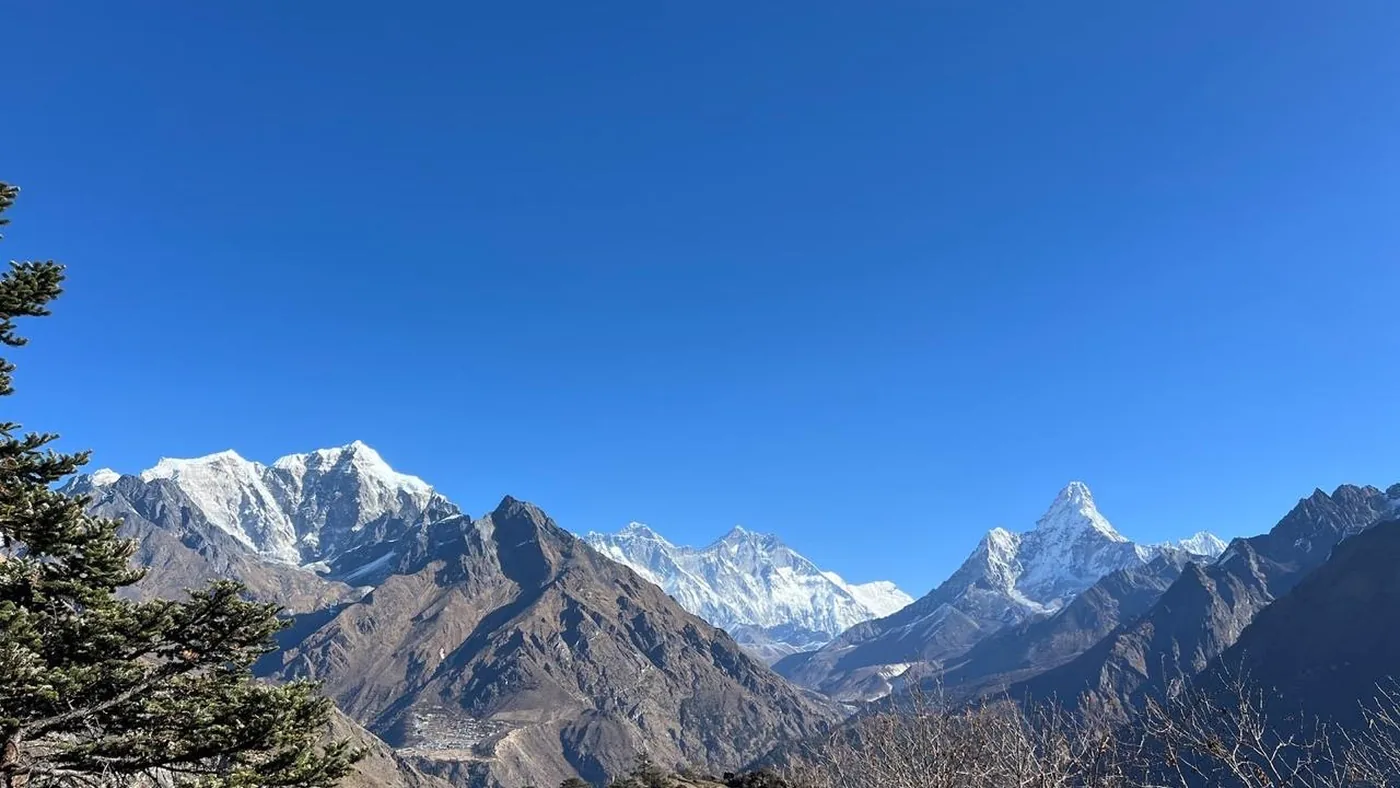
Kathmandu's domestic terminal is the launch pad for every aerial experience in Nepal, and there are two very different products on offer. The first is the mountain flight: a fixed-wing, one-hour scenic departure that climbs along the Himalayan front for close views of the range without landing anywhere. We sell it at $260 per person with a guaranteed window seat. The second is the helicopter, which is more expensive per seat but goes where no plane can - over the ridges, into the high valleys, and down onto the ground.
The helicopter options you can do as a day trip from Kathmandu include the Everest Base Camp day tour with a landing at Kala Patthar, the Muktinath pilgrimage, and private charters where you choose your own route and landing points. The Annapurna Base Camp day tour is also a single day, but it stages from Pokhara rather than Kathmandu. The table below compares what is actually available, what it lands on, and what it costs.
| Flight | Duration | Landing | Price |
|---|---|---|---|
| Everest scenic mountain flight from Kathmandu | 1 hour | No landing; 8,849 m views of the Everest range | $260 per person, window seat |
| Everest Base Camp helicopter day tour | 1 day, approx. 6 hours | Kala Patthar, 5,545 m | $1,260 per person, shared flight |
| Private Everest helicopter charter | 1 day, approx. 5-6 hours | Breakfast at the Everest View Hotel, 3,880 m | $4,500 per aircraft, up to 5 guests |
| Muktinath helicopter pilgrimage | 1 day | Muktinath temple, 3,710 m | $1,080 per person, shared flight |
| Annapurna Base Camp helicopter day tour | 1 day, approx. 3-4 hours from Pokhara | Annapurna Base Camp, 4,130 m | $860 per person, shared flight |
| Everest Base Camp helicopter trek (trek up, fly back) | 10 days | Max 5,545 m | $1,840 per person, shared flight |
| Annapurna helicopter return trek | 6 days | Max 4,130 m | $1,199 per person, shared flight |
| Manaslu helicopter return trek | 13 days | Max 5,160 m | $2,160 per person, shared flight |
Two of the eight rows above are not Kathmandu departures - the Annapurna Base Camp day tour begins in Pokhara - and we have listed them because most travellers build them into the same trip. Everything else leaves from Kathmandu. If your goal is the widest choice of aerial options, our overview of planning a helicopter tour in Nepal explains how the different bases fit together.
A Helicopter Flight With a Landing: What the Day Actually Looks Like
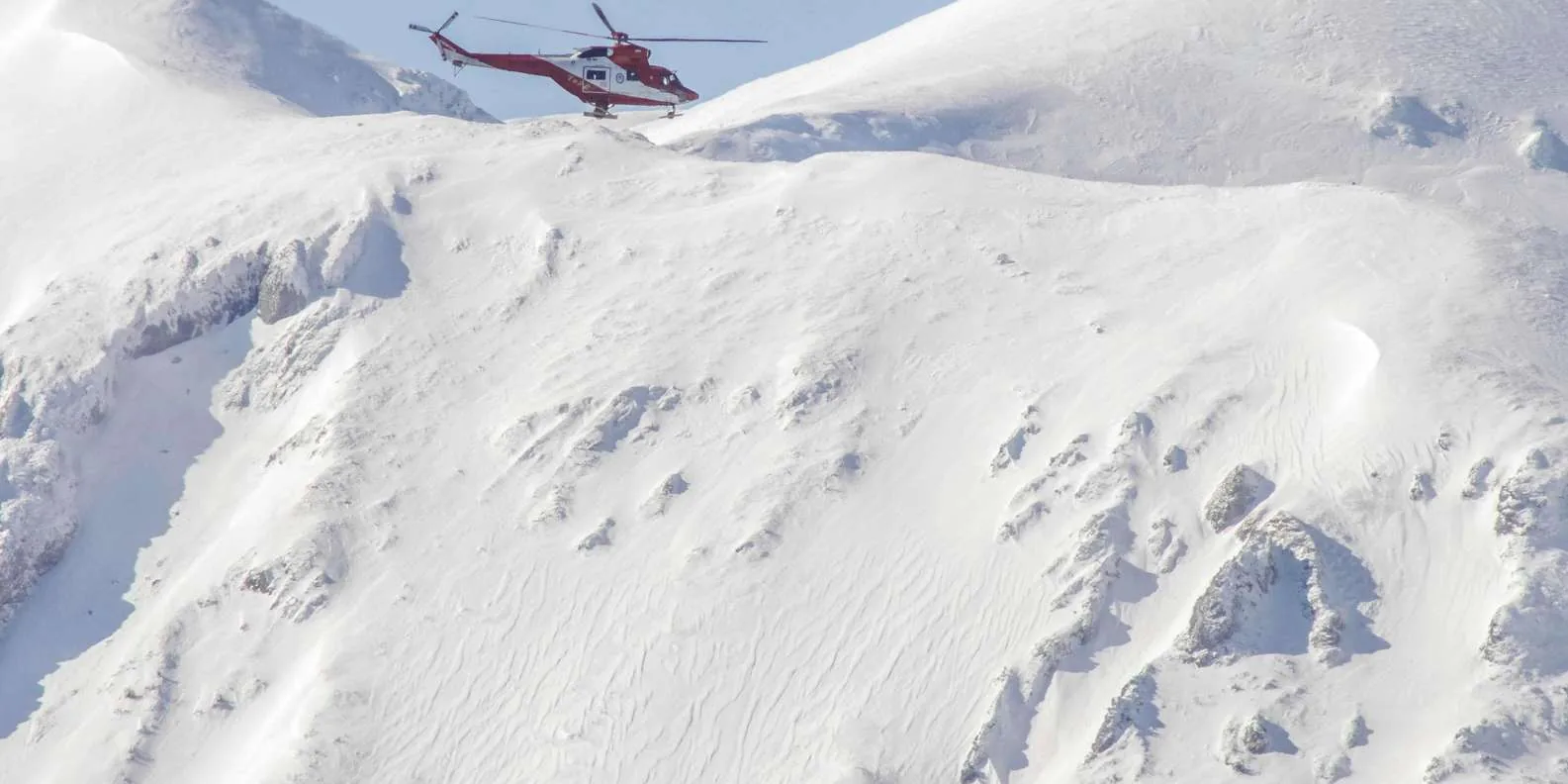
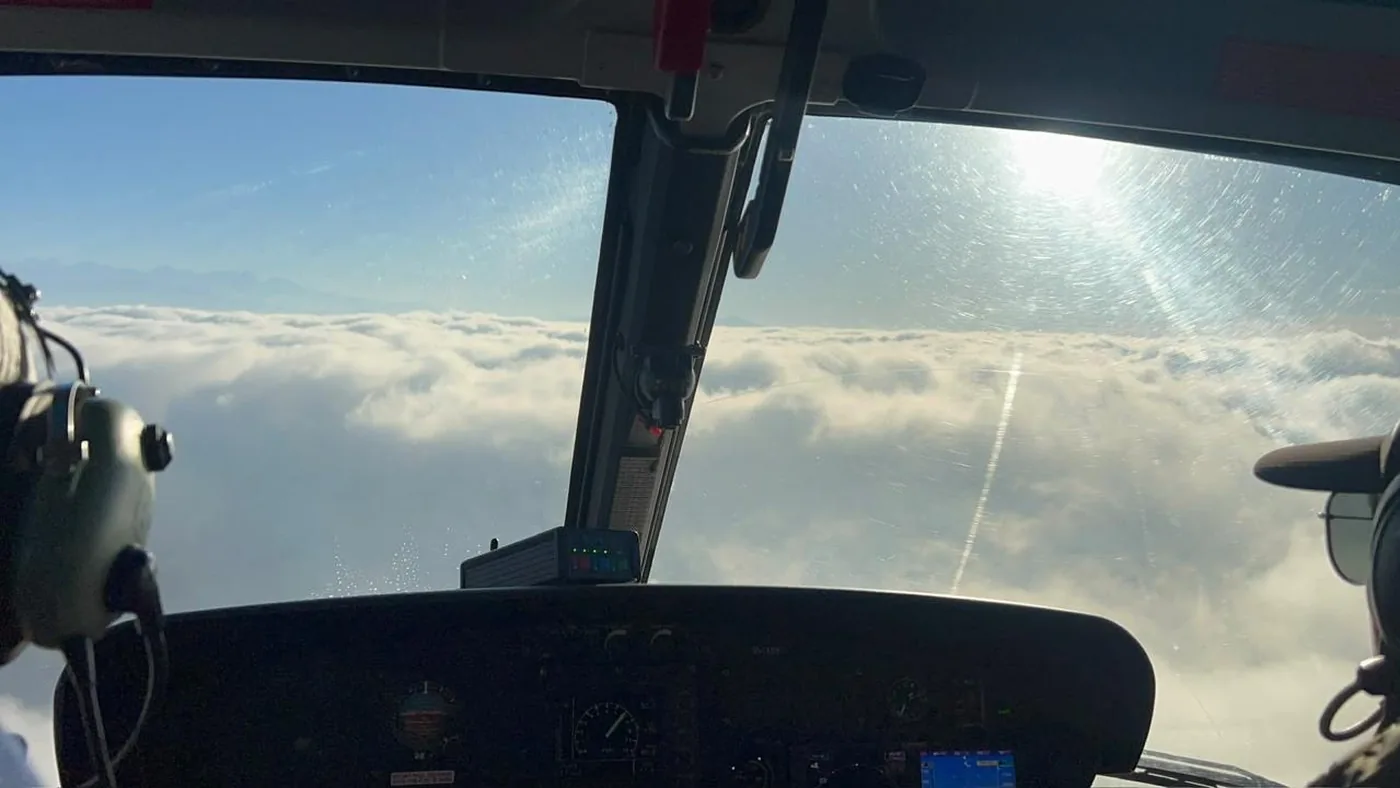
The difference between a mountain flight and a helicopter tour is one word: landing. On a fixed-wing mountain flight you see the range through a window; on a helicopter you leave the aircraft and stand on the ground at height, which is the photograph most people actually came for.
The standard Everest day tour goes like this. You are collected from your hotel in Kathmandu before first light and driven to the domestic terminal. The flight lifts off as the light comes up, tracks east along the Himalayan front past Langtang, Gauri Shankar and the Melungtse group towards the Khumbu, refuels where the operators' flight plan requires it, and then makes the approach into the Everest region. The landing is at Kala Patthar, 5,545 m - the ridge opposite Everest with the cleanest view of the summit - where you step out onto snow. A common variant stops at the Everest View Hotel at 3,880 m for breakfast; breakfast there is charged separately at roughly NPR 4,600 per person, which is worth knowing before you order. Ground time is deliberately short: because the air at 5,545 m is thin and the weather window narrow, the pilot keeps the rotors turning and keeps the visit brief.
Muktinath works the same way with a lower, gentler landing at 3,710 m, and the Annapurna Base Camp day tour lands at 4,130 m on a flight that is short enough to be comfortable for most ages. All three are single-day products: you are back in Kathmandu or Pokhara the same afternoon, which is why they are such a good use of a spare day at the end of a trip.
What a Helicopter Tour From Kathmandu Costs - and Why the Price Moves
Helicopter prices in Nepal are quoted per seat on a shared flight or per aircraft on a private charter, and the same route can differ sharply between the two. Three variables explain almost all of the difference.
| What moves the price | Effect | What it means for you |
|---|---|---|
| Shared seat vs private charter | A charter is one price for the aircraft, not per person | Everest Base Camp costs $1,260 per person on a shared flight, or $4,500 per aircraft privately for up to 5 guests |
| Altitude and landing point | Higher and thinner air means less payload, more fuel planning and lower legal passenger numbers | Kala Patthar at 5,545 m sits at the top of the range; Annapurna Base Camp at 4,130 m and Muktinath at 3,710 m are easier |
| Distance from the base | Longer sectors burn more fuel and cost more crew time | Everest routings are the most expensive day trips; routes staging from Pokhara are cheaper per seat |
| Extras charged on top | Not part of the fare | Everest View Hotel breakfast at roughly NPR 4,600 per person, and the Sagarmatha National Park entry permit at NPR 7,000 per person on Everest routings |
| Season and demand | Peak October-November and spring departures sell out first | Book the day you want early; flexibility on dates is worth money here |
As a rough ladder for a single day out of Kathmandu, the Everest scenic mountain flight is the cheapest aerial option at $260 per person, the Muktinath pilgrimage is $1,080, the Everest Base Camp helicopter day tour is $1,260, and a private Everest charter is $4,500 for the whole aircraft. Anything that involves trekking days on top of the flight - the 10-day Everest Base Camp helicopter trek at $1,840, the 6-day Annapurna helicopter return trek at $1,199, the 13-day Manaslu helicopter return trek at $2,160 - is priced as a full package rather than a flight. Our route-by-route charter price table breaks those numbers down further.
How to Book: Group Joining, Private Charter, and Booking From Abroad
There are three ways to get onto a helicopter in Kathmandu, and the right one depends on how fixed your dates are.
Group joining. Shared flights are how most single travellers and couples fly. You pay per seat, the aircraft departs when it is full or when the operator's schedule says so, and you accept that you may be matched with other guests. It is the cheapest per-person route to Kala Patthar and the normal choice for the Everest Base Camp day tour and the Muktinath pilgrimage. If you are travelling solo, group joining is the difference between $1,260 and buying five seats on a charter. We explain the trade-offs in group joining versus private helicopters.
Private charter. You buy the aircraft and choose the route, the landing points and the schedule. It costs more in total and less per person once you are four or five travellers, and it is the only way to combine, say, a Kala Patthar landing with a stop at the Everest View Hotel on the same flight.
Booking from abroad. You can reserve a seat weeks or months ahead from the United States, Europe or Australia - the operators work on written confirmation and a deposit, and the balance is settled in Kathmandu. What you cannot book is the weather. Every commercial flight in Nepal is subject to a morning go/no-go decision, and the honest answer is that a day can be scrubbed for cloud. Reputable operators rebook you on the next clear morning rather than charging you twice; our guide to how to book a helicopter tour in Nepal walks through deposits, cancellation terms and what to check before you pay. For an international traveller, the practical rule is simple: leave a buffer day in Kathmandu at the end of the trip rather than flying out the same evening.
If you want a fixed plan with the flight already built in, the Everest Base Camp helicopter day tour is the single most booked product we run out of Kathmandu, and the one-hour Everest mountain flight is the version for travellers who want the range but not the altitude.
The Nepali Rate: What Locals and Indian Travellers Pay
Nepal runs a two-tier market, and it is not a secret - it is printed on the airline fare sheets. On the mountain flights out of Kathmandu, foreign visitors pay the international fare while Nepali citizens pay a domestic fare in rupees. Buddha Air's published Nepali fare is NPR 13,776 and Shree Airlines' is NPR 15,000; Indian and SAARC nationals sit in between on a published INR fare such as Buddha Air's INR 8,610, with a passport required at check-in. Our own mountain flight product is sold at $260 per person with a guaranteed window seat regardless of nationality, but if you are booking an airline seat directly and you hold a Nepali or Indian passport, ask for the local fare by name - it is materially cheaper than the walk-up foreigner price.
Helicopters work slightly differently. Charters and shared flights are quoted in US dollars and priced per aircraft or per seat, so the nationality split is less dramatic than on the airline flights, but Nepali residents, students and families travelling together can usually be quoted a local rate in rupees for domestic-style routings. Ask for the current NPR quote rather than assuming the USD figure is the only one. Either way, budget for the rupee-denominated extras: the Sagarmatha National Park entry permit at NPR 7,000 per person on Everest routings, breakfast at the Everest View Hotel at roughly NPR 4,600, and cash for the small stuff. Indian rupees are widely accepted in tourist areas at roughly the pegged rate of about INR 100 to NPR 160, though smaller denominations are easier to spend than large notes.
The same logic applies to the rest of this list. Heritage entry tickets in the valley, cable car fares, taxis and meals are all paid in rupees, and Indian and Nepali travellers pay them at local prices. That is the real advantage of combining city sightseeing with a flight: the sightseeing is cheap, so the budget can go into the air.
For Indian Pilgrims: Pashupatinath, Muktinath and the Darshan Circuit
A large share of the pilgrims who fly out of Kathmandu are Indian families travelling for darshan, and for those travellers the valley has a natural shape. Pashupatinath comes first - it is the one Shiva temple in the world that draws Indian pilgrims as a primary destination, and it is 20 minutes from the airport. From there, the classic pilgrimage extension is Muktinath, the temple of 108 sacred waters in the Mustang district, which has its own eternal flame fed by natural gas and a spring-fed ring of spouts.
The reason Muktinath is so often done by helicopter from Kathmandu is simply time. It sits at 3,710 m in the mountains north-west of Pokhara, and the pilgrimage is a single-day round trip by air: $1,080 per person on a shared flight, back in the valley by the evening. For families travelling with older relatives, that is the difference between doing the darshan and not doing it. The full breakdown of what the day contains, and the Indian-traveller practicalities - currencies, currency limits, permits and documentation - is in our guide to the one-day Muktinath helicopter pilgrimage and the wider piece on Nepal helicopter tours for Indian travellers.
Beyond Muktinath, the pilgrimage calendar brings its own spikes: Gosaikunda's sacred lake at 4,380 m fills for Janai Purnima, and the Everest region draws Indian travellers for helicopter darshan flights that never involve trekking. If your dates are tied to a festival, book early - those are the weeks when every seat in the valley sells out.
When to Do All of This: Seasons and Timing
Nepal's weather is remarkably predictable in outline. October to November is the cleanest window of the year: the monsoon has washed the atmosphere, the mountains are sharp, and the flying weather is at its most reliable. March to May is the second strong window, warmer in the valley and still clear enough for mountain views, though haze builds later in the season. December to February is cold but often brilliantly clear, and the valley sites are at their quietest - good for sightseeing, harder for high-altitude flying. June to September is the monsoon: the valley is green, the heritage sites are emptiable, but the mountains are usually behind cloud and aerial plans regularly fail.
Within the day, the pattern matters as much as the season. Flights go early because the cloud builds over the hills through the morning; heritage sites are best at opening time before the tour buses; and the market lanes of the old city are liveliest before 10 a.m. Plan your aerial day first and build the sightseeing around it, not the other way round.
How Many Days Do You Need in Kathmandu?
Two days is the minimum for a first-time visitor: one for the heritage core around Kathmandu Durbar Square, Swayambhunath and Boudhanath, and one for Pashupatinath plus a half-day of the old city markets. Three days lets you add Patan and Bhaktapur properly and still leave an afternoon free. Five days, as in the valley heritage and aerial tour, is what we recommend for travellers who want the whole valley without rushing, and it is also the plan that tolerates one washed-out day without losing anything.
Add a day for anything aerial. That is the single most common way our guests use Kathmandu: heritage for two or three days at the start of the trip, the mountains in the middle, and a helicopter or mountain flight on the last morning before the flight home. If you only have 24 hours in the city, take the morning Everest mountain flight and spend the afternoon in Bhaktapur - you will have seen both ends of Nepal in one day.
Frequently Asked Questions
What are the best things to do in Kathmandu in two days?
Day one: Pashupatinath, Boudhanath and the Kathmandu Durbar Square, all within a few kilometres of each other. Day two: Swayambhunath in the morning and Patan or Bhaktapur in the afternoon. If you want to add a flight, put the Everest mountain flight before day one - it leaves at first light and returns you to the city in time for breakfast.
What should I do in Kathmandu, Nepal, if I only have one free day?
Do one thing properly rather than five badly. Either take a guided heritage day - Pashupatinath, Boudhanath and Swayambhunath, with lunch in the old city - or spend the morning in the air on an Everest mountain flight at $260 per person and the afternoon walking Bhaktapur. Both are honest single-day versions of Kathmandu.
Which places to visit in Kathmandu are UNESCO World Heritage sites?
The valley holds seven UNESCO World Heritage monument zones: the Durbar Squares of Kathmandu, Patan and Bhaktapur, the stupas of Swayambhunath and Boudhanath, and the temple complexes of Pashupatinath and Changu Narayan. They are spread across the valley, so three unhurried days covers them properly.
Is a helicopter tour in Kathmandu worth the money?
If you want to stand at altitude in the Himalaya and you do not have ten days to trek, yes - there is no cheaper way to be on the ground at 5,545 m. If you only want to see the range, the one-hour Everest mountain flight at $260 does that for a fraction of the cost. The helicopter is about the landing, not the view.
Can I book an Everest helicopter tour with a landing at Kala Patthar?
Yes - our one-day Everest Base Camp helicopter tour lands at Kala Patthar at 5,545 m, which is the ridge with the clearest view of the summit. Ground time is short, typically a few minutes, because of the thin air and the weather window.
How much does an Everest Base Camp helicopter tour with landing cost?
$1,260 per person on a shared flight for the one-day tour that lands at Kala Patthar. A private charter of the same region is $4,500 per aircraft for up to 5 guests, with breakfast at the Everest View Hotel at 3,880 m. Breakfast there is billed separately at roughly NPR 4,600 per person.
Can I join a group instead of chartering a helicopter privately?
Yes, and for solo travellers and couples it is the sensible choice. Shared flights are sold per seat: group joining keeps the Everest Base Camp day tour at $1,260 per person and the Muktinath pilgrimage at $1,080 per person, and you fly with other guests on the operator's schedule.
How do I book a helicopter tour from Kathmandu while I am still abroad?
Reserve in writing with a deposit and settle the balance in Kathmandu. Choose your date but keep a buffer day at the end of the trip, because every flight is subject to a morning weather decision, and a good operator rebooks you onto the next clear morning. Ask for the cancellation and rebooking terms before you pay.
Do Nepali citizens pay a local rate for mountain flights and helicopter tours?
On airline mountain flights, yes - the published Nepali fare is NPR 13,776 on Buddha Air and NPR 15,000 on Shree Airlines, against the higher international fare, and Indian and SAARC nationals pay a published INR rate such as INR 8,610 with a passport at check-in. Helicopter charters are quoted per aircraft or per seat in dollars, so ask for a current NPR quote if you hold a Nepali passport.
Can Indian pilgrims do Muktinath darshan by helicopter from Kathmandu?
Yes. Muktinath sits at 3,710 m in Mustang and the pilgrimage is a single-day round trip by helicopter from Kathmandu at $1,080 per person on a shared flight. Many families pair it with Pashupatinath darshan in the valley, since the temple is close to the airport.
Is Kathmandu at high altitude? Will I get altitude sickness?
Kathmandu sits at about 1,400 m, which is high enough to notice on the stairs and low enough that altitude sickness is not a realistic concern for healthy visitors. Altitude only becomes a factor on the flights and landings - Kala Patthar at 5,545 m is the highest point on any of our day trips, and ground time there keeps exposure short.
What is the difference between the Everest mountain flight and a helicopter tour?
The mountain flight is a one-hour fixed-wing departure from Kathmandu with no landing, at $260 per person, and it is the best value way to see the Everest range. A helicopter tour costs more but lands: Kala Patthar at 5,545 m on the Everest day tour, Muktinath at 3,710 m on the pilgrimage, Annapurna Base Camp at 4,130 m from Pokhara. See the full comparison in the Everest mountain flight cost guide.
The Bottom Line
Kathmandu rewards a little patience. Give the valley two or three days and you get seven UNESCO monument zones, the best street food in the Himalaya and the odd experience of a living medieval city at work. Give it one more morning and you get the sky as well: the Everest range from a window seat for $260, or the snow under your boots at Kala Patthar for $1,260. Nepali and Indian travellers pay materially less on the airline routes and can ask for rupee rates on domestic-style flights, and October to November remains the surest window of the year.
We are Enticing Himalayas Travel, a government-licensed Kathmandu operator, and we run these flights, pilgrimages and valley days every month of the year. Start from our helicopter tours from Kathmandu, or send your own question - dates, budget and who is travelling - through the contact page and we will send a written plan back.
One practical note before you close the tab: this page lists many options, but the only thing that decides your experience is a clear morning and a confirmed seat. Pick the flight, tell us the dates, and let the weather decide the rest.
Keep Reading
For the deeper versions of the things on this list, our Everest mountain flight, Everest Base Camp helicopter, private charter and Muktinath pilgrimage products all have detailed route breakdowns in the tours section, and the helicopter tour planning guide covers permits, weather policy and safety. The valley itself is described in the five-day UNESCO heritage itinerary. Kathmandu, as always, is at Wikipedia.