
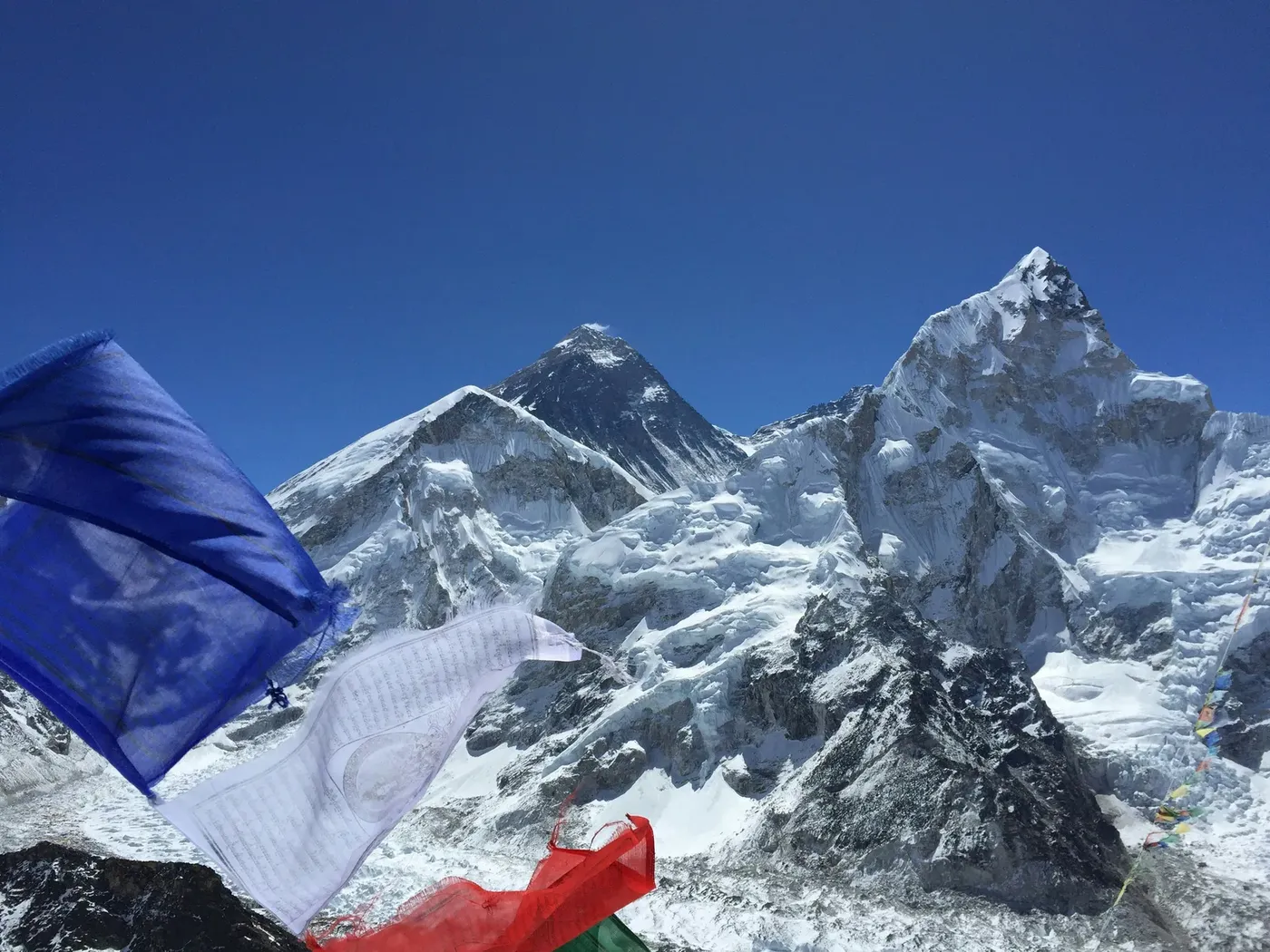
Who Shree Airlines Is
Shree Airlines is the mountain flight's newest old hand. The company built its reputation in helicopters — for years its rotor-wing fleet was the backbone of Nepal's high-altitude charter, rescue, and pilgrimage work — before expanding into fixed-wing domestic routes and, more recently, back into the scenic mountain flight market it had once helped define. That heritage is not trivia: an airline that has spent decades flying the same valleys and passes in helicopters brings a different kind of mountain literacy to a scenic circuit, and it shows in how Shree markets its flagship product — a 50-minute Everest experience flown at an advertised 25,000-foot ceiling.
For travellers, what matters is simpler: Shree is a licensed, CAAN-regulated domestic operator with a real fleet, a real booking system, and a price that undercuts the category leader by five dollars. For the full three-airline comparison with prices, our Everest mountain flight cost guide puts Shree next to Buddha Air and Yeti in one table; this article is the deep dive on the Shree side of it.
The 25,000-ft Flight Profile
Every scenic flight out of Kathmandu flies the same fundamental geometry: north-east out of the valley, alongside the Himalayan wall, and back. What differs is the altitude band the airline holds. Shree's marketing leans on a 25,000-foot operating ceiling — higher than the typical mountain-flight band — and the practical effect, when the flight plan uses it, is twofold.
First, photography is cleaner. The extra altitude buys separation from the middle-hills haze layer that often clings to the lower valleys in the early morning, and it changes the perspective on the big peaks: from the standard band the eight-thousanders sit roughly at eye level, while from higher up the camera takes in more of the surrounding structure — the full sweep of a massif rather than a single face. Second, the higher line gives the crew more room to manoeuvre around localised cloud without abandoning the sightseeing leg. The flip side is honest and worth stating: 25,000 feet is a ceiling, not a promise. On any given morning the actual altitude flown is the captain's call, made for weather, traffic, and the route's requirements — not a marketing number.
The flight itself runs about 50 minutes wheels-up to wheels-down, a shade shorter than the one-hour circuits of its competitors, with the same all-window seating that defines the category. If you want the peak-by-peak geography of what passes your window, our Everest flight route guide maps the full sequence from Gauri Shankar to the summit pyramid.
Shree Airlines Mountain Flight Price in 2026
Shree's 2026 pricing sits deliberately close to Buddha Air's, with the foreigner fare a fraction lower and the local rate expressed in Nepali rupees as always:
| Passenger Category | 2026 Shree Airlines Fare | Notes |
|---|---|---|
| Foreigner | USD 230 | Window seat guaranteed |
| Nepali citizen | NPR 15,000 | Citizenship certificate or passport at check-in |
| Indian / SAARC | seasonal | Published each season in INR |
The Nepali-rupee local rate is revised by the airline each season — treat the figure as the current benchmark rather than a fixed tariff. Children fly at reduced fares on most operators, typically around half the adult rate for under-12s; confirm the child fare for your date when booking. As with every scenic flight we sell, booking Shree through us adds no service charge: Nepali travellers pay the airline's own NPR rate, foreigners pay the USD fare, and the logistics — hotel pickup, check-in, rebooking if weather moves — are handled around the ticket. The full cross-airline price table lives in the mountain flight price guide.
What You See on the 50-Minute Route
The departure sequence is shared with every Kathmandu scenic flight because the geography dictates it: the aircraft crosses the middle hills north-east of the valley, and the snow line begins almost immediately. The Langtang range opens the show on the left side, then Gauri Shankar — the twin-summitted massif that trekkers know as the gateway to the Rolwaling — followed by the deep-field peaks most visitors have never heard of and all remember: Menlung, Choba Bhamare, and the isolated pyramid of Shisha Pangma, the only eight-thousander entirely in Tibet.
Then the main wall, in order: Cho Oyu, Gyachungkang, Pumori, Nuptse, Lhotse — and Everest, announced by the captain and unmistakable even in a line-up of giants. The aircraft holds the Nepali side of the range; there is no border crossing and no Tibet overflight. On the return leg the peaks fall away in reverse and the valley approach brings you back over the terraced hills south of Kathmandu, which on a clear morning are worth the window in themselves.
Total sightseeing time at the wall is comparable to the one-hour flights despite the shorter overall duration — the difference in minutes comes mostly from a brisker transit of the middle hills, not less time alongside the peaks.
Who Should Pick Shree
Three traveller profiles get the most out of the Shree flight. Photographers benefit from the higher operating band — the extra altitude changes the geometry of the big peaks and can lift the aircraft above thin haze that ruins long-lens work. Aviation enthusiasts and anyone who follows Nepal's aviation scene will appreciate the helicopter-heritage story and the newer market entrant's appetite for the product. And Nepali families comparing local rates notice that the NPR 15,000 citizen fare puts the Everest experience within domestic-holiday budget reach — a family of four flies for what a single foreigner pays, roughly.
Who should look elsewhere? Travellers who want the longest-established scenic fleet and the highest departure frequency should weigh our Buddha Air mountain flight guide — Buddha's Beechcraft fleet flies more morning departures, which matters most in the rebooking lottery when weather moves. And anyone whose real goal is landing rather than looking should skip the plane category entirely and read the Everest Base Camp helicopter day tour instead.
Shree vs Buddha Air vs Yeti Airlines
| Shree Airlines | Buddha Air | Yeti Airlines | |
|---|---|---|---|
| 2026 foreigner fare | USD 230 | USD 235 | USD 200–300 |
| Nepali citizen fare | NPR 15,000 | NPR 13,776 | seasonal |
| Duration | ~50 minutes | ~1 hour | ~1 hour |
| Advertised ceiling | 25,000 ft | standard scenic band | standard scenic band |
| Heritage | Helicopter operations | Longest-running scenic fleet | Established domestic network |
| Best for | Photographers, local-rate value | Frequency, track record | Price within seasonal band |
All three guarantee window seating and fly the same morning window with the same rebooking terms. The differences are real but small next to the two variables that actually decide your morning: the weather, and which airline has a seat on the earliest departure. Our side-by-side breakdown of the plane-vs-helicopter decision is in scenic flight vs helicopter tour.
Booking and the Weather Reality
Shree's mountain flights depart in the same early-morning window as every other scenic operator — roughly 6:30 to 8:00 am — because that is when the range is reliably clear. The same statistics apply: about one morning in four is lost to weather across the year, and the standard terms are free rebooking on the next available departure or a full refund if your itinerary runs out. Book the first morning of your stay, never your departure day, and if your schedule is tight tell us when you book so we can hold backup seats across operators — the one advantage of booking through an agency that works with all three airlines. Our weather and cancellation guide explains the rebooking mechanics, and the seasonality guide shows which months give you the best odds of flying on the first attempt.
The booking itself is unglamorous: we issue the ticket at the airline's own fare, arrange the hotel pickup, and put a person at the domestic terminal for check-in. No service charge on local-rate tickets; the same handling wrapped around the USD fare for foreigners.
Photographing From 25,000 Feet: What Actually Works
The scenic flight is one of the most photographed hours in Nepal, and most of those photos disappoint. The reasons are consistent: shooting through two layers of perspex that scratch and ghost, using a phone's default wide lens that renders the eight-thousanders as distant white bumps, and fighting the window with a polariser that turns the plastic into a rainbow.
What works instead: shoot with the window, not against it. A long lens — 70–200 mm equivalent on a camera, or the maximum zoom on a phone — compresses the distance and makes the summit pyramids fill the frame. Set the lens flat against the perspex to kill reflections, but remove any polarising filter first; aircraft windows are stress-birefringent and a polariser will paint purple stripes across every frame. Keep the shutter speed above 1/500 — the aircraft vibrates constantly, and image stabilisation alone will not save a 200 mm handheld shot at slower speeds.
Exposure is the quiet killer. Snow at altitude fools every metering system in existence: the camera sees a wall of white, decides it is overexposed, and darkens the frame until the peaks turn grey. Dial in roughly one stop of positive exposure compensation and check the histogram after the first frames, not after landing. Shoot raw if your camera allows it — the dynamic range between sunlit summit and shadowed glacier exceeds what any JPEG can hold.
And the Shree-specific note that ties back to the ceiling: from the higher band, the geometry favours structure over drama. At eye level with the range, a face fills the window; from above, you capture the shoulder lines, the ridges running away from the summit, the glacier systems that a lower flight only hints at. Frame for the massif, not the single peak — that is what the extra altitude is for. Our route guide doubles as a shot list if you want to plan the sequence in advance.
Frequently Asked Questions
What is the Shree Airlines mountain flight price?
The 2026 fare is USD 230 for foreigners and NPR 15,000 for Nepali citizens, with Indian/SAARC rates published seasonally. The airline revises the local rate in Nepali rupees each season. Booking through us adds no service charge to the airline's own price.
Is the 25,000 ft ceiling real?
25,000 ft is Shree's advertised operating ceiling for the scenic flight, higher than the typical mountain-flight band. Whether any particular flight uses the full ceiling is the captain's call on the day — weather, traffic, and routing decide the actual altitude flown. The practical benefit when it is used: cleaner photography geometry and separation from valley haze.
Which is better, Shree or Buddha Air?
On paper they are near-identical: window seats guaranteed, same route, same morning window, fares five dollars apart. Buddha Air offers more departures per morning and the longest scenic track record; Shree counters with the higher advertised ceiling and its helicopter-heritage pedigree. Whichever has a seat on the earliest departure on your morning is the right answer.
What happens if the Shree flight cancels?
The industry-standard terms: free rebooking on the next available morning or a full refund if your schedule runs out. About one morning in four is lost to weather across the year. Booking the first morning of your stay keeps the rebooking path open.
Do Shree mountain flights guarantee window seats?
Yes — like all Nepal scenic flights, the aircraft is loaded so every passenger has a window or adjacent seat. The scenic category exists for the view; an operator that seated passengers in blocked rows would not stay in the market.
Is Shree better for photography?
Potentially, when the flight plan uses its higher ceiling — extra altitude changes the perspective on the massifs and can lift the aircraft above thin morning haze. But the dominant factor in mountain-flight photography is the weather on your morning, not the airline. Choose the departure you can rebook from, and bring the longest lens you own.
Want a seat on the 25,000-foot Everest experience, or help choosing between the airlines? WhatsApp us at +977 9851318388 — we book all three scenic operators and every helicopter landing tour, and we answer in minutes.