

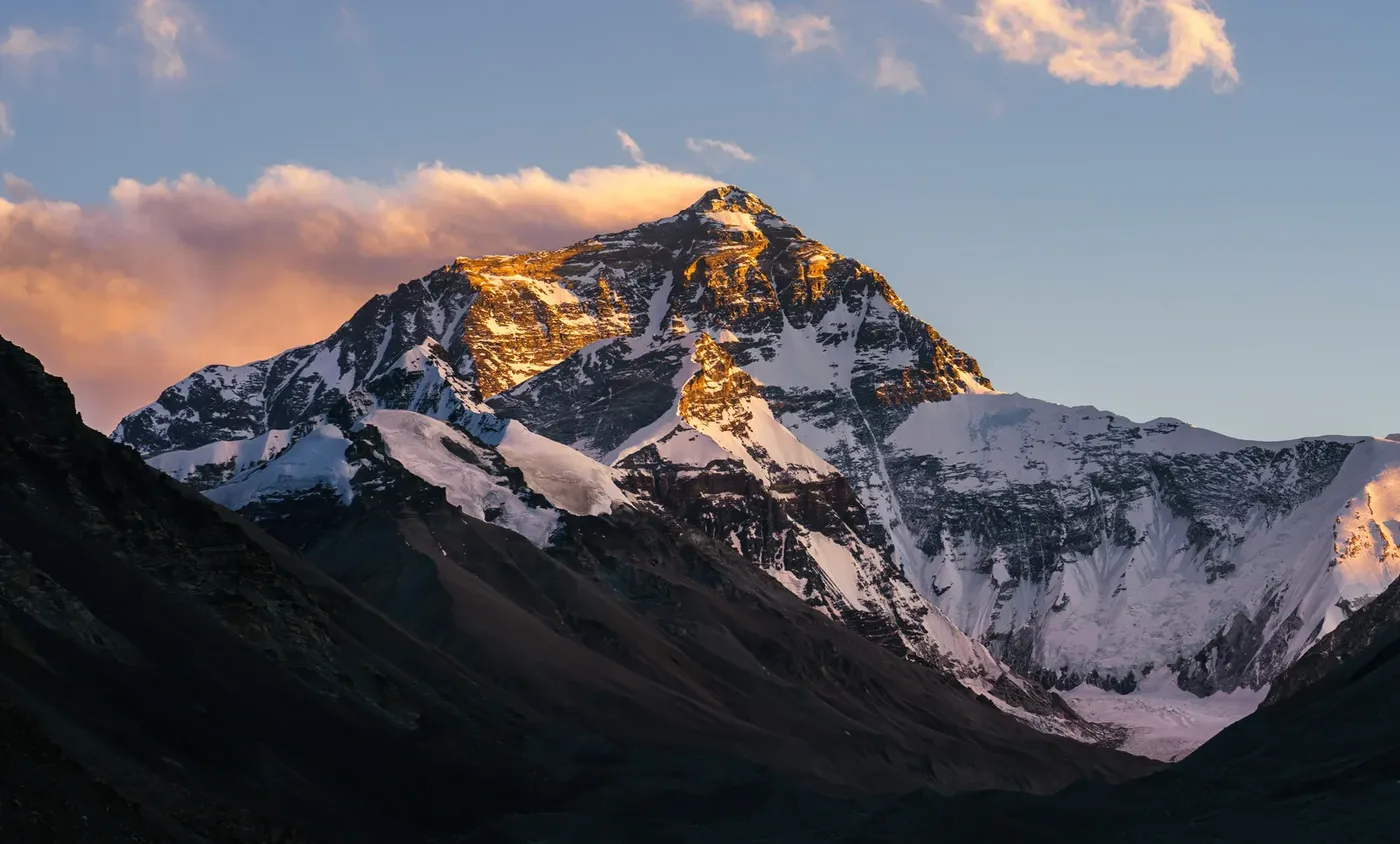
Short answer: A Nepal mountain flight helicopter is the rotor-wing version of the country's famous dawn mountain flight. Instead of a one-hour fixed-wing loop at $260 per window seat, you fly in an Airbus H125 or AS350 that can hold its altitude over a valley, hover on a ridgeline and land where no plane can go — 5,545 m on Kala Patthar on the Everest Base Camp day tour, which is published at $1,260 per person on a shared flight. The fixed-wing flight is the cheapest way to see Everest from the air; the helicopter is the only way to stand under it and be back in Kathmandu before lunch.
- $260Fixed-wing mountain flight, per window seat
- $1,260Everest helicopter day tour, per seat
- 5,545 mKala Patthar landing altitude
- 8,848.86 mEverest, the peak you are flying for
Both products leave from the same airport on the same morning and chase the same mountain. Almost everything else about them is different: the altitude you reach, the ground you touch, the number of people beside you, and what the ticket costs. This guide is written for the traveller who has already decided they want the Himalaya from the air but has not yet decided which aircraft to sit in. We run both, so there is no reason to oversell the more expensive one. What follows is the aircraft, the routes, the published 2026 rates, the altitudes, the permits and the failure modes.
What a Nepal Mountain Flight Helicopter Actually Is
A mountain flight, in the local sense of the phrase, means a sightseeing departure whose purpose is the view rather than transport. Nepal has flown them since the 1990s, most of them in twin-turboprop aircraft that climb north-east out of Kathmandu, run along the Himalayan wall for an hour and return. The helicopter version of that idea keeps the same objective — see the range, come home for breakfast — but changes the aircraft's job description. A helicopter does not need a runway, does not need to keep a minimum forward speed, and does not need to stay 3,000 m above the ground. It can drop into the Khumbu, sit on a moraine, and climb out again.
That is the whole distinction, and it drives every other difference on this page. A fixed-wing mountain flight is a viewing platform. A helicopter mountain flight is a transport service with a viewing platform built in, which is why operators price it per aircraft or per seat rather than per window.
Two further things are worth clearing up at the start, because they cause most of the confusion in the inquiries we answer. First, the helicopter that flies the Everest day tour does not land at Everest Base Camp itself. It lands at Kala Patthar, 5,545 m, the viewpoint above the base camp, while the base camp sits at 5,364 m. Second, a scenic helicopter flight in Nepal does not have to mean Everest. Langtang, Muktinath, Gosaikunda, Annapurna and the Kathmandu Valley rim all have their own published charters, and several of them cost less than half of an Everest day.
Fixed-Wing Mountain Flight vs Helicopter: The Honest Comparison
The fixed-wing product is genuinely good, and anybody who tells you it is a waste of money is selling something else. One hour, $260, a guaranteed window seat, Everest at 8,848.86 m in front of you and a certificate in your hand by 8 a.m. Nepal's airlines have run this route for decades and the safety record reflects that. But it is a look, not a visit.
| What you are comparing | Fixed-wing mountain flight | Helicopter scenic flight |
|---|---|---|
| Fare | $260 per window seat | $1,260 per seat on the Everest Base Camp day tour; $4,500 per aircraft on the private Everest charter |
| Time commitment | One hour in the air, door to door under three hours | About six hours for the Everest day tour; roughly a two-hour flying block on the Langtang charter |
| Altitude reached | Viewing altitude, with Shree Airlines advertising a 25,000 ft ceiling on its Everest experience | Landing at 5,545 m on Kala Patthar; cruise well below the aircraft's ceiling |
| Ground time | None — you land where you took off | 10–15 minutes on the ground at Kala Patthar on the standard day tour |
| People beside you | A full cabin of passengers, each with a window | Up to five guests in the aircraft, or a full charter if you buy every seat |
| Where it can go | Along the range, returning the same way | Into the valleys, over passes, onto ridges and pads the fixed-wing route cannot reach |
| Best for | Travellers on a budget or a tight schedule who want to see Everest once | Travellers who want the altitude, the landing and the photographs that come with it |
If you want the long version of that argument, we have written it out separately in helicopter versus plane flight in Nepal, including the weather ceilings that decide which one actually departs on a marginal morning. The short version: the plane flies above the weather, the helicopter flies under it, and on a cloudy day that difference is worth more than the fare gap.
The Routes a Nepal Mountain Flight Helicopter Flies
Almost every scenic departure starts at Tribhuvan International Airport in Kathmandu, 1,400 m, from the domestic terminal on the city side of the runway. The Everest and Langtang sectors both leave north-east; the Muktinath and Annapurna sectors either start in Kathmandu or join from Pokhara, which is why the Annapurna day tour is priced from Pokhara rather than from the capital.
| Product | Published 2026 rate | Unit | Duration | Highest point |
|---|---|---|---|---|
| Everest Scenic Mountain Flight (fixed-wing) | $260 | Per person, window seat | 1 hour | Everest at 8,848.86 m, viewed from the air |
| Everest Base Camp helicopter day tour | $1,260 | Per person, shared flight | 1 day, approx. 6 hours | Landing 5,545 m at Kala Patthar |
| Private Everest helicopter charter with breakfast at Everest View | $4,500 | Per aircraft, up to 5 guests | 1 day, approx. 5–6 hours | Everest View Hotel at 3,880 m |
| Langtang Valley day charter | $2,400 | Per aircraft, up to 5 guests | Block of roughly 2 hours | Ridge above the valley at 4,984 m |
| Muktinath helicopter pilgrimage | $1,080 | Per person, shared flight | 1 day | 3,710 m at the temple |
| Annapurna Base Camp day tour from Pokhara | $860 | Per person, shared flight | 1 day, approx. 3–4 hours | Landing 4,130 m at Annapurna Base Camp |
| Everest Base Camp helicopter trek, trek up and fly back | $1,840 | Per person, shared flight | 10 days | Max 5,545 m |
| Manaslu helicopter return trek | $2,160 | Per person, shared flight | 13 days | Max 5,160 m |
Read that table as a menu, not a ladder. The $1,260 Everest day and the $2,400 Langtang charter are not competing for the same customer: one is a seat on somebody else's departure to the highest landable point in the Khumbu, the other is your own aircraft on a two-hour block over a valley that most visitors never see from the air. The Manaslu and Everest trek lines are a third product again — a trekking itinerary with a helicopter exit, where the aircraft replaces the walk out rather than the whole trip.
Kala Patthar, Altitude and the Landing Decision
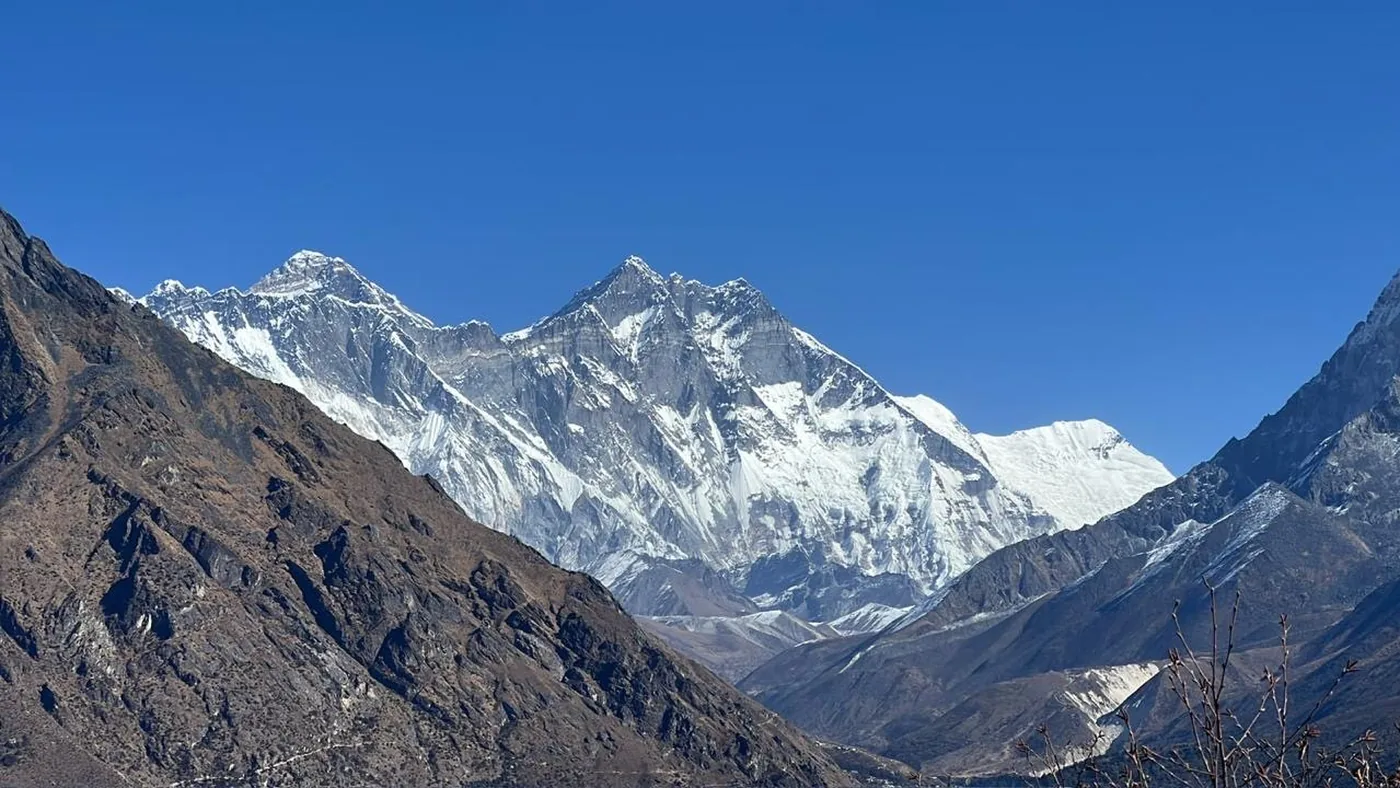
The Everest day tour is built around one number: 5,545 m. That is Kala Patthar, the rocky shoulder above Gorakshep, and it is where the helicopter puts down. Everest Base Camp itself is lower, at 5,364 m, and it is not the landing point — a distinction that matters to anyone who has read a brochure promising a landing "at base camp". Kala Patthar is the better viewpoint in any case: from the ground at base camp you look up at the icefall, while from Kala Patthar the whole south-west face of Everest and the Khumbu glacier sit in front of you.
The published shape of the day is simple. Roughly 45 minutes of flying each way from Kathmandu, split by a refuelling stop at Lukla, 2,845 m, plus 10 to 15 minutes on the ground at Kala Patthar. The stop at Lukla is not padding; it is how a single-engine helicopter reaches 5,545 m with a full load of passengers and gets home again with a legal reserve.
Ten to fifteen minutes at 5,545 m is short on purpose. At that altitude the oxygen partial pressure is roughly half of what it is at sea level, and the body notices even when the mind does not — the first symptom is usually a mild headache and a strange reluctance to walk uphill. Our pilots brief passengers to move slowly, keep the visit brief, and say something immediately if they feel dizzy. The flight is not recommended for travellers with uncontrolled heart or lung conditions, and it is not a substitute for acclimatisation: doing the helicopter day on your second morning in Nepal is very different from doing it on your first.
Aircraft, Crew and the Departure Airport
The workhorse of the Nepali scenic fleet is the Airbus H125, the single-engine machine most operators list under its old name, AS350. It carries a pilot and up to five passengers, which is why so many charter prices on this site are quoted "per aircraft, up to 5 guests" — the fifth seat is free in the sense that the fourth and fifth passengers do not add to the aircraft rate. There are Bell 407s and light twins in service too, used where the operator needs twin-engine redundancy or a slightly larger cabin.
The other aircraft you will meet on this route are not helicopters at all. Buddha Air flies the Beechcraft 1900D on its Everest Experience, Shree Airlines runs a 50-minute Everest circuit with an advertised 25,000 ft ceiling, and Yeti Airlines has flown the sector for years. All of them are licensed by the Civil Aviation Authority of Nepal, and all of them fly the same early-morning slot for the same reason: the mountain wind builds through the day, and by late morning the passes are no longer a place a small aircraft wants to be.
The departure airport is Tribhuvan International Airport, 1,400 m, and the domestic terminal is a separate building from the international one. Arrive 45 minutes before a helicopter departure rather than the two hours you would allow for an international flight — but do bring the passport you booked with, because the manifest is checked against it and the permits are issued in the same name.
Langtang: the Underrated Scenic Sector
If the Everest day is sold out, weathered off, or simply outside the budget, Langtang is the sector we point people towards first. The valley sits directly north of Kathmandu, close enough that a two-hour flying block reaches it and returns, and the published rate for the whole aircraft starts at $2,400 — divided across five seats, that is a per-person figure well below the Everest day tour. The ridge above the valley tops out at 4,984 m, high enough to feel alpine without the Kala Patthar altitude penalty.
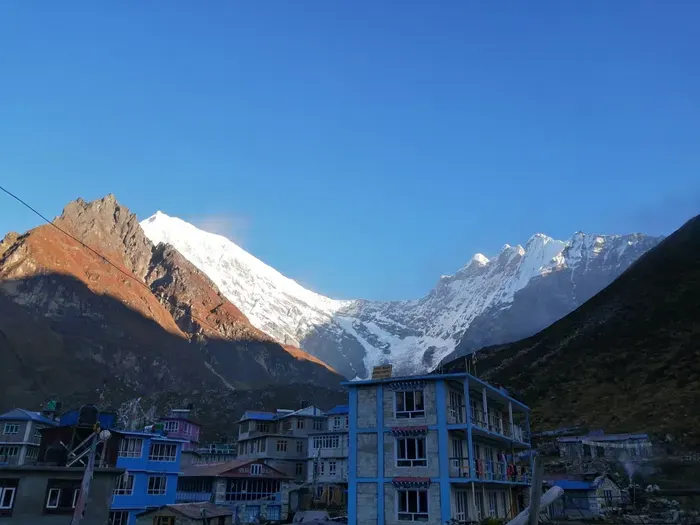
What you see is different in kind, not just in size. Langtang is a forested valley with a glacier at its head, Tamang villages on the terraces, and the massif itself filling the northern sky; the helicopter can run the length of the valley at ridge height and put down at a pad near Kyanjin. The full breakdown of inclusions, extras and what a shared seat actually costs is in our Langtang helicopter tour package guide.
What It Costs, Per Seat and Per Aircraft
Helicopter pricing in Nepal is not a markup on the plane fare; it is a completely different arithmetic. An aircraft costs the same to fuel, crew and permit whether it carries one passenger or five, so the operator has two ways to sell the same flight: fill it with strangers and sell seats, or hand the whole machine to one group and quote a charter rate. Every price you see on this site is one of those two things, and the unit is always stated.
That is why the same Everest day appears as $1,260 per person on a shared flight and $4,500 per aircraft on the private charter. Five seats at $1,260 is $6,300, so a group of five that can fill the aircraft usually finds the charter both cheaper and more flexible. A solo traveller or a couple, on the other hand, is much better off buying seats on a shared departure and letting the operator fill the rest.
| Line in the quote | What it covers | Fixed or variable |
|---|---|---|
| Aircraft, pilot and fuel | The helicopter, the crew and the published flying block | Fixed per charter; divided across the seats on a shared flight |
| Landing and pad fees | The Kala Patthar or valley pad, and the Lukla refuelling stop where the route needs one | Fixed per landing, usually inside the quoted rate |
| Permits and manifests | Sagarmatha National Park entry for the Everest sector, passenger manifests and pad permissions | Per person, only if the operator arranges it |
| Breakfast at altitude | The Everest View Hotel stop at 3,880 m on the private charter and longer day tours | Variable — check whether it is inside the rate or settled at the hotel |
| Transfers | Hotel to domestic terminal and back | Often excluded on the cheapest quotes |
| Insurance and rescue cover | Passenger insurance, and the evacuation cover a trekking policy may or may not include | Almost always separate |
Two lines deserve a question at the time of booking. Ask whether the breakfast at Everest View is included or billed at the hotel, and ask whether your travel insurance covers helicopter evacuation at altitude, because a scenic flight and a rescue are underwritten very differently. For the wider spread of fares across every route we fly, see the Nepal helicopter tour prices hub page.
Season, Weather and the Best Hour
The single most useful thing to understand about a Nepal mountain flight helicopter is that its schedule is written in pencil. Fixed-wing mountain flights cancel when the range is obscured; helicopters cancel earlier still, because a helicopter flies through the valleys rather than over them, and a valley can be closed by cloud while the summits are clear. The published rate buys you a departure, not a guarantee of a view, and any operator who promises otherwise is telling you something about their sales method.
The flying day starts at first light for a physical reason. Katabatic flow runs down the valleys overnight, so the air is at its calmest and clearest shortly after sunrise; by mid-morning the anabatic flow is running upslope, cloud is building on the ridges, and turbulence over the passes becomes the limiting factor rather than visibility. That is why every scenic departure in the country is scheduled between dawn and roughly 9 a.m., and why a 5:30 a.m. hotel pickup is normal rather than cruel.
Seasonally, the two settled windows are the post-monsoon autumn and the pre-monsoon spring, with the monsoon months carrying the highest cancellation risk and the deep winter offering the clearest air but the coldest mornings at altitude. Our month-by-month breakdown in the Everest mountain flight guide sets out how the two products behave in each window, and the weather and refunds guide covers what happens when the morning is lost.
One practical consequence: build the helicopter day into the front half of your trip rather than the last morning. If it is weathered off, a buffer of two or three days is usually enough to get airborne, and nothing is more common in Kathmandu than a traveller spending their final morning at the airport instead of over the Khumbu.
Permits, Insurance and Paperwork
The Everest sector is inside Sagarmatha National Park, so the flight carries a park entry requirement that the operator normally arranges and includes. The Kathmandu Valley and Langtang sectors sit inside different protected areas, and the Muktinath sector crosses into Mustang, which is why permit lines appear on quotations for some routes and not others. The important point for a buyer is to know who is filing what: ask for the permits to be listed by name on the quote, and check that your name matches your passport exactly on the manifest.
Insurance is the other line worth reading twice. A standard travel policy covers a scenic flight as a passenger, but helicopter evacuation cover is a separate clause and often excludes altitude above a stated ceiling. If you are combining the flight with a trek, the two policies need to fit together, and the detail is set out in our helicopter flight permits guide.
How to Book a Seat or the Aircraft
Booking a shared seat is mostly a matter of dates: tell us the window you have, we place you on a departure that already has the minimum load, and you pay the published per-seat rate. Booking a charter is a matter of arithmetic: count the seats you would otherwise buy, compare that total with the aircraft rate, and pick the cheaper number. Both routes need the same three things from you — full names as printed in passports, body weights for the load sheet, and a phone number that works in Nepal on the morning of the flight.
If your objective is simply to see Everest from the air and you have an hour to spare, book the Everest scenic mountain flight at $260 and keep the rest of the day. If your objective is to stand at 5,545 m with the Khumbu glacier at your feet, the Everest Base Camp helicopter day tour is the correct product and the fixed-wing fare is not a cheaper version of it — it is a different thing altogether. The two are best understood as a decision about ground time, not about money, because that is the only variable one of them cannot buy.
Whichever you choose, the aircraft leaves from the same terminal, at the same hour, for the same mountain, and the reference point for the peak itself never changes: Everest stands at 8,848.86 m, a figure agreed jointly by Nepal and China in 2020 and one that the crews quote to passengers on every flight north. The full survey history sits in the Mount Everest reference entry if you want the numbers behind the number.
Frequently Asked Questions
What is a Nepal mountain flight helicopter?
It is a scenic sightseeing flight in a helicopter rather than a fixed-wing aircraft. The objective is the same as the famous dawn mountain flight — see the Himalaya and return to Kathmandu the same morning — but a helicopter can hold its altitude over a valley, cross a pass at ridge height and land at places with no runway, including Kala Patthar at 5,545 m.
How much does it cost?
The Everest Base Camp helicopter day tour is published at $1,260 per person on a shared flight. The private Everest charter with breakfast at Everest View is $4,500 per aircraft for up to five guests. The Langtang Valley day charter starts at $2,400 for the whole aircraft, Muktinath is $1,080 per seat, and the fixed-wing Everest scenic mountain flight is $260 per window seat.
How long does the Everest helicopter day take?
About six hours door to door. Roughly 45 minutes of flying each way from Kathmandu, split by a refuelling stop at Lukla at 2,845 m, plus 10 to 15 minutes on the ground at Kala Patthar. Most departures are back in the city before midday.
Does it land at Everest Base Camp?
No. The landing is at Kala Patthar, 5,545 m, the viewpoint above the base camp. Everest Base Camp itself sits lower at 5,364 m and is not the landing point on the standard day tour. Kala Patthar gives the better view of the south-west face and the Khumbu glacier.
Can I see Everest without trekking or landing?
Yes. The fixed-wing mountain flight at $260 per window seat is a one-hour sightseeing loop that returns to Kathmandu without any ground time, and a helicopter charter can also be flown as a scenic circuit without a high landing if the group prefers to stay at lower altitude.
Is altitude sickness a risk on the flight?
The exposure is short but real. At 5,545 m the oxygen partial pressure is roughly half of sea level, and 10 to 15 minutes is enough for a headache or dizziness in some passengers. Move slowly on the ground, tell the pilot immediately if you feel unwell, and do not treat the flight as acclimatisation for a trek.
Do I need a permit for the helicopter flight?
The Everest sector is inside Sagarmatha National Park and carries a park entry requirement that the operator normally arranges and includes. Permits differ by sector — Langtang, Mustang and the Kathmandu Valley sit inside different protected areas — so ask for them to be listed by name on the quotation.
How many passengers fit in the helicopter?
The standard Airbus H125, also listed as the AS350, carries a pilot and up to five passengers. That is why charter rates on this site are quoted per aircraft for up to five guests, and why a group of five often finds the charter cheaper than five individual seats.
What happens if the weather cancels the flight?
The flight is rescheduled or refunded under the operator's written policy, which is why you should read that policy before paying rather than after. Helicopters are more weather-sensitive than planes because they fly through valleys rather than above them, so build a buffer of two or three days into the trip.
When is the best time to fly?
The calmest air is always shortly after sunrise, which is why every scenic departure in Nepal is scheduled between dawn and about 9 a.m. Seasonally, the settled post-monsoon autumn and pre-monsoon spring windows give the best combination of clear air and reliable departures, with the monsoon carrying the highest cancellation risk.
Is the helicopter worth it over the $260 plane flight?
Only if ground time matters to you. The plane flight shows you Everest at 8,848.86 m from a guaranteed window seat for $260 and takes an hour. The helicopter adds the landing at 5,545 m, the valley flying and the ability to stop — for roughly five times the fare. If you want to see the mountain, fly the plane; if you want to stand under it, take the helicopter.
The honest summary is that both products do exactly what they claim. A mountain flight gets you in front of the range for an hour at a price that undercuts a hotel night, and a Nepal mountain flight helicopter gets you onto the moraine at 5,545 m and back before lunch. Choose on ground time and altitude, not on the fare difference, and the decision usually makes itself in about thirty seconds.