
Short answer: The Everest mountain flight tour is cancelled or turned back more often than most travellers expect, because it is flown under visual flight rules along the Himalayan crest and the crew needs a clear line of sight to the range. When the sky closes, the seat is not lost: airlines and operators move passengers to the next clear morning, and a refund applies to the unflown flight portion if you cannot wait. What actually protects a trip is a buffer morning built into the itinerary, a fare and a cancellation rule confirmed in writing before payment, and a fallback product already understood — the Everest helicopter day tour at $1,260 per seat, or a valley viewpoint morning. Book the first morning of your stay, never the last.
- $260Mountain flight, per window seat
- 1 hourAirborne along the Himalayan crest
- 8,848.86 mEverest summit, seen in flight
- 1,400 mKathmandu departure elevation
Almost every enquiry about the Everest mountain flight tour ends with the same quiet worry, usually phrased as a polite question rather than a real one: what happens if the mountain does not show up? It is the right question to ask. The flight is a fixed-wing scenic departure from Kathmandu, about one hour in the air, sold from $260 per window seat — and it is sold as a morning product for a reason that has nothing to do with marketing. Mountain flying in Nepal is visual flying. The crew must be able to see the terrain they are flying past, and the Himalaya generate their own weather faster than any forecast can describe it. This guide is about the half of the product nobody photographs: the mornings that get cancelled, the mornings that get turned back halfway up the valley, and the mornings that launch twenty minutes late and land you in the clearest air of the week.
We book this flight alongside our helicopter tours, and we would rather tell you what the weather does than sell you a seat and hope. Everything below is grounded in how the flight actually operates and in the fares and figures already published on this site. Where a number is not verifiable, there is no number.
Why the Everest Mountain Flight Is Really a Weather Product
The aircraft leaves Kathmandu between 6:30 and 9:30 in the morning and runs roughly parallel to the Himalayan crest before turning back into the valley. That track is short, but it crosses two weather systems: the Kathmandu Valley bowl at 1,400 m, which fills with haze and low cloud overnight, and the high range beyond it, where Everest stands at 8,848.86 m. Between the two sits a belt of ridges and river gorges that decides whether the morning works.
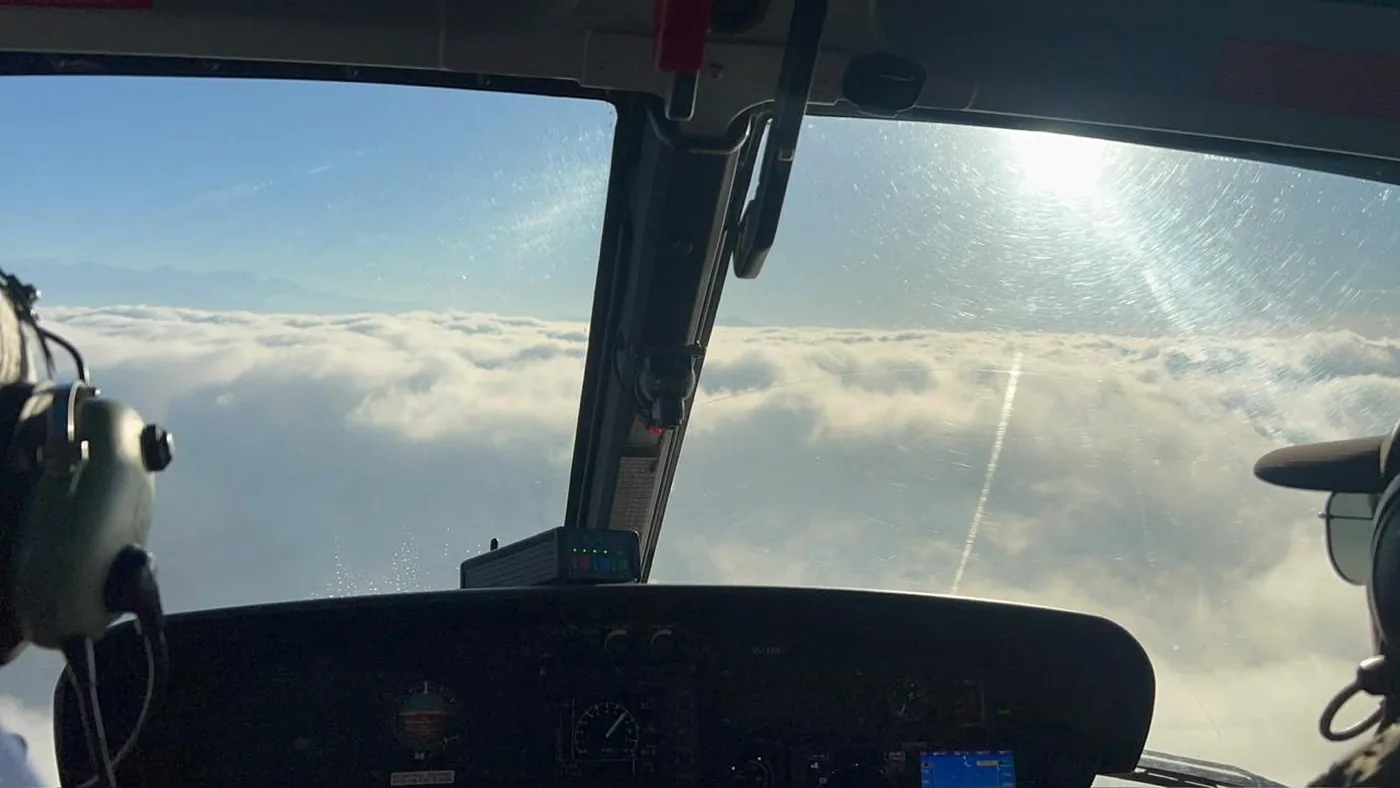
Three operational facts follow, and they explain nearly every cancellation a traveller experiences:
- The decision belongs to the pilot, not the booking office. A go/no-go call is made on the morning itself, against the actual visibility, cloud base and wind at the time of departure. No agent, no hotel and no tour page can promise a flight on a given date, and any operator who does is describing a hope, not a schedule.
- A partial flight is not a failure. Crews routinely fly the first leg and turn back when the crest is obscured. Passengers still see the range from a distance, but not the wall of peaks that the product promises, and the fare terms for a turned-back flight differ from a full cancellation. That distinction is worth asking about before you pay.
- The window closes fast. The calm, clear hours are early. By late morning the valley wind builds, convective cloud forms over the ridges, and the same route that was flyable at 7 a.m. is not flyable at 11 a.m. This is why the schedule is compressed into three hours rather than spread across the day.
Understanding that reframes the planning. You are not buying a ticket to a fixed event; you are buying a seat in a three-hour daily weather window, and the sensible way to buy it is to give yourself more than one window to use.
The Four Seasons of Cloud, and What Each One Does to the Flight
Nepal does not have four equal seasons from a mountain-flier point of view; it has a clear half and a cloudy half, with two short transitions that behave very differently. The mountain flight runs all year, but the probability of a clean view is not the same in June as it is in November, and a traveller who understands this can plan around the weather instead of arguing with it on the morning.
| Period | What the sky usually does | Odds of a clean view | What it means for your booking |
|---|---|---|---|
| October to November | Post-monsoon. The dust and humidity of summer have been washed out of the air and the crest stands out hard against blue sky. | Highest of the year | Book early. This is peak season for flights, seats and helicopters alike. |
| December to February | Deep winter. Cold, dry and mostly clear, with occasional valley fog that clears after sunrise and the very rare winter storm. | High, with a fog risk at dawn | Expect the first slot to be delayed rather than cancelled. Add warm layers for the open apron. |
| March to May | Pre-monsoon. Clear mornings early, then haze and growing convective cloud as the season advances into May. | Good early, falling through May | Ask for the earliest slot of the day. Late-morning departures carry real risk by May. |
| June to September | Monsoon. Moisture-laden air from the Bay of Bengal wraps the range in cloud for weeks at a time. | Lowest of the year | Do not build an itinerary around a single monsoon morning. Keep two backups or shift to another product. |
Two things about that table matter more than the table itself. First, the shoulder weeks around late September and early December are the underrated ones: the crowds have gone, the air is still clean, and the flight costs the same $260 it costs in high season. Second, the pattern is a probability, not a promise. A November morning can be completely socked in, and a July morning can be flawless. The months tell you what to expect; the morning tells you what you get.
If you want the month-by-month version written for helicopter touring, our best time for a helicopter tour in Nepal guide covers the same sky from the rotorcraft side, including how the monsoon reshapes the schedule. The weather logic is shared; the aircraft are not.
Who Decides Whether You Fly, and When
The most common misunderstanding about the Everest mountain flight tour is that the airline decides the day before. It does not. Bookings are held against a morning departure, and the operational decision is taken at the airport on the morning, usually within an hour of the scheduled slot, by the crew and the airline operations desk. They are looking at actual conditions along the route: the cloud base over the valley rim, the visibility at the turn point, the wind at altitude, and whether the aircraft that flew the first rotation reported a usable view.
This is why the honest answer to the question can a mountain flight be guaranteed is no, and why a serious operator will never structure a trip that depends on one. It is also why the passenger experience of a cancellation is so variable. A well-briefed passenger loses a morning and gains a rebooking. A poorly briefed passenger discovers at the airport that the terms they agreed to were the airline tariff, not a promise of Everest.
Watch the sequence on a marginal morning and the decision logic becomes obvious. The transfer collects you 90 minutes before departure. At the terminal the departures board starts showing delays rather than cancellations, because a delay costs the airline nothing while a decision costs it a slot. Somewhere between 7 and 9 the call is made: fly, fly a shortened route, or stand the flight down. Passengers who know this arrive at the airport expecting a decision rather than a departure, and they are far less frustrated by it.
What a Cancellation Actually Costs You, Layer by Layer
A mountain flight is rarely one transaction. It is a fare, a transfer, sometimes a hotel night moved to accommodate the flight, and sometimes a commission paid to whoever sold you the seat. When weather stops the flight, each of those layers behaves differently, and the traveller who has separated them in advance knows exactly what to reclaim.
| Layer | What happens if the flight is cancelled or turned back | What you should hold in writing |
|---|---|---|
| The airline fare (from $260 per window seat) | The flight portion is the part that can be refunded or rebooked. Nepali carriers flying this route handle weather cancellations routinely, but the tariff conditions govern the exact treatment, and they differ between a full cancellation and a flight that operated over a shortened route. | The airline name, the fare basis, and the cancellation wording for a weather stand-down. A screenshot of a booking site is not the tariff. |
| Hotel transfer and ground arrangements | Usually absorbed or repeated at no charge if you rebook through the same operator; a standalone transfer bought separately may simply be consumed. | Whether the pickup and return transfer are included and whether they are re-run free on a rescheduled morning. |
| Agent or reseller commission | This is where money quietly disappears. Overseas resellers commonly add 20 to 40 percent to the local operator price, and a weather refund issued against the airline fare does not return that margin. | Who holds the ticket, and what the commission treatment is on a cancellation. Booking direct with a licensed local operator removes the layer entirely. |
| A lost day of your itinerary | Not refundable in any currency, and the only layer that really hurts. It is also the only layer fully under your control at the planning stage. | Not applicable. Plan a buffer morning instead. |
The plain-language version, and the one we give on the phone: you are never charged for a flight you did not take, but you do have to ask the right question before you pay. A good operator will reschedule you to the next suitable morning at no extra cost, and will refund the unflown portion if your dates will not stretch. The precise terms depend on the airline and on the tariff you bought, so the sentence that protects you is short — what happens to this money if the weather stands the flight down? — and it should be answered in writing, not at the airport counter.
If you are weighing the plane against the helicopter, the cancellation mechanics are covered in more detail in our guide to helicopter tour cancellation and weather policy in Nepal. The helicopter has one genuine advantage here and it is worth naming: it flies lower, slower and more flexibly, so it can sometimes slip under or around a cloud deck that would stop a fixed-wing aircraft entirely. It is not weather-proof, and nobody should sell it as such.
If the cloud wins and you still want Everest, the commercial page for the flight itself is the Everest scenic mountain flight, and the helicopter option that flies above the weather is covered on the Everest Base Camp day tour.
Rebook, Refund or Change Product: Four Questions That Decide It
When the call comes, most travellers react rather than decide, and the reaction is usually to demand a refund they do not actually want. Four questions settle it in about two minutes.
How many mornings do I still have? If you have two or more mornings before your international departure, rebook and stop worrying. Two attempts on a marginal week is a very different proposition from one.
Is the next morning forecast better or worse? Ask the operator what the pattern looks like, not what the weather app says for Kathmandu. The relevant forecast is for the crest, roughly 150 km east of the city, and valley conditions are a poor proxy for it.
Would a different product get me the mountain today? A helicopter can sometimes operate when a fixed-wing cannot, and the Everest helicopter day tour reaches Kala Patthar at 5,545 m for $1,260 per seat. That is nearly five times the mountain flight fare, and it is a different product, not an upgrade — it lands, it takes half a day, and it carries its own weather risk.
Am I flying home in under 48 hours? If yes, take the refund and spend the morning on a valley viewpoint instead. Chasing a flight you cannot wait for is how people miss international connections.
There is no universally correct answer, but there is a correct order: protect the international flight first, the mountain second, the budget third. Travellers who invert that order are the ones who end up angry at an airline for doing its job.
Backup Plans That Actually Work When the Crest Is Clouded In
The worst backup plan is another flight on the same sky. If the crest is obscured, a second scenic flight at 10 a.m. will show you the same cloud from a different seat. Useful backups change the altitude, the aircraft or the direction of the trip.
| Backup | What it salvages | Honest limits |
|---|---|---|
| Rebook the mountain flight to the next clear morning ($260 per window seat) | Everything the product promises, one day later: the crest, the peaks, the certificate on landing. | Requires a spare morning. Useless on a departure day. |
| Switch to the Everest helicopter day tour ($1,260 per seat) | A landing at Kala Patthar (5,545 m) and breakfast with the range in front of you, in a lower and more flexible flight profile. | Nearly five times the fare, half a day of itinerary, and still weather-dependent. |
| Private helicopter charter ($4,500 per aircraft, up to five guests) | Timing on your terms: the machine is yours, so a weather window can be taken whenever it opens. | Per aircraft, not per seat. Only rational for a group of four or five. |
| A valley viewpoint morning instead | Kathmandu Valley heritage sites and the valley rim, which stay accessible when the high range does not. | You will not see Everest. On a heavy monsoon day, nobody will. |
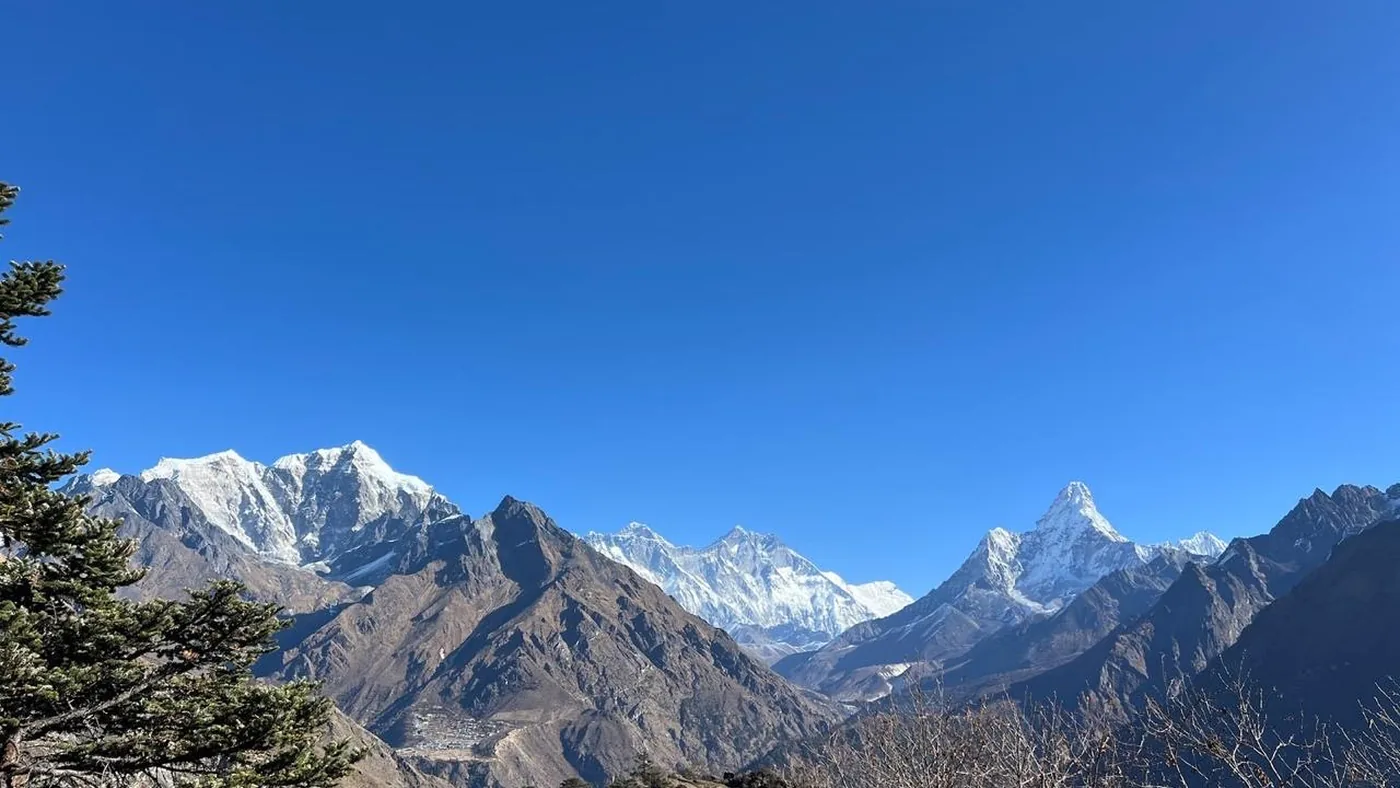
The sequencing matters. On a cancelled morning, decide within the hour — the next day fills up while passengers are still at the terminal arguing. Then confirm the new slot in writing, re-confirm the transfer time, and adjust the rest of the day rather than trying to compress it.
How to Build a Buffer Morning Into a Nepal Itinerary
The single most effective weather protection costs nothing: place the flight on the first full morning of your stay, not the last. Arrive, sleep, fly on morning one. If the sky closes, you still have morning two, and possibly three, and the rest of the trip proceeds undisturbed.
Three practical placements work for most itineraries. Put the flight the morning after arrival, before any trek or transfer, so a cancellation costs you a rest day rather than a flight connection. If you are heading to Pokhara or the Khumbu, put it on the morning you return, when a delay is absorbed by a buffer night in Kathmandu. If your trip is short, put it on the morning of the day you fly home only if the international departure is late in the evening and you accept the risk.
The full logic of fitting the flight around other bookings is covered in our guide to seeing Everest from Kathmandu, which compares the flight with the viewpoints you can reach on the ground, and in the 2026 mountain flight fare guide, where every airline price is listed side by side. Neither of those articles can change the sky, but between them they let you spend the buffer day well if you need it.
One more piece of planning worth doing: check what the flight actually flies past before you commit, because a turned-back flight is much easier to accept when you know what you did and did not see. Our aircraft, altitude and route guide walks the track peak by peak, and the Everest mountain flight guide collects the fares, the airlines and the local rate in one place.
Six Things to Get in Writing Before You Pay
None of this is unusual in Nepal, and none of it takes more than a few messages. It simply has to happen before the money moves, because after the money has moved you are negotiating with an airline tariff rather than with a booking agent.
One: the operating airline and the aircraft type. The route and the window view differ between the aircraft in the fleet, and the fare should be quoted against a named service, not a category.
Two: the departure window. A slot between 6:30 and 9:30 is the product; a vague morning departure is not.
Three: whether the transfer is included and whether it is re-run free if the flight is rescheduled. This is the cost most often rediscovered on the second morning.
Four: the cancellation and turn-back wording, in the airline or operator terms you are actually buying. Ask what happens to a flight that operates over a shortened route because the crest is obscured, as distinct from a flight that never leaves the ground.
Five: who holds the ticket, and whether a commission sits on top of the published fare. The local fare is the fare; a 20 to 40 percent reseller margin is not weather-protected.
Six: the current summit figure and what you are being shown. Everest is measured at 8,848.86 m, the joint China-Nepal figure published after the 2020 survey and recorded on the Mount Everest entry on Wikipedia. It is a detail, but it is the one number every passenger repeats afterwards, and it is worth repeating correctly.
With those six answers in hand, a cancelled morning becomes an administrative event rather than a crisis. You know who to call, what the rule is, and what the alternative costs.
Frequently Asked Questions
How often is the Everest mountain flight cancelled?
It depends entirely on the season and on the specific morning. Post-monsoon mornings in October and November are usually flyable, monsoon mornings in July often are not, and shoulder-season mornings sit in between. No operator can quote you a reliable cancellation percentage for a given date, because the deciding factor is the visibility along the route on the morning itself. What can be said with confidence is that a three-hour morning window gives the crew more options than a single fixed slot, and that a traveller with a spare morning is rarely inconvenienced for long.
Do I get my money back if the weather cancels the flight?
The unflown flight portion is refundable or transferable, subject to the fare conditions of the airline that holds your ticket, and any operator worth booking with will rebook you to the next suitable morning at no extra charge. The part that is often not refundable is a reseller commission layered on top of the local fare, plus any ground arrangement bought separately. Ask for the cancellation wording in writing before paying, and ask specifically about the difference between a cancellation and a flight that operated over a shortened route.
What is the difference between a cancelled flight and a turned-back flight?
A cancelled flight never departs. A turned-back flight departs, flies part of the route and returns when the crew judges the crest to be obscured, which means you were airborne and you did see the range, just not the wall of high peaks the product is sold on. Because part of the service was delivered, the commercial treatment is usually different, and sometimes there is no refund at all. This is the single clause most travellers fail to read, and it is the one that causes the angriest phone calls.
Can I rebook to another day, and is there a fee?
Yes, rebooking is the standard response to a weather stand-down, and with a licensed local operator it is normally free because the seat is simply moved to the next departure with space. Fees appear when the ticket was bought through a reseller on a discounted tariff with restrictive conditions. Rebooking also depends on availability: in peak October and November the next morning may be full, which is another argument for booking the flight early in your stay rather than at the end of it.
Is the helicopter less affected by the weather than the plane?
Somewhat, but not categorically. A helicopter flies lower and slower and can work a narrower corridor, so it can sometimes operate under a cloud deck that would stop a fixed-wing aircraft flying the same route. It is also subject to the same visibility minimums and the same pilot judgement, and a monsoon morning will ground both. Treat the helicopter as a different product with a different risk profile, not as a weather guarantee. It lands at Kala Patthar at 5,545 m and costs from $1,260 per seat.
What time of year gives the best chance of a clear view?
October and November are the strongest months, with the post-monsoon air at its cleanest. December to February is nearly as clear but can start with valley fog that delays the early slots. March and April are good, with haze building through May. The monsoon months of June to September are the weakest, and a single morning booking in that period is a gamble rather than a plan.
How early should I book to avoid losing the seat to the weather?
Book for the first clear morning of your stay, and book it before you travel if you are coming in high season. The reason is not price, it is space: a weather cancellation pushes a full load of passengers into the following morning, and in October that following morning is often already sold. The earlier your slot in the trip, the more mornings remain available as substitutes.
What happens if the flight is delayed rather than cancelled?
A delay is the most common outcome on a marginal morning, and it usually means the crew is waiting for the valley cloud to lift or for a report from an aircraft already airborne. Delays are absorbed inside the morning window rather than adding to your day, but they can push a 6:30 departure toward 9:00, which is why nobody should book a mountain flight and a midday domestic connection on the same morning. If you must connect, put the flight on a different day.
Will I see Everest if the flight is shortened?
Usually you will see the range from a distance, and sometimes Everest itself, but not at the scale the full route delivers. The full track runs parallel to the crest and puts the high peaks broadside in the windows; a shortened route turns earlier and holds them further away. Passengers are told what they are seeing by the crew, and the honest way to judge a shortened flight is by what the captain announces, not by whether the wheels left the ground.
Should I book the mountain flight or the helicopter if the weather worries me?
Book the product that matches what you want to do, then protect it with a spare morning. If standing at 5,545 m matters, the helicopter day tour at $1,260 per seat is the only product that delivers it and its flexibility is a genuine advantage. If seeing the wall of peaks from a window seat is enough, the $260 mountain flight is the better value by a wide margin, and the cheaper product is the one you can afford to repeat the next morning if the first attempt is rained out.
Does the flight operate on a fixed daily schedule?
Not in the way a scheduled airline does. Departures are scheduled in a morning block between 6:30 and 9:30, with the exact slot confirmed close to the date and sometimes changed on the morning. Aircraft rotation, seat availability and the weather all feed into the final time, so a confirmed booking is a confirmed seat, not necessarily a confirmed clock time.
Can I take the flight on my departure day?
Only if your international flight leaves late in the evening and you have accepted that a cancellation will be absorbed rather than solved. The mountain flight lands you back in the city before lunch in normal conditions, but a delayed morning can push that to midday, and a rescheduled flight is no help at all when you are boarding at 14:00. On a departure day there is no buffer left, which is precisely the resource this product needs.
The Short Version
The Everest mountain flight tour is the cheapest legitimate way to see the highest mountain on earth, and it is also a morning product in a mountain climate, which means weather is part of the purchase rather than an interruption to it. Plan it for the first clear morning you have, confirm the cancellation and turn-back wording in writing, keep one spare morning in reserve, and know before you fly what the helicopter would cost if you decide the view is worth the difference. That is the whole method — and it is the difference between a traveller who loses a morning and a traveller who loses the mountain.
Talk to us about a slot, a rebooking or a helicopter fallback: we will tell you what the sky is likely to do, and we will not promise you a clear morning that nobody can promise.