

Short answer: Damodar Kund Nepal by helicopter is flown as the Muktinath route. A shared flight leaves Kathmandu in the morning, lands at the Ranipauwa helipad at 3,710 m beside the Muktinath temple, and gives you two to three hours at the sacred complex before the return leg. The published scheduled product is the Muktinath Helicopter Pilgrimage at $1,080 per person, one day, with permits and landing fees included. The lake itself sits higher in the valley, above the temple, and is reached from Ranipauwa on foot or by jeep, not by a scheduled lake-side landing. If anyone quotes you a Damodar Kund helicopter tour, ask them to name the exact surface you will touch down on.
- $1,080Muktinath shared seat, per person
- 3,710 mRanipauwa helipad beside the temple
- 108Muktidhara spouts at Muktinath
- 1 dayKathmandu to Kathmandu
Where Damodar Kund Sits in the Muktinath Yatra
Damodar Kund is a high glacial lake in the Muktinath valley of Mustang, in north-central Nepal, and it belongs to the same pilgrimage circuit as the temple itself. Families who walk the circuit treat the two as one journey. First the temple at 3,710 m: darshan at the Vishnu shrine, the wall of 108 Muktidhara spouts, the eternal flame that burns on water inside the complex. Then the lake, higher in the same valley, for the bathing ritual that many pilgrims regard as the completion of the visit. Hindus hold the lake sacred to Vishnu, and the black saligram stones that the Kali Gandaki is famous for belong to the same devotional landscape, fossilised ammonites that pilgrims carry home as a form of the deity.
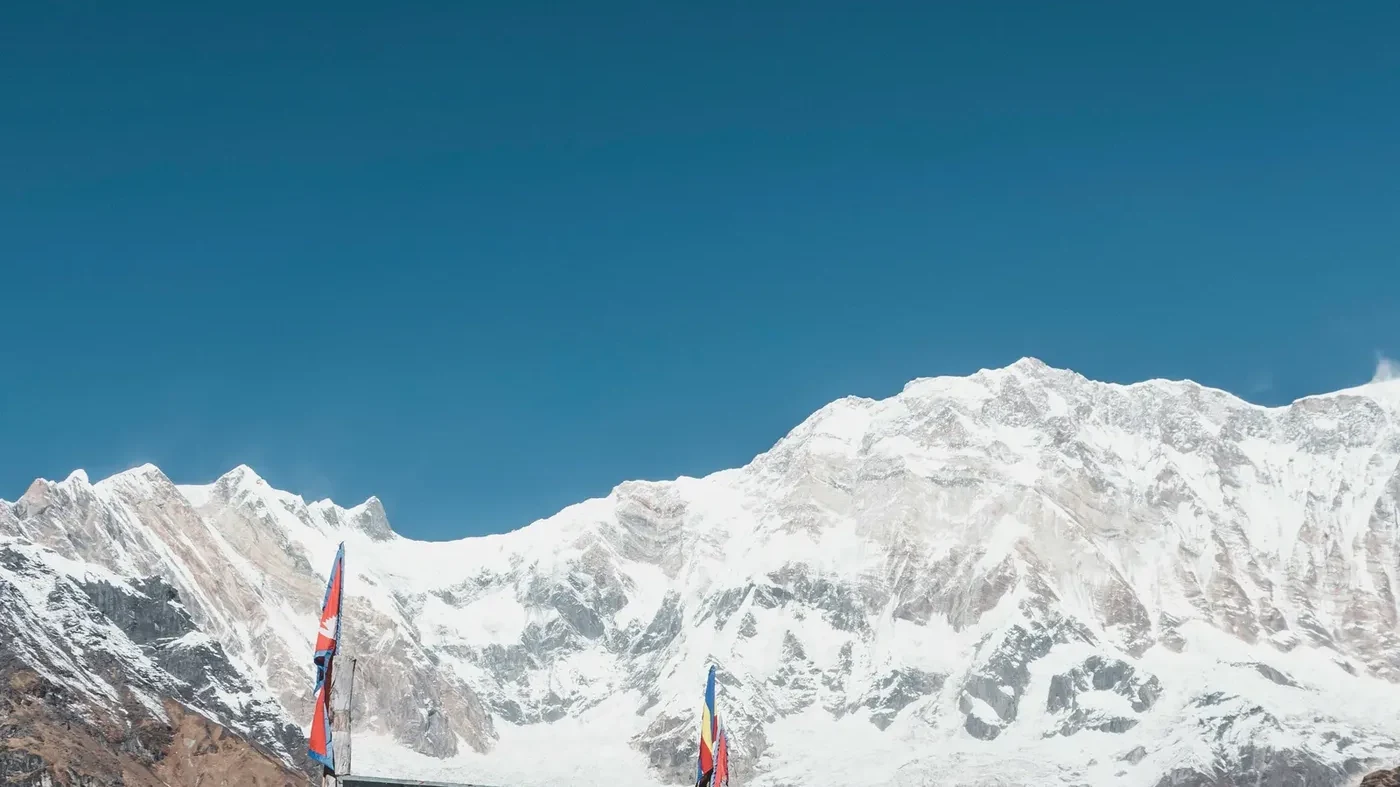
The geography explains why the two sites are spoken of together. Muktinath sits at the northern edge of the Annapurna Conservation Area, behind the Annapurna range, in the rain shadow that keeps Mustang dry while the rest of Nepal sits under monsoon cloud. The Kali Gandaki runs below the temple, the valley trekkers know as the deepest gorge on earth, walled by Dhaulagiri at 8,167 m on one side and the Annapurna massif on the other. Above Ranipauwa the ground climbs toward the Damodar Himal, and that is the basin the lake occupies. North again is Upper Mustang, the restricted former kingdom of Lo, which requires its own permits and a different conversation entirely.
Most visitors never reach the lake, and that is the honest starting point for this guide. The scheduled helicopter product lands at Ranipauwa, the village that serves the temple, a cluster of lodges and shops selling ritual items with a helipad on its edge. The lake is the extension: a separate leg, done on foot or by jeep from the village, or built into a private charter with the operator quoting it case by case. Understanding that split is the difference between a good pilgrimage and a wasted morning spent looking for a helicopter that was never going to land at the water.
Damodar Kund Nepal by Helicopter: What the Flight Actually Lands At
Here is the part that most pages about Damodar Kund Nepal by helicopter skip. Helicopters in Nepal land on prepared surfaces and open fields that the operator has assessed, not on lake shores chosen for a photograph. On the Muktinath route the surface is the Ranipauwa helipad, at the same 3,710 m as the temple, a ten minute walk or a short jeep shuttle from the temple gate. Our own landing list runs from Kathmandu's domestic terminal at 1,400 m to Kala Patthar at 5,545 m, and Muktinath at 3,710 m is one of the named points on it. The lake is not.
That does not make a Damodar Kund helicopter tour impossible. It makes it a charter question. A private charter gives a group the aircraft for the day and the freedom to add a stop, subject to the operator's assessment of the surface, the weight and the weather, and subject to being quoted and confirmed in advance. What you should never accept is a shared-seat product advertised as landing at the lake when the aircraft is going to Ranipauwa. Ask the question directly: which helipad, at what altitude, and how long on the ground. A serious operator answers in one sentence.
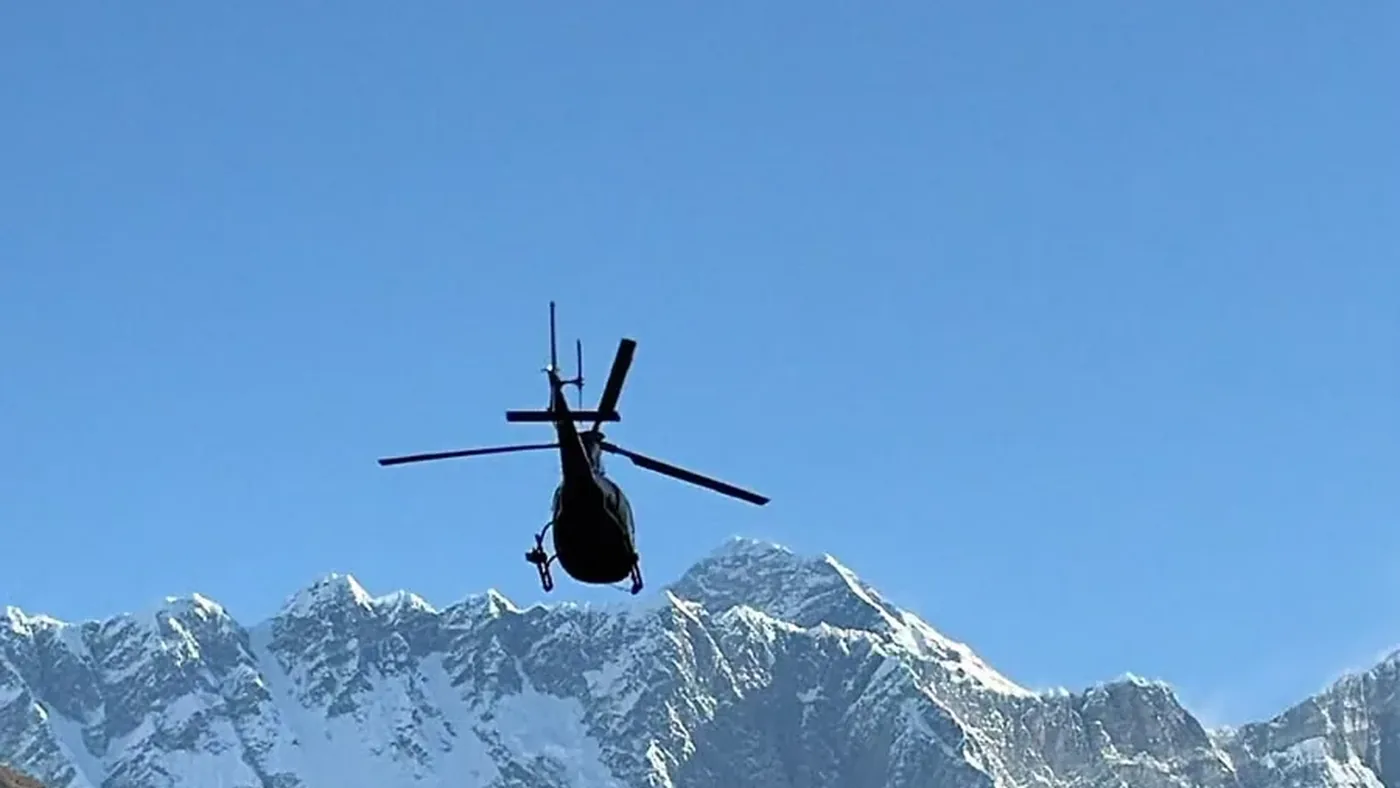
What the flight does give you, and gives you better than any jeep, is the approach. The route leaves Kathmandu over the Trishuli valleys, climbs across the ridgelines toward Pokhara, and then follows the Kali Gandaki north into Mustang, with Dhaulagiri close on one side and the Annapurna wall on the other. On the return leg the aircraft crosses the gorge with the whole depth of the valley under the skids, a photography window the overland pilgrimage never gets. If your reason for flying is the lake at the end, know what you are buying. If your reason is the pilgrimage, the flight is doing exactly what it promises.
The Day, Hour by Hour
The schedule below is the published Muktinath day, and it is the framework any Damodar Kund extension has to fit inside. Times are the operator's working times, not marketing estimates, and they depend on wind, slot allocation at Kathmandu and the load on the day.
| Time | What happens | Where |
|---|---|---|
| 05:30 to 06:00 | Hotel pickup, transfer to the domestic terminal, weight and passport check, safety briefing | Kathmandu |
| 06:30 to 07:00 | Wheels up, west-northwest across the Trishuli valleys, Annapurna range on the horizon | Kathmandu to Mustang |
| 08:15 to 09:00 | Landing at the Ranipauwa helipad, short walk or jeep shuttle to the temple gate | 3,710 m |
| 09:00 to 10:30 | Temple circuit: the 108 spouts, darshan at the Vishnu shrine, the eternal flame, the Buddhist shrines | Muktinath |
| 10:30 to 11:00 | Refreshment at Ranipauwa, board the aircraft, return leg across the Kali Gandaki gorge | Ranipauwa |
| 13:00 to 14:00 | Arrival in Kathmandu, hotel drop | Kathmandu |
Read the table with one thing in mind: the flying is roughly 75 to 90 minutes direct each way, and the ground time at the temple is two to three hours, inside a day of about eight hours door to door. A lake leg has to come out of that ground time or out of a longer charter day. It cannot be bolted on for free. Any itinerary that promises both the temple circuit and the walk to the lake inside a standard shared day is either shortening the temple visit or bending the truth about the walking.
For most families the better plan is the reverse of what the brochures suggest: keep the shared day for the temple, and treat the lake as a second visit or a private charter with an early start. The temple is the part that rewards time. The 108 spouts alone take as long as your body allows, and the guides will say plainly that a partial circuit is not a failure.
What a Damodar Kund Helicopter Tour Costs
Prices on this route are quoted per seat on a shared flight and per aircraft on a charter. The published numbers below are the operator's own 2026 figures, and they are the honest comparison set, because the cost of flying to Mustang is driven by the same aircraft, the same fuel burn and the same permit block as the rest of the one-day products.
| Product | Price | Ground time | Landing |
|---|---|---|---|
| Muktinath Helicopter Pilgrimage, shared seat | $1,080 per person | 2 to 3 hours at the temple | Ranipauwa, 3,710 m |
| Everest Base Camp day tour, shared seat | $1,260 per person | Short photo stops | Kala Patthar, 5,545 m |
| Annapurna Base Camp day tour from Pokhara | $860 per person | Time at the base camp | Annapurna Base Camp, 4,130 m |
| Private Everest charter, whole aircraft | $4,500 for the aircraft | Set by the group | Everest View Hotel, 3,880 m |
The $1,080 is a genuinely all-inclusive pilgrimage price: the round trip flight shared with other passengers, all necessary flight permits and landing fees, the ground transfer between the helipad and the temple complex, two to three hours at the temple, and a flight crew that knows the Mustang route. What sits outside it is what sits outside any Nepal trip, starting with your international airfare and the $50 USD thirty-day visa obtained on arrival at Kathmandu airport.
Put that against the alternative. The overland-and-trek route to Muktinath, once transport, lodging, meals, permits and guides are added over a week or more, typically lands somewhere between $800 and $1,500 per person and takes five to fourteen days. The helicopter does not undercut it. It replaces it, for people whose reason to go is the temple rather than the trail, and for the parents in their eighties who could never do the trail at all.
A charter is where the lake becomes realistic. At $4,500 for an aircraft across five people, the per-head figure can fall below a single shared seat, and the group controls the reporting time, the stops and the ground time. That is the format to ask about if Damodar Kund is the point of the trip rather than a bonus at the end of it.
Best Season: Why Mustang Flies When the Rest of Nepal Is Clouded
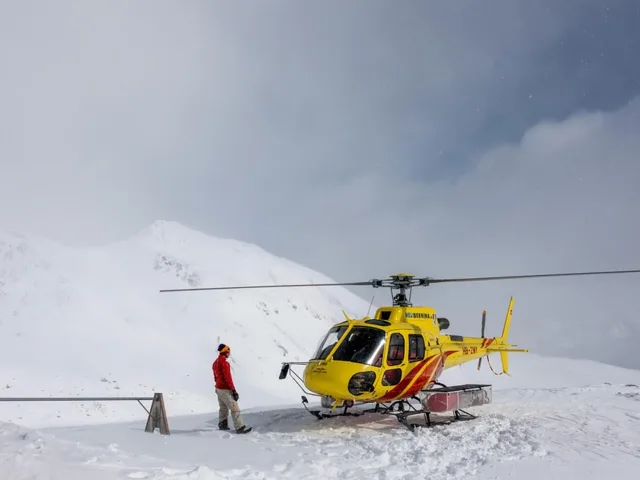
Mustang sits in the rain shadow of the Annapurna and Dhaulagiri ranges, which is why the Muktinath route runs year round when Everest flights are being cancelled for monsoon cloud. The dry months are the reliable ones: March to May and September to November give the clearest air and the most stable mornings, and those are the weeks to book first if your dates are fixed.
Winter is colder than most visitors expect and the mornings can hold valley fog in Kathmandu, but the flying is often excellent, and a clear January morning over Mustang is a better flight than a hazy April one. Monsoon is the season to think hardest about. The temple itself stays reachable, but the approach and departure windows compress, and the lake walk, which is exposed high ground, becomes a different proposition in cloud and rain.
Whatever the season, the pattern of the day is the same: the early flight is the flight that goes. Mountain weather builds through the morning, valley cloud fills the Kali Gandaki by afternoon, and a departure that slips to ten o'clock is a departure that may not happen. This is why the pickup is at 05:30 and why nobody who has flown this route for years argues with it. It is also why we build a spare day into itineraries for anyone whose trip has a hard deadline at the end.
Altitude, Age and the Walk to the Lake
Muktinath's 3,710 m is the same altitude band as Namche Bazaar, where trekkers sleep and acclimatise for days. The flight profile manages it in three ways: total exposure at the site is about 45 to 60 minutes of high ground if you keep moving, altitude is gained in a helicopter rather than on foot, and oxygen is carried on the aircraft. That is why the pilgrimage works for pilgrims in their eighties, for wheelchair users carried the last twenty metres, and for three-generation families completing a vow.
The lake leg changes those numbers. Walking above Ranipauwa means spending hours, not minutes, above the temple's altitude, on rough ground, with the wind that Mustang is known for. If you are fit and acclimatised it is a fine morning's outing. If you are not, the walk is where a pilgrimage becomes an evacuation, and no operator should encourage it for a group that has just flown in from sea level the night before.
Our advice is blunt because we have flown the aftermath of the other version. Treat the temple as the altitude objective on a one-day flight. If the lake matters to you, give it a second day, sleep at Ranipauwa or Jomsom, walk early, and fly out in the afternoon. Anyone with heart or lung conditions, anyone pregnant, and anyone who has been unwell in the previous fortnight should talk to a doctor before booking, not to a booking agent.
For Nepali Pilgrims and Indian Families: The Local Rate Question
Most of the demand for this route is regional, not Western. Families travel from Kathmandu and Pokhara, and a large share of pilgrims on the Muktinath circuit come from India, where the temple and the lake are known as a single yatra. The practical questions are different from the ones a Colorado hiker asks, and the honest answers are worth spelling out.
The published price is $1,080 per shared seat, quoted in US dollars, and it is the same seat whether you hold a Nepali, Indian or any other passport. If you have been told there is a Nepali citizen rate, ask for it in writing before you pay a deposit, and ask what it is tied to, because on a shared flight the seat costs the operator the same regardless of nationality. Rates for Nepali and Indian passport holders do exist on some products when a group fills an aircraft, but they are a group negotiation on a charter, not a discount that appears at the counter.
Two practical notes for Indian families. First, the temple and the lake are a pilgrimage, and the ground support on the shared day includes a guide who can arrange a Hindu priest for a proper puja with advance notice, which is the part most families care about and the part most booking pages forget to mention. Second, vegetarian food and a place to sit down matter more than the aircraft type on a day that starts before dawn, and Ranipauwa's lodges handle both. Tell the operator at booking, not at the helipad.
For Nepali families the calculation is often about elders rather than budget. The flight exists because the overland route takes five to fourteen days and costs $800 to $1,500 per person once everything is counted. If the goal is to get a grandmother to the 108 spouts while she can still walk them, the shared seat is the cheapest way to do the thing that actually matters.
Permits, Landing Fees and the Paperwork
Muktinath sits inside the Annapurna Conservation Area, and the permit block for the region is the ACAP entry, charged at NPR 3,000 per person, with a TIMS card where the route requires one. On the helicopter pilgrimage those costs are inside the $1,080: the product includes all necessary flight permits and landing fees, which is one reason the headline price is not a teaser with a permit bill waiting at the airport.
Upper Mustang is a different matter. The restricted former kingdom of Lo, north of the temple, has its own permit regime and its own cost structure, and a flight that crosses into it is not covered by the Muktinath product. If your plan is the temple plus a look at Upper Mustang, say so at the enquiry stage, because the paperwork has to be arranged before you fly, not at a checkpost.
For the lake leg, the permit question is the same ACAP block, since the lake lies in the same conservation area as the temple. What changes is the TIMS card if you are walking rather than flying, because a walking leg through a checkpost needs the card that a helicopter passenger does not. Carry your passport, carry a copy of the permit, and carry cash for the small municipal fees that appear on the trail.
Booking From Abroad: What to Get in Writing
Booking this route from the United States or Europe is straightforward if you insist on four things in writing. The aircraft type and registration, or at least the type, which on this route is normally an Airbus H125, the AS350 B3e that Nepali operators use for high-altitude work. The exact landing point, which for the scheduled product is the Ranipauwa helipad at 3,710 m. The ground time at the temple, which should be stated in hours and not in adjectives. And the all-in price, with permits, landing fees and the helipad transfer listed as included rather than quoted separately at the airport.
Then ask about the weather policy. Mountain flights get cancelled, and the difference between a good operator and a bad one is what happens next: whether the seat moves to the next morning, whether the money is refunded, and who decides. We build a spare day into every itinerary for a reason, and anyone booking an international trip around a single flight slot should do the same.
The practical sequence for a booking from abroad runs like this. Send your dates, the number of travellers and their weights, because weight and balance is a real constraint on a H125 at 3,710 m. Ask for written confirmation of aircraft, slot and price. Pay the deposit against that confirmation, not against a chat message. Send passport details for the manifest, and reconfirm the reporting time 24 hours before departure, when the operator has the next morning's forecast.
One more thing worth knowing: the flight can also be booked as a leg rather than a full tour. If you are already in Pokhara, the same aircraft can be joined there for the Mustang sector, and the Kathmandu to Jomsom helicopter guide explains how that long leg works when you want to start closer to the mountains. The Jomsom to Muktinath sector is the same route flown from the north side.
Damodar Kund or Gosaikunda or Rara: Which Sacred Lake Flight
Nepal has three sacred lakes that people fly to, and they are not interchangeable. Gosaikunda, at 4,380 m in Langtang, is the one with the festival: Janai Purnima fills it with pilgrims, and the flight is short from Kathmandu, which makes it the cheapest way to reach a high sacred lake. The Gosaikunda helicopter guide covers the ritual calendar and what the site is like when it is crowded.
Rara, at 2,990 m in the far west, is the largest lake in Nepal and the least visited, a long transit with limited landing options and a price to match. Our guide to Nepal's quieter helicopter destinations sets Rara, Langtang, Gosaikunda, Lumbini and Muktinath side by side, which is the fastest way to choose between them.
Damodar Kund is the third kind: a lake attached to a temple, visited as part of a pilgrimage rather than as a destination in its own right. That is why the route is priced and scheduled as the Muktinath day. If you want the lake with the temple, book the Muktinath helicopter pilgrimage and ask about the extension at the same time. If you want the wider Mustang landscape without the ritual, the Mustang helicopter tour is the better fit, and if cost is the constraint, the full cost breakdown of the Muktinath day shows exactly where the $1,080 goes.
Frequently Asked Questions
Can a helicopter land at Damodar Kund itself?
On the scheduled product, no: Damodar Kund Nepal by helicopter means landing at the Ranipauwa helipad at 3,710 m beside the Muktinath temple, and the lake is reached from there on foot or by jeep. A private charter can be assessed for a stop closer to the lake, but that has to be quoted and confirmed in advance, with the surface named in writing.
How much does a Damodar Kund helicopter tour cost?
The scheduled flight is the Muktinath Helicopter Pilgrimage at $1,080 per person, one day, with permits, landing fees and the helipad transfer included. A private charter is quoted per aircraft, not per seat, and a whole-aircraft day is the format in which a lake leg becomes realistic.
Is Damodar Kund the same trip as Muktinath?
They are two sites on one pilgrimage circuit. Muktinath is the temple complex at 3,710 m with the 108 spouts and the eternal flame; the lake sits higher in the same Mustang valley and is visited for its bathing ritual. Most one-day flights cover the temple only.
How long is the whole day from Kathmandu?
About eight hours door to door. Pickup is between 05:30 and 06:00, the flight is roughly 75 to 90 minutes each way, ground time at the temple is two to three hours, and you are back in Kathmandu between 13:00 and 14:00.
What is the best month to fly this route?
March to May and September to November for the clearest air. Mustang is in the rain shadow, so the flight also runs through the monsoon and through winter, but the early morning departure matters more than the month.
Can elderly pilgrims do it?
Yes, and they are the reason the flight exists. Exposure at 3,710 m is about 45 to 60 minutes, oxygen is carried on the aircraft, and the ground transfer from the helipad covers the distance to the temple gate. The walking leg to the lake is a different proposition and should not be promised to a frail traveller.
Do I need permits for Muktinath and the lake?
The Annapurna Conservation Area entry applies, at NPR 3,000 per person, and it is included in the $1,080 pilgrimage price along with the landing fees. Upper Mustang, further north, has its own restricted-area permits and is not part of this product.
Is there a Nepali or Indian pilgrim rate?
The published price is $1,080 per shared seat in US dollars, the same for every passport. Group rates for Nepali and Indian families exist on some charter products, but ask for them in writing before paying a deposit and expect them to be tied to filling an aircraft.
What aircraft flies the route?
Normally an Airbus H125, the AS350 B3e that Nepali operators use for high-altitude work. Weight and balance matters at this altitude, so the operator will ask for passenger weights when you book, not on the morning of the flight.
What happens if the weather cancels the flight?
The seat moves to the next available morning, which is why a spare day in the itinerary is worth more than any discount. Ask for the cancellation and refund terms in writing at booking, and reconfirm the reporting time 24 hours before departure.
Can I combine the temple with Jomsom or Upper Mustang?
Yes, on the same aircraft day if the schedule and permits allow. The Jomsom sector is the natural add-on because the aircraft is already in the Kali Gandaki; Upper Mustang needs restricted-area permits arranged before you fly.
How do I book from the United States or Europe?
Send dates, traveller count and weights, and ask for written confirmation of the aircraft, the landing point, the ground time and the all-in price. Pay the deposit against that confirmation. The temple at Muktinath is documented in detail on Wikipedia's Muktinath entry if you want background before you commit.
Book the Pilgrimage, Then Decide About the Lake
The order of decisions matters more than the sales page suggests. Book the temple first, because that is the product that exists, that flies year round from Kathmandu, and that gets a family of three generations to the 108 spouts in a single morning for $1,080 per person. Then ask, in the same conversation, what a lake leg would take: a second day on foot from Ranipauwa, or a private charter with the aircraft held for the afternoon. The answer will be honest if the operator is, and the honest answer is the one worth planning around.
If you want the whole picture before you commit, the Nepal beyond Everest guide puts this route next to Gosaikunda, Rara, Langtang and Lumbini, and our team will quote the Muktinath day and any extension in the same reply. Send your dates and the number of pilgrims, and we will confirm the aircraft, the slot and the price in writing.