

Short answer: Helicopter charter availability Nepal turns on one fact that surprises most buyers: the bottleneck is not the number of aircraft in the country but where those aircraft already are at six in the morning. The Kathmandu-based fleet is small, the usable Himalayan flying day is short, and every machine committed to an Everest sunrise departure is unavailable for a Muktinath or Lukla booking on the same morning. Book a private charter at least seven days ahead inside the published season — October to November, and March to May — and earlier than that for Dashain, Tihar, Christmas and the wedding season, when the same handful of helicopters is being requested by several groups at once.
- 5Passengers per H125 charter
- $3,500Everest day charter, full aircraft
- 7 daysPublished booking lead time
- 5,545 mKala Patthar, highest landing
Almost every enquiry about a private helicopter in Nepal starts with a date and a route, and almost every reply starts with the same correction: the question is not whether a helicopter exists, but whether one is free on the morning you want it. Helicopter charter availability Nepal is a narrow, weather-shaped calendar. A small fleet cannot cover a country where the useful flying window above 3,000 m closes as late-morning cloud builds over the passes, and where the same airframe is expected to serve an Everest sunrise tour, a Lukla transfer, a Muktinath pilgrimage and an evacuation call-out on a single day.
This guide sets out how that calendar is built, what the 2026 full-aircraft rates are on the routes we operate, which months sell out first, what a deposit does and does not hold, and what you should have confirmed in writing before money moves. Every price and altitude below is either a figure published on this site or a route fact we can stand behind. Where a number is not something we can verify, the sentence is written without one rather than with a guess.
Why Charter Availability in Nepal Is a Scheduling Problem, Not a Stock Problem
In most aviation markets, availability means inventory: how many seats, how many aircraft, how many departures. Nepal does not work that way. The tourist helicopter fleet is concentrated around Tribhuvan International Airport in Kathmandu and a smaller Pokhara base, and the machines are light single-engine turbine helicopters — the Airbus H125 (AS350) B3 and Bell 407 are the two types you will most often board. A five-passenger cabin plus pilot means one aircraft absorbs one group, not a coachload, and a full day in the Khumbu consumes the whole morning of that aircraft and its crew.
Layer the geography on top. A Kathmandu departure for Kala Patthar at 5,545 m has to leave early, climb gradually for passenger comfort, hold a landing slot at a site shared with other operators, and be back over the ridge before the cloud builds. The same helicopter cannot then be over the valley rim for a wedding shoot at noon. So when a charter is quoted as unavailable, the reason is usually a route block already sold, a weather hold that has pushed yesterday’s departures into today, or a maintenance check that reduces the day’s fleet by one machine — not an empty booking system.
That has a practical consequence for anyone planning a fixed itinerary. The earlier your dates are locked, the less the operator has to move other people to make room for you. Read this alongside our complete guide to chartering a helicopter in Nepal, which covers what a charter buys you, before working through the rate card below.
The 2026 Full-Aircraft Rate Card
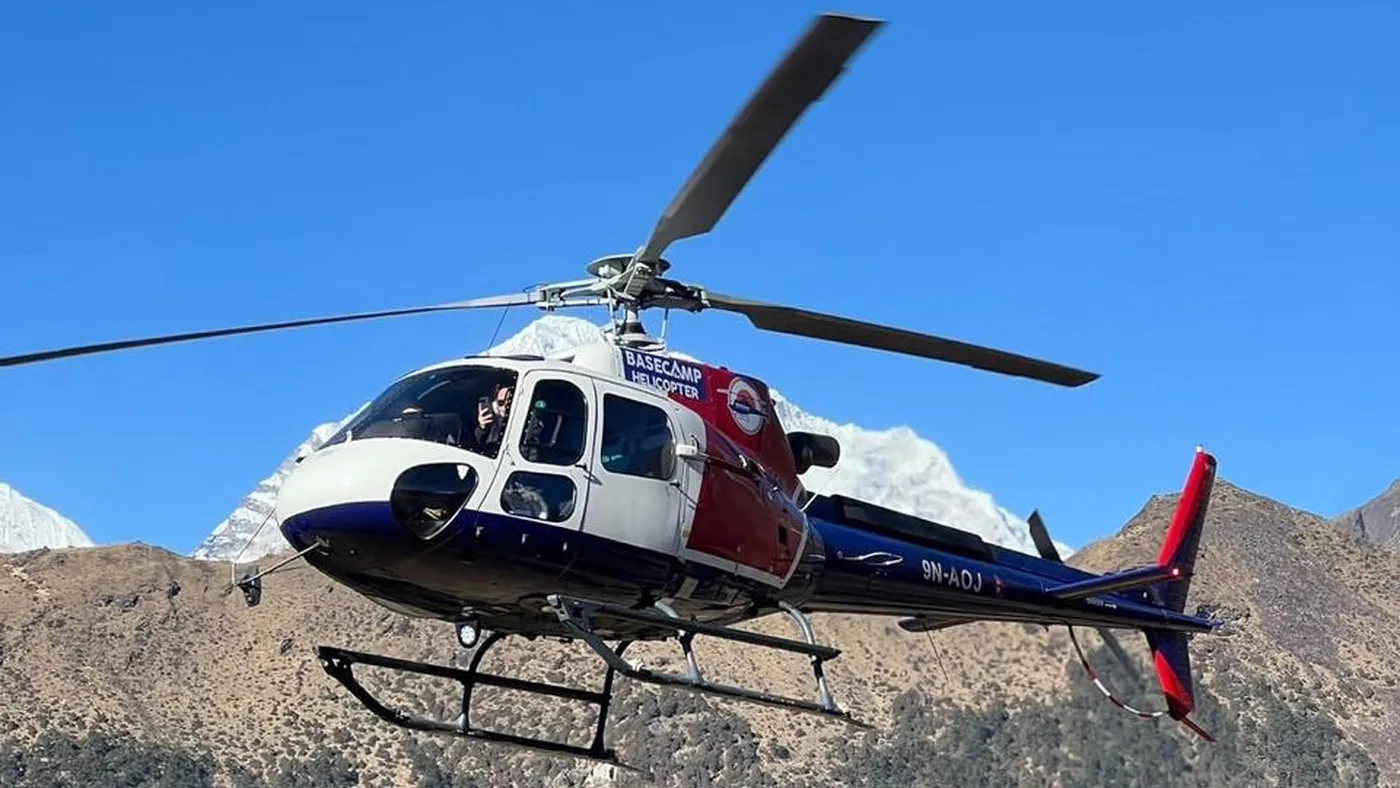
Availability and price are the same conversation in Nepal, because the price of a charter is essentially the price of a block of that aircraft’s day. The figures below are the 2026 published rates for a five-seat mountain-class helicopter quoted for the whole aircraft, not per seat. They exist so you can size a budget before you ask for a date; the day’s quote should still be confirmed in writing, because fuel and season move the number.
| Charter route | Block time | 2026 price, full aircraft |
|---|---|---|
| Kathmandu – Everest region day tour, Kala Patthar and Everest View Hotel | roughly 4–5 hours | from $3,500 |
| Kathmandu – Lukla, one way | roughly 1 hour | from $1,700 |
| Kathmandu – Lukla round trip with wait | roughly 2–3 hours | from $2,800 |
| Kathmandu – Muktinath day tour with ground time | roughly 4 hours | from $4,200 |
| Kathmandu – Pokhara transfer, one way | roughly 1 hour | from $1,900 |
| Pokhara – Annapurna Base Camp with landing | roughly 1.5 hours | from $2,585 |
| Kathmandu – Langtang Valley day tour | roughly 2 hours | from $2,400 |
| Wedding or proposal flight, Kathmandu Valley | roughly 1 hour | from $1,500 |
Two patterns matter when you are choosing dates. First, the Everest day is the most expensive block on the board because it is the longest, the highest and the most weather-sensitive: two landings, a narrow morning window and the tightest turnaround discipline on any route we fly. Second, the short valley blocks look cheap per booking but they are the ones that vanish first in December, because they are the only helicopter product that reliably runs in winter. Our per-route charter price table breaks the same numbers down by aircraft and by waiting time if you need to compare quotes line by line.
When the Fleet Sells Out: Charter Availability by Season
Demand in Nepal is not spread evenly across the year, and the shape of it is easy to describe honestly. Two windows carry almost all trekking and tour traffic: the clear post-monsoon weeks of October and November, and the spring window of March to May. In between sit the monsoon months, when low cloud and rain ground most mountain flying, and the deep winter weeks of December to February, when skies are often brilliantly clear but high-altitude cold and short daylight reshape what a crew will attempt.
| Window | What the calendar looks like | What it means for a charter request |
|---|---|---|
| October – November | The busiest flying weeks of the year; Everest blocks are sold in sequence, day by day | Ask early, accept a fixed departure hour, expect the Everest day to be the first thing to go |
| December – February | Clear skies, cold mornings, short days; valley and low-altitude flights dominate | Short valley blocks are contested by weddings and proposals; high landings depend on the day |
| March – May | The spring season, with warm days and long light; Everest, Annapurna and Langtang all running | Second-best availability of the year; still book ahead for the Everest sunrise slot |
| June – mid September | Monsoon; mountain flying is weather-dependent and often impossible for days | Charters are easier to secure but should be booked with a flexible date, not a fixed one |
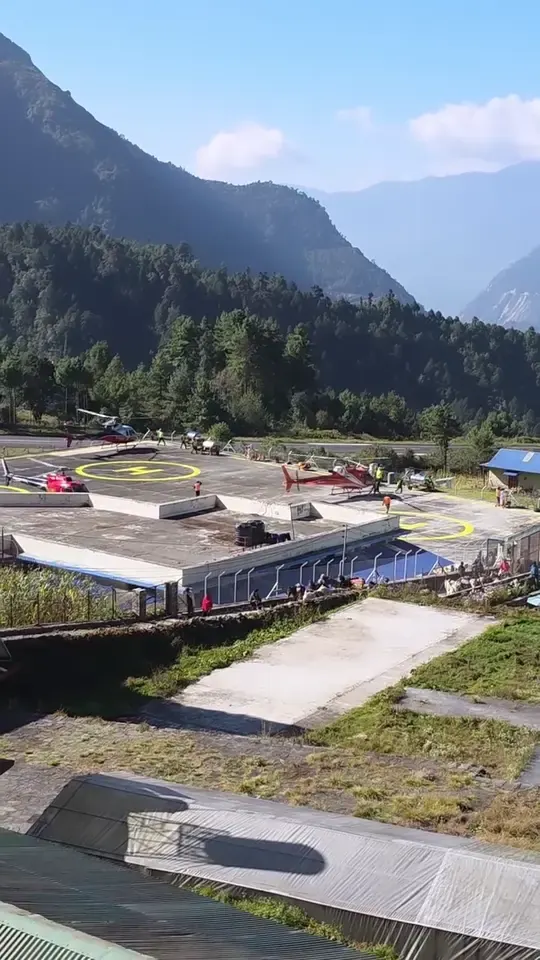
There is a second, less obvious squeeze inside the good months. Festival and holiday travel clusters: Dashain and Tihar in autumn, and the Christmas and New Year week, pull domestic family groups and Indian pilgrimage traffic into the same short period that international trekking groups are already booking. That is when a charter request for a specific morning is most likely to come back with a different hour, a different aircraft, or a request to move a day. If your itinerary is built around a fixed international flight, treat those weeks as the ones to plan furthest ahead.
How Far Ahead to Book: Helicopter Charter Availability Nepal by Month
The honest starting point is the lead time we publish on this site: seven days is the recommended booking lead for a helicopter tour in Nepal. That is not a marketing number, it is the point at which an operator can still move a machine or a crew without cancelling somebody else. Inside seven days you are competing for what is left after the sold blocks, and in the peak weeks that can mean a different departure hour or a different aircraft rather than the flight you pictured.
Work backwards from your own constraints instead of forwards from the price list. If you need a specific morning — because you fly out the next day, or because a proposal or a wedding has a fixed hour — the request should go in well before the seven-day mark, and the day before departure should be treated as a buffer, not as part of the plan. If you have a two or three day margin, seven days is comfortable. If you are booking from Kathmandu for tomorrow, the realistic question stops being availability and becomes whether the weather will let anything fly at all.
Judging helicopter charter availability Nepal properly also means knowing which product you are asking for. A shared Everest Base Camp day tour is scheduled every morning of the year, weather permitting, and you buy a seat on a departure that is already going — so the calendar is not the constraint, the weather is. A private charter is different: it is your block of the aircraft, which means it can also be displaced by a sold block on a busier route. If your dates are firm and your group is five, book the charter early and lock the hour; if your dates are firm and your group is two, a shared seat is both cheaper and more flexible.
Deposits, Holds and What Happens When Weather Takes Your Slot
Weather is the single largest consumer of helicopter availability in Nepal, and no operator can promise around it. What a professional operator can promise is a clear rule for what happens to your booking when a morning is lost. Ask for that rule before you pay, and ask it in writing, because the difference between a rebooking, a refund and a credit is the whole value of your deposit.
A deposit on a charter is normally what reserves the aircraft and the crew for that block, and it is what makes the slot unavailable to somebody else. That is why a late cancellation hurts: the block usually cannot be resold at short notice, particularly in the shoulder weeks. The practical protections to look for are a stated rebooking preference when the operator cancels for weather, a clear statement of who decides that a flight is not going, and a written flight time or check-in time rather than a vague morning window.
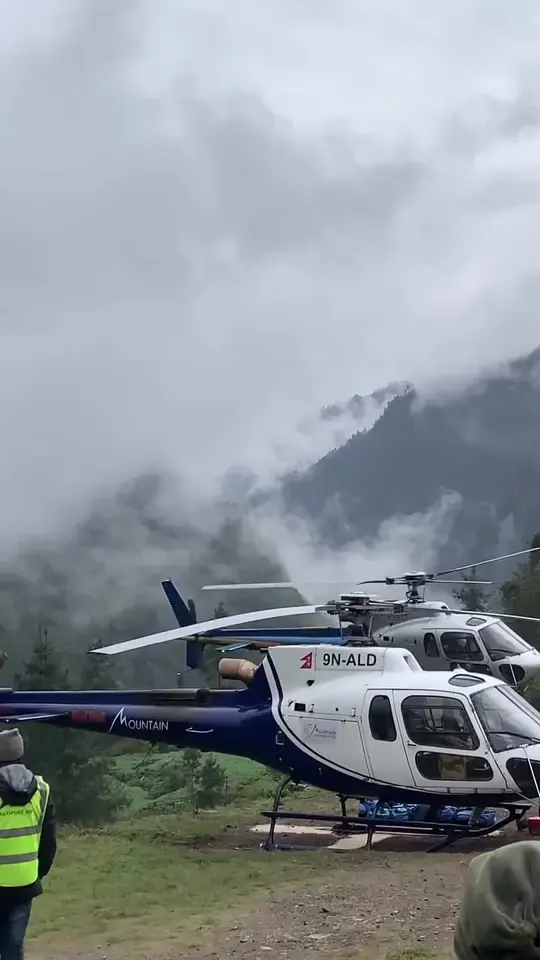
Season matters here too. In October and November, a lost morning is usually recoverable the next day because the pattern is stable. In the monsoon, a lost morning can be the start of a lost week, which is why flexible dates are worth more than a discount in June and July. The rule of thumb that has served our passengers best: book the flight for the start of your stay in Nepal, not the end, so a weather day can be absorbed without touching your international connection.
Aircraft Supply: What the Nepali Fleet Actually Consists Of
Availability is easier to reason about once you know what is flying. The tourist fleet is built around light single-engine turbine helicopters, principally the Airbus H125 (AS350) B3 and the Bell 407, with Eurocopter AS350 variants also in service. In tourist configuration an H125 carries five passengers plus the pilot, which is why the charter rate divides so neatly by five when a group compares a private aircraft against five shared seats.
Payload is the other half of the supply story, and it is the reason a charter can be confirmed and then re-planned. Loading is calculated by the pilot from the day’s temperature, the altitude of the landing site and the fuel required; on shared operations the working assumption is roughly 80 kg per person including a day bag, while a charter allows a more flexible load sheet but never an unlimited one. Groups with heavy camera cases, expedition duffels or a passenger well above the average should say so at the enquiry stage, because the answer may be a different aircraft rather than a different price.
Twin-engine charters exist and cost significantly more — often double — because those aircraft are scarcer and burn more fuel. For most mountain tour routes the single-engine H125 is the workhorse, and it holds the best high-altitude record in Himalayan aviation. Our private Everest charter page shows the configuration we actually fly for a full-aircraft Everest morning.
Permits and Clearances That Gate a Departure
Paperwork is part of availability, and a charter is not confirmed until the clearances behind it are. Two different sets of permission apply. The operator must hold an air operator certificate issued by the Civil Aviation Authority of Nepal and file the flight clearance for the route it intends to fly; that is the operator’s job and it is included in the price. You are the person who needs the area permit, and which one depends on where the aircraft lands.
On Everest routings the Sagarmatha National Park entry permit is charged at NPR 7,000 per person and is payable at the gate rather than folded into the fare. Annapurna, Pokhara and Muktinath routings sit inside the Annapurna Conservation Area, where the permit is NPR 3,000 per person. Langtang and Gosaikunda need a Langtang National Park permit, and Manaslu sits inside the restricted-area structure, where the first week is $100 per person. On our day tours and scenic flights these are arranged for you; on trek-up, fly-back itineraries they sit inside the package. The helicopter flight permits guide sets out each layer in full.
The one clearance nobody can book is the landing slot itself at a busy site. Kala Patthar at 5,545 m and the Everest View Hotel at 3,880 m are shared infrastructure, and time on the ground is finite. That is why a charter confirms an hour rather than a wish, and why a request to land at both sites on the same morning is a scheduling question before it is a pricing question.
Weddings, Filming and Groups: The Bookings That Take the Calendar First
Some charter products do not compete for the same hours as a tour, and knowing which is which helps you plan. Wedding and proposal flights are valley blocks of about an hour, priced from $1,500, and they cluster into the winter months when the mountain product is quiet — so they rarely block an Everest booking, but they do fill the short December days quickly. A full destination wedding at Everest Base Camp, priced at $5,100 per couple, is a different matter: it consumes an aircraft, crew time and ground handling for a long block and needs to be planned as an event rather than a flight.
Filming and photography charters are the most demanding users of the calendar. A production needs door-off configurations, repeated passes over the same terrain, and hovering time that no shared departure can offer, and it usually needs the same aircraft across several days. Those bookings are arranged as dedicated blocks and should be discussed as a production schedule, not as a tour with cameras. Skydiving by helicopter, at $850 per person for a half day, sits in the same category of fixed-slot operations.
Groups of five are the natural unit for a charter, because five is the cabin. A group of six or more means two aircraft flying in formation or in sequence, and two aircraft are materially harder to find on the same morning than one. If your group is larger than five, say so at the first enquiry: it changes what availability looks like, not just what the invoice looks like.
Shared Seats vs Full Charter: When Availability Changes the Maths
| Product | Price | Who controls the departure |
|---|---|---|
| Everest scenic mountain flight, window seat, about an hour | from $260 per person | The airline and the fixed morning schedule |
| Everest Base Camp day tour, shared helicopter seat | from $1,260 per person | The operator, on a departure that runs every morning weather permitting |
| Private Everest region charter, up to five guests | from $4,500 per aircraft | You, within the confirmed weather window |
| Muktinath helicopter pilgrimage | from $1,080 per person | The operator, on scheduled departures |
| Annapurna Base Camp day tour from Pokhara | from $860 per person | The operator, on scheduled departures |
The arithmetic is blunt. Five seats on a $4,500 charter is $900 a seat, which is why a group that can fill the cabin should usually charter: the per-person cost falls below the shared price of an Everest day tour while the departure time, the landing order and the time on the ground all become yours. Two people on the same aircraft pay $2,250 each for exactly the same flight, which is why couples and solo travellers are usually better served by a shared seat.
Availability changes that comparison in one direction only. When shared departures are full in peak weeks and a charter is the only confirmed aircraft, the charter stops being a luxury and becomes the option that protects a fixed itinerary. If you are weighing the two against a scenic fixed-wing flight instead, the Everest scenic mountain flight is the cheapest way to see the range from the air and needs no charter at all. Our group joining versus private charter comparison takes the same decision apart in more detail.
What to Confirm in Writing Before You Pay
A charter confirmation is a short list of specific facts, and a booking that cannot state them is not really confirmed. The aircraft type and registration, the passenger names as they appear on passports, the departure airport and the check-in time, the planned landings with the altitude of each, the block time and the waiting allowance on the ground, the luggage limit per passenger, and the weather rule that governs a rebooking are the eight items that decide whether the morning works.
Two of those deserve extra attention. The waiting allowance determines whether a landing is a photograph stop or a proper visit: a charter that lands at the Everest View Hotel for breakfast is a different product from one that touches down for a few minutes. And the weather rule should say who decides, when they decide, and what you are owed if they decide against flying — a rebooking to the next available morning, a credit, or a refund, stated plainly rather than described as negotiable.
Finally, match the booking to your own margin. If you are in Nepal for a week, put the flight on day two or three and keep the last morning free. If you are here for three days, say so, and ask for the earliest available slot rather than the most convenient one. Availability in the peak windows rewards the traveller who is flexible about the hour and firm about the date, and it punishes the reverse. Our Nepal helicopter tour prices hub collects the rate guides, the group-joining options and the charter comparisons in one place if you want to check any figure above against its source page.
Frequently Asked Questions
How far in advance should I book a helicopter charter in Nepal?
Seven days is the booking lead we publish, and it is the point at which an operator can still rearrange aircraft and crew without cancelling someone else. In the October to November and March to May windows, and around Dashain, Tihar and the Christmas week, book earlier than that if your date and hour are fixed.
Is helicopter charter availability Nepal better in winter or in the monsoon?
Winter is better. December to February brings clear skies, cold mornings and short days, and the short valley flights run reliably. The monsoon months from June to mid September are the hardest for mountain flying, so a charter booked then should carry a flexible date rather than a fixed one.
Can I get a private charter for tomorrow in Kathmandu?
Sometimes, but it depends on what is already sold rather than on the price. The realistic constraints are the aircraft block, the crew duty day and the weather. A shared Everest Base Camp departure runs every morning weather permitting, so a seat is usually easier to find at short notice than a whole aircraft.
How many passengers fit in a charter helicopter?
Five passengers plus the pilot in the H125 (AS350) B3 and Bell 407 configurations used for tourism. Groups larger than five need two aircraft flying in sequence or formation, which is materially harder to arrange on the same morning in peak weeks.
What happens to my charter if the weather closes the route?
The operator decides, and the decision should be stated in your confirmation: rebooking to the next available morning, a credit, or a refund. Ask for that rule in writing before paying a deposit, and book the flight early in your stay so a lost morning does not threaten your international connection.
Does a deposit hold the aircraft for my date?
Yes, that is what a deposit does — it takes the block off the market. It also means a late cancellation usually cannot be resold, particularly in shoulder weeks, which is why the cancellation terms are worth reading before the deposit rather than after.
Which permits do I need on an Everest charter?
The Sagarmatha National Park entry permit at NPR 7,000 per person, payable at the gate on Everest routings. The operator files the flight clearance under its air operator certificate. Annapurna, Pokhara and Muktinath routes need the Annapurna Conservation Area permit at NPR 3,000 per person, and Langtang routes need a Langtang National Park permit.
Is a charter cheaper than five shared seats?
For a full group of five, usually yes in per-person terms: a $4,500 Everest charter works out at $900 a seat against $1,260 for a shared seat on the day tour. For two people the same charter costs $2,250 each, so shared seats are the better value unless a fixed departure hour is essential.
What is the highest landing on a charter from Kathmandu?
Kala Patthar at 5,545 m on the Everest route, above Everest Base Camp at 5,364 m. Landing there depends on the day’s load, temperature and wind, and the pilot makes the final call. The Everest View Hotel at 3,880 m is the usual breakfast stop on the same morning.
Can I charter a helicopter for filming or a wedding?
Yes, and both are arranged as dedicated blocks rather than tour seats. Filming needs door-off configuration and repeated passes, and usually the same aircraft across several days. A valley wedding or proposal flight runs about an hour and is priced from $1,500, while a full Everest Base Camp wedding is priced at $5,100 per couple.
Do charter prices include the park permit fees?
On day tours and scenic flights the operator arranges the permits and clearances and includes them in the price. The Sagarmatha National Park entry permit at NPR 7,000 per person is the one routinely charged on top on Everest routings, paid at the gate.