
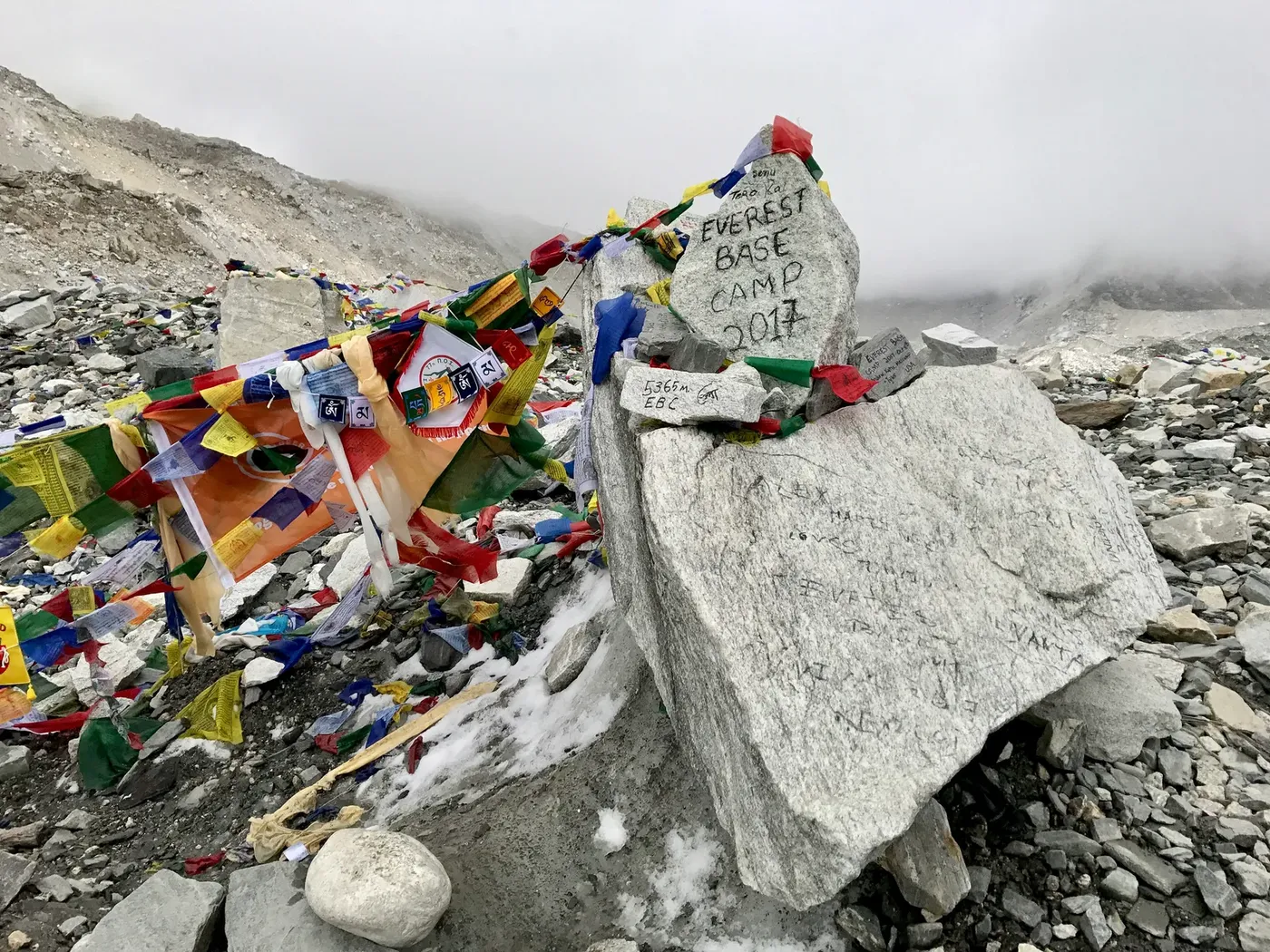
Short answer: Everest Base Camp on the Nepal side stands at 5,364 m, and the summit of Everest is 8,848.86 m — so even standing at Base Camp you are still just under 3,500 vertical metres below the top. Almost no helicopter tour lands exactly at Base Camp: the standard landing point is Kala Patthar at 5,545 m, 181 m higher, because the view of Everest from there is unobstructed. A one-day Everest Base Camp helicopter tour from Kathmandu costs $1,260 per person on a shared flight and takes roughly six hours from pickup to drop-off.
- 5,364 mEverest Base Camp elevation
- 5,545 mKala Patthar landing height
- 8,848.86 mEverest summit elevation
- $1,260One-day tour, per seat
Why the Elevation of Everest Base Camp Decides Everything About Your Flight
Ask most travellers what they want to know about Everest Base Camp and the first word back is usually "elevation". That is not an accident. The height of Base Camp is the single number that shapes every other decision on an Everest helicopter trip: which aircraft can be used, how much fuel the flight burns, how long the pilot is willing to let you stand on the ground, whether the flight departs at all on a given morning, and ultimately what you pay per seat.
Everest Base Camp sits at 5,364 m on the Khumbu Glacier in Nepal's Solukhumbu district, inside Sagarmatha National Park. It is not a village and not a permanent settlement. Each spring the climbing teams rebuild it from scratch on the moving ice, which is why published figures describe the plateau as a whole rather than one fixed building. For a helicopter pilot, that plateau is a high-altitude landing zone with thin air, an unpredictable surface and a very short usable weather window — and that is exactly why the standard commercial flight pattern developed the way it did.
There is also a North Base Camp, on the Tibetan side of the mountain, reached by road from the plateau. It is a different site at a different height, and no Nepal-based helicopter tour flies there. Every flight described on this page departs from Kathmandu and operates on the Nepali, southern side of the mountain.
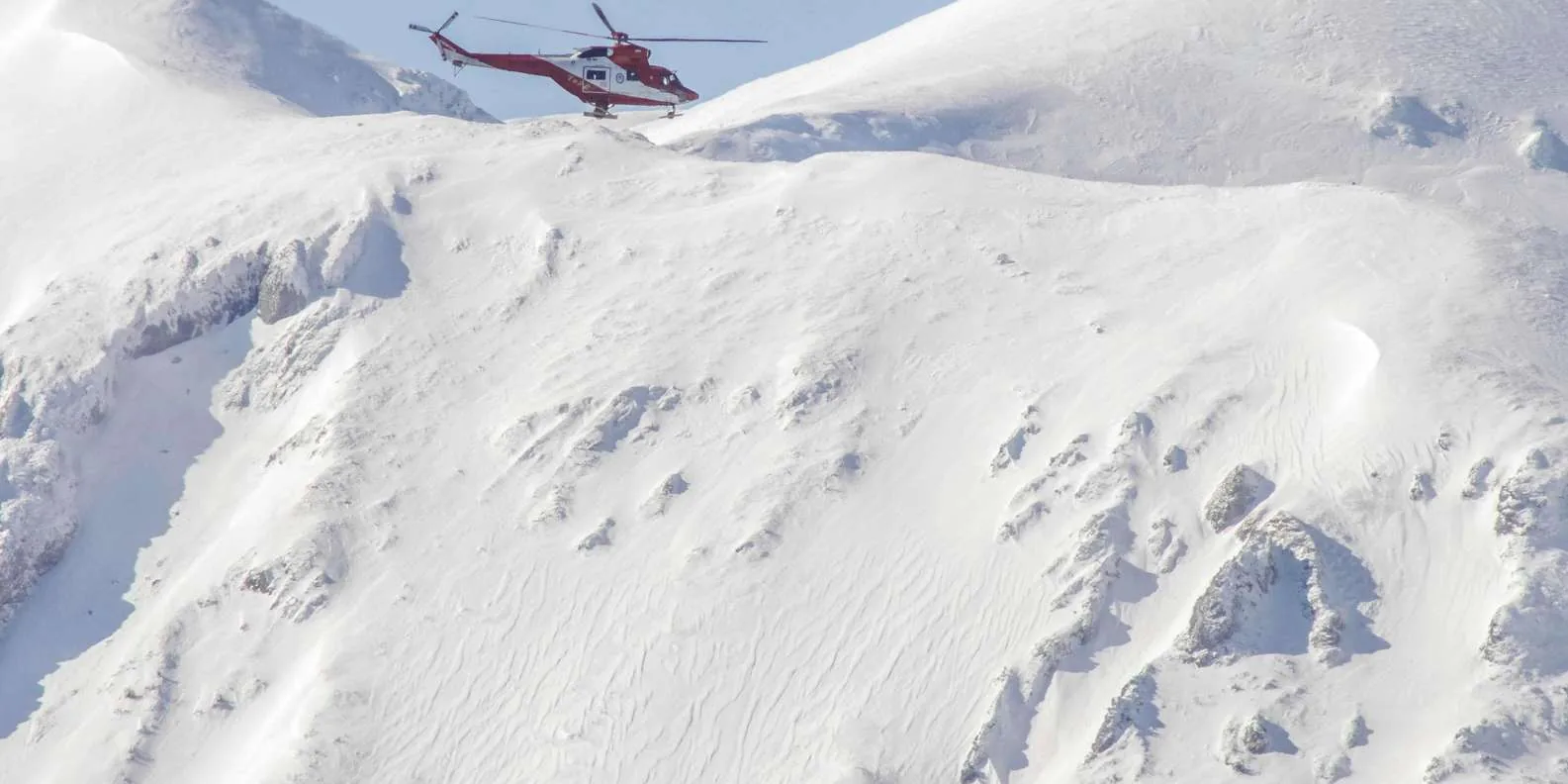
How High Is Everest Base Camp, Exactly?
The figure to remember is 5,364 m. That is the elevation quoted for Everest Base Camp on the south side, and it is the number you will find on trekking maps of the Khumbu. The summit above it is 8,848.86 m. The gap between the two is 3,484.86 m of climbing — which is the entire reason Base Camp is not the end of the story for mountaineers, and the entire reason a helicopter is such an attractive shortcut for everyone else.
It also explains a detail that confuses a lot of first-time bookers. When a trekker says "I reached Everest Base Camp", they mean they stood at 5,364 m. When a pilot says "we land at Everest Base Camp", the landing is usually made a short hop higher, at Kala Patthar, 5,545 m. Base Camp itself sits in a bowl between the Khumbu Glacier and the West Shoulder of Everest, and from the glacier floor the summit is largely hidden behind Nuptse. Kala Patthar is the rocky viewpoint just to the south that faces Everest head-on. That 181 m of extra height is the difference between seeing a wall of rock and seeing the top of the world.
For the practical maths: from Kathmandu, at 1,400 m, the flight climbs 3,964 m to reach Base Camp, and 4,145 m to reach the Kala Patthar landing point. Those are big numbers for a single morning, and they are why operators split the ascent with stops rather than flying straight to altitude.
The Elevation Ladder on a Base Camp Helicopter Flight
A well-run Everest helicopter tour is not one long climb; it is a staircase. Each stop gives the aircraft and the passengers a breather, and each one has a purpose beyond photography. The table below shows how the standard one-day itinerary stacks up.
| Stage of the flight | Elevation | What happens here |
|---|---|---|
| Kathmandu (Tribhuvan International Airport) | 1,400 m | Early-morning departure from the domestic terminal after a weather and weight briefing. The cooler, calmer air of the early morning is the safest window for high-altitude flying. |
| Lukla | 2,860 m | Refuelling and paperwork stop. Lukla is the gateway to the Khumbu and the point where most passengers notice the air thinning for the first time. |
| Everest View Hotel, Syangboche | 3,880 m | The breakfast stop on the itinerary. Sitting on a terrace at this height, Everest, Lhotse and Ama Dablam are all in the frame at once. |
| Everest Base Camp | 5,364 m | Flown over and photographed from the air. Most commercial tours do not set down here. |
| Kala Patthar | 5,545 m | The landing and photo stop, and the highest point of a standard Everest Base Camp helicopter day tour. |
Notice the shape of it: the flight climbs in stages, and the single highest point lasts only minutes. That is deliberate. A helicopter at 5,545 m is operating in genuinely demanding conditions, and passengers who have been at sea level the day before have no acclimatisation at all. Short ground time is a safety measure dressed up as an itinerary detail.
Everest Base Camp Elevation vs the Summit: What the Gap Means
The 3,484.86 m between Base Camp and the summit is not just a number on a chart. It is the reason the climbing season exists at all, and the reason Base Camp is a small city of tents for a few weeks each spring and an empty glacier the rest of the year. Above Base Camp the route crosses the Khumbu Icefall, the Western Cwm, the Lhotse Face and the South Col before the final push — all of it at heights where the human body needs weeks of acclimatisation and supplementary oxygen.
For helicopter passengers the gap matters in a different way. Because the flight reaches 5,364 m or 5,545 m in a matter of hours rather than days, there is no acclimatisation whatsoever. The sensible assumption is that you will feel the altitude, and the sensible plan is to treat the landing as a short, spectacular visit rather than a place to linger. If you want to know what you can actually see from that height and how the peaks line up along the route, our guide to what you see on the Everest helicopter route walks through every landmark from Lukla to Kala Patthar.
The Highest Point of Every Everest Helicopter Option
Different products top out at different heights, and that is one of the main reasons prices vary so much. Here is how the options compare on the single measure that matters most for altitude exposure.
| Option | Highest point | Price | Duration |
|---|---|---|---|
| Everest Scenic Mountain Flight (fixed-wing) | Views toward the 8,848.86 m summit, no landing | $260 per person | 1 hour |
| Everest Base Camp Helicopter Day Tour | Landing at 5,545 m (Kala Patthar) | $1,260 per person, shared flight | 1 day, approx. 6 hours |
| Private Everest Helicopter Charter | Everest View Hotel at 3,880 m, with breakfast | $4,500 per aircraft, up to 5 guests | 1 day, approx. 5-6 hours |
| Everest Base Camp Helicopter Trek | 5,545 m, after a 10-day trek up | $1,840 per person, shared flight | 10 days |
The pattern is worth understanding before you book. The cheapest option never lands at altitude at all, so you get the view with none of the altitude exposure. The shared day tour lands at the highest point. The private charter trades the highest landing for privacy, flexibility and the breakfast terrace at 3,880 m. The heli trek spreads the altitude gain over ten days, which is the only way on this list to reach Base Camp's height with a properly acclimatised body.
With Landing or Without: What the Booking Language Actually Means
Search results for Everest flights are full of near-identical-sounding products, and the differences hide in three words. Understanding them is the fastest way to avoid paying for something you did not want.
"With landing" means the helicopter sets down at altitude, which on this route means Kala Patthar at 5,545 m. A landing is what turns a sightseeing flight into the thing most people actually picture: standing on snow, wind in your jacket, Everest in front of you. It also adds to the cost, because a landing burns more fuel, requires more careful weight calculation and shortens the weather window the pilot can work with. If a quote is dramatically cheaper than $1,260 per seat for a one-day Everest Base Camp helicopter tour, ask directly whether a landing is included.
"Group joining" means you buy a seat rather than the whole aircraft. This is how almost everyone flies the one-day tour: the standard price of $1,260 per person is a shared-flight price, and you will usually be one of a small group with other travellers. If you are travelling alone, it is by far the most economical way to reach Kala Patthar — our guide to joining a shared Everest helicopter group explains how seats are allocated and why you may be asked to be flexible about your date.
"Private charter" means you book the entire aircraft, which at $4,500 for up to five guests works out very differently depending on how many people are in your party. It gives you control over the date, the stops and the pace, and it is the only version that includes the breakfast stop at the Everest View Hotel at 3,880 m in the standard listing. For families and small groups, the per-person figure can end up closer to the shared price than the headline suggests.
One more piece of vocabulary matters at these heights: weight. Helicopters flying at 5,545 m are weight-critical, and every operator will ask for passenger weights at the time of booking. This is not a formality — it is part of how the pilot decides how many people can be carried and how much fuel can be taken. Answer honestly and you will not be turned away at the helipad.
How Everest Base Camp Compares to Other Helicopter Landings in Nepal
Everest Base Camp is the most famous high landing in Nepal, but it is not the highest one available. If altitude itself is the attraction, the comparison below is useful — and a little surprising.
| Landing point | Elevation | Region |
|---|---|---|
| Kala Patthar | 5,545 m | Everest region |
| Everest Base Camp | 5,364 m | Everest region |
| Langtang | 4,984 m | Langtang |
| Tilicho Lake | 4,919 m | Annapurna region |
| Gokyo Lakes | 4,790 m | Everest region |
| Gosaikunda | 4,380 m | Langtang |
| Annapurna Base Camp | 4,130 m | Annapurna region |
| Muktinath | 3,710 m | Mustang |
Two things stand out. First, Kala Patthar is higher than Everest Base Camp itself, which is why the Everest day tour lands there. Second, the Annapurna and Langtang options sit lower by a wide margin, and that has real consequences: a landing at 4,130 m at Annapurna Base Camp is markedly gentler on the body than one at 5,545 m, and the flight from Pokhara to Annapurna Base Camp costs $860 per person on a shared basis for a day trip that takes roughly three to four hours. If you are unsure how you will handle altitude, that difference is worth taking seriously. For the full range of heights and routes, see our Nepal helicopter tour price guide.
Altitude, Oxygen and How Long You Can Realistically Stay on the Ground
No one acclimatises on a six-hour tour. The body adapts to high altitude over days, not hours, which is why trekkers spend a fortnight walking to Base Camp and why helicopter passengers are kept on the ground for a short, controlled window. The physical effects are predictable and worth preparing for: breathlessness on the smallest exertion, a dry throat and cough from the cold air, a headache, and a racing pulse. Most passengers feel nothing more serious than that, and the descent back to Kathmandu resolves it quickly.
What you should do is simple. Sleep well the night before. Eat something before departure, even if it is early. Avoid alcohol the previous evening. Take the landing slowly rather than striding around for photographs. Tell the pilot or crew if you feel unwell, and do not try to tough it out to be polite — the crew makes these flights every week and can read the signs better than you can. If you have a heart or lung condition, are pregnant, or have recently been ill, speak to your doctor before booking rather than after. This is not a reason to cancel a flight; it is a reason to ask the question in advance.
It is also worth knowing how the flight itself protects you: the staircase pattern of stops, the fact that the highest point is brief, and the readiness of crews to turn back if the wind rises. Operators who fly this route constantly are not being cautious for show. The safety margins are the product.
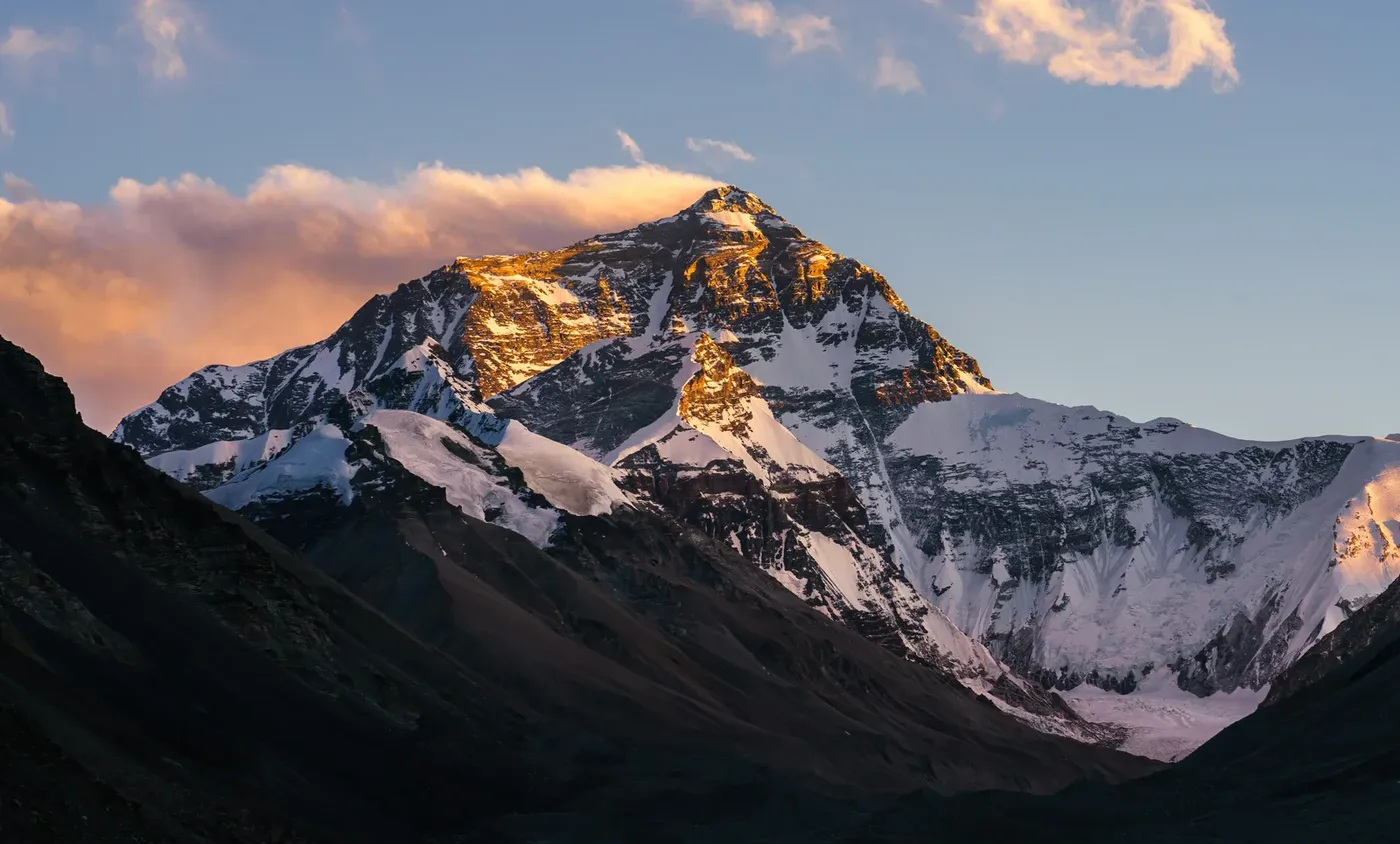
The Cheapest Way to See Everest Base Camp's Elevation: the $260 Scenic Flight
If your goal is literally to see the mountain, not to stand on it, the fixed-wing Everest scenic mountain flight from Kathmandu deserves serious attention. At $260 per person for about an hour, with a guaranteed window seat, it flies east along the Himalayan range and gives passengers a view toward the 8,848.86 m summit without any high-altitude landing at all. There is no ground time at 5,000 m, no weight-critical helicopter boarding, and no exposure to altitude beyond the standard aircraft cabin.
It is a different product with a different feeling, and it is not a substitute for landing at Kala Patthar — but as a first taste of the Khumbu it is unbeatable value. You can compare the aircraft, timing and full inclusions on our Everest scenic mountain flight page. Many travellers who book the helicopter tour later say they wished they had done the scenic flight first; doing it the other way round is perfectly sensible too, because it helps you decide whether the extra height of a landing is worth the extra cost.
Best Months to Fly at That Elevation
High landing zones have narrow seasons. The two reliable windows in the Khumbu are the spring months before the monsoon and the autumn months after it, when skies are clear and morning winds are light. Winter flights can be superb in terms of visibility, but cold and wind make cancellations more likely at altitude, and the summer monsoon brings cloud that can close the valley entirely. Because the helicopter must be able to land at 5,545 m and return safely, the weather decision is always made by the pilot on the morning of the flight, not by the calendar.
That is why flexibility in your travel dates is worth more than a discount. If you have a fixed date and one free morning, plan the flight for the first morning of your trip so you have spare days to fall back on. Our season-by-season guide to helicopter flying in Nepal sets out month by month what the conditions normally look like.
Booking a Base Camp Flight from Kathmandu
Almost every Everest helicopter tour sold in Nepal departs from Kathmandu, usually from the domestic terminal at Tribhuvan International Airport, which sits at 1,400 m. The practical sequence is short. Choose whether you want a shared seat on the one-day tour or the whole aircraft. Confirm that a landing is included and where it takes place. Send passenger names and weights so the operator can run the load calculation. Pay a deposit to lock the date, and keep a spare morning free in case the first attempt is grounded by wind.
Prices on this page are the operator's published 2026 rates: $1,260 per person for the shared one-day tour with a landing at 5,545 m, and $4,500 per aircraft for a private charter of up to five guests with a breakfast stop at 3,880 m. Both products and full itineraries are listed on our Everest Base Camp helicopter day tour page, which is the page to compare seats and dates against. If you would rather understand the paperwork first — including what a mountain flight requires in terms of permits and registration — start with our Nepal helicopter permits guide.
Finally, be sceptical of any quote that is far below these figures for a flight that claims to land above 5,000 m. At that altitude, fuel, maintenance and crew cost money, and the honest operators price accordingly. The reference entry on Everest Base Camp is a useful sanity check on the geography and the elevation itself before you compare offers.
Frequently Asked Questions About Everest Base Camp Elevation
What is the exact elevation of Everest Base Camp?
Everest Base Camp on the Nepal side sits at 5,364 m on the Khumbu Glacier, inside Sagarmatha National Park. The summit of Everest above it is 8,848.86 m. The camp is rebuilt each spring on moving ice, so the figure describes the plateau rather than one fixed spot.
Is Everest Base Camp higher or lower than Kala Patthar?
Lower. Base Camp is at 5,364 m and Kala Patthar is at 5,545 m, a difference of 181 m. Because Base Camp sits between the glacier and Everest's West Shoulder, the summit is partly hidden from the camp itself — which is why most helicopter tours make their landing at Kala Patthar instead.
Do Everest helicopter tours actually land at Base Camp?
Most commercial one-day tours overfly Base Camp at 5,364 m and land at Kala Patthar at 5,545 m. The view from Kala Patthar is the one people picture when they think of standing beneath Everest, and the short hop between the two takes only minutes. Always confirm the landing point in writing when you book.
How much does an Everest Base Camp helicopter tour cost?
The shared one-day tour with a landing at 5,545 m is $1,260 per person. A private charter of the whole aircraft, up to five guests, with a breakfast stop at the Everest View Hotel at 3,880 m, is $4,500 per aircraft. A ten-day Everest Base Camp helicopter trek, which flies you back down after trekking up, starts at $1,840 per person.
Can I book a single seat instead of the whole helicopter?
Yes. The standard one-day tour is sold per seat on a shared flight, which is how most solo travellers and couples fly. Group joining is the most economical way to reach the 5,545 m landing, and you will normally share the aircraft with a small number of other passengers on the same departure.
Is there a group joining option for the Everest helicopter tour?
Group joining is effectively the default for the one-day Everest Base Camp helicopter tour — the $1,260 figure is a per-person seat price on a shared flight. Departures depend on filling the aircraft, so flexibility with your date makes it much easier to be placed in a group.
Does the tour include a landing at altitude, or is it a fly-over only?
The one-day Everest Base Camp helicopter tour includes a landing at Kala Patthar, 5,545 m. The fixed-wing Everest scenic mountain flight from Kathmandu, at $260 per person for about an hour, is a fly-over with no high-altitude landing — worth knowing if you want the view without the altitude exposure.
How long do you actually spend on the ground at 5,545 m?
The stop is deliberately brief — a few minutes for photographs and the view. There is no acclimatisation on a tour of this length, and the whole day from Kathmandu pickup to drop-off runs roughly six hours. The short ground time is a safety decision, not a scheduling accident.
Is Annapurna Base Camp at a lower elevation than Everest Base Camp?
Considerably lower. Annapurna Base Camp is at 4,130 m, and the day tour from Pokhara lands there for $860 per person on a shared flight, taking roughly three to four hours. That is around 1,200 m lower than the Everest Base Camp landing, which makes it distinctly gentler on the body.
Can older travellers or people with heart or lung conditions fly?
Many do, and the landing is short enough that most passengers feel nothing worse than breathlessness. But 5,545 m is genuinely high, so anyone with a heart or lung condition, who is pregnant, or who has been unwell recently should speak to their own doctor before booking. The operator can advise on the flight side; medical clearance is not ours to give.
Which is the highest helicopter landing available in Nepal?
Among the routinely offered tours, the Everest Base Camp flight tops out at the 5,545 m Kala Patthar landing. Other landings run lower: Langtang at 4,984 m, Tilicho Lake at 4,919 m, Gokyo Lakes at 4,790 m, Gosaikunda at 4,380 m, Annapurna Base Camp at 4,130 m and Muktinath at 3,710 m.
What if the flight is cancelled because of weather?
At these heights the pilot makes the call on the morning of departure, because a helicopter must be able to land and return safely. Build a spare morning into your itinerary, and read the operator's cancellation terms before paying a deposit so you know exactly what happens to your money and your date.
Everest Base Camp's elevation of 5,364 m is the number that governs the entire experience, from the 5,545 m landing at Kala Patthar to the altitude briefing you will get before boarding. If you want the broader picture — how the Everest products fit together, what each one includes and how the prices compare — start at our Everest helicopter tours guide, which links every Everest flight we operate in one place. And if you would rather see the itinerary, the stops and the current 2026 seats side by side, the one-day Everest Base Camp helicopter tour is the page to check first.