

Short answer: The Annapurna Base Camp flight from Pokhara is a 20 to 25 minute helicopter sector from the Pokhara Old Airport helipad into the Annapurna Sanctuary, landing on the moraine shelf at 4,130 m. A shared seat costs USD 860 per person in 2026 and a private charter of the whole aircraft costs USD 2,585 for up to 5 passengers. The round trip runs 3 to 4 hours door to door with 15 to 30 minutes on the ground, and departures leave at first light, usually between 7am and 10am, because the Modi Khola valley fills with cloud after midday.
- $860Shared seat, ABC day flight
- 4,130 mAnnapurna Base Camp landing
- 80 kgWeight allowance with hand baggage
- 15-30 minTime on the ground at ABC
Most people who search for the Annapurna Base Camp flight from Pokhara are not undecided about the mountain. They have already decided they want to stand in the Sanctuary. What they want to know is narrower and more practical: where the aircraft leaves from, how long the sector takes, whether they can buy one seat or must charter the whole machine, how much luggage they can bring, and what happens if the valley is closed on their only free morning. This guide answers exactly those questions and leaves the trekking philosophy to the other pages.
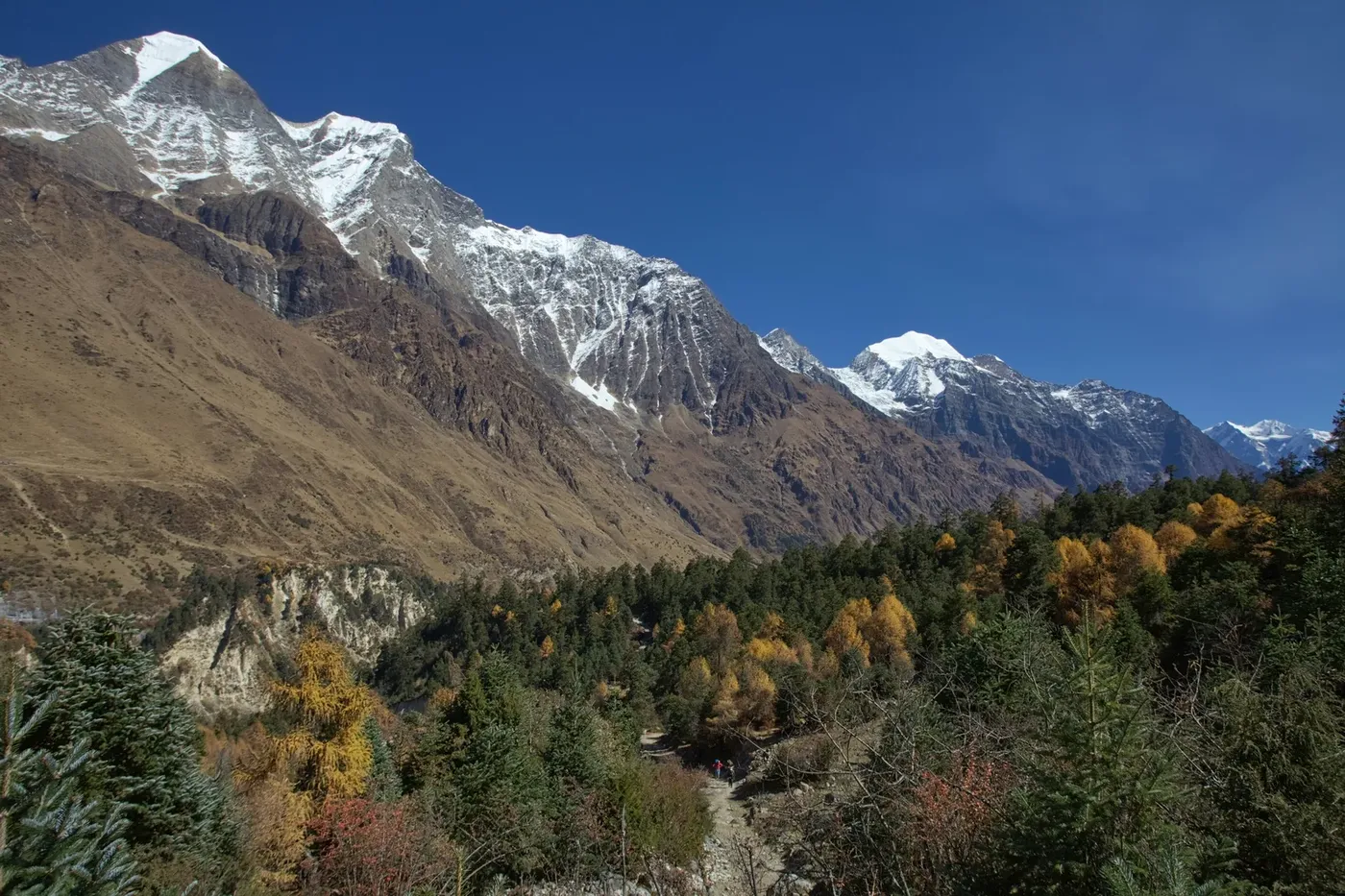
The flight exists because Pokhara sits at the foot of the range. Annapurna Base Camp is roughly 40 km north of the city as the helicopter flies, up the Modi Khola valley and into a glacial amphitheatre ringed by Annapurna I at 8,091 m, Annapurna South, Hiunchuli and Machhapuchhre. On the ground that 40 km is several days of walking with a permit, a guide and a sleeping bag. In an Airbus H125 it is a sector short enough that you are back at the lakeside before lunch. For the wider set of departures from this city, see our guide to helicopter tours from Pokhara.
The Sector Itself: Distance, Altitude and Air Time
The Annapurna Base Camp flight from Pokhara is one of the shortest mountain sectors sold in Nepal. That shortness is the reason the product works: the aircraft is not crossing the middle hills in both directions, so fuel, crew time and cost all stay low compared with a Kathmandu departure. The table below is the whole flight on one screen, with the numbers we actually quote to passengers.
| What the flight is | The detail |
|---|---|
| Departure point | Pokhara Old Airport helipad, by the lakeside end of the city |
| Route | Pokhara - Modi Khola valley - Annapurna Base Camp - Pokhara |
| Distance | About 40 km each way, roughly north of the city |
| Air time per leg | 20 to 25 minutes |
| Total air time | About 1 hour across the two legs |
| Landing altitude | 4,130 m at Annapurna Base Camp |
| Time on the ground | 15 to 30 minutes |
| Door to door | 3 to 4 hours from a Pokhara hotel |
| Passengers per aircraft | Up to 5 |
| Weight allowance | Approximately 80 kg per person including hand baggage |
| Best months | March to May and September to November |
Two numbers in that table decide most bookings. The first is the 15 to 30 minute ground time. It is not a marketing restriction and it is not negotiable with the pilot. Annapurna Base Camp sits at 4,130 m, and most passengers on a day flight have not acclimatised at all. The window is long enough for the amphitheatre, the photographs and a slow walk to the tea houses, and short enough that altitude sickness does not have time to build. Travellers who want an hour or more inside the Sanctuary are usually trekkers who walked up, and they are on a different product.
The second number is the 80 kg allowance, which we explain properly further down. Both constraints come from the same physics: a helicopter at 4,130 m in thin air lifts less than it does at sea level, so every kilogram in the cabin is traded against fuel and against the number of seats sold.
How the Annapurna Base Camp Flight from Pokhara Is Sold: Seat or Charter
There is no airline counter for this route and no fixed timetable. The flight is sold in two ways, and choosing between them is the single biggest pricing decision a traveller makes. A shared seat puts you on a rotation with other passengers and costs USD 860 per person. A private charter buys the whole aircraft for USD 2,585, which covers up to 5 passengers. The second option is not a luxury upgrade in the usual sense. It is arithmetic.
| How the flight is sold | Shared seat | Private charter |
|---|---|---|
| 2026 price | USD 860 per person | USD 2,585 per aircraft |
| Who flies with you | Other travellers on the same rotation | Only your group |
| Aircraft capacity | Up to 5 passengers | Up to 5 passengers |
| Departure time | Fixed early morning slot assigned to the rotation | You choose a slot inside the safe morning window |
| If weather closes the valley | Moved to the next available rotation | Moved or re-timed around your group |
| Seating | Allocated by the pilot for weight and balance | Allocated by the pilot, with more room to plan |
| Best for | Solo travellers, couples, tighter budgets | Families, photographers, groups of 4 or 5 |
Run the division and the shape of the market becomes obvious. Five passengers on a charter pay about USD 517 each, which is meaningfully less than a shared seat. A group of four pays about USD 646 each, still below the shared price. A couple pays about USD 1,293 each, which is why couples almost always buy two shared seats instead. Solo travellers buy a shared seat or wait to join an existing departure with space on it.
The other half of the decision is time. A shared rotation is scheduled around the aircraft, the pilot and the other passengers, so your departure is assigned rather than chosen. A charter lets a photographer pick the light, a family with small children pick a later slot after breakfast, and a group of five decide the order of the day. Neither is better in the abstract. They suit different travellers, and we say so plainly rather than steering everyone toward the expensive option.
The Aircraft, the Payload and Why 80 kg Is Not a Formality
This route is flown by an Airbus H125 or an equivalent high-altitude helicopter, which is the same AS350 B3 family that carries the Annapurna scenic flights and the Base Camp exits for trekking groups. It seats up to 5 passengers in a cabin built around the view, and it is the standard high-altitude workhorse in Nepal for a reason: it performs at 4,000 m and above with a payload that smaller machines cannot match. The helicopter that flies you to Annapurna Base Camp is the same type that lands at Kala Patthar at 5,545 m on the Everest day tours, so 4,130 m is comfortably inside its envelope.
What that does not mean is that weight is unlimited. Passengers are weighed with their hand baggage before boarding, every time, and the allowance is approximately 80 kg per person including everything carried into the cabin. The pilot then balances the load across the cabin, which is why seat assignments on a shared flight are a safety decision rather than a preference. Nobody is guaranteed a particular side, although every seat on an H125 has a view.
If your group runs over the allowance, the operator has to adjust the load. In practice that means moving a bag to a second lift, adding a seat, or splitting the group. The cheapest way to avoid the conversation is to travel light on the flight itself: a small day pack with a camera, a warm layer, gloves and your documents. Boots and trekking bags belong with the ground crew, not in the cabin. If you are heavier than the allowance, tell us at booking rather than at the helipad, because the fix is easy in advance and awkward on the morning.
Getting to Pokhara Before the Flight
The flight departs from Pokhara, which means the first logistics question is not about helicopters at all. It is about how you reach the city. There are four realistic ways and the trade-offs are time, money and reliability.
| Way to Pokhara | Journey time | Price basis | Best for |
|---|---|---|---|
| Domestic flight from Kathmandu | 25 to 35 minutes | Around USD 100 for a seat | Travellers with one spare morning |
| Tourist bus | 6 to 8 hours | Cheapest, per seat | Backpackers with no fixed schedule |
| Private car | 5 to 6 hours | Per vehicle | Couples and families who want door to door |
| Helicopter charter from Kathmandu | 35 to 40 minutes | Charter, whole aircraft | Groups who want the corridor itself as the experience |
The domestic flight is the option most travellers choose, and it is also the one that fails most often, because Kathmandu weather and Pokhara weather are not the same weather. A morning flight that is grounded in the capital can leave you on the Prithvi Highway instead. The helicopter charter from Kathmandu, which is the only way to fly that corridor with a helicopter, is a separate product and we price it per aircraft rather than per seat; the full comparison is in our Kathmandu to Pokhara helicopter transfer guide.
Whatever you choose, the rule that protects the flight is the same: be in Pokhara the night before. A traveller who lands in Pokhara at 9am and expects to be airborne into the Sanctuary at 10am is buying a lottery ticket. A traveller who sleeps in Pokhara and walks to the helipad at dawn is buying a flight.
The Morning Window and Why the Schedule Looks So Early
Every operator on this route flies early, and the reason is not a preference for sunrise photographs. The Modi Khola valley is a deep, steep-sided gorge that acts as a chimney. Air heats on the valley floor through the morning, rises, and carries moisture up with it until the Sanctuary fills with convective cloud. By early afternoon the amphitheatre can be closed even when Pokhara is sunny and clear, and a landing site that was flyable at 8am is not flyable at 1pm.
That is why the pilot waits for the first clear window after sunrise, usually between 7am and 10am, and why the morning discipline on this route is deliberate rather than cosmetic. It is also why morning departures are smoother: the same thermals that build cloud make the ride rough after mid-morning, and passengers who fly at 10am in October often describe a different aircraft than passengers who flew at 7am.
For your own planning, the practical consequence is simple. Book the first morning of your stay in Pokhara, not the last. Keep the afternoon free of anything you cannot move. If the flight goes, you have the rest of the day for Phewa Lake and the World Peace Pagoda. If the valley closes, you still have tomorrow.
Leg by Leg: What the Twenty Minutes Actually Looks Like
The sector is short, but it is not a shuttle hop over flat ground. The climb starts almost immediately after the helipad and the terrain changes three times in twenty minutes: terraced farmland, forested gorge, then glacier and moraine with no vegetation at all.
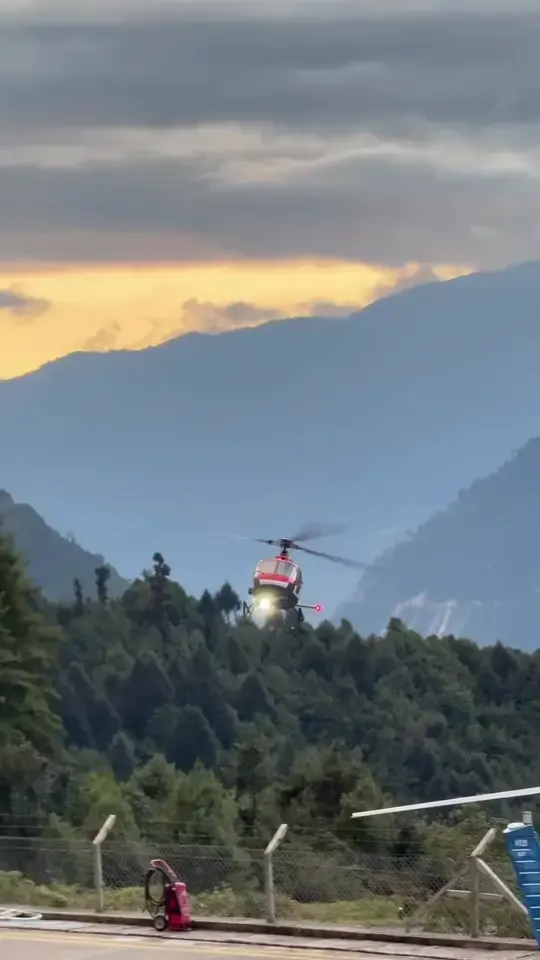
On the way out you lift off over the city and turn north up the valley. The terraces below are stacked so tightly that they read as contour lines, and the villages along the Modi Khola are places trekkers walk two or three days to reach. Then the gorge closes over the aircraft: bamboo, oak, and a narrowing V of sky. Machhapuchhre appears and disappears as the aircraft tracks the river, and the air gets colder and thinner in a way passengers notice in their ears before they notice it in the view.
The gorge opens into the Sanctuary without warning. One moment the walls are close, the next the aircraft is over Machhapuchhre Base Camp at 3,700 m and the basin is ahead: moraine, glacier, and the wall of Annapurna I rising almost three vertical kilometres above the landing site. The aircraft sets down on the Base Camp helipad a few minutes walk above the tea houses and the pilot shuts down or holds, depending on the day and the rotation.
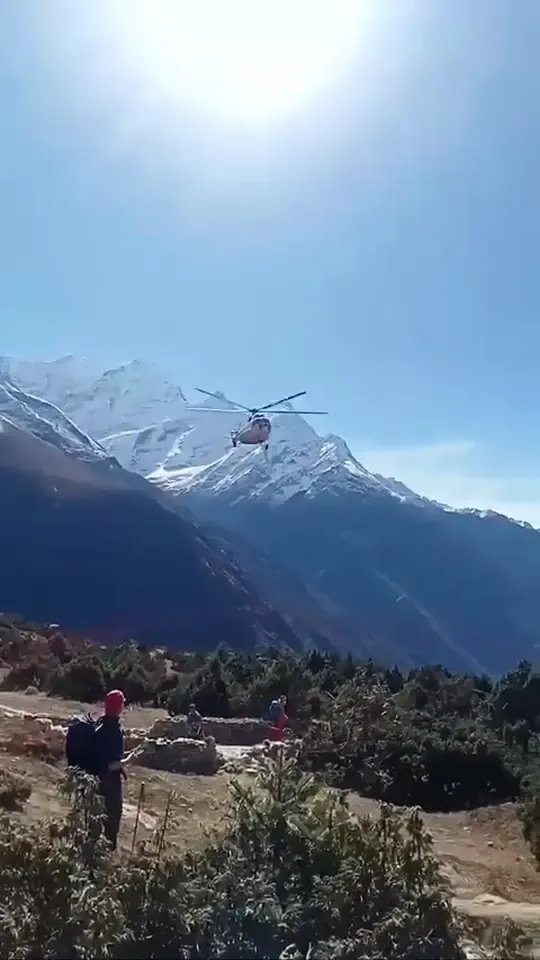
The return leg gives you the view you missed on the way in, because the aircraft tracks slightly differently and the light has moved. Most passengers spend it quiet. You land back at the Pokhara helipad with the morning still intact, which is the entire proposition of the product.
Booking the Flight from Abroad: What International Travellers Need to Know
Almost every booking on this route is made before the traveller reaches Nepal, usually from the United States, Europe or Australia, and usually on a phone at an awkward hour. The process is deliberately simple, but four details cause most of the friction, and all four can be settled in advance.
Price and currency. Quotes are in US dollars, and the 2026 numbers are USD 860 per shared seat and USD 2,585 per charter. Payments are settled before the flight, and a 20 percent deposit is what actually holds a departure date once a slot is confirmed. Card and bank transfer both work, and we confirm the total in writing before anything is paid, including the charter division if you are a group of five.
Documents and weight. Bring your passport on the morning; the manifest needs it. Send body weights with hand baggage at booking rather than at the helipad, because the load sheet is built the evening before. If someone in the group is over the 80 kg allowance, say so early: the answer is usually an extra seat or a lighter bag, not a cancellation.
Insurance. Travel insurance is mandatory and it must explicitly cover helicopter evacuation above 4,500 m. This is the single most common failure we see from overseas bookings, because a policy that looks comprehensive on price often carries an altitude ceiling buried in the trekking clause. Check the number, not the headline.
Timing and time zones. Nepal is UTC+5:45, which is an awkward offset from both US coasts, so most enquiries arrive overnight and are answered the next morning Nepal time. That is fine for a flight three weeks out and uncomfortable for a flight in 36 hours. If your trip is imminent, message on WhatsApp and ask for a slot check before you pay for anything else in Pokhara.
Bookings are on a free-enquiry basis: send dates, group size and weights, we confirm the aircraft, the slot and the price, and the deposit secures it. No trekking permit is involved, because you are not entering the conservation area on foot. The operator holds the aviation and landing permissions for the Sanctuary flight, which is one of the quieter advantages of flying rather than walking.
When the Valley Closes: The Weather Clause in Plain English
Weather is the one variable no operator controls, and this route is honest about it. Cloud can close the Modi Khola gorge while Pokhara is blue. Wind can make the Base Camp landing unsafe. Visibility at 4,130 m can fail while the city below is clear. None of those conditions is a reason to fly, and a pilot who values a licence will not treat them as one.
What happens next depends on the booking type. A shared seat is moved to the next available rotation, at no extra cost, and refunded in full if you are leaving Pokhara with no window left. A charter is re-timed around your group, which is often the difference between flying the next morning and flying three days later. The landing site itself can also change on the day: Annapurna Base Camp is the usual point, but the pilot may use an alternative if conditions or aviation rules require it. That is judgement, not a downgrade.
Budget one buffer morning. Travellers who build a spare morning into Pokhara almost always fly. Travellers who book the last morning before an international departure are the ones who write to us from the airport. Our cancellation and weather policy guide sets out the rescheduling and refund logic in full, and the same logic applies to every mountain flight we sell.
Flying In or Flying Out: Which Direction Suits You
The day flight is the version almost everyone books, but it is not the only way to use the same sector. Two other patterns are worth understanding before you choose a product, because they suit different travellers and they cost very different amounts.
The first is the trek up and fly out pattern. You walk the Sanctuary trail over five days, sleep at Base Camp, watch sunrise from the amphitheatre, and then take the helicopter out to Pokhara instead of walking down. That is the Annapurna Helicopter Return Trek, six days at USD 1,199 per person, and it deletes roughly three days of descent on stone steps. The exit leg is the same 20 to 25 minute sector described above, flown in the opposite direction.
The second is the pure scenic flight with no landing, which is a different product again: a shorter hop over the range from about USD 150 per person, no Sanctuary landing, no altitude exposure. If your only goal is the aerial panorama and you have a tight budget or a fear of 4,000 m, that is the honest recommendation rather than the day tour.
What does not exist is a scheduled one-way seat for walkers who want to fly in and walk out. The aircraft is chartered per departure, so the seat you buy belongs to a rotation with a fixed plan. If you want a non-standard pattern, ask before booking and we will price it as a charter rather than pretending a shared seat can be reshaped on the day.
The Three Annapurna Options Priced Side by Side
It helps to see the whole ladder in one table, because the products are often compared unfairly. They are not three versions of the same trip. They are three different uses of the same aircraft and the same mountain.
| Option | 2026 price | Duration | What you get |
|---|---|---|---|
| Annapurna scenic flight, no landing | From about USD 150 per person | About 1 hour | The range from the air, no Sanctuary landing |
| ABC helicopter day tour with landing | USD 860 per shared seat, or USD 2,585 per charter | 3 to 4 hours | 15 to 30 minutes at 4,130 m inside the Sanctuary |
| Annapurna Helicopter Return Trek | USD 1,199 per person | 6 days | Five days of walking up, helicopter exit instead of the descent |
Read the table with the walking column in mind, even though it is not there. The day flight and the scenic flight require no fitness at all. The return trek requires five days of walking with a day pack and one night at 4,130 m. The price difference between the day flight and the trek is not the helicopter; it is the five days of guiding, porters, permits and lodge nights that surround it. Our Annapurna Base Camp helicopter tour cost guide breaks the day flight price into its components if you want to see what the seat is actually paying for.
What the Price Covers and What It Does Not
The shared seat price is a flight price, and it is worth being precise about the boundary. Inside USD 860 you get the round trip from Pokhara, the landing at Annapurna Base Camp, an experienced high-altitude pilot, the pre-flight safety briefing, all aviation and landing permissions for the Sanctuary, hotel pickup and drop-off inside Pokhara, oxygen and a basic first-aid kit on board, and help with photographs on the ground.
Outside the price you have meals and drinks at the Base Camp tea houses, travel insurance, tips for the pilot and ground crew, and any extra night in Pokhara created by a weather delay. Those extras are small, but the insurance point is not small at all, and the extra night is the one travellers forget when they book a flight on their final morning.
There is no conservation-area permit and no TIMS card on this product, because you are not walking into the Annapurna Conservation Area. That is a real saving in both money and queueing time, and it is one of the differences between this flight and the trekking products that use the same trail.
Who the Flight Actually Suits
This sector suits travellers with limited time, travellers with knees or hips that will not take five days of stone steps, families with children old enough to enjoy the view but not old enough for altitude, and photographers who want the Sanctuary in morning light without a trekking schedule. It suits anyone who is already in Pokhara and wants the amphitheatre without giving up a week.
It suits less well the traveller who wants to say they walked to Annapurna Base Camp, because you will not have walked. It also suits less well anyone who cannot tolerate 4,130 m even briefly: the ground time is capped for that reason, but altitude affects people unpredictably, and no operator can screen for it in advance. If you have a heart or lung condition, talk to a doctor before booking, and tell the pilot on the morning.
For the full one-day itinerary with timings from hotel pickup to drop-off, the Annapurna Base Camp helicopter day tour from Pokhara guide walks through the morning hour by hour, and the tour page for the Annapurna Base Camp helicopter day tour carries the live price and the booking form.
The Annapurna massif itself is worth reading about before you fly, because the ring of peaks you land inside has a climbing history that explains why the Sanctuary is treated as sacred ground rather than a viewpoint. The Annapurna Massif reference is a reasonable place to start, and Machhapuchhre is the peak the Nepali side of the story centres on: it has never been climbed and it is not going to be.
Frequently Asked Questions
How long is the flight itself?
Each leg is 20 to 25 minutes, so roughly 1 hour in the air for the round trip. Door to door from a Pokhara hotel is 3 to 4 hours, which includes the safety briefing, the weight check and the 15 to 30 minutes on the ground at 4,130 m.
Can I buy a single seat, or do I have to charter the helicopter?
You can buy a single seat. Shared seats cost USD 860 per person and put you on a rotation with other passengers. A private charter costs USD 2,585 for the whole aircraft and up to 5 passengers, which works out cheaper per person for a group of four or five.
Where does the flight leave from in Pokhara?
The Pokhara Old Airport helipad, at the lakeside end of the city. Hotel pickup and drop-off inside Pokhara is included, so you do not need to arrange a taxi at 6am. If you are coming from Kathmandu on the same day, plan a night in Pokhara first.
What is the weight limit on the flight?
Approximately 80 kg per person including hand baggage. Every passenger is weighed before boarding and the pilot balances the load across the cabin. If the group exceeds the limit, the operator may move a bag, add a seat or split the lift.
How much time do you get at Annapurna Base Camp?
15 to 30 minutes on the ground. The cap exists because most passengers on a day flight have not acclimatised and 4,130 m is high enough to affect people who have never had a problem before. Tell the pilot immediately if you feel a headache, dizziness or nausea.
Do I need a permit or a guide for the flight?
No. There is no trekking permit, no Annapurna Conservation Area entry and no TIMS card on the day flight, because you are not walking in. The operator holds the aviation and landing permissions, and a guide is available on request rather than included.
What time of day do the flights operate?
Early morning, usually between 7am and 10am. The Modi Khola valley fills with convective cloud after midday, so afternoon departures are unreliable on this route. Morning air is also calmer, which makes the ride noticeably smoother.
What happens if the weather cancels my flight?
The flight moves to the next available morning at no extra cost, or is refunded in full if you are leaving Pokhara with no window left. Charters are re-timed around your group. This is why we recommend booking the first morning of your stay rather than the last.
When is the best season for this flight?
March to May and September to November. Autumn gives the sharpest visibility and the most stable mornings; spring brings rhododendron on the lower slopes. December to February is cold and clear but snow can close the landing site. June to August is the least reliable window.
Can I fly to Annapurna Base Camp from Kathmandu instead?
It is possible as a charter, but it adds significant cost and air time because the aircraft crosses the middle hills in both directions. The standard answer is to travel to Pokhara, sleep there, and fly the short sector at dawn. The 40 km position of the Sanctuary relative to Pokhara is exactly why this product exists.
Can I add Tilicho Lake or Muktinath to the same flight?
Not on a shared rotation, which is built around the Base Camp landing. Tilicho Lake sits at 4,919 m and Muktinath at 3,710 m, and both are separate routes with their own flight time and payload calculations. Ask for a charter quote if you want two landings in one morning.
Is the flight safe at 4,130 m?
The sector is flown by CAAN-licensed commercial pilots in an Airbus H125 or equivalent high-altitude helicopter, the same type used for Kala Patthar landings at 5,545 m. The main risk to passengers is altitude rather than the aircraft, which is why ground time is capped and every passenger is briefed before departure.
Booking the Flight: The Short Version
Send your dates, the number of passengers and each person body weight with hand baggage. We confirm the aircraft, the departure slot and the exact price, usually within 12 hours. A 20 percent deposit holds the date, the balance is settled before the flight, and the weather clause is the one described above.
If you are still deciding between the half-day landing, the trek-and-fly hybrid and the no-landing scenic hop, start with our Annapurna and Pokhara helicopter tours hub, which maps every route in this region and links the detailed guide for each one. It is the fastest way to see how the products fit together before you commit to a morning.
We are Enticing Himalayas Travel, a government-licensed Kathmandu operator running helicopter flights in Nepal since 2012. The Pokhara to Annapurna Base Camp sector is one of the shortest mountain flights we sell and one of the most reliable, provided it is booked for a morning when the valley is still open.