

Short answer: The Pokhara to Muktinath helicopter price is not a shelf fare you can look up and pay. The temple sits at 3,710 m above the village of Ranipauwa in Mustang, and the flight is sold either as a seat on a shared one-day pilgrimage or as a whole aircraft for your group. The published anchor on this site is $1,080 per person on a shared flight for the one-day Muktinath pilgrimage, the same product that runs from Kathmandu and can be arranged out of Pokhara, where the flying is the short half of the corridor up the Kali Gandaki. From Pokhara the quote is built per aircraft, on your date, your group size and the time the machine waits beside the temple. For spring 2027 the timing matters as much as the money: March is the quieter month with clear mornings and fewer trekkers, April has the best all-round conditions but is the busiest month for helicopter tours in Nepal, and an April seat wants confirming several weeks ahead, before you book flights to Kathmandu.
- $1,080Published one-day Muktinath pilgrimage, per shared seat
- 3,710 mMuktinath temple, Mustang, the landing altitude
- 108Sacred water spouts at the temple wall
- 8,167 mDhaulagiri, across the Kali Gandaki valley
Almost everyone who searches for this fare has the same picture in their head: a price list, one number per person, and a booking button. That is how the Everest day tour is sold, and it is how the Annapurna Base Camp flight out of Pokhara is sold. The Muktinath corridor does not work quite that way, and the confusion is worth clearing up before you compare quotes, because two travellers asking two operators for the same morning can be handed numbers that differ by hundreds of dollars for reasons that have nothing to do with the temple.
This guide sets out what is actually published, what is quoted and why, how the Pokhara departure differs from the Kathmandu departure, what the day looks like hour by hour, and how to buy a seat for March or April 2027 without losing a morning to weather or a place in the rotation to a late booking. It is written for travellers booking from abroad in dollars, and it keeps a separate section for Nepali families and Indian pilgrims, who buy the same flight on a domestic rate and a different calendar.
What does the Pokhara to Muktinath helicopter price actually buy?
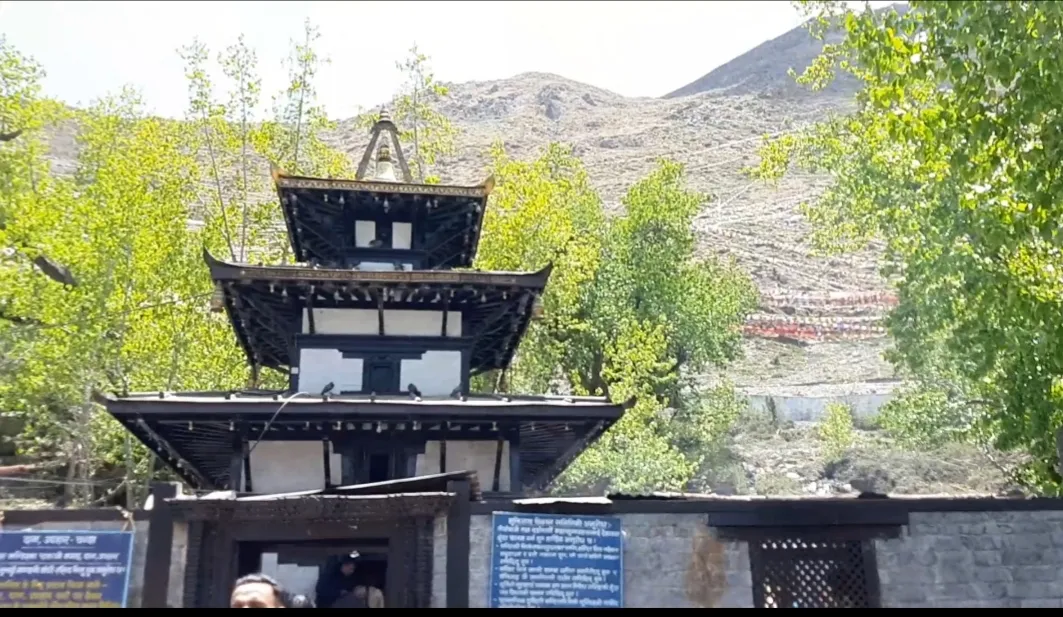
It buys a morning, not a flight sector. The aircraft lifts off from Pokhara before sunrise, tracks north-west up the Kali Gandaki, the gorge that trekkers know as the deepest on earth, with Dhaulagiri closing the valley on the west and the Annapurna massif on the east, and sets down at the helipad beside Ranipauwa, the village below the temple. From the pad it is a short walk of about ten minutes to the temple gate, or a jeep shuttle if anyone in the group needs it. You then have roughly two hours on the ground, which is the published ground time on our one-day pilgrimage, and it is enough for the full circuit: the wall of 108 spouts, the Vishnu shrine at the centre of the complex, and the Jwala Mai flame that burns on water beside it.
That is the product whether you start in Kathmandu or in Pokhara. What changes is how much of the day is spent in the air. From Kathmandu the western leg is 75 to 90 minutes each way on the published itinerary, and the whole day runs about eight hours door to door. From Pokhara the aircraft is already inside the valley system, so the flying is shorter and the day compresses, which is why so many pilgrims pair a few days in Pokhara with a temple morning and are back at their hotel by early afternoon.
There are two ways to buy it, and they are priced differently on purpose. A shared seat is one place in a rotation, sold per person, and the published anchor is $1,080. A private aircraft is the machine and the crew for your family alone, up to five passengers in an Airbus H125 or equivalent high-altitude type, and that is quoted per aircraft rather than per head.
| What you are buying | How it is priced | Published figure or basis |
|---|---|---|
| One-day Muktinath pilgrimage, shared seat | Per person, shared flight | $1,080 per person |
| One-day pilgrimage from Pokhara | Quoted per aircraft on your date and group size | Shorter flying than the Kathmandu day, quoted on request |
| Private aircraft, up to 5 passengers | Per aircraft, whole machine | Quoted on your date and waiting time at the temple |
| Fixed-wing Pokhara to Jomsom seat | Per person, scheduled flight | Roughly $90 to $120 when booked direct |
| Annapurna Base Camp day tour from Pokhara | Per person, shared flight | $860 per person, for comparison on the same aircraft |
Why there is no per-seat shelf price from Pokhara
A helicopter is billed by the hour it is airborne and the hours its crew and machine are committed to you, not by the kilometres covered. The Pokhara to Muktinath leg is short, which is exactly why no operator sells it as a cheap seat: the aircraft still needs positioning at the Pokhara helipad before first light, a pilot on duty, a landing permission for Ranipauwa, and a window in the morning schedule for the wait at the temple. Whether that wait is forty minutes or two hours changes the quote more than the flying does, and it is the single line item that travellers forget to discuss.
Three things move the number, and it is worth asking about each of them before you compare two quotes on price alone.
Group size. The tourist cabin carries up to five passengers. Five people on one aircraft is the cheapest way to fly this corridor per head, because the machine costs the same whether one seat or five are filled. A couple paying for a whole aircraft is paying for four empty seats, and that is usually the moment a shared rotation starts to look sensible.
Waiting time at the temple. The published pilgrimage gives two to three hours on the ground, which is what a full circuit of the 108 spouts, a darshan at the Vishnu shrine and a stop at the Jwala Mai flame actually takes at pilgrim pace, especially with an elderly parent in the group. A shorter ground stop is a cheaper quote, and it is also a worse pilgrimage. Say plainly how long you want and let the operator price that day.
The date. April is the busiest month for helicopter tours in Nepal, and the Muktinath corridor carries domestic pilgrimage traffic on top of the tourist season. A confirmed April morning is worth more than a flexible one, and an operator holding a machine for you on a peak date will price it accordingly.
The comparison that confuses most people is the scheduled fixed-wing flight from Pokhara to Jomsom, which sells for roughly $90 to $120 a seat when booked directly. It is a genuine bargain and it does not get you to the temple. It puts you down at Jomsom, from where the temple is still a road journey up the valley, and on the mornings when the airstrip closes for wind, which is often, the seat is worth nothing at all. The helicopter quote is for a different job: the temple in one morning, from a pad that is not wind-limited in the same way, with the aircraft waiting for you while you do the circuit.
Pokhara or Kathmandu: which departure changes the price
The same pilgrimage is sold from both cities and the two versions are not interchangeable. Kathmandu is the long version: a 05:30 hotel pickup, wheels up between 06:30 and 07:00, 75 to 90 minutes west across the middle hills, the temple by mid-morning and a return that lands you in the city by early afternoon, about eight hours in total. It is the right buy for a traveller whose only base in Nepal is Kathmandu and who wants the temple without a domestic detour.
Pokhara is the short version. You are already at the gateway to the Annapurna range, the aircraft does not have to cross the country twice, and the day finishes earlier. For anyone whose itinerary already includes Pokhara, for a family with children, or for a pilgrim who wants a second buffer morning in hand, this is the better shape of the day. The money usually follows the flying: a shorter commitment per aircraft is a lower quote, though the exact figure still depends on the three variables above.
| Detail | From Kathmandu | From Pokhara |
|---|---|---|
| Departure point | Tribhuvan International Airport domestic terminal, 1,400 m | Pokhara, the lakeside city in the Annapurna gateway |
| Flight time to the temple | 75 to 90 minutes each way on the published day tour | Shorter leg up the Kali Gandaki, quoted on the day |
| Typical day length | About 8 hours door to door | Compressed, back in the city by early afternoon |
| Published seat price | $1,080 per person, shared flight | Quoted per aircraft on your date and group |
| Best for | Kathmandu-based travellers, one-day add-on | Pokhara itineraries, families, buffer mornings |
The morning, step by step, and why it starts before sunrise
Every helicopter flight on this corridor leaves before sunrise, and that is not an operator preference. The Kali Gandaki works as a wind tunnel: once the sun is on the high ground, air accelerates north through the gorge and the passes either side of the temple turn turbulent, and the valley air builds cloud over the high peaks by early afternoon. The calm window is the first two or three hours after first light. A flight that leaves at nine is a different and less reliable proposition than one that is airborne at six.
So the day runs early. Check-in is at the helipad as the light comes up, with passports and body weights recorded, because both matter on a high-altitude machine. The pilot briefs the group, balances the load across the cabin, and lifts off. The climb out of Pokhara is over terraced hills and river gravel, then the valley narrows and the walls come up on both sides. If the morning is clear you will see Dhaulagiri at 8,167 m on the western wall and the Annapurna massif on the eastern one before the aircraft turns in to land.
On the ground the sequence is simple and it has not changed in centuries. Shoes off at the main shrine, socks on, a slow circuit of the 108 spouts with as many of them as the body is comfortable with, the Vishnu shrine, then the Jwala Mai flame where water and fire share the same rock. A priest can be arranged for a proper puja with advance notice. The published ground time is two to three hours, and it is generous by the standards of high-altitude landings because 3,710 m for two hours with no sleeping high is a manageable exposure for most pilgrims, including elderly ones, with oxygen on board the aircraft.
Then the return leg, which many passengers rate above the outbound: the aircraft lifts off the pad and turns down the gorge with the whole Dhaulagiri wall on one side and the terraces of the middle hills opening below. You are back in Pokhara by early afternoon with the rest of the day intact, which is the quiet advantage of the Pokhara departure over the long Kathmandu day.
Spring 2027: March, April and the seat you confirm in writing
The window that matters for a 2027 booking is being sold right now, in December, January and February, because that is when the good mornings on the Muktinath corridor are allocated. Two months carry almost all of the demand and they behave differently.
March is the quieter month. The trail traffic on the Annapurna circuit is still building, the mornings are clear, and there are fewer trekkers in the villages below the temple, which shows in the price of the lodges around Pokhara and in how easy it is to hold a morning slot. If your dates are flexible and you want the temple without a crowd at the spouts, March is the month to ask about first.
April is the busiest month for helicopter tours in Nepal. Conditions are the best all-round of the year, the snow line is still low enough to look right against the dark rock, and the whole spring trekking population is in the valleys at once. The trade is cloud: April afternoons build earlier and thicker than March afternoons, which is another reason every flight on this route is a sunrise flight and not a lunchtime one. For April, confirm the seat several weeks ahead, and do that before you book flights to Kathmandu, not after.
No operator can promise you a specific departure date months in advance, and any that does is guessing. Dates are confirmed in writing at the time of booking, against the aircraft and crew that are actually available on your morning. What runs and how often is listed on the fixed departures page, and it is the honest starting point for planning spring travel: read the pattern, then ask for your date. For the wider seasonal picture across every route we fly, including the monsoon and winter trade-offs, see the guide to the best time for a helicopter tour in Nepal, and for the Everest comparison in the same seasons, the best time to go to Everest Base Camp.
What the price covers, and what it does not
The one-day pilgrimage is quoted as a package, and the inclusions are worth reading line by line because the exclusions are where budgets quietly grow.
Included: the return helicopter flight, the guided temple circuit, ground transfers at the site if you need the jeep between the pad and the gate, and the standard offerings for darshan. On the Kathmandu version the hotel pickup and drop are part of the day as well.
Not included: personal ritual items bought at the puja samagri shops by the gate, any special priest arrangement beyond the standard darshan, meals beyond the light refreshment at Ranipauwa, and travel insurance. Insurance is worth saying out loud. A helicopter flight at 3,710 m is a benign exposure for a healthy traveller, but the policy you buy for Nepal should still name helicopter evacuation and the altitude it covers, and it should be bought before you fly, not after.
Weather is handled in writing too. If the pilot judges the gorge or the landing site unsafe, the flight does not go, and the published policy is a full refund or a free rebooking to the next available morning, your choice. That is why the single most valuable thing you can add to a Muktinath booking is a spare morning in Pokhara. One morning and one attempt is a gamble on the weather; two mornings and the odds stop being interesting.
The Nepali rate and the Indian pilgrim market
Muktinath is a domestic pilgrimage before it is a tourist product, and the morning manifest reflects that. A large share of the seats on this corridor go to Nepali families flying a parent to the temple, and to Indian pilgrims for whom Muktinath is one of the great darshan sites of the Himalaya alongside Pashupatinath. Their buying pattern is different from the international one: shorter lead times, tighter budgets, group bookings built around a family rather than a holiday, and a strong preference for a Tuesday or a weekend morning that fits leave from work.
For Nepali travellers the fare is quoted on a domestic basis in rupees rather than in dollars, and it is a different number from the published international seat price. Ask for it directly and ask what it includes, because a domestic quote sometimes excludes the ground transfer or the guide that the international package bundles. For Indian passport holders the journey itself is simple: no Nepal visa is required, a passport or voter ID card is enough for the manifest and the checkpoints, INR is widely accepted at the temple, and our own team includes Hindi-speaking staff. The one thing that does not change with nationality is the altitude. Three thousand seven hundred and ten metres is the same for everyone, and the same advice holds: move slowly, drink water, and tell the operator about any heart or respiratory condition at the time of booking rather than at the helipad.
Booking from abroad: what to send, and what to expect
Booking is a short exchange if you send the right information in the first message. The useful list is: your preferred date and a backup morning, the number of passengers, each passenger body weight including hand baggage, whether you want shared seats or the whole aircraft, and your passport details for the manifest. The weight figure is not a formality. The published allowance on these flights is approximately 80 kg per person including everything you carry, and the pilot balances the aircraft around it.
Payment is in US dollars for international bookings and is settled before the flight. Confirmation comes in writing with the meeting time at the helipad and the name of the pilot or ground contact. Build the rest of the trip around that morning rather than the other way round: fly Muktinath early in your stay in Pokhara, keep the next morning free as a weather buffer, and put the long transfer or the international flight home after that buffer rather than on the same day.
Landing points: Ranipauwa helipad and the rest of Nepal
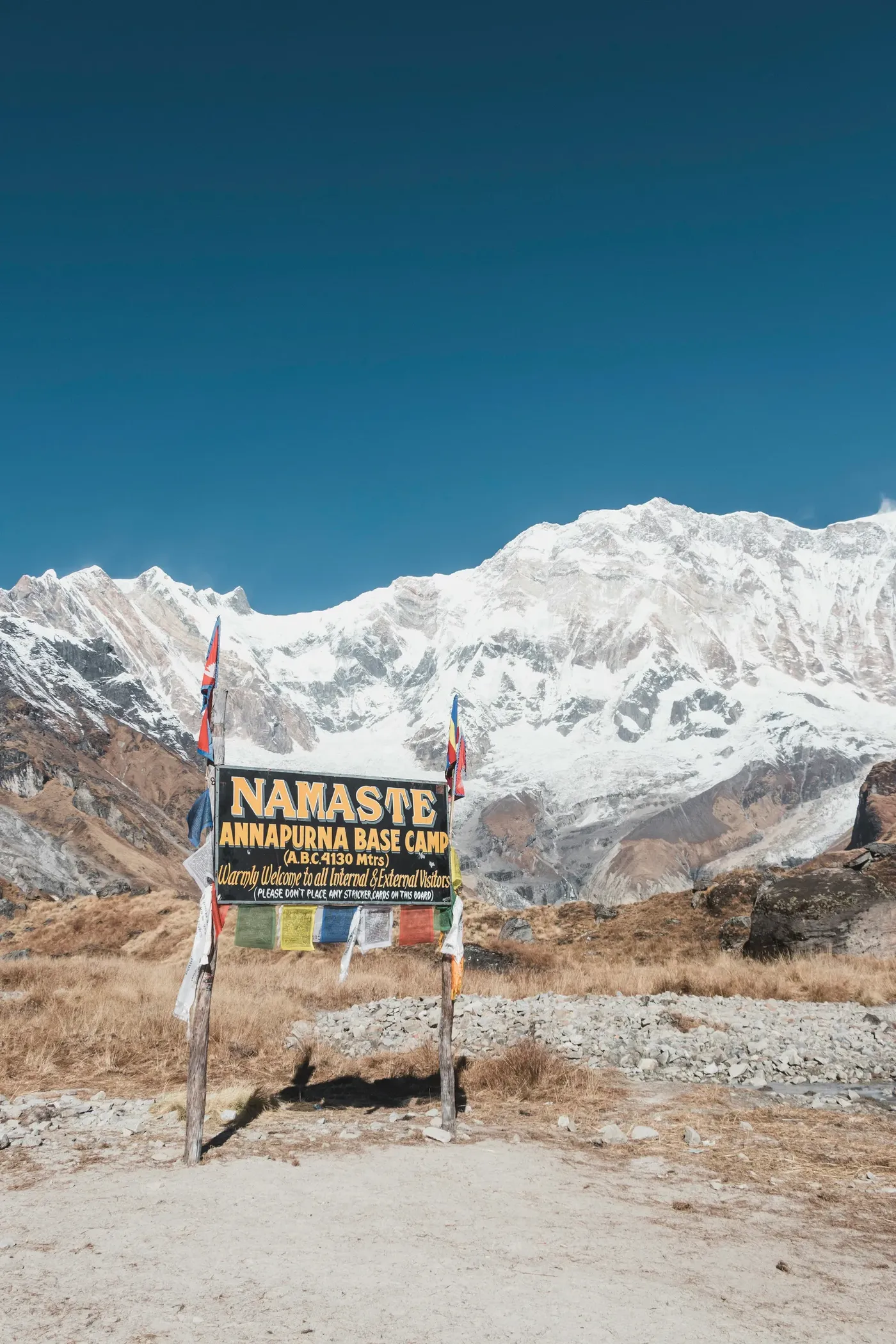
Ranipauwa is the landing point for Muktinath, a gravel pad on the shelf beside the temple village, and it is the reason the pilgrimage fits into a morning. Nepal has a short list of places where a helicopter can genuinely put down at altitude, and it is worth knowing them if you are comparing this flight against the rest of the country: Kala Patthar at 5,545 m above Everest Base Camp, Annapurna Base Camp at 4,130 m inside the sanctuary, Tilicho Lake at 4,919 m, Gokyo at 4,790 m, Langtang at 4,984 m and Gosaikunda at 4,380 m. Muktinath at 3,710 m is the lowest and the easiest of them, which is precisely why it is the one that works for elderly pilgrims and for a family with three generations on board. Our guide to where a helicopter can land in Nepal covers each of those sites in detail.
Questions travellers ask before paying for this flight
Is the Pokhara to Muktinath helicopter price per person or per aircraft?
Both exist, and they answer different questions. A shared seat is per person, with the published one-day pilgrimage at $1,080 for a shared flight. A private machine is per aircraft, up to five passengers, and it is quoted on your date and the time you want at the temple. If your group is four or five, ask for the per-aircraft number and divide it; that comparison usually settles the decision.
Is it cheaper to fly to Muktinath from Pokhara than from Kathmandu?
The flying is shorter from Pokhara, and a shorter commitment per aircraft normally prices lower, but the two are not the same product. The Kathmandu day includes the long 75 to 90 minute western leg each way and runs about eight hours door to door. Ask for both quotes on the same date and with the same ground time, and compare the totals including the hotel night in Pokhara.
Can I do a Muktinath temple helicopter tour in one day from Pokhara?
Yes, and that is the usual shape of it. You leave before sunrise, land at Ranipauwa, complete the circuit of the 108 spouts, the Vishnu shrine and the Jwala Mai flame in about two hours on the ground, and are back in Pokhara by early afternoon. The day is shorter than the Kathmandu version because the aircraft does not cross the middle hills twice.
How long is the flight and how long do you stay at the temple?
From Kathmandu the published flight time is 75 to 90 minutes each way. From Pokhara it is the short leg of the same corridor. The published ground time at the temple is two to three hours, which is what a full circuit takes at pilgrim pace; the altitude exposure itself is about 45 to 60 minutes for most groups, with oxygen on board the aircraft.
What is the Muktinath helicopter tour from Kathmandu cost, for comparison?
The published one-day pilgrimage from Kathmandu is $1,080 per person on a shared flight, covering the flight legs, the temple circuit, ground transfers at the site and the return the same day. The Muktinath helicopter tour from Kathmandu guide breaks that day down hour by hour, and the Kathmandu to Muktinath fare piece covers what moves the number.
Is a helicopter needed for the last stretch from Jomsom?
No, but it is the stretch that decides whether the pilgrimage happens. Jomsom sits in the valley below the temple and the road up is unpaved, dusty and occasionally closed after monsoon damage. A helicopter picks you up at the airstrip and puts you at the pad beside Ranipauwa in the calm morning air. The Pokhara to Jomsom helicopter price guide covers that sector on its own terms.
Can elderly parents fly this route?
Yes. It is the reason the route exists in its modern form. There is no trekking: the aircraft lands beside the village, the walk to the temple gate is about ten minutes, and a jeep shortens even that. We board seniors first, walk at the pace of the slowest pilgrim, and carry oxygen. Anyone with a serious heart or respiratory condition should get a doctor to clear the altitude before booking.
What documents do Indian citizens need, and what about the Nepali rate?
Indian citizens need a passport or voter ID card in original, with photocopies, for the flight manifest and the checkpoints. No Nepal visa is required, INR is accepted widely at the temple, and we have Hindi-speaking staff. Nepali travellers are quoted a domestic rate in rupees rather than the dollar price; ask for it directly and confirm what the quote includes.
What happens if the weather cancels the flight?
The flight is delayed, rebooked to the next available morning, or refunded in full, your choice and at no penalty. The Kali Gandaki builds its wind most afternoons, which is why every departure is a sunrise departure. Keep a buffer morning in Pokhara: two attempts in hand is the difference between a holiday with a temple morning in it and a holiday without one.
When should I book for March or April 2027?
Now, if April is your month. April is the busiest month for helicopter tours in Nepal and the corridor carries domestic pilgrimage traffic as well, so a seat confirmed several weeks ahead is worth more than a flexible one. March is quieter with clear mornings and easier slots. Read the pattern on the fixed departures page, then ask for your date so it can be confirmed in writing.
How does this compare with flying from Pokhara to Annapurna Base Camp?
The Annapurna Base Camp day tour from Pokhara is the other half-day flight out of the same city, landing at 4,130 m inside the sanctuary for $860 per person on a shared basis. It is a mountain landing rather than a pilgrimage, shorter on the ground and cheaper. If your interest is peaks rather than temples, start with the Annapurna and Pokhara helicopter tours hub and the helicopter tours from Pokhara overview.
One last piece of arithmetic that is worth doing before you pay a deposit. The full commercial detail of the product, with inclusions, timings and the booking form, sits on the Muktinath helicopter pilgrimage tour page, and that is the page to hold any quote against. If the number you have been given cannot be explained in terms of the flight legs, the ground time and the size of the machine, it is not a price yet, it is an opening offer.
The temple itself is the reason all of this exists. Muktinath is shared ground, a Vishnu shrine for Hindus and Chumig Gyatsa for Buddhists, with the 108 spouts and the Jwala Mai flame inside one courtyard at 3,710 m. The helicopter has not changed what the place means. It has changed who can reach it, and for a family flying a parent to the temple after decades of wanting to go, that is the whole value of the fare.