


Short answer: The Kathmandu to Muktinath helicopter fare is $1,080 per person on a shared flight in 2027, for a one-day return to the temple at 3,710 m in Mustang. That is a seat price, not an hourly rate and not a whole-aircraft charter: it buys the westbound leg, the landing at Ranipauwa, roughly 90 minutes to two hours on the ground, and the return to Kathmandu the same morning. Hotel pickup is around 05:30, wheels up 06:30 to 07:00, and you are back in the city by early afternoon. Everything that changes the number afterwards is weather, seat count and how early you commit to a spring date.
- $1,080per person, shared flight
- 3,710 mMuktinath temple altitude
- 75-90 minKathmandu to the temple, each way
- ~8 hrsdoor to door, one day
A fare question sounds simple until you try to compare two quotes for the same temple. One operator replies with a seat price, another with a number per aircraft, a third with a package that quietly includes a jeep transfer and a priest. The Kathmandu to Muktinath helicopter fare in 2027 is easiest to read as a single seat on a shared morning flight, because that is the product almost everyone actually buys. Once you know what the seat costs and what moves it, the quotes stop contradicting each other and start telling you which trip you are really being sold.
What the Kathmandu to Muktinath Helicopter Fare Actually Pays For
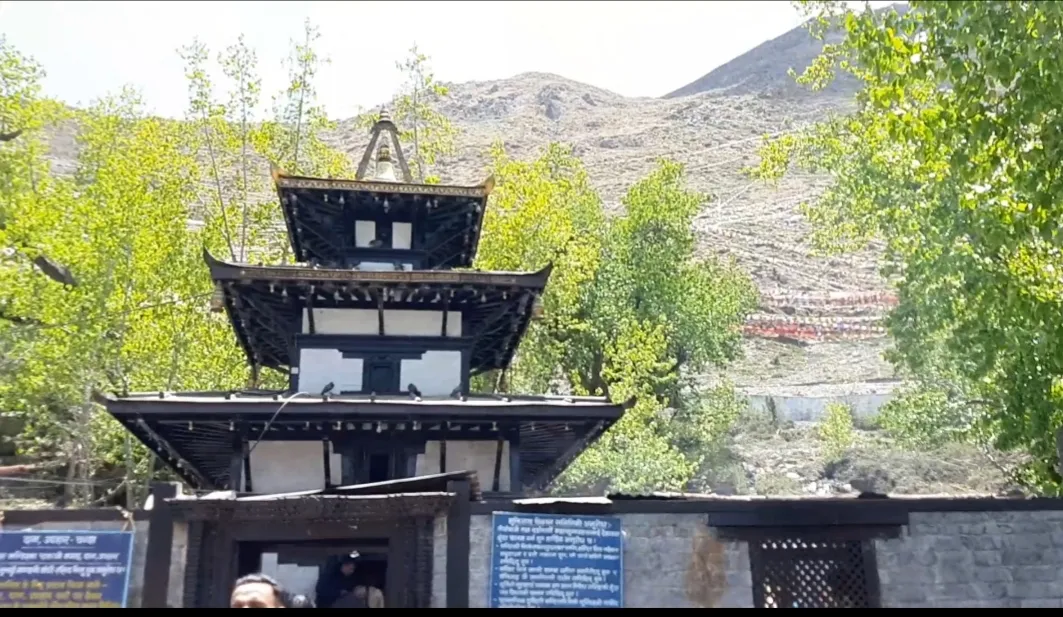
The published fare is $1,080 per person on a shared flight, one day, landing at the temple complex at 3,710 m. It is not a sightseeing loop that turns around at a viewpoint above the valley. The aircraft lands at Ranipauwa, you walk or take a short jeep shuttle to the temple gate, and the clock on the ground is real time rather than a photo stop. That distinction matters when you price the alternatives, because the value in the fare is the geography it deletes: the overland approach runs through Pokhara and Jomsom on mountain roads, or as a multi-day section of the Annapurna Circuit, and the helicopter turns all of it into a morning.
What you are paying for, in order of size, is aircraft time, fuel for a high-altitude round trip, the landing and ground handling at a remote pad, the crew day, and the administrative work of a passenger manifest, weight check and permit paperwork. On a shared departure those costs are divided across the seats sold, which is why the per-person figure moves when the aircraft is not full and why a private charter is quoted per aircraft instead. If you want the itinerary itself hour by hour, that lives in our guide to the one-day Muktinath helicopter tour from Kathmandu; this page is about the money.
Per Seat or Per Aircraft: The Two Fares Behind One Quote
There are two prices in the Muktinath market and they are not interchangeable. A shared seat is $1,080 per person, and the operator fills the remaining seats to make the flight pay. A charter is a price for the whole aircraft regardless of how many people board, which is why a family of five often asks the right question and a solo traveller often asks the wrong one. The site publishes the same structure on the Everest side: the private Everest helicopter charter is $4,500 per aircraft for up to five guests, while the shared Everest Base Camp day tour is $1,260 per person. Multiply the shared price by five and you are in charter territory, which is the arithmetic every group should run before booking.
For Muktinath, a charter quote has to be requested rather than read off a page, because the number depends on the date, the aircraft and whether the group wants extra ground time for a puja. The honest way to compare is to ask both questions at once: the per-seat fare for the dates you want, and the per-aircraft price for your group size. If the charter figure divided by your group is close to $1,080, the charter is the better product because the schedule bends to you. If it is far above, the shared seat is doing its job.
| Published Nepal helicopter product | Price | Basis | Duration |
|---|---|---|---|
| Everest scenic mountain flight | $260 | per person, window seat | 1 hour |
| Annapurna Base Camp day tour from Pokhara | $860 | per person, shared flight | 1 day, 3-4 hours from Pokhara |
| Muktinath helicopter pilgrimage | $1,080 | per person, shared flight | 1 day |
| Everest Base Camp day tour | $1,260 | per person, shared flight | 1 day, about 6 hours |
| Everest Base Camp helicopter trek, trek up and fly back | $1,840 | per person, shared flight | 10 days |
| Private Everest helicopter charter | $4,500 | per aircraft, up to 5 guests | 1 day, 5-6 hours |
Read that table as a fare ladder rather than a menu. The Muktinath seat sits between the Pokhara-side Annapurna day tour and the Everest day tour, which is roughly where the flight time puts it: a longer round trip than Annapurna from Pokhara, a shorter one than the Khumbu. The $260 mountain flight at the top is the product people confuse with a helicopter tour. It is a fixed-wing scenic flight that never lands, so it is not a cheap version of the Muktinath fare; it is a different purchase.
The Fare Clock: Why the Price Is Tied to a 05:30 Start
Every helicopter route in this part of Nepal is a morning route, and Muktinath is the clearest case. The Kali Gandaki acts as a wind tunnel: once the sun is on the high ground, air accelerates north through the gorge and the passes either side of the temple turn turbulent. The calm window is the first two or three hours after sunrise. That is why the day starts before the city does, and it is also why the fare is not really for flight hours in the abstract; it is for a specific, narrow, non-negotiable slot.
| Time | What happens | Why it matters to the fare |
|---|---|---|
| 05:30-06:00 | Hotel pickup in Kathmandu, transfer to the domestic terminal, passport and weight check, safety briefing | The crew day and the ground handling are already running before the first passenger boards |
| 06:30-07:00 | Wheels up, tracking west-northwest across the Trishuli valleys | The slot is fixed by wind, not by your preference |
| 75-90 minutes later | Landing at the Ranipauwa helipad at 3,710 m | High-altitude landing and ground handling at a remote pad |
| 09:00-10:30 | Temple circuit: the 108 spouts, darshan, the Jwala Mai flame | Ground time is part of the product, not a bonus |
| 10:30-11:00 | Refreshment at Ranipauwa, back on board | The return leg must still beat the afternoon build-up |
| 13:00-14:00 | Kathmandu arrival and hotel drop | Roughly eight hours door to door |
The practical consequence for anyone flying in from abroad is a buffer day. You cannot land at Tribhuvan International Airport at midnight, sleep four hours and expect to be at the domestic terminal by 05:30 in a fit state, and the tour needs you at your hotel and ready before the city wakes. International arrivals feed into the same domestic complex the helicopter uses, so one extra hotel night buys the whole margin of the trip. Budget for it in the same breath as the fare, because a missed departure is the most expensive thing in this article.
March and April 2027: What the Calendar Does to the Fare
Spring 2027 is the window this page is written for, and the two months behave differently. March is the quieter month: clear mornings, fewer trekkers on the trails, and a booking book that still has slack in it. April is the busiest month for helicopter tours in Nepal, with the best all-round conditions of the year and more afternoon cloud as the pre-monsoon build-up begins. Both months fly on the same early schedule, because every flight leaves before sunrise and is on the ground before the valley air builds cloud over the high peaks by early afternoon.
For April, the advice is blunt: confirm the seat several weeks ahead, and do it before you book flights to Kathmandu. The fare does not usually fall as the date approaches; the seats simply disappear, and a traveller who has already paid for an international ticket is in a poor position to negotiate. March rewards the opposite behaviour, because a quieter month means you can hold a date loosely and still find a seat. Neither month comes with a guaranteed departure date from us, and that is deliberate: dates are confirmed in writing at booking, and the fixed departures page lists what runs and how often.
If you are still choosing between the two, our best-time guide for helicopter tours in Nepal sets out the month-by-month weather, and the Everest Base Camp timing guide explains the same spring mechanics higher up. The short version for Muktinath: March for quiet, April for the fullest colour and the biggest demand, and both flown in the first hours of daylight.
Booking the Fare From Abroad: USD, Deposit and the Paper Trail
The fare is quoted in US dollars, and that is the number to compare across operators. Indian travellers will usually want the INR equivalent on the day of payment, and Nepali families will want the resident rate, which is quoted on request rather than published here. Ask for the currency and the exchange basis in writing before you pay anything, because a quote that shifts with the exchange rate is not a quote.
Booking from the United States or Europe is otherwise a short process: pick the date window, send passport names exactly as printed, declare body weights for the manifest, pay the deposit, and receive a written confirmation that names the pickup time and the weather policy. What you should not accept is a WhatsApp message that says a seat is held without a date, a price and a cancellation rule in it. The full commercial process, including how deposits and balances usually work in this market, is in our guide to booking a helicopter tour in Nepal.
Two more items belong in the budget rather than the fare. Travel insurance that covers helicopter evacuation and trip interruption is not optional on a flight to 3,710 m, and a night in Kathmandu before the flight is a cost you should plan rather than discover. Our safety and insurance guide explains what the policies actually cover.
What Can Change the Number After You Book
Three things move a Muktinath fare after the deposit, and none of them is a hidden fee. The first is weather. If the morning window closes, the flight does not go, and the question is whether your booking moves to the next morning or ends. That rule should be in writing before you pay. The second is seat count on a shared departure: an aircraft that sells out spreads the cost, and a departure that does not may be re-timed or combined. The third is weight and luggage, because the manifest is a real constraint on a high-altitude machine, and excess baggage can change what the aircraft can carry.
Read the cancellation and rebooking clause before you compare two prices, because a cheaper seat with a strict no-refund rule is not cheaper if your only available morning is the one the cloud sits on. Our weather cancellation policy guide sets out how these clauses are usually written in Nepal, and the solo traveller guide explains what happens to the fare when you are the only person on the manifest.
One Seat, One Morning: What the Fare Is Worth Against the Road
The comparison that matters for most buyers is not helicopter against helicopter but helicopter against the road. The overland route to Muktinath runs for days, whether as a jeep journey through Pokhara and Jomsom or as a walking section of the Annapurna Circuit, and it costs you nights in lodges, meals, road time and the physical price of altitude. The flight costs one morning and returns you to Kathmandu the same day. For a family carrying an elderly parent who has wanted to see the temple for decades, or for a traveller with a fixed two-week itinerary, that trade is usually obvious. For a trekker who came to walk, it is not a substitute at all.
That is also why the fare is not the whole budget question. Add the buffer night, the insurance, the airport transfers and whatever you spend in Kathmandu, and the real comparison is a two-day city-based trip against a five-to-seven-day road trip. Our Jomsom to Muktinath helicopter guide covers the last leg for anyone already on the trail, and the Mustang helicopter tour guide widens the frame to the whole Kali Gandaki valley if you want more than the temple.
Indian Pilgrims and Nepali Families: The Same Fare, Different Arithmetic
The Muktinath helicopter pilgrimage is one of the few Nepal helicopter products with a genuinely religious core, and that changes what buyers ask about. Indian pilgrims usually want darshan timing, the 108 spouts, the Jwala Mai flame and a priest arranged in advance, and they often travel three generations at once. The fare is the same $1,080 per seat on a shared flight, quoted in USD, with the INR equivalent worked out on the day of payment. For a family of five, the per-aircraft quote is worth requesting, because at five seats the arithmetic starts to favour a charter and the ground time becomes yours to set.
Nepali families should ask specifically for the resident rate rather than assuming the published USD figure applies. It is quoted separately and depends on the date and the seat count, in the same way the Annapurna side of the business quotes separate Nepali pricing for Annapurna Base Camp flights. The temple is a pilgrimage site before it is a tourist attraction, and the operators who fly it know the difference between a darshan trip and a sightseeing trip. Our guide for Indian travellers flying to Muktinath and Everest covers the documentation and the darshan logistics in more detail.
How to Read a Muktinath Quote in Five Minutes
Put two quotes side by side and check four lines: the total per person, the basis (seat or aircraft), what the ground time actually is, and what happens if the weather closes the window. If a quote does not state the basis, it is not a quote. If it does not state the ground time, assume the shortest version. If it does not state the weather rule, ask before you pay.
Then check the permit line. Muktinath sits inside the Annapurna Conservation Area, and the ACAP entry fee is a real cost on this route; the question is whether it is inside the number you have been given or added at the counter. The same goes for the Ranipauwa landing and any jeep shuttle up to the temple gate. None of these is large against $1,080, but each is the kind of line that turns a quoted fare into a final bill, and a good operator will itemise them without being asked.
Frequently Asked Questions
How much is the Kathmandu to Muktinath helicopter fare in 2027?
$1,080 per person on a shared flight, one day, landing at the temple at 3,710 m. The fare includes the return leg and roughly 90 minutes to two hours on the ground. A private charter is quoted per aircraft and priced on request.
Is the Muktinath helicopter tour from Kathmandu a round trip?
Yes. You leave Kathmandu before sunrise, land at Ranipauwa, visit the temple, and fly back the same morning, arriving in the city by early afternoon, roughly eight hours door to door.
Can I book a Muktinath temple helicopter tour for March or April 2027?
Yes. March is the quieter month with clear mornings and fewer trekkers. April is the busiest month for helicopter tours in Nepal, so confirm the seat several weeks ahead, before you book flights to Kathmandu. Dates are confirmed in writing at booking.
Why does the Muktinath helicopter fare go up for a single traveller?
The seat price is fixed, but a shared departure needs enough seats sold to run. If you are alone on the manifest, the operator may re-time the flight or quote you the aircraft instead, which is why solo travellers should read the shared-seat terms carefully.
Is a KTM to Muktinath flight cheaper than a charter?
For one or two people, yes. At around five passengers the per-aircraft quote divided by the group often comes close to the shared fare, and a charter gives you control of the ground time. Ask for both numbers for your dates.
What does the fare not include?
Expect to budget separately for the ACAP entry fee if it is not itemised, any jeep shuttle at Ranipauwa, travel insurance covering helicopter evacuation, and a hotel night in Kathmandu before the flight.
Does the Muktinath helicopter tour run in the afternoon?
No. Every flight leaves before sunrise because the Kali Gandaki valley turns turbulent once the sun is on the high ground, and the calm window is the first two or three hours after dawn.
Can elderly parents fly to Muktinath by helicopter?
This is one of the main reasons families book it. The flight removes days of road travel and the walk from the helipad to the temple gate is short, with a jeep shuttle available. Anyone with heart or lung conditions should clear the altitude at 3,710 m with a doctor first.
What happens to the fare if the weather cancels the flight?
It depends on the clause you agreed to. Most bookings move to the next available morning rather than refund outright. Get the rule in writing before you pay the deposit, and leave a spare morning in your itinerary.
How far ahead should I book the Muktinath helicopter pilgrimage?
For April 2027, several weeks ahead and before you buy international flights. For March, a shorter lead time usually works because demand is lower, but the date is still confirmed in writing at booking.
Is the fare the same from Pokhara?
No, and it is not published as a standard seat here. Pokhara departures are quoted for the date and group, and the flight time is shorter, so ask for a written quote rather than assuming the Kathmandu figure applies.
Where do I see the full Muktinath package?
The Muktinath helicopter pilgrimage tour page carries the inclusions and the booking form, and the Nepal beyond Everest guide compares Muktinath with Langtang, Gosaikunda, Rara and Lumbini.
One closing note on the temple itself: Muktinath is shared ground, a Vishnu shrine for Hindus and Chumig Gyatsa for Buddhists, and the 108 spouts are the reason many families make the trip at all. The fare is the price of arriving in time for that, before the wind and the cloud take the morning away.