
Short answer: The Muktinath helicopter tour from Kathmandu flies you to the temple complex at 3,710 m in Mustang and back in one morning, from $1,080 per person on a shared flight. Hotel pickup in Kathmandu is around 05:30, the flight west takes roughly 75 to 90 minutes, you get about 90 minutes to two hours at the temple for darshan at the 108 spouts and the Jwala Mai flame, and you are back in the city by early afternoon, roughly eight hours door to door.
- $1,080per seat, shared flight
- 3,710 mMuktinath temple altitude
- 75-90 minKathmandu to the temple, each way
- ~8 hrsdoor to door, one day
What the Muktinath Helicopter Tour from Kathmandu Actually Is
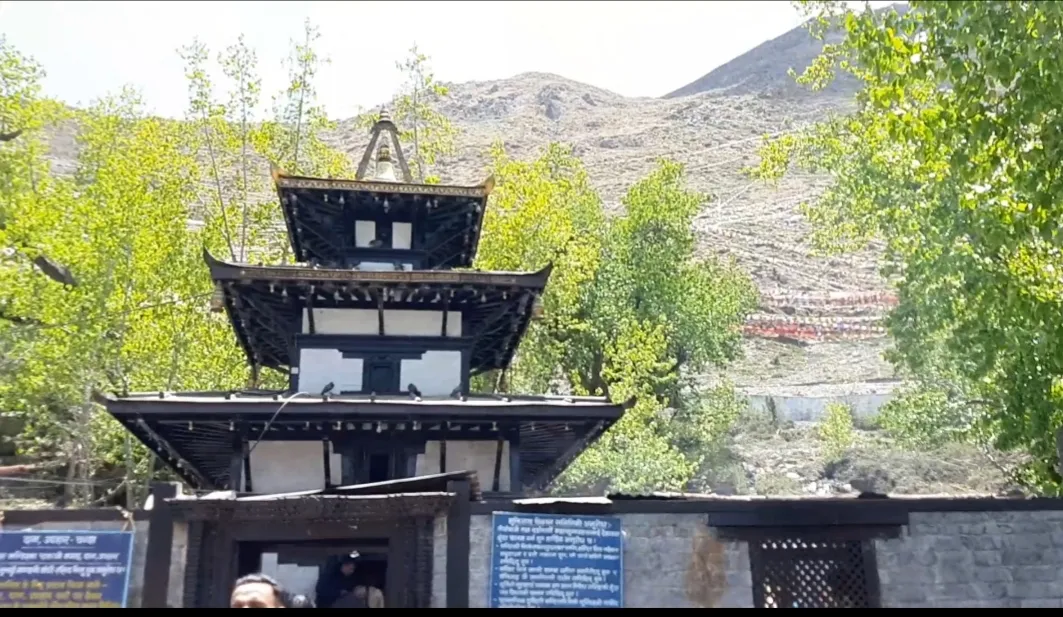
The Muktinath helicopter tour from Kathmandu is a same-day round trip to one of the most important pilgrimage sites in the Himalaya, the temple complex at Ranipauwa in the Mustang region, at 3,710 m. It is not a scenic loop over mountains and it is not a mountain flight that turns around at a viewpoint. The aircraft lands, you walk to the temple gate, and you have real time on the ground for the ritual that people come for: the wall of 108 spouts, the eternal flame, and darshan at the Vishnu shrine that Hindus call Muktinath and Buddhists call Chumig Gyatsa.
What makes the flight worth its price is the geography it deletes. Muktinath sits in the rain shadow behind the Annapurna and Dhaulagiri ranges, in the valley of the Kali Gandaki, the gorge that trekkers know as the deepest on Earth. The overland route runs for days, either as a section of the Annapurna Circuit or as a long jeep journey through Pokhara and Jomsom on mountain roads. The helicopter makes the whole approach a morning. For a family carrying an elderly parent who has wanted to see the temple for decades, that difference is the entire product.
If you want the full commercial picture of the product, prices, inclusions and the operator behind it, the Muktinath helicopter pilgrimage tour page is the place to start. If you are still deciding whether Muktinath is the right Himalayan destination for your dates at all, our hub guide to Nepal beyond Everest: Langtang, Gosaikunda, Rara and Muktinath compares the quiet-flight options side by side.
Why the Flight Leaves Kathmandu Early, and Why That Is the Point
Every helicopter route in this part of Nepal is a morning route, and Muktinath is the clearest example. The Kali Gandaki valley acts as a wind tunnel: once the sun is on the high ground, air accelerates north through the gorge and the passes either side of the temple become turbulent. The calm window is the first two or three hours after sunrise, which is why pickup is at 05:30, wheels are up around 06:30 to 07:00, and the landing at Ranipauwa happens between 08:15 and 09:00.
That timing has a practical consequence for anyone booking from abroad, and it is the thing most first-time buyers get wrong. You cannot land in Kathmandu at midnight, sleep four hours and expect to make the flight comfortably. The sane plan is to arrive at least one full day before, because the tour needs you at your hotel and ready before the city wakes. International arrivals at Tribhuvan International Airport feed straight into the same domestic terminal complex that the helicopter uses, so a buffer day costs you a hotel night and buys you the whole margin of the trip.
The second consequence is that the drive to the domestic terminal takes about twenty minutes at that hour instead of an hour. Kathmandu traffic is not a rumour, and the early start is not only about mountain weather.
What You See on the Way West
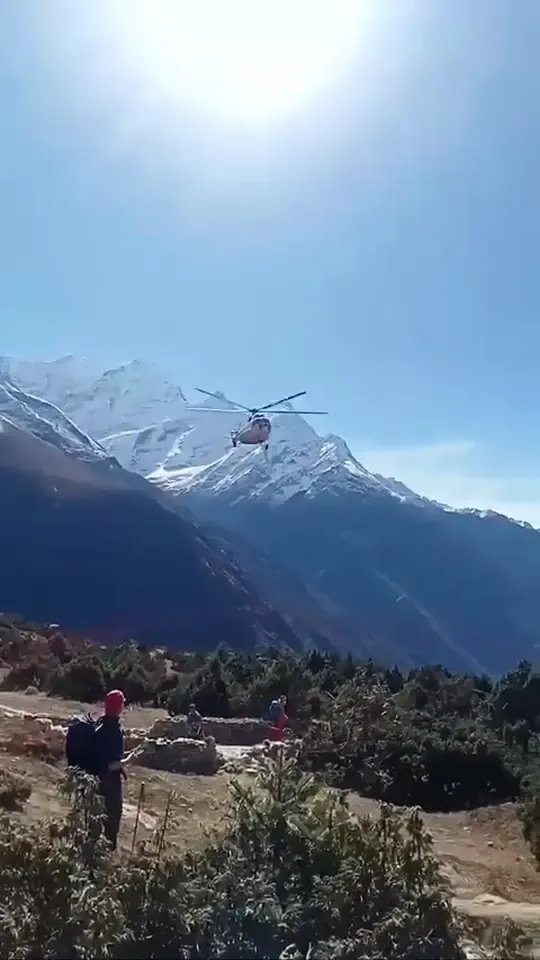
The routing varies with wind and with air traffic control, and the pilot will tell you which line he is taking, but the shape of the flight is consistent. The aircraft climbs out of the Kathmandu bowl and tracks west-northwest across the Trishuli river valleys, over ridgelines that carry terraced fields and scattered settlements, and then the Annapurna range assembles itself on the horizon as a single white wall. On a clear morning you are looking at Dhaulagiri (8,167 m) and the Annapurna massif from the same window within the same hour.
The last section is the one people remember: the aircraft drops into the Kali Gandaki and follows the valley north toward the temple, with the black river far below and the Tibetan frontier plateau opening ahead. The ground pilgrimage spends three or four days earning that view. You get it before breakfast.
The Morning, Hour by Hour
These are the timings our own flights run to. They are not a rigid timetable, because wind, air traffic control and the group itself all move them, but they are the honest shape of the day and they are the same shape whether you are flying as a couple, a family of five, or a group of pilgrims who have chartered the aircraft.
| Time | What happens |
|---|---|
| 05:30-06:00 | Hotel pickup in Kathmandu and transfer to the domestic terminal. Passport and weight check, safety briefing, and a manifest that matches the names on your passports. |
| 06:30-07:00 | Wheels up. The route west-northwest crosses the Trishuli valleys, climbs over the ridgelines, and puts the Annapurna range on the horizon as a single white wall. |
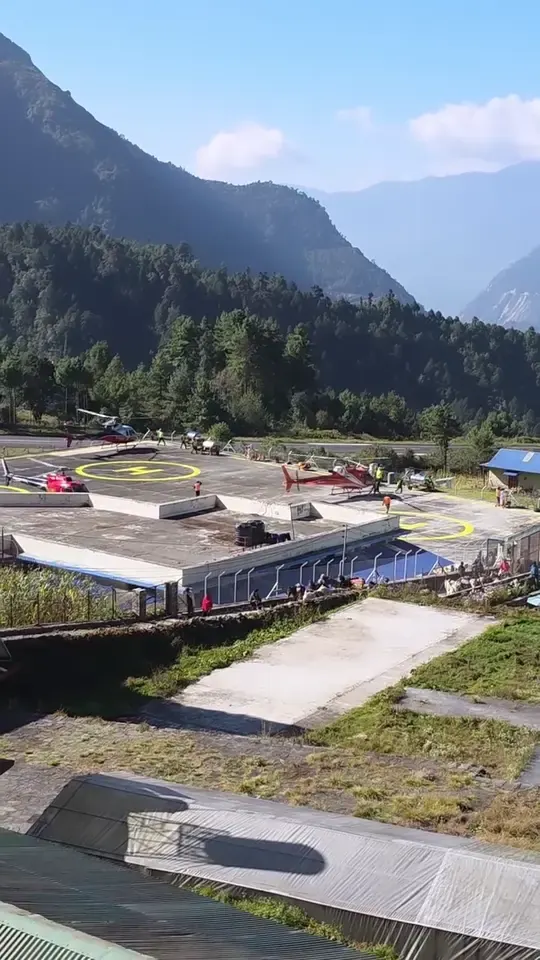
| 75-90 min later | Landing at the Ranipauwa helipad at 3,710 m. A ten-minute walk, or a jeep shuttle if anyone in the group needs it, up to the temple gate. |
| 09:00-10:30 | The temple circuit: the 108 spouts, darshan at the Vishnu temple, the Jwala Mai flame, and the Buddhist shrines around the courtyard. A Hindu priest can be arranged for a puja with advance notice. |
| 10:30-11:00 | Light refreshment at Ranipauwa and back on board. The return leg crosses the Kali Gandaki gorge with Dhaulagiri close on the left, which is the photography window the ground route never gets. |
| 13:00-14:00 | Kathmandu arrival and hotel drop. Roughly eight hours from pickup to drop, and the rest of your day is your own. |
Ground time is the variable worth protecting. The complex is not large, but the spout circuit takes longer than people expect, and a group that wants a proper puja, photographs at every shrine and a slow walk back down needs the full ninety minutes. If your quote compresses the ground stop to forty minutes to fit a second group into the aircraft, the price is not the only thing that is smaller.
What the Muktinath Helicopter Tour from Kathmandu Costs in 2027
The rate for the shared flight is $1,080 per person, and that is the number to hold in your head when you compare quotes. It buys the round-trip sector from Kathmandu to Ranipauwa and back, the permits and landing fees that go with it, the crew, the ground transfer between helipad and temple, and enough time at the site to do the pilgrimage properly rather than photograph it from the doorway.
A private charter is quoted per aircraft rather than per seat, and the arithmetic only works in your favour when the group fills the cabin. We confirm the aircraft, the slot and the price in writing before anything is paid, because a helicopter quote that grows between the enquiry and the invoice is the oldest trick in this market.
| Product | Duration | Landing altitude | 2027 price |
|---|---|---|---|
| Muktinath helicopter tour from Kathmandu (shared seat) | 1 day, about 8 hours door to door | 3,710 m at Ranipauwa | from $1,080 per person |
| Everest Base Camp helicopter day tour (shared seat) | 1 day, about 6 hours | 5,545 m at Kala Patthar | from $1,260 per person |
| Annapurna Base Camp day tour from Pokhara (shared seat) | 1 day, 3 to 4 hours from Pokhara | 4,130 m at Annapurna Base Camp | from $860 per person |
| Everest Base Camp helicopter trek (trek up, fly back) | 10 days | 5,545 m maximum | from $1,840 per person |
| Everest scenic mountain flight (fixed wing) | 1 hour | No landing, 8,849 m views | from $260 per person |
Put beside the Everest day tour, Muktinath is the cheaper flight and the lower landing: 3,710 m instead of 5,545 m, and roughly an hour less in the air. Put beside the fixed-wing mountain flight at $260, it is four times the money for the one thing the plane cannot do, which is put you on the ground at a sacred site. And put beside the ten-day trek at $1,840, it is a different purchase altogether: the trek buys the walk, the flight buys the destination.
The full cost breakdown, including what a genuine all-inclusive pilgrimage price should contain and where operators hide the extras, is in our Muktinath helicopter pilgrimage cost guide. If your dates sit in the Everest region instead, the same comparison logic is applied to the Khumbu in the Everest helicopter tour cost guide.
What the $1,080 Covers, and What It Does Not
Included in the seat price: the round-trip helicopter sector from Kathmandu to the Ranipauwa helipad, the flight permits and landing fees, the crew, the ground transfer between helipad and temple complex, and the ground time at the site. Oxygen is carried on the aircraft, and the crew is trained for the altitude band the flight enters.
Not included: your international airfare to Nepal, your travel and medical insurance, and anything personal at the temple such as offerings, a priest for a formal puja, or the small trade in saligram stones that the Kali Gandaki is famous for. The Nepal entry visa, for most foreign passport holders, is $50 for thirty days and is issued on arrival at Kathmandu airport. None of that is hidden, and none of it belongs in the helicopter price.
Insurance deserves its own sentence. Any insurer can sell you a Nepal policy; very few will cover helicopter flight at altitude without a specific clause. Read the exclusions before you fly, because the office will ask for proof of cover, and a policy that quietly excludes rotary-wing evacuation is not cover at all. Our guide to safety and insurance on Nepal helicopter tours goes through the wording to look for.
Booking the Flight from the United States or Europe
The booking mechanics are simple, and they are the part of this trip that people over-plan. You pick your date, we confirm the aircraft and the slot, you pay a deposit, and the balance is settled before the flight. The quote is issued in US dollars, so there is no exchange-rate surprise between the enquiry and the invoice. Names on the manifest must match passports exactly, because the domestic terminal checks them against the manifest before boarding.
Two practical points for long-haul travellers. First, give the tour a buffer day at the front of the trip. A flight that departs at 06:30 does not forgive a delayed connection from Doha, Istanbul or Guangzhou. Second, book with lead time: we ask for about seven days on a normal departure, and more in the peak windows, because the aircraft and the crew slots are shared across all our routes and Muktinath competes with Everest for the same morning.
If you are coming from North America, the calendar question matters as much as the price. October and November give the clearest air of the year, with the monsoon having washed the dust out of the atmosphere. March to May is the second window, warmer, with rhododendron in flower on the middle hills. December to February flies often and flies beautifully, but the cold at 3,710 m is real and the mornings are short. June to mid-September is the monsoon, when low cloud and rain ground most flights, and no honest operator will promise you a Muktinath landing in that window.
The same season logic applies across the country, and the month-by-month version is in our best time for a helicopter tour in Nepal guide, which also explains why the morning slot is a safety decision rather than a scheduling preference.
At 3,710 Metres: Who This Flight Suits, and Who Should Ask a Doctor First
Muktinath sits in the same altitude band as Namche Bazaar, where Everest trekkers spend two nights acclimatising. The helicopter manages that exposure in three ways: you are at the site for about forty-five minutes to an hour of actual altitude time, you do not sleep high, and oxygen is on board. For most travellers that is a manageable dose, and it is why the flight has become the standard answer for pilgrims who could never trek.
The honest rules are these. Anyone with serious cardiac or respiratory conditions should get a doctor to clear the flight before booking, not after. Pilgrims with knee or mobility limits fly happily, because the only required walking is the ten minutes between helipad and temple gate, and a jeep can shorten even that. Advanced age is not a barrier in itself: we have flown pilgrims in their eighties, and we board seniors first. What we will not do is pretend that 3,710 m is a flat sea-level afternoon, and any operator who does is selling you a risk they have not priced.
For Nepali Families and Indian Pilgrims
Half of the demand for this flight is local, and it looks different from the Western booking. Nepali families are usually flying a parent, or three generations at once, and the questions are about the walk from the helipad, whether a wheelchair can be carried the last stretch, and whether a priest can be arranged for a proper puja. The answers are yes, yes with notice, and yes. The seat rate is the same posted rate, and the domestic side of the booking is simpler than the international one: no visa, no international connection, just an early start from home.
Indian pilgrims are the other half, and Muktinath is one of the four dhams that Indian families plan years ahead for. Indian citizens do not need a visa for Nepal; the open border is reciprocal. By air, carry a valid passport (a voters ID card is accepted, and Aadhaar works in practice at airline counters, but a passport ends the argument at check-in). Indian rupees are accepted across Nepal at roughly ₹100 to NPR 160, and for the flight itself we invoice in US dollars or the INR equivalent, whichever you prefer, confirmed in writing before payment.
The pilgrimage pattern is worth knowing if you are travelling from India. Most groups fly into Kathmandu, take the first morning slot the next day, and are back at the hotel by mid-afternoon with the darshan done, which leaves the rest of the trip free for Pashupatinath or a mountain flight. Families with elderly parents often ask for the front of the aircraft and the shortest possible walk, and both are arranged at booking rather than at the helipad. Our guide for Indian travellers to Muktinath and Everest by helicopter covers entry rules, INR handling and the two or three day Kathmandu heli weekend in more detail.
If the family wants to extend the sacred circuit, the lake above the temple is a separate short hop, and the flight to Damodar Kund above Muktinath explains what that add-on involves. Groups coming from Pokhara rather than Kathmandu should read the Jomsom to Muktinath segment guide, which covers the same valley from the other end.
What Happens at the Temple Itself
The site is compact and the ritual is physical. The centre of it is the wall of 108 spouts, the Muktidhara, where pilgrims walk the line and bathe beneath each one in sequence; the water is snowmelt and completing the full circuit is the point of the discipline, though a partial circuit is a perfectly respectable choice for anyone feeling the altitude. Inside the temple, the Jwala Mai flame burns on the same rock where spring water emerges, a natural gas seep that has burned for as long as records exist, and which Buddhist texts treat as one of the proofs of the site's sanctity.
The main shrine is the Vishnu temple, where the deity is worshipped as Muktinath, Lord of Liberation; mukti means salvation, and the whole site is organised around that idea. Around it are Buddhist prayer flags, chortens and shrines, because this is a genuinely shared complex, with Hindu pandits and Buddhist lamas conducting ritual in the same courtyard. That dual identity is why the site carries the Tibetan name Chumig Gyatsa, the hundred waters, alongside its Hindu one. The encyclopedia entry on Muktinath is a useful background read on the site's dual tradition before you go.
Temple practice, honestly stated: photography is fine in the courtyard and around the spouts, less welcome inside the shrine. Shoes come off. The courtyard is exposed and the wind is cold even in spring, so a layer you can put on over a wet shirt matters. The village of Ranipauwa has lodges, tea houses and shops selling ritual items, and it is where the jeep shuttle and the refreshment stop happen. North of the temple the trail continues into Upper Mustang, the restricted former kingdom of Lo, which needs its own permits and is not part of this day.
The Weather Question, Answered Honestly
No operator controls the Kali Gandaki wind, and anyone who guarantees a landing on a specific date is not being straight with you. What a good operator does is control the decision: the flight is assessed on the morning, on the spot, by the crew, and the call is made before you are in the air rather than after. October and November carry the best odds, March to May are close behind, and the monsoon months are a gamble we would rather you did not take with a fixed itinerary.
Ask two questions before you pay a deposit. What happens to my money if the flight is grounded, and when is that decided? And can the flight move to the next morning without a new charge? The answers belong in writing. Our weather cancellation policy guide explains how the decision chain actually works, and the booking walkthrough covers deposits, manifests and what to send in advance.
Shared Seat or Full Charter
The $1,080 rate is a shared seat, which is how most people fly and how the price stays sane: the aircraft carries a group of up to five, and the cost of the sector is split. Group joining is the right answer for couples, solo travellers and small families who are flexible on the date. A full charter makes sense when the group already fills the cabin, when the schedule cannot move, or when the trip is built around a ritual that needs the aircraft to wait. Charter rates are quoted per aircraft, and we confirm the figure in writing. If you are weighing the two structures across routes, the group joining versus private charter comparison sets out the arithmetic.
Frequently Asked Questions
How much does the Muktinath helicopter tour from Kathmandu cost in 2027?
From $1,080 per person on a shared flight, which includes the round-trip sector from Kathmandu to the Ranipauwa helipad, permits and landing fees, the crew, the ground transfer to the temple and the ground time at the site. A private charter is quoted per aircraft rather than per seat. Travel insurance and your international airfare are not included.
Can it be done as a day trip, or do I need to stay in Mustang?
It is a day trip. Pickup in Kathmandu is around 05:30, the return lands you back in the city between 13:00 and 14:00, and the whole thing runs about eight hours door to door. You do not sleep at altitude, which is one of the reasons the flight is manageable for older pilgrims: exposure at 3,710 m is roughly forty-five minutes to an hour.
What time does the flight leave Kathmandu, and why so early?
Wheels up is normally between 06:30 and 07:00. The Kali Gandaki valley becomes a wind tunnel once the high ground warms, so the calm window after sunrise is the safe window. It is a weather and safety decision, not a scheduling preference, and it also means the drive to the domestic terminal takes twenty minutes instead of an hour.
Can I fly to Muktinath from Pokhara instead of Kathmandu?
Yes, departures can be arranged from Pokhara as well, which suits travellers already in the Annapurna region. The Kathmandu version is the one to book if you are flying into Nepal internationally, because it removes a domestic repositioning day. Prices for the Pokhara departure are confirmed against your date and group size.
How long do you actually get at the temple?
About ninety minutes to two hours on the ground, which is enough for the full 108-spout circuit, darshan at the Vishnu shrine, the Jwala Mai flame and the surrounding Buddhist shrines at a human pace. A formal puja with a Hindu priest needs to be arranged in advance, and it needs the longer end of that window.
Is 3,710 m safe for elderly parents?
For most people, yes. The flight profile limits exposure to under an hour, you do not sleep high, and oxygen is carried on board. Anyone with serious heart or lung conditions should get a doctor to clear the flight first. The walk from the helipad to the temple gate is about ten minutes, and a jeep can shorten it further.
Do Indian pilgrims need a visa or a special permit for Muktinath?
Indian citizens do not need a visa for Nepal; the open border is reciprocal. By air, carry a valid passport, which is the cleanest document at airline check-in. Muktinath itself is not a restricted area, so the flight permits and landing fees in the seat price cover the paperwork. Upper Mustang, north of the temple, is restricted and needs its own permit, but it is not part of this day.
Which months give the best chance of a landing?
October and November are the clearest of the year, with the monsoon having scrubbed the dust out of the air. March to May is the second window, warmer and greener. December to February flies well but is cold at the temple. June to mid-September is the monsoon, when low cloud and rain ground most flights.
What if the weather cancels my flight?
The decision is taken on the morning by the crew, before you board, and your options depend on the terms you were issued. Ask before paying: what happens to the money if the flight is grounded, when is that decided, and can it move to the next morning without a new charge. Get the answer in writing, from any operator you consider.
Is the flight shared with strangers, or can we charter the aircraft?
Both exist. The $1,080 rate is a shared seat on an aircraft carrying up to five passengers. A full charter gives your group the aircraft and the schedule, and is quoted per aircraft; it usually works out cheaper per person once the group fills the cabin.
Do we land at the temple, or is there still a walk?
The aircraft lands at the Ranipauwa helipad at 3,710 m, a short walk from the temple gate, about ten minutes on a good path. A jeep shuttle covers most of that distance for anyone who needs it. The helicopter does not land inside the temple complex itself.
Book the Muktinath Flight from Kathmandu
If you have a date in mind, the fastest route is to send it to us with your group size and we will come back with the aircraft, the slot and a written price. If your dates are flexible, tell us the month and we will tell you honestly which mornings in it are worth booking. The Muktinath helicopter pilgrimage page carries the live detail, the guide hub for Nepal beyond Everest puts the flight beside Langtang, Gosaikunda, Rara and Lumbini, and if you are building a longer Nepal itinerary the routes and packages overview is the map of everything we fly.
One last honest note. Muktinath is not the most spectacular flight we operate; Everest holds that title. It is the one with the most meaning attached to it, the one families plan for a parent who has waited a lifetime, and the one where the thank-you messages tend to mention prayers rather than photographs. That is worth an early start.