
Short answer: The Mt Everest villages that matter on a helicopter route are the ones strung up the Khumbu valley from Lukla at 2,845 m to Gorak Shep at 5,140 m, the last settlement below Everest Base Camp at 5,364 m. In between sit Phakding at 2,610 m, Namche Bazaar at 3,440 m, Khumjung, whose Everest View Hotel stands at 3,880 m, Tengboche at 3,860 m, Dingboche at 4,410 m and Lobuche at 4,940 m. A one-day helicopter tour covers that corridor in a single morning, lands at Kala Patthar at 5,545 m, and has you back in Kathmandu by lunch. No walking is involved, and spring 2027 is the season to plan it: March for quiet trails and clear mornings, April for the best all-round conditions if you confirm your seat several weeks before you book flights to Kathmandu.
- 2,845 mLukla, the first Everest village on the route
- 5,140 mGorak Shep, the last village below Base Camp
- 5,545 mKala Patthar, the highest landing point
- $1,260Everest Base Camp day tour, per shared seat
Which villages count as the Mt Everest villages?
The Khumbu is a single valley system, not a scatter of separate hamlets, and every settlement in it sits on one of two lines: the Dudh Kosi gorge running north from Lukla, or the high shelf above it where the monasteries and the older Sherpa villages were built. When people search for mt everest villages they usually have a mental list of names taken from a trekking itinerary, and no idea which of them a helicopter actually reaches, which of them you only fly over at sightseeing altitude, and which of them are a cluster of lodges rather than a village in any real sense.
This guide sorts that out. It follows the corridor in the order the aircraft flies it, gives the published altitude of every settlement where we have one, and separates the handful of places a helicopter can genuinely put down from the eight or nine it passes above. If your interest is the landing zones across the whole country rather than the villages of one valley, the companion piece on where a helicopter can land in Nepal covers Kala Patthar, Annapurna Base Camp, Muktinath, Gokyo, Langtang and the rest in one table.
| Village or point | Altitude | What it is | On a helicopter tour |
|---|---|---|---|
| Lukla | 2,845 m | Airport town at the head of the road, gateway to the Khumbu | Refuel and turn point on the corridor |
| Phakding | 2,610 m | First-night trekking village in the Dudh Kosi gorge | Flown over |
| Namche Bazaar | 3,440 m | The Khumbu market town, built in an amphitheatre | Flown over; landing on request |
| Khumjung | Everest View Hotel 3,880 m | Old Sherpa village on the shelf above Namche | Breakfast stop on private charters |
| Tengboche | 3,860 m | Monastery village on a ridge-top clearing | Flown over |
| Dingboche | 4,410 m | Trekkers' village where the valley opens out | Flown over |
| Lobuche | 4,940 m | Last lodges before the glacier | Flown over |
| Gorak Shep | 5,140 m | The highest settlement in the valley | Landing point for trek-up, fly-back trips |
| Kala Patthar | 5,545 m | Ridge opposite the Everest face, no settlement | Landing point on the day tour |
Two things are worth noticing in that table. The first is that the altitude gain is relentless: from Lukla to Gorak Shep you climb 2,295 m in a valley that a helicopter crosses in minutes and a trekker crosses in eight or nine days. The second is that the two points at the top are not villages at all. Kala Patthar is a bare ridge of rock and prayer flags; Gorak Shep is a handful of lodges that exists because it is the last flat ground before the glacier. The villages people picture when they imagine Everest, with stone walls and potato fields and a monastery bell, are all below 4,000 m.
The flying order, village by village
Every Everest helicopter flight out of Kathmandu follows the same spine, and knowing the sequence is the difference between a flight where you recognise what is underneath you and one where the whole valley blurs into a single wall of rock. The aircraft lifts from the domestic terminal at 1,400 m, crosses the valley rim east of the city, and picks up the Dudh Kosi drainage. The first twenty minutes are green: terraced fields, pine, the road that ends at Salleri, and then the deep V of the gorge closing in on both sides.
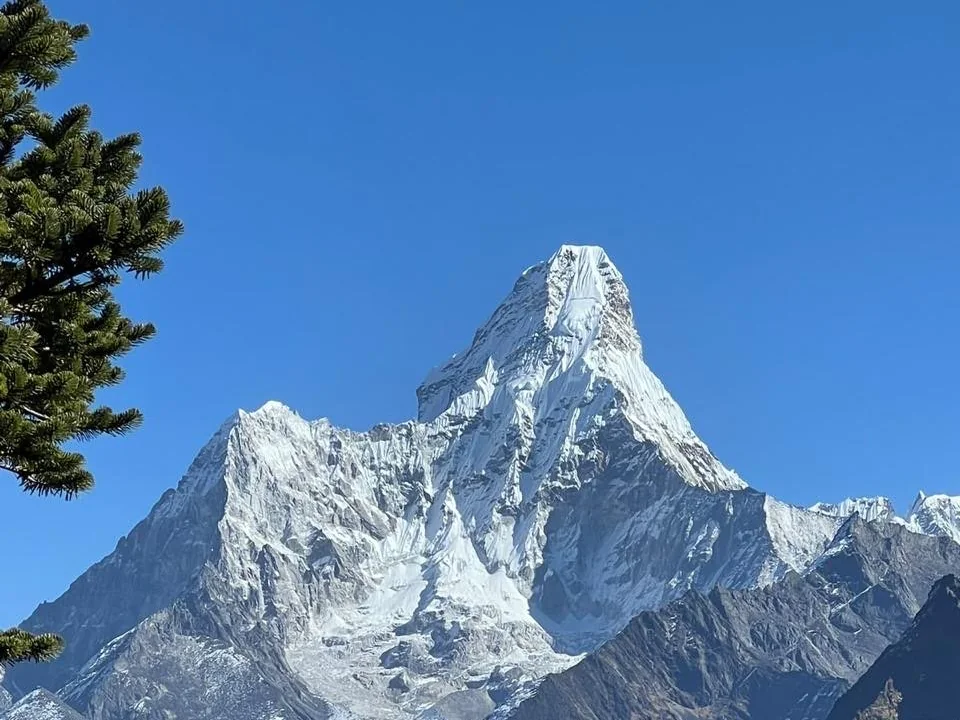
Phakding and Monjo come first, low in the gorge on the west bank, with the Sagarmatha National Park gate between them. Then the valley steps up and Namche appears below and to the left, its houses stacked in tiers around a bowl in the hillside. Above Namche the aircraft climbs onto the shelf where Khumjung and its neighbouring villages sit, passes Tengboche on its ridge, and follows the widening valley past Pangboche, Dingboche and Lobuche until the Khumbu Glacier forces the last lodges onto the lateral moraine at Gorak Shep. The full route, peak by peak, is set out in the guide to what you see on the Everest helicopter route.
Lukla: where the villages begin
Lukla is not a village in the romantic sense, but it is where the Everest story starts for almost everyone. The airstrip at 2,845 m is cut into a hillside at a gradient that makes fixed-wing pilots earn their money, and the town around it exists for two reasons: the airport and the porters. Every load that reaches Namche, Tengboche or Base Camp passes through here on somebody's back or on a mule, and the helicopter uses the strip as its fuel stop on the way north and south.
Flying over Lukla tells you something about the valley you are about to enter. The town sits below the confluence of the Dudh Kosi and the Bhote Kosi, and the two valleys that meet there are the two ways into the Khumbu: the main corridor to Namche, and the quieter Bhote Kosi line that runs up towards Thame and the Nangpa La. Trekkers take nine days from Lukla to Base Camp and back down to Lukla. A helicopter covers Lukla to Gorak Shep in a fraction of that, which is why the trek-up, fly-back format exists at all. If you are weighing the two halves, the guide to the helicopter from Everest Base Camp to Lukla sets out the descent side in detail.
Namche Bazaar at 3,440 m: the capital of the Khumbu
Namche is the largest settlement on the route and the only one that feels like a town. It sits at 3,440 m in a natural amphitheatre of pine and rhododendron, built in tiers because there is no flat ground to build on, and it holds the region's market, its bakeries, its gear shops, its clinics and its bank. For a trekker it is the acclimatisation stop and the last place with a decent coffee. From the air it is the single most legible landmark in the valley: a horseshoe of roofs wrapped around a bowl, with the trail switchbacking up to it from the gorge below.
Namche is also the point where the flight stops feeling like a transfer and starts feeling like a mountain flight. The aircraft is above 3,000 m with the ground still climbing, and the peaks that were a distant wall from Kathmandu are suddenly beside the window. Kongde, Thamserku and the fluted face of Kusum Kanguru all stand around the town. Most day tours pass over Namche rather than land, but a landing at Namche's helipad can be arranged on a charter, and it is the usual substitute when weather closes the upper valley. The Kathmandu to Namche Bazaar helicopter flight takes roughly 45 to 60 minutes and is the single most useful fallback on a marginal morning.
Khumjung and the Everest View Hotel at 3,880 m
Above Namche the valley opens onto a shelf of old Sherpa villages: Khumjung, Khunde, and the smaller settlements around them. This is the part of the Khumbu where people live year-round rather than working a lodge season. Khumjung has the region's oldest monastery and, in the gompa's locked cabinet, what is displayed as a yeti scalp, which is either the best piece of theatre in the Khumbu or a piece of anatomy from a very large goat, depending on your disposition. Khunde next door has the hospital.
The reason Khumjung matters to a helicopter itinerary is the Everest View Hotel at 3,880 m, the highest hotel in the valley, built on a ridge with the Everest massif filling its northern windows. It is the breakfast stop on private Everest charters: you land, walk a short distance, sit at a table with Everest, Lhotse and Ama Dablam in front of you, and eat before the cloud builds. The hotel breakfast is billed separately at NPR 4,600, and the landing itself carries a NPR 3,000 allowance, which is why the charter price is not the whole cost of the morning. The practical version of this day is covered in the guide to the Everest View Hotel helicopter tour.
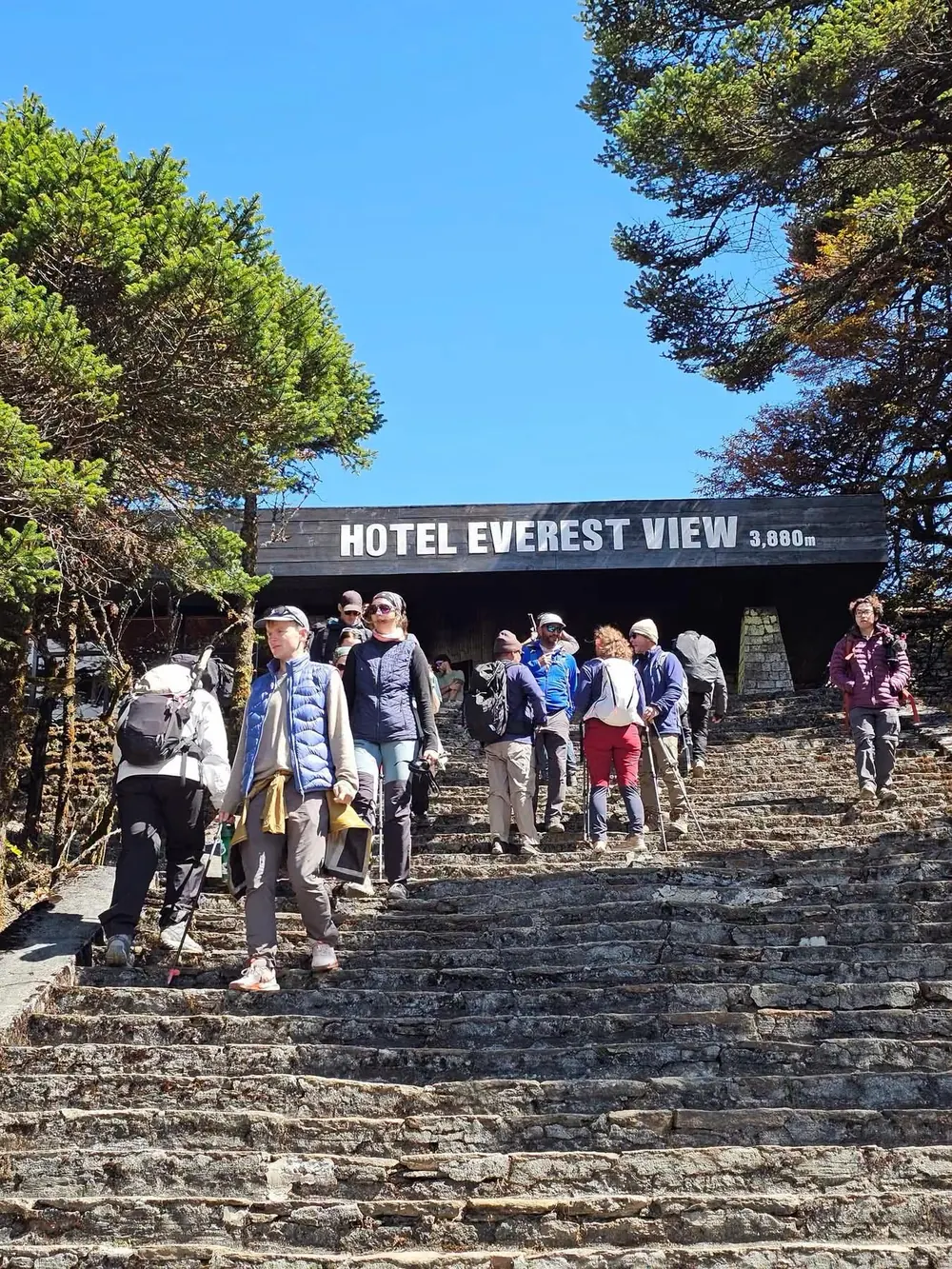
For anyone who wants the village experience without the walking, this is the compromise that works. You are in a real Sherpa settlement, at an altitude where the air is thin enough to notice but not thin enough to hurt, and you are looking at the highest mountain on earth while holding a cup of tea. Two-day versions that add a night at the hotel exist and are quoted per group rather than per seat, because the room and the aircraft are booked together.
Tengboche, Pangboche and Dingboche: the monastery villages
Tengboche sits at 3,860 m on a ridge-top clearing with forest falling away on three sides, and it holds the most important monastery in the Khumbu. The setting is the reason it appears in every itinerary: the gompa faces Ama Dablam at 6,812 m across the valley, and the clearing is one of the few places on the route where the ground is level enough for a ceremony, a festival, or a helicopter to consider. The monastery has been rebuilt after fire and after the 2015 earthquake, and the Mani Rimdu festival draws people up the valley every autumn.
Pangboche, a little further on, is one of the oldest villages in the region and has its own gompa. Dingboche at 4,410 m is the last village with a proper cluster of lodges and the point where the valley opens into a wide glacial basin with fields walled against the wind. Above it, the trail climbs to Thukla and the memorial cairns, then along the lateral moraine to Lobuche at 4,940 m, where the lodges sit in the shadow of the glacier's edge.
A helicopter passes all of this at sightseeing altitude in a few minutes. That is not a criticism and it is not a substitute for walking it: what the flight gives you is the shape of the valley, the way the villages relate to the glacier and to each other, and the sheer scale of the drop between the rim and the floor. Passengers who have trekked the valley before almost always say the flight showed them something the walk hid.
Gorak Shep, Kala Patthar and the end of the village road
Gorak Shep at 5,140 m is the last settlement below Base Camp and the highest village in the valley. It exists because the ground there is flat enough for lodges, on the sand flats beside the Khumbu Glacier, and because it is the base from which trekkers climb Kala Patthar at 5,545 m for the sunrise view of the Everest face. Base Camp itself, at 5,364 m, is two hours of moraine walking away and has no helipad: it sits on moving ice, and every commercial landing on this side of the mountain happens at Kala Patthar instead.
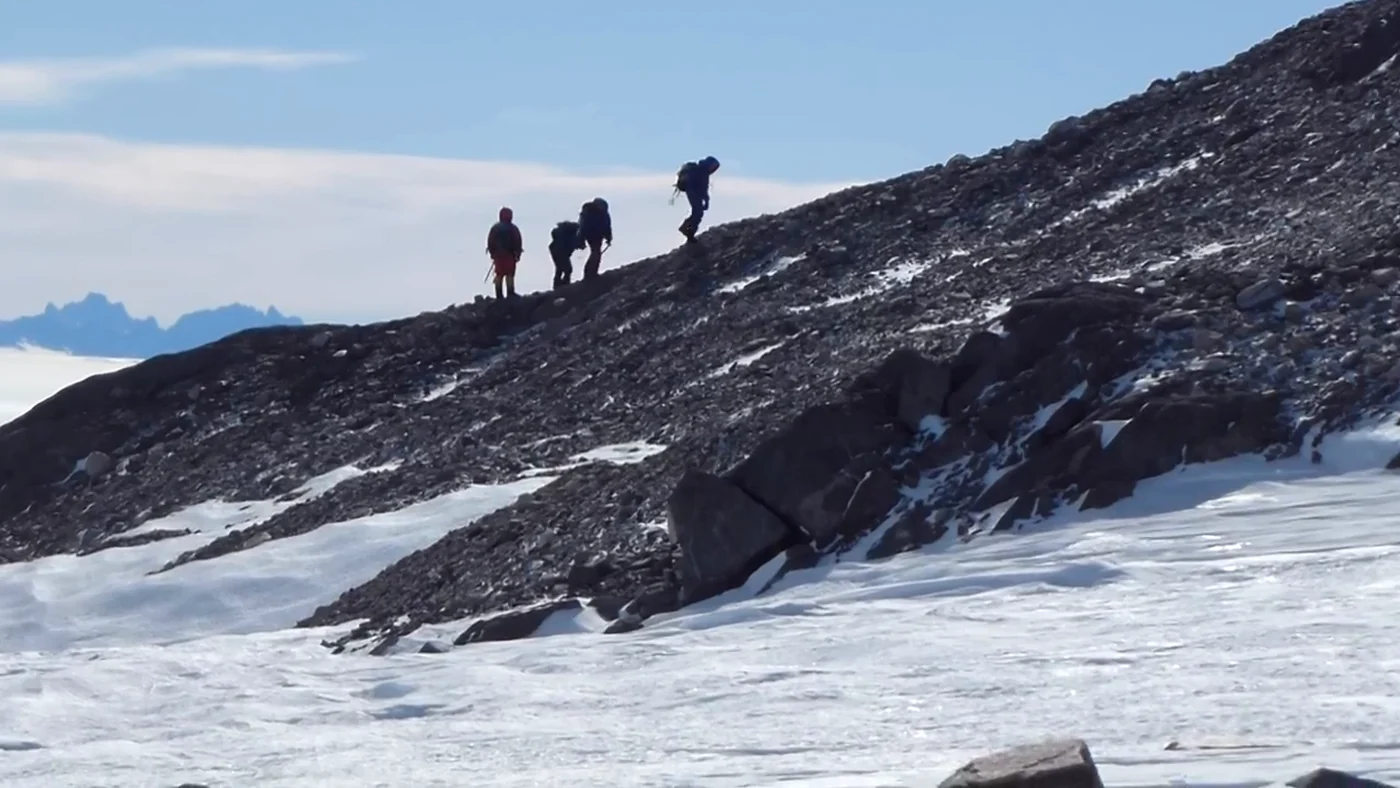
Landings at Kala Patthar reopened for shared tours in May 2026 after the suspension that followed the July 2023 crash near Lobuche, and they operate under a two-passenger shuttle staged from Pheriche at 4,371 m. In plain terms the aircraft does not carry a full cabin to 5,545 m and back; it stages lower and runs passengers up in pairs, which is why the ground time on a shared day tour feels longer than the flying time. Private charters were able to arrange landings throughout the closure and still can.
For anyone finishing a trek rather than starting one, Gorak Shep is the sensible pick-up. The walk from Base Camp back down to Gorak Shep takes about two hours, and the flight from there to Lukla takes about twenty minutes against two or three days of retracing the valley on foot. The trek-up, fly-back format at $1,840 per person over ten days is built around exactly that arithmetic.
What a helicopter tour of the villages costs in 2027
Prices on this route are quoted per seat on a shared flight or per aircraft on a charter, and the difference matters more than the headline number. A shared seat on the Everest Base Camp day tour is $1,260. The version with hotel breakfast included is $1,450. A private charter of an Airbus H125, which carries up to five passengers plus the pilot, is $4,500 for the aircraft, so the per-person figure falls as the group grows: at five guests it is $900 each, at two it is $2,250 each.
| Product | Price | Basis | What it includes |
|---|---|---|---|
| Everest Base Camp day tour | $1,260 | Per shared seat | Kala Patthar landing, Pheriche shuttle, about 6 hours |
| Shared tour with breakfast | $1,450 | Per shared seat | As above, with hotel breakfast included |
| Private Everest charter | $4,500 | Per aircraft, up to 5 guests | Everest View Hotel at 3,880 m, your own timing |
| Everest Base Camp helicopter trek | $1,840 | Per person, shared flight | 10 days trekking up, helicopter out |
| Everest scenic mountain flight | $260 | Per person, window seat | Fixed-wing, no landing, about 1 hour |
Three costs sit outside every one of those figures, and they are the same on any operator's invoice: two national park permits at NPR 3,000 each, the Everest View Hotel breakfast at NPR 4,600 if you stop there, and the landing allowance of NPR 3,000 per operation. That is roughly NPR 10,600 per person on top of the seat price. Travel insurance and personal gear are separate again. The full breakdown, including what a charter costs when it is split five ways, is in the guide to Everest helicopter tour cost.
Spring 2027: March, April and the pre-sunrise departure
The window to book for spring 2027 is now, in December, January and February, because that is when March and April seats are taken and when the aircraft calendar for the season is fixed. The two months behave differently, and the choice between them is the main decision a spring traveller has to make.
March is the quieter month. The winter jet stream has moved off, the mornings are clear with a hard, cold light, and there are far fewer trekkers on the trails and far fewer helicopters over the ridges. Photographers tend to prefer it: the snow line is still low, the peaks carry more white than they do in May, and the air is clean after the winter. The trade is temperature, especially at Kala Patthar and at the Everest View Hotel before the sun clears the ridge.
April is the busiest month for helicopter tours in Nepal, and for good reason: it has the best all-round conditions of the year, with stable morning weather, warmer temperatures at altitude and the rhododendron forest in flower on the slopes below Namche. It also has more afternoon cloud. That does not usually affect the flight itself, because every flight leaves before sunrise for exactly this reason: valley air builds cloud over the high peaks by early afternoon, and the aircraft needs to be up, landed and back down the valley before it does. An April tour that lifts at 06:00 is flying in the same air as a March tour at the same hour.
The booking consequence is straightforward. For April, confirm the seat several weeks ahead, and do it before you book flights to Kathmandu. If the seat is the scarce item, the international ticket should follow it, not the other way round. Dates are not promised on a web page: they are confirmed in writing at the time of booking, and the fixed departures page lists what runs and how often in the season. The month-by-month weather picture is in the guide to the best time for a helicopter tour in Nepal, and if your target is the top of the valley specifically, the best time to go to Everest Base Camp sets out the same trade-offs for the ground game.
Booking from the US or Europe: what to lock in first
Almost every foreign booking on this route follows the same four steps, and doing them in the wrong order is what turns a spring trip into a rescheduled one. First, choose the product: a shared seat on the day tour if you want the landing at the lowest price, a private charter if there are four or five of you and you want the Everest View Hotel breakfast and control over the timing. Second, pick the month and a date range rather than a single day, because mountain weather does not consult the calendar, and a two or three day buffer in Kathmandu is what absorbs a cancelled morning.
Third, confirm the seat in writing and pay the deposit before you buy the international ticket. April seats go early and the aircraft calendar is finite; a Kathmandu flight booked around an unconfirmed helicopter seat is a booking that can only be fixed by moving the more expensive item. Fourth, treat the pickup time as non-negotiable. The flight leaves before sunrise, the hotel pickup is well before that, and the one thing a passenger can do to lose the morning is oversleep.
Payment is in US dollars, and the operator you should be booking with is the company that holds the aircraft rather than a reseller, because on a weather morning the person who can move you to the next slot is the one who owns the machine. The guide to how to book a helicopter tour in Nepal covers deposits, cancellation wording and the questions worth asking before you pay. If your dates are tight and the season is full, the article on last-minute Everest Base Camp helicopter booking explains what is realistically available inside a week.
Nepali travellers and Indian pilgrims on the same corridor
The villages are not only an international product. Namche, Khumjung and Tengboche are places Nepali families fly to for a wedding, a funeral, a monastery festival or a first look at the mountains, and the Everest corridor carries a steady domestic traffic that has nothing to do with trekking itineraries. Nepali rates are quoted separately from the USD seat prices above and are confirmed at the time of booking, because they depend on residency documentation and on whether the flight is shared or chartered.
For Indian travellers the pattern is different again: the Everest and Muktinath corridors both draw pilgrims and families, and the practical questions are the same ones everyone asks, about altitude, about how much walking is involved and about whether an elderly parent can do it. The answers are usually yes with a private charter and a lower landing, and the guide to Everest helicopter tour price for Nepali travellers sets out how the local rate structure works. Our own guide to Nepal beyond Everest collects the quieter alternatives, Manaslu among them, for anyone who wants the same mountain experience without the queue over Namche.
Manaslu is the clearest example of what the other valleys offer. The Manaslu helicopter return trek is a 13-day circuit with a helicopter exit over the Larkya La, topping out at 5,160 m under a peak of 8,163 m, and the villages along it, Samagaun and Samdo among them, are older and less visited than anything on the Everest corridor. It is $2,160 per person on a shared flight. If your reason for flying is the villages rather than the summit, that is worth a look before you default to Everest.
Questions about the Mt Everest villages
Can a helicopter land at Everest Base Camp itself?
No. Base Camp at 5,364 m sits on the moving Khumbu Glacier and has no helipad. The commercial landing on this side is Kala Patthar at 5,545 m, the ridge opposite the summit face, and the aircraft overflies Base Camp on the way. Any listing that promises a Base Camp landing is using the name loosely.
Which is the highest village you can actually land at?
Gorak Shep at 5,140 m is the highest settlement in the valley and the landing point for trek-up, fly-back trips. It is a small cluster of lodges on the sand flats beside the glacier rather than a village in the fuller sense, and it is the last flat ground before Base Camp.
Do you fly over Namche Bazaar or land there?
The shared day tour flies over Namche. A landing at its helipad can be arranged on a private charter, and Namche is the usual substitute when weather closes the upper valley: the flight from Kathmandu takes roughly 45 to 60 minutes and puts you at 3,440 m instead of at Kala Patthar.
Is Khumjung a village or just the hotel?
It is a real village, one of the oldest Sherpa settlements in the Khumbu, with a monastery that holds what is displayed as a yeti scalp. The Everest View Hotel at 3,880 m sits on the ridge above it and is the breakfast stop on private charters, which is why the name comes up in helicopter itineraries.
Is March or April better for a spring 2027 flight?
March is quieter, with clear mornings and fewer trekkers, and colder conditions on the ground. April is the busiest month for helicopter tours in Nepal, with the best all-round conditions and more afternoon cloud. Both months fly in the same pre-sunrise window, so the choice is really about crowds and temperature rather than about flying conditions.
How far ahead should I book for April 2027?
Several weeks, and before you book flights to Kathmandu rather than after. April seats are the first to go in the season and the aircraft calendar is finite, so the international ticket should follow a confirmed seat, not the other way round.
Why do flights leave before sunrise?
Because valley air builds cloud over the high peaks by early afternoon. The aircraft needs to be at altitude, landed and back down the valley before that happens, and a first-light departure also gives the clearest air of the day for the view of the range from Kala Patthar.
How long does the whole day take?
Four to five hours from hotel pickup to hotel drop-off in Kathmandu on a shared day tour, and about six hours end to end on the standard day-tour itinerary. The flying is a small part of it: most of the time goes on the Pheriche shuttle, the landing itself and the breakfast stop at 3,880 m.
Can I see the villages without trekking at all?
Yes, and that is the main reason people book. A one-day tour reaches Kala Patthar and returns to Kathmandu the same morning, while a two-day version with a night at the Everest View Hotel at 3,880 m gives you an evening and a dawn in a real Sherpa village without a single day of walking.
What does the day tour cost, and what is extra?
The shared day tour is $1,260 per seat, or $1,450 with breakfast included. On top of that come two park permits at NPR 3,000 each, the breakfast at NPR 4,600 if it is not in your package, and a landing allowance of NPR 3,000 per operation, roughly NPR 10,600 per person in total.
What aircraft flies this route?
Typically an Airbus H125, also designated the AS350 B3e, or a similar high-altitude type. In tourist configuration it carries up to five passengers plus the pilot, which is why a private charter at $4,500 per aircraft falls to $900 per person at five guests.
Are the permits arranged for me?
Yes. The park permits and the landing allowance are handled by the operator as part of the day, and they are the reason you carry your passport on the morning of the flight. The wider question of which permits apply to which flight is covered in the guide to helicopter flight permits in Nepal.
The villages of the Khumbu are, in the end, a vertical sequence of human decisions about where it is possible to live: flat ground beside a river, a shelf that catches the sun, a moraine that will hold a lodge. Flying the corridor shows you that sequence in about forty minutes, and the landing at Kala Patthar at 5,545 m shows you why the sequence stops where it does. The mountains above the last village are the Sagarmatha National Park, protected since 1976 and a World Heritage Site since 1979, and they are the reason the villages below them look the way they do.