
Short answer: An Everest helicopter tour costs $1,260 per person on a shared seat in 2027, $1,840 for the trek-up fly-back version, or $4,500 per aircraft for a private charter that seats five. That charter works out at $900 per person when five share it, which is less than a shared seat. The fixed-wing scenic flight, which does not land, starts at $260. The shared day tour runs four to five hours from Kathmandu and lands at Kala Patthar at 5,545 m.
What an Everest Helicopter Tour Costs in 2027
There is no single price for an Everest helicopter tour, because there is no single product. Four different things are sold under that name, and they differ by a factor of seventeen. The table below is the whole market in one place, priced from Kathmandu for the 2027 season.
| Product | Price 2027 | Unit | Lands? | Duration |
|---|---|---|---|---|
| Scenic mountain flight (fixed wing) | $260 | per person | No, flyover only | About 1 hour |
| Shared day tour to Kala Patthar | $1,260 | per person | Kala Patthar, 5,545 m | 4–5 hours |
| Trek up, fly back (12 days) | $1,840 | per person | Kala Patthar, on foot | 12 days |
| Private charter (AS350 B3) | $4,500 | per aircraft, up to 5 guests | Kala Patthar, your timing | Half day, flexible |
| Two-day Everest View Hotel | Quoted per group | per group | Kala Patthar next morning | 2 days, 1 night |
- $1,260 Cheapest way to land at Kala Patthar
- $900 Per person for a private charter filled with five
- 5,545 m Landing altitude at Kala Patthar
- 2 National park permits, both NPR 3,000
Two numbers in that table are worth pausing on. The first is the gap between $260 and $1,260: the scenic flight and the day tour are often described as the same experience, and they are not. One flies past the mountain. The other puts you on a ridge at 5,545 m with the summit face in front of you.
The second is the charter arithmetic, which almost nobody does before booking. More on that below, because for a group of four or five it changes the answer.
Everest Base Camp helicopter tour cost at a glance (2027)
| Way to fly | Price | Basis | Who it suits |
|---|---|---|---|
| Shared seat, day tour with landing | $1,260 | Per person | One or two travellers |
| Private charter, whole aircraft | $4,500 | Per aircraft, up to 5 | Groups of four or five, families, photographers |
| Trek up, fly back (10 days) | $1,840 | Per person | Travellers who want the walk and the exit |
| Scenic flyover, no landing | $260 | Per person | Fixed-wing; the cheapest way to see Everest from the air |
Add roughly NPR 10,600 per person for the two park permits and the Everest View Hotel breakfast, plus a NPR 3,000 landing allowance per operation. Those are charged locally in rupees and are the same whichever operator you book.
Shared seat or private charter: the price by group size
The charter is a fixed cost, so the per-person price is entirely a function of how many people fill it. This is the comparison that decides the booking:
| Group size | Shared seats | Private charter | Cheaper option |
|---|---|---|---|
| 1 traveller | $1,260 | $4,500 | Shared seat |
| 2 travellers | $2,520 | $4,500 | Shared seats |
| 3 travellers | $3,780 | $4,500 | Shared seats, narrowly |
| 4 travellers | $5,040 | $4,500 | Charter |
| 5 travellers | $6,300 | $4,500 | Charter, $900 each |
The crossover sits between three and four passengers. Below it, buy seats. Above it, buy the aircraft — and get the departure time you want as part of the deal.
How the season moves the price
Nepal has two clear-sky windows and one long cloudy one, and the price follows demand rather than the weather itself.
- October and November — the peak. Clearest air of the year and the highest demand; seats are the first to sell out and the least likely to be discounted.
- March and April — the spring window, and April is the single busiest month for helicopter tours in Nepal. Same price band as autumn, same scarcity, slightly warmer mornings.
- December to February — clear skies, bitter cold at altitude, empty trails. The quietest of the good-weather months.
- June to September — the monsoon. Cloud sits on the high ground for days and the landing is frequently impossible; this is where the cheapest quotes come from, and also where the most flights never leave.
The season does not change the published fare as much as it changes availability. A quote that is materially below the figures on this page in October or April is not a seasonal discount — it is a different product.
A worked example: a family of four in April 2027
Take two adults and two children flying in the busiest month of the spring.
- Four shared seats: 4 × $1,260 = $5,040 — and the children fly with strangers and on the operator's departure time.
- One private charter: $4,500 for the aircraft, which is $540 less than four seats and gives the family the cabin to themselves.
- Local costs, either way: permits at NPR 3,000 + NPR 3,000 per person, breakfast at NPR 4,600 per person, and the NPR 3,000 landing allowance per operation.
That is the whole argument for chartering in one line: at four passengers it is already cheaper, and at five it is $900 a head against $1,260.
Pre-booking checklist
- Is the quote per seat or per aircraft — and for how many passengers?
- Is the landing point named? Kala Patthar (5,545 m) and Base Camp (5,364 m) are different altitudes and different permissions.
- Are the two park permits and the Everest View breakfast inside the number, or on top?
- What exactly happens if the morning weather closes the pass — rebooking, refund, or credit?
- Which aircraft, and how many seats does it actually have?
- Is the departure time the operator's, or yours?
The Four Ways to Fly Everest, Priced Side by Side
Scenic mountain flight, $260. A fixed-wing aircraft, usually a Beechcraft 1900, departing Kathmandu at dawn with a window seat for every passenger. You fly the length of the Himalaya and get a cockpit visit. You do not land, and you do not get close to the summit. It is the cheapest way to see Everest from the air and the least like a helicopter tour, despite what some listings imply.
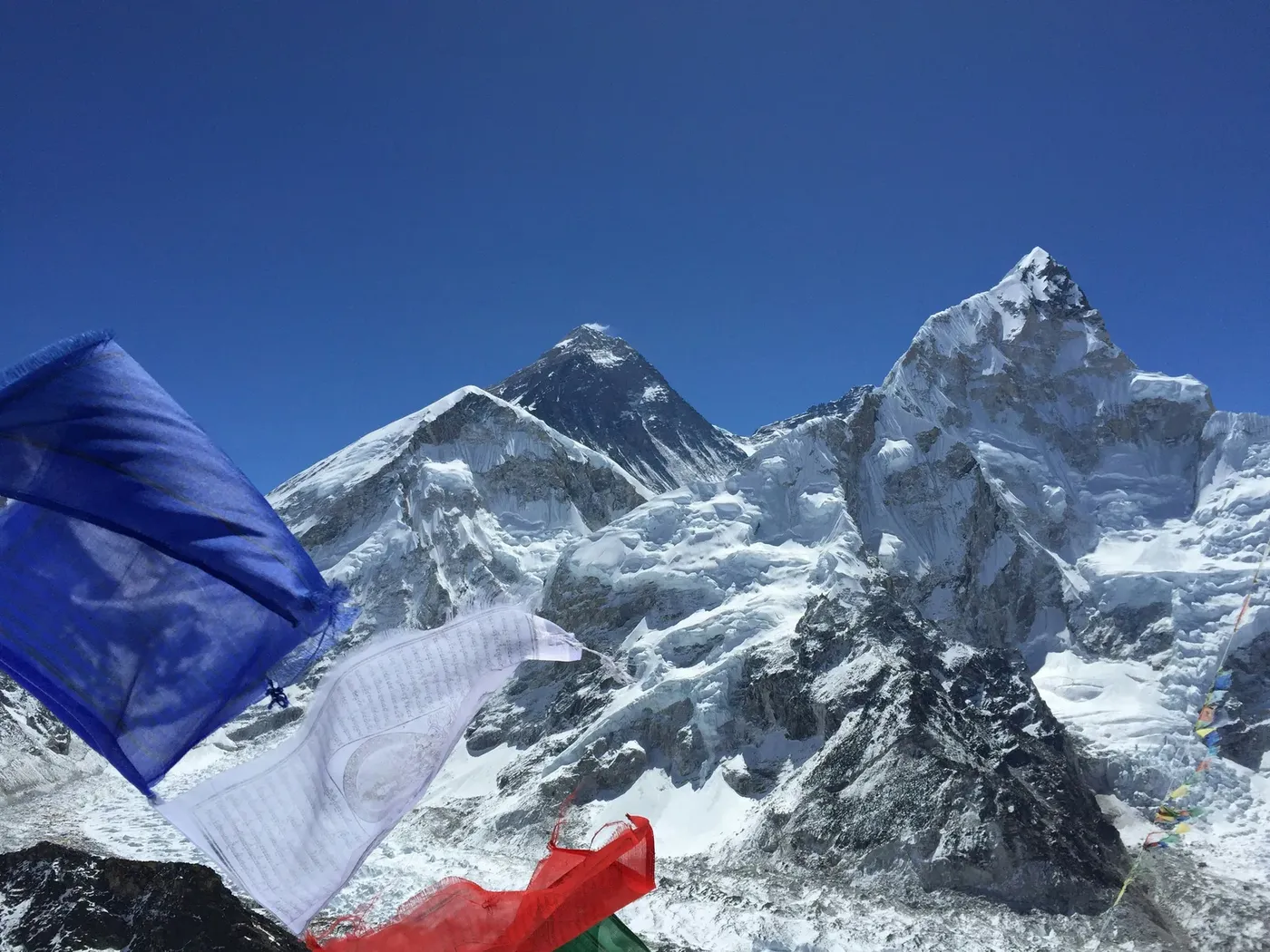
Shared day tour, $1,260. The standard product. A helicopter from Kathmandu, a landing at Kala Patthar at 5,545 m, a stop at the Everest View Hotel at 3,880 m for breakfast, and back to the city before lunch. You share the aircraft with up to four other passengers. This is what most visitors mean by an Everest helicopter tour, and it is the option this site sells most of.
Trek up, fly back, $1,840. Twelve days of walking to Base Camp at 5,364 m, then a helicopter out from the Khumbu instead of the walk back down. The helicopter leg is the small part of the price. You are paying for eleven nights of lodges, guides, permits and food. Choose this if the walking is the point.
Private charter, $4,500. The whole aircraft, your departure time, and routing choices where the weather allows. Doors on for privacy, room for camera kit, and no strangers in the cabin. The aircraft seats five. This is the option families, photographers and VIPs take, and it is the one with the arithmetic problem described next.
The Per-Person Math That Changes the Answer
A shared seat costs $1,260 each, however many people travel. A private charter costs $4,500 for the aircraft, and the aircraft holds five. Fill it and the charter is $900 per person.
Read that again as a buying decision. Five of you travelling together pay $4,500 either way, but on shared seats you get five seats on someone else's schedule, and on a charter you get the aircraft. Same money. Better product. There is no clever negotiation here, it is just division.
The crossover is four people. At four, a charter is $1,125 per person against $1,260 on a shared seat, so it is still cheaper and still private. At three it is $1,500 each and no longer competes on price, though it may still be worth it for the privacy or the photography. At one or two, group joining is the only sensible buy.
Families with children and older travellers tend to choose the charter regardless of the maths, because the schedule is theirs and the day can be shortened if someone feels the altitude earlier than expected.
The whole decision fits in one table. These are the same figures as above, laid out by group size, before permits and breakfast.
| Group size | Shared seats | Private charter | Cheaper option |
|---|---|---|---|
| 2 people | $2,520 | $4,500 | Shared seats, by $1,980 |
| 3 people | $3,780 | $4,500 | Shared seats, by $720 |
| 4 people | $5,040 | $4,500 | Charter, by $540 |
| 5 people | $6,300 | $4,500 | Charter, by $1,800 |
One caveat that keeps this fair: the charter seats five passengers, but payload at Kala Patthar is limited, which is why the Pheriche shuttle exists. Five adults plus camera bags may be split across two lifts at the top. Tell the operator your group weight at the enquiry stage, not on the morning.
The two-day option is priced differently. Overnighting at the Everest View Hotel at 3,880 m is quoted per group rather than per person, because it bundles the room, the meals and two separate flying days. It is the most expensive of the four on a per-person basis, and the only one that gives you sunrise from the hotel terrace rather than a morning landing. It suits travellers for whom the sunrise is the reason for the trip.
What Is Included, and What Is Not
The quoted tour price covers the aircraft, the crew, the fuel, the landing and the flight time. It does not cover everything, and the extras are small enough that operators do not always mention them at the enquiry stage.
Not included, priced honestly: the Sagarmatha National Park permit at NPR 3,000, the Khumbu Pasang Lhamu rural municipality permit at NPR 3,000, and the Everest View Hotel breakfast at NPR 4,600. Both permits are set by the park and the municipality, not by the operator, and both are charged per person. The breakfast is a hotel price and applies to anyone sitting down, on any tour.
So budget roughly NPR 10,600 on top of the seat price for permits and breakfast. That is the honest all-in number, and any operator quoting you a figure that excludes it is quoting you a smaller number than you will pay.
Included: hotel pickup in Kathmandu, the helicopter, the pilot, the landing fee, and the flight itself. Oxygen is carried on board as standard on this route, and you should ask to see it if you are travelling with anyone unwell.
Landing Rules in 2027 and How They Affect the Price
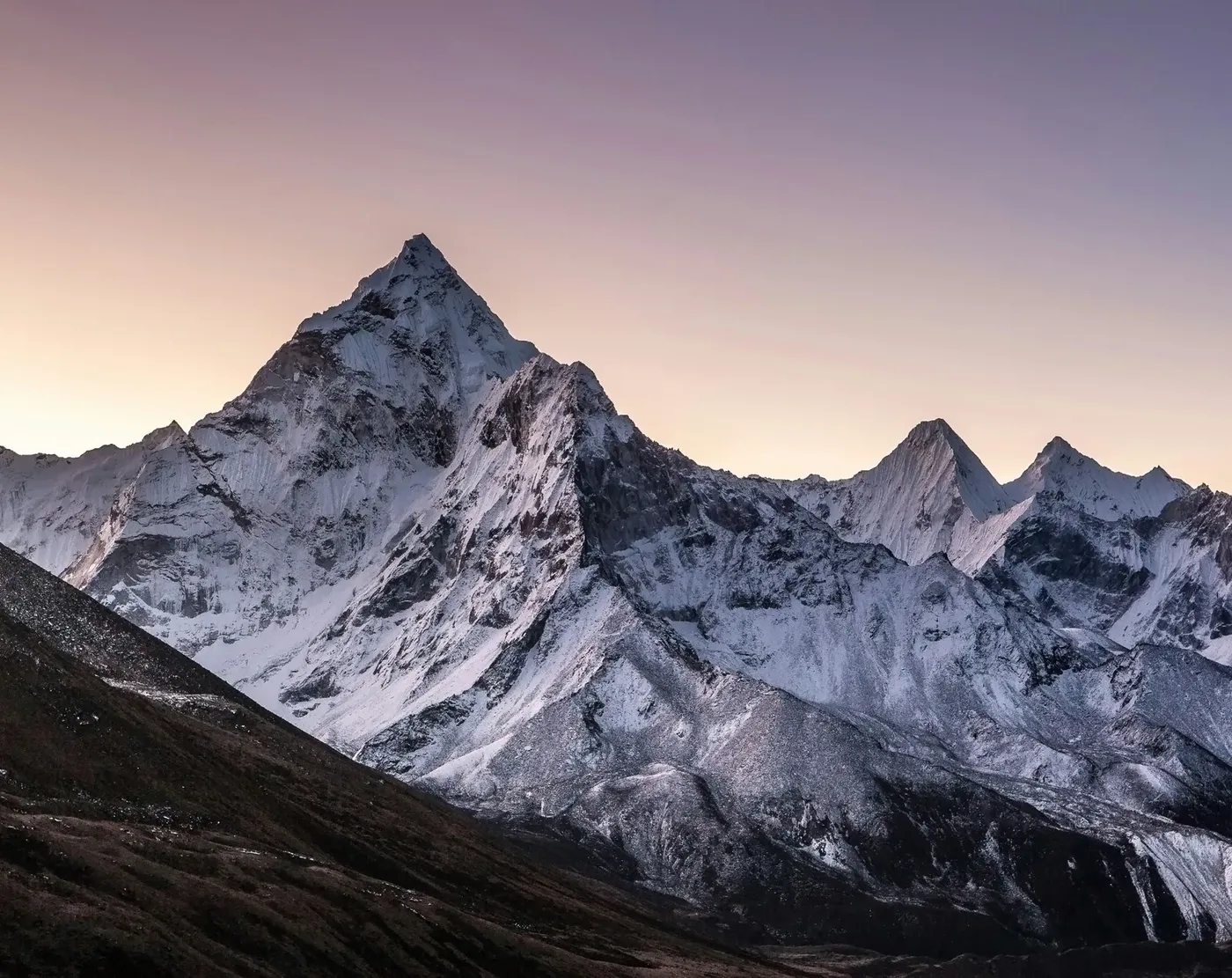
If you have read that Everest helicopter landings were banned, that was true and it is now out of date. In July 2023 a helicopter crashed near Lobuche with the loss of all six people aboard, and Nepal's Civil Aviation Authority responded by stopping shared sightseeing groups from landing at Kala Patthar. Private charters could still arrange a landing. Shared tours could only fly over.
That restriction was lifted in May 2026. Shared groups land at Kala Patthar again, using a shuttle staged from Pheriche at 4,371 m. The helicopter carries the group as far as Pheriche, splits them into pairs for the high sector, and flies each pair up in turn. Waiting at Pheriche for the second lift usually takes thirty to forty-five minutes.
This is why the price did not fall when the ban lifted. The shuttle costs more to operate than a single lift of five, and the crew time is longer. It is also why any itinerary description that does not mention Pheriche is out of date.
The landing remains subject to weather, aircraft weight limits and the operating permission of the day. On a morning with wind on the ridge, the landing can be shortened, moved to a lower point, or reduced to a flyover. No operator can honestly promise otherwise, and the ones that do are telling you something about how they sell.
What You Pay on the Day
Beyond the tour price and the permits, the extras are simple. The table below is the full list, in Nepali rupees, as charged in 2027.
| Item | Cost | Set by | Per |
|---|---|---|---|
| Sagarmatha National Park permit | NPR 3,000 | The park | Person |
| Khumbu Pasang Lhamu permit | NPR 3,000 | The municipality | Person |
| Everest View Hotel breakfast | NPR 4,600 | The hotel | Person |
| Landing and operation allowance | NPR 3,000 | Per operation | Aircraft |
None of these are operator markups. They are government and hotel charges that every operator pays, which is why they are identical across companies and why a quote that hides them is not a better quote, only a later surprise.
Why Prices Vary Between Operators
Quotes for the same morning differ by a few hundred dollars between companies, and it is worth understanding why before you compare them.
Aircraft type. An AS350 B3 and an H125 carry similar loads but cost different amounts to run. Older airframes are cheaper and noisier.
What is bundled. Some quotes include permits and breakfast, some exclude them, and some exclude the airport tax. Comparing a bundled price with an unbundled one is comparing two different products.
Group size assumed. A quote described as "per person" may assume a full aircraft. If the flight goes with two passengers instead of five, some operators surcharge and some absorb it. Ask which.
Weather policy. This is the line that matters most and the one least often discussed. Ask in writing what happens if the morning is cancelled: full refund, free reschedule, or credit. The answer tells you how the operator is capitalised and how they behave when things go wrong.
How to Book Without Overpaying
Four things, in order of how much money they save.
Book the group, not the seats. If you are four or five, price the charter before you price the shared seats. Most people do this the other way around and pay more for a worse morning.
Fly in the shoulder of peak season. October and November are the clearest months and the most expensive. Late September and early December are close in weather and quieter on the ridge, which matters because the Pheriche shuttle runs faster when fewer groups are cycling through it.
Take the first departure. Mountain wind builds through the day. The earliest slot has the best landing record and the least chance of a shortened stop.
Leave a buffer day. If your flight matters, do not schedule it for the morning you fly home. Weather cancellations are a normal part of operating in the Khumbu, not an unusual event, and a spare day costs you a hotel night instead of the whole trip.
Frequently Asked Questions
How much does an Everest helicopter tour cost per person?
$1,260 on a shared seat in 2027. That covers the aircraft, the Kala Patthar landing at 5,545 m and the Everest View Hotel stop, but not the two park permits at NPR 3,000 each or the breakfast at NPR 4,600.
Is a private charter cheaper than a shared seat?
For four or five people, yes. The charter is $4,500 for the aircraft regardless of how many fill it, so at five guests it is $900 per person against $1,260 for a shared seat. For one or two travellers the shared seat costs far less in total.
Why is the scenic mountain flight only $260 if it also sees Everest?
Because it does not land. The $260 flight is a fixed-wing aircraft that passes the range at altitude and returns to Kathmandu. There is no landing, no Kala Patthar, no Pheriche shuttle and no Everest View Hotel. It is a different product, not a cheaper version of the same one.
Does the tour actually land at Everest Base Camp?
No. Base Camp at 5,364 m sits on the moving Khumbu Glacier and has no helipad. The commercial landing is at Kala Patthar, 5,545 m, the ridge opposite the summit face. Flights overfly Base Camp. Any listing that claims a Base Camp landing is using the name loosely.
Are Kala Patthar landings open in 2027?
Yes, for shared tours since May 2026. Landings were stopped after the July 2023 crash near Lobuche and resumed under a two-passenger shuttle staged from Pheriche at 4,371 m. Private charters were able to arrange landings throughout the closure.
What is not included in the price?
Two park permits at NPR 3,000 each, the Everest View Hotel breakfast at NPR 4,600, and the landing allowance of NPR 3,000 per operation. Together that is roughly NPR 10,600 per person on top of the seat price. Travel insurance and personal gear are separate again.
How long does the whole day take?
Four to five hours from hotel pickup to hotel drop-off in Kathmandu on a shared day tour. The flying is a small part of it: most of the time is the Pheriche shuttle, the landing, and the breakfast stop at 3,880 m.
What happens if the weather cancels my flight?
It depends entirely on the operator's written policy, so ask before you pay. The fair version is a free reschedule to the next available morning and a full refund if no morning works during your stay. Anything less than that should be read as a price increase.
Can I do an Everest helicopter tour in one day from Kathmandu?
Yes. The shared day tour is built for exactly that and returns before lunch. There is no need to stay in the Khumbu, though the two-day Everest View Hotel option exists for travellers who want sunrise from 3,880 m rather than a single morning.
Is the price different for Nepali and Indian passengers?
Yes, and it is worth saying plainly. Park and municipality permits are charged at different rates for Nepali, SAARC and foreign nationals, so the all-in figure differs by nationality even when the helicopter seat costs the same. Ask for the breakdown in rupees before you compare quotes.
For the full picture of what each tour involves, see the shared day tour, the private charter and the scenic mountain flight. If you are still deciding between flying and walking, the helicopter versus trek comparison sets the two side by side. The trek-up fly-back cost breakdown covers the twelve-day version, and the day tour cost and landing guide goes deeper on the shuttle process. Altitude figures in this article are cross-checked against the Mount Everest reference entry.