
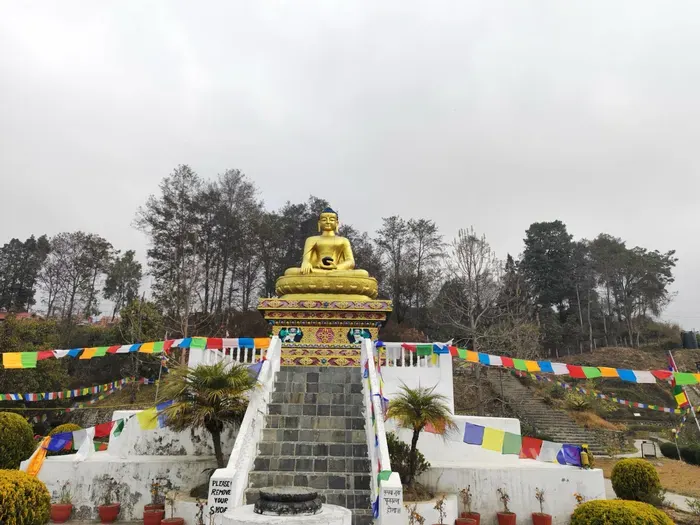
Lumbini Helicopter Tour from Kathmandu: Buddha's Birthplace in a Day — Cost and Itinerary
Lumbini is where Siddhartha Gautama was born — the garden in the Terai plains where Queen Maya Devi delivered the child who would become the Buddha, and where one of Buddhism's four holiest sites still draws pilgrims from every Buddhist nation on Earth. It is also 300 km from Kathmandu: eight hours by road, or a half-day shuttle of flights and transfers. A helicopter day tour compresses the whole pilgrimage into one comfortable morning — wheels up in Kathmandu, two to three hours inside the Sacred Garden with a guide, and home by mid-afternoon.
- 3,710 mMuktinath temple
- $1,080Muktinath, per seat
- 8,163 mManaslu, eighth-highest
- 1 dayTypical pilgrimage round trip
For Buddhist pilgrims from China, Thailand, Myanmar, Vietnam, Sri Lanka and Japan, for elderly travellers who cannot manage the road, and for groups with a single free day in Nepal, this is the most complete Lumbini visit available: no overnight, no monsoon-road gamble, no altitude at all — Lumbini sits at just 150 m elevation on flat plains.
What You See at Lumbini
The UNESCO World Heritage site is organised around the exact birth spot, and the walk between its monuments is gentle, flat and shaded:
- The Maya Devi Temple — the modern structure protects the excavated foundations of the ancient temple and the marker stone identifying the precise birth spot of the Buddha. The Ashokan sandstone from the 3rd century BCE lies inside.
- The Ashoka Pillar — erected by Emperor Ashoka in 249 BCE after his own pilgrimage, and for over a millennium the proof that identified Lumbini to the world. It still stands where it was raised.
- The Sacred Garden and Eternal Peace Flame — the meditative heart of the site, where the flame burns continuously.
- The Monastic Zone — monasteries built by Buddhist nations side by side: Thai, Japanese, Myanmar, Chinese, Vietnamese, Sri Lankan, German and more. Each reflects its national architecture; together they form a walkable gallery of world Buddhism.
- The Lumbini Museum and crane sanctuary — the archaeological collection and the protected wetland where sarus cranes nest.
Two to three hours of ground time with a knowledgeable guide covers all of it at a pilgrim's pace — not a rushed drive-by. That pace is the reason the helicopter version beats every same-day alternative.
The Helicopter Day: Timeline
Departure from Kathmandu is typically 7:30-8:00 AM. The Airbus H125 crosses the middle hills and drops onto the Terai plain in about 70-80 minutes, landing at the Lumbini helipad a short drive from the Sacred Garden gate. Your guide meets the aircraft; the next 2-3 hours belong to the site. The return leg lifts late morning, and you are back in Kathmandu by early afternoon — the entire pilgrimage inside one daylight window.
The aircraft is chartered whole (Lumbini flights are not run on a shared-seat basis): an H125 taking up to 4-5 passengers, with generous payload headroom since there is no high-altitude performance penalty at Terai elevation. Pricing is quoted per aircraft for your dates — because fuel, season and routing change the number, we confirm the exact figure in writing the same day you enquire, and we do not publish invented ones.
Lumbini by Helicopter vs Flight vs Road
| Option | Duration (day) | Cost basis | Best for |
|---|---|---|---|
| Helicopter day tour | ~5-6 hrs door-to-door, 2-3 hrs at site | Charter per aircraft (custom quote) | Elderly pilgrims, groups, one-day windows |
| Domestic flight via Bhairahawa | 30-40 min flight + 30 min drive each way | Fixed per-seat fares, schedule-dependent | Solo travellers with time for delays |
| Private vehicle / tourist bus | 7-9 hrs each way | Cheapest per person | Budget travellers with an overnight to spend |
Two practical notes from our operations desk: the Buddha Air/Yeti flights into Gautam Buddha Airport (Bhairahawa) are reliable but weather and load factor cancel seats exactly when Lumbini's season peaks; and the road — even the new expressway sections — consumes two full days of a Nepal itinerary for one site visit. The helicopter is the only version of this pilgrimage that fits inside a single Kathmandu day. For a fuller picture of combining Lumbini with other Buddhist and heritage circuits, our Kathmandu Valley UNESCO itinerary shows how the capital's sacred sites pair with a Terai extension.
Who Flies This Route with Us
Three patterns dominate our Lumbini bookings. First, Buddhist pilgrim groups — Chinese, Thai, Myanmar, Vietnamese, Sri Lankan and Japanese travellers for whom Lumbini is a required pilgrimage and Kathmandu is the entry point; the charter becomes a moving monastery of their own for a morning. Second, elderly travellers and those with mobility limits: the site is flat, shaded and bench-lined, and the helicopter removes the one hard part (the road). Third, conference and wedding groups in Kathmandu who want a meaningful day-excursion that a bus cannot deliver.
If your pilgrimage ambitions are broader — Muktinath's 108 spouts in Mustang, or the high lakes sacred to Hindus — those are different flights: our Muktinath helicopter pilgrimage covers the most famous one, and the two can be combined into a two-day Nepal pilgrimage circuit with an overnight in Pokhara. Ask us to price the combination.
Seasons, Weather and the Terai Reality
Lumbini's climate is the opposite of the mountains. October to March is ideal: dry, warm-but-not-cruel days, and the winter fog windows burn off by mid-morning. April-June pushes past 40°C on the plains — flights move earlier and the site walk is best finished by 11 AM. July-September is monsoon: the plains flood, the site is lush but humid, and while flights operate between weather systems, it is the season we book only with a buffer day attached.
There is no altitude consideration anywhere on this route — the highest moment is Kathmandu's valley rim at takeoff. That makes this our most accessible Himalayan-country tour: suitable for very young children, very senior travellers, and everyone a mountain landing would exclude. It also pairs cleanly with a Kathmandu Valley aerial tour — see the capital's World Heritage sites from the air one morning, and stand at the Buddha's birth spot the next.
How to Book the Lumbini Helicopter Tour
Send your dates, passenger count and preferred ground-time through the contact form, call +977 9851144618, or message WhatsApp. We confirm the aircraft, the exact charter price and the itinerary in writing the same day. The flight is operated by Enticing Himalayas Travel Pvt. Ltd., Kathmandu — licensed operators running pilgrimage and mountain helicopter tours since 2012. Morning slots are limited and the season peaks around Buddha Jayanti (the May full moon) — book early for that window.
A Pilgrim's Site, Not a Tourist Stop
Something worth knowing before you book: Lumbini rewards the pilgrim's pace, and punishes the checklist pace. The Maya Devi complex is an active devotional site — monks chant at the marker stone, pilgrims from a dozen nations perform prostrations in the garden, and the monasteries each hold their own liturgical rhythm. Our guides are briefed to read the group: Buddhist pilgrims get the full ritual geography, mixed groups get the history and archaeology, families get the storytelling version. All three versions are true; they are different depths of the same story.
The archaeology is genuinely world-class. The marker stone identifying the birth spot was placed in the 3rd century BCE and rediscovered beneath the temple foundations in the 1990s excavations — the dig that re-confirmed Lumbini's identity. The Ashoka Pillar's inscription, readable today, is the oldest written proof of any Buddhist pilgrimage site's location. Standing in front of both within one hour is a two-thousand-year paper trail that very few world religions can produce.
The Development Master Plan
Since 1978 the site has developed under a UNESCO-backed master plan by the Japanese architect Kenzo Tange: the Sacred Garden at the centre, the Monastic Zone in two east-west corridors (Theravada nations one side, Mahayana the other), and the buffer zone beyond. The result is a site that is both authentic and genuinely walkable — a rarity among South Asian pilgrimage destinations. Give the Monastic Zone the extra time most visitors skip it; the contrast between a Thai monastery's gold and a Japanese one's restraint, both facing the same birthplace, is the modern story of Buddhism in one walk.
Practical Details Pilgrims Ask About
Dress code: none is enforced, but shoulders and knees covered is the respectful norm inside the Maya Devi complex and all monasteries — the same standard as any active Buddhist site. Shoes come off inside temples; the paths between them are fine for walking sandals in the hot months. Photography is welcome everywhere except inside the innermost Maya Devi chamber, where the marker stone is; the attendants will indicate. Chanting and meditation are welcome in the garden — morning is the quiet window.
Food and water: the site has cafés at the gate and a good restaurant strip in the buffer zone; our standard ground time includes a lunch stop if the group wants it (add 45 minutes). Pure-vegetarian and Buddhist dietary needs are easy here — the whole district eats accordingly. Wheelchairs: the main paths are paved and flat; tell us in advance and we arrange local wheelchair support at the helipad end.
Time inside the site in the Buddha Jayanti window (the May full moon) is the deepest experience available — the entire Monastic Zone fills with ceremonies — but the site is also at its most crowded, and the calendar shifts each year with the lunar cycle. If your pilgrimage is flexible, tell us the window and we will advise the exact dates.
The Lumbini-Kapilavastu Pair
A note for pilgrims completing the full circuit: 25 km west of Lumbini lies Tilaurakot-Kapilavastu — the palace complex where the young Siddhartha lived before leaving palace life, and the archaeological site of the Sakya capital. A ground extension there adds about two hours of driving to the day. Helicopter clients who want the complete story — birth at Lumbini, childhood at Kapilavastu — usually add it as a post-landing drive before the return leg. It changes the day's shape; we price it as a custom variant when you enquire.
Why the Charter Model Suits Lumbini
Everest flights sell seats because the demand is deep enough to fill aircraft daily. Lumbini does not work that way — demand is pilgrimage-shaped: whole-family groups, monsoon-avoiding seasons, dates tied to the Buddhist calendar. Charter is the honest model: your group gets the aircraft, the guide shapes the ground time to your tradition, and the schedule bends around your liturgical needs rather than a fixed timetable. For a family of five flying a parent to the birthplace of their faith, the per-person maths is not the point — the point is that it is finally possible in one day.
A Note on Responsible Pilgrimage
Lumbini is a living devotional site, and helicopter access carries a responsibility: we time arrivals to avoid the loudest disruption of morning chanting, our guides are local Lumbini people, and we brief every group on temple etiquette before landing. The site's sacred core is small and the aircraft never overflies the Maya Devi complex. The money-side matters too: chartering through a licensed Nepali operator keeps the economics inside the community that maintains the garden — a point worth checking with any operator you consider, ours or another. We have flown Himalayan and pilgrimage circuits since 2012 and we will still be here when your group returns with the next generation.
Practical closers: bring the passport for check-in, dress for warm plains weather rather than Kathmandu's valley chill — the temperature difference between the two ends of this flight is regularly 10 degrees, and pilgrims dressed for Kathmandu arrive at Lumbini overdressed. Sunglasses and a hat for the garden; modest cover for the temples; the rest of the day belongs to the site.
When you are ready, send the dates and the story of your group — where your family's Buddhism comes from changes how our guide shapes the garden walk, and we like getting it right. The birthplace has received pilgrims for twenty-three centuries by road; the helicopter is simply the newest arrival, and the oldest welcome.
Booking note: charter slots around Buddha Jayanti and the winter pilgrimage season go first, and the aircraft that flies you to Lumbini is the same one that serves our Everest mornings — the calendar is shared, so early enquiries get the better routing options. One message with dates, passenger count and your tradition's needs is all it takes; the reply comes the same day, in writing, with the real price.
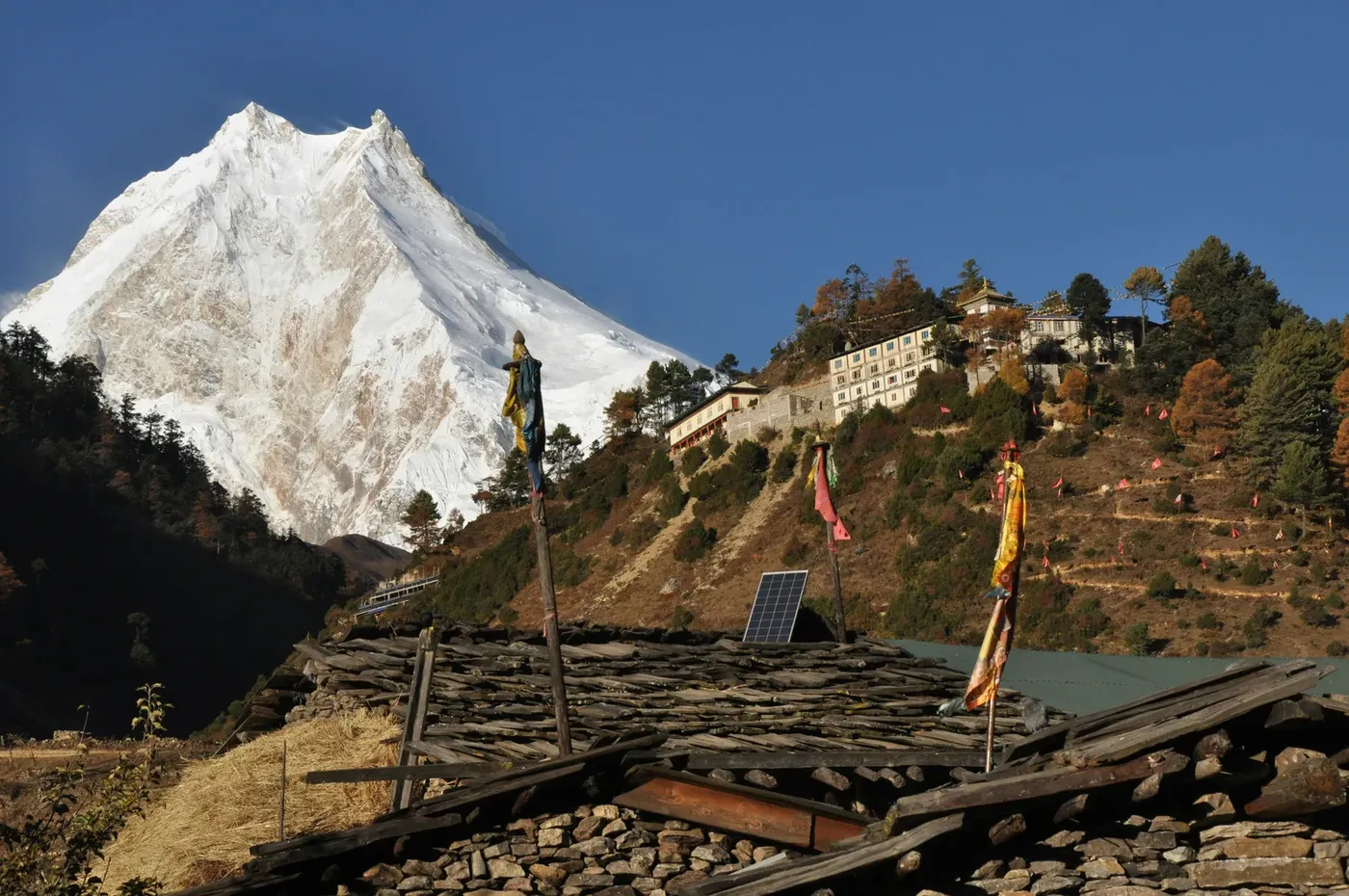
Cited source for the geography here: Manaslu. We link it because it is the source, not because it sells anything.
Pair this with Gosaikunda Helicopter Tour: Sacred Lake by Helicopter (2026), Janai Purnima 2026: Gosaikunda Helicopter Tour for the Sacred…, and Kathmandu Valley Tour 2026 — 5-Day UNESCO Heritage & Aerial….
Frequently Asked Questions
How much does the Lumbini helicopter tour cost?
It is quoted per aircraft, not per seat — Lumbini flights run on charter basis only, and the exact figure depends on your dates, passenger count and fuel conditions. We confirm the written price the same day you enquire. What we can say: it is the premium option among the three ways to reach Lumbini, and for a group of 4-5 pilgrims splitting a charter it becomes directly comparable to the all-in cost of flights-plus-transfers done twice in one day.
Can elderly travellers do this tour?
Emphatically yes — this is the most accessible tour we operate. Lumbini sits at 150 m (no altitude considerations anywhere), the site is flat and shaded with benches throughout, and the helicopter removes the eight-hour road journey entirely. We regularly fly pilgrim groups whose average age makes trekking impossible and for whom this flight is the only realistic way to complete the pilgrimage.
How long do we spend at the site?
Two to three hours of guided ground time — enough to cover the Maya Devi Temple and birth marker, the Ashoka Pillar, the Sacred Garden and Eternal Peace Flame, the museum, and a curated walk through the Monastic Zone at a pilgrim's pace. The guide tailors the depth to your group; Buddhist groups typically want longer inside the Maya Devi complex, and we build that in.
What is the best season for the Lumbini flight?
October to March: dry, warm-but-not-cruel plains weather with winter fog burning off by mid-morning. April-June exceeds 40°C — doable with an early flight and an 11 AM finish. July-September is monsoon on the Terai: flights operate between weather systems but we only book with a buffer day attached. Buddha Jayanti (the May full moon) is the site's peak — book early for that window.
Can we start from Pokhara instead of Kathmandu?
Yes — a Pokhara departure is possible and slightly shorter. Most of our clients pair Lumbini with a Kathmandu stay, but the Terai routing works from either base city. Tell us your itinerary shape and we will quote the version that fits it.
Can Lumbini be combined with Muktinath in one trip?
Yes, as a two-day pilgrimage circuit with an overnight in Pokhara — Muktinath (3,710 m, the 108 sacred spouts) on day one, Lumbini on day two. It is the most complete Hindu-Buddhist sacred-site circuit reachable by helicopter in Nepal, and we quote it as a custom multi-day program. Ask for the combined-pilgrimage rate when you enquire.