

Short answer: The Kathmandu to Pathivara helicopter price is not a fixed seat fare. Pathivara, also spelled Pathibhara, is quoted per aircraft, because the shrine sits in the far east of Nepal and the flight is a private charter rather than a scheduled shared departure. Our 2026 price list gives you the honest anchors: a shared seat on the comparable one-day Muktinath pilgrimage flight is $1,080 per person, and a private Everest charter is $4,500 for the aircraft with up to five guests. A Pathivara charter sits in that private bracket, and we confirm the number against your date, your group size and your ground time before you pay anything.
Pathivara Devi is one of the Shaktipeeth shrines of Nepal, and for a large number of families in the eastern hills, in the Terai and across the border in India, a darshan there is a duty rather than a holiday. The temple stands on a ridge in Taplejung district, in Koshi Province, at 3,794 m, and it is served by a helipad on the temple ridge. That single fact is what makes the Kathmandu to Pathivara helicopter price a real question rather than a curiosity: without a helicopter, the same journey is two long road days each way, and for elderly parents or a family travelling with small children that is usually the end of the plan. On this page we explain how the flight is priced, what comparable pilgrimage and day-tour flights on our own list actually cost, when to go, and how to book it from abroad or from Nepal without being handed a made-up number.
- 3,794 mPathivara Devi temple
- 1,400 mKathmandu departure point
- $1,080Comparable shared pilgrimage seat
- 5Guests per Airbus H125 charter
What a Kathmandu to Pathivara helicopter flight actually involves
Pathivara is not Everest. That sounds obvious, and it changes everything about the booking. An Everest day tour is a short high circuit: you climb out of Kathmandu, cross the Khumbu, land at Kala Patthar at 5,545 m, and you are back in the capital before lunch. A Pathivara flight is a long eastward transit. The aircraft leaves the Kathmandu Valley, tracks east along the middle hills, passes over the eastern foothills and the terraced country around Ilam and the tea gardens, and then climbs onto the Taplejung ridge where the temple sits at 3,794 m. You are crossing a large part of the country rather than circling one massif.
That geography produces three practical consequences, and all three of them show up in the price.
It is aircraft time, not a seat product. Shared departures only work where a sector is short enough that five strangers can be filled into one machine at a price each of them will accept. Everest, Annapurna Base Camp and Muktinath all meet that test. A Pathivara round trip does not, so we do not sell it as a per-seat tour with a published fare. You charter the aircraft, and the whole aircraft is yours for the day.
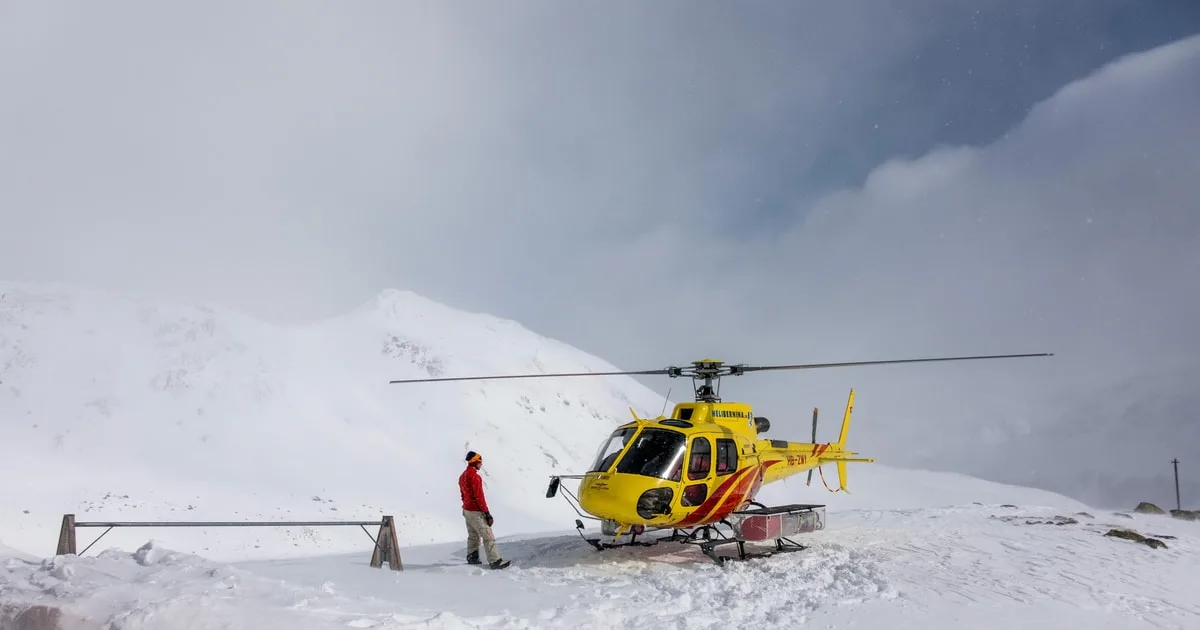
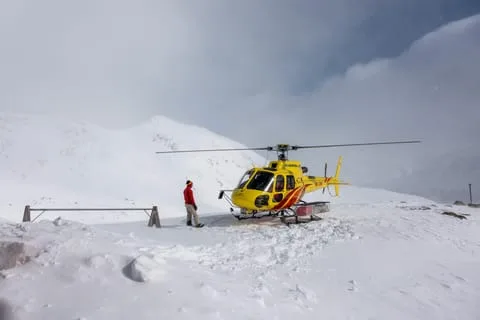
The machine is the same one that flies the high mountains. These are Airbus H125 helicopters, the AS350 B3e that carries out most commercial mountain work in Nepal. The cabin takes five passengers plus the pilot, which is why a Pathivara charter is usually booked by one family or one group of friends rather than by a single traveller. If you are travelling alone, the aircraft is still the aircraft, and the honest advice is either to wait for a group you can share with or to choose one of the per-seat pilgrimage products instead.
The ground time is yours to set, within limits. At the temple you want to walk the final stretch, queue for darshan, make an offering and come back down to the pad. That is the reason people fly. Ground time is part of the quote, so a group that wants a rushed twenty minutes of darshan and a group that wants a slow, unhurried visit with three generations of the family are quoting two different flights in the same aircraft.
Pathivara is also a secondary approach route for the Kanchenjunga trek, and that has a side effect worth knowing: pilots who work this sector know the ridge and the weather on it, and the valley below the temple is used to seeing aircraft. It does not make the flight routine. It does mean the timing has been worked out by people who have done it before you, which is exactly what you want when the destination is a single pad on a ridge at 3,794 m.
Where the Kathmandu to Pathivara helicopter price comes from
Any operator who sends you a Pathivara number without asking four questions is guessing. Here is what a serious quote is built from, and you can use this list to interrogate any quote you receive.
Aircraft block time. The helicopter is charged for the time the rotors are turning, and a long eastern sector is a long block. This is the biggest single line in any Pathivara quote and the one that varies most between operators, because it depends on the routing, the cruise setting and how the pilot manages the ridge.
Ground time at the temple. The aircraft waits for you. That waiting time is billed, because the machine and the crew are committed to your group and cannot be doing anything else. A generous darshan slot is a real cost, and any quote that ignores it is a quote that will change on the day.
Airport, landing and handling charges. Departure from Kathmandu, landing at the temple pad and the handling around both are charged where they apply. These are fixed costs rather than negotiable ones, and they are the reason two quotes for the same aircraft on the same day can differ by a few hundred dollars.
The weather buffer. Eastern Nepal is cloud country. A serious operator plans the flight around an early departure and holds the option of a later slot, and that planning has a cost: crew duty time, a held aircraft, a slot that is not sold to anyone else. When a quote looks unusually cheap, ask what happens if the ridge is closed at nine in the morning. The answer tells you whether the cheap quote was ever going to fly.
| Cost block | What it covers | How it moves your number |
|---|---|---|
| Aircraft block time | Rotors running, Kathmandu out and back | The largest line, set by routing and sector length |
| Ground time | The aircraft and crew waiting at the temple pad | Set by your darshan slot, not by the operator |
| Airport and landing charges | Kathmandu departure, temple pad landing, handling | Fixed, and charged where they apply |
| Weather buffer | Early slot, held aircraft, crew duty day | Usually invisible until you need it |
Notice what is missing from that table: a per-seat figure. We will not print one, because a Pathivara seat price that is not tied to a date and a group is a marketing number, and the moment you try to book it the number changes. What we will do is quote the aircraft, in writing, with the cost blocks separated, so you can see exactly what you are paying for. That is the same standard we apply to the Everest and Annapurna products on this site, where the prices are published because those flights are sold by the seat.
What comparable pilgrimage flights on our 2026 price list cost
You cannot price a charter against nothing, so here is the reference set we use in conversation with clients. These are our own published 2026 figures for flights we sell by the seat, plus the one private product we publish as an aircraft price. None of them is a Pathivara fare. All of them are real, and they are the numbers we would use to sanity-check any quote you bring us from another operator.
| Product | Price | Basis | Landing altitude | Duration |
|---|---|---|---|---|
| Muktinath helicopter pilgrimage | $1,080 | Per person, shared flight | 3,710 m | 1 day |
| Everest Base Camp helicopter day tour | $1,260 | Per person, shared flight | 5,545 m at Kala Patthar | 1 day, about 6 hours |
| Annapurna Base Camp day tour from Pokhara | $860 | Per person, shared flight | 4,130 m | 1 day, about 3 to 4 hours from Pokhara |
| Private Everest helicopter charter | $4,500 | Per aircraft, up to 5 guests | 3,880 m at Everest View Hotel | 1 day, about 5 to 6 hours |
| Manaslu helicopter return trek | $2,160 | Per person, shared flight | 5,160 m maximum | 13 days |
| Everest scenic mountain flight | $260 | Per person, window seat | 8,849 m views, no landing | 1 hour |
Read that table the way an operator reads it. The Muktinath pilgrimage is the closest thing to a Pathivara flight in purpose: one day, one shrine, a landed darshan, a family group. It is a shorter sector than Pathivara, which is why it can be sold as a shared seat at $1,080 per person, and why it is the number most pilgrims arrive with in their head. The private Everest charter is the closest thing to a Pathivara flight in structure: one aircraft, up to five guests, a full day committed, a fixed price for the machine. A Pathivara charter behaves like the second one, and the per-person cost simply depends on how many of the five seats your group fills. Divide a charter figure by two and it looks like an expensive pilgrimage; divide it by five and it looks like a reasonable one. That is not a pricing trick, it is just how a charter works, and it is why the honest answer to what does Pathivara cost per person is another question: how many of you are going?
If your group is small, or you are travelling alone, the practical alternative is to fly a per-seat pilgrimage product and keep Pathivara for a later trip. Our Muktinath helicopter pilgrimage does the same job in a single morning at a published seat price, and our guide to what the Muktinath pilgrimage actually costs breaks that price down line by line so you can see what a fair pilgrimage quote looks like. If your group is four or five, the charter arithmetic starts to work, and Pathivara becomes worth quoting properly.
Booking a Pathivara helicopter flight from abroad
Most of the people who ask us about this flight are not in Nepal when they ask. They are in the United States, in the Gulf, in Australia, or in India, planning a family visit around a Nepal trip, and they want to know whether the thing can be arranged before they book international tickets. It can, and the process is short if you send the right information in the first message.
What we need from you. Your preferred date and a second acceptable date. The number of passengers and their approximate weights, because the aircraft has a payload limit and the manifest has to be built before we can confirm a price honestly. Full names as printed in the passports of everyone flying. The hotel you are staying at in Kathmandu, so the pickup can be timed. And a note on how long you want at the temple, because ground time is a cost line and a darshan slot is not something we can guess on your behalf.
What you get back. A written quote for the aircraft, with the cost blocks separated, the date held, and the weather policy stated in plain language before you pay. Not a per-seat number pulled out of the air, and not a price that changes when you ask a second question.
How far ahead to book. Our published guidance for helicopter tours in Nepal is about a week of lead time for a standard product. A private charter in the peak weeks needs more, because you are competing for the same aircraft that is flying Everest day tours and Annapurna charters, and those are the flights that pay the operator's bills. If your dates are fixed, for example because an international ticket is already bought, tell us that in the first message and we will tell you honestly whether the aircraft is available rather than holding you in a maybe.
Payment. A deposit secures the aircraft and the date, and the balance is settled before departure. If you are paying from India rather than from the United States, say so at the enquiry stage and we will confirm the currency and the method in writing before you commit. Nobody should be sending money to a Nepali operator on the strength of a WhatsApp message with no written quote behind it.
The weather buffer, planned in advance. Build one spare morning into your Kathmandu days. A Pathivara flight needs a clear eastern horizon, and the ridge is a long way from the capital. If the morning is closed, the aircraft does not go, and the difference between a good operator and a bad one is whether your second morning was already discussed when you booked. Ours always is, and our cancellation and weather policy guide sets out how that conversation works.
The best season for a Pathivara pilgrimage flight
Nepal has two flying seasons and one long argument in between. Our own seasonal guidance, written for helicopter tours across the country, names October and November as the best window, with March to May close behind. The same logic applies to the eastern hills, and for the same reasons.
October and November give the cleanest air of the year. The monsoon has retreated, the haze has been washed out of the valleys, and the ridge at Pathivara stands clear against the Kanchenjunga skyline. This is the window we recommend first to anyone flying in from abroad, because it is also the most comfortable season for the ground portion of the day at 3,794 m.
March to May is the second window. Days are warmer, the rhododendron is out on the eastern ridges, and mornings are usually clear before the afternoon cloud builds. April is the busiest month of the Nepali helicopter year, and the eastern sector feels that too, so book earlier if your trip lands in it.
June to September is the monsoon, and a ridge landing in the monsoon is a gamble rather than a plan. We will still quote it if you ask, because some families have a date they cannot move, but we will tell you plainly that the flight is weather-exposed.
December to February brings clear, cold skies and a temple ridge that is genuinely cold at 3,794 m. The flying is often beautiful and the crowds are thinner. If you are bringing elderly parents, this is the season to think hardest about warm layers, and about how long they can comfortably stand outside.
You can read the full month-by-month picture in our best time for a helicopter tour in Nepal guide, which covers the same seasons from the point of view of a general tour rather than a pilgrimage.
For devotees travelling from Nepal and India
The Pathivara flight exists because of a very specific kind of traveller: a family group that wants darshan at the shrine, often with parents or grandparents who cannot do the road journey, and often on a date that matters to them for family reasons. That shapes the booking more than any seasonal advice.
Fill the aircraft with your own people. With five seats, a Pathivara charter works best when it is one family, one neighbourhood group or one office group. You set the pace, you decide when to come down off the ridge, and you are not waiting for a stranger who wants a different darshan slot. It also settles the per-person arithmetic, because there is no operator margin to protect on an empty seat.
Take the elders seriously. The temple sits at 3,794 m. Flying up means you skip the acclimatisation that a slow road journey would have given you, so the arrival is the exposure. Plan a short, unhurried visit, keep the walk to the shrine gentle, and do not schedule anything demanding for the afternoon back in Kathmandu. If someone in the group has a heart or lung condition, ask their doctor before you ask us for a quote.
Say what the visit is for. Pathivara is a wish-fulfilling goddess and a remover of difficulties, and pilgrims come to her with vows, with thanks and with family obligations. Devotees travel here from across Nepal and from India, and the shrine carries meaning for both Hindu and Kirat communities. If your group wants a particular ritual, a specific offering or a priest arranged in advance, tell us when you enquire, because that is arranged on the ground and it belongs in the plan rather than in a last-minute request at the pad.
Coming from India. The eastern border crossings at Kakarbhitta and the road up through Ilam are the usual overland approach, and they are slow. If you are already crossing, flying from Kathmandu or joining the aircraft at a point closer to Taplejung is the part of the trip where the money genuinely buys you time. Tell us which side of the border you are arriving from and we will shape the itinerary around it rather than selling you a Kathmandu round trip you do not need.
What can go wrong on a high-altitude darshan flight
Four things go wrong on this sector, and three of them can be planned around.
Cloud on the ridge. The most common reason a Pathivara flight does not happen. The eastern hills gather cloud earlier than the Khumbu in some weather patterns, and a pad on a ridge is not a place to arrive on a guess. This is why the flight is planned early and why a spare morning matters.
Payload. The H125 carries five passengers plus the pilot, and the manifest has to be built with real weights. Our published working figure is 80 kg per seat in the cabin, and a group that averages above it may need to drop a passenger or split into two flights. We would rather have that conversation a month before your date than at the apron.
Altitude on arrival. Arriving at 3,794 m by air is a shock to a body that was at 1,400 m an hour earlier. Shortness of breath on the walk, dizziness and headache are common and usually settle with rest. It is the reason we advise a slow visit and no onward trekking the same day.
Ground time running long. A festival morning at the temple means queues, and a queue means the aircraft is waiting. Since ground time is billed, a long unplanned wait becomes a real cost. If your date falls on a major pilgrimage day, say so and we will quote a longer slot instead of pretending the queue will not exist.
Pathivara versus Muktinath and Lumbini: which pilgrimage flight
Three pilgrimage flights come up in almost every enquiry, and they are not interchangeable. Muktinath is the one people book by the seat. Lumbini is the one people add to a cultural itinerary. Pathivara is the one people book for family reasons and on family dates.
Muktinath sits at 3,710 m in Mustang, and the temple complex with its 108 water spouts is the classic one-day helicopter pilgrimage from Kathmandu. It is a shorter sector, it runs as a shared departure at a published seat price, and the aircraft is back in the capital the same morning. If your goal is a landed darshan at a major shrine with the minimum of planning, Muktinath is the efficient answer, and our Muktinath helicopter pilgrimage page has the itinerary.
Lumbini is the Buddha's birthplace, down in the Terai plains, and it is a different kind of day entirely: no altitude, no ridge, no weather-exposed pad, and a site that rewards a slow walk through the monastic zone. It suits mixed groups where some members want a pilgrimage and others want history. Our Lumbini helicopter tour guide covers the routing and what the day looks like.
Pathivara is the eastern option, the one for families with roots in Taplejung, Panchthar, Ilam or the eastern Terai, and for devotees who have promised the goddess a visit. Pathivara Devi is recorded as one of the Shaktipeeth shrines of Nepal, a wish-fulfilling goddess and a remover of difficulties, and the reference entry for Pathibhara Devi Temple sets out the shrine's place in both Hindu and Kirat practice. You cannot buy it as a seat. You charter it, you fill it with people you know, and you plan around the eastern weather.
If you are choosing between them, the question to ask is not which is the better flight. It is which shrine your family is actually being called to, and then how many of you are travelling, because the group size decides whether a charter makes sense at all. The guide to Nepal's quieter helicopter destinations on this site puts Langtang, Gosaikunda, Rara, Muktinath and Lumbini side by side for exactly this comparison, and Pathivara belongs in that company rather than in the Everest bucket list.
Frequently asked questions
Is there a direct helicopter from Kathmandu to Pathivara?
Yes, as a private charter. There is a helipad serving the temple ridge in Taplejung district, and the flight is flown from Kathmandu as a single-day aircraft booking. It is not a scheduled service and there are no timetabled departures, so you are booking the aircraft rather than a seat on a rotation.
How does the Kathmandu to Pathivara helicopter price work out per person?
It depends on how many of the five seats your group fills. The aircraft price is fixed once the date, the group and the ground time are confirmed, so the per-person figure is that price divided by your group size. A family of five pays a very different per-head amount from a couple, and we quote both rather than pretending one number fits everyone.
Can I book a single seat on a Pathivara flight?
Not on a scheduled departure, because there is no scheduled departure. A solo traveller can charter the aircraft and pay for it, or ask us to look for a group already going on the same date. Many solo pilgrims are better served by a per-seat product such as the Muktinath pilgrimage, and we will say so rather than sell you a charter you do not need.
How long is the flight from Kathmandu to Pathivara?
We do not publish a block time for this sector, because it changes with the routing and with aircraft performance on the day, and a number invented for a web page is worse than no number. What we will do is confirm the planned block time in writing with your quote, once the routing is set.
Is the Pathivara helicopter flight suitable for elderly parents?
It is usually the reason the flight is booked. Skipping the two-day road journey is exactly what makes the shrine reachable for older pilgrims. The caveat is the arrival altitude of 3,794 m, which is a shock when you have not walked up slowly, so plan a short visit and check with a doctor first if there is any heart or lung condition in the group.
Which spelling should I search for, Pathivara or Pathibhara?
Both are used for the same shrine. The Nepali name is transliterated as Pathivara in most booking contexts and as Pathibhara in official and reference sources, and you will also see Pathibhara Devi and Mukkumlung. If you are searching, try both; if you are booking, we will know what you mean either way.
What is the best month for a Pathivara darshan by helicopter?
October and November, then March to May. Both windows give clear mornings and a reasonable chance of an open ridge. The monsoon months are weather-exposed, and December to February is clear but cold at 3,794 m, which matters if the group includes small children or grandparents.
Do I need a permit to fly to Pathivara?
A flight that lands at the temple and returns does not involve a trekking permit. If your plan continues on foot into the Kanchenjunga restricted area, permits and a registered trekking agency are required, and that is a different booking. We will tell you in writing which applies to your itinerary before you commit.
What happens if the weather closes the ridge?
The aircraft does not go. A ridge pad at 3,794 m is not somewhere a pilot arrives on hope, and the eastern hills can be clouded in while Kathmandu is clear. This is why we ask you to hold a spare morning, and why the weather policy is stated in writing with the quote rather than discovered after payment.
Can we combine Pathivara with a Kanchenjunga view or the Ilam tea country?
Usually, yes, and it is worth discussing because the routing already passes through that part of the country. Tell us what you want to see on the way and we will tell you honestly whether it fits inside one aircraft day or whether it turns the trip into two.
How do I pay from the United States or from India?
A deposit secures the aircraft and the balance is settled before departure. Tell us where you are paying from at the enquiry stage and we will confirm the currency and the method in writing. If you are paying from India, say so early rather than at the last step, because it changes the paperwork.
Why is there no fixed Pathivara helicopter price on this page?
Because there is no fixed product to attach it to. Seat prices exist where flights run on a schedule with five strangers. A charter is priced against a date, a group and a ground time. We would rather show you the cost blocks and the comparable published fares than print a number that would not survive your first enquiry.
The short version
Pathivara is a pilgrimage flight, not a sightseeing circuit. It is a private charter to a ridge at 3,794 m in Taplejung district, it is priced per aircraft, and it makes sense when four or five people who know each other are travelling together, often with elders who could not face the road. Book it in October or November if you can choose, or March to May if you cannot. Hold a spare morning. Tell us the group, the weights, the date and the darshan time you want, and you will get a written quote with the cost blocks visible rather than a number shouted down a phone.
If you want the broader picture before you decide, start with our guide to Nepal's other Himalayan helicopter destinations, or read how charter pricing works route by route. And if your family would rather fly a published seat price this year, the Muktinath pilgrimage is the honest comparison. When you are ready to price the Pathivara charter itself, send the date and the group size, and we will get to work on it.