

Short answer: Altitude sickness becomes a helicopter problem the moment a trekker cannot walk steadily, becomes confused, or is breathless at rest — at that point descent on foot is too slow and a rescue flight is the correct call. On a tour, the risk window is short but real: the Everest day tour lands at Kala Patthar at 5,545 m and returns to Kathmandu at 1,400 m the same morning, so anyone who is already unwell before boarding should not fly. For travellers searching helicopter rescue altitude sickness Nepal, the practical answer is that the flight itself does not cause altitude illness — it removes the acclimatisation that prevents it, and it cannot be used as a substitute for a medical decision that has to be made on the ground.
- 5,545 mHighest landing, Kala Patthar
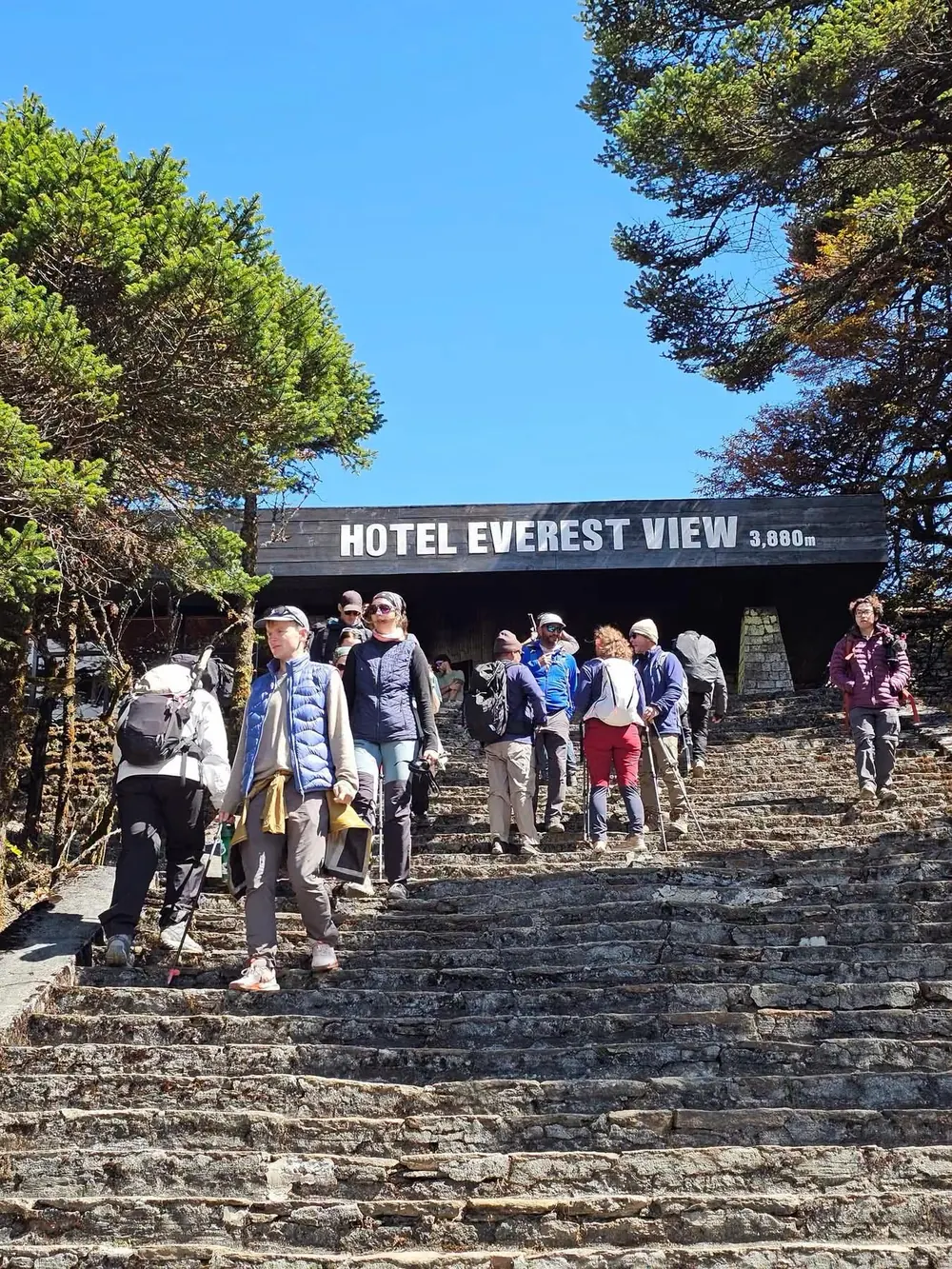
- 3,880 mEverest View Hotel, overnight stop
- 1,400 mKathmandu, where every flight starts
- $1,260Everest day tour, per person
Most people who look up altitude sickness and helicopters are not planning an expedition. They are either about to book a morning flight to the roof of the world, or they are standing in a lodge in the Khumbu with a headache that has stopped being funny. This guide is written for both. It explains what altitude does in the short exposure of a scenic flight, how a normal headache turns into the two conditions that actually kill people, how a rescue flight is requested and paid for, and where the line sits between “rest and descend” and “call the helicopter now”.
We fly these routes weekly, and the honest framing is this: the helicopter is the safest form of high-altitude travel in Nepal and also the least forgiving of a bad judgement made earlier in the day. Every number below is either published on this site or a fixed altitude, and where a figure does not exist we have written the sentence without one.
Helicopter Rescue Altitude Sickness Nepal: The Decision Comes Before the Flight
Search results for helicopter rescue altitude sickness Nepal tend to jump straight to insurance clauses, and that is the wrong end of the problem. Insurance decides who pays. The decision that saves a life is made before any aircraft is called, by a guide, a lodge owner, a trekking partner or the patient themselves, and it is made on four observations rather than on how the person says they feel.
The first is whether they can walk a straight line. Ask them to walk heel to toe along the lodge floor; if they wobble or need the wall, the illness has moved past the stage where rest at the same altitude is acceptable. The second is whether they are thinking clearly — repeating questions, mixing up names, drowsy in daylight. The third is whether they are breathless while sitting still. The fourth is whether the headache and vomiting continue after an hour of rest and fluids. Two of those four together is a descent, and at 4,000 m or above, a descent by helicopter rather than by foot.
That is the whole framework, and it applies identically to a trekker at Pheriche and to a passenger at the Everest View Hotel. What changes with a helicopter tour is the timeline. A trek gains height over days, which gives the body time to adapt. A flight gains the same height in twenty minutes and gives it none. Read that as a warning about pacing rather than a reason to avoid flying — the day tour is designed around a short landing precisely because the aircraft is not a place to spend an hour at 5,545 m.
Why a Scenic Flight Is Not a Free Pass on Altitude
There is a persistent belief that being flown to altitude protects you from altitude illness because you did not climb. The opposite is closer to the truth. Acute mountain sickness is a response to the oxygen partial pressure your body is exposed to, not to the effort you spent getting there. Walking up slowly triggers a set of adaptations — breathing faster, producing more red cells over weeks, shifting body fluid — and a helicopter skips all of them. That is also why any search for helicopter rescue altitude sickness Nepal is better answered by an itinerary than by an insurance PDF: the order of stops, the ground time at each one and the descent plan tell you far more about your risk than any wording an insurer will approve.
In practice this matters less than people fear on a well-run day tour and more than people expect on an overnight product. A one-day Everest helicopter tour from Kathmandu typically spends a short time on the ground at Kala Patthar, a longer and much more comfortable stop at the Everest View Hotel at 3,880 m for breakfast, and returns to 1,400 m. Exposure is measured in minutes. The two-day version, which sleeps at 3,880 m, is a different risk profile altogether, because sleep is when breathing slows and symptoms that were mild in the afternoon can become serious overnight. The Everest View Hotel stay is a beautiful product and it is the one to book with a pulse oximeter and an honest conversation about how you felt at altitude before.
Two more things are worth stating plainly. Fitness does not confer protection: marathon runners get altitude illness at the same rates as anyone else, and being young and strong sometimes hides the early symptoms because the person keeps going. And youth is not protective either — the people who deteriorate fastest in the Khumbu are often fit men in their twenties who dismiss a headache for a day. The aircraft does not care how much you deadlift.
AMS, HACE and HAPE: The Ladder That Decides Everything
Altitude illness is not one condition with one severity. It is a ladder, and the three rungs are treated completely differently. Acute mountain sickness is unpleasant but reversible. High-altitude cerebral oedema and high-altitude pulmonary oedema are medical emergencies where the treatment is descent and oxygen, and where a helicopter changes the outcome rather than merely the comfort.
| Stage | What you see | Correct action |
|---|---|---|
| AMS | Headache plus nausea, fatigue, dizziness or poor sleep; the person can still walk normally | Stop ascending. Rest, fluids, review after an hour. Descend if not improving. |
| HACE | Confusion, unsteadiness, vomiting, severe headache that does not respond, unusual drowsiness | Descend immediately, give oxygen, call for evacuation. This is not a wait-and-see. |
| HAPE | Breathlessness at rest, dry cough turning productive, blue lips, extreme weakness | Descend immediately, oxygen, evacuation. Do not let the person sleep at the same altitude. |
The reason this ladder matters for a rescue call is that HACE and HAPE are the only rungs where a flight is clinically indicated rather than convenient. A trekker with straightforward AMS who can walk is better off walking down: descent works faster than any aircraft can be dispatched, and the walk itself is the treatment. A trekker with HACE or HAPE cannot walk reliably, and every hour at altitude makes the fluid in the brain or lungs worse. That is the case the helicopter exists for.
Oxygen saturation readings help but do not decide. A fit trekker can sit in the low 80s at Namche and be perfectly well; a deteriorating one can read in the high 70s and be in trouble. Guides look at the trend across a day, not a single number, and they look at the person in front of them. If you are carrying a oximeter, record the reading with the altitude and the time, and treat a falling reading alongside symptoms as a reason to act rather than a reason to keep measuring.
What 5,545 m Does to a Body in Twenty Minutes
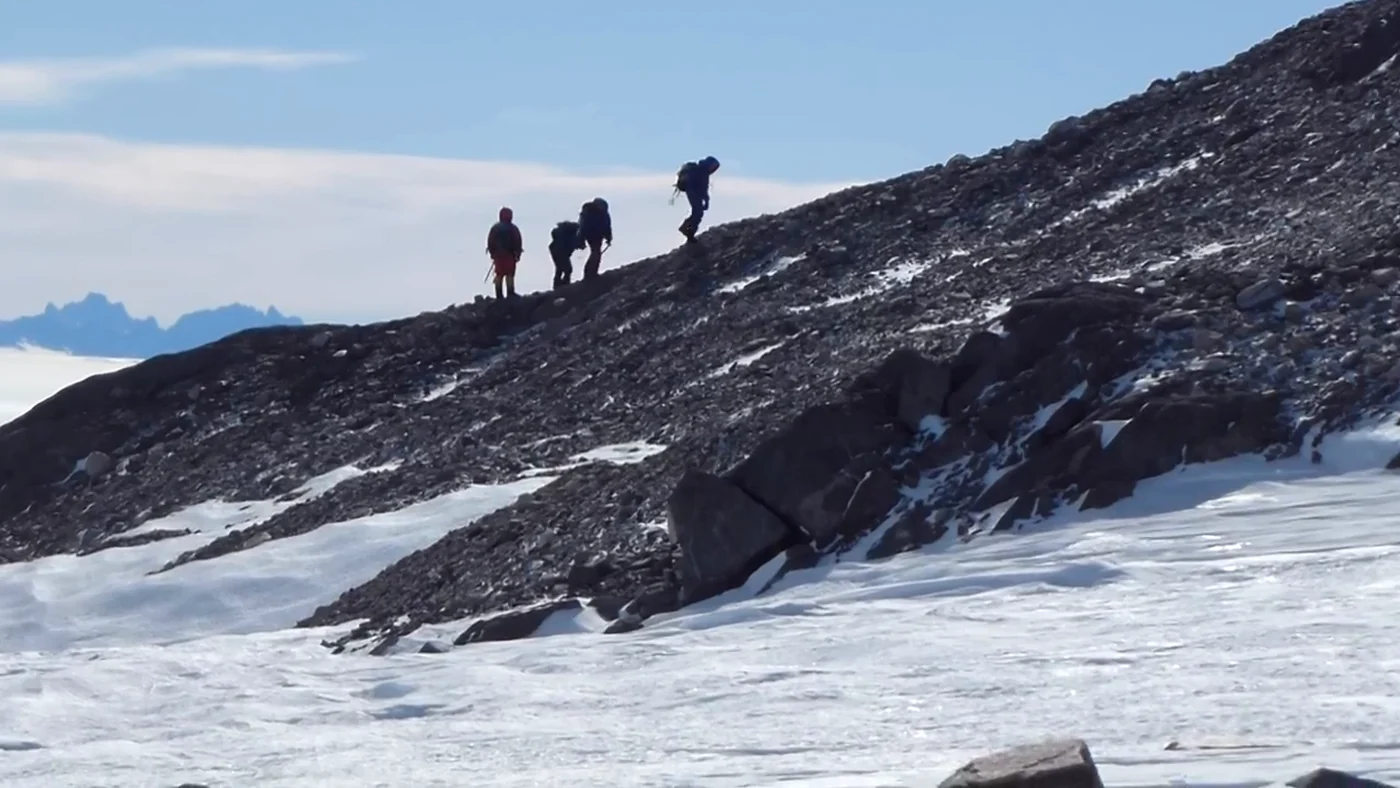
Kala Patthar is the highest point most of our passengers ever stand on, and it is worth understanding why the landing is short. At that altitude the air holds roughly half the oxygen available at sea level, and the body compensates by breathing faster and by constricting blood vessels in the lungs. For a healthy passenger stepping out of a warm cabin for a few photographs, the result is breathlessness, a pounding heart, cold hands and a headache that arrives later in the day. For a passenger who is already dehydrated, already unwell, or already sleeping badly, the same twenty minutes can push them over a threshold they cannot walk back from.
This is also why the day tour itinerary is built the way it is. The flight climbs from Kathmandu at 1,400 m to the Khumbu in one push, lands high, then drops to the Everest View Hotel for a seated breakfast and a slow descent of the valley. If the order were reversed — hotel first, Kala Patthar last — the product would be less safe for exactly the passengers most likely to book it. When you compare operators, ask about the order of stops, not just the list of them.
The other thing twenty minutes does is hide symptoms. Adrenaline from the flight, the cold, the photographs and the sheer scale of the view all mask early AMS, which is why the headache usually appears after landing back in Kathmandu or in the lodge that evening. If you feel unwell the day after a high landing, treat it as altitude-related until proven otherwise, drink, rest, and do not book another high flight the next morning.
When to Call the Helicopter, and When Not To
There are only a handful of situations where a rescue flight is the right answer, and they are worth memorising because the call is usually made by someone exhausted at four in the afternoon with the cloud coming in.
Call for a helicopter when the patient has HACE or HAPE symptoms; when they cannot walk and the trail below is long, exposed or snow-covered; when they are unconscious or deteriorating quickly; when a suspected fracture or internal injury makes walking impossible; or when the group's own guide judges that a descent on foot cannot be completed before dark. Those are medical indications, and every operator flying in Nepal will treat them as urgent.
Do not call a helicopter because the trip is tiring, because the weather has taken a day out of the itinerary, or because someone would rather not walk back to Lukla. Those requests get quoted as charters, they are expensive, and they push aircraft away from the flights that genuinely need them. A guide who says “walk down for two hours and reassess” is usually giving better medical advice than a passenger with a satellite phone.
The mechanics of how a call-out is dispatched, who authorises it and how the aircraft is tasked are covered in our guide to how helicopter rescue in Nepal actually works. What matters here is the sequence: the guide or lodge calls the insurer's assistance company or the operator directly, gives a location, an altitude, a name and a symptom summary, and waits for a weather window. Nobody flies into the Khumbu in cloud, and the honest waiting time on a bad afternoon can be hours.
What a Rescue Flight Costs, and Who Actually Pays
Rescue flights in Nepal are billed by the aircraft, not by the patient, and the bill arrives whether or not your insurance agreed to it in advance. The cost bands published on this site run from roughly $1,800–$2,500 for an evacuation to the nearest airstrip up to $4,000–$8,000 for a flight to Kathmandu, depending on altitude, distance and how the aircraft is tasked. A realistic call-out reaches most Everest and Annapurna trekking routes in one to three hours once the weather allows.
| Rescue service | Published cost band | What it covers |
|---|---|---|
| Evacuation to nearest airstrip | $1,800–$2,500 | Short flight out of the trail corridor, onward transfer by fixed-wing or road |
| Evacuation to Kathmandu | $4,000–$8,000 | Direct flight to a Kathmandu hospital, higher altitude and longer distance |
| Helicopter evacuation insurance | Policy-dependent | Pays the operator directly when the policy covers the altitude and activity |
The insurance clause that decides most cases is the altitude ceiling. A policy that covers evacuation up to 4,000 m is useless on a route that sleeps at 4,400 m, and a policy that excludes “mountaineering” can be read to exclude a trek above the tree line if the wording is loose. Ask for the evacuation limit in writing, ask whether helicopter evacuation is named explicitly, and ask whether the assistance company operates in Nepal. Our helicopter tour safety and insurance guide sets out the questions to send your insurer before you fly.
What the Altitudes Look Like Across Our Routes
Altitude is the single variable that predicts how a flight will feel, and it is worth reading the numbers before choosing a product rather than after. The table below uses the altitudes and 2026 prices published on our own tour pages; nothing here is an estimate.
| Product | Highest point | Published price |
|---|---|---|
| Everest Base Camp helicopter day tour | Landing 5,545 m (Kala Patthar) | $1,260 per person, shared |
| Everest View Hotel + Kala Patthar, 2 days | Overnight 3,880 m, landing 5,545 m | Quoted per group for 2 days, 1 night |
| Private Everest charter with breakfast | Everest View Hotel 3,880 m | $4,500 per aircraft, up to 5 guests |
| Everest Base Camp helicopter trek, 10 days | Max 5,545 m | $1,840 per person, shared |
| Annapurna Base Camp day tour from Pokhara | Landing 4,130 m | $860 per person, shared |
| Muktinath helicopter pilgrimage | 3,710 m | $1,080 per person, shared |
| Everest scenic mountain flight (fixed wing) | Views to 8,849 m, no landing | $260 per person, window seat |
Two practical readings follow. First, the products that land above 5,000 m are short-exposure by design and are the ones where fitness and hydration on the morning of the flight matter most. Second, the products that sit between 3,700 m and 4,400 m — Muktinath, the Everest View Hotel, Annapurna Base Camp — are where most altitude discomfort actually appears, because people relax there and stay longer. A headache at 3,710 m is a warning, not a nuisance.
If you are choosing between the one-day Everest product and the two-day hotel stay, our comparison of the Everest Base Camp helicopter day tour sets out the timings in detail. For the full menu of routes, altitudes and prices in one place, the planning hub for helicopter tours in Nepal is the index we keep current.
Prevention: The Choices That Actually Work
Nothing prevents altitude illness completely, and anybody selling you a guaranteed acclimatisation protocol is selling something. What works is unglamorous. Arrive in Kathmandu already rested rather than after a red-eye and a connection. Drink more than you think you need, and treat alcohol and sleeping tablets at altitude as a bad combination. Tell your guide honestly how you slept, because the first night is the most informative one.
On a trek, keep the nightly sleeping gain small and take the rest day your itinerary offers rather than trading it for a tighter schedule. On a flight, book the high landing for a morning when you are not already unwell: if you have a chest infection, a fever or a hangover, postpone. The operator will move you, and a day's delay costs far less than a rescue flight. Packing for the cold matters too — shivering at 5,545 m is a physiological stress on top of the hypoxia — and our helicopter tour packing list covers what to wear for a landing and a hotel breakfast on the same morning.
If you take prescription medication for altitude, take it as a doctor advised and start it before the exposure, not after the headache begins. Acetazolamide is widely used and widely misunderstood: it speeds acclimatisation, it does not treat HACE or HAPE, and it is not a licence to skip a descent. Ask your own doctor, not a lodge owner, and remember that the medication most likely to matter in an emergency is oxygen and a helicopter, not a tablet.
Choosing an Operator Who Will Make the Right Call
The difference between a good and a mediocre operator is almost entirely in the decisions nobody photographs: whether the flight is cancelled when the valley is marginal, whether the pilot asks how passengers are feeling before boarding, whether supplemental oxygen is on board, and whether the stop at Kala Patthar is timed. Our tour aircraft carry supplemental oxygen for passengers and crew, and the pilots flying the Khumbu have spent years reading the cloud that forms on the ridge by mid-morning.
Ask three questions when you book. What is the order of stops on the day tour, and how long is the ground time at 5,545 m? What happens if a passenger feels unwell at altitude — who decides, and does the aircraft carry oxygen? And what is the cancellation and rebooking policy if the weather closes the valley? A operator who answers those three without hesitating is one that has thought about altitude, not just about seats.
Season matters as well, and the same weather that cancels a flight can strand a trekker who needs evacuation. Our guide to the best time for a helicopter tour in Nepal explains the two flying windows and what the monsoon and winter do to visibility, which is also the practical answer to “when can a rescue actually reach me”.
Frequently Asked Questions
Can you get altitude sickness on a one-day helicopter tour to Everest Base Camp?
It is possible but uncommon, because exposure is short. The Everest day tour lands at Kala Patthar at 5,545 m and then drops to the Everest View Hotel at 3,880 m for breakfast before returning to Kathmandu at 1,400 m. Most passengers feel breathless and headachy at the landing and normal again by the afternoon; if you are already unwell before boarding, postpone the flight.
How do I know whether someone needs a helicopter rescue or just needs to descend?
If they can walk a straight line, are thinking clearly and are not breathless at rest, walk them down — descent is the fastest treatment. If they are confused, unsteady, vomiting repeatedly or breathless while sitting still, they have HACE or HAPE symptoms and need oxygen plus evacuation. Do not wait for a helicopter at the same altitude when walking down is possible.
How quickly can a rescue helicopter reach the Everest region?
One to three hours from the call reaching the operator, weather permitting. Cloud in the Khumbu can close the valley for hours, and no operator flies into it. That is why the decision to call is made early rather than when the patient is critical.
Does travel insurance cover helicopter rescue for altitude sickness in Nepal?
Only if the policy names helicopter evacuation and covers the altitude you will reach. Many standard policies exclude evacuation above 4,000 m or 6,000 m, and some exclude “mountaineering” in wording that can be stretched to cover trekking. Ask your insurer for the evacuation ceiling in writing before you leave.
Who pays for the rescue flight if my insurance refuses?
You do. The operator bills the person who was flown, or the person who authorised the flight, and the bill is payable whether or not a claim is later approved. Get a written authorisation reference from the assistance company before the aircraft departs if there is time.
Is the Everest View Hotel at 3,880 m risky for one night?
For a healthy traveller it is a comfortable altitude with a genuine view of the summit, and it is the highest many visitors ever sleep. It is also the altitude where mild AMS most often appears, because a night at 3,880 m means hours of slower breathing. Take a oximeter reading in the evening and again in the morning, and tell your guide if you slept badly.
Does being fit reduce the risk of altitude sickness?
No. Fitness affects how hard the climb feels, not how your blood responds to low oxygen. Fit travellers sometimes deteriorate faster because they push through early symptoms that would stop someone less confident.
Should I take acetazolamide before a helicopter flight to 5,545 m?
Discuss it with your doctor rather than a lodge owner. It speeds acclimatisation on a trek but does not treat HACE or HAPE, and it does not make a short high landing risk-free. For a single morning flight most travellers do not need it; for a trek with rapid ascent, it is often prescribed.
What happens if someone becomes unwell at Kala Patthar during a tour?
The aircraft is already there, so the response is immediate: oxygen on board, back into the cabin, and descent to a lower altitude, usually the Everest View Hotel, with a decision on whether to continue to Kathmandu. This is one of the few situations where a helicopter genuinely improves the medical outcome rather than just the comfort.
Is a helicopter evacuation possible at night in the Khumbu?
Rarely, and not on the trekking routes. Helicopter operations in the mountains are visual flights, and the aircraft need daylight and a clear line of sight. An evening deterioration is treated overnight with oxygen and descent to a lower lodge, and flown out at first light if conditions allow.
Which is safer for a family with children, the scenic flight or the helicopter day tour?
The fixed-wing scenic flight never lands high, so there is no altitude exposure at all beyond the cabin; the helicopter day tour reaches 5,545 m on the ground. For children or older travellers, the scenic flight or the Everest View Hotel breakfast without the high landing is the gentler choice.
Can I fly the day after a high-altitude rescue?
Not on a tour, and usually not on a commercial flight either without medical clearance. Once someone has had HACE or HAPE, the priority is hospital assessment in Kathmandu, and altitude exposure of any kind should wait until a doctor has cleared it.
Altitude illness is the one risk on a Himalayan flight that rewards preparation rather than courage. If you are booking, ask about landing altitudes, ground time and oxygen before you ask about the price — and if you are already on the trail with someone who is deteriorating, act on what you can see rather than on what they tell you. For the wider medical evidence behind the symptom ladder described here, the Wikipedia entry on altitude sickness is a reasonable starting point and lists the primary clinical sources.