
Short answer: Wear the wedding dress, but travel in the second outfit. A full embroidered lehenga with a dupatta weighs 8 to 12 kg, and every passenger on a Kala Patthar charter is weighed against an 80 kg allowance that includes body weight and cabin bag, so the gown is a payload decision before it is a style decision. On the ridge, wear flat, closed, grippy shoes and accept that the shoe is in every frame, or carry a second pair and change while the photographer repositions. Everything else follows one method: the ceremony look for the photographs, a warm layer over it for the ten to fifteen minutes of ground time, and the sequence reversed before you climb back into the aircraft. Makeup, hair, sindoor and the mangalsutra get done in Kathmandu, because the ridge has no power, no mirror and no water.
- 8-12 kgweight of a full embroidered lehenga
- 80 kgbody and cabin bag, per passenger
- 5,545 mthe ridge where it has to work
- 10-15 minground time on the ridge
Most packing advice for a helicopter flight in Nepal is written for a walker with a camera bag: a base layer, a shell, trail shoes, a daypack. That is the general case, and it is set out in our guide to what to wear and pack for a Nepal helicopter tour. A wedding differs in three ways: you carry a garment that outweighs a daypack, you stand still for a camera, and the frame is looked at for life.
The flight is a private charter at $4,500 per aircraft for up to five guests, Kathmandu to Kala Patthar at 5,545 m, not inside Base Camp at 5,364 m, which sits on the moving Khumbu Glacier. You get 10 to 15 minutes on the ridge, then 45 to 60 minutes on the sheltered terrace of the Everest View Hotel at 3,880 m. The flight and ceremony are in our Everest destination wedding guide. What follows is the wardrobe.
The Gown Is a Cargo Problem: 8-12 kg Against an 80 kg Allowance
Passengers on a Kala Patthar charter are weighed, and the allowance is roughly 80 kg including body weight and cabin bag. A lehenga with a worked bodice, a net skirt and a dupatta runs 8 to 12 kg, about a tenth of the entire allowance. The gown is not one item in a list. It is the item that decides what else you can carry.
The aircraft is also full at five passengers, and above five the load forces a two-lift shuttle: a second flight, a second weather risk, and a second group that is not in the photographs. Every kilogram of embroidery on the bride is a kilogram the photographer's camera body and lenses do not have.
The fix is to stop treating the gown as luggage. It travels as freight, the way the ceremony decor does. A full toran and mandap is 80 to 90 kg of marigold and mango leaf, and it cannot fly in the cabin at all: it is pre-positioned at 3,880 m or flown as a separate load. The dress can travel the same way. Fly it in a cabin garment bag if the bag plus everything else stays inside your 80 kg, or send it ahead.
Whatever you choose, the dress never goes in the hold, because a bag that arrives a day late at Kathmandu breaks the ceremony. Keep a smaller ceremony outfit in the cabin as the fallback, since one morning in four is lost to weather. Wearing it in is the worst option for the cold.
| Who or what | Allowance | What they carry | Where it flies |
|---|---|---|---|
| Bride | 80 kg incl. body | Outfit 8-12 kg, warm layer, flat shoes, kit | Cabin garment bag, or separate load |
| Groom | 80 kg incl. body | Sherwani or suit, shoes, ridge layers | Cabin |
| Photographer | 80 kg incl. body | Body, lenses, tripod, batteries | Cabin |
| Guests | 80 kg each | Personal bag only, no outfit boxes | Cabin |
| Florals, toran, mandap | Not passenger payload | 80-90 kg of freight | Pre-positioned at 3,880 m |
Heels on Scree: Why the Shoe Is a Photography Decision
The ridge is scree, wet rock and, in the shoulder season, mud and old snow. A stiletto or a slim block heel on rock with a slope under it will slip or sink, and a fall at 5,545 m ends the photograph and probably the trip. You are not walking far, but you are standing still on an uneven slope in shoes never designed to grip.
But the shoe is not a comfort problem, it is a photography problem. The shoe is in the frame. In the ridge portraits the hem lifts, the bride steps forward and the camera is low, so footwear is visible for much of the shoot. A bride in a beautiful gown on grey rock in flat black shoes photographs as someone who came hiking; the same gown with an elegant flat photographs as someone who came to be married.
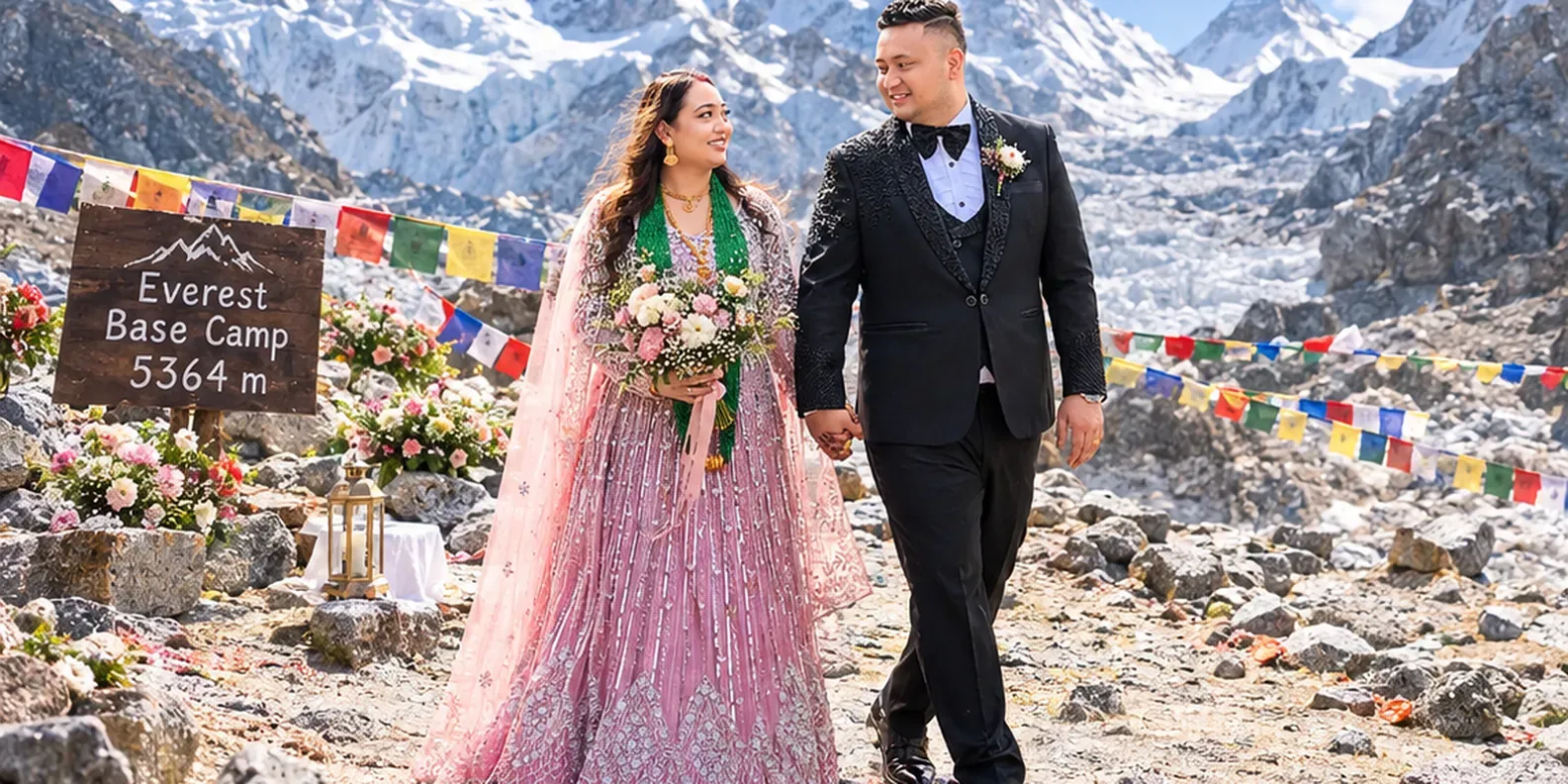
The practical answer is a flat, closed, grippy shoe for the rock and a second pair for the picture. The swap takes about a minute and happens while the photographer walks the frame, so it costs nothing from the ground time. Avoid stilettos, a heel on a soft or wet sole, and the heel protectors sold for grass, which do nothing for scree. Work: a closed flat leather shoe with a rubber sole.
| Footwear | On the ridge at 5,545 m | In the photograph | Our advice |
|---|---|---|---|
| Stiletto heel | Slips or sinks on scree | Elegant, but a fall ends the shoot | Never on the ridge |
| Low block heel | Still a liability on a slope | Reads as bridal | Terrace and hotel only |
| Flat closed shoe, grippy sole | Stable on rock and mud | Reads as a bridal flat | The ridge shoe |
| Elegant flat sandal | Fine on the sheltered terrace | The strongest bridal frame | The photograph shoe, carried |
| Two pairs, both carried | One on the rock, one in frame | Best of both | Standard on a charter |
The Wind at 5,545 m: What Cold Actually Does to a Bridal Outfit
The wind is the enemy, not the temperature. The ceremony months are the mild end of the year and a Mangsir or Baisakh morning can be manageable on the ridge. But Kala Patthar is an exposed, wind-swept shoulder of rock with no shelter, and moving air strips heat from exposed skin far faster than still cold does. Plan for an air temperature of about -15°C at 5,545 m at dawn, and for the wind on that ridge to push the felt temperature towards -28 to -30°C, which is the figure you actually pack for.
Here is what cold does to specific garments. A silk dupatta stiffens in the cold and then behaves like a sail, so a veil over a bride's head becomes a lever. A georgette dupatta moves the same way, so a veil has to be pinned into the hair rather than combed into it, and it needs weight at the hem or it will sit horizontal. Beaded embroidery is stiff and mirror work is brittle, but a dropped shard cuts the wearer. The hem is the other problem, because on wet rock a long hem drags.
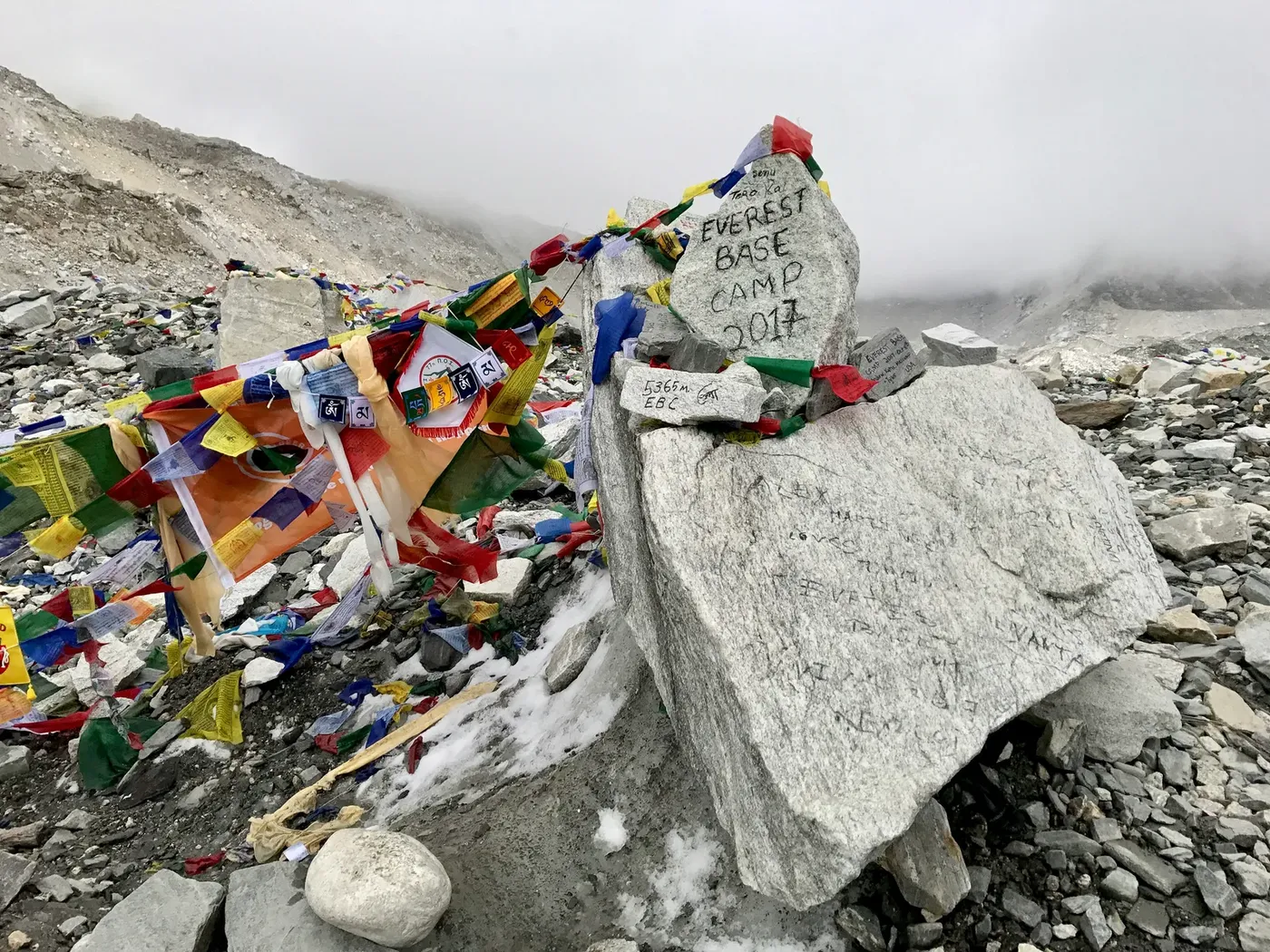
The layering that still photographs like a wedding is built outwards, each layer with one job. A long-sleeve base in the gown's own tone under the bodice keeps the arms warm and adds nothing to the silhouette. A long opaque underskirt covers the legs, stops wind getting under the skirt, and disappears under the gown in every frame. Over the shoulders, a pashmina or wool wrap in ivory or the gown's own colour is the most useful cold accessory you can pack: it reads as a shawl in the frame.
Two Outfits, One Ridge: Sequencing the Ceremony Look and the Warm Layer
There is a structural point about the day that changes what you should wear. The ridge is the ceremony: a short window, exposed, aircraft waiting. The terrace of the Everest View Hotel at 3,880 m is 45 to 60 minutes, sheltered, with the south face of Everest across the tables. Most of your album is made there, so the heavier gown belongs on the terrace.
The sequencing is a communication problem as much as a clothing one. The priest sets the muhurat, the auspicious moment, inside the sait, and the group has to be ready for a fixed instant inside a 10 to 15 minute window. If the muhurat falls eight minutes into a fifteen-minute ground time, you have two minutes to get the bride into the ceremony look and the shoe swapped. So the change happens before you leave the aircraft, and the shoes change on the ground while the photographer walks the frame. Agree the muhurat with the priest before the day, and rehearse in the valley.
Makeup, Hair and Sindoor at Altitude: Dry Air, No Mirror, No Power
At 5,545 m the air is dry and cold and the ridgeline is a wind tunnel. Cold skin and warm skin are not the same surface: blood leaves the face, so base that matched in the valley reads too pale, and a heavy contour that was invisible in the valley shows in the flat light of the ridge. Dry cold air also pulls the moisture out of a powder finish well within your ground time, so a soft-powdered face looks tired rather than luminous. A cream-based or high-pigment base, set with a light translucent powder and a cream blush, holds better. For lips, a matte liquid survives the wind. For eyes, waterproof mascara survives and fibre mascara does not.
Hair is harder than makeup at altitude, because a veil, a garland and a wind are all acting on it. An updo or a low bun is the right answer: there is nothing for the wind to catch. A half-up style with loose hair is the worst of both worlds, because it looks done and windblown in the same frame. Heavy extensions are worse, because wind unravels them over an hour on the terrace.
Two ritual elements are more awkward than the makeup, and neither is a clothing problem, which is why they get missed. Sindoor is applied with a finger at the parting, at the moment the priest says so, in the open air, with a cold hand and no water to rinse afterwards, so the kit is a sealed pot, a second shade and a compact mirror, all in your hand. Apply it in the valley and it is smeared by the veil, the garland and the wind before the camera is switched on, so bring two shades and take the choice to the priest. The mangalsutra is a clasp problem in cold hands: let the priest tie it.
Practically, the makeup and hair are done in Kathmandu and the touch-up kit in the cabin is small: pressed powder, lipstick, blotting paper, a compact mirror, hairpins and a hand cream, because cold hands and cold skin ruin the day. There is no power on the ridge, so no hot tools and no second blow-dry. Keep your phone in an inside pocket, because a lithium battery left in the cold loses charge fast.
The Bridal Party as Cargo: Who Travels, and What Travels Separately
The party is a payload decision, and it is the one most often negotiated late. The aircraft is full at five passengers: bride, groom, photographer, priest and one guest is a full cabin. Beyond that is a second lift, meaning a second flight, a second weather window and a second set of pictures that do not match.
Everyone on the aircraft gets 80 kg including body weight, which sounds generous until you subtract a person. A guest who brings a full-size suitcase, a gift bag and a spare pair of heels has taken a serious share off somebody else, and that somebody else is the photographer. Give your party one rule: personal items only, nothing that is not in a frame.
Outfit boxes for guests are the classic mistake. A boxed sari, a boxed sherwani and a box of return gifts are freight, not cabin luggage, and freight has to be pre-positioned at 3,880 m or flown as a separate load with the same lead time as the toran. Marigold survives transport, but fresh mango leaf wilts in about a day, so the greenery sets the schedule.
If you are not taking a private charter, the shared seat on the Everest Base Camp day tour is $1,260 per person, and the difference for your luggage is total: a shared seat has no hold, no freight channel and no room for a garment bag of 8 to 12 kg. The charter cost guide breaks down what a private aircraft costs, and the charter page lists dates.
Briefing Your Photographer: The Shot List Starts With the Outfit
Photographers plan around a head count, a location and a light. Almost nobody briefs them on the hem, and that is where the album is won. Send your photographer, in writing before the day, a short outfit note: the exact hem length, whether there is a train, that the dupatta will fly and will be pinned, the shoe decision, and the two-outfit sequence. Give them the ground time too: a professional who knows there are 45 to 60 minutes on a terrace will shoot the ridge fast.
Two specific requests are worth making. Ask them to photograph the shoe change, because a bride on rock in flat shoes, captured stepping into the dress shoe, is the frame that makes the decision look intentional rather than a compromise. And ask them to time the sindoor to the ceremony, because those frames exist once.
Then give them the light they are working in. At 5,545 m the sun is hard and the contrast against a snow-bright background is severe, so ask for a backlit or side-lit frame rather than a flat front-on shot, and expect them to want the bride slightly turned so the dupatta reads as a shape against the rock. A blush, ivory or deep red gown photographs well against grey scree and blue sky, a white gown can blow out.
Three Days, Not One Morning: The Full Trip Plan
A wedding trip is not a one-morning flight, and packing it as one is why couples arrive with the wrong shoes and no hair kit. Plan three days. Day one in Kathmandu: the trial, the alterations, the suit fitting, the hair, and the sagan, the henna, done the night before. Day two: the flight, the ridge, the terrace. Day three: the buffer, because one morning in four is lost to weather.
Now split the trip into three luggage streams. The cabin stream is everything you need for the ceremony itself, and the only stream you control: the ceremony essentials, the warm layer, both pairs of shoes, the hair and makeup kit, the sindoor and jewellery pouch, the sagan supplies and the second outfit. The freight stream is the gown, the guest outfit boxes, the florals and the mandap.
| Item | Where it travels | Why |
|---|---|---|
| Ceremony gown, 8-12 kg | Cabin garment bag, or separate load | Never in the hold |
| Second ceremony outfit | Cabin | Weather backup, and the terrace look |
| Warm layer, wrap, gloves, hat | Cabin | Ridge and the walk back |
| Two pairs of shoes | Cabin, one worn | Dress shoe for frame, flat for rock |
| Hair and makeup kit, mirror | Cabin | No power or water on the ridge |
| Sindoor, mangalsutra, rings | Cabin, under the layer | Body-warm, applied at the right moment |
| Guest outfit boxes, gifts | Separate load | Freight, not cabin luggage |
| Florals, toran, mandap | Separate load | 80-90 kg, cannot fly in the cabin |
The general helicopter rules still apply to everything that is not a gown, and the full list is in our Nepal helicopter tour packing guide: no cotton, a windproof shell, a warm hat, lip balm, sunglasses, water, a small daypack, and nothing heavy in the cabin that you must hold for the climb. Add the wedding-specific items: a garment bag, a sewing and tape kit for a shifted hem, a stain remover wipe, blister plasters, spare insoles and a second warm layer for the photographer. If some of your guests fly up and trek instead of taking the charter, their footwear is governed by the trail, and our helicopter trekking guide covers that version. To see the outfit plan inside a complete wedding, read the Everest destination wedding guide.
Frequently Asked Questions
Can I wear a full lehenga to an Everest Base Camp wedding?
Yes, and most couples do. A full embroidered lehenga with a dupatta weighs 8 to 12 kg and is carried, not worn, for the flight. It travels in a cabin garment bag or goes ahead with the florals, and you travel in a second outfit for the ceremony.
Does the wedding dress count against the 80 kg helicopter limit?
Yes. The 80 kg allowance is body weight plus cabin bag for every passenger, and a full embroidered lehenga is 8 to 12 kg, about a tenth of that before you add a layer and a second outfit. That is why the dress travels as freight.
Can I wear heels at Kala Patthar?
Not on the ridge. The ground is scree, wet rock and old snow, and a heel on a slope either slips or sinks, and a fall at 5,545 m ends the shoot. Wear a flat closed shoe with a grippy sole on the rock, and carry the elegant flat for the photographs.
How cold is it on the ridge, and what should I layer for?
Design for an air temperature of about -15°C at dawn at 5,545 m, and for a felt temperature of -28 to -30°C once the ridge wind is on you, which governs the layering even on a mild morning. Wind is the problem, not cold, because an exposed shoulder strips heat from the face and hands. Layer a long-sleeve base, an opaque underskirt, and a wool wrap.
Do I need two outfits for a helicopter wedding?
Yes. The ridge gives you a short window of exposed ground time, and the terrace at the Everest View Hotel gives 45 to 60 minutes of sheltered photography. Put the heavier gown on the terrace and the lighter look on the ridge, with the warm layer over the top.
How do I do my makeup and hair with no power or mirror at 5,545 m?
You do them in Kathmandu and carry a small touch-up kit. There is no power or water on the ridge, so there can be no second blow-dry. Keep the base matte, use a cream blush and a matte lip, choose waterproof mascara, and do the hair in an updo.
How do I apply sindoor and the mangalsutra in the cold?
Sindoor is applied at the parting with a finger, at the moment the priest gives it, in the open air, with a cold hand and no water to rinse afterwards. Carry a sealed pot with two shades and a mirror in your hand, and apply it at the ridge, not the valley.
How much luggage can the wedding party bring?
About 80 kg per person including body weight, which leaves a guest far less for a cabin bag once you subtract a person. Personal items only, and no outfit boxes in the cabin. Boxes of saris and gifts are freight, pre-positioned at 3,880 m.
What should I tell my photographer about my outfit?
Send it in writing before the day: the hem length, whether there is a train, that the dupatta will fly and will be pinned, the shoe plan, the two-outfit sequence, and the short window on the ridge. Ask them to time the sindoor to the ceremony.
How do I pack for a three-day wedding trip in the Himalayas?
Split it into three streams. The cabin stream holds the ceremony essentials: warm layer, both pairs of shoes, hair and makeup kit, the jewellery pouch, the sagan supplies and the second outfit. The freight stream holds the gown, the guest outfit boxes and the florals.