

Short answer: The Lukla to Everest Base Camp by helicopter leg is a planning decision before it is a purchase. You are buying one seat in a five-passenger Airbus H125 that has to leave at first light, carry roughly 15 kg per person, and land before the valley cloud builds over the high peaks. In spring 2027 the leg works best in one of two shapes: as the exit from a trek you have already finished above Pheriche, or as a fly-in that removes the walk between Lukla at 2,845 m and the Base Camp bowl at 5,364 m, with the landing itself at Kala Patthar, 5,545 m. Confirm the seat several weeks ahead for April, and do not book the long-haul flights to Kathmandu first.
- 2,845 mLukla, where this leg begins
- 5,545 mKala Patthar landing altitude
- 15 kgBaggage allowance per passenger
- $1,260One-day landing tour, per person
Most people who search for a Lukla to Everest Base Camp by helicopter transfer are not first-time visitors to Nepal. They have already walked the Khumbu, or they are midway through planning a trek and have realised that the two days between Pheriche and Lukla, at the end of a long itinerary, are the least rewarding part of the whole route. That is the exact moment this leg earns its price. It converts a two-day retreat down the same valley you have just climbed into a twenty-minute flight over it, and it gives you the summit ridge from the air rather than from under the cloud line.
It is also the leg that produces the most avoidable disappointment, because it is sold as a simple add-on and behaves like a scheduled operation. Weight is counted, weather is not negotiable, seats are shared with strangers, and the aircraft does not wait. This guide is the planning version rather than the sales version: what the machine can carry, how March and April 2027 differ, what the published fares on this corridor actually cover, and the order in which a traveller booking from the United States or Europe should put the pieces together.
If you have not yet chosen a product at all, the Everest helicopter tours hub compares every route in the region side by side, and it is the right place to start before reading the rest of this page.
Why Spring 2027 Changes the Lukla to Everest Base Camp by Helicopter Decision
Spring is the second flying window of the Everest year, and from a booking point of view it is the more complicated one. The autumn window is short and predictable: the monsoon clears, the air stabilises, and everyone in the industry knows what October looks like. Spring is longer, warmer, more popular with Europeans and North Americans because it coincides with school breaks, and far more variable inside its own two months.
The window itself is well defined. Flights run from early March to the end of April, and in a good year into the first days of May. What changes inside that window is the crowd, the cloud and the price of leaving the decision late. A March departure on the Lukla corridor is a decision you can still make in February with reasonable confidence. An April departure is a decision that should already be on the calendar, because April is the busiest month for helicopter tours in Nepal and the seats that remain late in March are the ones other people did not want.
There is a second reason spring matters specifically for this leg rather than for the flight from Kathmandu. A trekker who has walked up through Namche and Pheriche is acclimatised, and that changes the safety calculus of a 5,545 m landing completely. A traveller who flies from Kathmandu to Lukla and straight up to Kala Patthar on the same morning has not acclimatised at all, and the aircraft cannot give them the hours that altitude requires. Spring itineraries, which are built around walking, naturally put the body in the right place for the flight. That is the strongest argument for the trek-up, fly-back shape of the trip, and it is why we steer most spring travellers towards it.
The dates themselves are never guessed on this page. Departures are confirmed in writing at the time of booking, and the fixed departures page lists exactly what runs and how often in each month, so nobody has to plan around a date we have published as an example.
March or April 2027: Two Very Different Months on the Same Route
March is the quieter month. Mornings are clear, the forests below Namche are starting to turn, the trail has not yet filled, and the aircraft is easier to fill and therefore easier to join as a single traveller or a pair. If your dates are flexible and your priority is a landing rather than a party, March gives you the same mountain with less competition for the seat.
April is the busiest month for helicopter tours in the whole country, and it earns the traffic: the best all-round conditions of the spring, warmer valley mornings, and the widest choice of departures. The trade is afternoon cloud, which in April arrives earlier and thicker than it does in March. That is why every flight on this corridor leaves before sunrise, and why the seat for an April date should be confirmed several weeks ahead, before you commit money to flights into Kathmandu.
| Planning point | March 2027 | April 2027 |
|---|---|---|
| Character of the month | Quieter, clear mornings, fewer trekkers on the trail | Busiest month for helicopter tours in Nepal |
| Conditions | Cold mornings, stable air, snow still high on the upper trails | Best all-round spring conditions, more afternoon cloud |
| Seat availability | Easier to join a shared flight at shorter notice | Confirm several weeks ahead, before booking flights to Kathmandu |
| Trail traffic below Namche | Light | Heavy, especially in the second half of the month |
| Best use of the helicopter leg | Fly-in to start a trek, or exit after a full walk | Exit leg, because the walk down is the slowest part of a crowded trail |
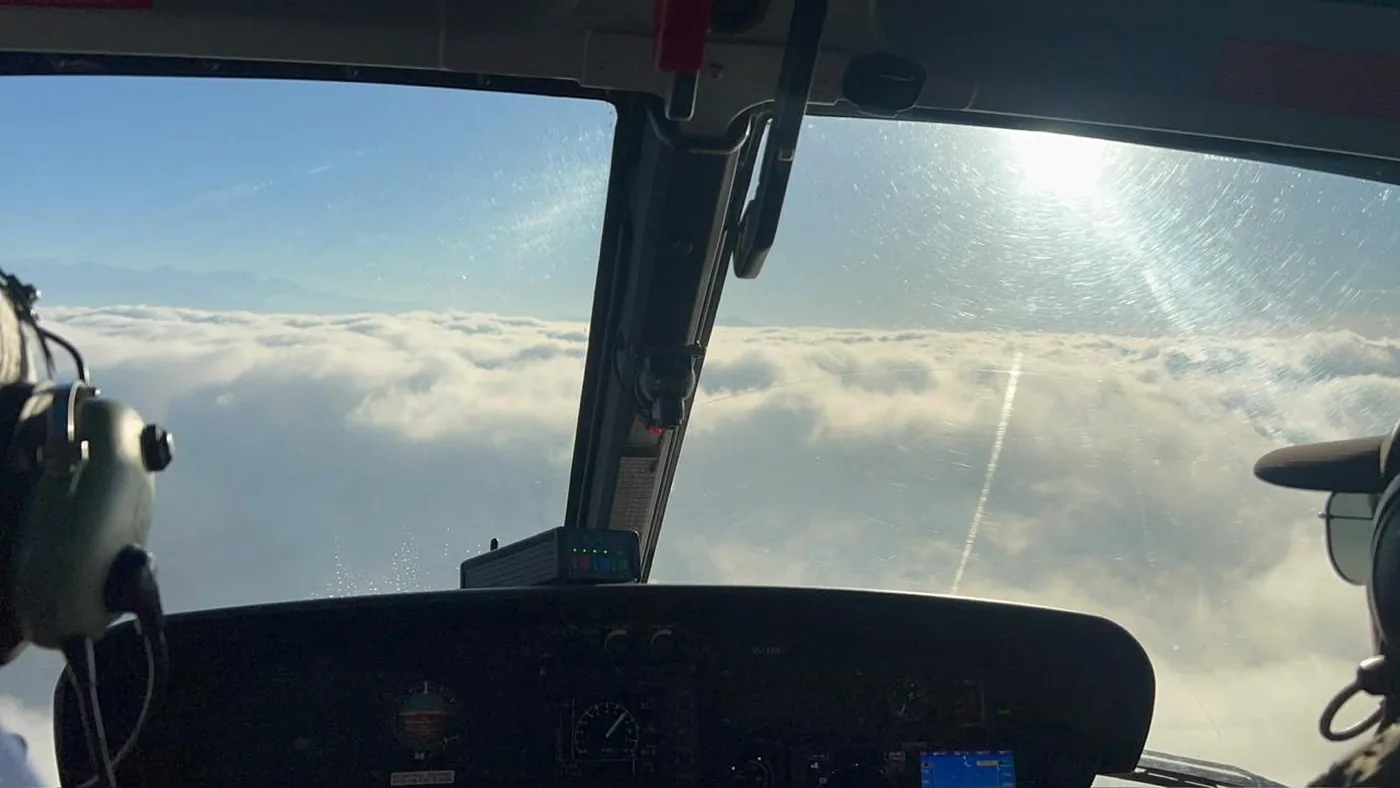
One rule applies to both months equally: the flight window is the morning, not the day. Warm air rising out of the valleys builds cloud over the high peaks by early afternoon, and by then a landing at 5,545 m is no longer a decision the pilot can make in your favour. If your itinerary has the helicopter as an afternoon activity, the itinerary is wrong.
What the Aircraft Will Actually Carry
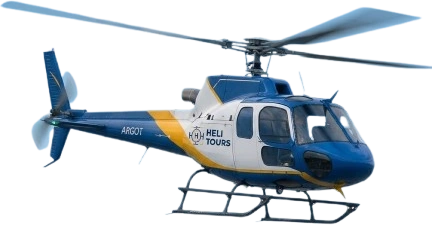
The machine on this corridor is the Airbus H125, also sold as the AS350 B3e. It is the standard high-altitude light helicopter in Nepal for a reason: it holds its performance when the air thins, and it can put five passengers plus a pilot into a landing area the size of a tennis court. What it cannot do is ignore physics. At altitude the aircraft is weight-critical, which means the load sheet, not the booking confirmation, decides how much baggage actually flies.
Plan on roughly 15 kg per person, daypack included. That allowance is not a suggestion and it is not negotiable at the helipad; the pilot builds the load sheet from the passenger weights and the duffel weights you supplied, and if the totals do not work the bags come off. On a trekking exit this is the moment to be honest about the shopping in Namche. Most trekkers solve it by leaving the heavy duffel at the hotel in Kathmandu, walking with a light pack, and sending the rest by road.
Passenger weights matter as much as bag weights. If you are travelling as a group of five, the aircraft is full and there is no slack; if you are a pair joining a shared flight, you are pooled with strangers and the operator balances the cabin. Nobody is judged for the number they write on the form, but an inaccurate number is the one thing that can ground a departure you have already paid for.
Three Ways to Use the Leg: Fly In, Fly Out, or Both
There is no single product called a Lukla to Base Camp transfer. There are three shapes, and the right one depends on where your body will be when the aircraft arrives. The first is the fly-in: land at Lukla from Kathmandu, then use a helicopter to reach the upper valley and start walking from there. The second, and by far the most common, is the fly-out: walk the full route, then leave the Khumbu from Pheriche, Gorek Shep or Base Camp itself instead of retracing the trail to Lukla. The third is the return leg in both directions, which is only worth the money if your time in Nepal is measured in days rather than weeks.
| Shape of the trip | What it replaces | Who it suits | Altitude you gain or skip |
|---|---|---|---|
| Fly in to the upper valley | The walk from Lukla up to the Base Camp approach | Travellers with under two weeks, and anyone who wants the landing before the trek rather than after it | Straight to the Base Camp bowl at 5,364 m, landing at Kala Patthar 5,545 m |
| Fly out after a full trek | The two-day walk back down to Lukla | Anyone finishing at Base Camp, Pheriche or Gorek Shep with a fixed international flight | Leaves from the high villages, lands at Lukla 2,845 m |
| Both directions | The whole Lukla approach and the whole descent | Short-stay travellers, photographers and families with children | Maximum altitude gained, minimum days on trail |
The fly-out shape is the one we recommend most often, and the reason is acclimatisation rather than price. By the time a trekker reaches Pheriche they have spent several nights above 3,500 m, their body has done the work, and a twenty-minute flight out of the valley is a comfortable end to the trip. The fly-in shape asks the aircraft to do in one morning what the body normally does over eight days, and no operator can make that safe by flying lower or faster.
Whichever shape you choose, the leg is one line item inside a larger itinerary. The Everest Base Camp helicopter day tour page covers the single-morning version from Kathmandu at $1,260 per person, and the same-day connection timetable explains how the arrival from Kathmandu links to the upper-valley flight if you are doing both on one day.
Published Fares for the Everest Products That Include This Leg
Prices on this corridor are per seat and per aircraft, and the difference between the two is where most confusion starts. A shared flight is priced per person and fills with strangers; a charter is priced per aircraft and flies whether the other seats are sold or not. The table below is the published 2027 pricing on the products that include a Lukla connection or an upper-valley landing, so that the quote you receive can be checked against something.
| Product | 2027 price | Duration | Landing or maximum altitude |
|---|---|---|---|
| Everest Base Camp helicopter day tour | $1,260 per person, shared flight | 1 day, about 6 hours | 5,545 m at Kala Patthar |
| Private Everest helicopter charter | $4,500 per aircraft, up to 5 guests | 1 day, about 5 to 6 hours | Everest View Hotel, 3,880 m |
| Everest Base Camp helicopter trek, trek up and fly back | $1,840 per person, shared flight | 10 days | Max 5,545 m |
| Everest scenic mountain flight | $260 per person, window seat | 1 hour | No landing, 8,848.86 m views |
| Manaslu helicopter return trek | $2,160 per person, shared flight | 13 days | Max 5,160 m |
What that table cannot give you is a price for the Lukla leg on its own, because the leg is priced inside an itinerary: the aircraft has to be positioned, the landing has to be permitted, and the empty return has to be paid for by somebody. Our guide to what the up-leg costs breaks that structure down line by line, and the 10-day trek-up-fly-back product is explained on the trek and fly-back cost page.
Booking From the United States or Europe: The Order That Works
Almost every disappointment on this corridor comes from doing the same four things in the wrong order. The traveller books a return flight to Kathmandu, then books the trek, then tries to add the helicopter, and discovers in March that the April seats went in January. The order below is the one that survives contact with a busy spring.
First, fix the dates of the flight leg, not the dates of the holiday. The helicopter is the constrained item. Once a seat is confirmed in writing for a specific morning, the rest of the itinerary can be built around it: the days into Kathmandu, the trek, and the buffer at the end. Fares are quoted in US dollars per seat or per aircraft, and a written confirmation should name the date, the aircraft type, the number of passengers and the baggage allowance.
Second, book the international flights. Only now is it safe to buy the long-haul ticket, because the seat that determines your schedule is already held. If you book the other way round, you are asking a weather-dependent mountain operation to fit itself around a non-refundable ticket, and that is the arrangement that ends in a stranded traveller and a rebooking fee.
Third, arrange insurance that actually covers helicopter evacuation. Standard travel policies frequently exclude aviation activities and high-altitude trekking, and the policy that looks comprehensive on a comparison site is often the one that excludes the thing you are buying. Ask for the evacuation clause in writing and check the altitude limit it names.
Fourth, send accurate weights. Passenger weights and duffel weights are not paperwork, they are the load sheet. Send them once, correctly, and the morning runs smoothly. Amend them late and the pilot has to re-plan a departure that is already tight against the cloud.
One more piece of sequencing matters if you are flying in from North America or Europe: give yourself a night in Kathmandu before the helicopter morning. A first-light departure after thirty hours of travel is a bad way to meet 5,545 m, and the flight will not wait while you find your bags.
The Walk-Up Question: Standby Seats at Lukla in April
Every spring somebody asks whether they can simply turn up at Lukla and buy a seat. The honest answer is that a walk-up is possible and a walk-up plan is not. Seats do open, because groups shrink, because a trekker decides to walk down after all, and because aircraft reposition empty. What you cannot do is build a return flight home around the hope that one of those seats appears on the morning you need it.
The pattern is predictable enough to plan against. In March, with lighter traffic, a flexible traveller with three mornings to spare has a reasonable chance of joining a shared flight at short notice. In April, with the corridor at its busiest, the seats that remain are usually the ones attached to a full aircraft going the other way. The practical compromise is to hold a confirmed seat for the morning you actually need and treat any earlier walk-up opportunity as a bonus rather than a plan.
There is also a weather dimension that walk-up travellers underestimate. A morning lost to cloud is not a morning that can be recovered the same afternoon, because the afternoon is exactly when the cloud arrives. Two consecutive lost mornings are normal in a bad spring week, and a traveller with a fixed international departure three days later is now in a negotiation with the weather rather than with an operator.
Timing on the Day: First Light Is Not a Suggestion
Every flight on this corridor leaves before sunrise. That is not a marketing preference or an operator quirk; it is the shape of the mountain weather. The valley floor is still and cold before dawn, the air is dense, and the aircraft has both the performance and the visibility it needs. By mid-morning the sun is working on the south-facing slopes, and by early afternoon the cloud has built over the high peaks and the landing at 5,545 m is off the table.
What that means for you as a passenger is simple and slightly brutal: the day starts at about four in the morning, and the decision about whether you fly is made before most hotels have opened the kitchen. The compensation is the light. The first hour over the Khumbu, with the ridge lines still in shadow and the peaks already lit, is the reason photographers pay for this leg twice.
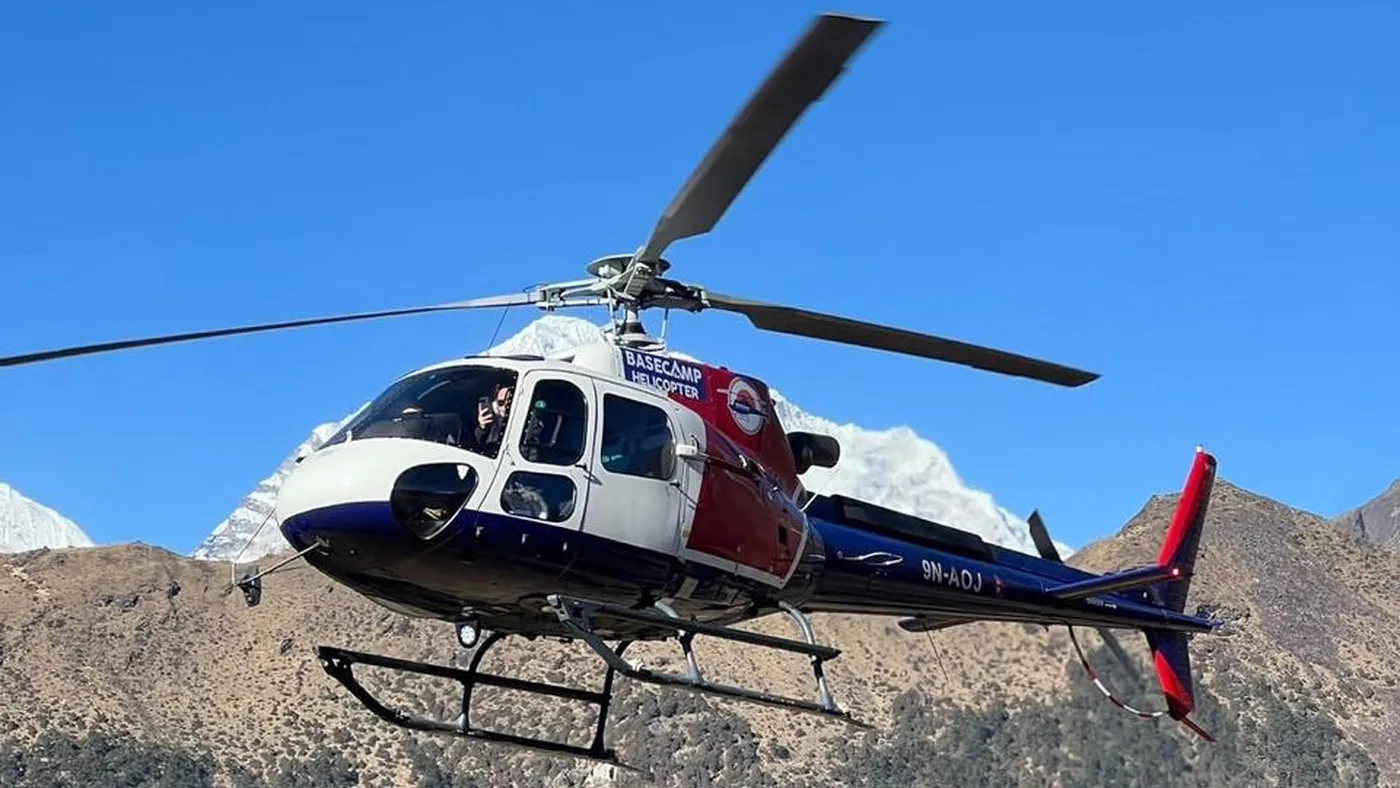
The same logic applies in reverse to your arrival in Nepal. If the helicopter morning is your first morning in the country, the jet lag and the altitude arrive together. One acclimatisation night in Kathmandu, at 1,400 m, is a cheap way to make the following morning go better.
Lukla or Kathmandu as the Boarding Point
The two boarding points produce genuinely different trips, and the choice is usually made for you by where you are standing rather than by price. From Kathmandu the aircraft climbs out over the middle hills, crosses the lower Khumbu and gives you the whole range in one sweep; the day tour at $1,260 per person is built around that shape, with a landing at Kala Patthar and a stop at the Everest View Hotel at 3,880 m on the way. From Lukla the flight is short, low and entirely inside the upper valley, which is what makes it a connection rather than a tour.
| Boarding point | What the flight gives you | Typical use | Planning constraint |
|---|---|---|---|
| Kathmandu, 1,400 m | The full range in one sweep, landing at Kala Patthar 5,545 m, breakfast stop at 3,880 m | One-day tour at $1,260 per person, or a private charter at $4,500 per aircraft | Longer weather exposure on the approach, so the first-light departure matters most |
| Lukla, 2,845 m | The upper valley only, from Namche upwards, in a short hop | Connecting to or from a trek already in progress | Depends on a fixed-wing or helicopter arrival at Lukla first, which is the most weather-sensitive part of any Khumbu itinerary |
Lukla has one advantage that no amount of planning can manufacture: it is where the trek already is. A traveller sitting in a lodge at Pheriche does not need a Kathmandu product; they need a seat on an aircraft that is already working the valley that morning. That is why the Lukla boarding point is priced inside an itinerary rather than sold as a product: what you are buying is the empty leg of a repositioning flight rather than a dedicated tour.
If you are still deciding which of the two shapes suits your dates, our upper valley flight guide explains the route leg by leg, and the Kathmandu to Lukla helicopter guide covers the arrival that everything else depends on.
Permits, Park Fees and What the Fare Leaves Out
Any visit to the Everest region sits inside a protected area, and the paperwork does not disappear because you arrived by air. The Sagarmatha National Park entry permit is required for the region, and the local municipality charges its own fee on the same route. Both are set by the park and the municipality rather than by operators, so the price is the same whoever you fly with, and neither is something a tour company can discount for you.
What matters for planning is that these fees are usually quoted separately from the flight, and a fare that looks low is often a fare that excludes them. Ask for the full list in writing: flight, landing permission, park and municipal fees, breakfast stop if there is one, and the transfer at each end. Our guide to helicopter permits in Nepal sets out which permits apply to which route, and the Sagarmatha National Park entry explains why the whole upper Khumbu, including the Base Camp bowl, is managed as one protected area.
Two costs sit outside every fare and cannot be avoided by choosing a cheaper operator. The first is travel insurance with helicopter evacuation cover, which is not optional on a route where the aircraft is the evacuation. The second is time: a lost weather morning costs a night in a lodge and possibly a rebooked international flight, and no operator refunds the second one.
One more line item deserves a warning for trekkers rather than day-trippers. If you are flying out with a full trekking kit, the baggage allowance of roughly 15 kg per person is the constraint that shapes the last two days of your walk, not the first. Plan the shopping in Namche around it, and send anything heavy back to Kathmandu by road before the morning of the flight.
Frequently Asked Questions
Can you fly the Lukla to Everest Base Camp by helicopter leg on its own?
Not as a standalone ticket. The leg is sold inside an itinerary, either as the exit from a trek or as the connection to one, because the aircraft has to be positioned and the empty return has to be paid for. In practice you are buying a seat on a flight that is already working the valley, which is why the quote depends on the date and the direction rather than on a fixed published price.
How much baggage can I bring on the flight?
Roughly 15 kg per person, daypack included. The Airbus H125 is weight-critical at altitude, and the pilot builds the load sheet from the passenger and duffel weights you supplied at booking. Leave the heavy trekking duffel in Kathmandu or send it by road, and give accurate numbers rather than optimistic ones.
Is it better to fly in to Base Camp or fly out?
Fly out, for most travellers. Walking up gives your body the acclimatisation that a landing at 5,545 m demands, and the flight then removes the two least interesting days of the route, the walk back down to Lukla. Flying in is the better choice only when your time in Nepal is short or you are travelling with children.
What time of day does the helicopter leave?
Before sunrise, on every departure. Valley air builds cloud over the high peaks by early afternoon, so the usable window is the first hours of daylight. That is true in March, in April and in October, and it is the single most reliable rule on this corridor.
How far ahead should I book for spring 2027?
For April, confirm the seat several weeks ahead and do it before you book flights to Kathmandu. April is the busiest month for helicopter tours in Nepal and the popular mornings sell first. For March, a few weeks is usually enough, and shorter notice is sometimes possible for a single traveller joining a shared flight.
Does the fare include the park permit and the landing fee?
Sometimes, sometimes not, and it is worth asking directly. The Sagarmatha National Park entry permit and the local municipal fee are set by the authorities, not by operators, and some quotes fold them in while others list them separately. Ask for a written breakdown before you compare two prices.
Can the helicopter land at Everest Base Camp itself?
The landing on this route is normally at Kala Patthar, 5,545 m, not on the glacier at Base Camp, 5,364 m. Kala Patthar gives the view of Everest that people are actually paying for, and it is the landing point named on our published day tour. Photography stops on the glacier are a separate permission question.
What happens if the weather closes the valley?
The flight does not go, and the morning is lost. Cloud is the one thing an operator cannot negotiate with, and a lost morning cannot be recovered in the afternoon because the afternoon is when the cloud forms. Build a spare day into the end of the itinerary if you have an international flight to catch.
Can I do the flight and a trek in the same trip?
Yes, and it is the most popular spring shape. The 10-day Everest Base Camp helicopter trek at $1,840 per person walks up and flies back from the upper valley, which pairs the acclimatisation of a trek with the twenty-minute exit. It is also the product that photographs best, because you see the same valley twice from two heights.
Is a private charter worth it for a couple?
Only above three or four passengers. The private Everest helicopter charter is priced at $4,500 per aircraft for up to 5 guests, so the per-person cost falls sharply as the group grows. For a couple it is a luxury purchase rather than a saving, and the shared day tour at $1,260 per person does the same landing.
Do I need special insurance for this flight?
You need travel insurance that explicitly covers helicopter evacuation and high-altitude trekking. Many standard policies exclude both, and the exclusion is usually buried in a definition rather than stated on the summary. Ask for the clause in writing and check the altitude limit it names before you pay.
The Bottom Line on the Lukla to Everest Base Camp by Helicopter Leg
Book the seat before the international flight, expect to fly at first light, pack to 15 kg, and choose the fly-out shape unless your calendar is genuinely short. In March you can decide late and still fly; in April you should already be confirmed. The Lukla to Everest Base Camp by helicopter leg is not complicated once those four rules are in place, and it turns the end of a trek from two days of retracing your own footprints into a single flight with the whole Khumbu ridge line underneath you.
For the full comparison of every route in the region, start at the Everest helicopter tours hub. For the season itself, our month-by-month best time to go Everest Base Camp guide and the wider best time for a helicopter tour in Nepal both cover March and April 2027 in detail, and the packing list covers what actually fits inside the weight allowance. Departure dates for both months are listed on the fixed departures page.